

When it comes to the best tile for a kitchen backsplash, the conversation often starts and ends with ceramic or porcelain. Why? They hit the sweet spot between durability, affordability, and a seemingly endless variety of designs. For most homeowners, they masterfully balance the style you want with the performance a busy kitchen demands.
Your Guide to the Perfect Kitchen Backsplash
Let’s be honest: the kitchen backsplash is way more than just a shield against spaghetti sauce splatters and steam. It’s the artistic soul of your kitchen. It’s the single design element that ties your cabinets, countertops, and appliances together into one cohesive, stunning look.
A great backsplash doesn’t just protect your walls; it defines the entire personality of the room, turning a purely functional space into a true centerpiece.

This guide is designed to move beyond generic advice. Think of it as your roadmap to finding the perfect tile—one that hits that ideal intersection of form and function, ensuring your choice is not just beautiful today, but built to last for years.
Setting the Stage for Your Selection
Before we get lost in the fun of colors and patterns, we need to talk fundamentals. What actually makes a tile suitable for a kitchen? Your choice has to be a true performer, delivering on a few key promises.
The best tile for a kitchen backsplash must check three critical boxes:
- Exceptional Durability: It needs to handle the daily grind of a high-traffic area without chipping, cracking, or fading.
- Effortless Cleanability: From simmering sauces to sizzling oil, your backsplash has to be non-porous and incredibly easy to wipe clean. No fuss, no stains.
- Heat and Moisture Resistance: Placed right behind stoves and sinks, it absolutely must handle constant temperature swings and humidity without breaking a sweat.
A great backsplash is like a coat of armor for your walls; it has to be tough enough to handle the battle of daily cooking while looking effortlessly stylish.
On this journey, we’ll give you the tools to evaluate materials not just for how they look, but for how they’ll perform. From timeless ceramic to artisanal cement, we’ll break down the real-world pros and cons of each contender. By the end, you’ll be ready to pick a tile that looks fantastic and works flawlessly.
What to Demand from Your Kitchen Backsplash
Before you get swept away by a tile’s stunning pattern or perfect color, you have to think like a kitchen inspector. Your backsplash isn’t just there to look pretty; it’s a hardworking shield in one of the most demanding rooms in your home. Choosing the best tile for a kitchen backsplash means putting performance on the same level as appearance.
Think of your backsplash as a key player on your kitchen’s team. Every single day, it faces assaults from steam, splatters, and heat. To make sure it’s an investment that lasts, it has to meet a few non-negotiable demands. When you look at tile options through this practical lens, you guarantee your final choice will be both beautiful and tough.
Built-In Resistance to Moisture
Your backsplash lives in the splash zone. From the steam rolling off a pot of pasta to the spray from the kitchen sink, moisture is just a fact of life. A tile’s most fundamental job is to repel all that water.
Picture your tile wearing a built-in raincoat. Materials that are non-porous or have very low porosity—like porcelain or glass—act as an impenetrable barrier. They stop water from seeping into the tile, which can lead to staining, mildew, or even damage to the wall behind it. More porous materials, like natural stone or unsealed cement, are more like a sponge; they need a good, robust sealant to give you that same level of protection.
An Unyielding Defense Against Stains and Splatters
The kitchen is where beautiful messes happen. Tomato sauce flies, grease sizzles out of the pan, and coffee sometimes misses the mug entirely. The right backsplash tile makes cleanup an afterthought, not a chore.
A smooth, non-porous surface is your best friend here. It keeps liquids and food particles from soaking in and leaving a permanent mark.
Key Takeaway: The easier a tile is to wipe clean, the more you’ll appreciate it years from now. This single quality preserves both your tile’s look and the hygiene of your cooking space.
A few things to keep in mind:
- Surface Texture: Glossy or satin finishes are almost always easier to clean than heavily textured or matte surfaces, where food bits can get trapped.
- Grout Lines: The fewer and thinner the grout lines, the less space there is for grime to build up. This is where larger format tiles really shine.
The Ability to Handle the Heat
Sitting directly behind your cooktop, your backsplash has to withstand serious and frequent temperature swings. It needs to stay cool and collected, even when things get heated in the kitchen.
Heat resistance is all about a tile’s ability to take high temperatures without cracking, discoloring, or weakening over time. Materials like ceramic, porcelain, and metal are fired at extreme temperatures when they’re made, which makes them perfectly suited for this job. They won’t scorch or melt, giving you a safe and durable surface right behind your range. This resilience ensures the tile’s structure and beauty remain intact for the long haul, solidifying its place as a top contender for the best tile for a kitchen backsplash.
Comparing the Most Popular Backsplash Tile Materials
Okay, you’ve got the basics down—you know what your kitchen demands from a backsplash. Now for the fun part: picking the actual tile. Each material brings its own personality to the kitchen, complete with unique strengths, quirks, and care routines. Think of it like interviewing candidates for the most visible design job in your home.
This isn’t about finding one “best” material, but the perfect tile for your kitchen. Let’s walk through the top contenders, looking at them not just for their technical specs, but for the lifestyle and look they support.
Ceramic and Porcelain: The Reliable Workhorses
Ceramic and porcelain are often lumped together, but it’s better to think of them as cousins. Ceramic is the classic, budget-friendly choice, while porcelain is its tougher, more durable relative. Both start as clay fired in a kiln, but porcelain uses a more refined clay and gets fired at much higher temperatures, making it incredibly dense and resistant to just about everything.
For decades, these tiles have been the default choice for kitchens, and for good reason. They are the definition of a safe, versatile, and reliable bet. And that’s not just a feeling; the numbers back it up. Ceramic tile is the top pick for 34% of US homeowners installing a new backsplash. That kind of loyalty is a major reason the global kitchen tile market was valued at USD 0.73 billion and is still growing. You can dive deeper into these numbers and discover additional insights on kitchen renovation materials on Statista.
- Pros: Super durable, moisture-proof, a breeze to clean, and available in a staggering range of colors, shapes, and patterns. They’re also one of the most affordable options out there.
- Cons: Standard ceramic can chip if you hit it hard, revealing the clay color underneath the glaze. Grout lines can also be a pain to keep clean unless you invest in a good stain-resistant grout from the start.
- Best For: Pretty much any kitchen style you can dream up. They work just as well as classic subway tile in a farmhouse kitchen as they do in a bold, graphic pattern for a modern space. Perfect for anyone wanting a low-maintenance, budget-friendly, and stylish solution.
Before we dive into the other materials, here’s a quick comparison to help you see how they stack up at a glance.
Kitchen Backsplash Tile Material Comparison
This table gives you a quick-reference guide to the key characteristics of each popular kitchen backsplash material. Use it to quickly narrow down the options that best fit your lifestyle, budget, and design vision.
| Material | Durability | Ease of Cleaning | Stain Resistance | Best For |
|---|---|---|---|---|
| Ceramic/Porcelain | High | Very Easy | High (Glazed) | All-around performance, budget-friendly styles |
| Glass | Moderate | Very Easy | Excellent | Brightening dark spaces, modern aesthetics |
| Natural Stone | Moderate to High | Moderate | Low to Moderate (Requires Sealing) | Creating a luxurious, one-of-a-kind look |
| Metal | High | Easy | High | Industrial, professional, and ultra-modern kitchens |
| Zellige/Cement | High | Moderate | Low (Requires Sealing) | Artisanal, bespoke designs with unique character |
This table should help frame your decision, but the real choice comes down to the look and feel you want for your kitchen every day.
Glass Tile: The Sleek Modernist
If you want to make your kitchen feel brighter and more open, glass tile is your best friend. It acts like a mirror, bouncing light around the room and adding a sense of depth that can make a small kitchen feel much larger. From tiny mosaics to large, seamless sheets, glass delivers a clean, sophisticated look.
Because glass is non-porous, it’s completely waterproof and will never stain. A quick spray of glass cleaner and a wipe-down is all it takes to make it sparkle. This makes it one of the most hygienic and low-maintenance options you can find.
Glass tile doesn’t just protect your wall; it transforms the light in your room. Its reflective quality can turn a small, dark kitchen into a brighter, more inviting space.
But that sleek beauty comes with a couple of footnotes. Installation can be tricky—the adhesive is visible right through the tile, so you need a skilled installer to get that flawless finish. It’s durable, but it can be scratched or chipped, and repairs tend to be more obvious than with other materials.
Natural Stone: Timeless Luxury
For a kitchen that feels earthy, organic, and truly high-end, nothing beats natural stone. Materials like marble, travertine, slate, and granite bring patterns straight from the earth into your home. Every single tile is unique, with its own veining and color variations. You’re guaranteed a backsplash that is one-of-a-kind.
A natural stone backsplash connects your home to the outdoors and adds a layer of timeless elegance that manufactured materials can only try to imitate. It’s also important to understand why high-end materials matter for your home’s long-term value.
This beauty, however, demands respect. Most natural stones are porous, so they need to be sealed right after installation and then resealed periodically (usually once a year) to fend off stains. Acidic spills like lemon juice or vinegar can etch the surface of stones like marble, so you have to be quick with the cleanup.
Metal Tile: The Industrial Edge
Want a bold, industrial, or ultra-modern look? Metal tiles are hard to forget. Usually made from stainless steel, copper, or bronze, they offer a sleek, professional vibe that looks fantastic next to modern appliances. They’re also incredibly durable, heat-resistant, and simple to clean.
A stainless steel backsplash, whether it’s a single sheet or individual tiles, can make a kitchen feel like a professional chef’s workspace. Copper tiles add a warm, rustic glow and develop a gorgeous patina over time.
The main downside? Metal shows everything. Fingerprints and water spots are its enemies, so you’ll be wiping it down often to keep it looking pristine. It can also get scratched, and a heavy impact could leave a dent.
Zellige and Handmade Cement Tile: The Artistic Soul
Finally, we get to the tiles that are less about mass production and all about artistry: Zellige and handmade cement tiles. These are for homeowners who see their backsplash not as just a utility, but as a canvas.
-
Zellige Tiles: These handcrafted clay tiles from Morocco are famous for their beautiful imperfections. No two are ever the same; you’ll find subtle shifts in color, texture, and shape across your wall. The result is a surface with incredible depth and character, perfect for rustic, bohemian, or eclectic kitchens.
-
Handmade Cement Tiles: Unlike ceramic, cement tiles aren’t glazed. The color comes from a mix of mineral pigments poured right into a mold, meaning the pattern is baked into the body of the tile. It can’t fade or chip off. Known for their silky matte finish and intricate patterns, these are the best choice when you want your backsplash to be the undeniable star of the room.
Both of these options are porous and need to be sealed to protect them from stains and moisture. They cost more, but what you get in return is a backsplash that’s a true piece of art, full of soul that you simply can’t get from a factory line.
The Unique Appeal of Handmade Cement Tile
While materials like ceramic and glass offer clean lines and consistent finishes, handmade cement tile brings something entirely different to the kitchen: soul. This isn’t just a building material; it’s a piece of functional art, crafted with a rich history and an unmistakable human touch.
Choosing cement tile for your backsplash is a declaration that you value character over conformity.
What really sets cement tile apart is how it’s made. Forget kilns and glazes. Each tile is created using a traditional hydraulic press where a mixture of cement, sand, marble dust, and natural mineral pigments is poured into a mold. This process creates a through-body color, meaning the pattern isn’t just a thin layer on top—it runs deep into the tile itself.
Because the design is integral to the tile, it will never fade or chip away like a surface glaze might. The result is a tile with incredible durability and a signature silky, matte finish that feels both modern and timeless.
A Story in Every Tile
Because they are made by hand, no two cement tiles are perfectly identical. You’ll find subtle variations in color and texture from one tile to the next. These slight imperfections aren’t flaws; they are the very essence of the tile’s charm.
When laid out, these variations create a surface with incredible depth and movement. It’s a living finish that evolves with your home, telling a story that mass-produced tiles simply cannot.
This organic quality makes cement tile a powerful choice for transforming a kitchen from a purely functional room into a space with personality and warmth. It’s easily one of the best tile options for a kitchen backsplash when the goal is to create a true focal point.
This flowchart can help you visualize where different tile materials fit based on your primary decision-making factors, from budget to style.
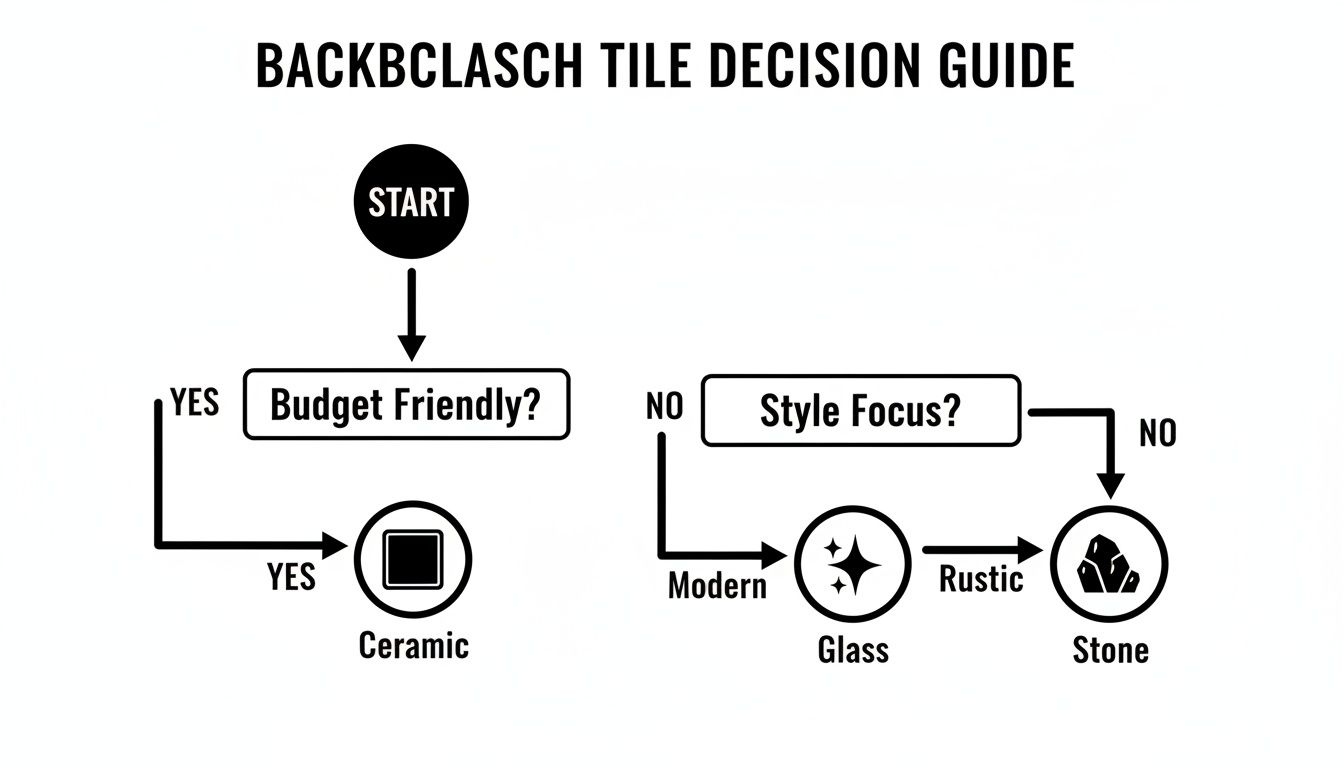
As the decision tree shows, when your focus moves beyond pure budget and into specific aesthetic goals, materials like glass, stone, and artisan tiles like cement become top contenders.
Marrying Beauty with Kitchen-Ready Performance
At first glance, a porous material like cement might seem like an odd choice for a kitchen. But when properly sealed, it becomes a formidable opponent to the daily messes of a busy cooking space.
A high-quality penetrating sealer soaks into the tile, creating an invisible barrier that provides exceptional resistance to moisture and stains. This crucial step transforms the tile into a durable, wipeable surface ready for anything from sauce splatters to steam. With the right care, a cement tile backsplash is not just beautiful but also incredibly practical.
- Durability: The through-body color ensures that even if a scratch were to happen, it would be far less noticeable than on a glazed ceramic tile.
- Heat Resistance: Cement is naturally non-combustible, making it perfectly safe for installation behind a stove or cooktop.
- Design Flexibility: The production process allows for intricate patterns and a vast color palette, offering nearly limitless design possibilities. You can explore a wide array of cement tile designs by style to find the perfect match for your vision.
The growing appreciation for such high-performance, design-forward materials is reflected in the market. The global kitchen backsplash wall tile market was valued at USD 0.73 billion and is projected to climb to USD 1.19 billion by 2033, with a 5.59% compound annual growth rate. This trend highlights the increasing demand for durable, easy-to-clean surfaces that don’t compromise on style—a perfect description of handmade cement tile. You can read the full research about these market trends from Business Research Insights.
Ultimately, choosing handmade cement tile is an investment in character. It’s for the homeowner or designer who wants a backsplash that does more than just protect a wall—it makes a statement, adds a layer of artistry, and gives the kitchen a unique and enduring identity.
Critical Design Choices for Your Backsplash Project
Picking the right material is a huge step, but it’s really only half the story. Now comes the fun part: focusing on the design details that turn a simple wall covering into the focal point of your kitchen. The size, shape, grout, and finish you choose are what will bring your kitchen’s personality to life.

Think of this as the final styling session for your kitchen. Just like the right accessories complete an outfit, these finishing touches define your backsplash. Getting them right is the key to a professional, thoughtfully designed space that feels intentional and complete.
How Tile Size and Shape Influence Your Space
The dimensions and form of your tile have a surprisingly powerful impact on how a room feels. This isn’t just about looks; it’s about playing with spatial perception. Small choices here can make a kitchen feel larger, cozier, taller, or wider.
- Small Mosaic Tiles: Tiny tiles, like penny rounds or small squares, create a surface rich with detail and texture. They’re fantastic for adding intricate patterns and work beautifully in smaller feature areas, like behind the sink or stove.
- Classic Subway Tiles: You can’t go wrong with the ubiquitous 3×6 or 4×12 subway tile for a timeless, clean look. Laying them horizontally makes a wall feel wider, while a vertical stack draws the eye upward, giving the illusion of height. For a subtle twist with more character, check out options like these classic cement tile bricks.
- Large-Format Tiles: Using big tiles (think anything over 12×24 inches) means far fewer grout lines. This creates a seamless, uncluttered look that is both modern and incredibly easy to clean—a perfect trick for making a smaller kitchen feel more expansive.
The Unsung Hero: Grout Color and Type
Grout might seem like a minor detail, but it plays a massive role in the final look of your backsplash. It’s the framework holding your design together, and your choice can either make your tiles pop or let them blend into a subtle tapestry.
Grout is to tile what punctuation is to a sentence. It can completely change the meaning and impact of the entire composition, directing the eye and defining the rhythm of the design.
You really have two main approaches here:
- Matching Grout: Using a grout color that’s very close to the tile color creates a uniform, monolithic look. This approach plays down the grid pattern, making the surface feel continuous and serene.
- Contrasting Grout: A dark grout with light tile (or vice versa) puts the shape of each individual tile on full display. This highlights the pattern and adds a graphic, bold quality to your backsplash.
For kitchens, epoxy grout is a game-changer compared to traditional cement-based grout. It costs a bit more, but it’s non-porous. That means it actively resists stains, mold, and mildew without ever needing to be sealed—a huge advantage in a high-splash, high-mess zone.
Creating Harmony with Cabinets and Countertops
The final piece of the puzzle is making sure your backsplash works with the two biggest players in your kitchen: the cabinets and countertops. Trends are leaning toward materials that are both beautiful and tough. A recent NKBA report noted that natural quartzite was a backsplash choice for 61% of projects, right behind quartz countertops at 62%. This shows a clear desire for materials that look great and can handle real life.
A simple trick for a cohesive look is to pull a secondary color from your countertop’s veining or flecks and use that for your backsplash tile. If you have a busy, dramatic countertop, a simple, solid-color backsplash will provide balance. On the flip side, a simple, quiet countertop is the perfect canvas for a bold, patterned tile to take center stage. For a truly professional result, looking at broader aesthetic principles from articles on the best design ideas for modern living can help you tie all the elements of your room together.
Bringing Your Vision to Life with Artisan Tile
Choosing the right tile for a kitchen backsplash is where the practical meets the personal. You need a hardworking shield against splashes, heat, and grease, but you also want it to be the artistic heart of your kitchen. It’s a balancing act.
This is exactly where artisan tile shines. Whether you’re drawn to the classic geometry of an 8×8 pattern, the intricate elegance of a Star & Cross design, or the earthy texture of Terrazzo, there’s a handmade tile that nails both the functional demands and your unique vision. Each tile tells a story through its subtle variations, creating a surface with a character you just can’t get from a machine.
Your Next Steps to a Perfect Backsplash
Ready to go from idea to installation? Here’s how you can get started creating a backsplash that’s truly yours:
- Explore Our Gallery: Get lost in a world of design possibilities. See how different patterns, colors, and layouts have transformed real kitchens into beautiful, personal spaces.
- Design Your Own: Step into our online Design Studio and play with color and pattern. You can create a one-of-a-kind tile that perfectly fits your home’s style. Learn more about crafting your own custom-made cement tiles and see just how simple the process is.
- Connect with Our Experts: Got questions? Need a second opinion? Our team is here to help you navigate material choices, pattern selection, and installation tips to make sure the final result is flawless.
Your kitchen deserves more than just a functional wall covering; it deserves a piece of art that reflects your style and stands the test of time.
When you choose the quality and soul of artisan tile, you’re not just finishing a project—you’re making a lasting investment in the beauty and character of your home. We invite you to begin that journey with us today.
A Few Final Questions on Kitchen Backsplash Tiles
Even after you’ve landed on a material and a look you love, a few practical questions always pop up. Getting these last details sorted is what gives you the confidence to pull the trigger on the perfect tile for your kitchen.
What Is the Easiest Backsplash Tile to Keep Clean?
When it comes to pure, wipe-and-go ease, non-porous materials are the undisputed champs. Porcelain and glass tiles sit at the top of that list. Their surfaces are slick and don’t absorb a thing, which means spaghetti sauce splatters and grease wipe away without a fight. A quick spritz and a swipe, and you’re done.
But don’t let that scare you away from more character-rich options like handmade cement tile. Once you apply a high-quality penetrating sealer, these tiles become incredibly resistant to stains and moisture. A properly sealed cement tile backsplash is just as simple to wipe down as any other material.
The Real Secret: Cleanability isn’t just about the tile’s raw material—it’s about how well the surface repels moisture. Whether it’s naturally non-porous like glass or properly sealed like cement, a tile that doesn’t absorb liquids will always be a breeze to clean.
Should I Choose a Glossy or Matte Backsplash Tile?
This is the classic design dilemma: do you go for shine or subtlety? It’s a battle between aesthetics and practicality, but the differences are often smaller than you’d think.
- Glossy Tiles: These finishes are brilliant at bouncing light around, which can make a kitchen feel instantly brighter and bigger. Their smooth, slick surface is incredibly easy to wipe clean, but it’s also more likely to show off water spots and fingerprints.
- Matte Tiles: A matte finish has a soft, modern feel that’s fantastic at hiding smudges and everyday imperfections. While it offers a sophisticated, low-glare look, you might need a little extra elbow grease to scrub dried-on food splatters from a more textured surface.
Honestly, you can’t go wrong with either. The right choice really comes down to how much light your kitchen gets and how you feel about a quick daily wipe-down.
Can I Just Install a New Backsplash Over My Old Tile?
It definitely sounds like a tempting shortcut, but tiling directly over an old backsplash is something we almost never recommend. If you want a professional result that will actually last, taking the time to remove the old tile is the only way to go.
When you install over an existing tile surface, the new tile just can’t get a good grip on the old glazed finish. This leads to weak adhesion and, eventually, failure. It also creates a clunky, uneven surface and adds extra thickness that makes it a headache to work around outlets and cabinets.
Ready to find a tile that marries handmade beauty with real-world performance? Original Mission Tile offers a stunning collection of artisan cement tiles that will turn your kitchen into the heart of the home.