
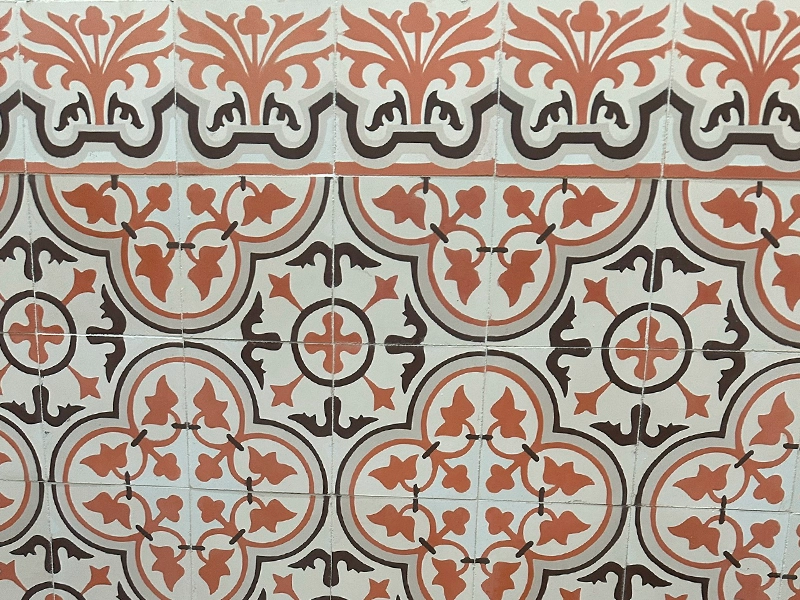
What do Michelin-worthy restaurants, boutique hotels, and magazine-ready homes have in common? Surfaces that tell a story. When you’re choosing between cement tiles vs ceramic tiles for a premium project, you’re not just picking a material—you’re defining tone, texture, and brand. This guide compares performance, aesthetics, lifecycle, and cost so architects, designers, builders, and homeowners can specify with confidence—and create interiors that photograph beautifully and perform every day.
Quick Take: Cement Tiles vs Ceramic Tiles
- Cement tiles (aka encaustic cement tiles) are hand-pressed with mineral pigments. They have a velvety matte surface, saturated color that runs through the wear layer, and a crafted, architectural look that’s ideal for statement floors, patterned fields, and brand storytelling.
- Ceramic tiles are kiln-fired. Glazed ceramics offer crisp prints, glossy or satin finishes, and high stain resistance out of the box; they shine on walls and as mosaics, and are widely used where you want a consistently smooth, wipeable surface.
Design truth: The most luxurious spaces often use both—cement for soulful pattern and tactile floors; ceramic (or porcelain) for glossy walls, mosaics, or high-sheen accents.
What Are Cement Tiles?
Cement tiles are handmade, not fired. Pigmented mineral slurry is poured into a metal pattern mold (the coup de patte), backed with a cement/concrete mix, and then hydraulically pressed. Tiles cure at ambient temperature rather than in a kiln. The result is a thick, matte, richly colored handmade cement tile with a wear layer that carries the color and pattern.
Benefits of cement tiles
- Handmade quality: Natural tonal movement and artisanal depth that reads lux in photos and in person.
- Design freedom: Recolor patterns, scale motifs, and create custom cement tiles—including custom logo tiles for brand storytelling.
- Longevity: Thick, mineral-pigmented wear layer ages gracefully; can be re-sealed, spot-repaired, and refinished over time.
- Sustainability: Ambient curing (no kiln) and long lifecycle mean a smaller footprint per year of use.
Explore real installations in our Gallery.
What Are Ceramic Tiles?
Ceramic tiles are formed from clay and fired in a kiln. Many have a glaze—a glass-like coating that defines color, pattern, and sheen (glossy, satin, or matte). Body composition and firing schedule determine hardness, water absorption, and recommended usage.
Strengths of ceramic tiles
- Finish variety: From mirror-gloss zellige-style looks to satin crackle glazes.
- Stain resistance: Glazed surfaces are highly wipeable and easy to maintain, particularly on walls and backsplashes.
- Precision & consistency: Great for stacked-bond walls, specialty shapes, mosaics, and decorative trims.
Aesthetics: Texture, Color, and Pattern
Cement tiles (the artisanal, matte look)
- Texture: Silky matte with micro-variation—never flat or plasticky.
- Color: Mineral pigments deliver depth; hues feel natural and architectural.
- Pattern: Motifs form across multiple tiles. Borders, “tile rugs,” and field-plus-frame layouts look bespoke.
Ceramic tiles (the glazed, polished or satin look)
- Texture: From high gloss to soft satin; crisp edges and clean joints.
- Color: Glazes can be uniform or intentionally varied (e.g., zellige-style).
- Pattern: Screen-printed and digitally printed options; excellent for walls and feature niches.
Styling tip: Combine a patterned cement tile floor with glossy ceramic wall tile for a high/low sheen contrast that screams editorial.
Performance: Durability, Moisture, and Wear
Foot traffic & abrasion
- Cement tiles perform beautifully on residential and commercial floors when sealed properly. Mineral color lives in the wear layer, so patterns endure.
- Ceramic tiles (especially porcelain-body ceramics) excel in abrasion resistance. Glaze hardness varies; check specifications for floors vs walls.
Moisture & wet areas
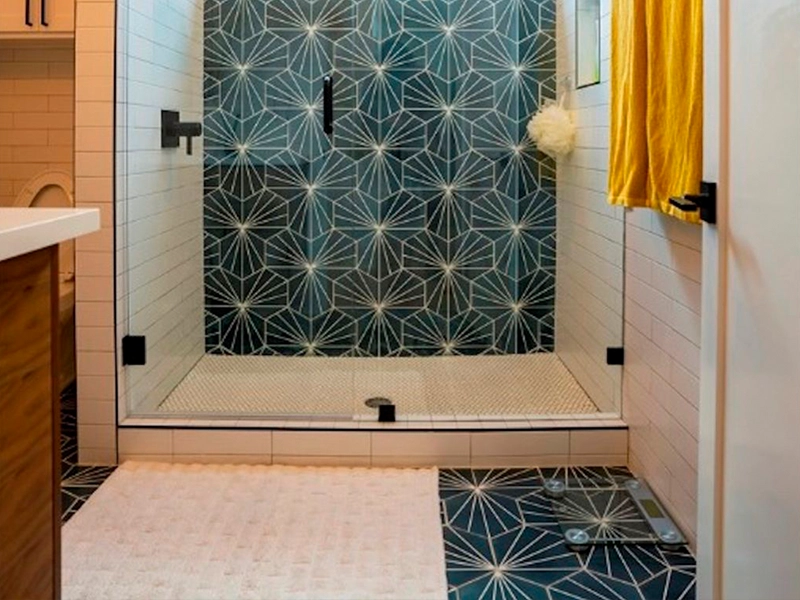
- Cement: Great for bathroom floors, powder rooms, shower walls, entries, and covered patios. For shower floors, many specifiers select coordinating mosaics (often porcelain) for extra traction and drainage, while keeping cement on the walls and dry zones.
- Ceramic: Glazed surfaces are inherently water-friendly; ideal for tub surrounds, shower walls, and backsplashes.
Slip resistance
- Cement’s matte finish helps underfoot feel. Your sealer choice and maintenance plan matter—define them early. For ceramic, look for appropriate slip ratings for the intended use.
Applications by Room & Space
Kitchens
- Floors (cement tiles): Patterned cement floors hold up to daily traffic and photograph beautifully.
- Backsplashes (ceramic): Glazed ceramic makes clean-ups easy; consider zellige-style gloss for light play.
- Hybrid: Cement tile “rug” under the island + ceramic backsplash.
Bathrooms & Showers
- Floors (cement): Velvety matte underfoot; choose mid-contrast patterns for hide-and-seek with water spots.
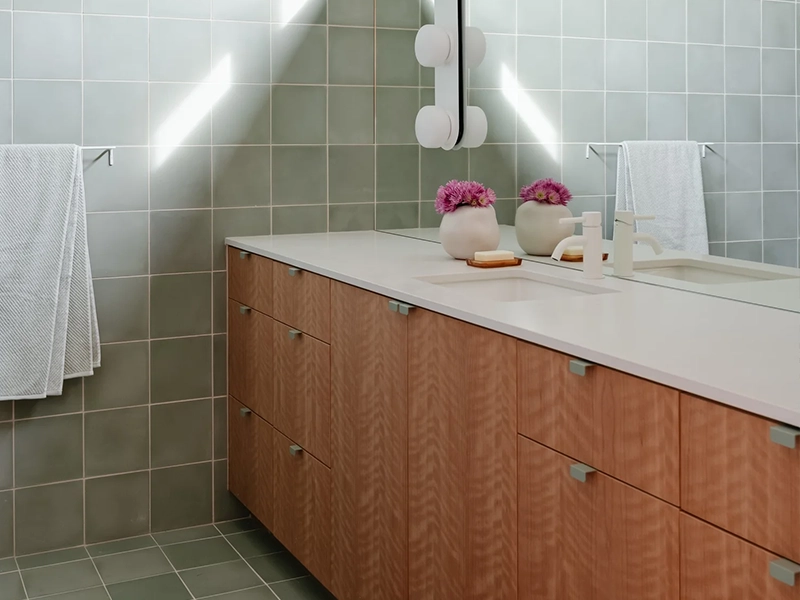
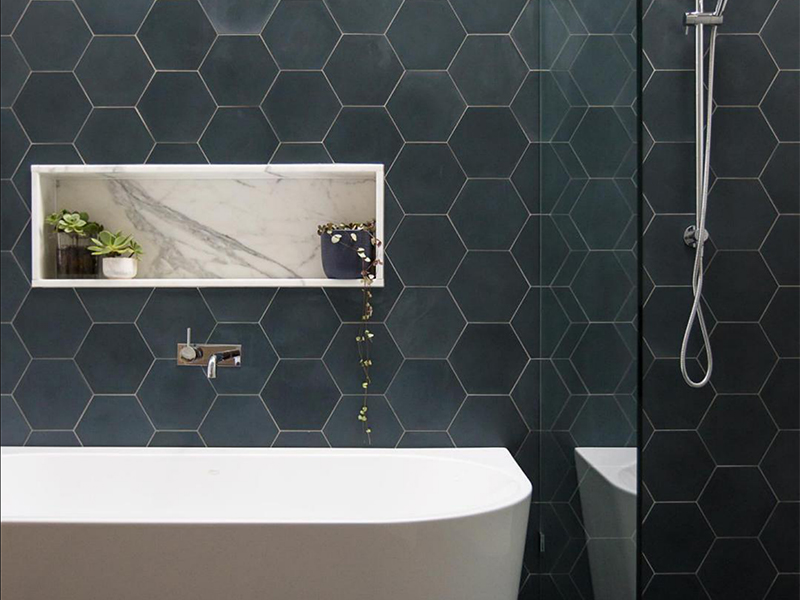
- Walls (cement or ceramic): Cement yields spa-calm texture; ceramic offers pearl-like sheen.
- Shower floors: Many teams prefer porcelain/ceramic mosaics for extra grip; tie hues back to the cement walls.
Entryways & Mudrooms
- Cement tiles thrive here: patterned “rugs,” bold thresholds, and border-and-field layouts create instant identity.
Living Areas & Fireplaces
- Cement on hearth surrounds and feature niches adds sculpture and warmth; ceramic liner trims offer crisp edges.
Patios & Hospitality Terraces (covered)
- Cement patterns read beautifully outdoors (follow sealer and climate best practices). Terracotta accents pair naturally.
Style Ideas & Trends
Moroccan & Mediterranean
Stars, interlace, florals, and bold borders—recolored in modern palettes (bone, clay, olive, charcoal, indigo). Use cement on floors; pair with glossy ceramic liners or niches.
Modern & Minimal
Two-tone geometry, chunky stripes, and large-scale checks in low contrast. Cement keeps it matte and architectural; ceramic adds controlled shine.
Vintage Revival
Historic motifs reimagined with tobacco, stone, and ink—perfect for bistros, speakeasies, and boutique hotel corridors.
Logo & Branding
Custom cement tiles integrate wordmarks or icons at entries, host stands, and elevator lobbies—subtle, premium, unforgettable.
See living examples in the Gallery, and start a brief in Custom Cement Tiles when you’re ready.
Commercial Design: Restaurants, Hotels, and Retail
Restaurants & Bars
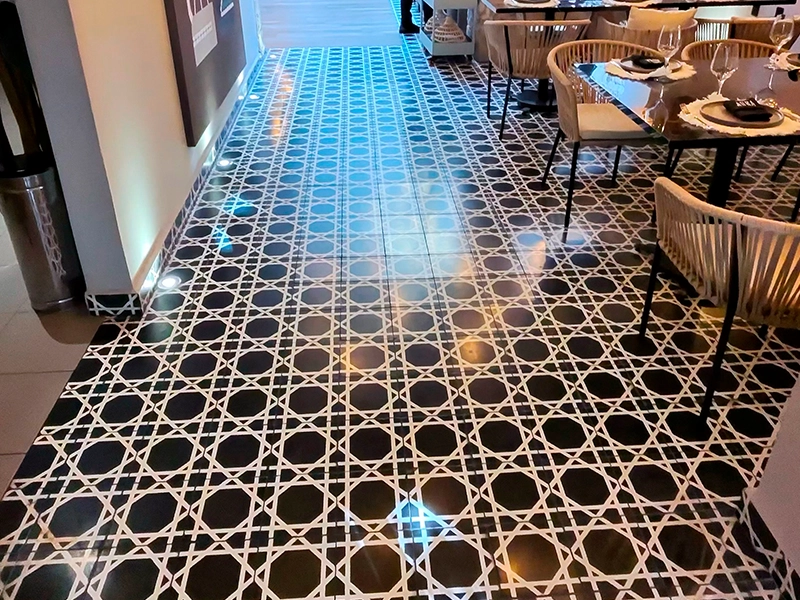
- FOH floors (cement): Medium-contrast pattern to disguise crumbs and scuffs.
- Bar faces & host stands: Repeat the floor motif (or recolor it) vertically for a cohesive scene.
- Restrooms: Small spaces, big impact—cement pattern plus great lighting is a social-media magnet.
Hotels & Hospitality
- Lobbies & corridors: Border-and-field layouts with corner blocks signal heritage; recolor for a modern read.
- Guest baths & spa: Cement walls and floors (sealed) deliver serenity; ceramic mosaics in wettest zones if needed.
Retail & Multiuse
- POS islands & risers: Pattern draws attention to product; grout/edge detailing elevates the whole display.
Why clients choose cement tiles in commercial spaces
- Branding power (custom patterns and logos)
- Long-term value (re-sealable surface, mineral color)
- Timeless imagery (magazine-ready matte texture)
Need a fast solution? Explore Cement Tiles In Stock for immediate options that pair well with ceramic trims.
Installation & Maintenance
Cement Tile Best Practices
- Dry-lay & blend from multiple boxes to distribute natural variation.
- Pre-seal before grouting to avoid staining or haze.
- Grout tone: Usually mid-tone or color-matched to preserve the pattern.
- Final seal after grout cures; schedule periodic refreshes based on traffic.
- Cleaning: pH-neutral cleaner only; avoid acids, bleach, harsh abrasives.
Ceramic Tile Best Practices
- Confirm body and glaze suitability for floors vs walls.
- Use recommended setting materials; for glossy glazes, consider unsanded grout and appropriate spacers.
- Wipe with non-abrasive cleaners; avoid scratching glossy surfaces.
Pro move: Detail thresholds early—brass, stone, or wood transitions protect edges and look intentional.
Common Mistakes to Avoid
- Skipping the pre-grout seal on cement → leads to grout haze and staining.
Fix: Seal before and after grout cure. - High-contrast grout that outlines every tile joint.
Fix: Test mid-tone grout on a sealed sample. - Treating cement like porcelain (expecting zero variation).
Fix: Embrace handmade nuance; it’s part of the luxury. - Under-ordering and breaking pattern continuity.
Fix: Add 10–15% overage for residential; 12–20% for commercial/borders/diagonals. - Ignoring lighting during color approval.
Fix: Approve samples under final LEDs and daylight.
Cost, Lead Time, and Sustainability
Cost
- Cement tiles sit in the premium handcrafted category. Value rises with longevity, re-sealing capability, and brand impact.
- Ceramic tiles run a wide range, from budget to luxury artisan glazes. For walls and mosaics, ceramic can be cost-efficient; for floors and pattern fields, cement often delivers the richer story.
Lead Time
- Stock cement tiles: available quickly (see In Stock).
- Custom cement tiles: include design proofs, sampling, curing, and freight in your timeline. Start early.
- Ceramic tiles: stock lines are fast; custom glazes/shapes require added time.
Sustainability
- Cement cures at ambient temperature; its long service life and repairability support waste reduction. Ceramic’s kiln process is energy-intensive, but many factories implement efficiency programs. Choosing durable, timeless design is the biggest sustainability lever.
FAQ: Cement Tiles vs Ceramic Tiles
1) Are cement tiles more durable than ceramic tiles?
Both are durable when used appropriately. Cement tiles excel on floors and statement fields (with sealing). Glazed ceramics are terrific on walls and for wipeable surfaces. Many premium projects combine them.
2) Do cement tiles need to be sealed?
Yes. Seal before grouting and again after grout cure, then maintain on a defined schedule (traffic-based).
3) Can I use cement tiles in a shower?
Yes—commonly on shower walls and bathroom floors. For shower floors, many designers prefer porcelain/ceramic mosaics for traction and drainage while coordinating colors with cement.
4) Will cement tiles stain?
With proper sealing and pH-neutral cleaning, cement tiles resist everyday stains. Avoid acidic cleaners and harsh chemicals.
5) What’s the maintenance difference?
Cement needs periodic sealer refresh; ceramic’s glazed surface is generally low-maintenance. Both respond well to pH-neutral cleaners.
6) Which is better for resale and “wow” factor?
Cement tiles offer unparalleled tactile richness and pattern depth—great for magazine-worthy kitchens, entries, restaurants, and hotel lobbies. Ceramic tiles deliver crisp, glossy walls and signature mosaics. The curated mix of both often reads most luxurious.
7) How much extra should I order?
Residential: 10–15% overage. Commercial and border/diagonal layouts: 12–20%.
8) Can you match our brand color or create logo tiles?
Yes. With custom cement tiles, we match brand palettes and fabricate custom logo tiles for entries, host stands, or medallions.
9) Are cement tiles slippery?
Cement’s matte finish provides a comfortable underfoot feel. Slip behavior depends on sealer choice and maintenance—align these with your code requirements and operations.
10) What’s more budget-friendly?
For walls and standard shapes, ceramic often wins on upfront cost. For high-impact floors and branded patterns, cement frequently delivers more perceived value per dollar in the finished space.
How to Get Started
- See Trend Tiles in our Gallery.
- Order Samples and begin a brief via Custom Cement Tiles—share mood boards, brand colors, room dimensions, and traffic levels.
- On a timeline? Browse Cement Tiles In Stock for immediately available patterns and solids.
- Talk to a Tile Specialist: share plans and elevations for technical guidance on layout, transitions, and sealer strategy via Contact Us.
Side-by-Side Summary
| Attribute | Cement Tiles | Ceramic Tiles |
|---|---|---|
| Manufacturing | Hand-pressed, ambient-cured | Kiln-fired (glazed or unglazed) |
| Aesthetic | Matte, mineral depth, artisanal | Glossy to satin, crisp, consistent |
| Best For | Patterned floors, entries, bars, lobbies, logo tiles | Walls, backsplashes, mosaics, high-sheen features |
| Customization | Full recolor/scale/logo options | Glaze colors/sizes vary by line |
| Maintenance | Seal pre-grout + post-grout; periodic refresh | Generally low (wipeable glaze) |
| Sustainability | No kiln; long lifecycle | Kiln energy; durable when specified well |
| Value Story | Architectural, brandable, photogenic | Cleanable, glossy, precise |
Real-World Pairings That Sing
- Modern kitchen: Cement checkerboard floor (bone/ink) + glossy ceramic subway backsplash.
- Mediterranean bath: Cement star-and-cross floor + ceramic zellige-style wall; brass trim at transitions.
- Boutique lobby: Cement border-and-field floor + ceramic liner at baseboards and desk front.
- Restaurant bar: Cement motif on bar face + recolored cement “rug” at host stand; ceramic niche shelves.
Screenshot
You don’t have to choose a single winner. The most elevated projects combine cement tiles for tactile, branded surfaces with ceramic tiles for glossy walls and mosaics. Specify the right material in the right place—and let the surfaces do your storytelling.
See Trend Tiles in our Gallery • Order Samples • Talk to a Tile Specialist • View Cement Tiles In Stock