

What if your lobby, restaurant dining room, or retail floor could look like a boutique hotel on opening day—and still look that good after millions of footsteps? With the right specification, it can. In 2026, commercial floor tiles are more than a surface; they’re a brand experience. And among the many options available to architects, designers, and builders, cement tiles stand out for their blend of durability, handmade character, and limitless customization.
This complete guide explains why commercial floor tiles made from cement are a strategic upgrade for hospitality, retail, workplace, and public venues. You’ll learn how cement tiles are made, where they excel, how to install and maintain them for long-term performance, and how to use pattern, borders, and custom colorways to turn traffic into storytelling. As you explore, browse our project Gallery for pattern ideas, review our Custom Cement Tiles options for brand-driven design, and Contact Us to align specs, samples, and timelines.
Why Cement Tiles Win for Commercial Floors
1) Heavy-duty durability with a luxe look
Cement tiles are hydraulically pressed—not fired—creating a dense, stone-like body. The surface pigment layer is thick, so color isn’t just sitting on top; it’s part of the tile. Properly sealed, cement tiles handle rolling carts, heel traffic, and daily cleaning cycles while developing a soft patina that reads “luxury,” not “wear.”
2) Handmade quality at scale
Each tile is cast by hand, which means micro-variations in tone and texture—exactly the artisanal character many luxury brands want. Unlike printed look-alikes, handmade cement tiles read authentically in person and in photos. That authenticity elevates perceived quality for your clients and their guests.
3) Infinite patterns, colors, and formats
From quiet terrazzo-look fields to bold Moroccan cement tiles, from Spanish-style borders to contemporary geometrics, the design vocabulary is nearly limitless. Need a specific brand color? Custom is the rule, not the exception—ideal for hospitality and retail.
4) Sustainable, repairable, long-lived
Because cement tiles are cured (not kiln-fired), manufacturing energy is lower. They’re thick enough to be refinished if needed, extending useful life and reducing replacement cycles—critical for multi-year pro formas.
5) Performance in real spaces
When specified correctly—with the right sealer, grout, and maintenance plan—cement tiles hold up in demanding environments, from hotel lobby commercial floor tiles to café counters and retail checkout zones.
Applications by Project Type
Restaurants & Cafés
- Front-of-house floors: Use patterned “tile rugs” to create zones (foyer, host stand, main dining) without walls.
- Bar surrounds & corridors: High-contrast borders guide circulation and visually connect service spaces.
- Restrooms: A brand-true inset “tile rug” delivers a premium moment where guests least expect it.
- Quick tips: Choose mid-tone palettes that hide crumbs between sweeps; specify penetrating sealer with slip-conscious maintenance.
Hotels & Hospitality
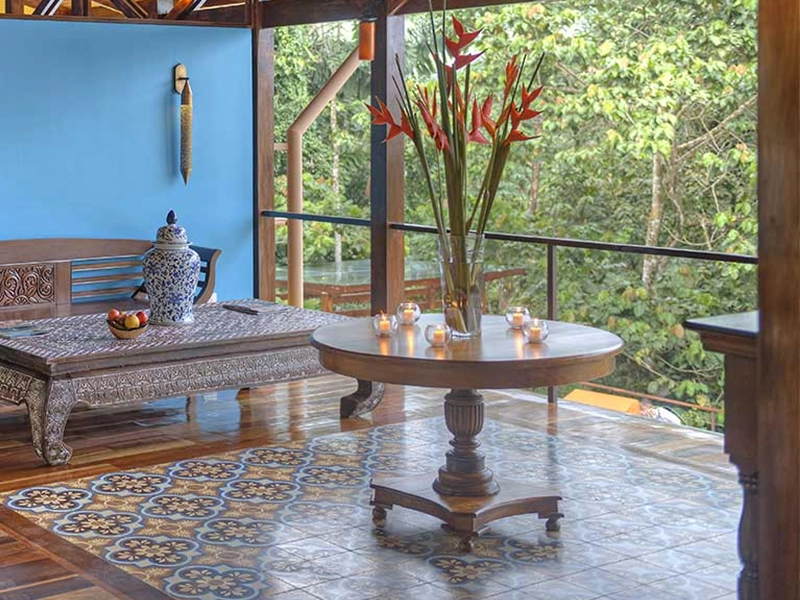
- Lobbies: Large-scale patterns (8×8 or 10×10) read clearly from a distance. Consider a framed border to anchor lounge seating.
- Elevator banks & corridors: Repeat motifs as wayfinding cues.
- Cafés & marketplace areas: Terrazzo-look fields transition seamlessly from lobby to F&B.
- Spa/amenity areas: Subtle Moroccan or Mediterranean patterns signal calm.
Retail & Showrooms
- Merch zones: Pattern “carpets” define product capsules and seasonal tables.
- Checkout: Custom colorways (or logo insets) create a brand moment where transactions happen.
- Fitting rooms: Warm neutrals reduce glare and feel boutique-grade.
Workplace & Co-Working
- Reception: Patterned floors bring hospitality vibes into office design.
- Cafeterias & micro-kitchens: Terrazzo-look or geometric patterns feel energetic yet refined.
- Mothers’ rooms & wellness spaces: Warm, matte neutrals read soothing and inclusive.
Education & Cultural
- Libraries & learning commons: Borders guide circulation; tonal patterns are easy on the eyes.
- Museums & galleries: Cement tiles offer a non-glare, camera-friendly surface for exhibitions.
Healthcare & Wellness
- Reception & waiting: Matte finishes reduce glare; patterned borders help wayfinding.
- Clinics: Mid-tone neutrals look clean without feeling clinical.
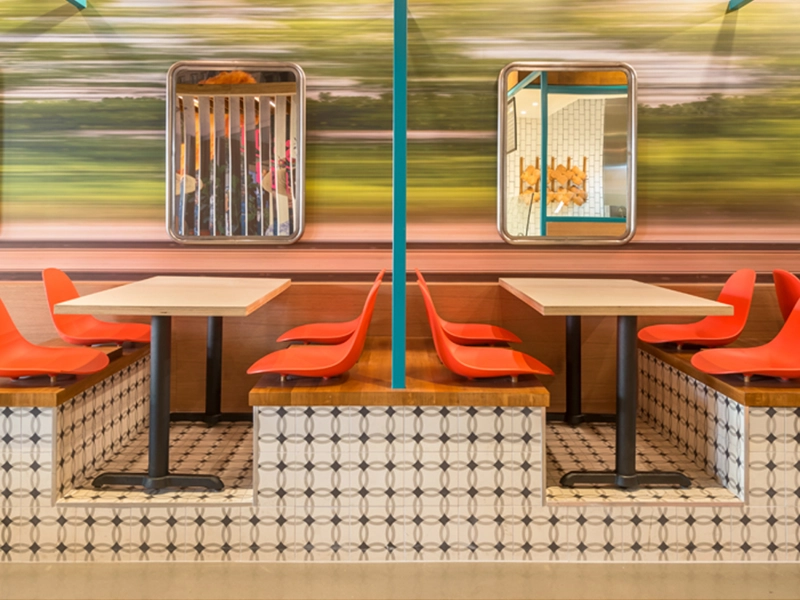
2026 Style Ideas & Trends
Moroccan & Mediterranean (Heritage Made Modern)
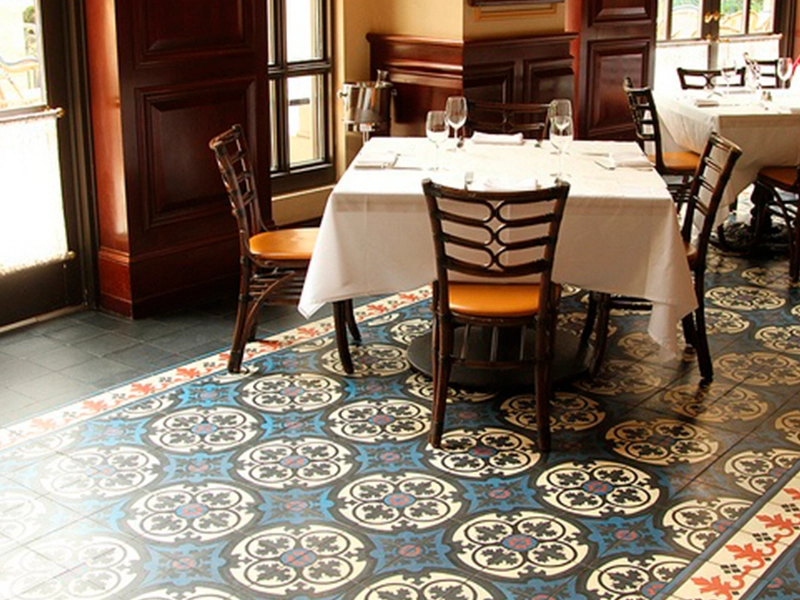
- Look: Star-and-cross, arabesque, and geometric motifs in warm neutrals, indigos, and coastal blues.
- Where: Hotel lobbies, restaurant entries, resort retail.
- Spec tip: Frame a patterned field with a solid border to manage grout alignment and create a “carpeted” effect. Explore motifs in the Gallery.
Contemporary Minimal
- Look: Large checkerboards, stripes, or plain fields in bone, biscuit, and oatmeal.
- Where: Corporate reception, co-working café, luxury retail.
- Spec tip: Use a 1–2 tile border at the perimeter to give simple fields a high-end, tailored finish.
Terrazzo-Look Texture
- Look: Fine speckle in warm or cool neutrals that hide dust and traffic.
- Where: Food halls, hotel marketplaces, corridors.
- Spec tip: Select speckle scale to match viewing distance—coarser for large volumes, finer for intimate rooms.
Vintage & Spanish-Style
- Look: Classic mission patterns, terracotta warmth, compass roses, and decorative borders.
- Where: Heritage renovations, boutique hotels, street-facing cafés.
- Spec tip: Balance a bolder heritage pattern with quiet furnishings to avoid visual competition.
Brand-Centric Custom
- Look: Custom cement tiles in house colors; tone-on-tone logo inserts at entries or counters.
- Where: Flagship retail, hospitality check-in, corporate showrooms.
- Spec tip: Provide vector artwork and brand colors. Start here: Custom Cement Tiles.
Commercial Design Strategies That Drive Results
1) Zone with Pattern (No Walls Required)
Use pattern rugs to define functions—queue lines, seating pods, stage areas. A visual “carpet” naturally directs guests, reducing signage clutter.
2) Scale for Sightlines
Large public spaces demand bold repeats; small zones look thoughtful with tighter patterns or 4×4 checkerboards. Lay out from major axes (entrance, reception desk, bar).
3) Borders = Polish
Two-tile borders around a field anchor furniture groupings and help installers terminate neatly at walls, columns, or transitions.
4) Slip Resistance by System
Cement tile + penetrating sealer + smart cleaning = a balanced, slip-conscious system. Add mats at entries and use cleaners that don’t leave residue.
5) Acoustics & Ambience
Cement tile’s mass and matte surface keep public spaces from feeling “tinny.” Pair with upholstered seating, drapery, and wood ceilings for balanced sound.
Installation & Maintenance (Spec Notes for Longevity)
Substrate & Prep
- Flatness: Meet or exceed industry standards; lippage is more visible with patterned floors.
- Movement joints: Honor structural joints and design soft joints per tile field size.
- Mockups: Create a small on-site mockup for approval of layout, grout, and sealer sheen.
Setting Materials
- Thinset: Use a high-quality thinset approved for cement tile.
- Grout joints: 1/16″–1/8″ typical; consistent joints keep patterns reading true.
- Grout color: Match dominant hues for seamlessness; contrast only if you want the grid to be a graphic element.
Sealing (The Non-Negotiable Step)
- Pre-grout: Apply a penetrating sealer to protect the pigment layer from grout haze and stains.
- Post-grout: Apply a second penetrating coat for full protection.
- Finish: Most commercial specs choose natural-matte; enhancers deepen color if desired.
Cleaning & Maintenance
- Daily: Dust mop and pH-neutral cleaner—avoid acids and harsh degreasers.
- Spills: Prompt wipe-ups protect long-term appearance.
- Reseal cadence: Assess annually; many projects reseal every 12–24 months depending on traffic and cleaners used.
Mistakes to Avoid (and How to Correct Them)
- Skipping the pre-grout sealer: Leads to grout haze staining. Fix: Strip per manufacturer guidance and re-seal properly.
- Not blending boxes: Can create visible banding. Fix: Always pull from multiple cartons during install.
- Acid cleaners: Etch and dull surfaces. Fix: Switch to pH-neutral; consider a light hone and reseal for severe cases.
- Undersized patterns in large spaces: Looks busy. Fix: Choose larger repeats or “tile rug” zoning.
- Ignoring movement joints: Can cause tenting. Fix: Integrate expansion joints per TCNA/ANSI guidelines.
- Over-contrasted grout: Makes the grid louder than the pattern. Fix: Harmonize grout with dominant tile tones.
Room & Zone Ideas (Commercial)
Restaurant Dining
- Floor: Terrazzo-look field with a patterned border that frames tables.
- Bar Zone: Darker tonal checkerboard for mood and spill camouflage.
- Restrooms: Micro-patterns or star motifs for an elevated surprise.
Hotel Lobby
- Entry: Custom logo inset, then expand into a large-scale geometric.
- Lounge: Pattern “carpet” under seating to define areas; repeat motif at concierge desk front. See references in our Gallery.
Retail
- Front-of-house: Quiet, brand-matched field with a stripe pattern leading to feature tables.
- Fitting rooms: Soft warm neutrals that flatter skin tones.
Workspace
- Reception: Bold, modern pattern underfoot; neutral field beyond the desk.
- Café/Breakout: Checkerboard around islands; tonal fields at circulation paths.
Budget & Spec Considerations
- Total cost of ownership: Cement tile’s long life and refinishability reduce replacement costs.
- Lead time: Many patterns/colors can be produced to schedule; custom timelines vary—loop in procurement early.
- Overage: Order 10–15% extra to cover cuts and future repairs.
- Branding ROI: Custom colors/logos reinforce memory and social-share moments; a quantifiable marketing benefit. Start the brief at Custom Cement Tiles.
How to Ensure a Flawless Outcome
- Gather inspiration and decide on zoning (fields, borders, rugs)—pull images from the Gallery.
- Order samples and test under project lighting.
- Select grout & sealer (create a sample board).
- Grid the room from major axes; mock up a panel for approval.
- Blend boxes during install; hold alignment at key sightlines.
- Seal before and after grouting; document your maintenance plan.
- Train staff on pH-neutral cleaning and reseal cadence.
- Coordinate logistics early—quantities, trims, borders, overage, and freight—by starting a spec conversation here: Contact Us.
Why Original Mission Tile
- Heritage craft, commercial performance: Handmade artistry with hospitality-grade durability.
- Custom at scale: Colors, patterns, formats, and custom logo tiles for branded environments.
- Trade-friendly support: Takeoffs, samples, spec help, and consistent QC from a team that works daily with architects, designers, and builders.
Commercial Spec Edition
1) Are cement tiles durable enough for high-traffic commercial floors?
Yes—when properly installed and sealed, cement tiles handle heavy foot traffic, rolling carts, and daily cleaning. Their dense body and thickness make them ideal for hospitality and retail.
2) Do cement tiles require special maintenance?
Use pH-neutral cleaners (no acids), place mats at entries, and plan periodic resealing (often every 12–24 months depending on traffic). This routine keeps color rich and surfaces protected.
3) Are cement tiles slippery?
With penetrating sealers (not topical gloss coatings) and appropriate maintenance, cement tile floors balance cleanability and traction. Add mats at wet zones and entries to further reduce slip risk.
4) Can I get custom brand colors or a logo in the floor?
Absolutely. Provide vector artwork and color references; we’ll translate them into molds and pigment mixes for custom cement tiles and logo insets. Start the brief on the Custom Cement Tiles page.
5) How do cement tiles compare with porcelain for commercial floors?
Porcelain offers excellent wear but often lacks the handmade depth and refinishable surface of cement. Cement tiles deliver a premium, artisanal look with robust performance and brand-level customization.
6) What size works best for lobby or dining rooms?
8×8 patterns read clearly in large spaces. Add 1–2 tile borders to frame seating or circulation. For intimate zones, 4×4 checkerboards or tighter repeats are perfect.
7) Will color variation be a problem on big floors?
Variation is inherent to handmade tiles—and part of their charm. Blend cartons during install, review a mockup, and choose grout tones that harmonize. Borders help manage large fields visually.
8) How much overage should I order?
Plan 10–15% to cover cuts, layout adjustments, and future repairs—especially on custom runs and patterned layouts.
9) Can cement tiles be used with radiant heat?
In many cases, yes. Follow the radiant system guidelines and tile industry practices for subfloor prep, thinset, and expansion joints.
10) What’s the best grout color for patterned floors?
Match a dominant tile tone for a seamless read. Use contrasting grout only if you want the grid to become part of the visual story.
From Concept to Grand Opening: Your Project Plan
- Design consult: Share floor plans, traffic zones, brand palette.
- Samples & mockup: Approve colorway, pattern scale, and sealer sheen.
- Takeoff & quote: We calculate quantities, trims, borders, and overage.
- Production & logistics: Align manufacturing and freight with milestones.
- Installer briefing: Layout keys, movement joints, sealer schedule, cleaning protocol.
- Turnover package: Maintenance guide and reseal cadence for facilities.

If your brief calls for commercial floor tiles that make a statement on day one and age gracefully year after year, cement tiles are the strategic choice. They bring artisanal depth, brand-level customization, and robust performance to the places where people live, shop, dine, and gather—exactly what modern hospitality and retail environments demand.