
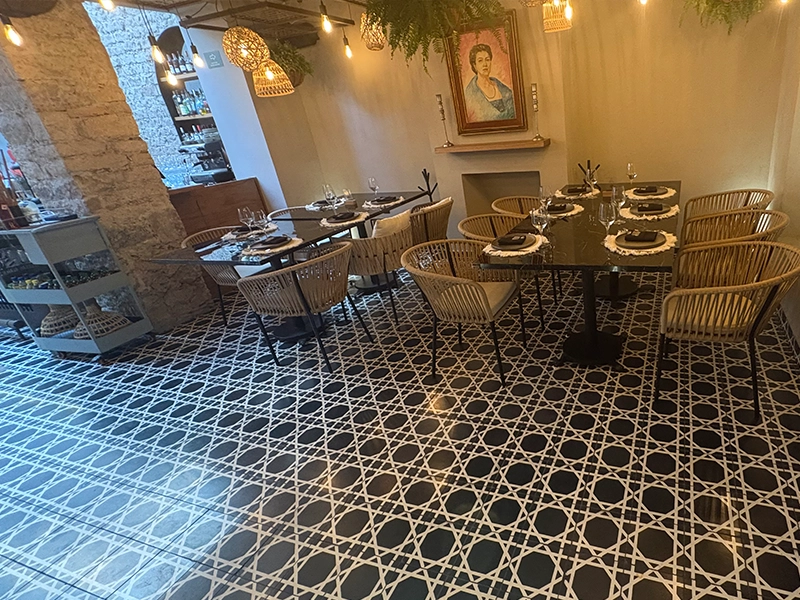
What if your floors, walls, and bar face could do more than “look good”—what if they became your most persuasive marketing asset? That’s the power of custom cement tiles in hospitality design. In restaurants, bars, boutique hotels, and branded venues, tile is both surface and storytelling. With the right pattern, palette, and layout, your space photographs beautifully, stands up to foot traffic, and communicates your brand before guests even read a menu.
This deep-dive gives hospitality teams, architects, interior designers, and builders a complete playbook—benefits, commercial applications, style directions, installation basics, mistakes to avoid, and FAQs—so you can specify custom cement tiles with confidence, on brand, and on schedule.
Why Custom Cement Tiles Win in Hospitality
Benefits of Cement Tiles (what your guests actually feel)
- Durability with depth. Cement tiles have a thick, mineral-pigmented wear layer—color lives inside the tile, not just on top—so your patterns remain vibrant across years of traffic.
- Handmade character. Pressed and finished by hand, every tile carries subtle tonal movement and a velvety matte finish that elevates lighting and photography.
- Sustainability story. Unlike kiln-fired products, cement tiles cure at ambient temperatures. The long lifecycle and repairability support “build once, enjoy for decades.”
- Style versatility. From classic Mediterranean florals to crisp modern geometry, you can recolor, resize, border, and even brand patterns with custom logo tiles.
Pro Tip: Think of patterned floors as “built-in wayfinding.” Borders guide circulation; framed “rugs” organize host stands, seating zones, and retail displays without adding walls.

Hospitality Applications
Restaurants & Bars
Front-of-House Floors
Choose medium-contrast patterns to disguise crumbs and scuffs while keeping the motif legible. A framed “rug” under the dining zone delivers a couture look and natural zoning.
Bar Faces & Host Stands
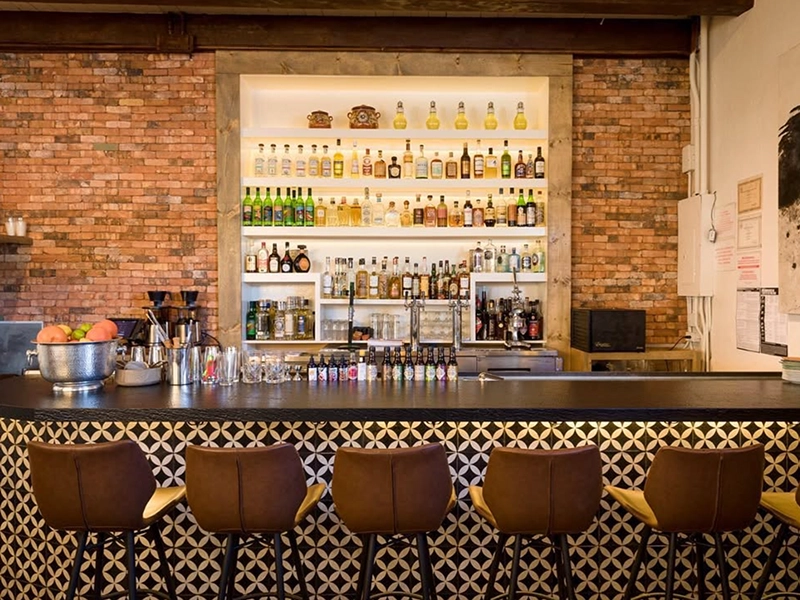
Vertical pattern fields are social-media magnets. Use a recolored motif from the floor on the bar face to create a cohesive, brand-forward vignette.
Restrooms (Small Space, Big Impact)
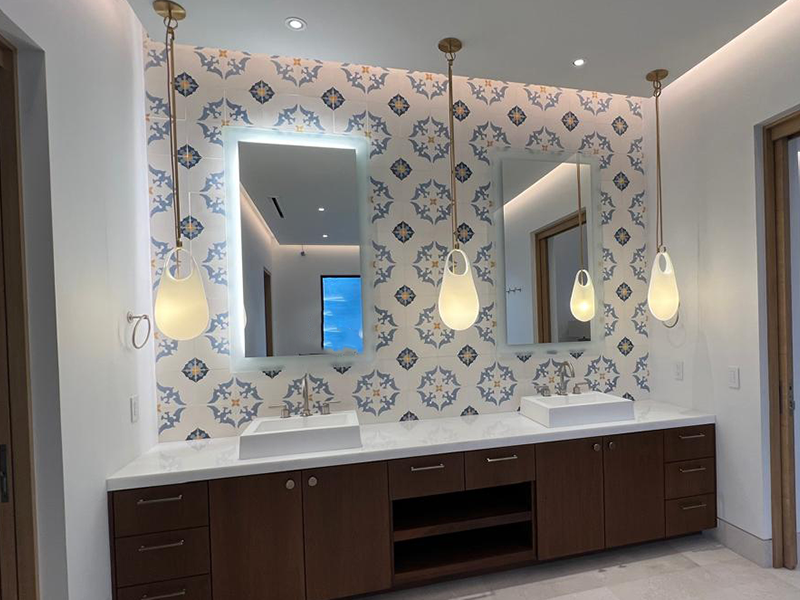
Powder rooms and restrooms are the most “Instagrammed” back-of-house spaces. Bold patterns + great lighting = memorable brand moments.
Outdoor Patios & Entries
Covered terraces, vestibules, and porticos love cement’s matte texture and mineral color. Use terracotta, clay, and charcoal palettes to handle sun exposure gracefully. (Follow sealer guidance and local climate best practice.)
Hotels & Hospitality
Lobbies & Reception
Border-and-field layouts echo heritage hotels while staying fresh with modern palettes. Pair with brass liners to sharpen edges and transitions.
Corridors & Elevator Lobbies
Repeating geometry creates rhythm, subtly regulates pace, and frames door thresholds. Consider a calm motif with a slightly darker border to define the path.
Guest Baths & Spa Areas
Cement on bathroom floors and shower walls (sealed properly) brings spa-like tactility. For shower floors, many specifiers prefer coordinating mosaics (often porcelain) for extra traction and drainage while keeping the cement look on walls and dry zones.
Retail & Multiuse Hospitality
Point-of-Sale & Display Plinths
Pattern draws attention to product and increases dwell time. Recolor the motif to align with seasonal campaigns or brand palettes.
Cafés Inside Hotels & Co-working
A single pattern scaled differently for floor, bar front, and back bar niche can tie multiuse areas together without visual noise.
Style Ideas & Trends That Translate to Hospitality
Moroccan & Mediterranean Classics
Stars, crosses, interlaced geometry, and floral curvilinears are endlessly adaptable. Modernize with clay, bone, sage, and charcoal; or lean coastal with indigo and chalky white.
Modern Graphic
Scaled-up chevrons, diagonals, and checkerboards read editorial and contemporary. Use low to mid contrast for sophisticated dining rooms and lounges.
Vintage Revival
Recolor historic motifs with updated tones (tobacco, olive, stone). Works beautifully for speakeasy bars and boutique hotel corridors.
Terrazzo & Terracotta Pairings
Let a terrazzo tile or terracotta tile handle perimeters and quiet zones while the cement “rug” commands the center stage. Brass or stone thresholds make the transition intentional.
Design Move to Steal: Frame patterned fields with a slim brass liner. It adds luxury, clarifies layout geometry, and protects edges at transitions.
The Custom Process (From Idea to Installed)
- Brand & Program Brief
Share mood, palette, guest profiles, operating hours/traffic level, and target photography angles. - Select/Design a Motif
Start from our pattern library or submit a sketch/brand assets for a new design. - Color Proofs
We recolor with mineral pigments to match your brand swatches, paint chips, or Pantone references. - Physical Samples
Approve in final lighting onsite. Review pattern scale, contrast, and grout tone together. - Production
Our artisans press and cure tiles—handmade cement tiles that align with your approved sample. - Logistics & Freight
We coordinate crating, lead times, and delivery windows to align with your install schedule. - Installation Support
We provide best-practice guidance for substrate prep, sealing, and grout to keep your patterns crisp.
→ Explore ideas in our Gallery and start a Custom Cement Tiles request when you’re ready. Need it faster? Check Cement Tiles In Stock.
Layout Strategies That Always Work in Hospitality
- Border + Field (Classic Lobby)
A timeless hotel look—especially effective in double-height spaces and corridors. - Patterned Rug (Dining & Lounge)
Frame a seating cluster; coordinate the bar face in the same motif. - Diagonal Checkerboard (Bars & Speakeasies)
Adds movement and drama; diagonal layouts visually broaden rooms. - Two-Tone Field + Accent Stripe (Retail)
Subtle, architectural, and budget-savvy. - Stair Risers + Landings (Boutique Hotels)
Micro-billboards for brand pattern—memorable and photogenic.
Commercial Specs: What to Plan Up Front
- Slip Resistance & Finish
Cement’s matte texture is naturally walkable. Your sealer choice, maintenance plan, and cleaning protocol will shape in-service slip characteristics. Define objectives early for public and wet areas. - Sealer Strategy
Hospitality = consistent protection. Seal before grouting to prevent haze, after grout cure to lock in, then refresh on a defined cycle based on traffic (front entry and host stand areas more frequently). - Grout Tone
Mid-tone or color-matched grout keeps motifs crisp without outlining every joint. Test on a spare tile. - Transitions & Thresholds
Brass, stone, or wood reducers—detail these in drawings up front. Elegant edges reduce chips and clarify circulation. - Maintenance Plan
pH-neutral cleaners only. Train staff and place entry mats to capture grit. Schedule sealer refreshes as part of regular maintenance.
Installation & Maintenance: The Quick-Start Checklist
Before You Set
- Confirm a flat, clean substrate; coordinate heights at transitions.
- Dry-lay and blend from multiple boxes to distribute natural handmade variation.
- Confirm centerlines and cut locations (especially at bars, thresholds, and casework).
Setting & Grouting
- Use a quality polymer-modified thinset suited to your substrate.
- Maintain consistent joints (often 1/16″–1/8″).
- Seal before grouting to avoid staining and haze.
- After grout cures, apply final sealer per manufacturer guidance.
Care
- pH-neutral cleaner, microfiber mops, and soft pads under furniture.
- Refresh sealer on a cadence matched to traffic (FOH entries/bars > back dining).
Mistakes to Avoid (and the Better Moves)
- Skipping the pre-grout seal → leads to haze and stains.
Better: Always seal before grout; then seal again after cure. - High-contrast grout → breaks the pattern into a grid.
Better: Test mid-tone or color-matched grout that preserves the motif. - Under-ordering → pattern discontinuity and emergency reorders.
Better: Add +12–20% overage for hospitality (borders, diagonals, stair risers, tight cuts). - Treating cement like porcelain → mismatched expectations.
Better: Educate stakeholders on handmade nuance and mineral color depth. That’s the point—and the charm. - Ignoring lighting → colors read differently at night.
Better: Approve samples under final LEDs and daylight conditions. - Undefined maintenance → dulling over time.
Better: Put pH-neutral cleaners and sealer refresh schedules into SOPs, just like glassware polishing or espresso machine care.
Budget & Value Engineering Without Losing the Look
- Concentrate pattern where it matters most—entry, bar, host, restrooms—use solids in the periphery.
- Recolor an existing motif instead of creating an entirely new pattern to reduce development time.
- Scale wisely—larger repeats in large rooms (fewer lines, calmer read); smaller motifs in compact restrooms (more detail per square foot).
- Plan trims early—liners, thresholds, and reducers belong in the first quote, not a change order.
Project Playbooks (Room-by-Room Hospitality Examples)
Restaurant Dining Room (All-Day Café)
- Floor: Mid-contrast Moroccan star in clay/cream for crumb forgiveness.
- Border: Slim brass liner + solid charcoal edge.
- Bar Face: Recolored star motif (tone-deeper) for continuity.
- Result: Photogenic, warm, easy to maintain.
Cocktail Bar (Speakeasy)
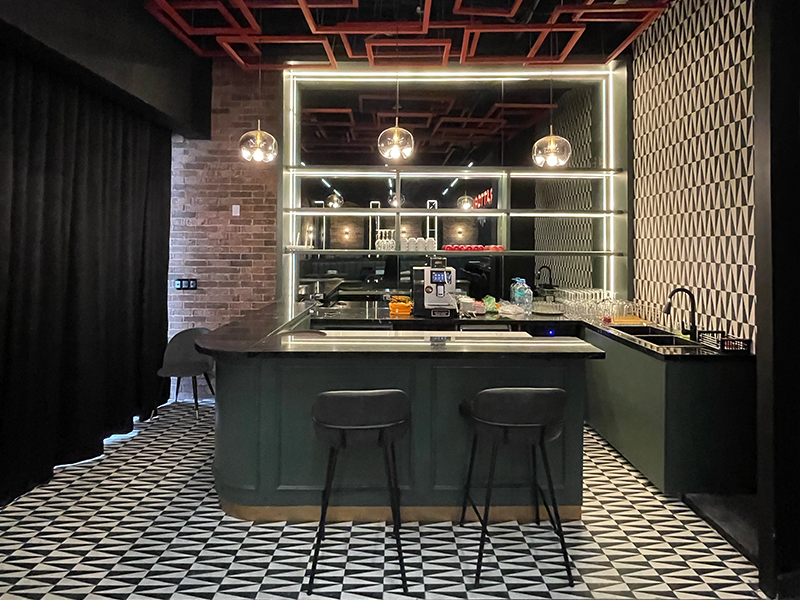
- Floor: Diagonal checkerboard (bone/charcoal), low sheen.
- Bar Die & Niche: Graphic pattern in a single accent color from the floor.
- Result: Editorial impact with simplified maintenance.
Boutique Hotel Lobby
- Field: Spanish-style floral in tonal greige;
- Frame: Wide border with corner blocks (Greek key or rope).
- Elevator Lobby: Same motif scaled down to reinforce the story.
- Result: Heritage nod with modern palette.
Rooftop Lounge (Covered)
- Floor: Terracotta-and-chalk pattern;
- Thresholds: Brass at interior transition.
- Result: Sun-friendly, highly shareable views.
How to Start (Today)
- Browse the Gallery for pattern and layout ideas.
- Kick off a brief in Custom Cement Tiles—share brand colors, mood, and program needs.
- On a deadline? Check Cement Tiles In Stock and plan a recolor or accent zone later.
- Ready to specify? Contact Us for samples, technical guidance, and a coordinated freight plan.
FAQs
1) Are custom cement tiles durable enough for restaurants and hotel lobbies?
Yes—when sealed and maintained correctly. The mineral-pigmented wear layer stands up beautifully to hospitality traffic, and the matte finish photographs well.
2) Do cement tiles need sealing in commercial spaces?
Absolutely. Seal before grout and again after grout cure. Establish a maintenance schedule (front entries and bar zones more frequently) for consistent protection and slip objectives.
3) Can I put cement tile in restrooms and shower rooms?
Yes for restroom floors and walls. For shower floors, many designers opt for mosaics (often porcelain) for additional traction while coordinating color with cement walls or dry zones.
4) How do custom colors work?
Provide paint or Pantone references. We produce color proofs and a physical sample so you can approve under final lighting before production.
5) What grout color is best with patterned cement tiles?
Mid-tone or color-matched grout usually preserves motif clarity. Always test on a spare tile after a pre-grout seal.
6) How much extra tile should I order for hospitality projects?
Plan +12–20% overage for borders, diagonals, tight cuts, and contingencies typical in commercial spaces.
7) What’s the lead time for custom cement tiles?
Timing depends on design development, sample approval, and production queue. Engage early—samples first, then schedule production and freight alongside your construction milestones.
8) Can you make custom logo tiles for branding at entrances or host stands?
Yes. We can embed brand icons and wordmarks into the pattern field or produce a dedicated logo medallion for thresholds and lobbies.
9) How do I maintain cement tiles in a busy restaurant?
Use pH-neutral cleaners, microfiber mops, and entry mats. Refresh sealer on a cadence aligned with traffic. Avoid acids, bleach, and harsh abrasives.
10) What’s the difference between cement tile vs ceramic tile for commercial floors?
Cement offers deep, mineral color and a handcrafted matte finish—great for FOH floors and brand storytelling. Ceramic (glazed) shines for walls and specialty mosaics where high-gloss or printed looks are preferred. Many successful projects mix both.
Micro-Checklist for Your Next RFP/Spec
- Pattern + border decision with mockups
- Approved colorway under final lighting
- Sealer system defined (pre-grout, post-grout, maintenance)
- Grout color tested on sealed sample
- Thresholds/liners detailed and budgeted
- Freight window aligned with installation schedule
- Overages included (12–20%)
- Cleaning & sealer refresh SOP documented for staff
Make Your Surfaces Work as Hard as Your Staff
Your space isn’t just a container for service; it’s a stage. Custom cement tiles give you the control to tell a richer story—through geometry, color, and craft—while delivering the durability and maintenance clarity hospitality demands. Frame the floor, brand the threshold, light it well, and seal it right. Guests will feel the difference, and your brand will live in their photos long after the check is paid.
See Trend Tiles in our Gallery • Order Samples • Talk to a Tile Specialist • Browse Cement Tiles In Stock