How Original Mission Tile Reproduces Any Vintage Tile Pattern (Without Losing the Soul of the Original)
Vintage tile has a way of stopping people mid-step.
It might be the faded “tile rug” in a 1920s entryway, a Spanish-style courtyard where the geometry still feels romantic, or a boutique hotel corridor where the floor quietly defines the brand. And if you’re renovating, restoring, or expanding that space, you already know the real challenge isn’t choosing a new tile—it’s finding the same tile.
Because vintage patterns aren’t just decoration. They’re architecture. They control rhythm, proportion, and mood. Replace them with “close enough,” and the room can lose its identity overnight.
That’s why custom tile reproduction has become a go-to solution for tile showrooms, interior designers, architects, contractors, builders, and homeowners who want a finish that feels historically correct—but performs like a modern surface. In this guide, you’ll learn how Original Mission Tile approaches reproduction with handmade cement tiles, how to plan your project from pattern capture to installation, and how to avoid the most common pitfalls that make reproduction work look “almost right” instead of seamless.
If you already have photos or a fragment of the original tile, the best starting point is to review Original Mission Tile’s custom tile manufacturing options and the cement tile design studio to understand what’s possible before you finalize your palette and layout.
What “Custom Tile Reproduction” Really Means (and Why It Matters)
Custom tile reproduction is the process of recreating an existing tile pattern—often historic, vintage, or discontinued—so it can be installed as a match, a repair, or an extension of an original surface.
Reproduction usually falls into one of three outcomes:
Exact-match restoration
This is ideal when:
- you’re repairing a historic floor and need the new tiles to disappear into the old
- a heritage detail must remain visually consistent
- the pattern is a defining feature of the property
In these projects, success depends on precision in size, repeat, and color control—and on understanding that aged tiles often look different than they did when first installed.
Heritage-correct recreation
This approach is common when:
- the original tile has heavy wear, patchy repairs, or inconsistent patina
- you want the authentic vintage feel, but with cleaner visual continuity
- the project needs modern durability and simplified maintenance
Instead of matching the current look tile-for-tile, the project matches the pattern language and color intent—so the finished space feels correct and cohesive.
Vintage-inspired redesign (the strategic upgrade)
This is the most commercially powerful route for many new builds and hospitality projects. It’s best when:
- you love the historic motif but want an updated palette
- you’re building a new home, restaurant, or boutique hotel that needs character
- you want a signature floor that becomes part of your brand identity
These projects often use the same tools as reproduction (pattern engineering, palette building, sampling), but the goal is a “new vintage” result that feels timeless rather than copied.
Why Cement Tiles Are the Best Medium for Vintage Pattern Reproduction
Many iconic vintage patterned floors were made using cement-based techniques or encaustic-style methods, which is why encaustic cement tiles are such a natural match for reproduction.
Benefits of Cement Tiles (especially for reproduction work)
Durability for real-life spaces
When specified correctly and sealed appropriately, cement tiles can handle daily traffic in entryways, kitchens, corridors, and hospitality environments. This is why cement is frequently specified for commercial floor tiles in high-traffic applications—especially when the pattern itself is part of the design story.
Handmade character that belongs in historic architecture
Vintage spaces rarely look sterile or ultra-uniform. Handmade cement tiles have subtle tone variation and depth that reads authentic next to plaster walls, old wood, antique stone, and architectural details that aren’t perfectly straight.
Sustainability and long-life value
Designers and builders are leaning toward finishes that last, age gracefully, and reduce replacement cycles. Cement tiles support that mindset when paired with proper sealing and a clear care plan.
Style versatility across eras and aesthetics
Cement tiles can reproduce patterns that feel:
- Old-world and ornate
- Crisp and geometric
- Bold and Moroccan-inspired
- Mediterranean and sun-washed
- Spanish-style and courtyard-ready
- Modern and minimal
- Vintage and patina-friendly
True customization (pattern + color control)
Reproduction isn’t just “finding something similar.” It often requires choosing the correct scale, adjusting line thickness, refining borders, and matching color to a specific lighting environment. That’s the advantage of custom cement tiles—you can engineer the tile to fit the room (not the other way around).
For color planning, Original Mission Tile’s cement tile color palette is one of the most useful references for building reproduction-ready combinations that feel vintage but intentional.
How Original Mission Tile Reproduces Any Vintage Tile Pattern (Step-by-Step)
Reproduction is part design, part detective work, and part craft. Here’s how successful custom tile reproduction projects are typically structured—so the final installation reads seamless and “original.”
Step 1: Pattern capture (tile, fragment, or photos)
A vintage reproduction can start from:
- one loose tile
- a broken fragment
- a floor section that still shows the repeat
- photographs (sometimes the only surviving record)
To get the best outcome, capture these details early:
- tile size and scale (the most common reason reproductions feel “off”)
- repeat logic (how the pattern continues across tiles)
- line weight (thin vs bold geometry)
- border behavior (if the original floor was framed like a rug)
If you’re working from photos, include:
- at least one straight-on image (minimal distortion)
- one wide photo showing multiple repeats
- one close-up under natural light
- a measurement reference (a tape measure is ideal)
Step 2: Identify the style “family” (so it feels authentic)
Vintage patterns often belong to recognizable style families. Naming the family helps guide decisions on color relationships, line thickness, and layout conventions.
Common families include:
- Moroccan tiles: star patterns, lattice geometry, complex repeats
- Mediterranean tiles: relaxed contrast, coastal palettes, soft repetition
- Spanish-style tiles: courtyard motifs, floral-medallion blends, warm tones
- European encaustic heritage: borders, corner tiles, framed fields
- Art Deco geometry: bold symmetry, clean arcs, strong contrast
- Early American revival: classic black-and-white, simple stars, florals
If your project leans toward a hospitality setting (restaurants, hotels, high-traffic commercial), your reproduction may also double as branding—especially for hotel lobby tiles and dramatic entry moments.
Step 3: Color matching (the hardest part of reproduction)
Color matching is where most vintage projects succeed or fail, because the “color” you see on a historic floor is not always the original color.
Tiles change over time due to:
- sealers and waxes
- UV exposure
- cleaning products
- embedded dirt and micro-scratches
- patina and wear patterns
A strong reproduction plan separates:
- the intended palette (what the tile was meant to be)
from - the aged effect (what decades of life created)
This is where it helps to build your project palette using the cement tile color palette—so you’re matching with controlled, repeatable color choices rather than chasing unpredictable patina.
Step 4: Pattern engineering (make it installable)
Reproduction isn’t just “drawing the pattern.” It’s translating a vintage motif into a buildable tile system that installs cleanly in real rooms.
A strong proof phase considers:
- grout joint width (and how it affects alignment)
- room dimensions (where cuts land)
- border and corner logic (so framing doesn’t break awkwardly)
- transitions (doorways, thresholds, stair landings)
- focal points (entry rugs, medallions, reception zones)
If you’re exploring pattern options or refining a motif, the cement tile design studio is a practical way to visualize the direction before you lock the final design.
Step 5: Sampling (the insurance policy for vintage projects)
Sampling prevents costly surprises.
Test these items with samples:
- the pattern scale in your room (especially important for large lobbies)
- color accuracy under your exact lighting (day and night)
- sealer impact (some sealers deepen color)
- grout color choice (matching vs contrasting changes the whole look)
If you need quick pattern reference or want to compare a vintage vibe against current options, browse in-stock cement tiles to evaluate scale, tone, and surface feel before final production.
Step 6: Production (handmade consistency across the run)
Once pattern and palette are approved, the goal is consistent production across the full quantity—while preserving the artisan quality that makes cement tile feel authentic.
This is especially important for:
- large floors
- multi-room continuity
- commercial spaces where pattern alignment is highly visible
Step 7: Layout planning (how vintage floors look “right”)
Many vintage floors follow classic layout rules:
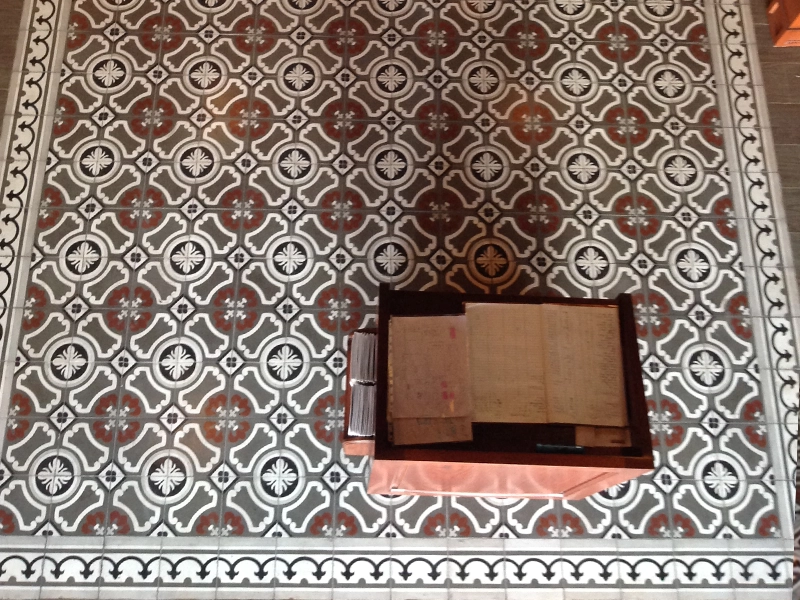
- framed “tile rug” fields with a border
- center medallions aligned to doors or chandeliers
- directional patterns guiding traffic
- perimeter bands stabilizing the composition
A reproduction can be perfect—and still look wrong—if the layout is improvised on-site. Plan your layout before installation begins, especially for entryways, corridors, and hospitality spaces.

Applications by Room: Where Vintage Tile Reproduction Works Best
Reproduction isn’t limited to one surface. With smart planning, you can create a cohesive story across the entire home—or across a commercial venue.
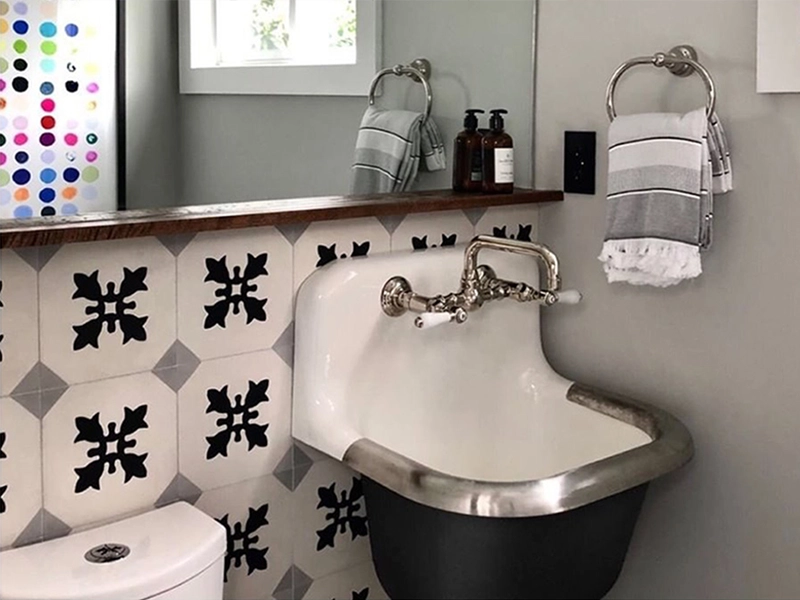
Bathrooms (classic charm with boutique energy)
Bathrooms are ideal for reproduction because small square footage creates high impact. Cement tiles work beautifully as bathroom tiles for:
- floors (especially framed “rugs”)
- vanity walls
- half-height wainscot
- niche backdrops
A winning strategy is to keep one surface patterned (floor or feature wall) and let the other surfaces stay quiet to preserve a premium, design-savvy feel.
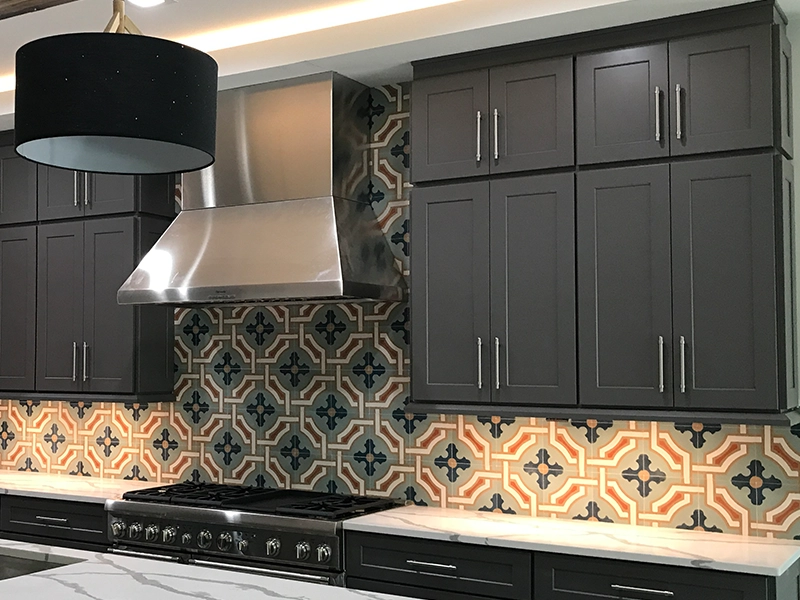
Kitchens (floors + kitchen backsplash moments)
Kitchens love pattern because cabinetry and counters are visually solid. A vintage pattern balances those solids with movement.
Reproduction-friendly kitchen ideas:
- a vintage runner layout between island and sink
- a framed breakfast nook floor
- kitchen backsplash tiles that echo the floor motif in a simplified palette
Showers (walls that look custom, not mass-produced)
Cement can be specified as shower wall tiles when waterproofing, sealing, and maintenance expectations are planned properly.
For shower planning, read the cement tile installation guidelines early so your installer treats cement differently than ceramic. Then align maintenance expectations using the cement tile maintenance guide so the finish stays consistent long-term.
Entryways (the classic vintage “tile rug”)
Entryways are where vintage pattern feels most authentic.
Entryway best practices:
- frame the field with a border (so it reads intentional)
- use mid-tone contrast to hide grit
- plan transitions to adjacent flooring
- seal appropriately for real traffic
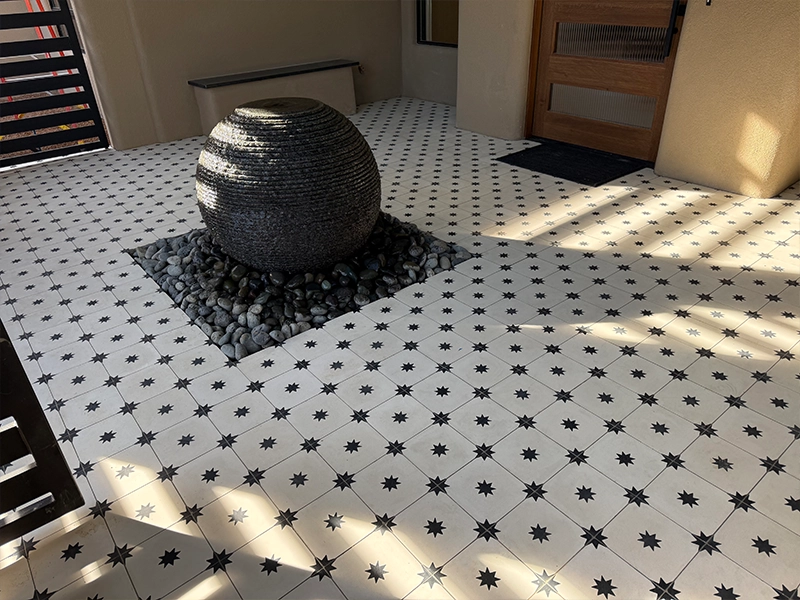
Patios and courtyards (heritage character outdoors)
Spanish-style and Mediterranean motifs are natural outdoors, especially in:
- courtyards
- covered patios
- outdoor dining zones
If your project includes exterior surfaces, plan materials and maintenance thoughtfully. For inspiration and best-practice guidance, review Original Mission Tile’s outdoor-focused content (for example, patio and exterior applications) and confirm the installation method with your installer.
Commercial spaces (restaurants, hotels, and high-traffic venues)
Reproduction has become a commercial design tool because it creates identity with heritage credibility.
Common commercial applications include:
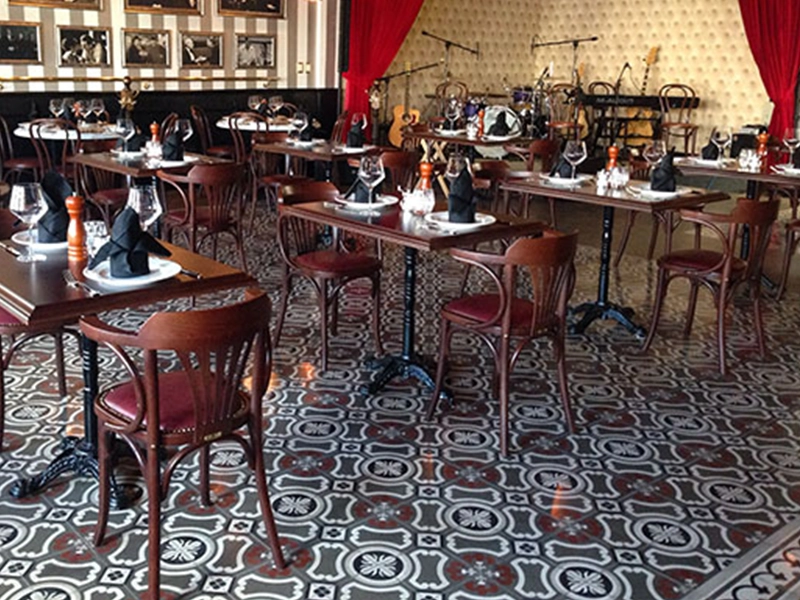
- restaurant tile design for dining rooms, bars, entry thresholds
- boutique hotel corridors
- reception and lounge moments with statement floors
- hotel lobby tiles designed to become a signature “photo spot”
In hospitality, the floor is marketing. A reproduced vintage pattern can become a brand asset that appears in photos, press, and social media—while still functioning as a hard-working surface.
Style Ideas & Trends: Vintage Reproduction That Feels Timeless (Not Themed)
A great reproduction doesn’t feel like a costume. It feels like it belongs.
Moroccan tiles: bold geometry and global character
Moroccan-inspired patterns are ideal for:
- statement entries
- restaurants and cafés
- boutique hotel corridors
- bold bathroom floors
They work especially well when you balance them with quieter finishes (plaster, wood, matte metals) so the pattern reads curated, not busy.
Mediterranean tiles: relaxed luxury with sun-washed palettes
Mediterranean looks often rely on:
- warm neutrals
- soft blues/greens
- gentle contrast
- natural textures (oak, plaster, linen)
In reproduction, Mediterranean palettes often look best when they’re slightly muted rather than overly saturated—so they feel long-established.
Spanish-style tiles: courtyard romance and heritage warmth
Spanish-style motifs pair beautifully with:
- terracotta-adjacent tones
- warm whites and creams
- ironwork, arches, and carved wood
- natural stone thresholds
For Spanish-style reproduction, borders and framed layouts are often the detail that makes the floor feel “authentic.”
Modern + vintage: heritage-meets-gallery
One of the strongest current approaches is placing a vintage pattern inside a contemporary shell:
- clean cabinetry + historic floor
- minimal furniture + patterned entry rug
- quiet plaster walls + bold geometric repeat
This is how you get a space that feels timeless rather than themed.
Where terrazzo tile and terracotta tiles fit in
Even when you’re reproducing cement patterns, many projects include adjacent finishes like terrazzo tile or terracotta tiles to create texture layering.
A strategic composition:
- use patterned cement tiles as the hero surface
- use terrazzo or terracotta looks in secondary zones to preserve warmth without adding more pattern
Commercial Design: Custom Tile Reproduction as a Brand Tool
For commercial projects, reproduction is not only restoration—it’s brand strategy.
Restaurants: pattern becomes atmosphere
In restaurant tile design, the floor sets the tone:
- warm vintage motifs = intimate, curated energy
- bold geometry = modern statement
- framed “tile rug” layouts = premium destination feel
Restaurants also benefit from patterns that hide traffic wear more gracefully than flat, uniform surfaces.
Hotels: lobbies that become marketing
In boutique hospitality, hotel lobby tiles shape the first impression and the photo identity of the property.
A reproduced vintage lobby pattern can:
- define zones without walls
- create wayfinding naturally
- become a signature asset in guest content
Custom logo tiles: subtle branding without signage
For hospitality and retail, custom logo tiles can be integrated in ways that feel elevated:
- entry medallion
- border monogram
- “seal” tile near reception or bar threshold
If your project includes a branded tile moment, start with the overview of custom tile options and then move into visualization using the design studio.
Cement Tile vs Ceramic Tile: What’s Best for Reproduction Projects?
This comes up constantly in vintage restoration and remodel planning.
Cement tile strengths (for reproduction)
Cement is often preferred when you want:
- authentic pigment depth (not printed)
- handmade texture compatible with vintage architecture
- true customization and reproduction flexibility
- strong pattern presence
Ceramic/porcelain strengths
Ceramic/porcelain is often chosen when you want:
- extremely low absorption (especially porcelain)
- simplified cleaning expectations
- broad availability of finishes
Many premium projects combine both:
- cement tiles where identity matters (entries, powder rooms, statement floors, lobby moments)
- ceramic/porcelain where wipeability or ultra-wet performance is prioritized
For a deeper comparison that many clients find useful during specification, reference the brand’s guide on cement tiles vs ceramic tiles.
Installation & Maintenance: How to Protect a Reproduction So It Ages Beautifully
A reproduction project doesn’t end when the tiles arrive. It ends after installation and after the first year of real cleaning.
Installation basics (cement is not ceramic)
Cement tiles require correct substrate prep, careful handling, and a sealing strategy. The most important first step is aligning your installer with cement-specific guidance before the job begins. Start with the cement tile installation guidelines.
Key installation principles that protect the final look:
- stable, flat substrate (reduces lippage and cracking risk)
- correct setting materials and curing time
- careful layout and dry-fitting for borders and focal points
- blending tiles from multiple boxes during installation
Sealing: plan it from day one
Cement tiles are porous and should be sealed for stain resistance and easier cleaning. Sealing is not optional in reproduction work—especially in kitchens, entries, bathrooms, and commercial floors.
Align sealing and care with the long-term housekeeping plan using the cement tile maintenance guide.
Cleaning: simple routines beat harsh chemicals
Most cement tile care plans favor:
- frequent sweeping/vacuuming (grit control)
- microfiber mops
- pH-neutral cleaners
- quick spill clean-up
The biggest performance upgrades often come from consistency—daily grit control prevents micro-abrasion that can dull the surface over time.
Mistakes to Avoid in Custom Tile Reproduction Projects
Most reproduction failures are predictable. Avoid these, and you protect both the design and the budget.
Mistake 1: Matching patina instead of original intent
If you try to match decades of wear exactly, the “match” may look off after cleaning or resealing. Decide early whether you’re matching:
- the original palette intent
or - the current aged look
A controlled palette reference like the cement tile color palette helps prevent endless guessing.
Mistake 2: Skipping sampling (or sampling under the wrong lighting)
Lighting changes everything. Always view samples in the actual space during:
- daylight
- evening lighting
- the exact lighting temperature the project will use long-term
Mistake 3: Not blending tiles during installation
With handmade material, blending is how you create a balanced field. Installing box-by-box can create visible patchiness.
Mistake 4: Sealing errors
Two common issues:
- skipping pre-seal before grout (risking haze and staining)
- applying sealer inconsistently or leaving residue (shifting sheen and color)
If the team is new to cement tiles, sharing the installation guidelines before day one prevents most sealing-related issues.
Mistake 5: Treating cement tiles like ceramic tiles
Cement tile care is different than ceramic care. Harsh cleaners that might be common for ceramic can degrade sealers and change appearance. Align expectations using the maintenance guide.
Mistake 6: Improvising layout without a plan
Borders, corners, and focal points are what make vintage floors feel “original.” Plan them early—especially for entry rugs, restaurant thresholds, and hotel lobby compositions.
FAQs: Custom Tile Reproduction
1) What is custom tile reproduction?
Custom tile reproduction is recreating an existing tile pattern—often vintage or discontinued—so you can restore, repair, or extend a historic surface with a faithful match or a heritage-correct update.
2) Can you reproduce a vintage tile pattern from a photo?
Often, yes—especially when photos are straight-on, show multiple repeats, and include a measurement reference. A physical tile or fragment increases accuracy, but photos can still be a strong starting point.
3) Are encaustic cement tiles the best option for reproducing vintage patterns?
They are one of the strongest options because cement tiles naturally match the matte depth, pigment richness, and historic character many vintage patterned floors are known for.
4) How do you match colors when the original floor has patina?
A good process separates original intent from aged effect. Sampling under project lighting and using a controlled reference like a brand cement tile color palette is the most reliable way to avoid “almost right” results.
5) Where do reproduction tiles work best in a home?
Reproduction is especially impactful in entryways, kitchens, bathrooms, and powder rooms—anywhere a pattern can serve as the “signature” detail. It can also be used as kitchen backsplash tiles or shower wall tiles when specified correctly.
6) Can cement tiles be used in showers?
They can be used as shower wall tiles when waterproofing, sealing, and maintenance routines are planned properly. Review the installation guidelines and align cleaning expectations with the maintenance guide.
7) Cement tile vs ceramic tile: which is better for vintage-style projects?
In a cement tile vs ceramic tile comparison, cement often wins on authenticity and customization, while ceramic/porcelain often wins on ultra-low absorption and simplified cleaning. Many high-end specs combine both. For a deeper breakdown, see cement tiles vs ceramic tiles.
8) Can you create custom logo tiles for restaurants or hotels?
Yes. Custom logo tiles can be incorporated subtly—entry medallions, border monograms, reception accents—especially in hospitality spaces like hotel lobby tiles zones or high-visibility restaurant thresholds. The best starting point is the custom tiles page with early visualization in the design studio.
Final Thoughts: The Best Reproduction Projects Don’t Copy—They Preserve Character
Vintage pattern isn’t just a surface choice. It’s part of the story of the building.
When your goal is authenticity, cohesion, and long-term performance, custom tile reproduction allows you to preserve the design language that made the space special—while upgrading the surface for modern living and commercial demands.
If you’re planning a reproduction project, these pages can help you move from inspiration to execution:
- Learn about custom cement tiles and reproduction options
- Visualize layouts in the cement tile design studio
- Build palettes using the cement tile color palette
- Explore quick-ship options via in-stock cement tiles
- Align installers with the cement tile installation guidelines
- Set expectations with the cement tile maintenance guide
- Support material selection with cement tiles vs ceramic tiles