
What if your floors could look cutting-edge today and still feel timeless ten years from now? The strongest floor tile trends for 2026 do exactly that—pairing warm, natural palettes with tactile finishes, smart sizes, and patterns that define space without overwhelming it. Whether you’re refreshing a compact entryway, designing a chef’s kitchen, or specifying a boutique hotel lobby, this guide walks you through the year’s best ideas and how to make them work beautifully in real life.
Browse real installations in our Cement Tiles Gallery, personalize any pattern through Custom Cement Tiles, or choose fast-ship options from In-Stock Cement Tiles.
Why Floor Tile Trends Matter in 2026
Great floors do more than survive daily traffic—they set the mood for the whole space. The leading floor tile trends of 2026 reflect what homeowners, designers, and builders are asking for right now:
- Warm minimalism: Calm, nature-inspired neutrals (bone, sand, clay, fog) that play nicely with oak, walnut, and brass.
- Handcrafted character: Soft matte textures underfoot, plus subtle movement and color depth that feels artisanal—not industrial.
- Functional beauty: Large formats to reduce grout lines and maintenance; slip-smart finishes where you need them; durable materials that age gracefully.
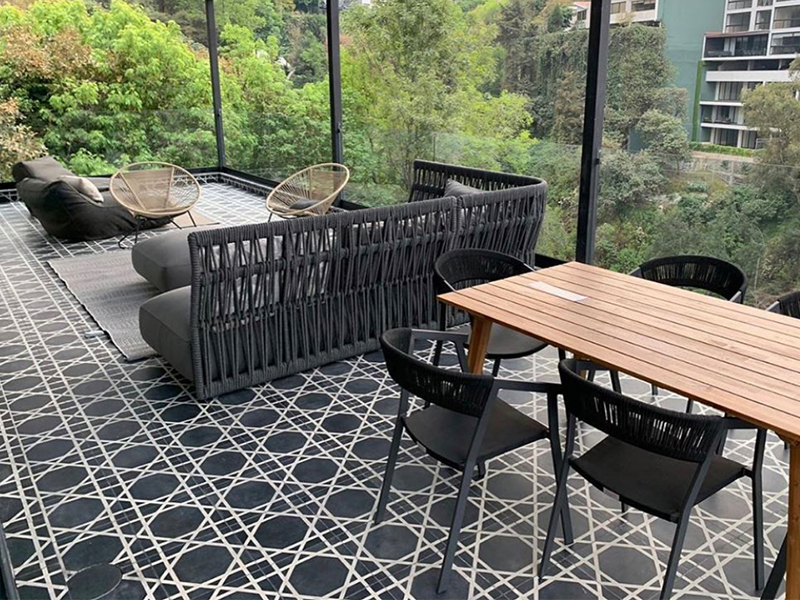
- Statement pattern, used wisely: Cement tile “rugs,” borders, and inlays that zone rooms and add personality without covering every square inch.
The Big Five: What’s Shaping Floors This Year
1) Zellige-Style—But for Walls, With Floors to Match
Zellige-style tile (with rippled, hand-glossed faces) remains the go-to for walls, while floors complement the look with matte cement tiles, terrazzo, or concrete-look porcelain. The mix—gloss up top, velvety underfoot—feels airy and elegant.
Pairing tip: If your backsplash is glossy and lively, choose a calm, matte floor in bone, clay, or soft gray for balance.
2) Terrazzo’s New Softness
Terrazzo looks (and true terrazzo tiles) continue their rise, but in 2026 they skew quieter: micro-chips and tone-on-tone palettes. In busy spaces like kitchens and hotel corridors, terrazzo’s gentle speckle hides crumbs and scuffs while feeling high design.
3) Large-Format Logic
Fewer grout joints = less maintenance and a more expansive look. For most homes, 24×24 is the sweet spot. Open plans and light-commercial projects lean larger (24×36, 24×48). Use tight, spec-compliant joints to keep the grid clean.
4) Matte vs. Glossy: The Underfoot Rule
Floors love matte: they hide dust, feel soft, and photograph beautifully. Save gloss for walls and accents. Satin finishes provide a versatile in-between for boutique retail or hotel suites.
5) Framed Patterns & Tile Rugs
The most designer-forward look of 2026: cement tile patterns framed with solids or borders to “zone” an area—an island, dining nook, foyer, or reception desk. You’ll see checkerboards and vintage-inspired geometrics in gentle, grounded palettes.
Want to test pattern scale and color? Request samples via Contact Us and we’ll help you curate a set that fits your light, cabinetry, and furniture.
Color Play: 2026 Palettes for Floors
Warm Minimal
- Base: Bone, mushroom, flax
- Accents: Tobacco, camel, wheat
- Works with: Oak, creamy stones, aged brass
- Cement tile note: Recolor a subtle geometric in bone and camel for a “quiet luxury” checkerboard.
Coastal Modern
- Base: Mist, fog, pale gray
- Accents: Sea-glass blues, chalky teal
- Works with: White oak, nickel, white quartz
- Cement tile note: A soft blue border framing a neutral field = instant calm.
Modern Ranch
- Base: Sand, clay, adobe
- Accents: Saddle brown, tobacco, pine green
- Works with: Shaker cabinets, leather, patinated metals
- Cement tile note: Clay-and-bone 8×8 checker under the island with a narrow border.
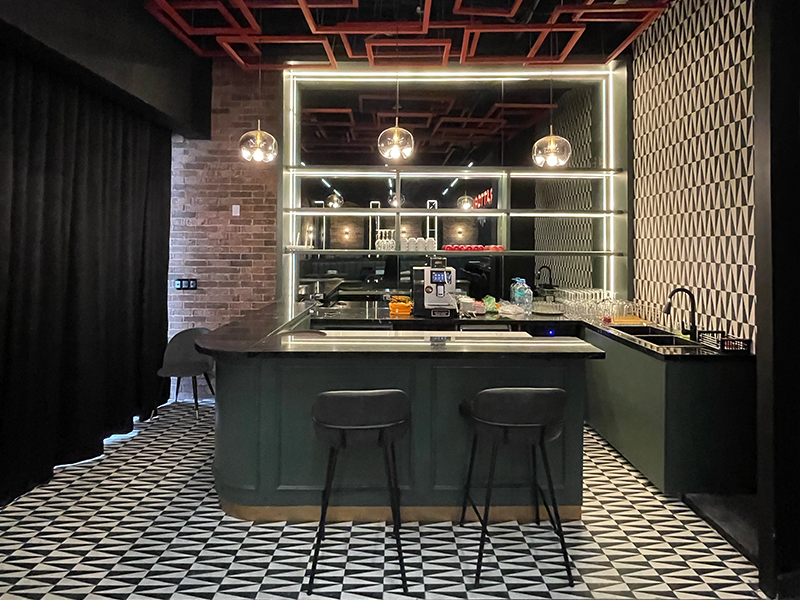
Black & Bone
- Base: Soot black, porcelain white
- Accents: Charcoal, pewter
- Works with: Soapstone, bronze, walnut
- Cement tile note: Classic black-and-white pattern, dialed down with mid-gray grout.
Pattern, Thoughtfully: How to Use Cement Tiles on Floors
Cement tiles are the hero of pattern in 2026: richly pigmented, velvety, and endlessly customizable. Here are designer-tested ways to use them underfoot:
- Tile Rug Under the Island
Frame the island with a 2–3-course border and fill with a repeating encaustic pattern. It grounds the work zone and protects from stool scuffs. - Breakfast Nook Feature
Define a casual dining area with a patterned rectangle inside a solid field. - Foyer Statement
Greet guests with a vintage-inspired motif bordered in a coordinating solid. It’s welcoming and forgiving of tracked-in dirt. - Retail & Hospitality
Inlays and borders guide traffic and anchor focal points (host stands, display tables). Patterns create memory markers—perfect for brand storytelling.
See dozens of layouts in our Cement Tiles Gallery. When you’re ready, recolor any design through our Custom Cement Tiles studio.

Size & Layout: What Looks Fresh Underfoot
- 8×8 Classics: The foundation of cement tile design. Works for kitchens, mudrooms, foyers, cafés, and corridors.
- 4×8 / 2×8 Bricks: Great for borders, herringbone in small entries, or thresholds between rooms.
- Large-Format Field + Patterned Inlay: Combine easy-care large porcelain with a cement mosaic under dining tables or in front of a fireplace.
- Checkerboard (Modernized): Bone + clay or fog + charcoal with mid-tone grout—less contrast, more sophistication.
- Diagonal or Hopscotch: Use in transitional spaces to add motion; up your waste factor to 15–20% for angled cuts.
Room-By-Room Inspiration (Residential)
Kitchens
- Trend combo: Matte terrazzo-look floor + zellige-style backsplash + brass hardware.
- Cement tile twist: A framed rug under the island or a patterned zone around a breakfast nook.
Bathrooms
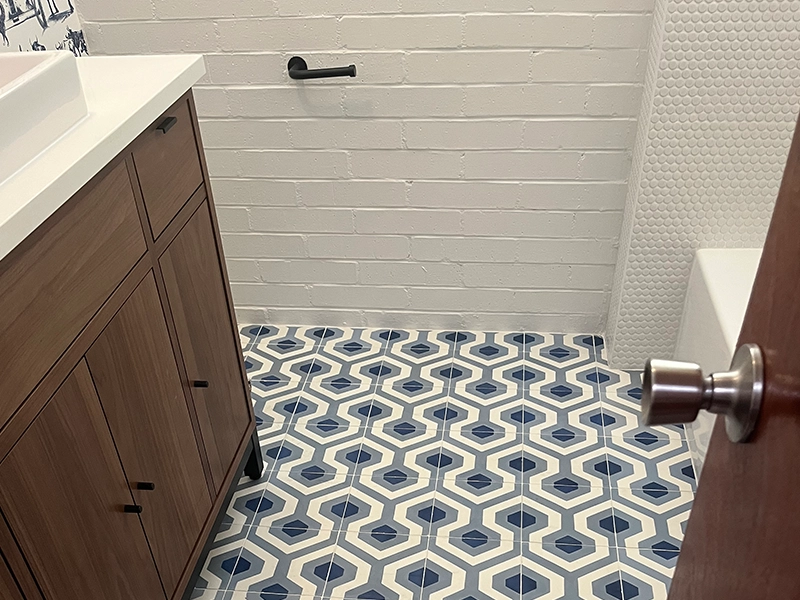
- Small bath: 8×8 cement tiles in tone-on-tone pattern make a tight room feel bigger than high-contrast checks.
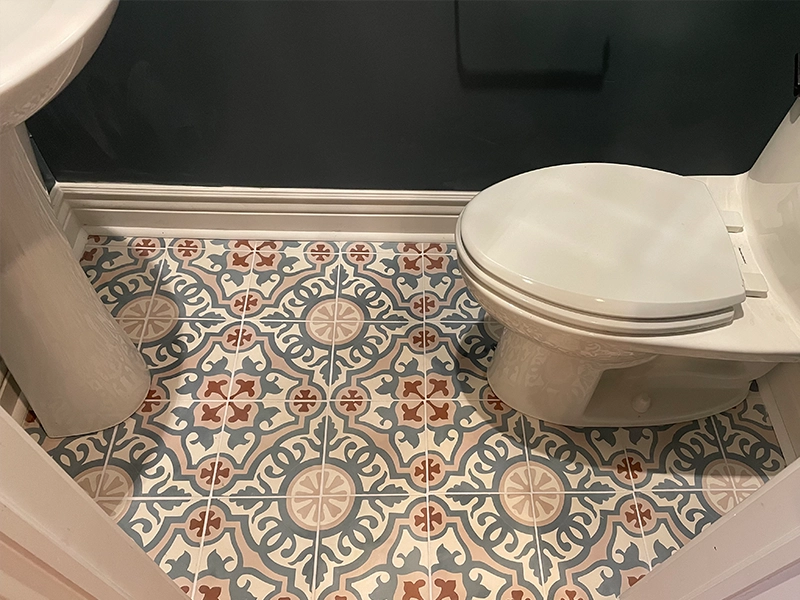
- Primary suite: Large-format porcelain on the main floor; cement tile in the water closet or vanity zone for personality.
Laundry & Mudrooms
- Why cement tiles win: They shrug off daily grit, look great with hooks and built-ins, and make “utility” feel designed.
- Pattern pick: Subtle geometrics or micro-florals in warm neutrals.
Living & Dining
- Open plan: Use borders and “tile rugs” to visually separate living and dining zones without walls.
Room-By-Room Inspiration (Commercial)
Restaurants & Cafés
- Front-of-house: Cement tile rugs define host stands and tables; terrazzo-look fields handle heavy traffic.
- Bar zones: Bold but balanced pattern in darker palettes hides spills and scuffs.
Hotels
- Lobbies: Large-format stone-look porcelain with cement inlays around seating.
- Guest corridors: Soft terrazzo speckle = forgiving and photogenic.
Retail
- Wayfinding with pattern: Use contrasting borders to subtly guide foot traffic and highlight merch zones.
Materials at a Glance: Pros, Cons & Best Uses
| Material | Why Choose It | Where It Shines | Notes |
|---|---|---|---|
| Cement Tiles | Rich color, artisan look, customizable patterns | Kitchens, entries, baths, hospitality accents | Seal before/after install; pH-neutral care |
| Porcelain (Large-Format) | Durable, low maintenance, many looks | Big kitchens, commercial floors | Tight, spec-compliant joints; flat substrate is key |
| Terrazzo (or Terrazzo-Look) | Classic speckle, hides wear, upscale | Kitchens, lobbies, corridors | Choose chip size for vibe—micro for subtle |
| Stone-Look Porcelain | Natural aesthetic without stone upkeep | Whole-home floors | Honed and matte reads current |
| Concrete-Look Porcelain | Calm, contemporary base | Modern lofts, commercial | Pair with warm woods for balance |
Matte vs. Glossy Underfoot (and Why Matte Wins)
- Matte finishes are kinder to daily life and lighting. They reduce glare, hide dust, and feel softer.
- Glossy floors can be slick and show streaking—reserve gloss for walls and decorative accents.
- Satin floors are a smart middle ground for boutique retail and hospitality suites.
Installation & Maintenance: Designer-Proof and Builder-Smart
- Substrate: Must be clean, flat, and structurally sound. Confirm movement joints per standards.
- Layout: Dry-lay to test pattern direction, border reveals, and grout color. Blend tiles from multiple boxes for natural variation.
- Sealing: Cement tiles require sealer before grouting and again after cure. Follow the sealer manufacturer’s schedule.
- Grout color: Mid-tone grouts hide wear; match grout to the background hue of your tile for the quietest look.
- Cleaning: pH-neutral cleaners for cement tiles; avoid harsh acids and abrasives.
Trends by Home Style (How to Apply the Look)
Modern House
- Floor: Large-format porcelain in bone or fog.
- Accent: A slim cement border outlining the dining area.
- Metal: Brushed stainless or blackened steel.
Farm House
- Floor: Cement tile checker in bone + clay.
- Accent: Narrow picture-frame border around a farmhouse table.
- Metal: Aged brass or pewter.
Ranch House
- Floor: Sand or adobe cement tiles in subtle geometry.
- Accent: Terracotta touches in thresholds or hearth surrounds.
Contemporary Loft
- Floor: Concrete-look porcelain with a cement tile rug under the sofa group.
- Accent: Walnut millwork + thin black metal trims.
Expert Tips: Color, Pattern, and Layout
- Start neutral, layer intentional color. Use pattern to define zones rather than across the entire floor.
- Scale pattern to the room. Small rooms = smaller motifs or tone-on-tone; large rooms can handle bolder repeats.
- Mind transitions. Use borders to cleanly separate materials across doorways or between open zones.
- Grout is a design tool. Darker grout = graphic; mid-tone = quiet.
- Order samples early. Light direction and cabinet color change how tiles read—test at home.
Need a curated sample set? Tell us your cabinet and counter finishes, and we’ll propose a trio to compare: Contact Us.

Frequently Asked Questions (Floor Tile Trends 2026)
1) What’s the #1 floor tile trend for 2026?
Pattern used with restraint—especially cement tile rugs and borders—paired with matte, warm-neutral fields.
2) Are large-format tiles worth it?
Yes. Fewer grout joints simplify cleaning and visually widen the room. Match format to your space (24×24 for most homes; bigger for open plans).
3) Will patterned floors date quickly?
Not if you use softer, tone-on-tone palettes or confine pattern to framed areas. Think classic composition, modern color.
4) Do cement tiles require special care?
Seal before grouting and again after cure; clean with pH-neutral products. Follow installer and sealer guidance for best results.
5) Can I mix terrazzo and cement tiles?
Absolutely. Use terrazzo (or terrazzo-look) as the durable field and cement tile for inlays and borders.
6) What grout color looks best in high-traffic areas?
Mid-tone grouts hide dirt. Matching grout to the tile’s background gives the quietest look.
7) How much overage should I order?
10% for straightforward grids; 12–15% for borders/patterns; 15–20% for diagonals or complex layouts.
8) Are matte floors slippery?
Matte generally improves traction; always follow product COF guidance for your use case.
9) How do I choose colors that won’t fight my cabinets?
Sample at home. If cabinets are warm, lean bone/clay floors; if cool, favor fog/mist. We’ll help fine-tune a palette.
10) Can you recolor a pattern to match my project?
Yes—recolor any design through Custom Cement Tiles.
Your Next Steps
- See Trend-Forward Patterns → Cement Tiles Gallery
- Personalize a Design → Custom Cement Tiles
- Order Today → Cement Tiles In Stock
- Talk to a Tile Specialist → Contact Us
At Original Mission Tile, we manufacture handmade cement tiles with hundreds of in-stock patterns and limitless custom possibilities. From residential foyers to boutique hotels, our team supports you with sampling, takeoffs, and practical guidance, so your floors look stunning and perform for years.
Final Thought
Trends come and go, but craftsmanship lasts. Choose a calm, durable floor you’ll love daily, and use cement tile borders or rugs to add soul. When you’re ready, we’ll help you finalize colors, sizes, and quantities—and ship samples fast.
Bravo!!! beautiful cement tiles!