

Patterned Cement Tiles Make Any Room Look Custom
If your space feels “fine,” this is the fastest way to make it feel designed.
You know the feeling: the layout works, the paint color is nice, the furniture is decent… and yet the room still looks like it’s missing something. Not a throw pillow. Not another piece of wall art. Something architectural—the detail that makes people say, “Oh wow, this is custom.”
That’s exactly what patterned cement tiles do.
They don’t just “decorate” a room. They define it. A patterned cement tile floor turns open space into a destination, makes bland rooms feel intentional, and creates the kind of high-end visual rhythm you usually only see in boutique hotels, designer showrooms, and magazine homes.
In this guide, you’ll learn why patterned cement tiles are the ultimate instant upgrade, how to choose the right pattern for any room, what trends are shaping the look (Moroccan, Mediterranean, Spanish-style, modern, vintage, contemporary), and how to plan installation and maintenance so your investment looks incredible for years.

Why Patterned Cement Tile Is the Fastest “Designed” Upgrade
Most upgrades are additive: new lighting, new décor, new furniture. Patterned cement tile is different—it’s foundational. It changes how the entire room reads.
It creates instant architecture
A patterned floor functions like a built-in rug—except it’s permanent, precise, and premium. It frames the space, sets the mood, and gives you a focal point that doesn’t rely on styling.
It makes simple furnishings look expensive
A classic designer trick: pair a bold floor with simple furniture and let the floor do the heavy lifting. This is why patterned floor tiles are everywhere in boutique hospitality: they create “design value” even with minimal décor.
It’s one of the few trends that’s actually timeless
Pattern has been part of design history for centuries. The reason it keeps coming back is simple: it works. Especially when the material is authentic—like encaustic cement tiles with matte depth and handmade character.
CTA: See Trend Tiles → Explore Cement Tiles In Stock
The Benefits of Cement Tiles (Why They’re Worth It)
Durability for real life (and real traffic)
With proper installation and sealing, cement tiles can perform beautifully in high-traffic homes and many commercial environments. They’re commonly used for commercial floor tiles in spaces where style can’t compromise performance.
Handmade quality that looks custom by default
Handmade cement tiles have subtle variation and depth that printed surfaces can’t replicate. That’s part of why they feel “designed” the moment you install them.
Sustainability and long-life value
Design is shifting toward materials that last, can be maintained, and don’t need replacing every few years. Cement tile supports this long-life approach when care is planned correctly.
Style versatility across aesthetics
Patterned cement tile isn’t one style. It can support:
- bold Moroccan geometry
- calm Mediterranean palettes
- Spanish-style heritage motifs
- modern black-and-white minimalism
- vintage European-inspired “tile rug” layouts
- contemporary tonal patterns
Customization that unlocks true differentiation
Need a specific color story? A signature motif? A repeatable pattern across multiple projects? Custom cement tiles make it possible—especially for designers, builders, and hospitality brands. Start here: Custom Tiles.
CTA: Talk to a Tile Specialist → Contact Us
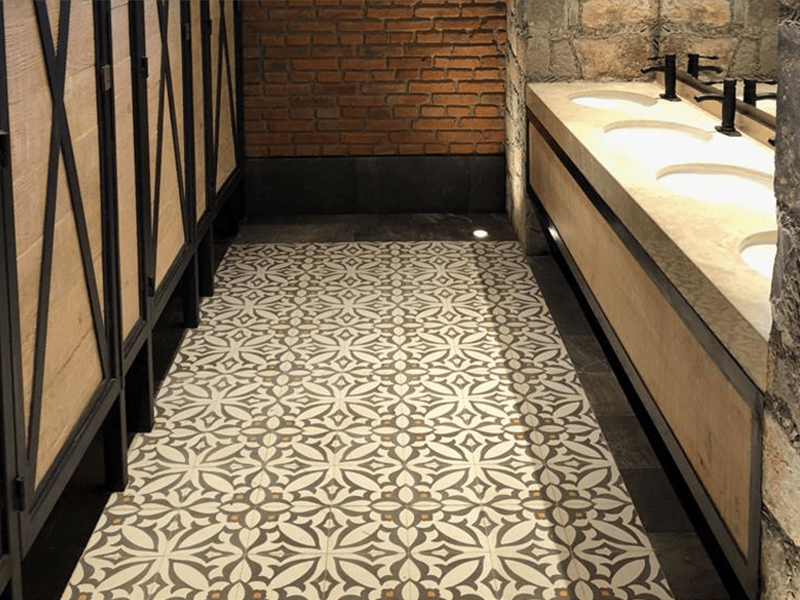
Style Ideas & Trends: How Designers Are Using Patterned Cement Tiles Right Now
Moroccan tiles: geometric energy, instant atmosphere
Moroccan tiles and Moroccan-inspired patterns are perfect when you want a high-impact “moment.” Use them in:
- entries
- powder rooms
- bar zones
- boutique hotel corridors
Designer tip: keep walls and furniture calmer so the pattern feels curated, not busy.
Mediterranean tiles: sun-washed and timeless
Mediterranean tiles lean into warm neutrals, dusty blues, and olive greens—ideal for:
- kitchens
- patios
- airy living spaces
- spa-like bathrooms
This style is especially strong when paired with natural wood, plaster textures, and warm metals.
Spanish-style tiles: heritage warmth
Spanish-style tiles are the shortcut to “old-world, but elevated.” They work beautifully in:
- courtyards and patios
- arched entryways
- dining rooms and kitchens
- restaurants with destination energy
Pairing tip: Spanish-style patterns look even richer next to terracotta tiles tones (or terracotta-adjacent palettes).
Modern: minimal pattern, maximum intent
Modern interiors are using cement tile in:
- clean checkerboards
- tonal linework geometry
- framed borders that define zones
- black-and-white statements with minimal furniture
This is also where cement tile can complement terrazzo tile in adjacent zones for a refined material mix.
Vintage: the “looks original to the home” effect
Vintage patterns feel premium because they feel established. The key is layout:
- borders
- corners
- framed fields (“tile rugs”)
- symmetry around doors and thresholds
If you want to recreate a vintage look exactly—or modernize it slightly—start with Custom Tiles and explore palettes via the Cement Tile Color Palette.
CTA: Order Samples → Start with Cement Tiles In Stock

Applications by Room: Where Patterned Cement Tiles Make the Biggest Difference
Entryways: the “tile rug” that instantly upgrades the whole home
If you do patterned cement tile in one place, do it in the entry.
Best practices:
- frame the area with a border
- choose a mid-tone pattern to hide daily grit
- plan transitions to adjacent flooring so it looks intentional
Browse entry-friendly options in Cement Tiles In Stock.
Kitchens: the fastest way to make cabinets look custom
Kitchens are full of big solids: cabinets, counters, appliances. A patterned floor adds movement and depth.
Two winning moves:
- patterned cement tile floor + calm backsplash
- calm floor + statement kitchen backsplash tiles behind range or coffee bar
If you want a coordinated story, use the Design Studio to visualize pattern directions and the Cement Tile Color Palette to build cohesive colors.
Bathrooms: boutique hotel impact in a small footprint
Bathrooms are ideal for pattern because the square footage is smaller—so it feels high-end, not overwhelming.
Great uses:
- patterned floor + simple walls
- vanity wall accent using decorative cement tiles
- niche backdrops for a subtle repeat of the floor palette
Showers: statement walls, specified correctly
Yes, cement can be used as shower wall tiles in design-forward projects—but success depends on correct waterproofing, sealing, and cleaning routines.
Before you specify cement tiles in wet areas, align your installer with:
- Installation Guidelines
And set long-term care expectations with: - Cement Tile Maintenance
Patios: make the outdoors feel like an extension of the interior
Indoor-outdoor continuity is one of the most “expensive-looking” design moves.
For outdoor patio tiles, choose patterns that:
- hide dust (mid-tone patterns work best)
- echo interior palette
- feel timeless (Mediterranean and Spanish-style motifs shine here)
Start browsing: Cement Tiles In Stock
Commercial Design: Why Patterned Cement Tiles Win in Restaurants and Hotels
When design has to perform under traffic, pattern becomes more than a style choice—it becomes strategy.
Restaurant tile design: floors that define zones and hide wear
In restaurant tile design, floors need to:
- handle constant traffic
- resist spills and frequent cleaning
- elevate the guest experience
- photograph well
Patterned cement tile helps restaurants:
- create “brand identity” with one surface
- define bar vs dining without walls
- hide daily wear better than flat, uniform finishes
If you’re designing commercial floor tiles for hospitality, start with proven designs in Cement Tiles In Stock or build a signature pattern through Custom Tiles.
Hotel lobby tiles: first impressions that sell the experience
Boutique hotels use patterned floors because they create instant place-making. Hotel lobby tiles can:
- set the mood immediately
- guide circulation through zoning
- become a signature photo moment
For multi-property hospitality brands, custom logo tiles can add subtle identity:
- entry medallion
- monogram border
- small brand mark near reception
Explore custom options in the Design Studio and get guidance via Contact Us.
CTA: Contact Us for Custom Tile Designs → Custom Tiles

Cement Tile vs Ceramic Tile: What to Choose
The cement tile vs ceramic tile debate usually comes down to two things: authenticity and operations.
When cement tiles are the better choice
Choose cement when you want:
- handmade depth (not printed)
- a true encaustic look
- stronger pattern presence
- customization and reproduction capabilities
When ceramic/porcelain might be better
Choose ceramic/porcelain when you want:
- very low absorption (especially porcelain)
- simplified maintenance in some extreme wet or back-of-house zones
- large-format minimal looks with fewer grout lines
Many premium projects combine both: cement tiles in identity zones (entry, kitchen, lobby, dining) and porcelain where operational simplicity is critical.
If you want project-specific guidance, the fastest path is to share your room list and traffic level via Contact Us.
Installation & Maintenance: How to Keep Patterned Cement Tiles Looking High-End
A stunning floor can be undermined by avoidable mistakes. Cement tile is not “difficult,” but it is different than ceramic.
Installation essentials
Align your installer with:
Key best practices include:
- stable, flat substrate (prevents lippage and cracking)
- dry layout planning (especially borders and focal points)
- blending tiles from multiple boxes (avoids patchy appearance)
- correct sealing steps coordinated with grouting
Sealing and cleaning
Cement tiles should be sealed for stain resistance and easier maintenance—especially in kitchens, entries, and commercial spaces.
Set expectations and routines with:
A strong care routine typically includes:
- grit control (sweep/vacuum regularly)
- pH-neutral cleaners
- quick spill response in kitchens and restaurants
- avoiding harsh acids that degrade sealers
CTA: Talk to a Tile Specialist → Contact Us
Mistakes to Avoid (So Your Floor Looks Custom, Not “Complicated”)
- Choosing pattern before scale: A small pattern can look busy in a large room; oversized patterns can overwhelm small spaces. Always sample.
- Skipping borders and transitions: High-end floors look intentional because thresholds are designed.
- Ignoring variation: Handmade variation is normal—blend tiles during installation.
- Sealing errors: Skipping steps, inconsistent application, or using harsh cleaners can cause long-term issues.
- Over-patterning: One hero pattern per room keeps the design curated.
- Treating cement like ceramic: Follow cement-specific guidance using the Installation Guidelines.
CTA: Order Samples → Start with Cement Tiles In Stock

FAQs: Patterned Cement Tiles
1) What are patterned cement tiles?
Patterned cement tiles are cement-based tiles with a pigmented surface layer that creates a matte, rich pattern (often called encaustic cement tiles). They’re used for floors and walls to create high-impact, custom-looking spaces.
2) Are cement tiles durable enough for kitchens and entryways?
Yes, when installed correctly and sealed properly. They’re commonly used in high-traffic areas like entryways, kitchens, and corridors.
3) Do patterned cement tiles need to be sealed?
Yes. Sealing improves stain resistance and long-term maintenance. Start with the brand’s Installation Guidelines and follow care steps in Cement Tile Maintenance.
4) Can cement tiles be used in showers?
Cement can be used as shower wall tiles when waterproofing, sealing, and maintenance expectations are planned properly. Review Installation Guidelines before specifying.
5) What styles work best with patterned cement tile floors?
Top styles include Moroccan tiles aesthetics (geometry), Mediterranean tiles palettes (sun-washed warmth), Spanish-style tiles motifs (heritage), plus modern monochrome and vintage border layouts.
6) Cement tile vs ceramic tile: which is better?
Cement often wins for handmade authenticity, matte depth, and custom pattern control. Ceramic/porcelain often wins for lower absorption and simplified maintenance in some zones. Many projects use both strategically.
7) Are patterned cement tiles good for restaurants and hotels?
Yes. They’re widely used in restaurant tile design and hotel lobby tiles because they create identity, define zones, and elevate the guest experience when installed and maintained correctly.
8) Can I create a custom pattern or brand look?
Yes. Create custom cement tiles (and even custom logo tiles) through Custom Tiles and visualize options in the Design Studio.