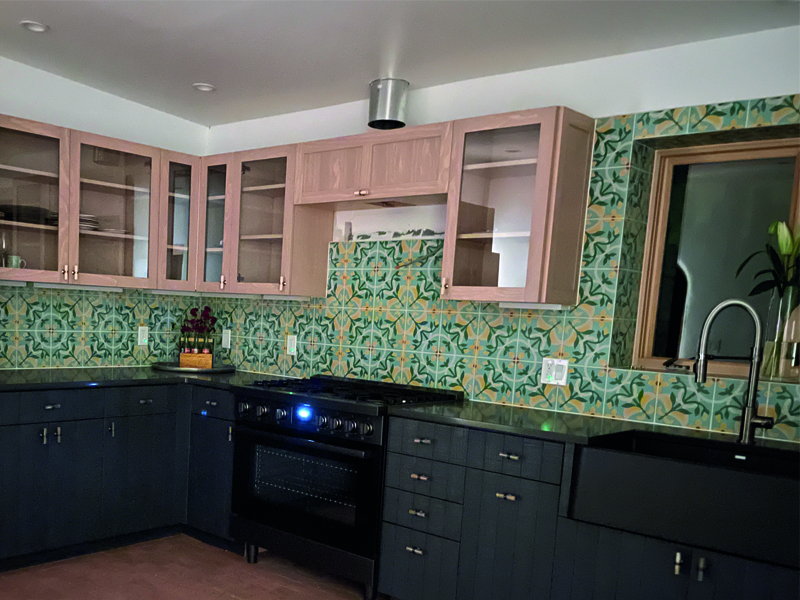
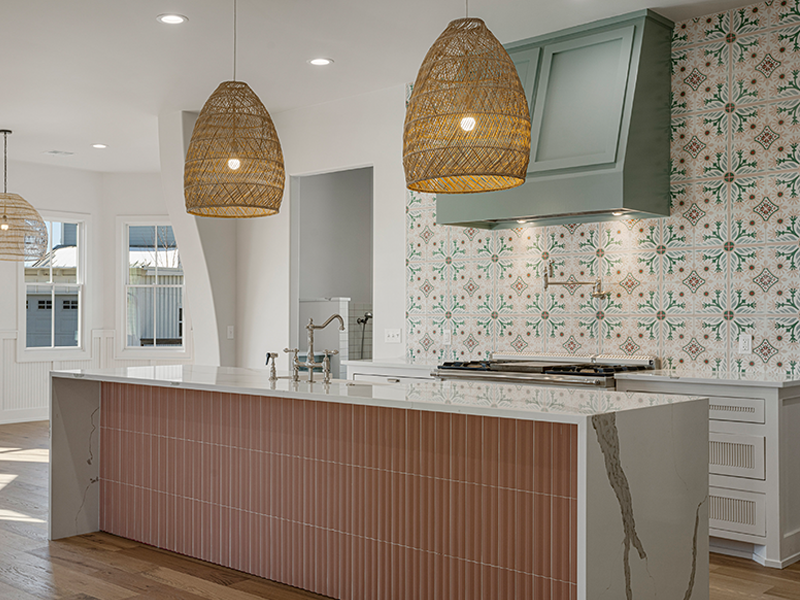
What if your next floor could anchor the entire project—guiding color, layout, and lighting—while staying timeless for decades? That’s the promise of patterned cement tiles. From breezy Mediterranean kitchens to dramatic hotel lobbies, patterned floors made with handmade cement tiles deliver the warmth of craft and the clarity of geometry in one design-forward, durable surface.
This guide distills everything you need—style directions, room-by-room ideas, commercial specs, installation tips, and mistakes to avoid—so you can specify patterned cement tiles with confidence for modern and classic interiors alike.
Why Patterned Cement Tiles Win (In 2026 and Beyond)
Benefits of Cement Tiles (and what your clients will actually feel)
- Durability that ages gracefully. Cement’s mineral pigments form a thick wear layer—so the color lives inside the tile, not just on top. With correct sealing and care, patterned cement tiles can perform beautifully for decades in residential and boutique commercial settings.
- Handmade quality. Each tile is hydraulically pressed and hand-finished. Subtle tone shifts and a velvety matte surface create depth you can’t fake—ideal for natural light and photography.
- Sustainability. No kiln firing. Lower energy inputs than many fired tiles, and long life spans reduce replacement cycles.
- Style versatility. Recolor classic motifs, scale patterns up or down, coordinate borders, or commission custom cement tiles—including custom logo tiles for brand moments.
Pro tip: Pattern is powerful. Use patterned floor tiles to define zones (like a “rug” under a dining table) without building walls.
What Makes a Floor “Patterned”—and Why Floors Are the Best Canvas
Floors are the largest contiguous planes in most spaces, so they set the mood. Patterned cement tiles deliver:
- Cohesion: A repeating motif ties cabinets, fixtures, and furnishings together.
- Wayfinding: Borders, frames, and directionality guide movement naturally.
- Scale: Larger patterns calm big spaces; smaller repeats energize compact rooms.
- Maintenance clarity: Matte surfaces hide occasional scuffs better than high-gloss finishes; mid-contrast palettes are forgiving in high-traffic areas.
Style Ideas & Trends (Modern, Classic, and Everything Between)
Whether you’re after sun-warmed Mediterranean charm or crisp contemporary geometry, these directions translate seamlessly into patterned cement tiles:
1) Moroccan Geometry
Stars, crosses, and interlaced lines create rhythmic floors that work in kitchens, entries, and hotel lobby tiles. Keep contrast medium; let one bold color lead.
2) Mediterranean & Spanish-Style Tiles
Curved florals, quatrefoils, and borders bring romance to bathroom tiles, stair risers, and terraces. Pair with plaster walls, limewash paint, or terracotta tiles for warmth.
3) Modern Minimal
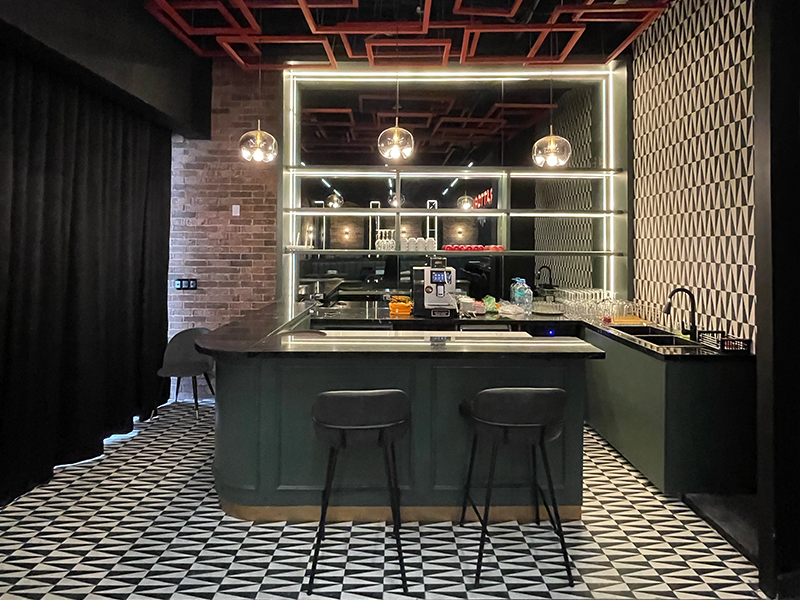
Checkerboards, stripes, or tonal diamonds. Try bone + charcoal or greige + cream for elegant patterned floor tiles that photograph clean and upscale.
4) Vintage Revival
Historical motifs recolored in contemporary palettes (sage, tobacco, clay) bring authenticity to bungalows and brownstones without feeling theme-y.
5) Contemporary Graphic
Big, confident repeats and scaled-up motifs read editorial and gallery-ready—ideal for open-plan living rooms or retail spaces.
6) Terrazzo & Terracotta Pairings
Let a terrazzo tile or terracotta tile act as the “quiet” neighbor to a patterned rug layout. Brass thresholds sharpen the transition.
Design move to steal: Frame a patterned field with a border (or a slim brass liner) to create a “bespoke rug” effect on the floor.
Applications by Room (Residential)
Kitchens: Performance + Personality
- Island rug: Center a bordered field under an island; continue solid tiles beyond.
- Galley rhythm: Run pattern parallel to the work zone to elongate the space.
- Backsplash echo: Pull one color from the floor into the kitchen backsplash tiles or a niche for cohesion.
Good to know: Matte, mineral-rich surfaces of encaustic cement tiles soften glare from task lighting and reduce visible streaking compared to some glossy finishes.
Bathrooms: Calm with a Kick
- Pattern-forward floor: Let the floor carry the motif; keep shower walls in a coordinating solid.
- Monochrome modern: Bone + black checkerboard for a crisp, gallery-like bath.
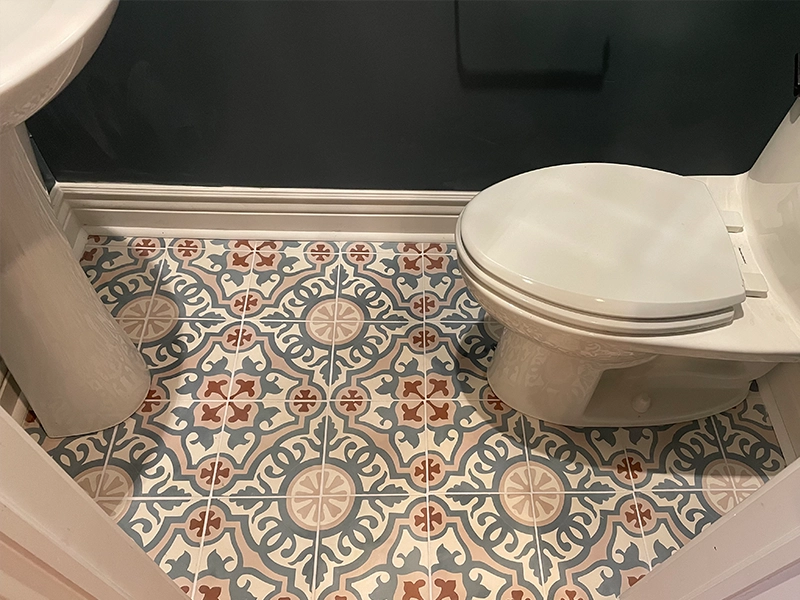
- Powder room theater: Small room, big drama—perfect for high-impact pattern.
Shower specifics: Shower wall tiles in cement are great with proper sealing. For shower floors, many pros prefer slip-friendly mosaics (often porcelain) while coordinating color with the cement wall or bath floor.
Bedrooms & Living Rooms: Warm Minimal to Pattern Statement
- Quiet herringbone or diamond: For airy bedrooms, pick low-contrast repeats.
- Fireplace surround: Use decorative cement tiles in a Moroccan or Spanish motif; repeat that color in pillows or drapery.
Entryways & Hallways: First-Impression Architecture
- Bordered entry rug: Practical (catches grit) and photogenic.
- Directional corridors: Interlaced geometry subtly guides guests.
Stairs & Landing: Small Area, Big Result
- Stair risers: Micro-billboard for pattern; pair with solid treads.
- Landing feature: A framed motif welcomes—and orients—movement.
Patios, Sunrooms & Mudrooms: Lifestyle-Ready
- Covered patios: Terracotta, clay, and charcoal palettes feel sun-safe and forgiving.
- Mudrooms: Mid-contrast pattern hides day-to-day wear; specify durable mats and appropriate sealers.
Reminder: Outdoor use depends on climate/exposure. Covered or protected areas are best. Always follow sealer and substrate guidance.

Commercial Design: Restaurants, Hotels, Retail, Offices
Patterned cement tiles are social-media gold and brand-building workhorses.
Restaurants & Cafés
- Front-of-house floors: Choose medium contrast to hide crumbs and traffic while keeping the pattern crisp.
- Bar faces & host stands: Patterned cladding communicates hospitality at first glance.
- Restrooms: Small footprint, huge design return—guests notice (and post).
Hotels & Hospitality
- Lobby statements: Border + field layouts evoke heritage hotels with a modern edge.
- Corridors: Repeating geometry provides rhythm and wayfinding.
- Rooftops & lounges: Earthy palettes and framed zones define experiences.
Retail & Workplace
- Threshold logos: Custom logo tiles at the entrance make an instant brand impression.
- Cash wraps & plinths: Pattern draws the eye and elevates perceived product value.
Specifier note: For busy commercial traffic, confirm slip-resistance objectives, sealing schedules, and maintenance plans. Commercial floor tiles in cement perform well when properly maintained.
Layout Strategies That Always Work
- Border + Field
Classic Mediterranean/Spanish look; scales from powder rooms to hotel lobbies. - Patterned Rug
Frame a seating or dining zone; contrast with solid fields beyond. - Checkerboard/Diagonal
Adds movement; diagonal layouts visually widen narrow rooms. - Two-Tone Field with Accent Stripe
Subtle, architectural, and cost-aware. - Scale Play
Use larger motifs in large rooms; smaller repeats for powder rooms and pantries. - Grout as a Design Tool
- Color-match grout to the lighter tile for cohesion.
- Test a darker grout only if you want to emphasize the grid.
Installation & Maintenance: The Process That Protects the Beauty
Before you install
- Verify a flat, clean, cured substrate per TCNA/industry best practice.
- Dry-lay and blend from multiple boxes to distribute natural handmade variation.
- Confirm centerlines, border math, and cut locations at thresholds.
Setting
- Use an appropriate polymer-modified thinset; back-butter where needed.
- Keep joints consistent (typically 1/16″–1/8″ depending on pattern and finish).
Sealing & Grouting
- Seal before grouting. This crucial step prevents grout haze and protects pigmentation.
- Test grout on a spare tile; medium-tone grout often preserves pattern clarity.
- After grout cures, apply final sealer as directed.
Cleaning & Care
- pH-neutral cleaners only—no acids or bleach.
- Mats at entries; felt pads for furniture legs.
- Reseal based on traffic (commercial cycles are shorter than residential).
Common myth: “Cement is high maintenance.”
Reality: With correct sealer selection and normal care, patterned cement tiles are practical for everyday living and boutique hospitality.
Mistakes to Avoid (And How to Avoid Them)
- Skipping the pre-grout seal → leads to staining and stubborn haze.
Solution: Always seal before grout; then seal again after cure. - Over-contrasted grout → visually “breaks” the pattern.
Solution: Mock up two grout tones and choose what preserves the motif. - Under-ordering tile → pattern breakup and emergency reorders.
Solution: Add +10% overage for simple rooms; 12–20% for borders, diagonals, stair details, and tight cuts. - Treating cement like porcelain → unrealistic expectations.
Solution: Educate stakeholders; celebrate handmade nuance. - Not planning transitions → awkward height and finish changes.
Solution: Specify brass liners, reducers, and thresholds in drawings and budgets. - Ignoring light → colors look “off” under site LEDs.
Solution: Approve handmade cement tiles samples in final lighting.
Customization: Color, Scale, Borders & Logos
Your project is unique—your patterned cement tiles should be, too.
- Recolors: Match paint chips, Pantone, upholstery, or stone veining.
- Scale changes: Increase motif size for open living; scale down for powder rooms.
- Borders & frames: Tailored edges that read couture.
- Logos & monograms: Entrances, host stands, elevator lobbies—memorable brand touchpoints.
Typical workflow: Mood & palette → digital/color proofs → physical sample → approval → production → coordinated freight.
Room-by-Room Recipes (Plug-and-Play Concepts)
Modern Farmhouse Kitchen
- Floor: Bone/charcoal checkerboard (low contrast).
- Cabinets: Warm white, brass hardware.
- Backsplash: Solid zellige-look in bone.
- Why it works: Patterned floor does the talking; everything else whispers.
Mediterranean Powder Room
- Floor: Spanish floral in clay/cream/charcoal.
- Wainscot: 40″ high solid field tile with a slim patterned cap.
- Mirror: Antiqued brass.
- Why it works: Small space, big story; low square footage keeps budgets friendly.
Contemporary Living Room (Open Plan)
- Floor “Rug”: Framed Moroccan star field under the seating group.
- Perimeter: Solid complementary tile or wood.
- Why it works: Zones the room and showcases furniture silhouettes.
Boutique Café
- FOH Floor: Medium-contrast geometric for scuff forgiveness.
- Bar Face: Recolored pattern echoing the floor’s accent tone.
- Why it works: Cohesive, photogenic, and brand-forward.
Budget & Timeline (Set Expectations Early)
- Concentrate pattern where it counts: entrances, statement floors, and rug zones.
- Leverage in-stock: Short timelines? Start with in-stock favorites; go custom where impact is highest.
- Include trims & thresholds: Brass liners and reducers belong in the first quote, not the change order.
- Freight planning: Consolidate palettes and align delivery with install windows.
FAQs
1) Are patterned cement tiles durable enough for kitchens and entries?
Yes. With correct sealing and pH-neutral maintenance, patterned cement tiles thrive in high-traffic residential zones and boutique commercial spaces.
2) Do cement tiles need to be sealed?
Absolutely. Seal before grouting to prevent haze, then seal again after grout cures. Reseal as needed based on traffic.
3) Cement tile vs ceramic tile—which should I choose for floors?
Choose cement for a velvety matte look, deep mineral color, and handmade authenticity. Choose ceramic for printed looks or when a glossy, glazed surface is desired—especially for walls. Many designers mix both intentionally.
4) Can I use patterned cement tiles in a shower?
Yes for shower walls and bathroom floors (when sealed properly). For shower floors specifically, many installers prefer mosaics (often porcelain) for added traction and drainage, coordinating color with the cement tile.
5) How do I manage natural color variation?
Dry-lay and blend tiles from several boxes, review under site lighting, and embrace the subtle tonal shifts that give handmade cement tiles their soul.
6) What grout color works best with patterned cement tiles?
Mid-tone or color-matched grout preserves motifs without outlining every joint. Always test on a spare tile.
7) How much extra tile should I order?
Add +10% for straightforward rooms; 12–20% for borders, diagonals, complex cuts, and stairs.
8) Can you match my brand or cabinet color?
Yes. Provide paint/Pantone references. Custom cement tiles can be recolored, scaled, and bordered; even custom logo tiles are possible.
9) Are patterned cement tiles suitable for restaurants or hotel lobbies?
Yes—when specified and maintained correctly. They’re photogenic and durable, ideal for restaurant tile design and hotel lobby tiles that tell a brand story.
10) What cleaning products should I use?
Stick to pH-neutral cleaners. Avoid acids, bleach, and harsh abrasives to protect sealers and pigmentation.
Calls to Action (Use These Throughout Your Project)
- See Trend Tiles • Explore popular patterns and palettes.
- Order Samples • Approve color and contrast in site lighting.
- Talk to a Tile Specialist • Get layout, grout, and sealer recommendations.
- Contact Us for Custom Tile Designs • Recolors, borders, logos—tailored to your space.
Final Takeaway
The right floor is architecture, not just finish. With patterned cement tiles, you get longevity, artisan character, and total design control—whether you’re crafting a quiet checkerboard for a modern kitchen or a statement motif for a hotel lobby. Frame it with a border, scale it to the room, and seal it right. Your project will look intentional on day one and authentic for years to come.