

Restaurant Tile Flooring
A restaurant floor has one job that no moodboard ever mentions: survive real service.
It has to look unforgettable at 5:00 PM when the first guests arrive—and still look credible at 11:30 PM after hundreds of footsteps, chair drags, spills, and constant cleaning. It has to support your brand, elevate the dining experience, and photograph beautifully, all while functioning like a true commercial surface.
That’s why restaurant tile flooring isn’t just a finish selection. It’s a business decision.
In this guide, we’ll break down how to choose restaurant tile flooring that balances style, durability, and maintenance—especially with cement tiles and encaustic cement tiles. You’ll also see how to use pattern strategically (not randomly), how to avoid common installation mistakes, and how to plan for real-world cleaning routines. If you’re designing a new restaurant, renovating an existing space, or specifying materials for a hospitality group, this will help you choose tile that performs—and becomes part of your restaurant identity.
Why Restaurant Tile Flooring Matters More Than Almost Any Other Surface
In hospitality, floors are marketing.
Guests may not remember the exact pendant light you installed—but they will remember how the space felt. Floors shape that feeling because they:
- set the visual tone of the room (warm, modern, bold, minimal, vintage)
- affect acoustics and perceived comfort
- handle the most wear of any finish
- become a constant background in photos, videos, and social posts
The right restaurant tile flooring helps you:
- define zones without building walls (bar, dining, waiting area)
- guide traffic intuitively (host stand → seating → restrooms)
- create a signature “brand moment” guests associate with your venue
That’s why designers increasingly rely on patterned floor tiles, especially patterned cement tiles, to create restaurant identity that can’t be copied with generic finishes.
See Trend Tiles: Start browsing fast-ship options in Cement Tiles In Stock
Benefits of Cement Tiles for Restaurant Flooring
When you’re specifying commercial floor tiles, you need material that can carry both aesthetics and performance. Cement tiles do that exceptionally well when they’re installed and maintained correctly.
Durability in High-Traffic Hospitality
Cement tiles are widely used in restaurants and hotels because they can hold up beautifully under heavy traffic with proper substrate prep, sealing, and cleaning routines. They’re a strong fit for:
- dining rooms
- bar areas
- host stands and entry zones
- corridors and transitions
- boutique hospitality concepts
Handmade Quality That Feels Premium
Restaurants are experiential. Guests notice when a space looks intentional and crafted. Handmade cement tiles bring subtle texture and depth that feels high-end and design-forward—without needing excessive decor.
Sustainability and Long-Life Value
Many brands are building sustainability into their story. Cement tile projects support long-life design thinking because the finish is made to last—and can age with character when cared for properly.
Style Versatility for Any Restaurant Concept
From contemporary bistros to mezcalerías, bakeries, and boutique hotel restaurants, cement tile adapts to many aesthetics:
- modern minimal
- vintage European
- Moroccan-inspired pattern statements
- Mediterranean coastal calm
- Spanish-style warmth and courtyard energy
If your brand needs a signature look, you can also build it with custom cement tiles using Original Mission Tile’s Custom Tiles capabilities.
Order Samples: Start with patterns you like inside Cement Tiles In Stock
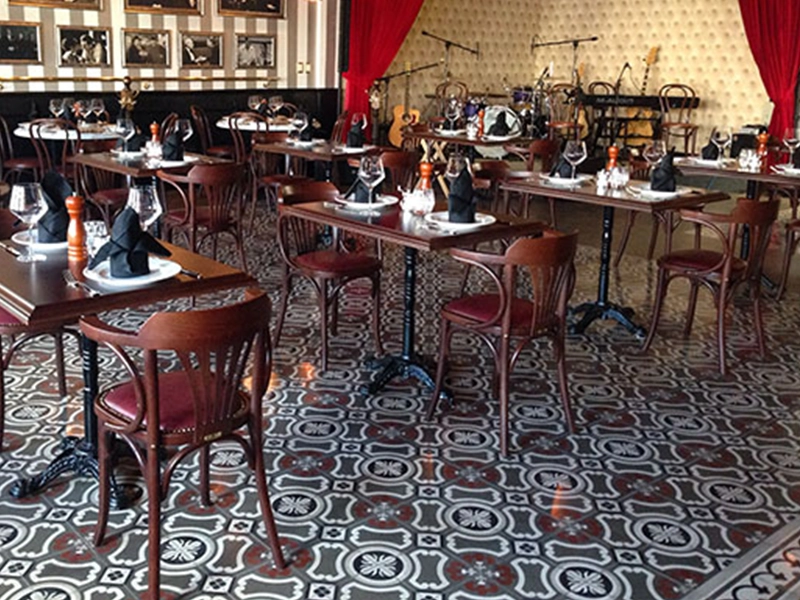
Restaurant Tile Design: Where Flooring Works Hardest
A smart restaurant tile design plan starts with the guest journey. Instead of treating the floor as one continuous field, think in zones.
Entry + Waiting Area
This is your first impression. It’s also where street grit and moisture hit first.
Best practices:
- use mid-tone patterns that hide daily debris
- consider a “tile rug” layout with a border for a premium feel
- plan mat systems so the tile stays cleaner longer
If you want a proven “signature entry” look, browse patterned options in Cement Tiles In Stock.
Bar Zone
Bar floors take the most abuse:
- spills (citrus, alcohol, syrups)
- constant foot traffic
- chair and stool movement
Bar zone strategy:
- choose patterns that visually camouflage small marks
- seal properly and commit to a consistent maintenance routine
- consider zoning the bar area with a distinct pattern to create separation
Dining Room
Dining rooms are where tile becomes atmosphere. Pattern and palette shape how guests experience the brand.
Winning layout approaches:
- a central patterned field with calmer perimeter circulation
- a border system that frames the room (high-end and intentional)
- a pattern change to separate dining from private rooms or booths
Restrooms (Guest-Facing)
Restrooms are a branding opportunity and often a photo moment. Many restaurants use bold bathroom tiles to create a memorable “surprise” space.
A cohesive approach:
- echo a color from the dining floor
- increase pattern intensity in restrooms for impact
- keep walls simpler so the tile remains the feature
Kitchen + Back-of-House (BOH)
BOH priorities are safety, cleanability, and compliance. Many venues use different flooring systems in BOH—but guest-visible kitchen zones or open kitchens can still benefit from tile continuity.
Where tile shows up in kitchens:
- coffee bars
- open expo stations
- visible prep areas
- kitchen backsplash tiles behind service counters
If you’re designing guest-visible counters or coffee bars, consider patterned cement tile as a brand detail, even when BOH floors use other systems.
Outdoor Dining + Patios
Outdoor dining is a marketing channel. The floor becomes the photo background.
Use cases:
- outdoor patio tiles in courtyards
- transitions from indoor dining to outdoor seating
- covered patios and terrace dining
For outdoor continuity and color planning, review the Cement Tile Color Palette and discuss specs with a Tile Specialist.
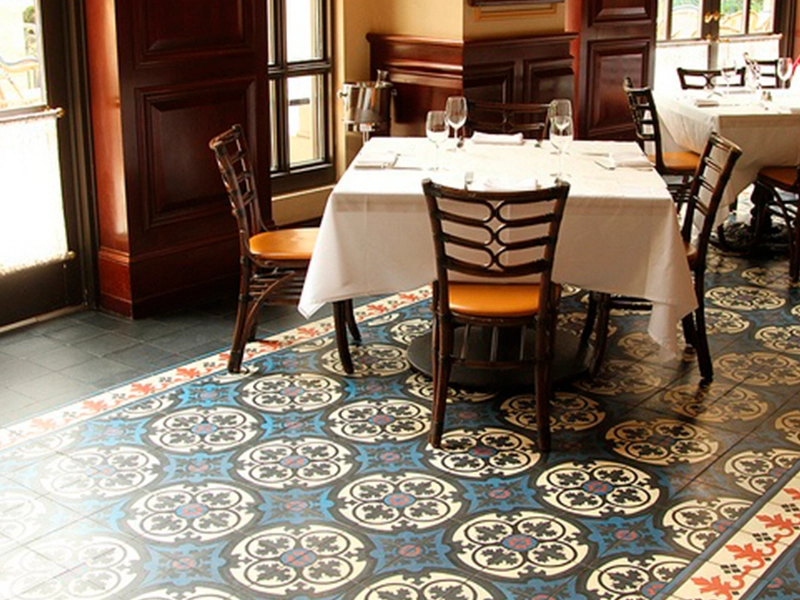
Style Ideas & Trends for Restaurant Tile Flooring
The fastest way to make a restaurant feel generic is to choose a floor that could belong anywhere. These style directions help you build identity.
Moroccan Tiles: Bold Pattern as a Brand Signature
Moroccan tiles and Moroccan-inspired geometry are popular in restaurants because they create instant atmosphere.
Best fits:
- mezcal bars, cocktail lounges, modern Middle Eastern concepts
- boutique cafés that want a “travel” feeling
- statement entries and bar zones
Pro tip: Use Moroccan pattern in a focused zone (entry or bar), then use calmer solids or tonal geometry elsewhere to avoid visual overload.
Mediterranean Tiles: Coastal Calm, Relaxed Luxury
Mediterranean tiles pair well with plaster walls, warm woods, and natural linens. This style is ideal for:
- seafood concepts
- wine bars
- coastal hotels and hotel restaurants
Spanish-Style Tiles: Warm, Romantic, Heritage-Forward
Spanish-style tiles are a natural match for:
- courtyards and patio dining
- tapas bars
- historic building renovations
Spanish-style patterns also pair beautifully with terracotta tiles as complementary accents (even when the main floor is cement tile).
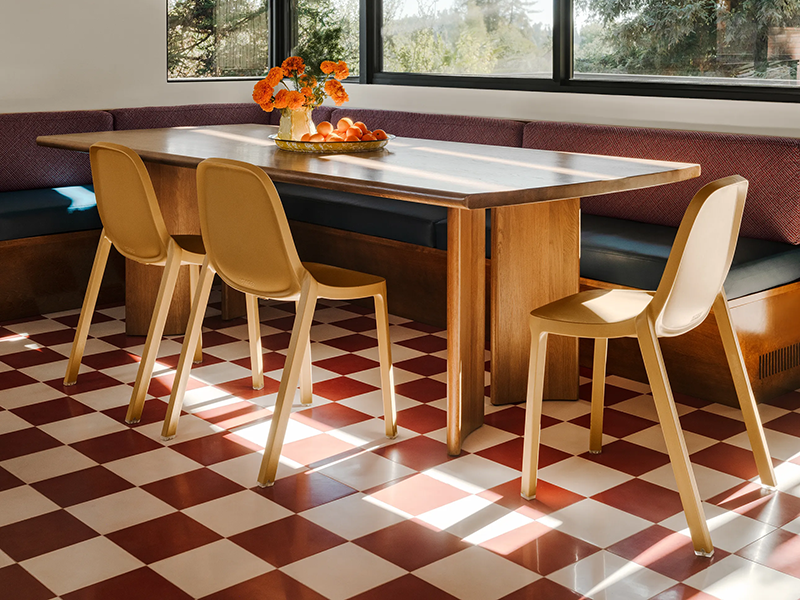
Modern + Contemporary: Minimal Pattern, Maximum Intent
Modern restaurants often choose:
- tonal geometric patterns
- black-and-white statements
- micro-checks or oversized checks
- simplified borders that frame seating zones
This is where cement tiles can compete visually with terrazzo tile and polished concrete—while offering more brand personality.
Vintage: “Looks Like It’s Always Been Here”
Vintage patterns are trending because they feel timeless and curated. The key is pairing vintage tile with modern lighting and clean furniture lines so it feels elevated—not themed.
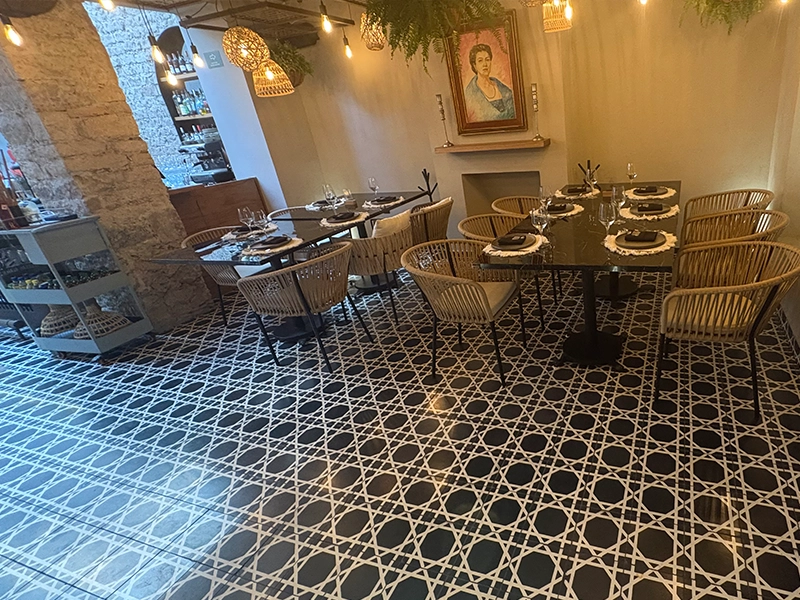
Commercial Design Section: Restaurants, Hotels, and High-Traffic Hospitality Solutions
Many restaurants today are part of larger hospitality ecosystems—boutique hotels, mixed-use properties, food halls, or multi-location brands. Flooring needs to work across all of it.
Restaurant Floors That Connect to Hotel Lobby Tiles
If your restaurant is attached to a hotel, your design should flow. Hotel lobby tiles often set the brand tone; restaurant flooring can echo that identity through:
- shared palette colors
- similar border logic
- related geometry at thresholds
If you’re planning a full hospitality suite, using a cohesive system of cement tile patterns can unify:
- lobby
- restaurant
- corridors
- restrooms
- patios
Multi-Location Brands: Use Custom Tile Reproduction
For restaurant groups, flooring can become a recognizable “signature.” With custom tile reproduction, you can repeat a signature pattern across locations while adjusting colors to suit each city or neighborhood.
Explore custom work through Custom Tiles and visualize options in the Design Studio.
Custom Logo Tiles for Branding
A subtle logo tile can feel premium when done tastefully:
- an entry medallion
- a border monogram
- a small mark near the host stand
This is where custom logo tiles elevate the space without looking like signage. If you want branding integrated into flooring, start with Talk to a Tile Specialist.
Cement Tile vs Ceramic Tile for Restaurant Tile Flooring
Design teams often debate cement tile vs ceramic tile for restaurants. The right answer depends on the zone and the brand goals.
When Cement Tiles Make the Most Sense
Choose cement when you want:
- handmade character and depth
- bold, authentic pattern presence
- customization and branding potential
- a boutique, premium feel
When Ceramic/Porcelain Might Be Better
Ceramic/porcelain may be preferable when you prioritize:
- ultra-low absorption (especially porcelain)
- simplified maintenance in extreme conditions
- certain BOH requirements
Many restaurants use a hybrid approach:
- cement tiles in guest-facing areas where identity matters
- porcelain in BOH or ultra-wet zones where operations demand it
For a deeper comparison, use: Cement Tiles vs Ceramic Tiles

Installation & Maintenance for Restaurant Tile Flooring
Cement tile success in restaurants comes down to execution. Most issues happen when cement is treated like ceramic.
Sealing: The Non-Negotiable Step
Restaurants involve staining risks (oils, wine, citrus, sauces). Cement tile should be sealed properly, and sealing needs to be part of the specification—not an afterthought.
Start with the brand’s guidance: Cement Tile Installation Guidelines
Cleaning: Build a Housekeeping Routine That Matches Reality
Best practices typically include:
- daily grit control (sweep/vacuum)
- pH-neutral cleaners
- avoiding acidic cleaners that can degrade sealers
- quick spill response protocols
Align expectations using: Cement Tile Maintenance
Common Maintenance Planning Tips (Restaurants)
- choose patterns that camouflage wear (mid-tone, multi-color motifs)
- avoid overly bright whites in heavy entry zones if traffic is intense
- plan for periodic resealing based on traffic and cleaning chemicals
- train staff on approved cleaners from day one
Mistakes to Avoid in Restaurant Tile Flooring Projects
Mistake 1: Choosing the Wrong Pattern Scale
Small patterns can look visually “busy” in large dining rooms. Oversized patterns can overwhelm tight spaces.
Fix: sample and view from 10–20 feet away under restaurant lighting.
Mistake 2: Skipping Samples and Approvals
A restaurant is not the place to guess. Sample for:
- color under day/night lighting
- grout color impact
- sealer appearance
Start with quick-ship pattern sampling via Cement Tiles In Stock.
Mistake 3: Not Planning Transitions
Restaurants have thresholds: entry → dining, dining → bar, dining → restrooms, indoor → patio.
Fix: use borders, breaks, or directional pattern shifts so transitions feel intentional and durable.
Mistake 4: Sealing Errors
Common issues:
- no pre-seal before grout (risking haze/staining)
- inconsistent sealer application
- using the wrong cleaner that degrades sealer
Fix: follow Cement Tile Installation Guidelines and reinforce care using Cement Tile Maintenance.
Mistake 5: Ignoring Color Variation Planning
Handmade materials have natural variation. That’s a feature, not a defect—until it’s installed box-by-box and looks patchy.
Fix: blend tiles from multiple boxes during installation, and design with variation in mind.
FAQs: Restaurant Tile Flooring
1) What is the best material for restaurant tile flooring?
The best restaurant tile flooring balances durability, maintainability, and design identity. Many hospitality projects choose cement tiles for guest-facing areas because they offer handcrafted character and strong pattern impact when installed and sealed correctly.
2) Are cement tiles durable enough for commercial floor tiles in restaurants?
Yes. Commercial floor tiles made from cement can perform extremely well in restaurants when substrate prep, sealing, and cleaning routines are aligned with high-traffic conditions.
3) Cement tile vs ceramic tile—what’s better for restaurant flooring?
In the cement tile vs ceramic tile debate, cement tiles often win on design authenticity and customization, while ceramic/porcelain often wins on low absorption and simplified maintenance. Many restaurants use cement in guest areas and porcelain in BOH.
4) How do you maintain cement tiles in a restaurant?
Use consistent grit control, pH-neutral cleaners, quick spill response, and a resealing plan based on traffic. Reference: Cement Tile Maintenance
5) Can I use patterned cement tiles in a restaurant bathroom?
Yes. Bathroom tiles are one of the best places to use bold pattern because the space is small and memorable. Many brands increase pattern intensity in restrooms for an “Instagram moment.”
6) What tile styles are trending for restaurant tile design?
Current trends include Moroccan tiles for bold statement floors, Mediterranean tiles for relaxed luxury, Spanish-style tiles for warm heritage character, modern tonal geometry, and vintage encaustic looks paired with contemporary furnishings.
7) Can restaurants use custom logo tiles in the floor?
Yes. Custom logo tiles can be incorporated as entry medallions, border motifs, or subtle brand marks. Start with Custom Tiles or discuss options via Talk to a Tile Specialist.
8) What’s the best way to choose patterns for restaurant tile flooring?
Start with your brand story and guest journey. Define the hero zone (entry, bar, dining), sample patterns under your lighting, and plan layout transitions. Explore options in Cement Tiles In Stock.
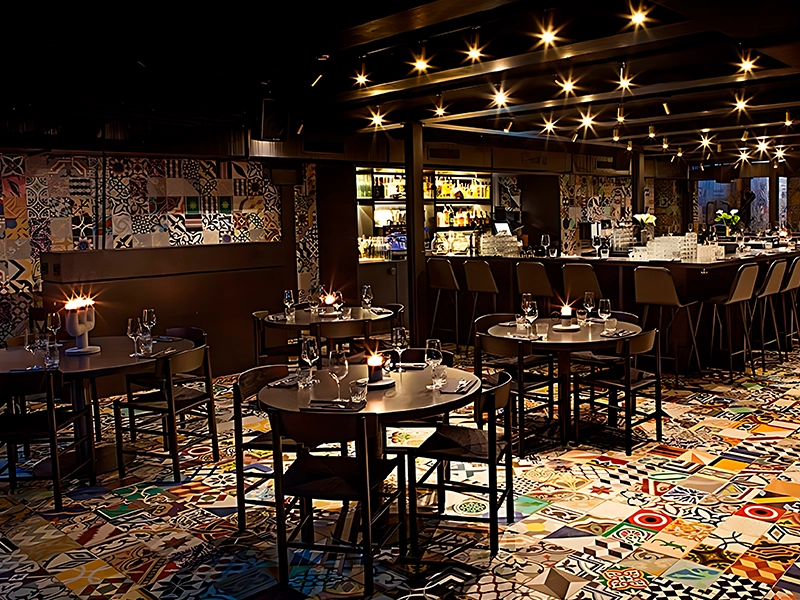
Final Notes: Build Restaurant Flooring That Becomes Part of the Brand
Great restaurant tile flooring does three things at once:
- Performs under service conditions
- Elevates the atmosphere with design credibility
- Brands the space in a way guests remember and share
If you want a floor that feels custom, timeless, and built for hospitality, start by browsing Cement Tiles In Stock and then explore brand-forward options through Custom Tiles. If you’re specifying for a high-traffic venue and want the fastest path to the right product and maintenance strategy, connect with a Tile Specialist.