

What if a single material could upgrade your floors, wrap your walls, and make your showers and backsplashes pop—without feeling cold or cookie-cutter? With tile for floors, walls, showers & backsplashes, you can design spaces that are durable, easy to clean, and absolutely beautiful. In this guide, we’ll show you how to use handcrafted cement tiles (plus complementary materials) to create magazine-worthy rooms—whether you’re a homeowner renovating a kitchen, an interior designer planning a client’s bath, or a showroom sourcing unique looks that sell.
Explore real projects in our Cement Tiles Gallery, shop speed-friendly In-Stock Cement Tiles, or bring your vision to life with Custom Cement Tiles.
Why Tile for Floors, Walls, Showers & Backsplashes?
Using tile for floors, walls, showers & backsplashes gives you:
- Design freedom – From calm neutrals to bold patterns, tile is a flexible canvas.
- Durability – Handles daily wear in kitchens, baths, and entries.
- Easy care – Tiles are simple to clean; cement tiles stay beautiful with proper sealing.
- Healthy homes – Tile doesn’t trap dust and allergens like carpet.
- Zoning power – Pattern and color visually “plan” open spaces without new walls.
And when the tile is handmade—like Original Mission Tile’s cement collections—you also get nuance and soul: a soft matte surface, subtle variation, and true artisan character.
A Quick Primer: Cement Tiles vs. Other Tiles
Cement tiles (often called encaustic cement tiles) are not fired like ceramic or porcelain. Pigmented mineral slurry is poured into a pattern mold, backed with cement, and hydraulically pressed, creating a wear layer with rich, long-lasting color.
Porcelain and ceramic are kiln-fired. They offer outstanding water resistance and standardized finishes—great for wet zones and budget control.
Stone (like marble or limestone) delivers natural veining and luxury, with specialized care.
Zellige-style ceramic brings wabi-sabi shine and surface variation to walls and backsplashes.
Most projects mix materials: e.g., cement tiles for a feature floor, zellige for the backsplash, and porcelain in the shower. The result is layered and intentional.
Design Benefits of Cement Tiles
- Real depth of color from the pigment layer (not a printed surface).
- Comfortable matte finish that photographs beautifully and resists glare.
- Customizable—recolor patterns, scale motifs, or create borders.
- Timeless patterns (Moroccan stars, geometrics, classic florals) that feel fresh in modern homes.
Ready to personalize a pattern? Visit the Custom Cement Tiles studio.
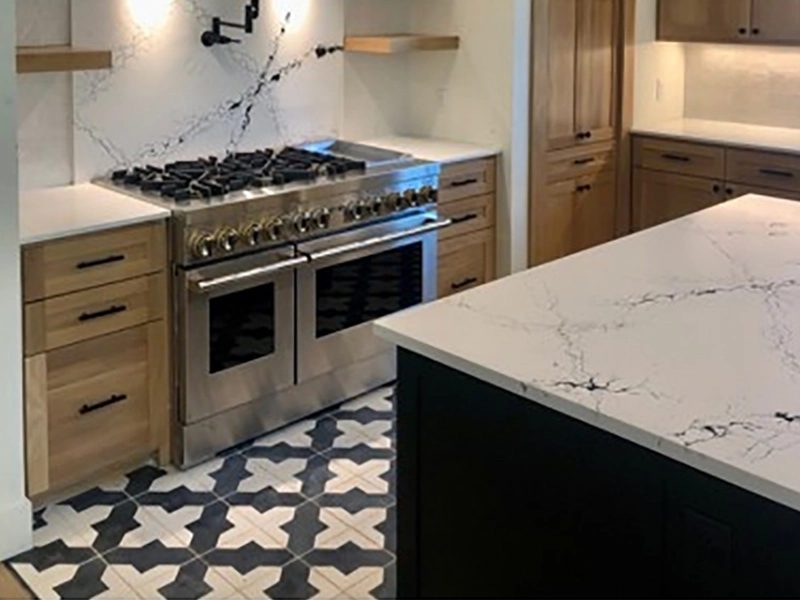
Where to Use Tile for Floors, Walls, Showers & Backsplashes
1) Floors (Kitchens, Baths, Entries, Mudrooms, Hallways)
- Kitchen floors: Tone-on-tone checkers or soft geometrics anchor the room and hide crumbs between cleanings.
- Bathroom floors: Pattern creates a “rug” effect; match grout to background to keep things calm.
- Entries & mudrooms: Hardworking, wipe-clean, and photo-ready.
- Hallways: Border frames or repeating motifs add a bespoke, historic touch.
2) Walls (Accent Walls, Fireplaces, Niches)
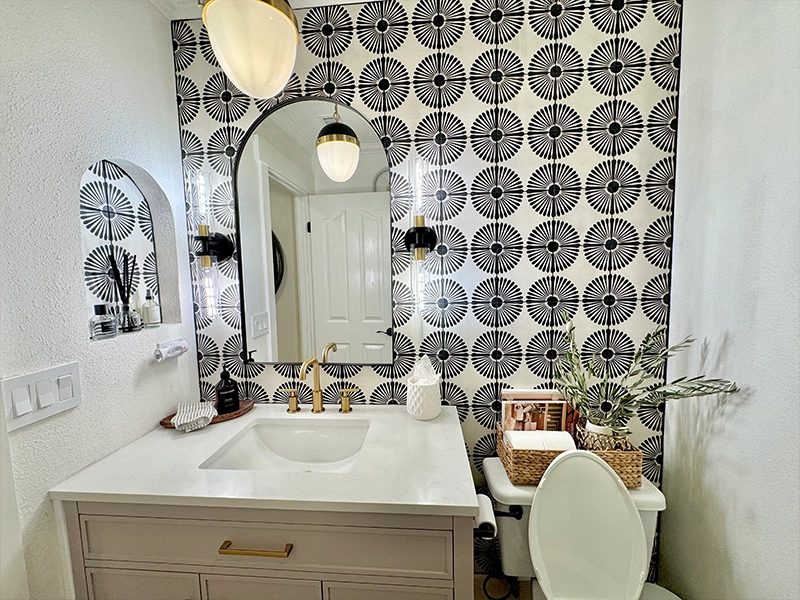
- Accent walls: Behind a bed, in a dining nook, or along a living-room feature wall, patterned cement tiles turn a plain expanse into a focal point.
- Fireplace surrounds: A few square feet of pattern transforms the whole room.
- Built-ins & niches: Leftover boxes of tile = high impact, low cost.
3) Showers
- Shower walls: Pair a calm patterned floor with zellige-style walls for a balanced, spa-like vibe.
- Shower floors: Many pros prefer small mosaics for extra traction. If considering cement on the floor, consult your installer regarding slope, sealer, and maintenance.
4) Backsplashes
- Kitchen backsplashes: Patterned bands, checker insets behind the range, or full-height statements to the ceiling.
- Bar & pantry: A micro-feature that photographs like a million bucks.
See dozens of room ideas in our Cement Tiles Gallery.
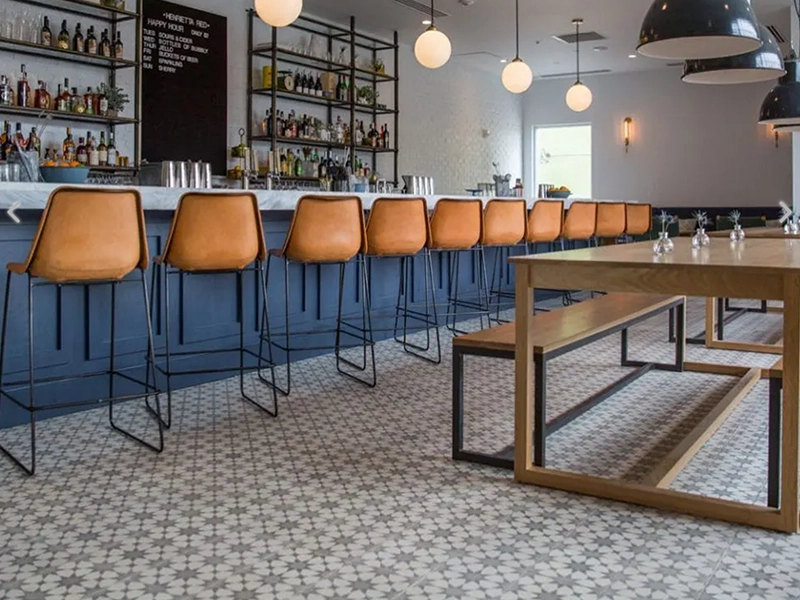
Style Playbook by Home Type
Modern House
- Palette: bone, fog, charcoal, ink
- Looks: crisp geometrics, minimal checkers, thin borders
- Pairs with: brushed brass, white oak, plaster or micro-cement walls
Farm House
- Palette: cream, soot black, clay, tobacco
- Looks: traditional stars, florals, vintage borders
- Pairs with: shiplap, apron sinks, unlacquered brass
Ranch House
- Palette: sand, saddle, sage, terracotta
- Looks: mid-century geometrics, tone-on-tone repeats
- Pairs with: walnut cabinets, terrazzo counters, linen pendants
Coastal & Mediterranean
- Palette: chalky whites, sea-glass blues, driftwood grays
- Looks: Moroccan stars, rope borders, checker with marine accents
- Pairs with: zellige tile, limewash walls, rattan and natural fiber
Five Layouts That Always Work
- Border + Field (Floor)
A solid or simple pattern frames a bolder inner field—perfect for entries and dining rooms. - Pattern “Rug” (Open Plan)
Center a patterned rectangle under the table or seating zone to define the area without walls. - Checkerboard (Any Style)
Soft contrast (bone + fog) feels upscale and calm; high contrast (black + white) is forever classic. - Stair Risers
A stack of patterns or a single motif across risers brings personality to the whole circulation path. - Backsplash Band
Two to four rows of patterned tile behind the range or sink = maximum charm with minimal square footage.
Material Pairings: Elevated and Effortless
- Zellige Tiles (Walls & Backsplashes) – Hand-glazed shine balances cement’s matte softness.
- Terrazzo Tile – Speckled texture plays beautifully with strong cement patterns.
- Terracotta Tiles – Add warmth and old-world soul to cool modern shells.
- Brass Tiles/Accents – Trim, liners, or hardware that catch the light and frame patterns.
Planning, Quantities & Overages (Stress-Free Ordering)
- Measure carefully – Sketch the room, list clear dimensions.
- Overage –
- Straight set or checker: +10%
- Borders/diagonals/inlays: +12–15%
- Complex cuts/stairs: +15–20%
- Trims & Transitions – Plan edging for clean meets with wood, stone, or carpet.
- Samples – Always request samples; view them in your lighting and next to cabinets and counters.
- Freight – Tile is heavy. Consolidate orders to save on shipping and reduce breakage.
- Timeline – In-stock ships fast; custom includes design, sampling, and production. (We’ll help you set the schedule.)
Shop quick timelines in In-Stock Cement Tiles.
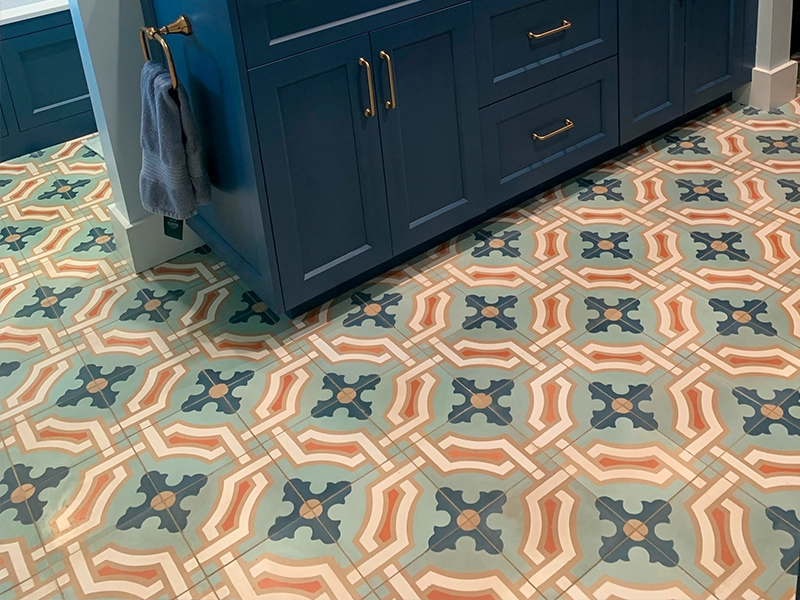
Installation & Care (Cement Tile Essentials)
- Substrate: Flat, clean, and structurally sound.
- Dry layout: Blend tiles from all boxes before installation to distribute natural variation.
- Sealing: With cement tiles, seal before grouting, then again after cure.
- Grout: Choose non-staining grout; test a small area.
- Cleaning: pH-neutral cleaner only—avoid acids, bleach, and abrasives.
- Protection: Felt pads under furniture; rugs at entries; reseal on a schedule based on traffic.
Comparison Snapshot: Cement vs. Porcelain vs. Ceramic
| Feature | Cement Tiles | Porcelain | Ceramic |
|---|---|---|---|
| Look/Depth | Rich pigment layer; handmade variation | Printed/glazed; highly durable | Printed/glazed; excellent value |
| Finish | Velvety matte | Many finishes (matte to polished) | Many finishes |
| Custom Color/Pattern | Excellent (recolor/resize) | Limited | Limited |
| Best Uses | Feature floors/walls, boutique commercial | Heavy traffic, wet zones | Walls, light/medium traffic |
| Care | Seal + pH-neutral clean | Low maintenance | Low maintenance |
Takeaway: Use cement tiles where you want artisan character, custom color, and a camera-ready matte surface. Use porcelain/ceramic for ultra-wet zones or strict maintenance goals.
Room-by-Room Inspiration: Tile for Floors, Walls, Showers & Backsplashes
Kitchen
- Floor: Calm checkers (bone + fog) or a soft geometric repeat.
- Backsplash: Zellige-style field with a cement tile band behind the range.
- Island Zone: Frame a patterned “rug” under stools.
Primary Bath
- Floor: Tone-on-tone motif (sand + chalk) for spa calm.
- Shower Walls: Glossy zellige to bounce light.
- Vanity Splash: Repeat floor colors in a smaller pattern.
Powder Room
- Floor or Full Wall: Go bold. Small rooms love strong pattern and contrast.
Entry & Mudroom
- Floor: Graphic star or vintage repeat with a solid border to hide day-to-day dust.
- Bench Niche: Leftover tiles line cubbies or a wall cap.
Living & Dining
- Fireplace: A patterned cement surround = instant statement.
- Dining Zone: Border + field “carpet” under the table.
More ideas: Cement Tiles Gallery
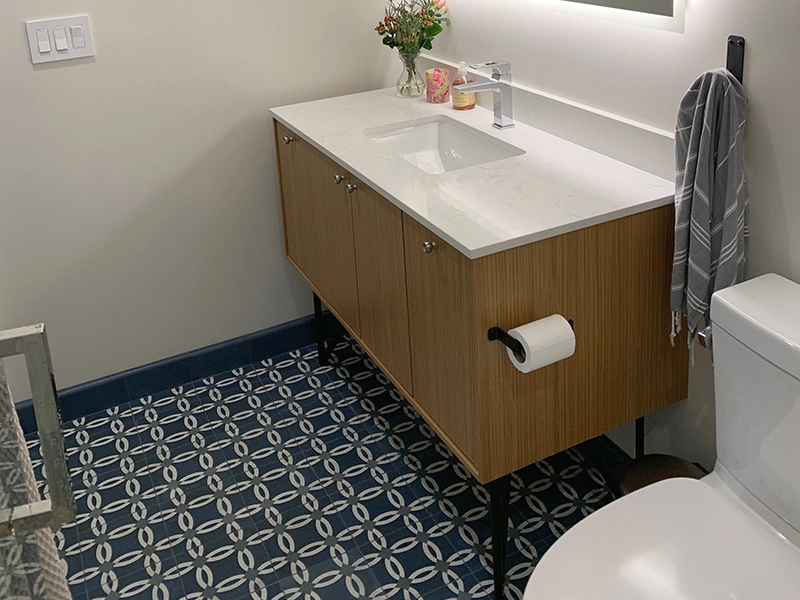
Pro Tips: Color, Pattern & Scale
- Start with the floor when using pattern; let it set the palette.
- Match grout to background so motifs read cleanly.
- Use light/dark pairs for legible patterns at a distance.
- Right-size the motif – Small room? Softer contrast or smaller scale.
- Think photography – Cement’s matte finish avoids glare for retail and portfolio shots.
Sustainability & Wellness Notes
- Long lifecycle – Durable surfaces reduce replacement waste.
- Low-VOC maintenance – pH-neutral cleaners keep indoor air fresher.
- Natural pigments and cement – A material story that feels honest and timeless.
Frequently Asked Questions (FAQs)
1) Can I use cement tile in a shower?
Cement tiles are fantastic on shower walls. For shower floors, consult your installer about slip requirements and maintenance preferences; many pros favor small mosaics for traction.
2) Do cement tiles need to be sealed?
Yes—seal before grouting, then reseal after cure. Maintain with pH-neutral cleaners.
3) How much extra tile should I order?
Plan +10% for straightforward layouts; +12–15% for borders/diagonals; +15–20% for intricate layouts or stairs.
4) Are cement tiles slippery?
Cement’s matte finish offers good traction versus many glossy tiles. Confirm COF needs for commercial specs.
5) What’s the best grout color with patterns?
Usually the background color—this keeps the motif crisp and easier to maintain visually.
6) Will cement tile stain?
With proper sealing and pH-neutral care, it’s easy to live with. Wipe spills promptly and reseal on schedule.
7) Can I recolor a pattern to match my cabinets?
Absolutely. Use our Custom Cement Tiles service to dial in the perfect palette.
8) How does cement compare to porcelain on maintenance?
Porcelain is generally lower-maintenance; cement offers irreplaceable handmade depth and custom color options.
9) Is tile good for radiant heat?
Yes—tile conducts heat efficiently. Confirm adhesive and underlayment compatibility with your contractor.
10) Can tile increase resale value?
High-impact features (entry floors, kitchen backsplashes, primary baths) are buyer magnets. Quality tile work signals a cared-for home.
How to Get Started (Simple, Fast)
- Get inspired: Browse the Gallery.
- Pick your path:
- Quick ship: See In-Stock Cement Tiles
- Totally custom: Visit Custom Cement Tiles
- Request samples: Verify color/finish with your lighting and surrounding materials.
- Confirm quantities: Add overage; plan trims and transitions.
- Schedule install: Share sealing and care notes with your installer.
- Enjoy your new space: Snap photos and tag us—we love featuring client projects.
Need tailored guidance? Talk to a Tile Specialist and we’ll recommend tile for floors, walls, showers & backsplashes based on your style, timeline, and budget.
Why Designers, Architects & Showrooms Choose Original Mission Tile
- Artisan quality at scale – Handmade character with reliable lead times.
- Trade-friendly support – Samples, takeoffs, and spec guidance for residential and commercial.
- Depth of assortment – Hundreds of in-stock designs + true custom capability.
- Logistics savvy – We pack, ship, and communicate so projects stay on track.
Ready to order? See In-Stock Cement Tiles or contact our team for a custom colorway.
Make every surface count with tile for floors, walls, showers & backsplashes—and give your home or project the handmade character it deserves.
- See Trend-Forward Patterns: https://originalmissiontile.com/in-stock-cement-tiles/
- Design Your Own: https://originalmissiontile.com/custom-tiles/
- Talk to a Tile Specialist: https://originalmissiontile.com/cement-tiles-contact/