Walls have always told a story. In 2026, the most compelling ones are being written in three dimensions.
The design world is in the middle of a quiet revolution — one that’s moving away from flat, uniform surfaces and toward materials with physical presence, tactile depth, and the unmistakable quality of being made. At the center of this shift are 3D tiles and wall tiles: surfaces that cast their own shadows, change with the light throughout the day, and transform a wall from a backdrop into a design statement.
For interior designers and architects, this represents one of the most exciting specification opportunities of the moment. The question is no longer whether textured wall tiles belong in a considered interior — it’s how to use them with precision and intention. This guide breaks down what’s driving the 3D tile trend in 2026, where to use it, how to specify it, and how handmade cement wall tiles fit into the larger picture.
Why 3D Wall Tiles Are Having a Moment in 2026

The rise of 3D and textured wall tiles in 2026 isn’t happening in isolation — it’s part of a broader correction in interior design after years of flat, frictionless surfaces dominating the market. Large-format slabs, glossy porcelain, and seamless finishes served a purpose: they felt clean, modern, and aspirational. But they also felt, increasingly, the same.
What designers and their clients are seeking now is materiality — the sense that a surface has weight, history, and craft behind it. Textured wall tiles deliver all three. They interact with light rather than simply reflecting it. They reward close inspection. They feel different to the touch. And in a project portfolio or on an Instagram grid, they photograph in a way that flat surfaces simply don’t.
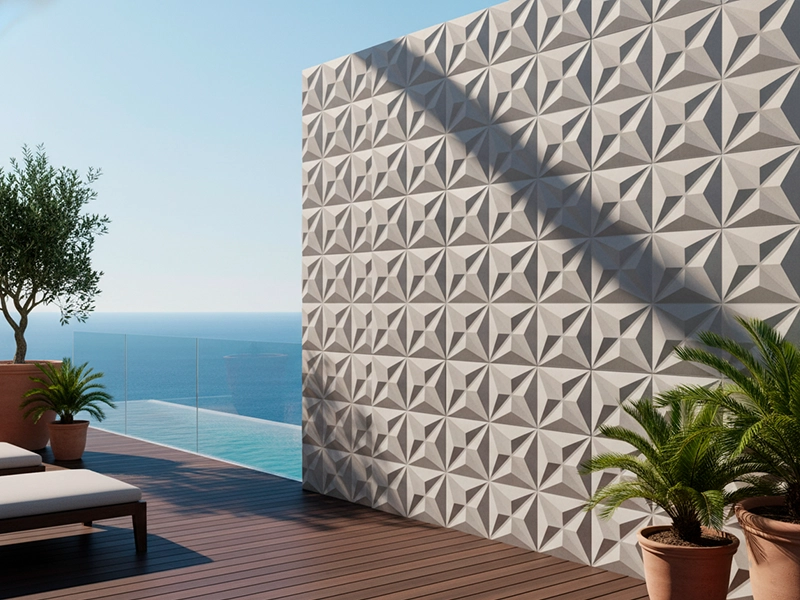
There’s also a specific architectural logic at work: 3D tiles do the work of both material and light fixture. A wall covered in a relief tile pattern will read differently at dawn, at midday, and under evening candlelight — giving a single surface an almost cinematic range of expression throughout the day.
The Cement Tile Advantage in Wall Applications

When the conversation turns to 3D and textured wall tiles, cement tiles offer something the broader market of pressed concrete and molded ceramics often can’t: the depth of a handmade surface combined with infinite pattern customization.
Traditional cement tiles are pressed under thousands of pounds of hydraulic pressure — a process that produces a surface with natural micro-texture even in flat patterns. When that same craft is applied to relief designs and geometric wall formats, the result is a surface that carries both visual and tactile complexity. The mineral pigments used in cement tiles produce color with a warmth and depth that printed glazes can’t replicate — meaning a white cement wall tile isn’t just white; it’s a surface with subtle variation that catches light and reads as alive.
For designers who want to go beyond standard catalog options, Original Mission Tile’s Custom Made Collection opens the door to wall tile designs developed specifically for a project — a pattern derived from an architectural detail, a relief based on a client’s heritage, or a surface treatment that echoes a material used elsewhere in the space.
Where to Specify 3D and Textured Wall Tiles in 2026
Feature Walls in Living Rooms and Bedrooms
The living room or bedroom feature wall behind a sofa or bed is perhaps the most natural home for a 3D tile treatment. Here, the tile isn’t competing with cabinetry or countertops — it’s the entire statement. A geometric relief in warm white or stone gray creates depth and shadow that reads as architecture, not decoration. Keep furniture and textiles simple and let the wall breathe.
Designer tip: The scale of the relief should relate to the scale of the room. A bold, deep-cut pattern in a grand living room feels proportionate and confident; in a more intimate bedroom, a subtler texture with finer geometry creates warmth without visual overwhelm.
Bathroom Accent Walls
The bathroom is where 3D tiles find some of their most dramatic applications — particularly the wall behind a freestanding tub or the back wall of a niche. The confined scale of most bathrooms means that a textured wall tile reads at close range, where its tactile quality is fully experienced.
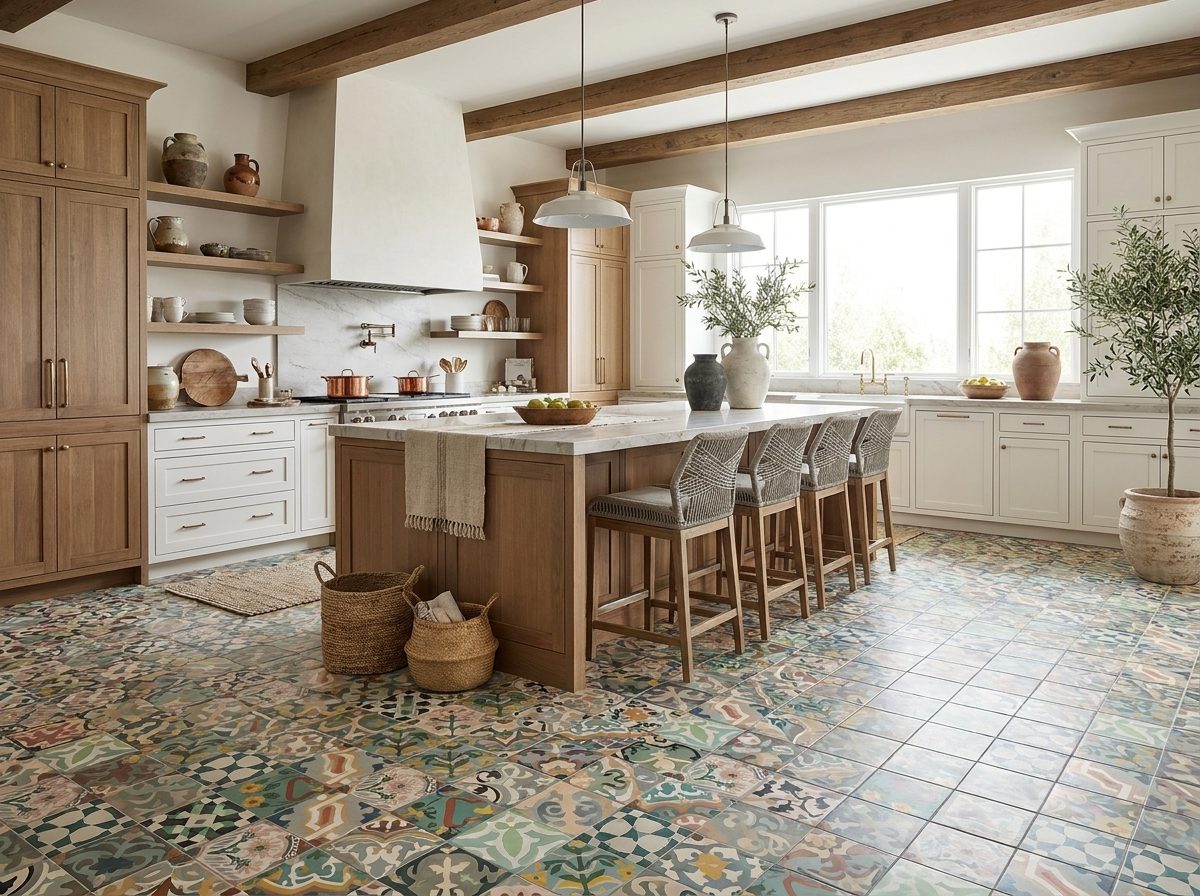
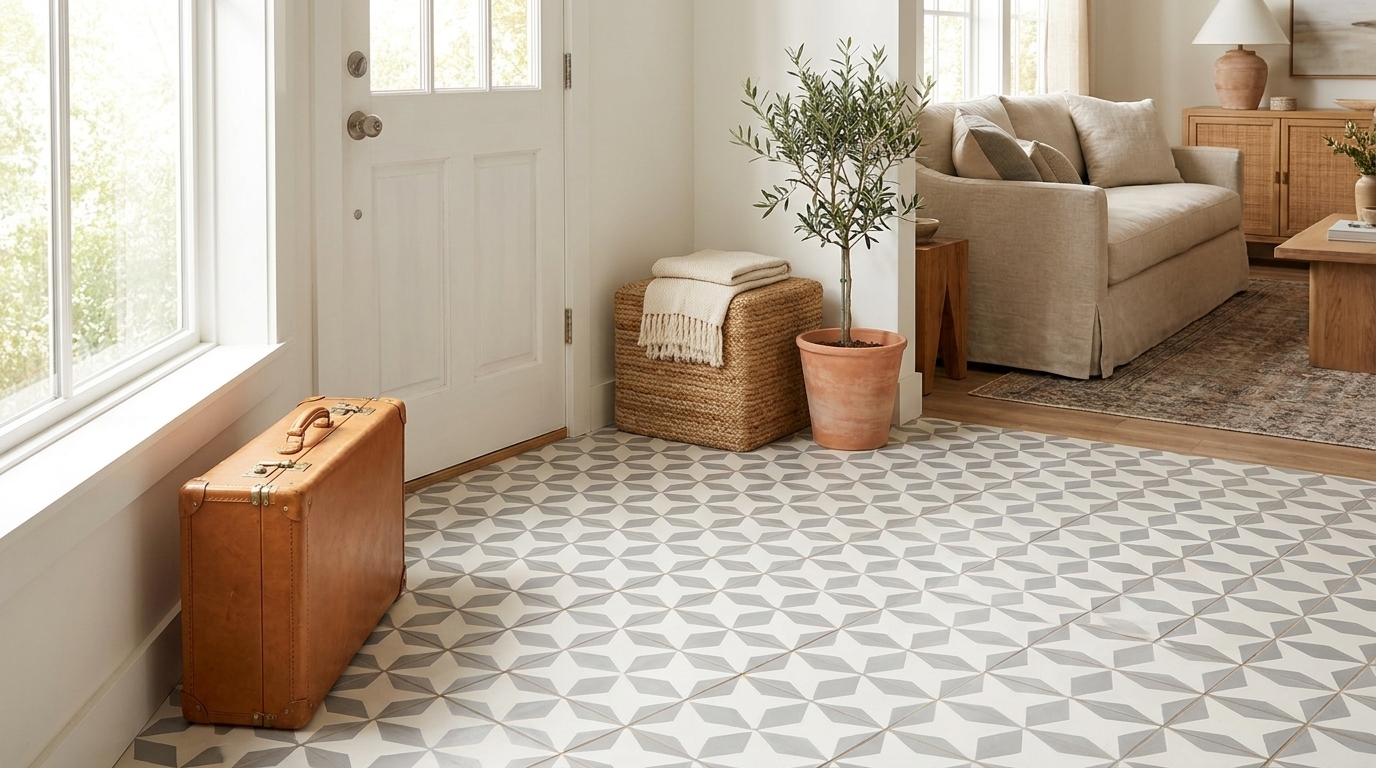
In 2026, the combination that’s generating the most attention from designers: a geometric cement tile floor in a bold pattern paired with a tonal, low-relief textured wall tile. Two handmade surfaces, both patterned, both from the same material family — but differentiated in scale and dimension to create a layered, considered interior.
[IMAGE SUGGESTION: Cement tile bathroom with textured wall tiles behind freestanding tub and geometric floor pattern — alt text: “Bathroom interior design 2026 featuring textured wall tiles and patterned cement tile floor by Original Mission Tile”]
Kitchen Backsplash as Textural Moment
A 3D tile on a kitchen backsplash introduces a dimension that standard subway tiles and slabs simply can’t — particularly when the surface is lit by under-cabinet lighting, which rakes across the texture and creates a play of light and shadow every time the kitchen is in use.
For backsplash applications, smaller-format relief tiles tend to work best — they tile elegantly around outlets and cabinetry without breaking pattern awkwardly, and their smaller scale allows the texture to read at the closer viewing distances typical of kitchen use.
Explore ready-to-specify options in the In-Stock Collection — a curated selection of patterns suited to both floor and wall applications in residential and commercial kitchens.
Hospitality and Commercial Interiors
In hospitality design, 3D wall tiles are being used to define zones, establish brand character, and create the kind of sensory environments that drive guest experience. A hotel corridor lined with textured tiles that shift under different lighting conditions. A restaurant bar back finished in relief cement tile that reads differently from every seat in the room. A spa reception where the wall becomes an object of quiet contemplation.
For commercial projects where the tile needs to carry a specific brand or visual identity, the Custom Made Collection is the right conversation to start — and starting it early in the design process, before budget sign-off, creates the most room for creative ambition.
How to Specify 3D Wall Tiles With Confidence

Lighting is everything. The most important specification decision you’ll make when working with 3D wall tiles is the lighting design — not the tile. Specify raking light sources (wall washers, directional spots, or grazing fixtures) that will travel across the tile surface rather than illuminating it head-on. Front-lit 3D tiles lose much of their dimensional impact; side-lit or grazing-lit tiles come alive.
Grout or no grout? Many contemporary 3D tile installations — particularly in residential living spaces and bedrooms — are moving toward tight-set installations with minimal grout joints, or toward grout colors that are closely matched to the tile body. This creates a more continuous, surface-like reading of the wall and prevents the grout grid from competing with the relief pattern.
Sample in context. Request samples from the In-Stock Collection and view them in the actual space, under the actual lighting conditions — both natural and artificial. Texture is profoundly context-dependent, and a tile that looks subtle in a showroom can be transformative in a client’s hallway under a single directional spot.
Use the Design Studio to present options. The Original Mission Tile Design Studio allows designers to explore pattern combinations and colorways before samples arrive — an invaluable tool for client presentations and early-stage design alignment.
FAQ: 3D Tiles & Wall Tiles for Designers
Are cement tiles suitable for wall applications, not just floors? Absolutely. Cement tiles have been used on walls for over a century — in Moroccan riads, Spanish colonial interiors, and French Art Nouveau spaces. Contemporary residential and hospitality projects are embracing wall applications with renewed enthusiasm, particularly for feature walls, bathroom accent surfaces, and kitchen backsplashes.
What’s the difference between 3D tiles and textured tiles? The terms are often used interchangeably, but there’s a useful distinction: 3D tiles have a pronounced relief — raised or recessed elements that create physical shadow and depth. Textured tiles have a surface variation (matte vs. slightly rough, or with micro-relief) but less dramatic dimensional change. Both are trending in 2026; the choice depends on how much visual and physical presence the wall application calls for.
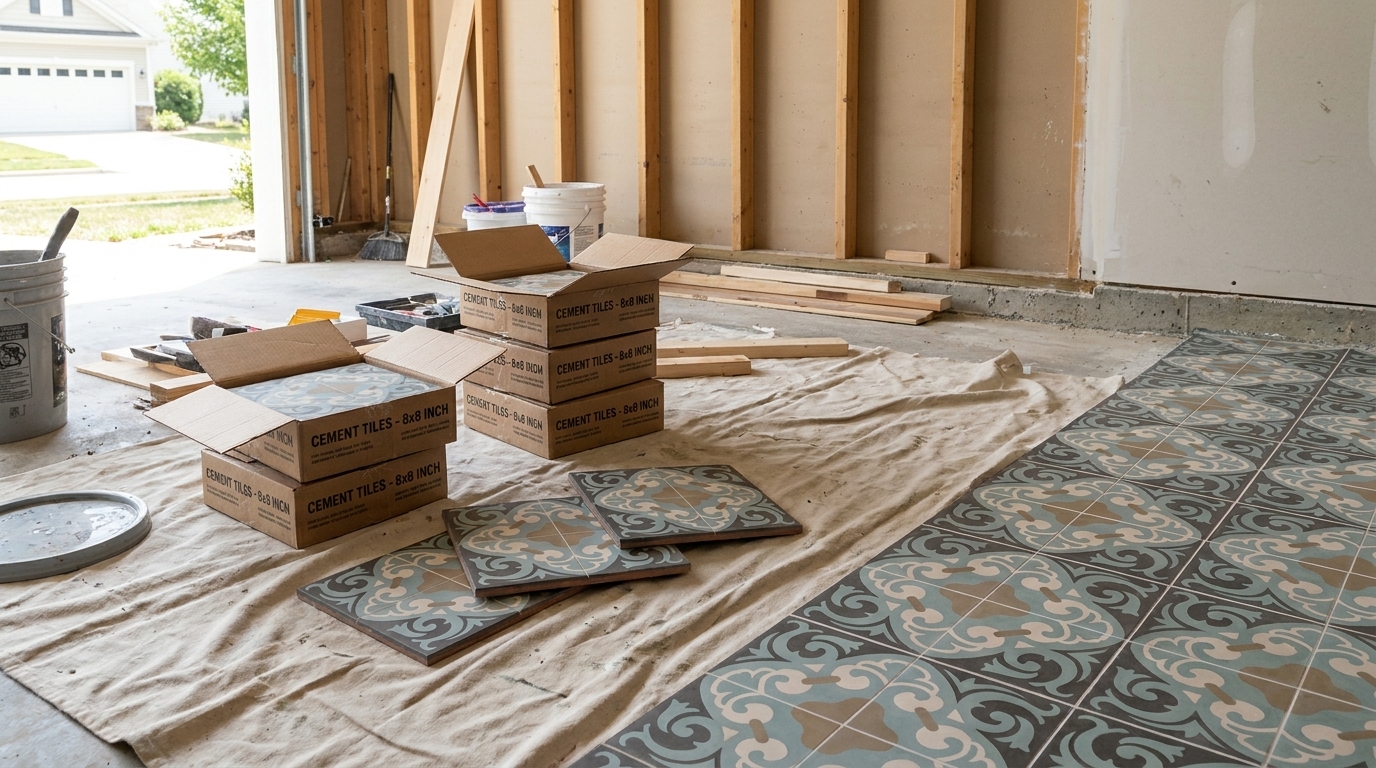
Do 3D wall tiles require special installation? The installation principles are similar to standard tile, but adhesive selection is important — particularly for heavier cement tiles on walls. Specify a high-bond, non-slip adhesive rated for wall applications. Always confirm substrate preparation and weight loads with your contractor before specifying on wall surfaces.
Can I mix 3D wall tiles with patterned floor tiles in the same space? Yes — and when done thoughtfully, it’s one of the most sophisticated moves in contemporary interior design. The key is maintaining a shared palette and ensuring the scale relationships between floor and wall patterns create balance rather than competition. Browse real project examples in the Projects Gallery to see how other designers have navigated this combination.
Conclusion: The Wall as Design Protagonist
In 2026’s most considered interiors, walls are no longer passive. They’re active — casting shadows, interacting with light, rewarding the people who live and move within them. 3D and textured wall tiles are the material expression of that shift: a return to surfaces that have something to say, made by hands rather than machines.
For designers and architects who want to bring that quality into their work, handmade cement wall tiles offer both the craft and the creative range to make it happen — in a kitchen, a bathroom, a hotel lobby, or anywhere a wall deserves more than a coat of paint.
The surface is waiting. What you put on it is the difference between a room that’s finished and a room that’s alive.
Ready to bring texture and dimension to your next project?
Explore patterned options in the In-Stock Collection, develop something unique with the Custom Made Collection, visualize wall layouts in the Design Studio, or browse real project applications in the Projects Gallery.
Contact the Original Mission Tile design team for samples and expert project guidance →