There is a moment in every well-designed room when the light does something unexpected — when it catches a surface and transforms it from material into atmosphere. In 2026, brass tiles are creating that moment more consistently than almost anything else in interior design.
Brass has been one of the most talked-about finishes in interior design for several years now — in fixtures, hardware, furniture legs, and lighting. But in 2026, the conversation has evolved: brass is moving from accent to surface. From a faucet finish or a drawer pull to an entire tile field that glows, shifts, and transforms a wall or floor into something genuinely extraordinary.
For homeowners dreaming of a bathroom that feels like a sanctuary. For contractors looking to offer clients a finish that photographs beautifully and holds its value. For designers and architects who understand that the right surface material can define an entire interior — brass tiles in 2026 represent one of the most compelling specifications available. This guide covers the trends, the applications, the practical considerations, and how handmade cement tiles in brass-adjacent palettes bring warmth and craft to every space they touch.
Why Brass Is the Defining Finish of 2026 Interiors

Brass’s dominance in contemporary interior design isn’t an accident — it’s a response to something real in how we want our spaces to feel.
The warmth imperative. After years of cool, industrial finishes — matte black, brushed nickel, cool gray — the design world has pivoted decisively toward warmth. Brass is the warmest of the metallic finishes. It doesn’t just reflect light; it transforms it, casting a golden glow that makes skin look better, spaces feel more alive, and rooms feel genuinely welcoming.
The luxury signal. There is a reason gold and brass have signaled luxury across cultures and centuries — they carry an inherent richness that cooler finishes cannot replicate. In 2026’s high-end residential and hospitality design, brass tiles are being used precisely because they communicate quality and investment in a way that is immediately legible to anyone who enters the space.
The photography effect. Brass surfaces are exceptionally photogenic. The way they interact with warm light sources — candlelight, warm-toned LEDs, afternoon sun — creates the kind of atmospheric imagery that drives design inspiration across digital platforms. A brass tile bathroom wall is a space that photographs like a set.
The craft alignment. The best brass and brass-effect tiles — whether metallic ceramic, glass mosaic, or handmade cement in golden and ochre palettes — carry the visual complexity of a material that has been worked by hand. That craft quality aligns directly with the broader design movement toward surfaces that carry the evidence of their making.
The Brass Tile Trends Defining 2026
Trend 1: Brass as the Feature Wall Finish

The most impactful brass tile application in 2026 is the feature wall — a single surface covered entirely in brass or brass-toned tile that becomes the compositional anchor of a room. Behind a freestanding bathtub. Behind a bed in a primary bedroom. At the back of a restaurant bar. At the end of a hotel corridor.
The effect is transformative: a wall that glows, shifts with the light throughout the day, and gives every other material in the room something to respond to. Pale stone reads warmer beside brass. White plaster becomes luminous. Dark marble develops depth.
For homeowners: A brass tile feature wall is a high-impact, focused investment — one surface that transforms an entire room. It works at almost any scale: from a powder room wall that becomes a jewel box to a full primary bathroom that earns its luxury designation.
For designers and architects: The key specification consideration is lighting. Brass tiles — like all metallic and warm-toned surfaces — are dramatically enhanced by warm-temperature light sources (2700K–3000K) directed to graze or wash across the surface. Plan the lighting design and the tile specification together.
Trend 2: Brass-Toned Cement Tiles — Warmth Without the Metal
Not every brass tile application requires a metallic surface. In 2026, one of the most sophisticated expressions of the brass trend is through warm, golden-toned cement tiles — handmade tiles in deep ochre, antique gold, warm amber, and burnished yellow that carry the feeling of brass without the metallic surface.
These tiles offer several specification advantages over literal metallic tiles. They are more forgiving of fingerprints and surface marks in high-use areas. They work in a wider range of lighting conditions — including natural daylight, where some metallic tiles can appear flat or overly reflective. And they carry the depth and variation of handmade cement that printed surfaces cannot replicate.
Through the In-Stock Collection, Original Mission Tile offers warm-toned patterns that bring a golden quality to floors and walls without the maintenance considerations of metallic finishes. For projects requiring a specific brass-adjacent tone, the Custom Made Collection allows designers to develop a colorway calibrated to their exact palette.
Trend 3: Brass and Deep Color — The Combinations of the Year

Brass tiles rarely work best in isolation — they come alive in combination. And the combinations generating the most design attention in 2026 are pairings of brass-toned surfaces with deep, saturated colors:
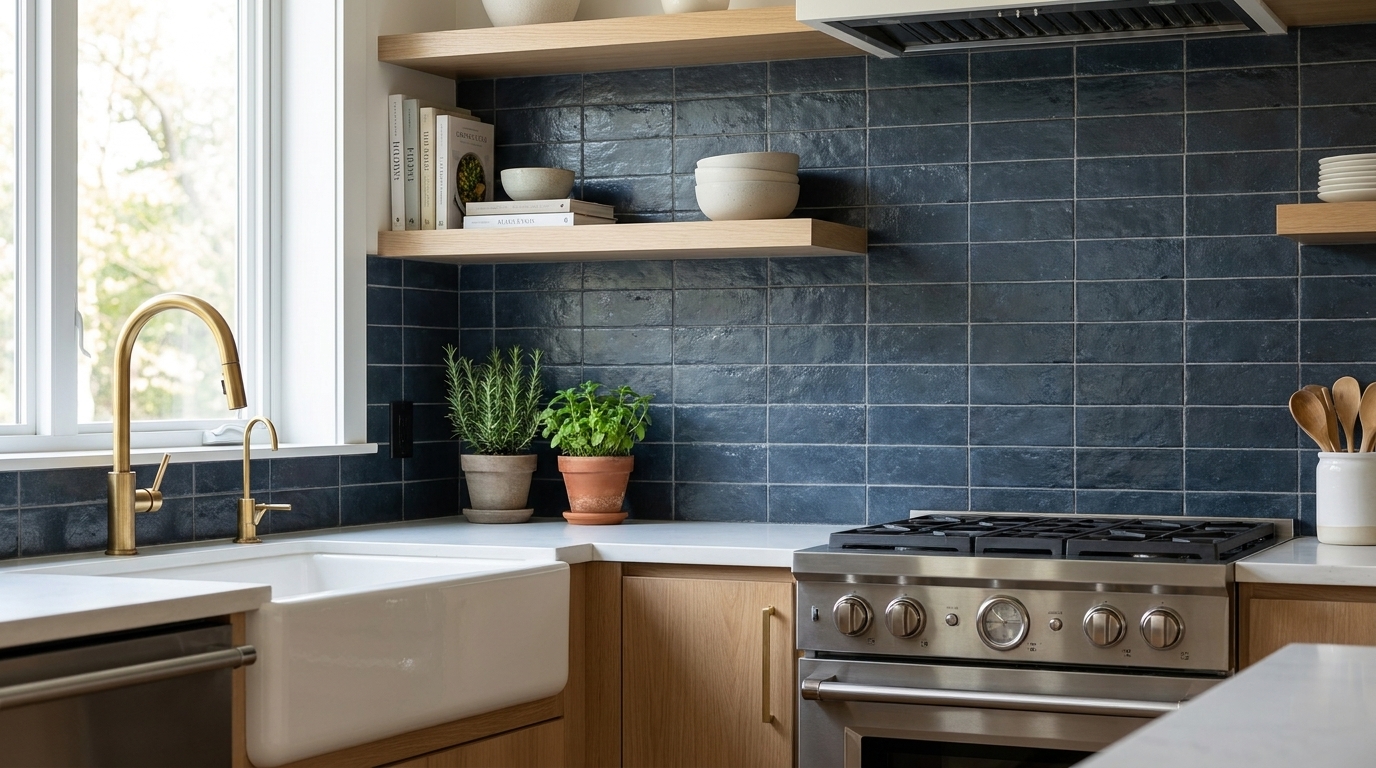
- Brass and deep navy — a combination with genuine drama and elegance, particularly in bathrooms and kitchens
- Brass and forest green — warm and earthy, evoking the feel of a botanical garden conservatory or a sophisticated bar
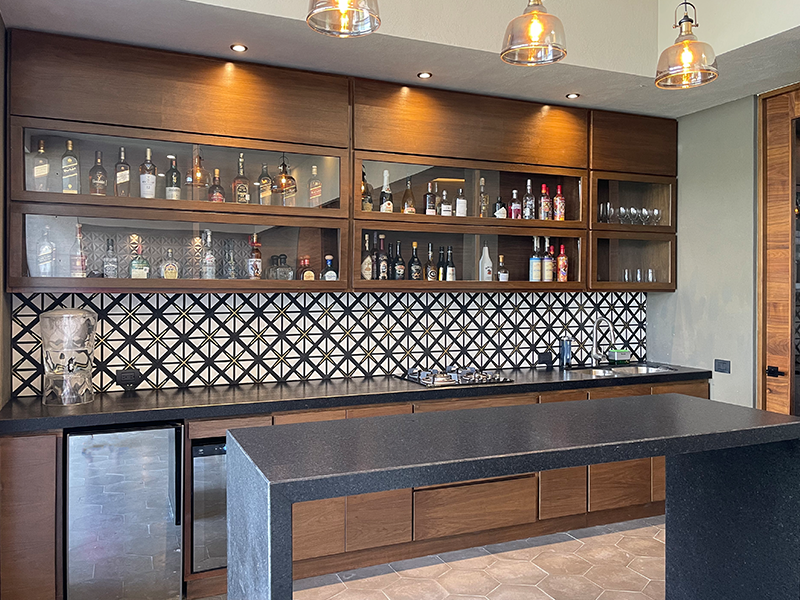
- Brass and charcoal or black — one of the most used combinations in hospitality design, where the contrast between the two materials creates maximum visual impact
- Brass and warm terracotta — an earthy, sun-warmed combination that feels genuinely Mediterranean and works beautifully in both indoor and outdoor applications
For interior designers: The golden palette of brass-toned tiles pairs exceptionally well with the earthy, warm color family that is defining 2026 interiors broadly. It’s a specification move that aligns with multiple trends simultaneously — warmth, craft, color confidence, and material depth.
For homeowners: If you’re planning a kitchen renovation in 2026, consider a brass-toned cement tile backsplash against deep green or navy cabinetry. It’s one of the most impactful and photographically stunning combinations available at any budget level.
Trend 4: Brass Tiles in Kitchens — The Backsplash Reimagined
The kitchen backsplash has emerged as the primary testing ground for brass tile in residential design. Positioned between cabinetry and countertop, the backsplash is the surface that gets the most light, the most visual attention, and the most opportunity to define the mood of the kitchen.
Brass or brass-toned tiles on a kitchen backsplash create a warmth and richness that no other surface fully replicates. Under under-cabinet lighting — which rakes directly across the backsplash — the warmth of the tile is amplified into something almost luminous. And in combination with the other materials trending in 2026 kitchens (natural stone countertops, deep-colored cabinetry, warm wood accents), brass-toned tiles create a cohesion and intentionality that elevates the entire room.
Browse completed kitchen projects in the Projects Gallery to see how brass-toned tiles have been used across a range of kitchen styles and scales.
Trend 5: Brass Accents in Pattern — Geometric Tiles With Golden Highlights

For designers who want the warmth of brass in a floor application without the impracticality of a metallic tile surface underfoot, geometric cement tiles that incorporate golden ochre, warm amber, or antique gold tones into their pattern are the answer.
A classic eight-pointed star pattern in deep teal and golden ochre. An encaustic grid with warm amber accents. A Moroccan geometric combining charcoal and burnished gold. These combinations bring the brass palette into a hardworking tile format — one that can be walked on daily, sealed for easy maintenance, and appreciated from the moment someone enters a room.
The Design Studio is the ideal tool for exploring these combinations — test different geometric patterns with brass-adjacent colorways, visualize full floor layouts, and generate client presentations before a single sample is ordered.
Where Brass Tiles Work Best in 2026 Interiors
Bathrooms: The primary destination for brass tiles in 2026. Feature walls, shower walls, floor accents, and vanity back panels — any surface that benefits from warmth, luminosity, and a sense of material luxury.
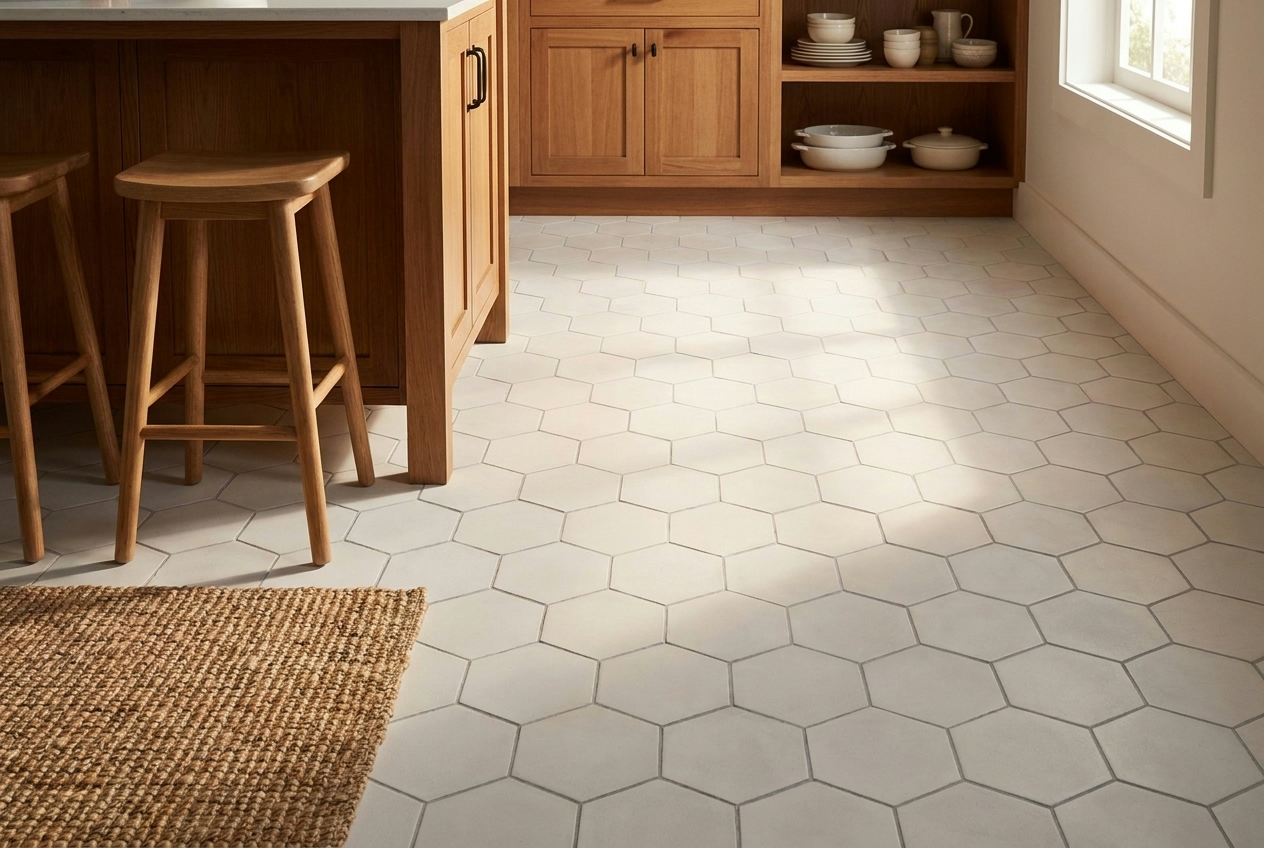
Kitchens: Backsplash as the signature move; golden-toned floor tiles as an alternative for designers who want the warmth spread across a larger surface.
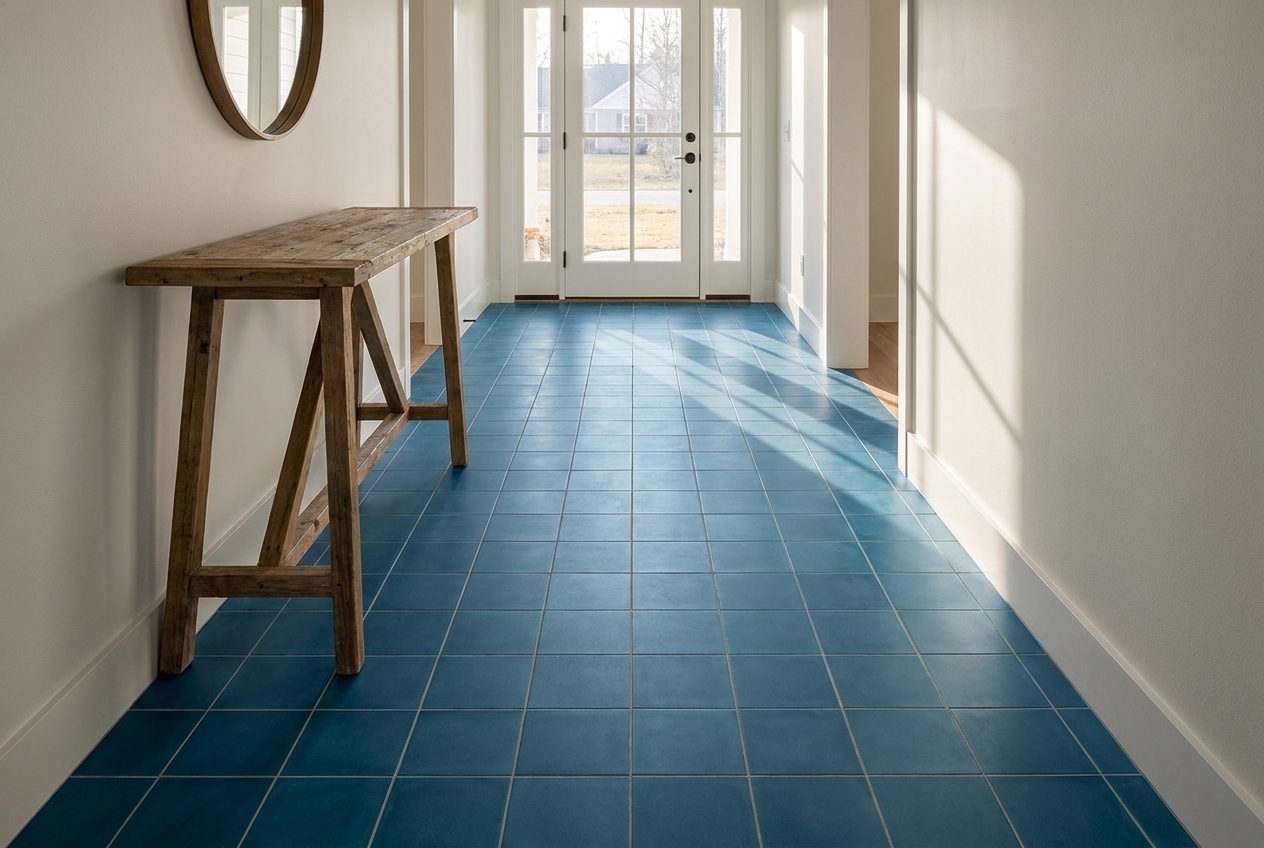
Entryways: A brass-toned cement tile entryway floor tells the story of a home immediately — warm, considered, and unmistakably designed.
Hospitality and commercial spaces: Bar backs, restaurant feature walls, hotel bathroom surfaces, boutique retail fitting rooms — anywhere an impression of quality and warmth needs to be made quickly and maintained over years of use.
Powder rooms: The enclosed scale of a powder room makes it the ideal space for a bolder brass tile treatment. A fully tiled brass wall in a powder room creates the jewel-box effect that has become one of the most shared design images of the year.
Practical Guidance for Brass Tile Specifications and Installation
For Homeowners
- Request samples and view them under both natural and artificial light — brass tones shift significantly between lighting conditions, and the tone that looks perfect in a showroom may read differently in your home
- Consider maintenance honestly: literal metallic tiles show fingerprints more readily than matte surfaces; brass-toned cement tiles in ochre and amber tones offer similar warmth with simpler day-to-day care
- Sealing is essential for cement tiles in any palette — apply penetrating sealer before grouting and again after, and reseal annually in high-use areas
For Contractors
- Warm-toned cement tiles, like all cement tiles, require careful grout color selection — a warm sand or honey-toned grout integrates naturally with brass and ochre palettes; cooler gray grouts can create visual conflict
- Layout planning matters: in geometric patterns with golden accent tones, the visual center of the pattern needs to be optically centered in the room
- Always specify 10–15% overage for cuts, waste, and future dye-lot matching
For Interior Designers and Architects
- Brass-toned tiles are a lighting-dependent specification: design the lighting scheme alongside the tile, not after it. Warm-temperature sources (2700K–3000K) at grazing angles maximize the warmth of the surface
- The Design Studio allows you to test brass-adjacent colorways in pattern combinations before samples arrive — essential for client presentations involving warm metallic tones, which are notoriously difficult to communicate from swatches alone
- For bespoke brass-adjacent colorways developed specifically for a project palette, the Custom Made Collection is the right conversation to initiate early in the design process
FAQ: Brass Tiles in 2026
What are brass tiles made from? “Brass tiles” refers to a range of tile types that achieve a brass-toned or golden surface effect. These include metallic ceramic tiles with a brass glaze or finish, glass mosaic tiles with gold leaf or metallic backing, and — most relevant to Original Mission Tile’s work — handmade cement tiles in warm ochre, amber, and golden mineral pigments that carry the warmth and depth of brass without a metallic surface. The right type depends on the application and the level of literal metallics the design calls for.
Are brass-toned cement tiles difficult to maintain? No more difficult than any other cement tile. The standard care protocol applies: neutral-pH cleaners, regular sealing, and avoidance of acidic or abrasive products. Warm mineral pigments in ochre and amber tones are practically forgiving — they absorb the visual evidence of everyday use gracefully.
Can brass tiles be used on floors? Metallic surface tiles are generally better suited to walls and backsplashes, where foot traffic is not a consideration. Brass-toned cement tiles in ochre and golden palettes, however, are excellent floor tiles — the mineral pigment runs through the full wear layer, and warm earth tones develop beautiful patina under regular foot traffic.
How do I make brass tiles work without looking overdone? The key is restraint in application and simplicity in everything around the tile. One feature wall, not four. Simple, unfussy fixtures. Quiet countertops and cabinetry. Let the brass-toned surface be the point of the room, and resist the urge to layer additional decorative complexity around it.
Where can I see brass-toned and warm-palette cement tile projects? The Projects Gallery features completed installations across residential and commercial applications — browse by application and space type for examples most relevant to your current project brief.
Conclusion: The Surface That Makes Light Beautiful
Every great interior has a moment — a surface, a material, a detail — where light becomes something more than illumination. It becomes atmosphere. It becomes mood. It becomes the reason a room feels the way it feels.
In 2026, brass tiles are creating that moment more consistently and compellingly than almost any other material available. Whether through the direct luxury of a metallic tile feature wall, or the deeper, earthier warmth of a handmade cement tile in golden ochre and amber — the brass palette is transforming interiors from finished rooms into genuinely felt experiences.
The warmth is real. The craft is real. And the effect on anyone who walks into a space defined by a surface like this is entirely, unmistakably real.