Everyone loves the look of terracotta. The warm, earthy tones. The connection to the Mediterranean, to Mexican haciendas, to sun-drenched courtyards where the color of the floor and the color of the earth are almost the same thing. Terracotta has never really gone out of style — it just cycles in and out of the design mainstream while quietly remaining one of the most emotionally resonant surface choices available.
But not all terracotta tiles are built the same. And in 2026, as the terracotta revival reaches full maturity in U.S. residential and commercial design, the distinction that matters most isn’t color or pattern — it’s material. Specifically: the difference between traditional fired clay terracotta tiles and cement-based terracotta tiles that are hydraulically pressed rather than kiln-fired.
For interior designers, contractors, and renovators who want the warmth and visual richness of terracotta without the fragility, porosity, and maintenance demands of traditional fired clay, this guide explains what makes cement terracotta tiles fundamentally different — and why they’re the specification that holds up as beautifully in twenty years as it does on installation day.
The Terracotta Problem Most Designers Don’t Talk About

Traditional fired clay terracotta tiles are beautiful. They’re also, by the standards of contemporary high-use residential and commercial interiors, genuinely demanding to maintain. Here’s what every designer and contractor should know before specifying fired clay terracotta:
High porosity. Fired clay terracotta is one of the most porous tile materials available. Unsealed, it will absorb liquids almost immediately — wine, cooking oil, coffee — leaving stains that are difficult or impossible to fully remove. Even sealed, the sealing schedule is demanding and must be maintained rigorously, especially in kitchens and bathrooms.
Thermal and impact fragility. Terracotta tiles fired at lower kiln temperatures — which includes most traditional Saltillo and handmade Mexican terracotta — are significantly more brittle than denser tile materials. They chip at edges and corners under normal residential use, and in climates with temperature swings or freeze-thaw cycling, unglazed fired clay terracotta can crack when moisture in the tile body expands and contracts.
Surface wear. The glaze or slip finish on fired clay terracotta wears unevenly in high-traffic areas, creating a patchy appearance that can be difficult to address without full floor restoration.
Thickness variation. Hand-formed fired clay terracotta varies significantly in thickness from tile to tile, making installation technically demanding and lippage management a real challenge on larger floor areas.
None of this makes fired clay terracotta wrong for every application. But for designers, contractors, and renovators who want terracotta aesthetics in kitchens, bathrooms, high-traffic entryways, and commercial spaces — the limitations are real and worth understanding before specifying.
What Makes Cement Terracotta Tiles Different

Cement terracotta tiles achieve the same visual warmth and earthy richness as fired clay — but through a fundamentally different manufacturing process that produces a more dimensionally consistent, more durable, and more specification-friendly tile.
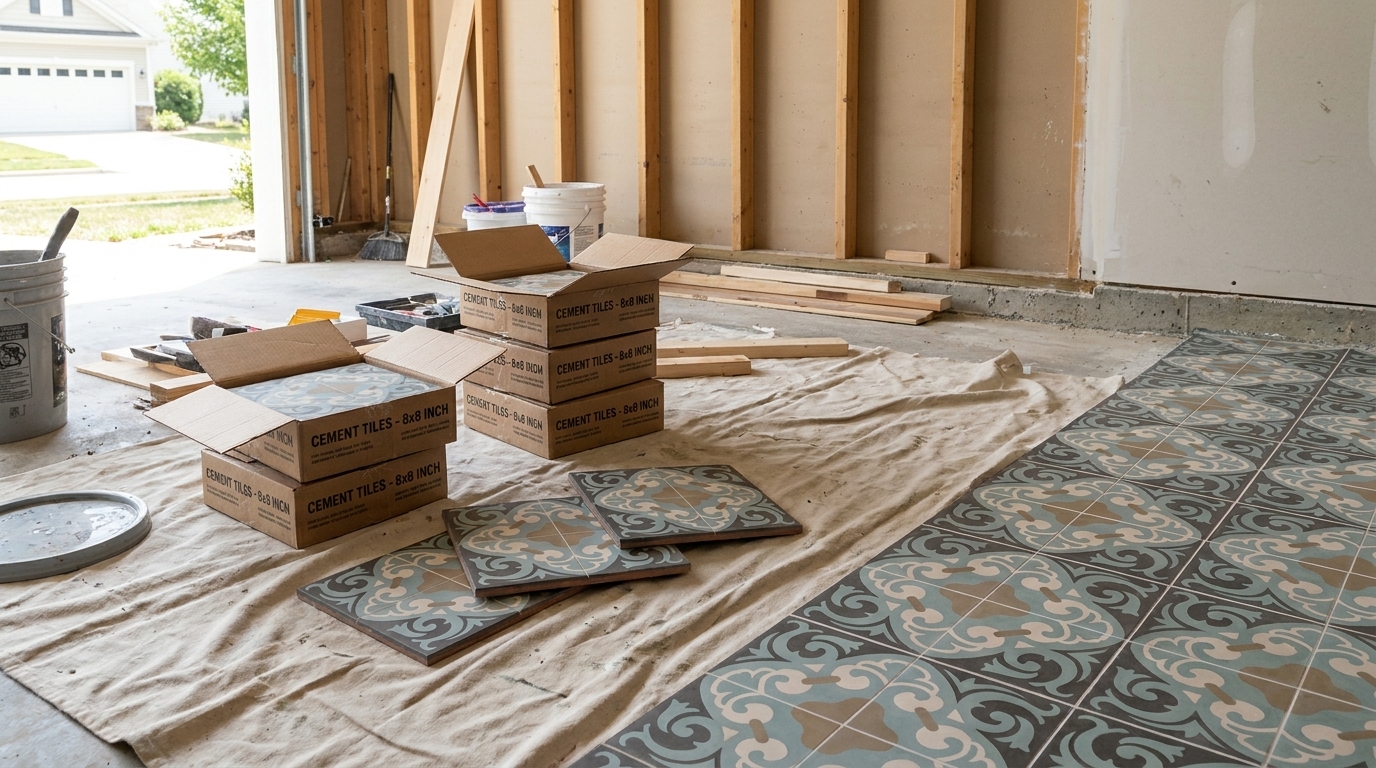
The process: Each cement tile is made by hand, but pressed rather than fired. Warm terracotta and earthy mineral pigments are poured into a metal mold, layered with a cement and marble powder mixture, and compressed under a hydraulic press. No kiln. No glaze. No firing temperature variables. The result is a tile with consistent thickness, a stable body, and color that runs through the full wear layer — not applied to a surface that can chip, flake, or wear through.
The durability difference:
- Density: Hydraulically pressed cement tiles are significantly denser than kiln-fired terracotta at standard temperatures, giving them better resistance to chipping, cracking, and surface abrasion
- Dimensional consistency: Every cement tile comes out of the press at the same thickness — installation is cleaner, lippage is easier to manage, and the finished floor reads as more refined
- Color integrity: The mineral pigment runs through the full wear layer. A cement terracotta tile that chips at a corner reveals the same warm tone beneath — not a foreign gray substrate
- Climate performance: Properly sealed cement tiles handle temperature variation and moisture cycling significantly better than porous fired clay in most interior and covered exterior applications
The aesthetic advantage: Cement terracotta tiles also offer something fired clay rarely can — pattern. The hydraulic press process allows terracotta palettes to be combined with geometric, Moroccan, and encaustic pattern designs, creating patterned floors in warm earthy tones that fired clay terracotta simply cannot produce. A Moroccan eight-pointed star in terracotta and cream. A classic encaustic diamond in burnt sienna and warm white. These are specifications that bring the warmth of terracotta together with the visual complexity of pattern — and they’re exclusively available in cement tile format.
Where Cement Terracotta Tiles Perform Best in 2026 Interiors
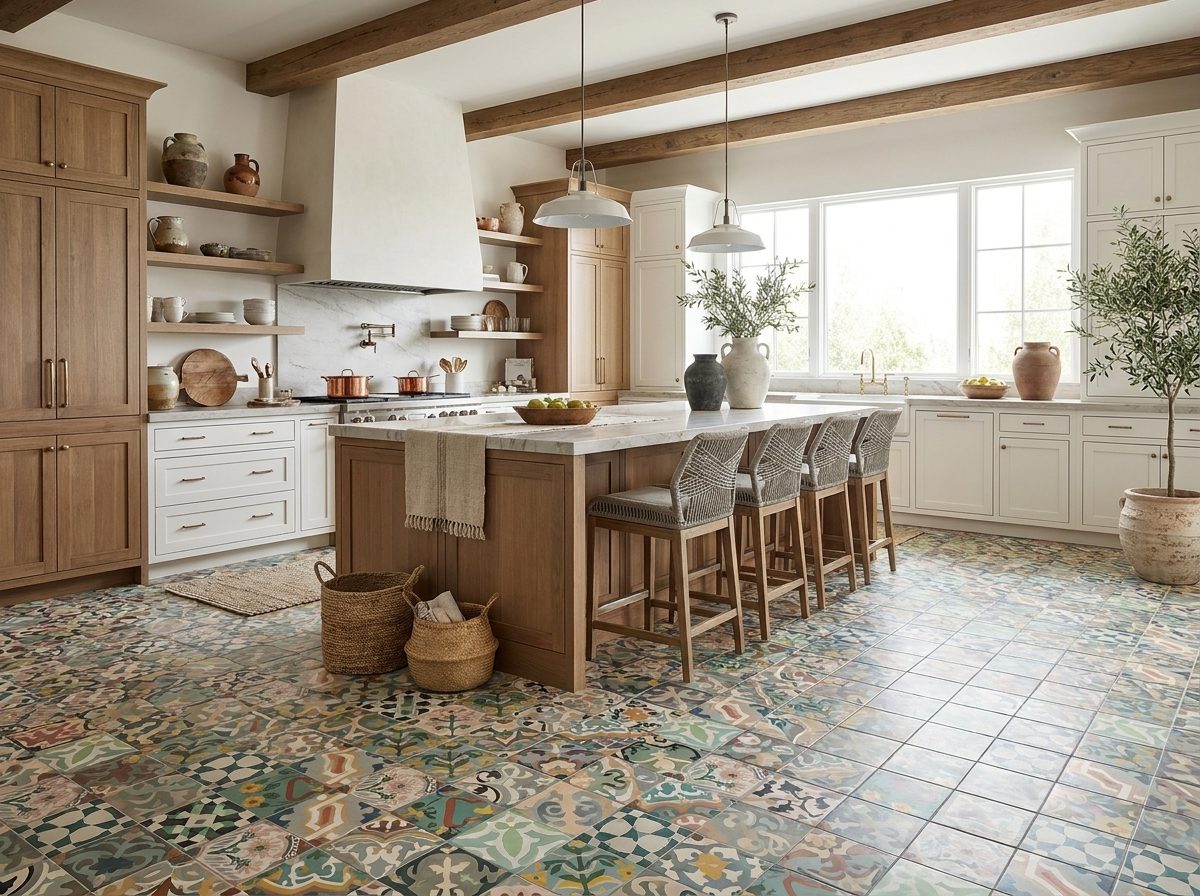
Kitchens: The Case for Terracotta on the Floor

The kitchen is the room where the fired clay vs. cement distinction matters most — and where cement terracotta tiles most clearly win the specification argument.
Kitchens are high-spill, high-traffic, chemically demanding environments. The acidic substances common in cooking — citrus, vinegar, wine, tomato — are exactly the materials that attack the surface of a porous fired clay tile most aggressively. A properly sealed cement terracotta tile floor handles these realities with dramatically more resilience. The mineral pigment doesn’t respond to acid etching the way a fired clay surface does, and the denser body means routine cleaning is straightforward rather than anxiety-inducing.
In 2026, the most specified cement terracotta kitchen floor combination is a warm terracotta encaustic pattern against deep cabinetry — forest green, navy, or charcoal — with unlacquered brass or warm bronze hardware. The terracotta floor anchors the room in warmth and earthiness; the deep cabinet color adds depth and drama; the warm metal ties the two together. It’s a combination that photographs beautifully, lives beautifully, and doesn’t date.
Explore terracotta and warm-palette patterns in the In-Stock Collection.
Bathrooms: Warmth That Holds Up
The bathroom-as-sanctuary trend has been one of the defining movements of residential design in the mid-2020s — and terracotta tiles are one of its primary material expressions. But fired clay terracotta in a bathroom, particularly a shower or wet area, presents real maintenance challenges.
Cement terracotta tiles in bathrooms — with a penetrating sealer applied before and after installation, using a wet-area formulation — provide the same earthy warmth without the porosity risk. The matte, micro-textured surface offers natural slip resistance in shower applications. And the color depth of mineral-pigmented terracotta in a bathroom creates a spa-like atmosphere that glazed ceramic or polished porcelain simply can’t produce.
The powder room is particularly well-suited to a bold cement terracotta treatment. Fully tiled in a warm encaustic pattern — terracotta and cream, or terracotta and deep charcoal — a powder room becomes the jewel-box space that guests remember and ask about. At the small scale of a typical powder room, the material cost is modest; the impact is disproportionate.
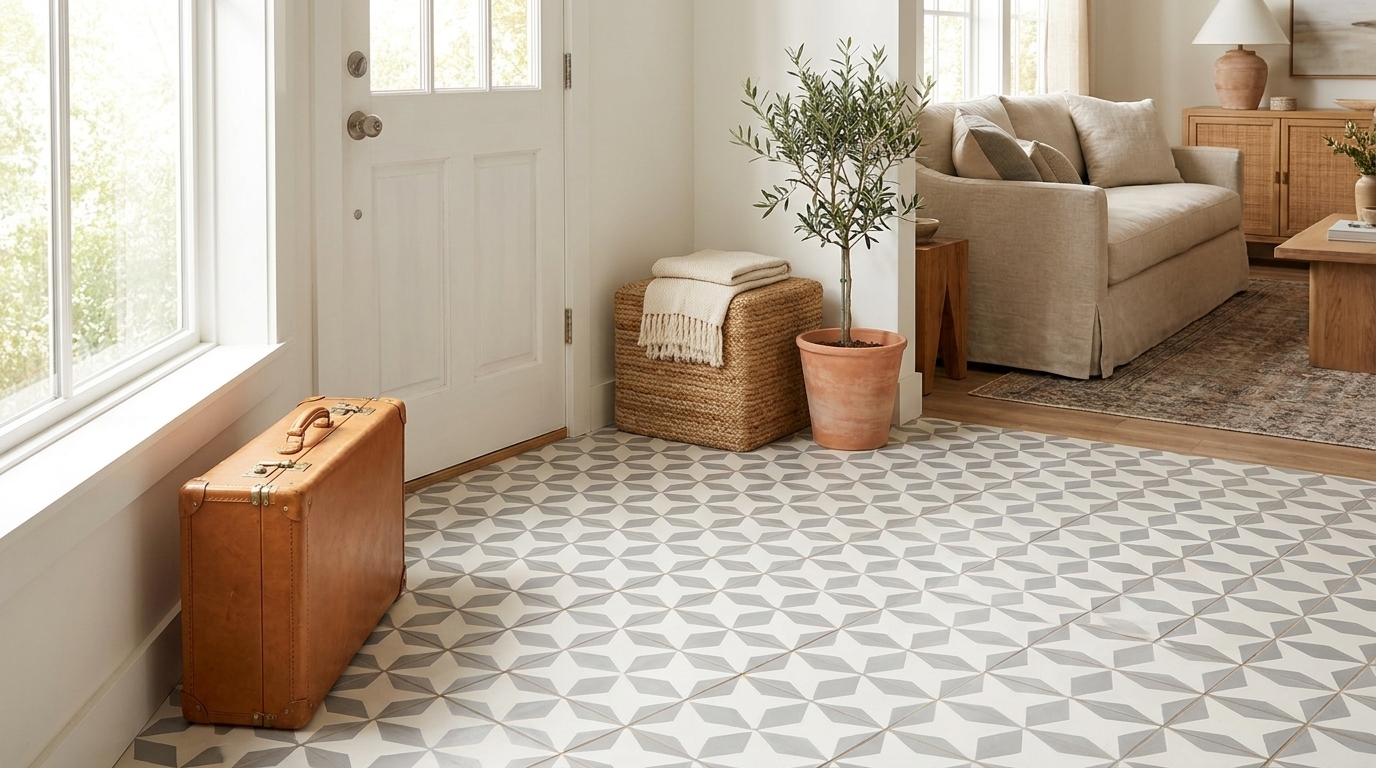
Entryways and Transition Spaces

Entryways are high-traffic, high-impact spaces — and the combination of heavy foot traffic with the grit and moisture tracked in from outdoors makes surface durability a genuine specification consideration, not just an aesthetic one.
Cement terracotta tiles in entryways handle this environment excellently. The dense body resists abrasion from foot traffic and tracked grit; the terracotta palette absorbs the visual evidence of daily use gracefully rather than showing every mark as a lighter-colored tile would. And the earthy warmth of a terracotta encaustic entry floor creates the arrival experience that establishes the design character of a home before a word is said.
For contractors: entryway installations benefit from a topcoat sealer in addition to the standard penetrating sealer — the additional protection is worthwhile in a space that receives regular grit and moisture from foot traffic.
Commercial Applications: Restaurant and Hospitality
In commercial design, the fired clay vs. cement terracotta distinction becomes even clearer. No restaurant operator wants the maintenance demands of fired clay terracotta under daily service conditions. Cement terracotta tiles — specified with a commercial-grade sealer and an appropriate grout — handle restaurant traffic, food-service spills, and daily cleaning with the durability that commercial applications require.
The warm earthy palette of terracotta is particularly effective in restaurant and hospitality design. It creates the sense of warmth and welcome that makes a dining room feel like a destination rather than a transaction — and it photographs beautifully in the warm evening lighting typical of quality restaurant environments.
For hospitality projects requiring a signature terracotta colorway tied to a specific brand palette, the Custom Made Collection supports bespoke terracotta development in collaboration with the design team.
Specifying Cement Terracotta Tiles: What Every Professional Needs to Know
Sealing protocol by application:
- Residential interior (kitchen, bathroom, entryway): Penetrating sealer before grouting + topcoat after installation. Refresh penetrating sealer every 1–2 years depending on use.
- Commercial interior: Commercial-grade penetrating sealer + commercial topcoat rated for the specific traffic type. Include maintenance specification in project handover.
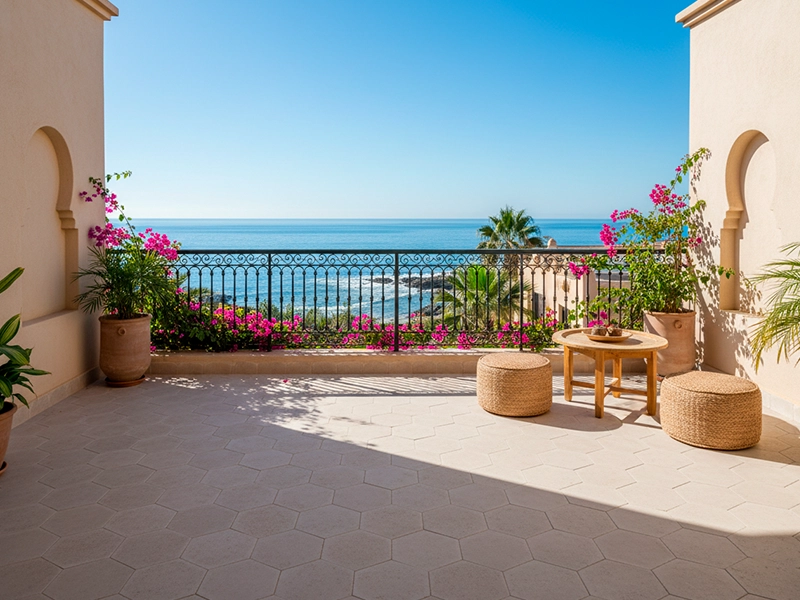
- Covered outdoor: Outdoor-rated penetrating sealer; consult with Original Mission Tile team for specific climate and exposure conditions.
Grout color: For terracotta palettes, a warm sand, honey, or warm gray grout integrates naturally and maintains the earthy visual tone of the floor. Cool gray or white grout creates contrast that can work beautifully in contemporary applications but may feel jarring against the warmth of terracotta.
Cleaning: Neutral-pH cleaner only. Avoid acidic or alkaline products — both will attack the mineral surface over time. The same rule applies to cement terracotta as to all cement tiles: keep it simple and keep it neutral.
Overage: Specify 10–15% above the calculated area for cuts, waste, and future repairs. Dye lot matching for future patching is important — terracotta tones can shift between production runs.
Custom terracotta colorways: For projects requiring a specific terracotta shade calibrated to a paint color, fabric, or material palette, the Custom Made Collection allows designers to develop a precise colorway in collaboration with the Original Mission Tile team. Engage early — custom lead times should be built into the project schedule.
Use the Design Studio to visualize terracotta pattern combinations in your project’s specific proportions before presenting to clients or finalizing specification.

FAQ: Cement Terracotta Tiles for Designers and Contractors
Are cement terracotta tiles the same as fired clay Saltillo tiles? No — they’re made differently and perform differently. Saltillo and traditional Mexican terracotta tiles are kiln-fired from natural clay, producing a porous, somewhat fragile tile with significant thickness variation. Cement terracotta tiles are hydraulically pressed from Portland cement and mineral pigments — denser, more dimensionally consistent, and significantly more durable in most residential and commercial applications.
Can cement terracotta tiles be used in a shower? Yes, with appropriate waterproofing behind the substrate and a wet-area penetrating sealer. The matte, micro-textured surface provides good slip resistance. Always specify professional installation and wet-area sealing for shower applications.
Will cement terracotta tiles fade in sunlight? Mineral pigments in cement tiles have excellent UV stability compared to dyed or printed surfaces. Some very slight tonal shift may occur over extended direct sun exposure in outdoor applications, but this is significantly less pronounced than with fired clay or synthetic pigments. For covered outdoor applications, UV-related fading is not a meaningful concern.
How does the maintenance of cement terracotta compare to fired clay? Cement terracotta is meaningfully easier to maintain than fired clay terracotta in most applications. The denser body is more resistant to staining, the sealing schedule is less demanding, and the surface is more forgiving of acidic substances. Both materials benefit from regular sealing and neutral-pH cleaning; cement terracotta simply has more margin for error.
Where can I see completed cement terracotta tile installations? The Projects Gallery includes completed installations across kitchen, bathroom, entryway, and commercial applications — browse by application type to find examples most relevant to your current project brief.
Conclusion: The Terracotta That Lasts as Long as It Looks Good
Terracotta’s enduring appeal has never been in question. The warmth, the earthiness, the sense of a surface made from the ground itself — these qualities will always be relevant in interiors that want to feel genuinely welcoming rather than merely impressive.
What has changed in 2026 is the material intelligence with which the best designers are specifying it. Cement terracotta tiles bring the full visual and emotional power of the terracotta palette — and add the durability, pattern range, and specification confidence that fired clay terracotta has always lacked.
For a kitchen floor that will look better in fifteen years than it does today. For a bathroom that delivers spa warmth without daily maintenance anxiety. For a commercial space that needs the personality of terracotta and the performance of a serious tile material. For any project where you want the beauty to outlast the renovation cycle by decades — cement terracotta tiles are the specification that delivers.
The warmth is real. The durability is real. And twenty years from now, the floor will still look like exactly the right choice.
Ready to bring lasting terracotta warmth to your next project?
Explore terracotta and warm-palette patterns in the In-Stock Collection, develop a custom terracotta colorway through the Custom Made Collection, and visualize your project in the Design Studio.
Contact the Original Mission Tile design team for samples and expert project guidance →