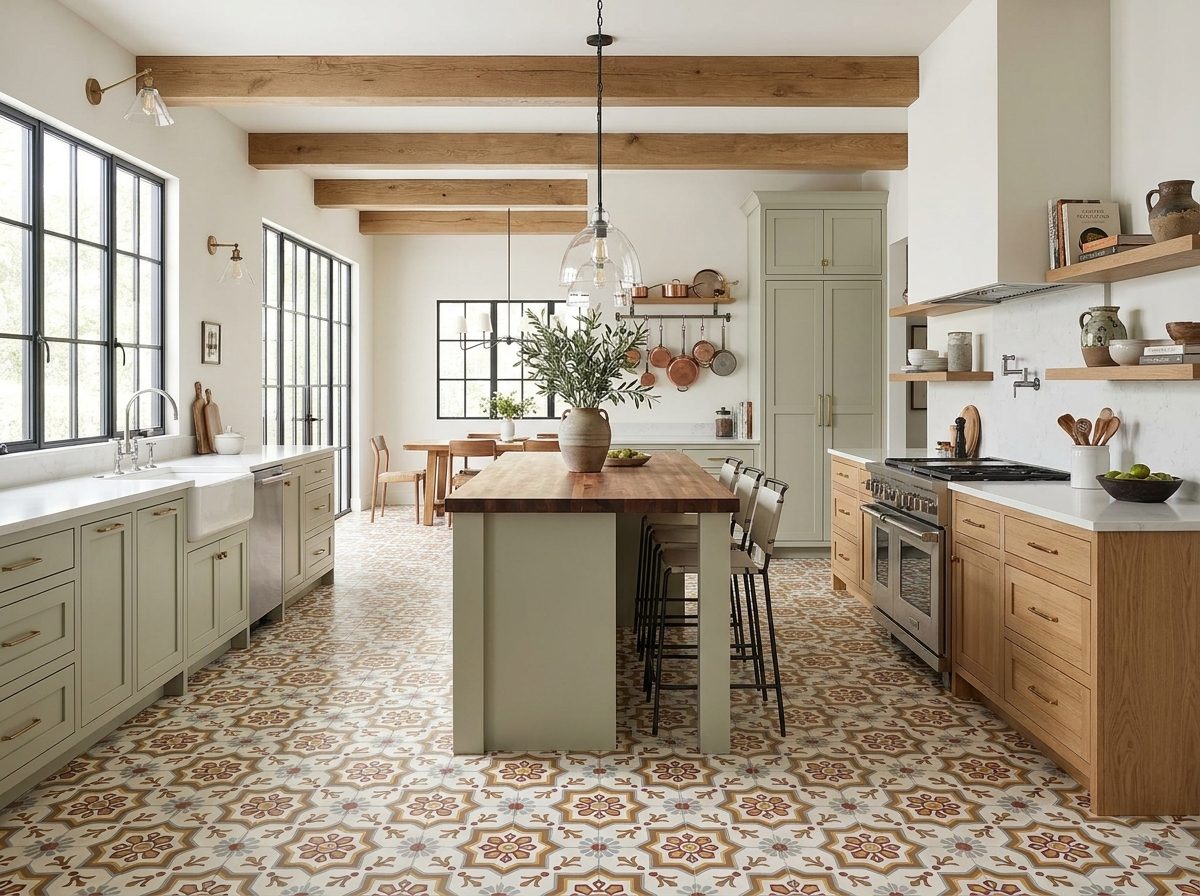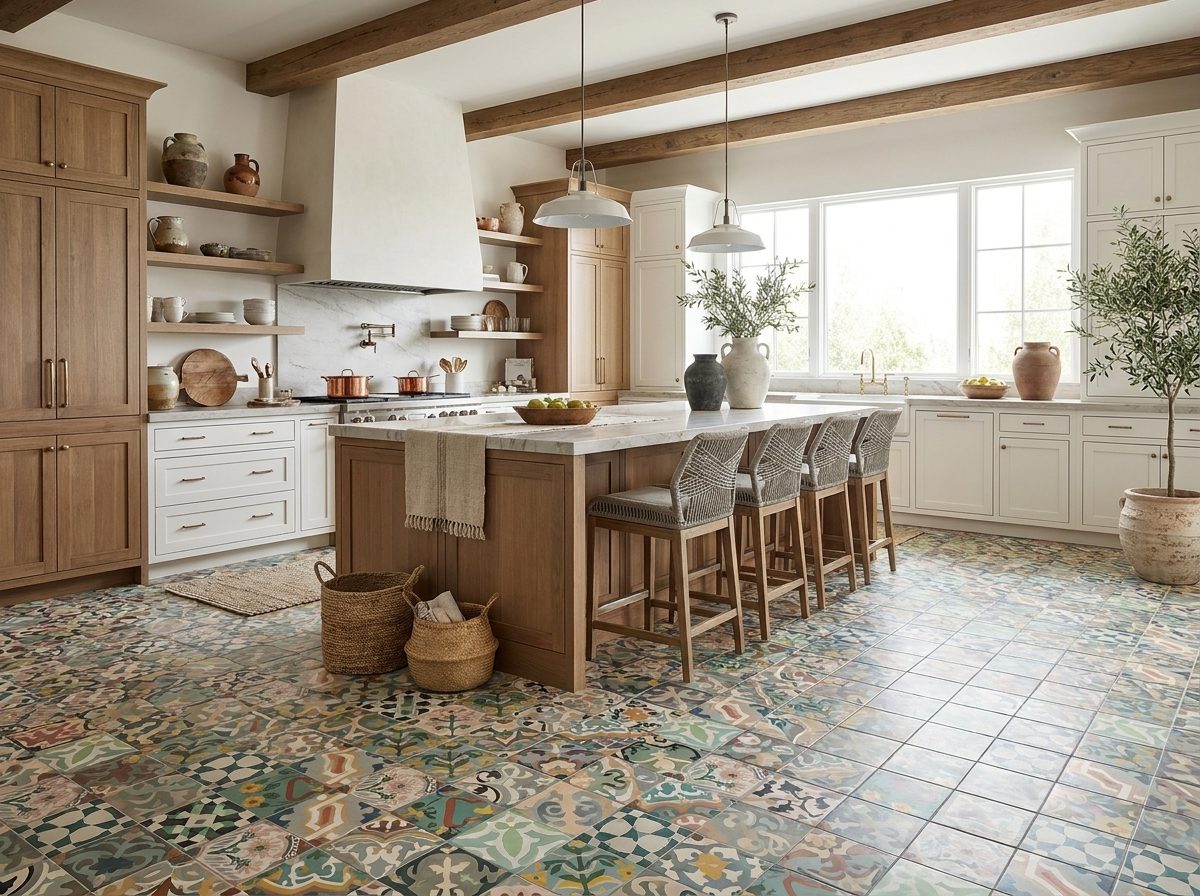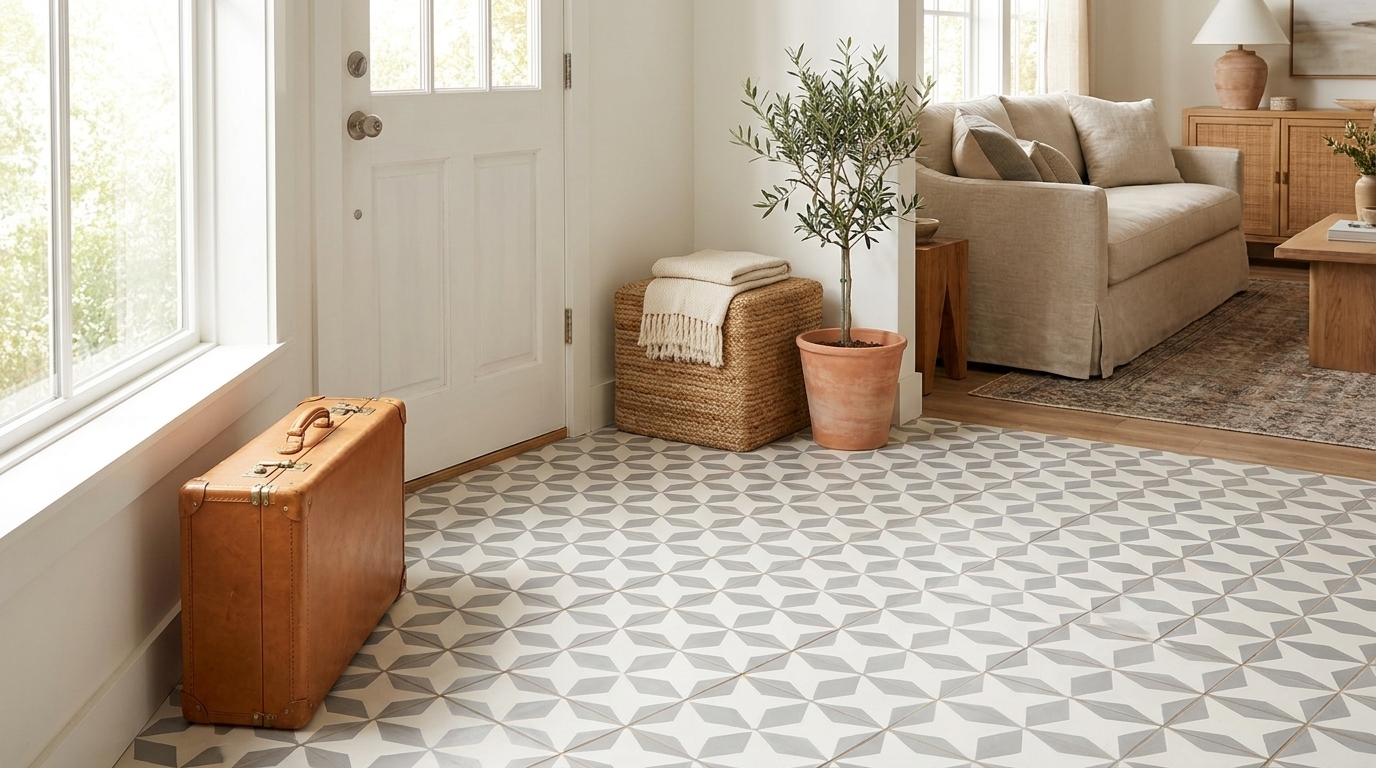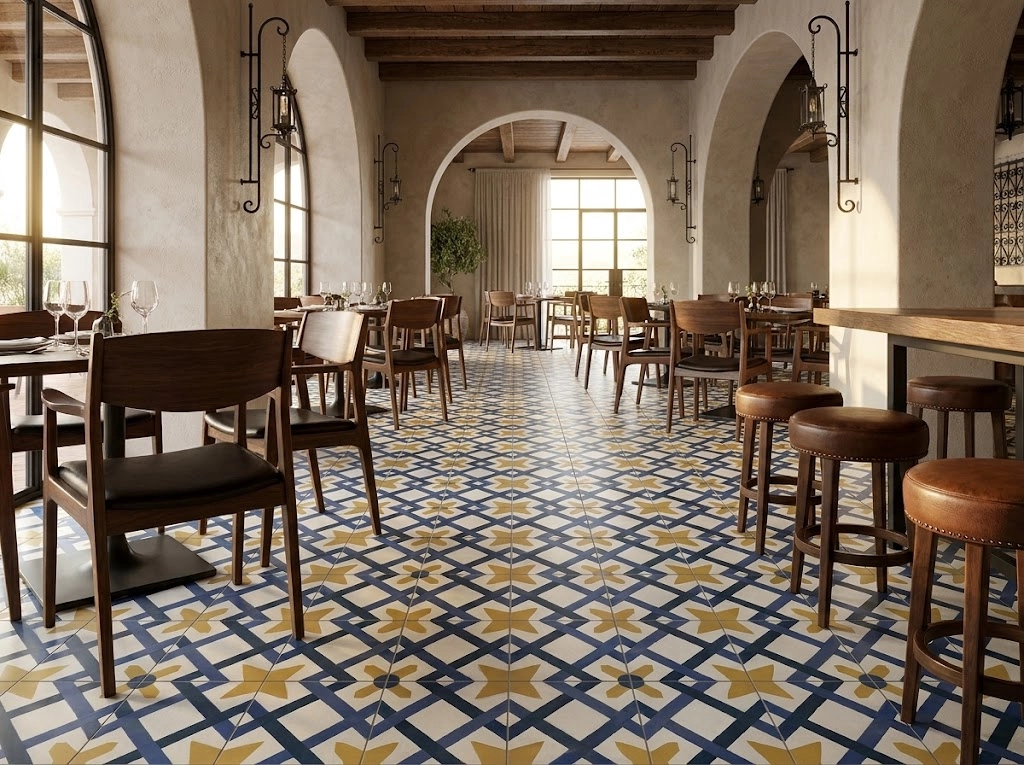
The best commercial interiors don’t feel like commercial interiors.
They feel like places — specific, considered, impossible to imagine existing anywhere else. A restaurant where the floor makes you feel like you’ve arrived somewhere worth being. A hotel room where the bathroom tile tells you, without words, that this property cares about craft. A retail space where the surface beneath your feet communicates brand values before a single product is in view.
That quality — the feeling of a space that was designed rather than merely finished — is rarely achieved with the default materials of commercial construction. Large-format porcelain, neutral luxury vinyl, generic stone lookalike: these materials fill space efficiently. They don’t define it.
Cement tiles define it.
For interior designers, architects, and hospitality developers working on restaurants, hotels, boutique retail, spas, and high-end commercial interiors, handmade cement tiles offer something the specification catalog rarely provides: a surface with genuine character, infinite pattern range, craft provenance, and the proven durability to perform in demanding environments for decades. This guide covers everything you need to know about specifying cement tiles in commercial spaces — from the material advantages to the application strategies to the practical considerations that make the difference between a good installation and an extraordinary one.
Why Cement Tiles Work in Commercial Interiors

Commercial interiors face a specification challenge that residential projects rarely encounter in the same form: the surface must perform under heavy, continuous use and communicate a brand identity and photograph beautifully and remain relevant long enough to justify the investment. Most materials solve one or two of these problems. Cement tiles solve all four.
Performance under real-world use. Cement tiles have been used in high-traffic commercial environments for over 150 years — in European cafés, Moroccan riads, Mexican cantinas, and Latin American hotel lobbies that have seen continuous foot traffic across multiple generations. The mineral pigment runs through the full wear layer of the tile, meaning heavy use develops patina rather than exposing a foreign substrate. Properly sealed and maintained, a cement tile floor in a busy restaurant will look better in fifteen years than a printed-surface porcelain floor will.
Brand identity through surface. Every element of a commercial interior communicates something about the brand behind it — and the floor is the largest single surface in any space. A patterned cement tile floor says things about a restaurant, hotel, or retail brand that no amount of copywriting can replicate: that craft matters here, that someone made considered choices, that the experience you’re about to have is worth paying attention to. It sets expectations and meets them simultaneously.
Photography and shareability. In an era where every hospitality and retail space is measured partly by how it photographs, cement tiles are an extraordinary asset. The depth of mineral pigment, the way pattern interacts with light across the day, the inherent variation of the handmade surface — all of it produces imagery that performs exceptionally well across digital platforms. A cement tile floor is both a design decision and a content production asset.
Longevity of design relevance. Trends in commercial interior design move faster than in residential, and the risk of a “dated” interior is real and expensive. Cement tiles — with their roots in Moorish, Mediterranean, and Latin American design traditions that predate any contemporary trend cycle — occupy a category that trends move around rather than through. A cement tile floor specified in 2026 will not look like a 2026 floor in 2036. It will look like a floor that was chosen because someone understood what endures.
Cement Tiles in Restaurant Design

The restaurant is perhaps the highest-stakes application for any design material. It needs to perform under daily service pressure — spills, chair scuffs, heavy foot traffic during multiple covers — while simultaneously creating the atmosphere that defines the dining experience.
The Floor as Brand Architecture
In restaurant design, the floor is the first thing guests experience physically and often the last thing they consciously notice — but it shapes the entire mood of their time in the space. A bold geometric cement tile floor in deep indigo and cream tells guests this is a considered, invested restaurant before they’ve been seated. A warm terracotta encaustic floor in a neighborhood trattoria communicates authenticity and warmth that white walls and reclaimed wood can only partially achieve without it.
The most compelling restaurant floor specifications in 2026 are using cement tiles as true brand architecture — not decorating the floor, but designing it as a compositional element that carries as much intentionality as the menu or the lighting scheme.
Pattern Strategy for Restaurants
Open-plan dining rooms: A single bold pattern across the entire floor creates visual cohesion and makes even large spaces feel designed with intention. For restaurants seating 80 or more covers, consider patterns with strong geometric structure rather than fine, intricate repeats — the larger the room, the more the pattern needs to hold from a standing vantage point.
Zoning with pattern: Cement tiles can define distinct zones within a single restaurant floor — a bar area differentiated from the dining room, a private dining section marked by a change in pattern or colorway, a lounge space distinguished by a transition to a complementary design. Pattern does this work without physical dividers, keeping the space open while creating experiential differentiation.
Terraces and outdoor dining: The indoor-outdoor dining movement that has permanently reshaped restaurant design benefits directly from cement tiles’ ability to bridge the two environments. Running a complementary pattern from interior dining floor to exterior terrace creates visual continuity that extends the perceived footprint of the space and makes outdoor dining feel like a deliberate design destination rather than an overflow solution.
Commercial Performance Specifications for Restaurants
- Sealing protocol: Specify a commercial-grade penetrating sealer applied before grouting and a topcoat appropriate for food-service traffic levels after installation. Commercial spaces require a more robust sealing specification than residential applications
- Grout selection: For restaurant floors, specify an epoxy grout in high-traffic zones — more resistant to staining and easier to clean in food-service environments
- Maintenance program: Include a maintenance specification in the project handover package — neutral-pH floor cleaner, periodic resealing schedule, guidance on handling spills immediately. Cement tiles in restaurants that aren’t properly maintained will show it; those that are maintained properly will outlast the restaurant’s lease
Cement Tiles in Hotel Design

Hospitality design is where cement tiles have perhaps their most natural and most powerful application. Hotels — particularly independent properties, boutique brands, and any hospitality project that wants to distinguish itself from the international chain aesthetic — have been among the most enthusiastic specifiers of handmade cement tiles for the past two decades.
The Hotel Bathroom: Where Craft Creates Loyalty
The hotel bathroom is a disproportionately powerful influence on guest satisfaction and brand perception. Guests spend significant time in the bathroom, experience it at close range, and make strong quality judgments based on what they find there. A patterned cement tile floor in a hotel bathroom communicates craft, investment, and care in a way that standard large-format porcelain simply cannot.
The most effective hotel bathroom specifications pair a bold cement tile floor with simpler wall treatments — white plaster, simple subway ceramic, or a tonal limewash — and warm metal fixtures (unlacquered brass or warm bronze) that respond to the mineral warmth of the tile palette. The result is a bathroom that feels individually designed rather than mass-produced, which is precisely what distinguishes a memorable hotel stay from a forgettable one.
Hotel Corridors and Public Areas
Hotel corridors are high-traffic, demanding environments — and they’re also one of the most underinvested areas in standard hotel design. A patterned cement tile corridor floor transforms one of the most anonymous spaces in a hotel into a navigational and experiential journey. Pattern can be used to create a sense of rhythm and movement through long corridors; complementary designs at lift lobby landings create moments of pause and arrival.
Public areas — lobby floors, bar surfaces, restaurant floors, spa reception — are the brand statement spaces where cement tiles perform at their most visible and impactful. The Original Mission Tile Projects Gallery includes completed hospitality installations that demonstrate how pattern, scale, and color have been used across a range of hotel typologies and brand positions.
Custom Tile for Hotel Brand Identity
For hotel brands with a strong visual identity — whether a globally recognized luxury brand or a design-led independent — custom cement tiles offer the ability to embed brand DNA directly into the building fabric. A pattern derived from the brand’s logo geometry, a colorway calibrated to the brand’s palette, a tile design developed in collaboration with the brand’s creative director: these are specifications that no other guest property in the world will share.
Custom work at this level requires early engagement in the design process. The Custom Made Collection is the starting point for these conversations — and the Original Mission Tile design team has experience working alongside hospitality architects and interior designers from initial concept through final specification.
Cement Tiles in Retail Design

Retail interior design has undergone a profound transformation over the past decade. In an era when any product can be purchased online in seconds, physical retail must justify the journey — must offer an experience worth having, an environment worth spending time in, a space that communicates brand values in a way a website never fully can.
The floor is where that communication begins.
Cement Tiles as Retail Brand Statement
A cement tile floor in a boutique retail environment tells customers something before they’ve looked at a single product: that this brand makes considered choices, that craft is valued here, that what they’re about to encounter has been thought about carefully. That pre-experience brand communication is one of the most valuable and underspecified elements in retail design.
Patterned cement tiles work particularly well in:
- Independent fashion boutiques — where the floor competes with and complements the product display rather than disappearing beneath it
- Premium food and beverage retail — delicatessens, wine shops, artisan bakeries, specialty coffee roasters — where the material language of the space reinforces the artisan quality of the product
- Beauty and wellness retail — where a warm, handmade tile floor creates the spa-adjacent atmosphere that premium beauty brands cultivate
- Home goods and design stores — where a beautifully tiled floor is itself a product demonstration
Creating Journey and Hierarchy in Retail Spaces
One of the most sophisticated uses of cement tiles in retail design is to create spatial hierarchy and customer journey without physical barriers. A patterned tile entry zone that transitions to a simpler field tile in the main selling floor, returning to a feature pattern at a focal display area — this sequencing uses tile as a navigation tool, directing attention and pacing the customer’s movement through the space.
The Design Studio is an invaluable tool for designing these sequences — test multiple pattern combinations, visualize transitions between zones, and present the full floor concept to retail clients before specification is finalized.
Specification Guidance: What Commercial Projects Require

Commercial cement tile specifications differ from residential in several important ways. Here is what every designer and architect needs to know before specifying for a commercial project.
Quantities and Lead Times
Commercial projects typically require larger quantities than residential, and handmade cement tiles have production lead times that must be built into the project schedule. For in-stock patterns, contact the Original Mission Tile team early to confirm availability for the required quantity. For custom patterns, plan for a minimum of 10–14 weeks from design approval to delivery — and build contingency into the schedule.
Sealing and Maintenance Specifications
Commercial sealing specifications are more demanding than residential. For restaurant and high-traffic hospitality floors:
- Specify a penetrating sealer rated for commercial use, applied before grouting
- Follow with a topcoat sealer rated for the specific traffic level and use type (food-service, dry retail, wet spa, etc.)
- Include a maintenance specification in the project close-out package — cement tiles in commercial settings that aren’t properly maintained will deteriorate; those that are maintained correctly will outlast the competition
Substrate and Installation Requirements
- Flatness tolerance: Commercial substrates must meet a flatness tolerance of 3mm over 3m before tile installation begins; lippage is more visible on patterned tiles than on solids, and is especially problematic in large commercial floor fields
- Movement joints: Specify movement joints at all columns, doorways, transitions, and perimeter zones — commercial buildings experience more structural movement than residential, and unaddressed movement will crack grout joints and potentially tiles over time
- Contractor selection: Specify a contractor with documented experience installing handmade cement tiles in commercial environments; the installation process and adhesive specification differ from standard ceramic or porcelain installation
Samples and Mock-Ups
For commercial projects, always specify a full mock-up installation — a minimum 1m × 1m section installed on-site using the actual tiles, substrate, adhesive, and grout — before full installation begins. This allows designers, clients, and contractors to confirm the visual result and installation quality before committing the full floor area.
The In-Stock Collection includes samples available for order at the concept stage — request them early, view them in the actual space, and build client confidence before specification sign-off.
FAQ: Cement Tiles in Commercial Spaces
Are cement tiles durable enough for commercial use? Yes — cement tiles have been used in commercial environments for over 150 years. The mineral pigment runs through the full wear layer, meaning heavy traffic develops patina rather than wearing through to a different substrate. With correct commercial-grade sealing and a proper maintenance program, cement tile floors in restaurants, hotels, and retail spaces perform beautifully for decades.
How do cement tiles compare to porcelain for commercial floors? Porcelain has a technical advantage in water absorption and surface hardness, making it the better choice for fully exposed outdoor commercial applications and areas requiring zero maintenance. For restaurants, hotel interiors, boutique retail, and hospitality spaces where design quality is the primary brief, cement tiles offer visual and material advantages that porcelain cannot replicate — and their commercial durability record is well established.
What maintenance program should I specify for a commercial cement tile installation? Specify daily cleaning with a neutral-pH commercial floor cleaner, immediate addressing of food and beverage spills, and an annual resealing schedule using a commercial-grade penetrating sealer. Include this maintenance specification in the project handover documentation — it is as important as the installation specification itself.
Can cement tiles be used in commercial kitchens or food-preparation areas? Cement tiles are appropriate for front-of-house restaurant floors and service areas. For commercial kitchen and food-preparation areas subject to heavy grease, harsh cleaning chemicals, and health code requirements, consult with the Original Mission Tile team and local health authority guidelines before specifying.
How early should I engage Original Mission Tile in the design process for a commercial project? As early as possible — ideally at the concept stage. Early engagement allows for accurate quantity planning, pattern development, sample procurement, and custom work if required. For large commercial projects with custom tile requirements, engagement at least 16–20 weeks before the required on-site date is recommended.
Conclusion: The Surface That Makes a Commercial Space Worth Visiting

In commercial design, the difference between a space that performs and a space that resonates is rarely the furniture or the lighting scheme — it’s the decisions that are made about materials. The surfaces that guests, diners, shoppers, and visitors actually touch, walk on, and live within.
Cement tiles, with their handmade quality, their infinite pattern range, their proven commercial durability, and their extraordinary ability to communicate brand character through the built surface — are one of the most powerful tools available to designers and architects working at the commercial scale. They turn floors into statements. They turn corridors into experiences. They turn commercial spaces into places worth returning to.
The brands that understand this are the ones whose interiors get talked about, photographed, and remembered. And the material beneath their guests’ feet is never an afterthought.
Working on a restaurant, hotel, or retail project?
The Original Mission Tile design team specializes in commercial specifications — from pattern selection and quantity planning to custom tile development and installation guidance. Explore the In-Stock Collection for proven commercial patterns, begin a Custom Made Collection conversation for brand-specific tile design, visualize your concept in the Design Studio, and browse completed hospitality and commercial projects in the Projects Gallery.