Designing a space that looks incredible on day one is easy. Designing one that still looks incredible after one million footsteps is the real challenge. This guide will help you specify commercial floor tile with confidence—balancing aesthetics, safety, durability, and maintenance across restaurants, hotels, and retail spaces. You’ll also learn how handmade cement tiles from Original Mission Tile can deliver brand-defining style without sacrificing real-world performance.
Quick links for busy teams
• Inspiration Gallery → https://originalmissiontile.com/cement-tiles-gallery/
• Custom Cement Tiles (brand colors, logos, patterns) → https://originalmissiontile.com/custom-tiles/
• In-Stock Cement Tiles (fast lead times) → https://originalmissiontile.com/in-stock-cement-tiles/
• Contact / Samples / Plan Takeoffs → https://originalmissiontile.com/cement-tiles-contact/
Why Commercial Floor Tile Still Wins (Even in the Age of LVT)
When safety, cleanability, and lifecycle cost matter, commercial floor tile checks the boxes:
- Safety underfoot: Matte textures and correct grout planning support slip resistance when properly selected and installed.
- Hard-wearing beauty: In high-traffic zones, tile resists dents and tears that can prematurely age other materials.
- Moisture & stain resistance: With proper sealing (for cement tiles) and housekeeping, tile stays fresh in foodservice, lobbies, and restrooms.
- Design impact: Tile offers color, pattern, and scale options that can double as brand cues—think “Instagrammable” floors that drive traffic.

The Spec Sheet, Simplified: What to Ask and Why It Matters
A great design brief answers these questions before you choose a commercial floor tile:
- Traffic Type & Volume
- Light commercial: Boutique retail, private offices.
- Moderate/heavy: Hotel corridors, restaurants, high-street retail.
- Extreme point loads: Back-of-house, carts, rolling loads (consider substrate, setting method, and expansion joints).
- Slip Resistance Strategy
- Look for products tested to ANSI A326.3 (DCOF) for the intended use and environment. Interior level surfaces commonly target a wet DCOF of ≥0.42; ramps and unusually wet/greasy areas may require higher slip management strategies (materials, matting, cleaning regimens). Always match the tile’s intended use per the manufacturer’s data and your local code consultant.
- Pair tile finishes with grout joint planning (narrow, but present) to add micro-texture underfoot.
- Finish & Cleanability
- Matte or lightly textured surfaces for front-of-house floors.
- Glossy finishes mainly for walls and feature zones, not busy floors.
- Choose mid-tone colorways that disguise dust between cleanings.
- Stain & Chemical Exposure
- Restaurants and cafes: vinegar, citrus, wine, oils. Plan sealing and maintenance cycles accordingly (see maintenance section).
- Substrate & Setting
- Verify substrate flatness, movement joints, waterproofing where needed, and mortar/grout compatibility with the chosen tile.
- Acoustics
- Tile is reflective; add soft finishes (rugs, upholstered seating, acoustic panels) to manage reverb in dining rooms and lobbies.
Cement Tiles for Commercial Floors: When and Where They Shine
At Original Mission Tile, our handmade cement tiles are engineered for real commercial life:
- Dense, mineral-pigmented wear layer: Color runs through the surface layer, so pattern isn’t just printed on—it has depth and can be refreshed over time.
- Matte, slip-friendly feel: A natural, tactile finish designers love for guest comfort.
- Brand-ready customization: Create custom tiles with your palette, logo cues, or heritage motifs to tell a story from the ground up.
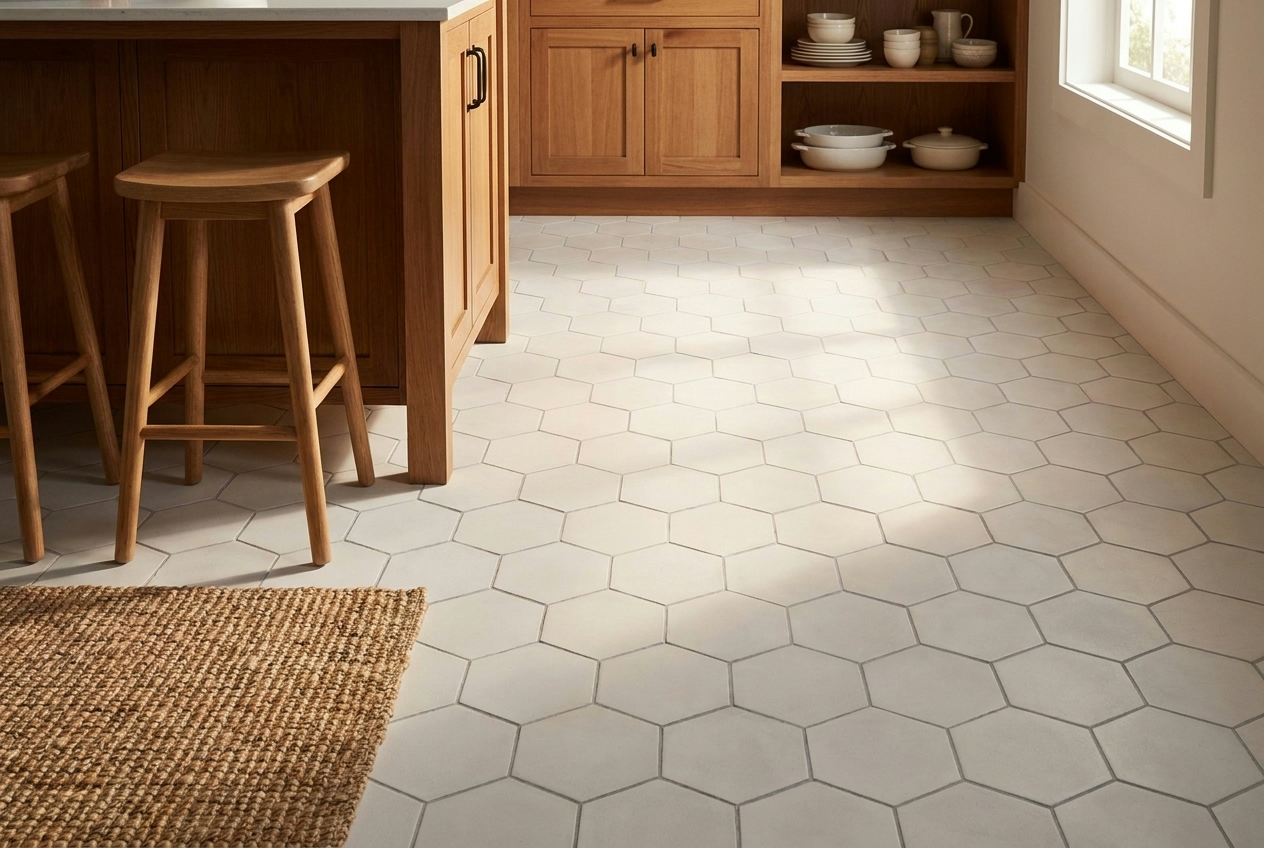
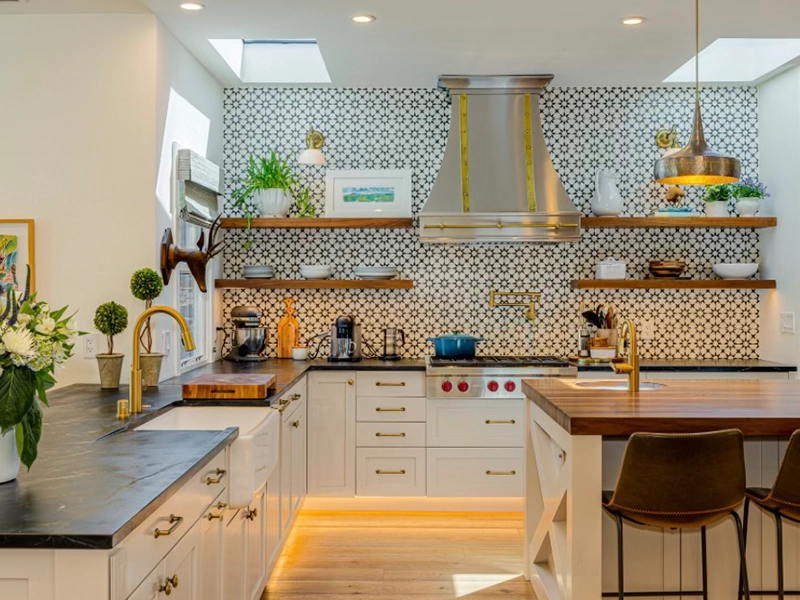
- Scale options: 8×8 classics, hexes, star-and-cross blends, borders, liners—ideal for “tile rugs” that zone seating and queue areas.
See examples in our Gallery or jump straight to Custom Cement Tiles.
Safety First: DCOF, ADA Considerations & Real-World Traction
- DCOF (Dynamic Coefficient of Friction): Specify tile with published ANSI A326.3 results appropriate for your application. Many interior level surfaces aim for ≥0.42 wet DCOF as a baseline. For persistently wet, greasy, or sloped surfaces (certain entries or BOH zones), consult your tile supplier, setting manufacturer, and code consultant for an elevated slip-resistance strategy.
- ADA & Local Code: ADA doesn’t prescribe a single universal number for every surface; instead, follow product testing + use area guidance, proper transitions, thresholds, and wayfinding.
- Cleaning matters: Even the best surface becomes slippery with the wrong cleaner or residue. Use pH-neutral cleaners, rinse thoroughly, and coordinate with janitorial teams.
Need help matching finish to use zone? Share your plan set—Contact Us and we’ll review DCOF data and layout details.

Lifecycle & Maintenance: Build a Plan (So Floors Keep Their Day-One Glow)
Cement Tiles (FOH guest areas)
- Sealing: Seal before grouting, then apply a finish/topcoat after cure. Reseal on a cadence that matches traffic and cleaning chemistry.
- Cleaning: pH-neutral products only; avoid harsh acids/alkalis. Promptly wipe food acids (wine, citrus, vinegar).
- Spot refresh: Light honing or polishing can renew the patina years later—an advantage of the pigmented wear layer.
Porcelain & Ceramic (large-format fields, BOH, wet zones)
- Glaze/through-body: Typically low maintenance; choose textures appropriate to the slip conditions.
- Grout: Consider epoxy or high-performance cementitious grouts for stain resistance.
Terrazzo Tile (brand moments, lobbies)
- Routine: Neutral cleaners, periodic sealing per manufacturer. Terrazzo brings playful color chips and modern heritage vibes.
Housekeeping Playbook (works across categories)
- Daily dust mop → damp mop with neutral cleaner → thorough rinse.
- Train staff to use clean, well-rinsed mops (residue = slipperiness).
- Keep matting at entries to capture grit and moisture.
Pattern with Purpose: Brand-Building Floors That Also Direct Traffic
Strategic layouts let your commercial floor tile do double duty:
- Tile Rugs: Frame the host stand, bar, or dining clusters with a patterned “rug” bordered by solids.
- Wayfinding Bands: Use contrasting borders to guide circulation—toward the counter in quick-serve, or around merchandise in retail.
- Queue Spine: A subtle patterned spine from entry to POS clarifies flow without stanchions.
- Zone Transitions: Switch pattern or scale at lounge thresholds and private dining, or at the retail cash wrap.
Our Custom Cement Tiles program can translate your brand palette into durable, on-message patterns.
Restaurants: Front-of-House vs. Back-of-House
Front-of-House (FOH)
- Look & feel: Warm matte surfaces, mid-tones that hide crumbs, patterns that photograph well.
- Best picks: Cement tile “rugs,” borders, mid-tone solids; terrazzo for modern vibes; zellige-style on walls for sparkle (not floors).
- Grout: Choose a mid-tone grout to disguise daily wear; keep joints modest (still present for traction).
- COF/DCOF: Match finish to foot traffic + spills profile; manage entries with matting.
Back-of-House (BOH)
- Performance first: Heavy-duty porcelain or quarry tile with aggressive texture where oils/water are present; epoxy grout.
- Slope & drains: Coordinate early with MEP for correct slopes and floor sinks.
Hotels: Lobbies, Corridors & Guest Baths
- Lobbies: Make the arrival moment unforgettable with a cement tile pattern that nods to local heritage or brand story. Consider terrazzo tile for a lively, contemporary lobby.
- Corridors: Resilient choices with controlled pattern scale; avoid busy designs that create visual flicker.
- Guest Baths: Patterned cement floors + glazed wall tiles in showers = luxurious, easy-to-maintain combo.
- Ballrooms & Pre-Function: Define flow with border bands; add area rugs to tune acoustics.
Retail: Selling With the Floor
- Merch zones: Use commercial floor tile to anchor seasonal displays; swap product, not the finish.
- POS clarity: A patterned “landing pad” in front of the cash wrap organizes queuing and frames brand signage.
- Dirt strategy: Mid-neutral floors with a small-scale pattern hide tracked-in dust between cleanings.

Case Snapshots (Inspiration You Can Adapt)
- Neighborhood Café
- Brief: Warm, Instagrammable, easy daily cleaning.
- Spec: Cement tile “rug” under the bar (charcoal/ivory star) framed by a slim border; surrounding field in warm greige; zellige-style wall splash.
- Win: Brand pop where it matters; mid-tone field hides day-to-day crumbs; pH-neutral cleaning keeps sheen consistent.
- Boutique Hotel Lobby
- Brief: Local story, durable welcome.
- Spec: Custom cement motif in lobby center using the hotel’s palette; terrazzo tile at the check-in path; brass accents and oak millwork.
- Win: Photogenic arrival, simple maintenance, clear wayfinding.
- Lifestyle Retail Store
- Brief: Seasonal changeouts with a consistent brand base.
- Spec: Large-format porcelain field + two cement tile “feature pads” for rotating displays; subtle border band guiding shoppers clockwise.
- Win: Floor drives circulation, feature pads refresh with merchandise—not construction.
Explore more ideas in our Gallery.
Cement Tiles vs. Porcelain vs. Ceramic vs. Terrazzo (At a Glance)
| Attribute | Cement Tiles | Porcelain | Ceramic | Terrazzo Tile |
|---|---|---|---|---|
| Look | Rich color, matte, artisan pattern | Broad looks, high performance | Budget-friendly walls/low traffic | Speckled modern classic |
| Wear | Pigmented wear layer | Very hard, low water absorption | Varies by glaze | Durable; seal as needed |
| Slip | Naturally matte; specify finish | Textures/finishes per zone | Mostly wall or light duty floors | Matte honed finishes available |
| Best Use | FOH floors, feature zones, borders | BOH, heavy traffic, large fields | Walls, light floors | Lobbies, brand moments |
| Custom | Excellent (colors/patterns) | Limited on custom; broad SKUs | Limited | Custom to semi-custom |
Need a hybrid spec? We’ll help you place each material where it performs best—Contact Us.
The Handmade Difference: How Our Cement Tiles Are Made
- Molds & pigments: Brass molds define pattern cells; mineral pigments are hand-tamped into each cell.
- Hydraulic press: We press layers under high pressure—no firing—producing a dense, stone-like body.
- Water cure: Tiles cure slowly, gaining strength and signature matte character.
- Outcome: A surface with depth and patina that ages gracefully and can be renewed.
This process is why commercial floor tile installations using cement tile deliver a level of richness that printed surfaces can’t match.
Expert Tips for Flawless Commercial Floors
- Mockup early: Build a small on-site mockup for color, grout, and sheen approval.
- Blend boxes: Especially for handmade looks—open multiple boxes and mix to distribute variation.
- Grout color: Use mid-tone grout that relates to your tile background; hides soils and traffic marks.
- Edge & transition trims: Keep tripping hazards in check and look polished with metal profiles or stone thresholds.
- Matting & maintenance: Permanent scraper mats at entries; documented cleaning protocol with the right neutral cleaner.
- Lighting: Tile reads differently under warm vs. cool LEDs; confirm under final lighting temps.
Room-By-Room Spec Notes (Quick Reference)
- Entries / Vestibules: High slip awareness; define a durable “landing zone” with texture and matting.
- Dining Rooms: Mid-tone matte floors + patterned zones = ambiance + practicality.
- Restrooms: Slip-conscious floors; wall tile up to 48–54″ for cleanability; consider epoxy grout.
- Bars & Coffee Counters: Statement floor “rug” + splash walls; plan for sugar/acidic spills (cement tile sealing + pH-neutral cleaners).
- Guest Corridors: Calm patterns that won’t strobe; robust base detail for carts and luggage.
- Retail Sales Floors: Wayfinding borders; small-scale patterns to hide dust; durable field tile for longevity.
Frequently Asked Questions (B2B Edition)
1) Are cement tiles suitable for commercial floor tile applications?
Yes—especially front-of-house. They’re dense, matte, and brandable. Use proper sealing and a neutral cleaning regimen.
2) What slip resistance should I target?
Follow ANSI A326.3 DCOF guidance for the use area. Many interior level surfaces target ≥0.42 wet DCOF; wet/greasy or sloped areas may require higher slip-resistance strategies. Consult your local code expert and manufacturer data.
3) How often do cement tiles need resealing?
Cadence depends on traffic and cleaners. In busy restaurants, many teams reseal annually or semi-annually; lower-traffic retail may go longer.
4) Can I use cement tiles outdoors?
In covered exterior areas in suitable climates, yes—verify product suitability, slope, and maintenance plan.
5) Will patterned floors look “too busy”?
Not if you use pattern with purpose. Keep large areas calm and concentrate pattern in rugs, spines, or borders.
6) Installation tolerances?
Substrate flatness is critical for large formats; plan movement joints per TCNA guidelines and coordinate with your installer/architect.
7) Cleaning in restaurants—what about wine and citrus?
Seal properly, wipe spills promptly, and use pH-neutral cleaners. Avoid acidic degreasers that can etch cement surfaces.
8) Lead times for custom?
We offer in-stock options for speed and custom for branding; share your timeline and we’ll propose the best path.

How to Order: From Concept to Installed
- Browse the Gallery for look/feel and layout ideas → Gallery
- Request Samples with your palette and use zones → Contact Us
- In-Stock vs. Custom: Speed vs. perfect brand match → In-Stock | Custom
- Submit Plans for Takeoff: We’ll help with quantities, waste factors, transitions, and movement joint planning.
- Finalize Maintenance Plan: Cleaners, sealers, reseal cadence, and staff training.
CTA: Start a Trade Account • Submit Plans for Takeoff → Contact Us
Final Word
Great commercial interiors don’t just look good—they manage safety, traffic, cleaning, and cost of ownership day after day. With the right commercial floor tile strategy and a material mix that plays to each surface’s strengths, you’ll deliver a space that works as hard as it wows. When you’re ready, we’ll help you turn brand stories into durable, welcoming floors—from samples and takeoffs to custom patterns and nationwide delivery.