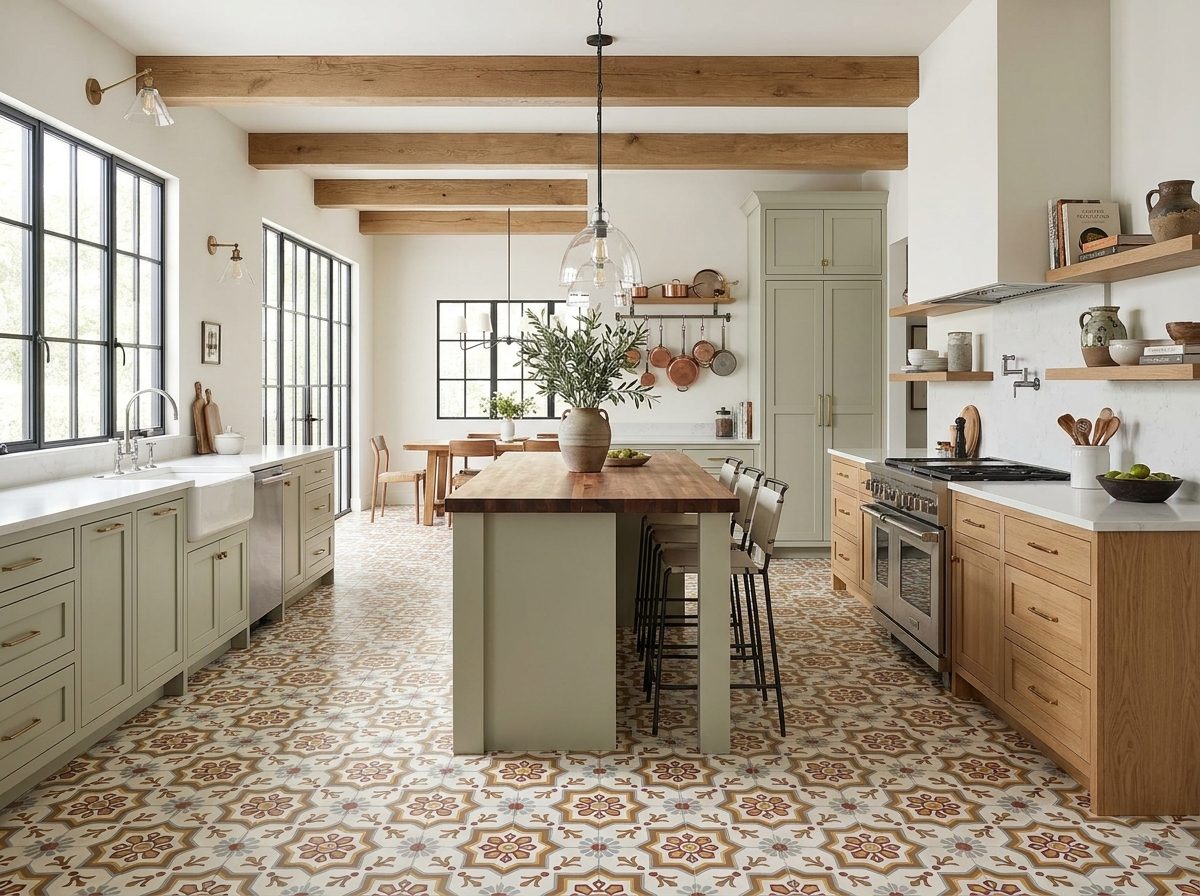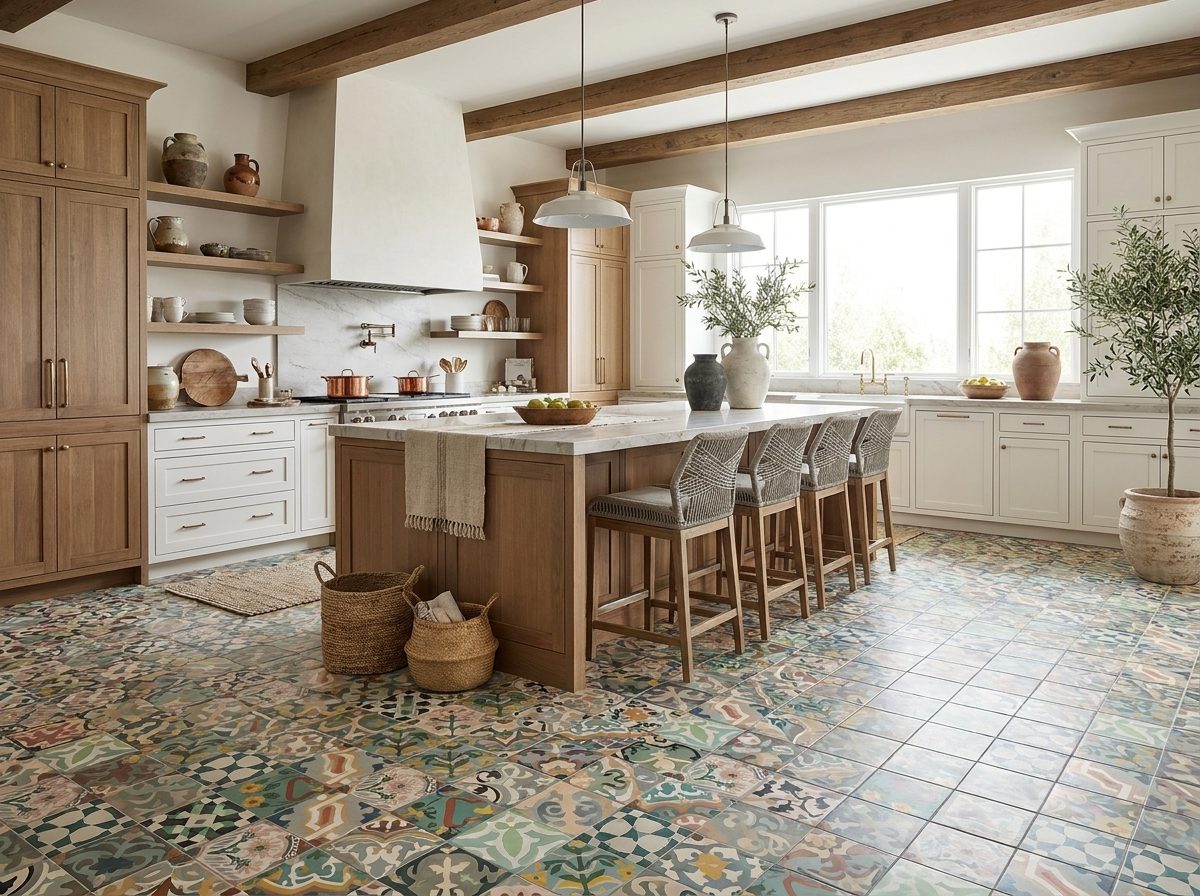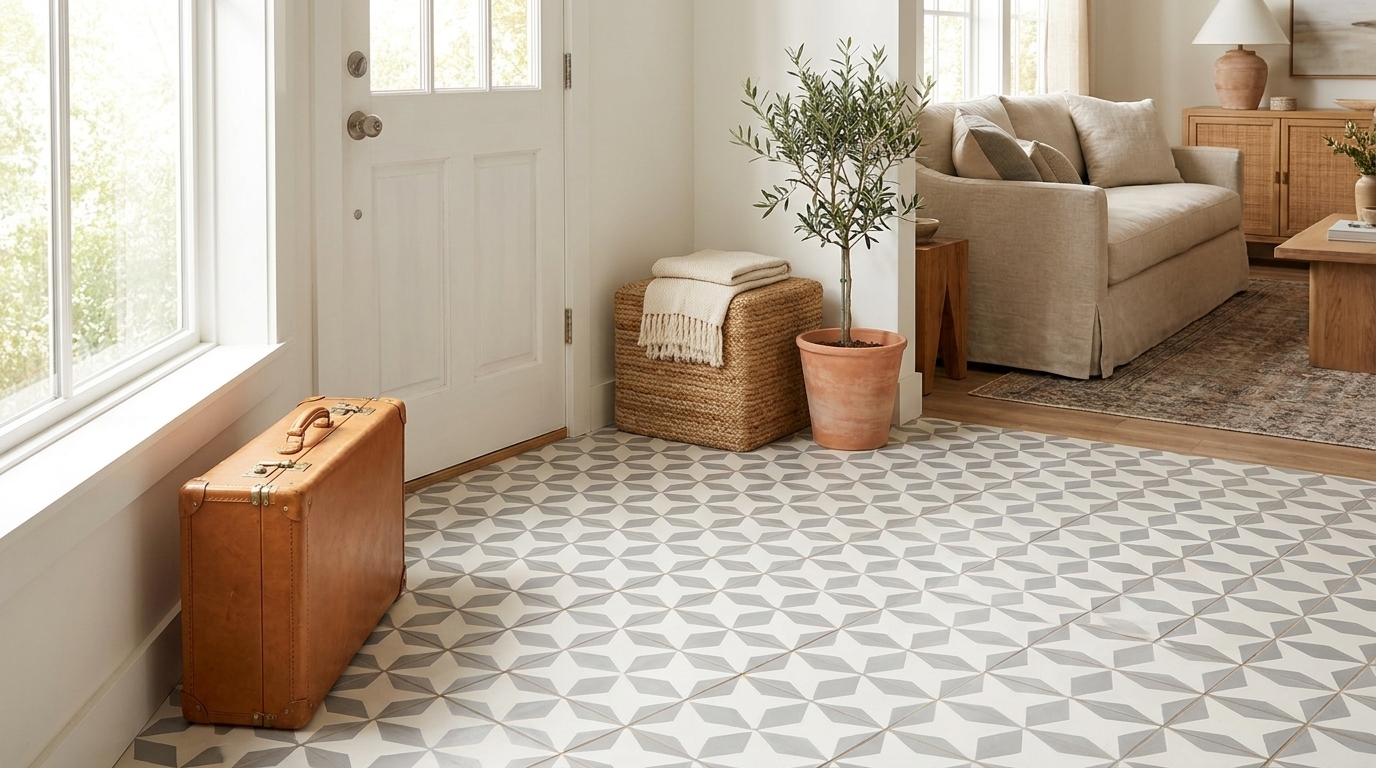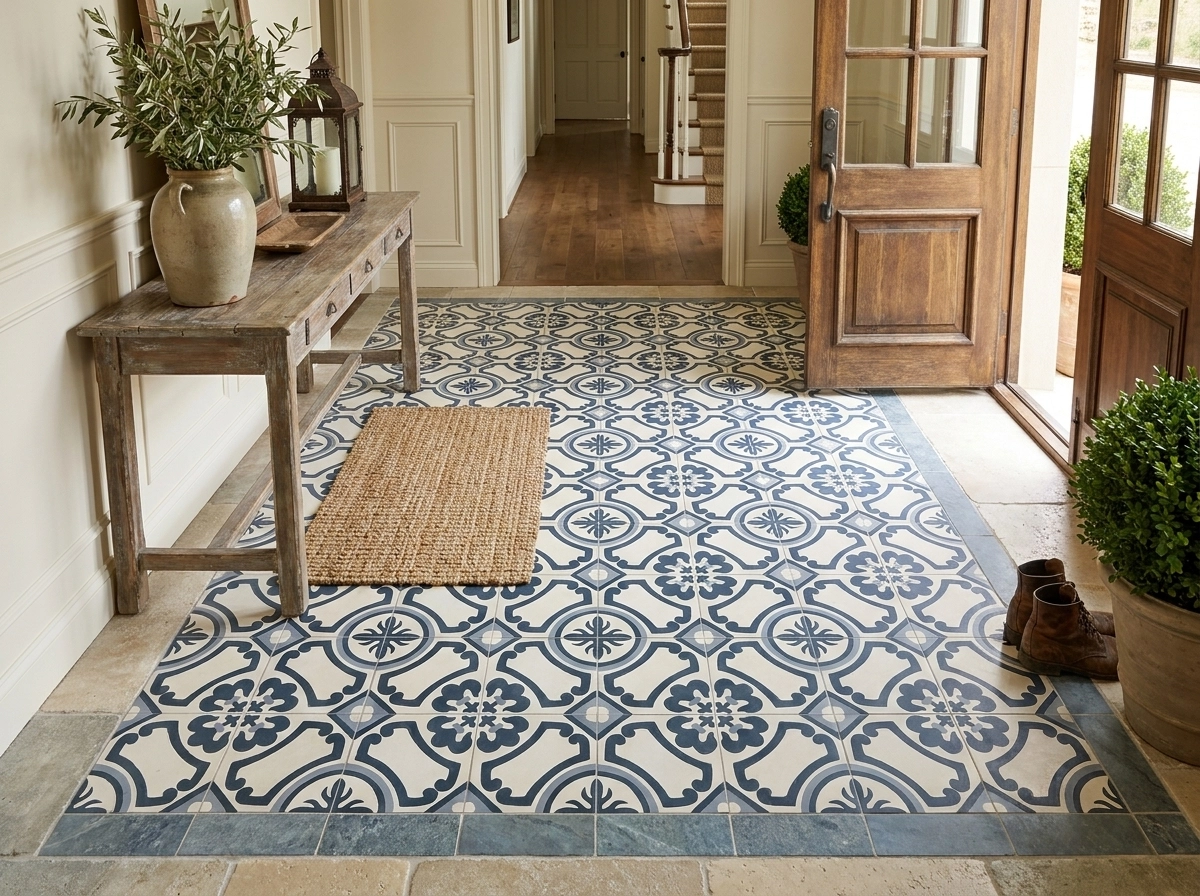
There’s a reason concrete tiles keep showing up in the most talked-about interiors of the year — in the kitchens that stop you mid-scroll, the bathrooms that feel like boutique hotels, the patios that make you want to move the living room outside.
It’s not that concrete tiles are new. They’ve been made by hand for over 150 years, pressed from Portland cement and natural mineral pigments in a process that hasn’t fundamentally changed since the 1870s. What is new is how designers, architects, homeowners, and contractors are using them in 2026 — with a level of creative confidence and material fluency that’s producing some of the most beautiful floors, walls, and surfaces in contemporary interior design.
Whether you’re a homeowner imagining your dream kitchen renovation, a contractor looking to offer clients something beyond standard porcelain, or a designer building your material library for the year ahead — this guide covers everything you need to know about concrete tile trends in 2026: what’s driving them, where they’re appearing, how to specify and install them, and why handmade is still the standard worth holding out for.
What Are Concrete Tiles — And Why Do They Look So Different?

Before diving into trends, it’s worth clarifying what makes concrete tiles — also called cement tiles, encaustic tiles, or hydraulic tiles — fundamentally different from the ceramic and porcelain tiles that dominate most big-box showrooms.
Concrete tiles are pressed, not fired. Each tile is made by hand: pigmented cement is poured into a metal mold, layered with a cement-and-marble-powder mixture, and compressed under a hydraulic press. No kiln. No glaze. No digital printing. The color is mineral-based and runs through the full wear layer of the tile, which means it doesn’t chip away to reveal a white substrate underneath.
The result is a tile with three qualities that manufactured surfaces rarely achieve together:
- Visual depth — the color has richness and variation because it’s mineral, not printed
- Natural texture — a matte surface with subtle micro-relief that interacts with light rather than simply reflecting it
- Character over time — concrete tiles develop patina as they age, becoming more interesting rather than simply more worn
For homeowners, this translates to a floor that gets better with the years. For contractors, it means a product that clients will still love a decade after installation. For designers, it means a material that earns its place on a mood board and holds it.
The Big Concrete Tile Trends for 2026
Trend 1: Bold Geometric Patterns in Unexpected Colorways

The dominant pattern movement in concrete tiles for 2026 is geometric — but not in the restrained, monochrome way that defined the last few years. Designers are pushing color into geometric patterns with a new confidence: deep teal and cream, charcoal and terracotta, cobalt and warm white, forest green and black.
These combinations work because concrete tiles carry color with a warmth and depth that printed tiles can’t replicate. The same geometric pattern in a cobalt and cream cement tile looks fundamentally different — richer, more dimensional, more alive — than it does on a glazed ceramic. That quality is what makes clients fall in love with the material when they see it in person.
Where it’s appearing: Kitchen floors, bathroom floors, entryways, and hospitality lobby flooring.
For homeowners: If you’ve been drawn to geometric tile but worried about commitment — consider that the richness of handmade concrete tile actually makes bold patterns easier to live with, not harder. The variation in tone means the pattern breathes rather than shouts.
For contractors: Geometric concrete tiles require careful layout planning before installation. Center the pattern optically in the room, account for border cuts at all edges, and always discuss overage with the client — 10–15% is the standard recommendation.
Trend 2: Earthy, Warm Palettes Taking Over

Cool grays are stepping back. The palette defining 2026 interiors — in concrete tiles and across material families — is warm, earthy, and grounded: terracotta, clay, warm ochre, dusty rose, burnt sienna, sand.
For concrete tiles specifically, this palette arrives with a material logic: mineral-pigmented cement in warm earth tones carries an inherent quality that feels connected to the natural world rather than manufactured. A terracotta cement tile floor doesn’t just look warm — it feels warm underfoot, has a matte surface that absorbs light rather than bouncing it, and develops a patina over time that only deepens its character.
For interior designers: The earthy palette is versatile. Pair terracotta concrete tiles with deep greens and blues for contrast-driven drama; pair them with warm whites and natural wood for something quieter and more enveloping.
For architects: Earth-toned concrete tiles align naturally with the sustainable material narratives increasingly embedded in residential and commercial briefs — mineral pigments, no kiln firing, long material lifespan.
Explore warm-palette patterns in the In-Stock Collection — ready to specify and ship.
Trend 3: Concrete Tiles on Walls (Not Just Floors)
One of the most significant concrete tile movements of 2026 is vertical: designers and homeowners are taking patterned cement tiles off the floor and onto the wall — kitchen backsplashes, bathroom feature walls, entryway accent panels, fireplace surrounds.
The case for concrete tile on walls is both aesthetic and practical. Aesthetically, a patterned cement tile backsplash or feature wall reads as art — a surface with genuine visual depth and craft behind it. Practically, wall applications are lower-traffic than floors, which means the sealing and maintenance calculus is simpler.
For homeowners: A cement tile kitchen backsplash is one of the highest-ROI design decisions available in a kitchen renovation. It transforms the room, requires minimal maintenance, and holds its visual power for years.
For contractors: Wall installations require a high-bond, non-slip adhesive rated for vertical applications. Always verify substrate preparation and weight load capacity before installing cement tiles on walls.
Trend 4: Outdoor and Indoor Pattern Continuity
The boundary between inside and outside has never been more dissolved in residential design — and in 2026, concrete tiles are one of the primary materials making that dissolution possible. Designers are running the same pattern or complementary colorway from interior kitchen or living room floors onto adjacent terraces and patios, creating a seamless visual flow that makes the entire footprint of a home feel designed as a whole.
For covered outdoor spaces, concrete tiles perform well with appropriate sealing and substrate preparation. The Original Mission Tile design team can advise on outdoor applications for specific climates and exposure conditions.
For homeowners planning a renovation: If your kitchen or living room opens onto a terrace, consider specifying the indoor and outdoor floors together. The continuity adds a sense of space and intention that’s difficult to achieve any other way.
Browse completed indoor-outdoor projects in the Projects Gallery for real-world inspiration.
Trend 5: Custom Concrete Tiles as Signature Design Moves

The most sophisticated concrete tile trend of 2026 isn’t a specific pattern or palette — it’s the move toward custom. Designers and architects at the top of the market are commissioning tile patterns developed specifically for a project: a geometric derived from an architectural detail, a pattern that echoes a client’s cultural heritage, a colorway calibrated to match a specific paint or fabric exactly.
For homeowners undertaking a significant renovation, a custom concrete tile floor or backsplash creates something no neighbor, no magazine, and no other project in the world will share. That exclusivity — combined with the handmade quality of the tile itself — is increasingly what clients at the higher end of the residential market are prepared to invest in.
Start a custom conversation through the Custom Made Collection. Build custom lead times into your project schedule early — the result is worth planning around.
How to Work With Concrete Tiles: Practical Guidance for Every Audience
For Homeowners
- Request samples before committing — concrete tiles look different in person than on screen, and different again under your specific home lighting. Always view samples in the actual space
- Plan for sealing — concrete tiles require a penetrating sealer before grouting and again after installation. It’s a simple process that protects the surface and maintains the matte quality
- Think about grout color — this is an underrated decision. A grout that echoes one of the tile’s tones creates a more immersive effect; a contrasting grout emphasizes the grid
For Contractors
- Layout planning is non-negotiable — center geometric patterns optically in the room, account for border cuts, and walk the client through the layout plan before installation begins
- Specify 10–15% overage — for cuts, waste, and future repairs; matching dye lot tiles are the ideal solution for any future patching
- Substrate preparation — concrete tiles require a flat, stable substrate; lippage is more visible on patterned tiles than on solid colors
For Interior Designers and Architects
- Use the Design Studio — the Original Mission Tile Design Studio allows you to visualize pattern and colorway combinations before samples arrive, and generate client presentations efficiently
- Consider the lighting design together with the tile — particularly for wall applications, where raking light dramatically amplifies the texture of handmade tile surfaces
- Order samples early — at the concept stage, not the specification stage; seeing real tiles in the actual project light is essential for confident specification
FAQ: Concrete Tiles in 2026
Are concrete tiles and cement tiles the same thing? Yes — the terms are used interchangeably. “Concrete tiles” and “cement tiles” both refer to hydraulically pressed tiles made from Portland cement, marble powder, and mineral pigments. “Encaustic tiles” and “hydraulic tiles” are also common names for the same product.
How durable are concrete tiles for high-traffic areas? Very durable — the mineral pigment runs through the full wear layer, so high-traffic areas develop patina rather than exposing a different color substrate. Properly sealed and maintained, concrete tile floors last for decades. There are original cement tile floors in Europe and Latin America that have been in continuous use for over a century.
How do I maintain concrete tiles? Day-to-day maintenance is simple: sweep or vacuum regularly, clean with a neutral-pH cleaner (never acidic or bleach-based products), and reseal every one to two years depending on traffic. In kitchens and bathrooms, the sealing schedule is more important — these are the areas where spills and moisture are most present.
What’s the difference between in-stock and custom concrete tiles? In-stock tiles are proven patterns available for immediate order — ideal for projects with standard timelines and clients who want to choose from a curated selection. Custom tiles are developed specifically for a project, with the client’s chosen pattern, colorway, and dimensions — ideal for projects where the tile is part of the core design concept. Explore both through Original Mission Tile.
Can concrete tiles go in a shower? Yes, with proper waterproofing behind the substrate and a penetrating sealer formulated for wet environments. Concrete tiles’ natural matte surface provides good slip resistance for shower floors. Always specify professional installation for wet-area applications.
Conclusion: The Material That Keeps Earning Its Place
Every few years, the design world revisits concrete tiles and finds them exactly where they’ve always been: beautiful, durable, endlessly versatile, and made by hand in a process old enough to have paved the floors of buildings that are still standing today.
In 2026, the trends around concrete tiles — the bold geometric colorways, the earthy palettes, the wall applications, the indoor-outdoor continuity, the move toward custom — are all expressions of something deeper: a design culture that is returning to craft, to material honesty, and to surfaces that carry meaning beyond their visual surface.
Whether you’re renovating a kitchen, finishing a bathroom, designing a hotel lobby, or specifying materials for a home you intend to live in for decades — concrete tiles offer a quality of surface that manufactured materials have never convincingly replicated. The handmade difference is real. And in 2026, it matters more than ever.
Ready to start your concrete tile project?
Browse proven patterns in the In-Stock Collection, begin a custom design through the Custom Made Collection, visualize your project in the Design Studio, or explore completed installations in the Projects Gallery.
Contact the Original Mission Tile team for samples, pricing, and expert guidance →