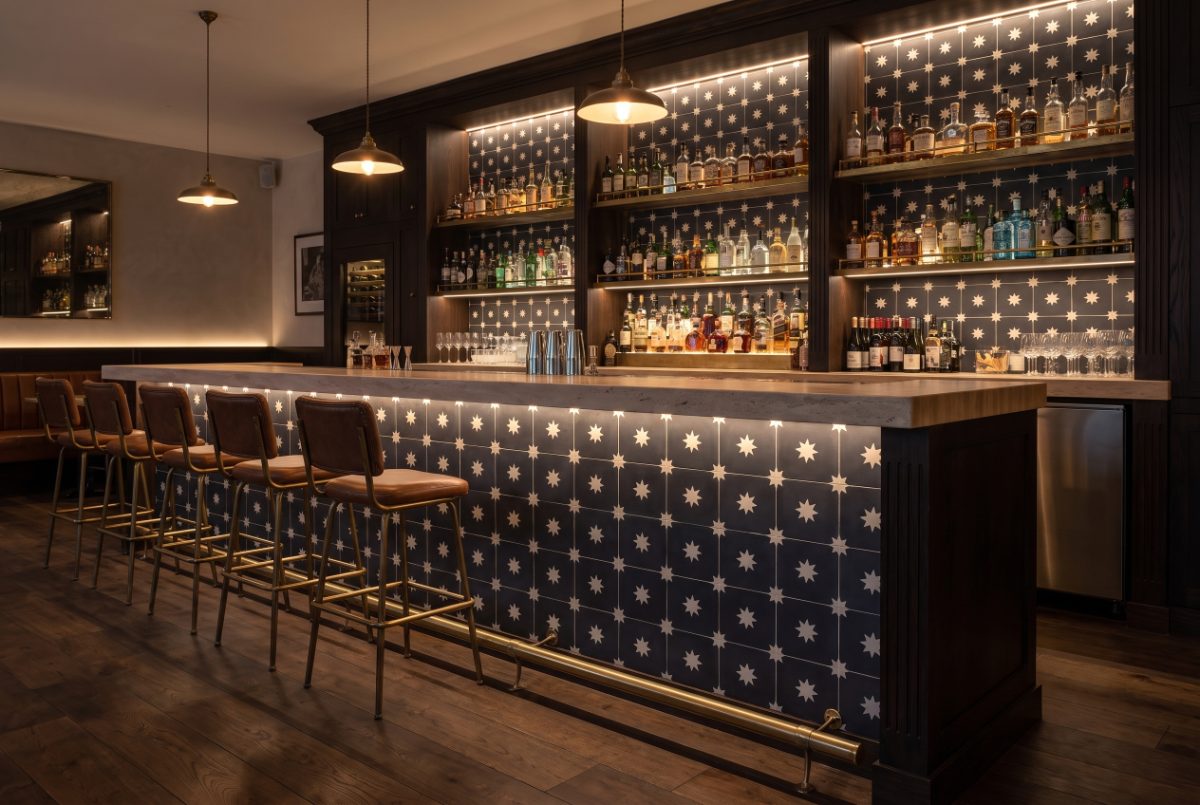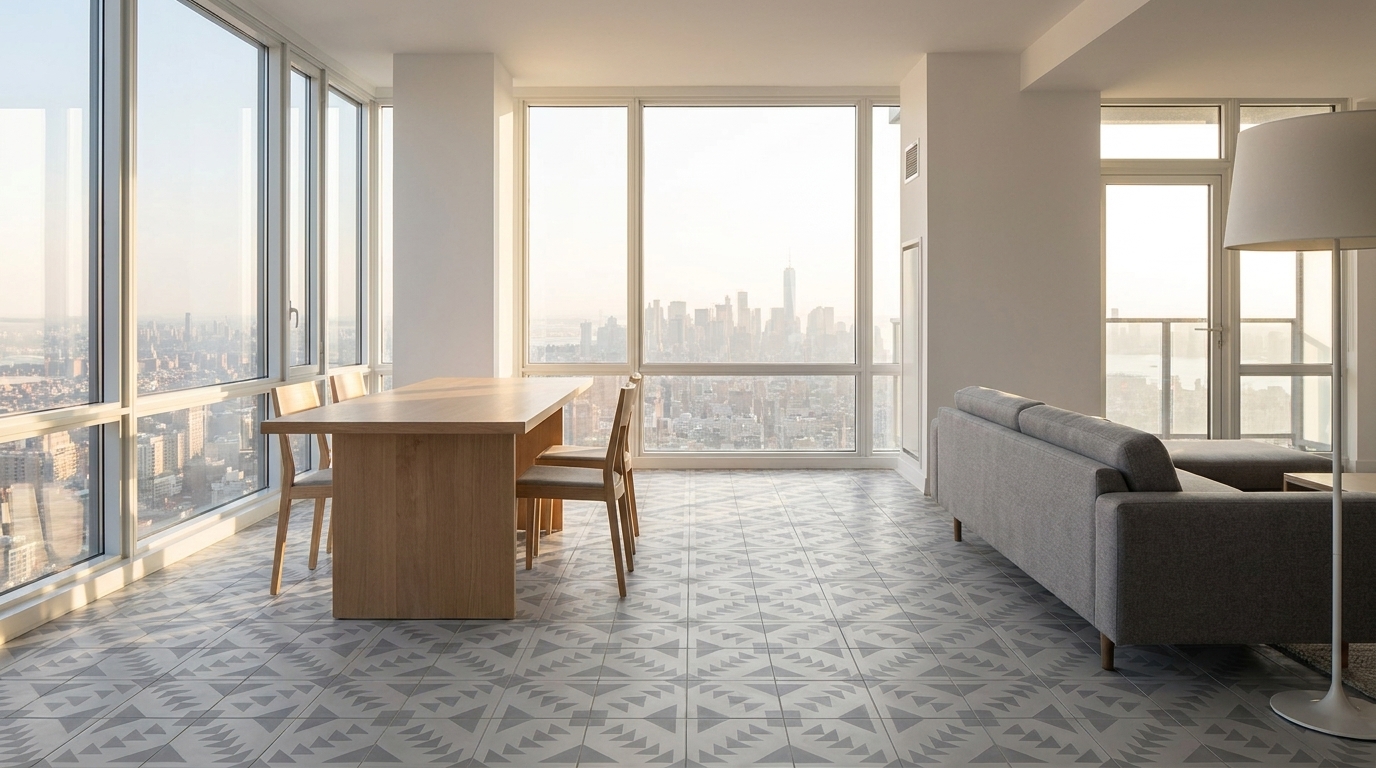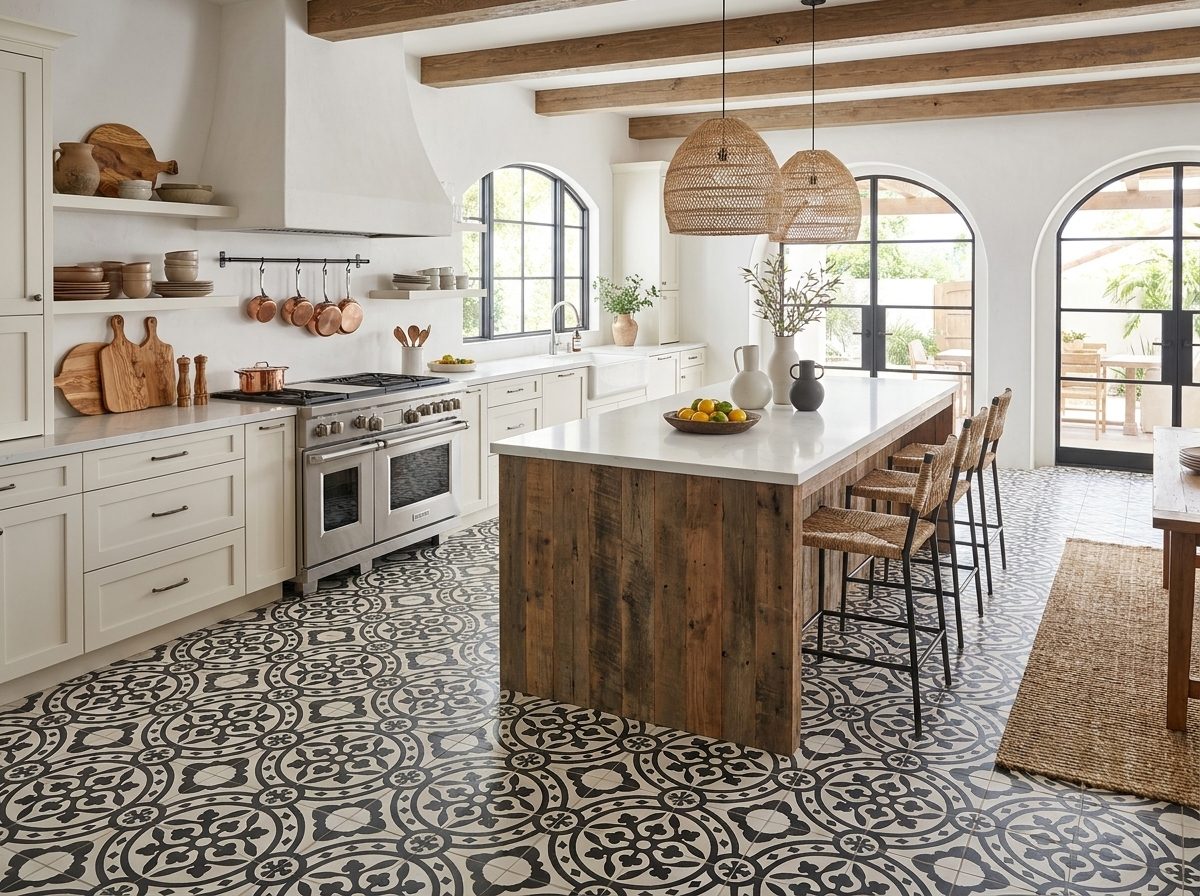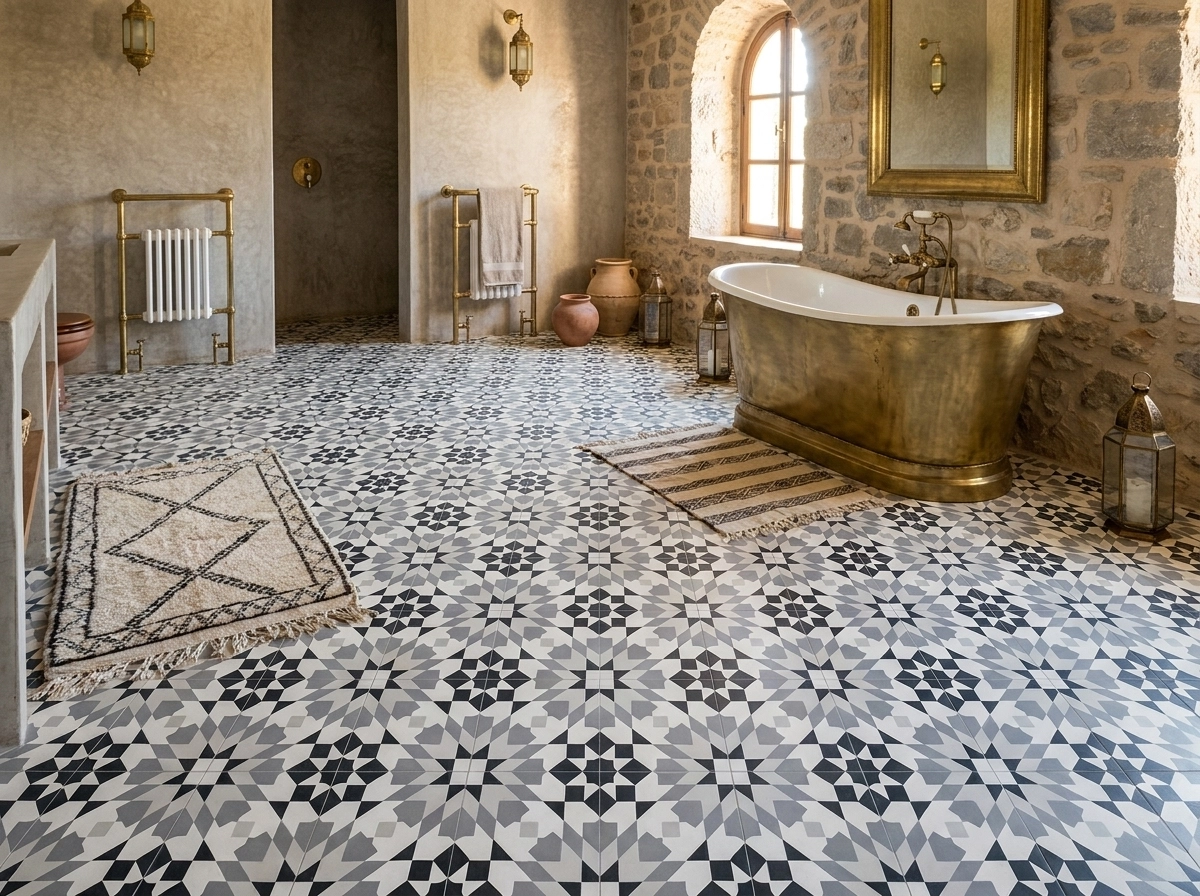
Every tile catalog in the world shows you someone else’s idea of what a beautiful floor looks like. Custom made tiles let you build your own.
That distinction matters more than it might seem. A pattern chosen from a catalog is a pattern someone else already chose, is choosing right now, and will choose again next year. It’s beautiful, functional, and proven — but it isn’t yours. A custom tile, developed specifically for your project, your space, and your vision, is something no other floor or wall in the world shares. That level of design specificity is increasingly what clients, homeowners, and designers are prepared to invest in — and increasingly, it’s what separates the spaces people remember from the ones they simply inhabit.
This guide explains everything you need to know about custom made tiles: what the process involves, who benefits most from going custom, how to prepare for a custom project, what it costs in time and budget, and how Original Mission Tile’s Custom Made Collection makes the process accessible for residential and commercial projects of every scale.
What Are Custom Made Tiles?

Custom made tiles are tiles developed specifically for a single project — in a pattern, colorway, size, or combination that doesn’t exist in any standard catalog. They’re the opposite of off-the-shelf: instead of choosing from what’s already been made, you work with a manufacturer to create something that hasn’t existed before.
In practice, custom tile projects range widely in scope and complexity. At the simpler end, a custom order might involve producing an existing pattern in a specific colorway that isn’t available in-stock — matching a paint color, fabric sample, or stone tone precisely. At the more complex end, a custom project might involve designing an entirely new geometric pattern, developing a pattern derived from an architectural detail, or creating a tile that encodes a brand’s logo geometry into the repeat.
Furthermore, custom tiles aren’t limited to pattern. Size, format, relief depth, and surface treatment can all be customized for the right project. The hydraulic press tradition behind handmade cement tiles is remarkably flexible when working with an experienced manufacturer.
Who Benefits Most From Custom Tiles?
Custom tiles aren’t the right choice for every project. However, for certain clients and certain briefs, they’re the only choice that fully delivers.
Interior Designers With a Specific Vision
For designers whose concept depends on a surface that doesn’t yet exist — a pattern that echoes an architectural motif in the building, a colorway calibrated to a specific furniture fabric, a tile format scaled to the proportions of a particular room — custom production is the only path that leads to the right result.
Additionally, custom tiles give designers a specification that no competitor can replicate. A floor or wall developed exclusively for a client’s project becomes, in effect, an original work. Consequently, it reflects directly on the designer’s creative capability and distinguishes the project in a portfolio.
Architects Developing Brand Identity Through Materials
For architects working on hospitality, retail, or institutional projects, the built surface is part of the brand. A hotel that has a proprietary tile pattern — one derived from the brand’s visual language, produced in the brand’s palette, installed in every property — creates a material identity that guests recognize and remember.
Furthermore, this kind of brand-embedded tile specification is increasingly sought after by hospitality operators who understand that the physical environment is a marketing asset, not just a building component.
Homeowners Who Want Something Truly Their Own
Not every custom tile project is large or commercial. Many of the most satisfying custom projects begin with a homeowner who has a specific vision — a kitchen floor in their grandmother’s favorite colors, an entry tile derived from a pattern seen in a travel photograph, a bathroom wall that replicates the tile they fell in love with in a Moroccan riad — and a manufacturer willing to bring it to life.
For homeowners undertaking a significant renovation, a custom tile floor is one of the most enduring investments available. Moreover, it creates something that future owners cannot simply replace with the next season’s catalog choice — because it doesn’t exist in any catalog.
The Custom Tile Design Process, Step by Step

Understanding what the custom tile process involves makes it easier to prepare, budget, and plan your project timeline accurately.
Step 1: Define the Brief
Every custom tile project begins with a clear brief. At minimum, the brief should cover the intended application (floor, wall, outdoor surface), the color palette or reference points, any pattern preferences or motifs, the approximate square footage required, and the project timeline.
The more specific the brief, the faster and more accurately the design team can respond. Therefore, gather as many reference materials as possible before the initial conversation: paint chips, fabric swatches, architectural drawings, photographs of tiles you love, and any brand guidelines relevant to the project.
Step 2: Design Development
Based on the brief, the design team develops one or more pattern and colorway proposals. These are typically presented as digital renderings that show how the pattern repeats across a floor or wall area.
At this stage, feedback is essential. Review the proposals critically against the brief, the space’s proportions, the surrounding material palette, and the client’s expectations. Furthermore, use the Design Studio to visualize the proposed pattern in the context of your project’s specific dimensions before moving forward.
Step 3: Sample Production and Approval
Before full production begins, a physical sample tile is produced for approval. This is the most important quality gate in the entire custom process. Specifically, it allows the designer or homeowner to evaluate the actual color, pattern sharpness, and surface quality of the proposed tile under real lighting conditions — not on a screen.
Review the sample in the actual space where the tile will be installed, under both natural and artificial light. Additionally, place it against the other materials in the room: the cabinetry, the countertop, the wall paint. Approve only when the sample meets the brief precisely. Changes are straightforward at this stage; they’re costly after full production.
Step 4: Production
Once the sample is approved, full production begins. Lead times for custom cement tiles typically range from 10 to 16 weeks, depending on order volume, pattern complexity, and the manufacturer’s current production schedule.
Consequently, custom tile orders must be initiated well before they’re needed. For commercial projects, engage the design team at the concept stage — not after the construction schedule is set. For residential renovations, initiate the custom order before contractor scheduling begins, so the tile arrival doesn’t delay the installation.
Step 5: Quality Check, Delivery, and Installation
Upon production completion, tiles are inspected, packaged, and shipped. Upon arrival, inspect the delivery carefully before installation begins. Specifically, confirm that the tiles match the approved sample in color and pattern, and that dimensional consistency meets the specified tolerance.
For the installation itself, work with a contractor experienced in handmade cement tiles. The installation process differs from standard porcelain in several important ways, including adhesive selection, layout planning, sealing protocol, and grout selection.
Custom Tiles by Application

Custom Kitchen Tiles
Custom kitchen floor and backsplash tiles allow homeowners and designers to develop a color and pattern combination calibrated precisely to the kitchen’s cabinetry, countertop, and lighting. For example, a warm terracotta with a geometric pattern derived from the cabinet hardware’s geometric detail creates a material connection that feels designed throughout, not assembled from separate choices.
Moreover, a custom kitchen backsplash becomes a conversation piece — the detail guests notice, ask about, and remember long after the dinner is finished.
Custom Bathroom Tiles
Custom bathroom tiles are particularly powerful in primary bathrooms and powder rooms, where the enclosed scale means every surface is experienced at close range. A pattern developed to complement the specific proportions of a bathroom — neither too bold nor too small for the space — creates an atmosphere that a catalog tile, chosen without that spatial knowledge, rarely achieves.
Browse completed custom bathroom and kitchen installations in the Projects Gallery for examples of what custom production makes possible in residential applications.
Custom Commercial Tiles
For restaurants, hotels, retail brands, and other commercial clients, custom tiles represent a brand asset as much as a building material. A pattern and colorway developed specifically for a brand — installed at every location, on every floor, visible to every guest — becomes part of how that brand communicates its identity through its physical environment.
Furthermore, as the brand grows and opens new locations, the same custom tile specification travels with it, creating instant visual recognition that no off-the-shelf specification can replicate.
Custom Breeze Blocks
Custom production isn’t limited to flat tile. The 8×8 Breeze Block Collection can also be developed in custom opening patterns, dimensions, or colorways for projects where a standard breeze block pattern doesn’t fully serve the design concept. For outdoor screens, interior partitions, and feature walls where the breeze block’s architecture is part of the design concept, custom production opens additional creative possibilities.
What Custom Tiles Cost: Time and Budget Considerations
Custom cement tiles carry a price premium over in-stock alternatives, reflecting the design development, sample production, and smaller production run involved. However, the premium is typically more modest than clients expect — particularly for colorway-only customizations of existing patterns.
The more significant cost consideration is time. Custom production requires 10–16 weeks from sample approval to delivery. Therefore, the real cost of a poorly timed custom order is often a delayed project, not the tile price itself.
For projects where budget is the primary constraint but design specificity still matters, consider a hybrid approach: specify a custom colorway on an existing pattern rather than developing an entirely new design. This approach reduces design development time and sample production costs while still achieving a tile that isn’t available off the shelf.
Additionally, for smaller custom projects, the In-Stock Collection may contain patterns and colorways that come closer to the design brief than expected — it’s always worth exploring in-stock options before committing to a full custom development.
FAQ: Custom Made Tiles
What’s the minimum order quantity for custom cement tiles? Minimum order quantities for custom production vary by project type and pattern complexity. Generally, custom tile projects require a minimum of one to three pallets, depending on the tile format and production setup. Contact the Original Mission Tile team directly to discuss your project’s specific requirements.
Can I customize just the color, or does the pattern also need to be new? Both options are available. Many custom projects involve producing an existing pattern in a specific colorway that isn’t available in-stock — matching a paint color, stone tone, or fabric sample precisely. This is typically faster and less costly than developing an entirely new pattern. As a result, colorway customization is often the right starting point for projects with tighter timelines or budgets.
How long does the design approval process take before production begins? The timeline from initial brief to sample approval typically ranges from two to four weeks, depending on design complexity and how many revision rounds are needed. Therefore, a total timeline from initial consultation to tile delivery is usually 12–20 weeks for a standard custom project.
What happens if the approved sample doesn’t match the delivered tiles? A reputable manufacturer will resolve quality discrepancies — either through replacement production or appropriate compensation. Before placing a custom order, confirm the supplier’s quality guarantee policy in writing. Additionally, inspect the delivery carefully upon arrival and report any discrepancies before installation begins.
Can I use the Design Studio to visualize my custom tile before production? Yes. The Design Studio is particularly useful in the early stages of a custom project, when you’re exploring pattern and colorway combinations before committing to a specific direction. While it doesn’t replace the physical sample approval step, it significantly accelerates the design development conversation.
Conclusion: The Only Floor in the World That’s Entirely Yours
The most enduring interior design decisions are the ones made with complete intentionality — where every element is exactly what it should be, rather than the best available option from what already exists.
Custom made tiles make that level of intentionality possible for one of the most significant surfaces in any interior. They offer the warmth and craft of handmade cement tile combined with the creative specificity of a design developed for a single project, a single space, a single vision.
The process takes time. It requires planning. And it results in a floor or wall that no catalog, no competitor, and no future renovation can simply replicate by pointing at a product number.
That’s what makes it worth it.
Ready to start your custom tile project?
Begin a design conversation through the Custom Made Collection, visualize early concepts in the Design Studio, explore in-stock patterns as a starting point in the In-Stock Collection, or browse completed custom projects in the Projects Gallery.
Contact the Original Mission Tile design team to discuss your custom tile project →