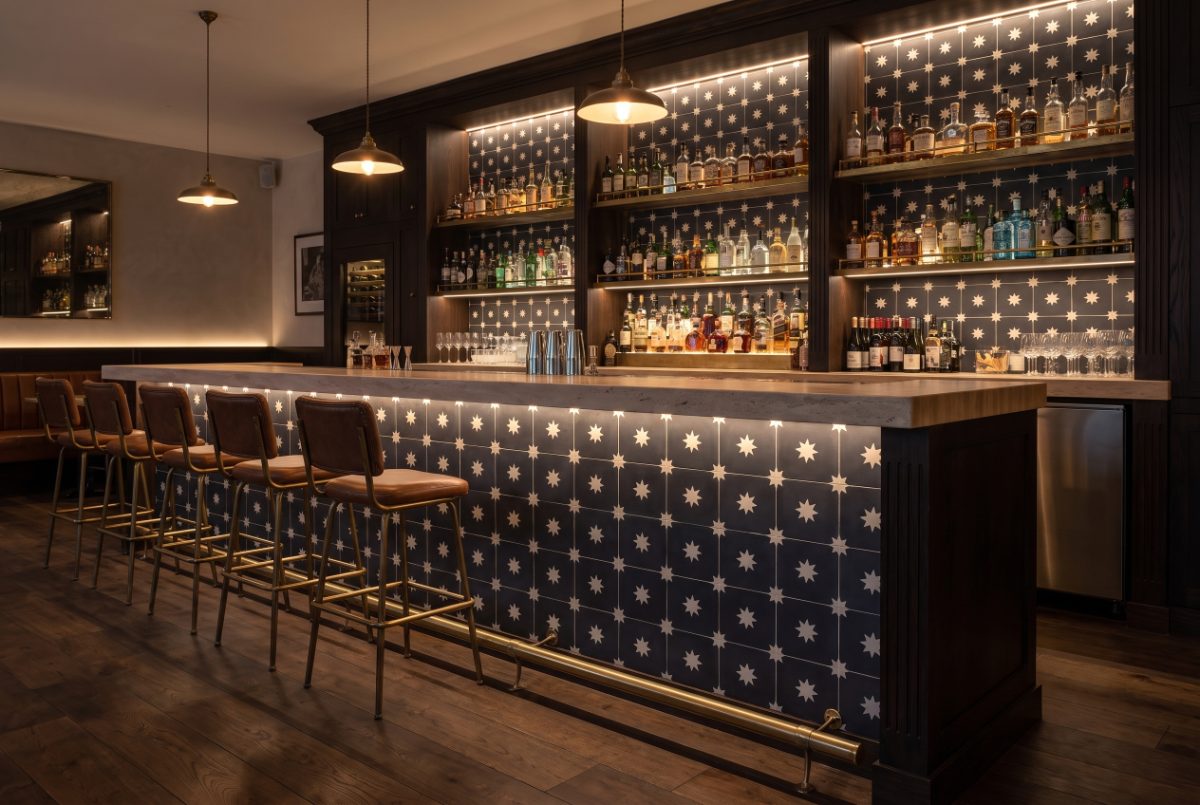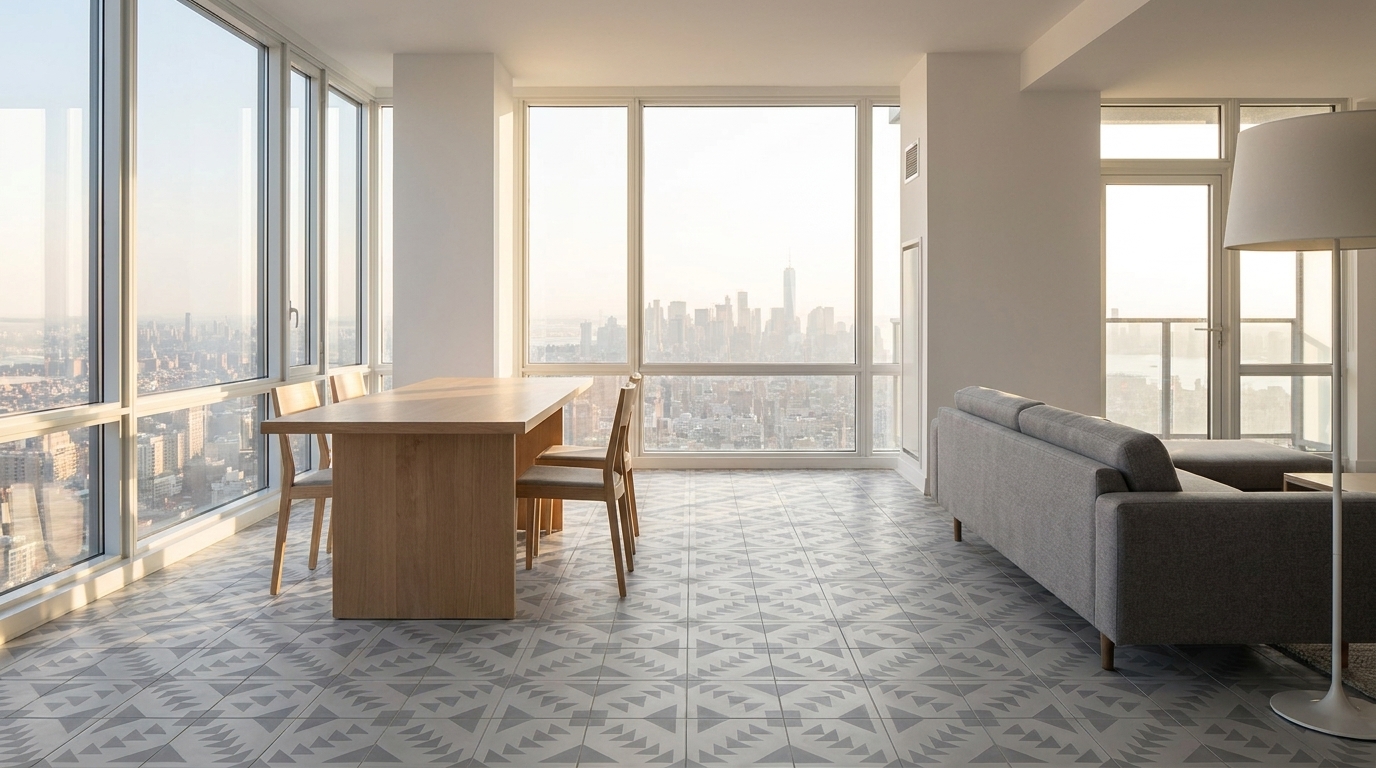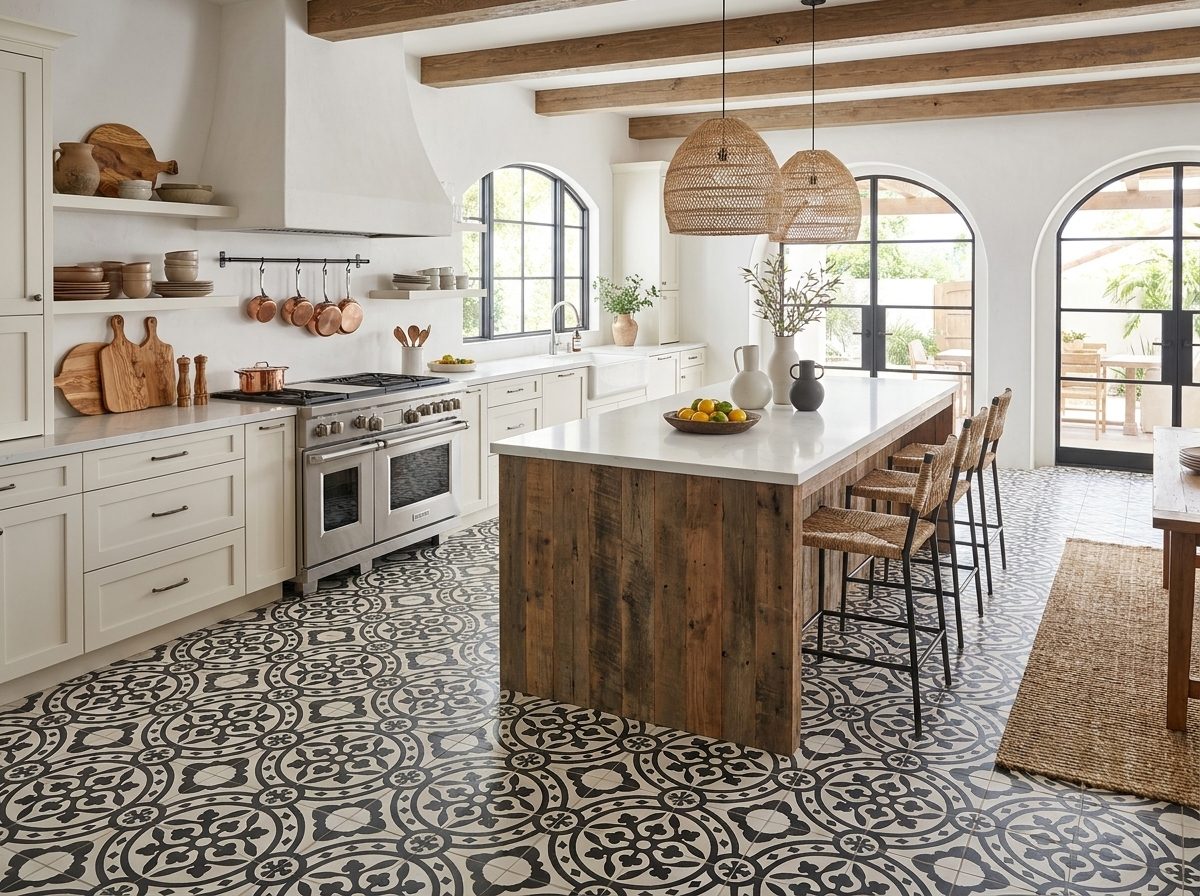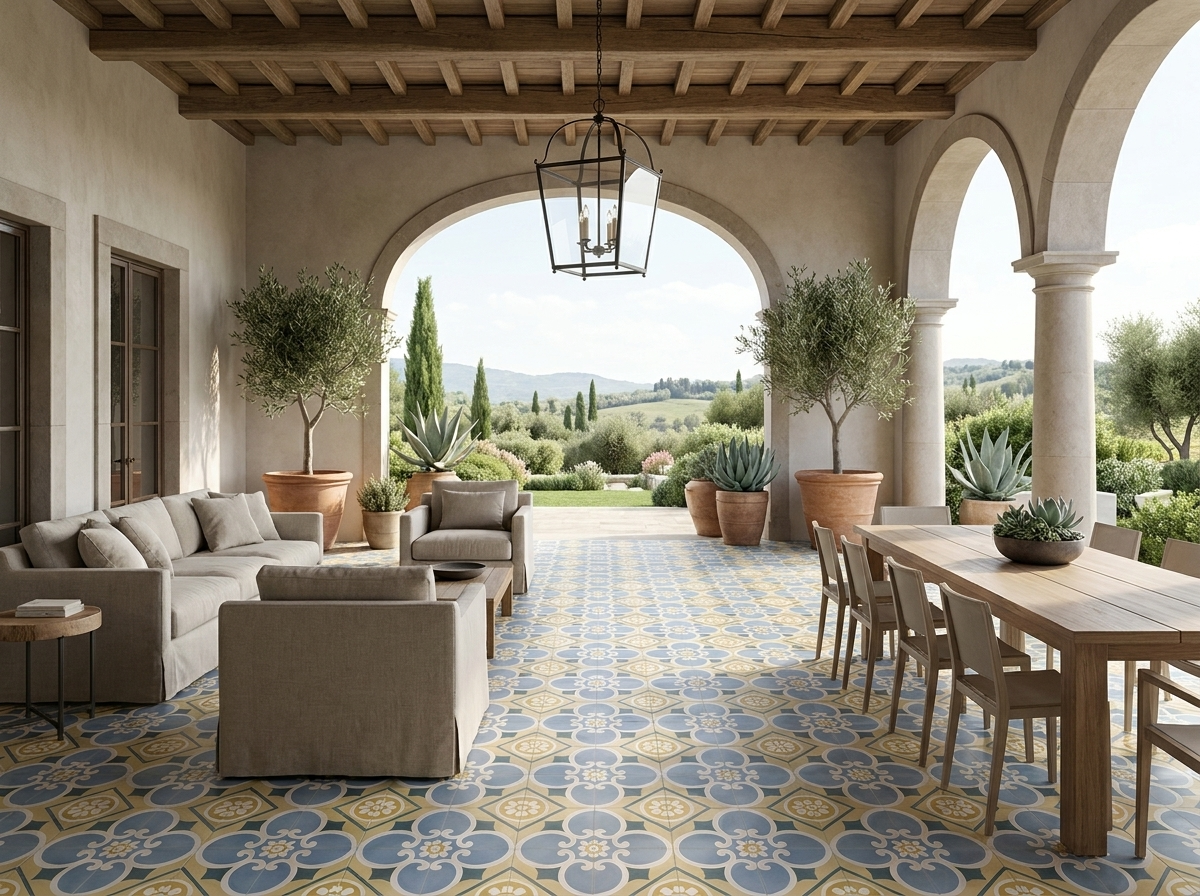
One of the most common questions in any tile specification conversation is also one of the simplest: will this tile work with my home?
The answer depends largely on architectural context. A bold Moroccan star that looks extraordinary in a Spanish Colonial hacienda can feel jarring in a mid-century ranch house. A classic encaustic black-and-white geometric that anchors a Victorian entryway with authority might overwhelm a Scandinavian-influenced contemporary interior. Pattern and palette choices that feel instinctively right in one architectural context can feel genuinely wrong in another.
This guide resolves that uncertainty. For each of the major U.S. residential architectural styles — Spanish Colonial, Mediterranean, craftsman, mid-century modern, contemporary, farmhouse, and Victorian — it identifies the cement tile patterns, palettes, and applications that fit most naturally, plus the combinations that consistently work best. Whether you’re renovating a specific home or building your material reference library as a designer or contractor, this is the guide that makes the tile-to-architecture matching process clear and confident.
Spanish Colonial and Hacienda Style

Spanish Colonial architecture — characterized by white or cream plaster walls, dark wood beams, arched doorways, and terracotta roof tiles — is one of the most natural architectural contexts for handmade cement tiles. Historically, these homes were built with encaustic tile floors as a standard feature. Consequently, cement tiles in Spanish Colonial interiors don’t feel like a design choice so much as a restoration of the original material intention.
Patterns That Work
Moroccan star-and-cross patterns in terracotta and cream are the most historically resonant choice. Eight-pointed stars, arabesque geometric, and classic Andalusian encaustic combinations all carry the visual language of the Spanish and Moorish design traditions that define this architectural style.
Additionally, single-color terracotta field tiles — used in the main living areas — paired with more intricate patterned tile in entryways and bathrooms create the layered material hierarchy typical of authentic Spanish Colonial interiors.
Palettes
Warm terracotta, burnt sienna, cream, warm ochre, and deep cobalt blue. These are the colors of the Andalusian and Mexican building traditions that Spanish Colonial architecture draws from. In contrast, cool grays and contemporary neutrals feel out of vocabulary in this context.
Applications
Entryways, kitchen floors, bathroom floors and walls, covered terrace floors, and staircase risers. Furthermore, breeze blocks from the 8×8 Breeze Block Collection work beautifully as courtyard screens and patio partition walls in Spanish Colonial properties.
Mediterranean and Tuscan Style

Mediterranean and Tuscan-influenced homes share much of the material vocabulary of Spanish Colonial architecture — warm plaster, natural stone, and hand-crafted surfaces — but tend toward a warmer, more sun-drenched palette and a somewhat freer approach to pattern mixing.
Patterns That Work
Classic encaustic geometric combinations, Moroccan-influenced patterns, and simple terracotta field tiles all work naturally. Moreover, mixed-pattern installations — where a patterned kitchen floor transitions to a complementary border at the room’s perimeter — are particularly at home in Mediterranean interiors, which have a long tradition of layered, curated material combinations.
Palettes
Sun-warmed terracotta, warm white, honey gold, warm sand, faded olive, and deep Tuscan red. This palette is intentionally less saturated than the deeper jewel tones that work in Moroccan-influenced interiors — Mediterranean design favors tones that read as aged by the sun rather than freshly applied.
Applications
Kitchen floors, bathroom floors and feature walls, outdoor terrace and patio surfaces, and hallway or corridor floors. The Projects Gallery includes several completed Mediterranean-influenced residential projects that demonstrate how cement tile patterns translate across indoor and outdoor surfaces in this architectural context.
Craftsman and Bungalow Style

Craftsman and bungalow architecture — defined by handcrafted details, natural materials, built-in millwork, and an emphasis on honest construction — is one of the architectural styles most naturally aligned with the values of handmade cement tile. Both share a commitment to craft over mass production, to materials that carry the evidence of their making, and to design that prioritizes quality and longevity over novelty.
Patterns That Work
Classic two-color geometric patterns — diamonds, hexagons, interlocking squares — in black and white or deep earth tones work particularly well. These are the patterns that appeared in craftsman homes from the early 20th century, and they return to this architectural context with immediate visual rightness.
Additionally, more complex encaustic patterns work beautifully in entryways and bathrooms, where the craftsman tradition of using high-quality decorative tile as a focal detail is well-established.
Palettes
Deep forest green, warm charcoal, black, cream, warm white, terracotta, and warm brown. Craftsman interiors favor saturated, grounded tones rather than pastels or contemporary light neutrals.
Applications
Entryways are the highest-impact craftsman application — a bold geometric cement tile entry floor is one of the most authentic and appreciated renovations possible in a craftsman home. Furthermore, bathroom floors, kitchen backsplashes, and fireplace surrounds are all historically appropriate and visually effective applications.
Mid-Century Modern Style

Mid-century modern architecture — open plans, clean lines, large windows, and a seamless relationship between interior and exterior — presents a different kind of tile challenge. The style’s commitment to simplicity means that pattern must be chosen carefully. However, when cement tile is used well in a mid-century interior, the result is extraordinary.
Patterns That Work
Geometric patterns with strong, clean lines — rather than intricate or curvilinear designs — work best. Classic encaustic diamonds, bold two-color checkerboard combinations, and simple hexagonal patterns in unexpected color pairings all feel at home in mid-century interiors without competing with the architecture’s clean lines.
Additionally, single-color field tiles in bold saturated tones — deep olive, warm mustard, terracotta — applied across a full floor or wall create the kind of confident color statement that mid-century design embraced, and that contemporary interpretations of the style are returning to in 2026.
Palettes
Warm mustard, terracotta, olive green, burnt orange, charcoal, cream, and warm white. These are the colors of the mid-century period revival — warm, saturated, and deliberately evocative of the era’s optimistic relationship with color.
Applications
Open-plan kitchen and living room floors, bathroom floors, entryways, and covered outdoor spaces — particularly around pool areas, where mid-century architecture and outdoor tile have always had a natural relationship.
Explore pattern and colorway options suited to mid-century interiors in the In-Stock Collection.
Contemporary and Minimalist Style

Contemporary and minimalist interiors present the most nuanced cement tile specification challenge. The style’s commitment to restraint means that bold pattern can easily feel out of place. However, the right cement tile choice in a contemporary interior adds the material warmth and depth that purely neutral, mass-produced surfaces lack — without disrupting the architectural simplicity.
Patterns That Work
Simple geometric patterns with limited color contrast — a tonal two-color diamond, a subtle encaustic grid in warm white and cream — work well. Furthermore, monochromatic or near-monochromatic cement tile in a single warm tone can introduce the texture and warmth of handmade material without introducing visual complexity.
In some contemporary interiors, a single bold pattern used in a contained application — a bathroom floor, an entryway — creates a deliberate design moment within an otherwise restrained space. As a result, the pattern feels intentional rather than inconsistent.
Palettes
Warm white, cream, pale sand, warm gray, and light terracotta. Cool whites and blue-toned grays feel at odds with the mineral warmth of cement tile pigments — therefore, contemporary cement tile specifications tend to work in the warmer half of the neutral palette.
Applications
Bathroom floors, powder rooms, entryways, and kitchen backsplashes. For larger contemporary interiors, a subtle field tile in a warm neutral tone can cover a full open-plan floor area with the textural richness of handmade material while maintaining the visual quiet the architectural style requires.
Modern Farmhouse Style

Modern farmhouse architecture — shiplap walls, wide-plank floors, neutral palettes, and a warm, casual aesthetic — has been one of the dominant residential styles in the United States for nearly a decade. In 2026, however, the style is evolving. Specifically, it’s moving away from the all-white, all-neutral version toward something warmer and more materially specific.
Patterns That Work
Simple geometric patterns, classic encaustic combinations, and Moroccan-adjacent designs in warm, earthy palettes all work well. In particular, terracotta and cream combinations bring the warmth that contemporary farmhouse interiors are moving toward, without the saturated depth of more traditional Moroccan patterns.
Palettes
Warm white, cream, terracotta, warm tan, sage green, and navy. The modern farmhouse palette in 2026 is specifically avoiding the cool grays and stark whites that defined the style five years ago — consequently, warm cement tile palettes fit the current evolution of the style naturally.
Applications
Kitchen floors and backsplashes are the most effective farmhouse cement tile applications. Additionally, entryways, laundry room floors, and bathroom floors all benefit from the material warmth and easy maintenance of cement tile in a farmhouse context.
Victorian and Traditional Style

Victorian and traditional architecture — ornate millwork, high ceilings, formal room layouts, and a rich material palette — is perhaps the oldest and most established architectural context for decorative encaustic tile. The original Victorian interior frequently included patterned tile floors, and the tradition is both historically authentic and visually natural.
Patterns That Work
Intricate Moroccan geometric patterns, classic Victorian encaustic combinations — typically in black, white, cream, and terracotta — and multi-color repeats all sit naturally in Victorian and traditional interiors. Moreover, border patterns and inset medallions, which create a rug-like composed quality within a floor, are particularly at home in the formal layout of Victorian rooms.
Palettes
Black, white, cream, terracotta, deep burgundy, forest green, and cobalt blue. These are the colors of the Victorian decorative tradition, and they translate directly into the handmade cement tile palette.
Applications
Entryways and hallways are the most historically authentic and visually effective Victorian applications. Furthermore, bathroom floors, parlor or sitting room floors, and kitchen floors all benefit from the period-appropriate quality that patterned cement tile brings to Victorian architecture.
Use the Design Studio to explore pattern combinations suited to any of these architectural styles before requesting physical samples. For projects requiring a specific pattern or colorway not available in-stock, the Custom Made Collection supports bespoke development for any architectural context.
FAQ: Cement Tiles and Architectural Styles
Can I use cement tiles in a home that doesn’t fit neatly into one architectural style? Yes — most homes are a combination of influences rather than a pure example of a single style. In that case, focus on the palette and material character of the dominant style, and choose cement tile patterns that fit that character rather than trying to match a specific historical reference. Furthermore, physical samples viewed in the actual space are the most reliable guide when the architectural context is mixed.
Which architectural style is most forgiving of bold cement tile patterns? Spanish Colonial, Mediterranean, Victorian, and craftsman styles are the most naturally accommodating of bold, intricate patterns. Contemporary and minimalist styles require more restraint, though bold patterns used in contained applications within these styles can be highly effective.
Do cement tiles work in new construction, or only in renovations of older homes? Cement tiles work equally well in new construction. In fact, some of the most striking cement tile installations are in contemporary new builds where the tile is used deliberately as a contrast to the architectural minimalism — a patterned bathroom floor or entryway that provides material warmth within an otherwise streamlined home.
How do I adapt a pattern to match a specific paint color in my home? The Custom Made Collection allows designers and homeowners to develop a colorway calibrated to a specific paint color, fabric, or material reference. This approach is often faster and more cost-effective than developing an entirely new pattern.
Conclusion: Every Architectural Style Has Its Cement Tile
The right cement tile for any home exists — it’s simply a matter of understanding which patterns and palettes align with the architectural character of the space. Spanish Colonial and Mediterranean homes reach naturally for warm terracotta and Moroccan geometry. Craftsman bungalows find their match in bold two-color geometric. Mid-century moderns benefit from clean-lined patterns in warm, saturated tones. And Victorian and traditional homes return to the intricate encaustic combinations they were originally built with.
In every case, handmade cement tiles bring something that manufactured alternatives cannot: material warmth, craft depth, and the sense that the surface was chosen with genuine understanding of the space it inhabits.
That understanding is what this guide is designed to provide.
Ready to find the right tile for your architectural style?
Explore patterns for every style in the In-Stock Collection, develop a custom colorway through the Custom Made Collection, visualize combinations in the Design Studio, and browse style-specific installations in the Projects Gallery.
Contact the Original Mission Tile design team for style-specific guidance and samples →