Farmhouse Tile That Doesn’t Feel Like Everyone Else’s Farmhouse
You’ve seen that farmhouse before. White subway tile. Shiplap. A chalkboard wall. And somehow, it looks exactly like the one next door.
There’s nothing wrong with loving the farmhouse aesthetic — the warmth, the texture, the sense of history baked into every surface. But somewhere between Pinterest boards and big-box renovation specials, “farmhouse style” became a formula. A predictable checklist that traded soul for safety.
The good news? The most exciting version of farmhouse design has never been about what’s on the shelf at your nearest home improvement store. It’s always been about handcrafted materials with real character — the kind that tell a story, absorb light differently at every hour of the day, and look like they were made specifically for your space. Because, in the best cases, they were.
Handmade cement tiles are rewriting the farmhouse design story for homeowners, interior designers, and architects who want the warmth and authenticity of the aesthetic without the cookie-cutter result. Earthy. Patterned. Deeply textural. Completely personal. This is the farmhouse tile conversation that nobody else is having — and it starts right here.

Why Farmhouse Style Deserves Better Tile
The farmhouse aesthetic is rooted in something real: the beauty of honest materials, regional craft traditions, and spaces built to be lived in rather than photographed. Spanish haciendas. Sicilian farmhouses. Moroccan riads. Provençal kitchens. Every one of these design traditions shares the same DNA as what we now call “farmhouse style” — and every one of them built their identity on patterned, handmade, regionally specific tile.
The modern American farmhouse trend borrowed the warmth but too often left behind the pattern, the color, and the irreplaceable character of hand-pressed tile. Replacing it with mass-produced subway tile is like replacing a hand-stitched quilt with a factory fleece blanket. Functional? Yes. Soulful? Not even close.
The designers, architects, and homeowners leading the next wave of farmhouse interiors are returning to those roots — reaching for handmade cement tiles that carry the weight of centuries of craft tradition and the freedom of complete customization.
What Makes Handmade Cement Tiles the Right Choice for Farmhouse Design
Durability That Tells a Story Over Time
One of the defining characteristics of authentic farmhouse interiors is the sense that the space has lived a full life. Surfaces that have aged well, acquired patina, and grown more beautiful with use. Handmade cement tiles do exactly that.
Unlike ceramic or porcelain, encaustic cement tiles are solid through their entire depth — the color and pattern are cast into the body of the tile, not printed on a surface glaze. This means that over years of use, they develop a natural luster and depth that only deepens with time. In farmhouse applications, that’s not wear — that’s character.
Cement tiles are also genuinely tough. Properly sealed and maintained, they handle high foot traffic, kitchen spills, outdoor exposure, and heavy furniture with ease. For farmhouse kitchens, mudrooms, and patios — spaces built for real life — that durability is essential.
Handmade Quality in Every Tile
Each decorative cement tile from Original Mission Tile is hand-pressed by skilled artisans using traditional techniques. Natural pigments, marble powder, and cement are layered in molds, pressed under hydraulic force, and cured without kiln firing. The result is a tile with natural variation — in tone, in texture, in the subtle irregularities that distinguish a handmade object from a machine-stamped one.
For farmhouse interiors, this variation is a feature, not a flaw. It creates the kind of visual interest and warmth that no perfectly uniform tile can produce, and it ensures that no two installations ever look exactly alike.
Sustainability at the Core
Authentic farmhouse design has always carried an implicit environmental ethic — the idea of building with natural materials, creating spaces that last generations, and rejecting disposable aesthetics. Cement tiles align perfectly with this philosophy. They are made from natural materials, require no kiln firing, and are built to last for decades with minimal maintenance.
In an era where sustainability is both a personal value and a design credential, the story behind your tile matters as much as its appearance.
Style Versatility That Goes Far Beyond the Formula
Here’s the creative liberation that handmade cement tiles offer farmhouse designers: the style vocabulary is essentially unlimited. Earthy terracotta tiles for a Southwestern farmhouse. Intricate Moroccan tiles for a maximalist farmhouse kitchen. Weathered Mediterranean tiles for an outdoor courtyard. Geometric patterned floor tiles for a modern farmhouse entryway. Spanish-style tiles for a hacienda-inspired bathroom.
Every one of these expressions is authentically “farmhouse” — rooted in craft, regional tradition, and material honesty. And every one of them is completely distinct from the white subway tile baseline that has come to define the category.

Room-by-Room: Farmhouse Tile Applications That Actually Inspire
Kitchen Backsplash Tiles: The Heart of the Farmhouse Kitchen
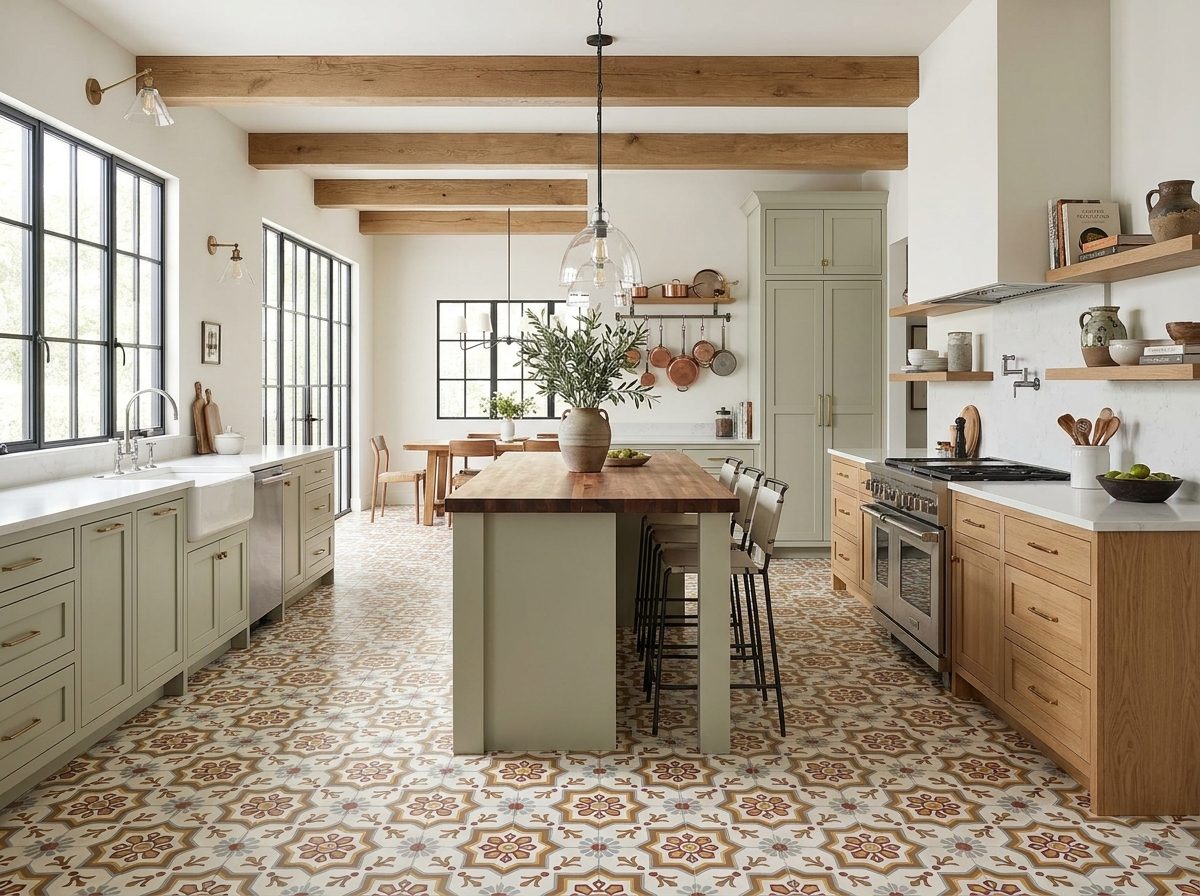
The kitchen is where farmhouse design lives most fully, and the backsplash is its most expressive canvas. Instead of the expected white tile, consider a handmade cement tile backsplash in a soft terracotta with a simple geometric border, or a bold Moroccan pattern in muted sage and cream that plays against natural wood cabinetry.
Kitchen backsplash tiles in cement offer unmatched design flexibility. A single pattern across the entire backsplash creates dramatic visual impact. A border tile framing a range hood communicates careful, considered design. Even a simple field tile in an unexpected color — dusty rose, slate blue, warm ochre — transforms a farmhouse kitchen from familiar to unforgettable.
Bathroom Tiles: Where Pattern Can Run Free
Farmhouse bathrooms are perhaps the most underutilized canvas in the home. Most homeowners default to white or beige, missing the opportunity to create a space with real personality. Handmade cement tiles change that conversation completely.
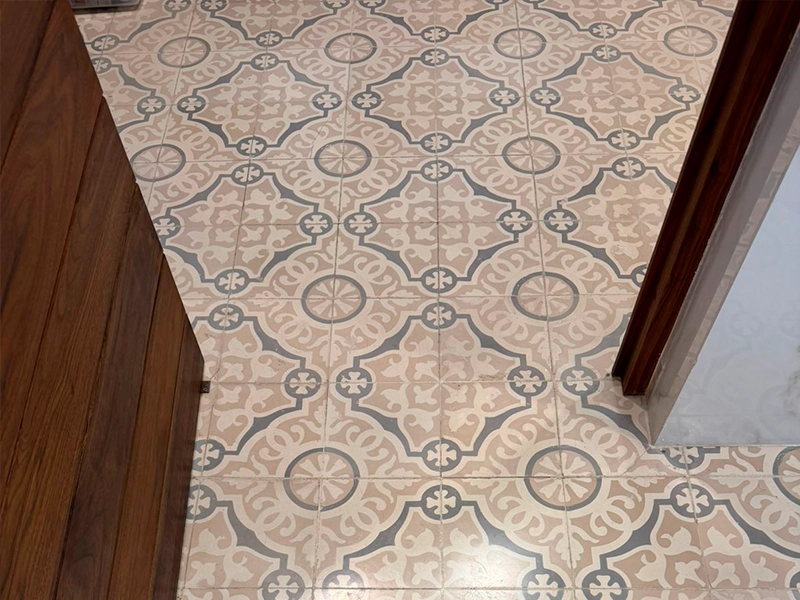
Encaustic cement tiles in a Moroccan star pattern across the bathroom floor, paired with simple white walls, create a space that feels simultaneously old-world and deeply contemporary. Patterned cement tiles on a feature shower wall — used as shower wall tiles with proper sealing — bring warmth and texture to a space that typically feels cold and clinical. Even a small powder room with a fully patterned floor in a bold geometric cement tile becomes a design statement that guests remember and talk about.
Entryways: First Impressions With Lasting Character
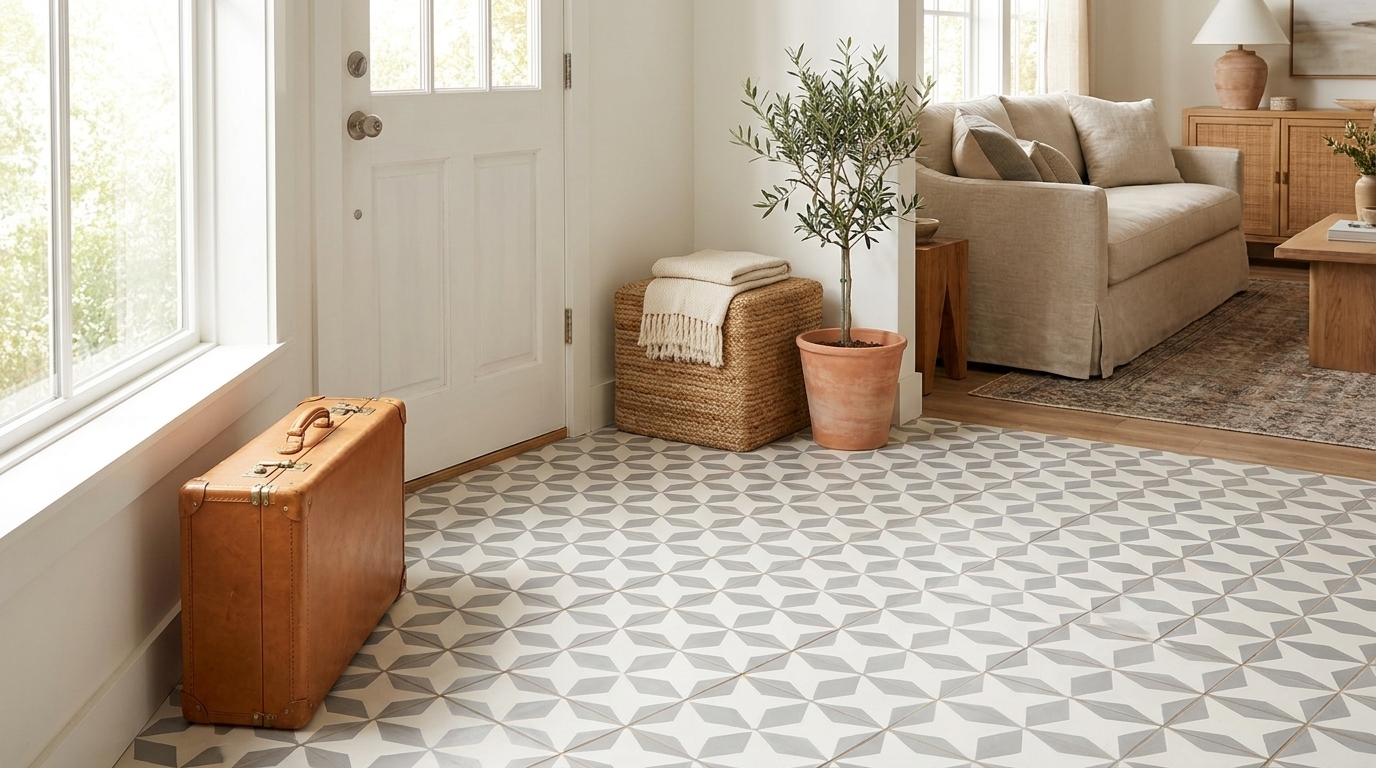
The entryway is the farmhouse’s calling card. A hand-pressed cement tile floor — whether a simple herringbone in warm gray and ivory, or an intricate medallion in terracotta and cream — communicates immediately that this is a home with intention and taste.
Patterned floor tiles in an entry also serve a practical function: they hide dirt and wear exceptionally well, making them ideal for high-traffic transition spaces. For farmhouse homes with working exteriors — gardens, chickens, muddy boots — that’s a genuine functional advantage alongside the aesthetic one.
Outdoor Patio Tiles: Extending the Farmhouse Outdoors
The most memorable farmhouse outdoor spaces feel like a natural extension of the interior — the same warmth, texture, and material story continuing from inside to outside. Outdoor patio tiles in sealed cement create exactly this continuity.
Spanish-style cement tiles in warm terracotta tones work beautifully for covered porches and outdoor dining areas. Mediterranean tiles with blue and white geometric patterns transform a simple patio into an outdoor room with its own distinct character. Properly sealed for outdoor use, cement tiles handle weather, sun, and seasonal changes while developing the natural patina that makes outdoor spaces feel genuinely lived-in.
Style Directions: Beyond the Farmhouse Formula
The Moroccan Farmhouse
Rich, layered, and visually complex, the Moroccan farmhouse direction pairs intricate Moroccan tile patterns with raw wood, woven textiles, and earthy plaster walls. The result is a farmhouse that feels well-traveled and deeply personal — far removed from the shiplap standard. Think deep indigo and cream encaustic tiles in a kitchen, or a bathroom floor in a classic Moroccan star pattern in terracotta and white.
The Mediterranean Farmhouse
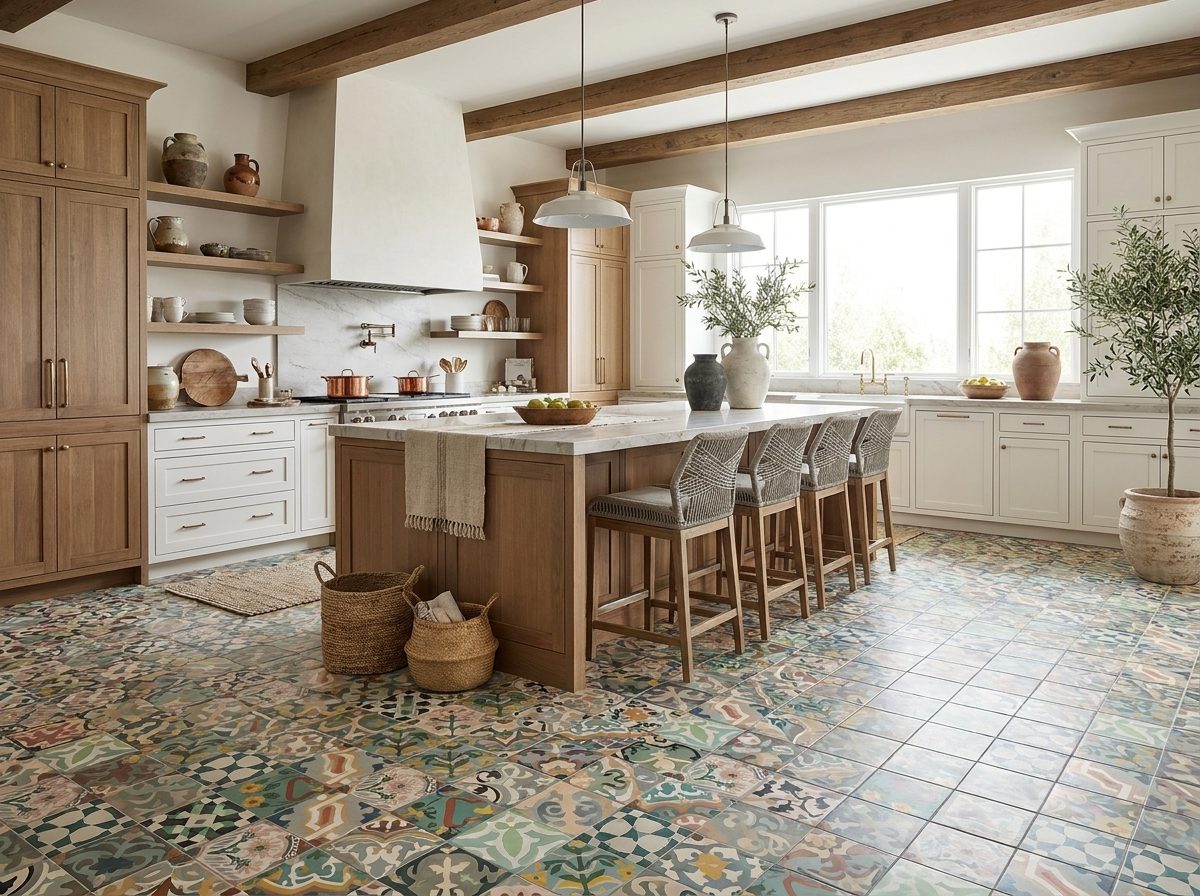
Mediterranean tiles — warm, sun-faded, patterned with geometric and floral motifs — bring the feeling of a Sicilian or Provençal farmhouse into American interiors. This direction works brilliantly with stone countertops, arched doorways, and warm plaster walls. A kitchen backsplash in a hand-painted Mediterranean pattern or an outdoor courtyard paved in traditional Spanish-style tiles captures this feeling with complete authenticity.
The Modern Farmhouse (Done Right)
For those who love the clean lines of modern design but want the warmth of farmhouse materials, geometric patterned cement tiles offer the perfect bridge. Bold, graphic, and architecturally precise, these tiles bring visual order and material warmth simultaneously. A modern farmhouse bathroom floor in a black and white geometric cement tile pattern, or a kitchen backsplash in a simple diamond pattern in muted natural tones — these choices honor both aesthetics without compromise.
The Vintage-Maximalist Farmhouse
The most daring and rewarding direction in contemporary farmhouse design is the maximalist approach — layering pattern, color, and texture with the confidence of an old farmhouse that has accumulated decades of beautiful choices. Highly detailed encaustic cement tiles, terrazzo tile accents, and decorative cement tile borders used together create a space that feels curated, eclectic, and completely irreplaceable.
Explore what’s possible. See our full trend tile collection and find the farmhouse direction that speaks to your aesthetic.

Installation and Maintenance: Protecting Your Investment
Sealing: The Most Important Step
Cement tiles are porous, which gives them their warmth and character but also makes sealing non-negotiable. Before grouting and again after installation, apply a quality penetrating sealer designed specifically for cement tile. In kitchens, bathrooms, and high-use areas, a topcoat sealer provides an additional layer of protection against staining and moisture penetration.
Never skip or rush the sealing process. A properly sealed cement tile floor will last for generations. An unsealed one will show permanent staining within months.
Daily and Weekly Cleaning
Sealed cement tiles clean easily with warm water and a pH-neutral cleaner. Avoid acidic cleaners, vinegar-based products, bleach, and anything abrasive. In farmhouse kitchens especially — where oils, wine, and food acids are common — the sealer is your defense, and the right cleaning products preserve it.
Grout and Adhesive Selection
Use white polymer-modified thin-set mortar and a sanded grout in a complementary tone. Grout joints for cement tiles typically range from 1/16″ to 1/8″ — tight enough to let the pattern read clearly, wide enough to allow for natural variation in handmade tile dimensions.
Mistakes to Avoid in Your Farmhouse Tile Project
Ordering without accounting for batch variation. Handmade tiles have natural color variation between production batches. Order your full project quantity at once and blend tiles from multiple boxes during installation for a naturally balanced result.
Skipping the dry layout. Always lay your tiles out in a dry run before setting, especially for patterned or custom tiles. Orientation, symmetry, and pattern flow require visual confirmation before any adhesive is applied.
Using the wrong sealer. Not all sealers are formulated for cement tile. Always use a penetrating sealer specifically designed for encaustic or cement tile — not a generic stone sealer.
Underestimating square footage. Order 10–15% extra to account for cuts, breakage, and future repairs. For custom tiles especially, this buffer is essential.
Choosing pattern without considering scale. Large, intricate Moroccan patterns can overwhelm a small bathroom. Simple geometric patterns can disappear in a large open floor plan. Work with the scale of your space, not against it.
Frequently Asked Questions
1. Are cement tiles appropriate for farmhouse kitchens? Absolutely. When properly sealed, cement tiles are highly durable and handle kitchen spills, heat, and daily use well. They’re one of the most popular choices for farmhouse kitchen backsplashes and floors.
2. How do cement tiles compare to ceramic tiles for a farmhouse look? In the cement tile vs ceramic tile comparison, cement tiles offer greater visual depth, a handmade character that ceramic cannot replicate, and natural aging that actually improves their appearance over time. Ceramic is lower maintenance but lacks the authentic farmhouse soul of cement.
3. Can I use cement tiles in a shower? Yes. With correct sealing and proper maintenance, cement tiles work beautifully as shower wall tiles and shower floor tiles. Use a penetrating sealer and reapply as directed by the manufacturer.
4. Do handmade cement tiles work outdoors? Yes, in covered or semi-covered outdoor applications. Sealed outdoor patio tiles in cement perform well in most US climates. Consult our team for specific recommendations for your climate zone.
5. How do I choose between Moroccan, Mediterranean, and Spanish-style tile patterns? Consider the broader design direction of your home. Moroccan tiles lean toward rich, intricate geometry; Mediterranean tiles evoke warm, sun-drenched coastal living; Spanish-style tiles bring terracotta warmth and bold geometric tradition. Our design team can help you choose. Talk to a tile specialist for personalized guidance.
6. What’s the best way to try a cement tile pattern before committing? Order samples before placing your full order. Seeing and touching the actual tile in your own lighting and alongside your existing finishes makes all the difference.
7. Can you create a custom farmhouse tile design that matches my brand or color palette? Yes. Original Mission Tile’s custom tile manufacturing allows you to reproduce virtually any pattern, color, or design. Whether you want to match a specific paint color, recreate a historical tile pattern, or design something entirely original, our team can make it happen.
8. How long do handmade cement tiles last? With proper installation and maintenance, cement tiles last for decades — often outlasting the homes they’re installed in. Many vintage cement tile floors from the early 20th century are still in use today.

Your Farmhouse, Finally Yours
The most beautiful farmhouse interiors have always had one thing in common: they look like no one else’s. They carry the fingerprints of the people who live in them — the choices, the patterns, the colors that reflect a specific vision of home rather than a trend board assembled by committee.
Handmade cement tiles give you that specificity. Whether you’re dreaming of a Moroccan-inspired farmhouse kitchen, a Mediterranean courtyard, a vintage-maximalist bathroom, or something entirely your own, the craft and the color palette are within reach.
This is farmhouse design as it was always meant to be — rooted in real materials, made by real hands, and built to last a lifetime.
See Trend Tiles — find the pattern that makes your farmhouse uniquely yours.
Order Samples — experience the quality before you commit.
Talk to a Tile Specialist — get expert design guidance for your farmhouse project.