Hotels Tile Design
If your hotel looks stunning on opening day but tired six months later, your finishes weren’t specified for real traffic—especially the floors.
One design choice can make a hotel feel boutique and custom—or instantly generic. It’s the tile.
In 2026-level Interior Design, hotels don’t compete on square footage. They compete on experience: the first impression in the lobby, the “photo moment” in the corridor, the spa-like calm in the bathroom, the outdoor lounge that feels like a destination. And in all of those spaces, tile does two jobs at once: it creates identity and it survives reality.
That’s why hotel lobby tiles and high-traffic flooring are no longer background decisions. They’re brand strategy.
In this guide, you’ll learn which tile patterns perform best in high-traffic hotels while still looking premium, how to use cement tiles and encaustic cement tiles in the most impactful zones, how to design across lobby-to-corridor-to-bathroom transitions, and how to avoid installation and maintenance mistakes that create expensive callbacks. You’ll also see style directions designers are using right now—Moroccan, Mediterranean, Spanish-style, modern, vintage, and contemporary—plus commercial insights for restaurants and hospitality programming.

Why Hotel Tile Design Is a Brand Decision (Not Just a Finish)
Hotel tiles get more exposure than almost any residential surface.
They face:
- rolling luggage and carts
- constant traffic patterns (peak hours, events, housekeeping)
- moisture at entrances and pool zones
- frequent cleaning with commercial chemicals
- furniture movement in lounges and lobbies
- nonstop photography and social media
A premium hotel tile plan must be:
- visually forgiving (hides daily wear)
- durable and maintainable
- cohesive across zones (lobby, corridors, bathrooms, patios)
- identity-driven (recognizable, photogenic, intentional)
That’s why patterned tile isn’t “extra.” It’s the quickest way to create a boutique experience—and it helps hotels stay visually fresh between renovations.
Benefits of Cement Tiles in High-Traffic Hotels
Durability (with the correct system)
With proper installation and sealing, cement tiles can perform beautifully in guest-facing hospitality zones. The key is not just the tile—it’s the system:
- stable, flat substrate
- correct setting materials
- correct sealing steps and maintenance routines
Before installation begins, align your team with the brand’s Installation Guidelines.
Handmade quality that reads “boutique”
Hotels want authenticity. Handmade cement tiles deliver matte depth and subtle variation that makes a space feel curated—not mass-produced. That’s why they’re often used for “signature moments” like lobby floors, elevator lobbies, and statement corridors.
Sustainability and long-life value
Many hospitality projects prioritize long-life finishes that can be maintained rather than replaced every few years. Cement tile supports this approach when housekeeping routines are planned correctly.
Style versatility (essential for hotel brands)
Even within one property, hotels need multiple moods: energetic lobby, calm corridor, spa-like bathroom, outdoor lounge. Cement tile can support:
- Moroccan tiles geometry and pattern drama
- Mediterranean tiles relaxed luxury
- Spanish-style tiles heritage warmth
- modern tonal geometry
- vintage European “tile rug” layouts
- contemporary soft-contrast patterns
To browse options quickly, start with Cement Tiles In Stock.

Patterns That Handle Hotel Traffic and Still Look Premium
The best hotel tile patterns are designed to do one thing exceptionally well: look clean and intentional even under heavy use.
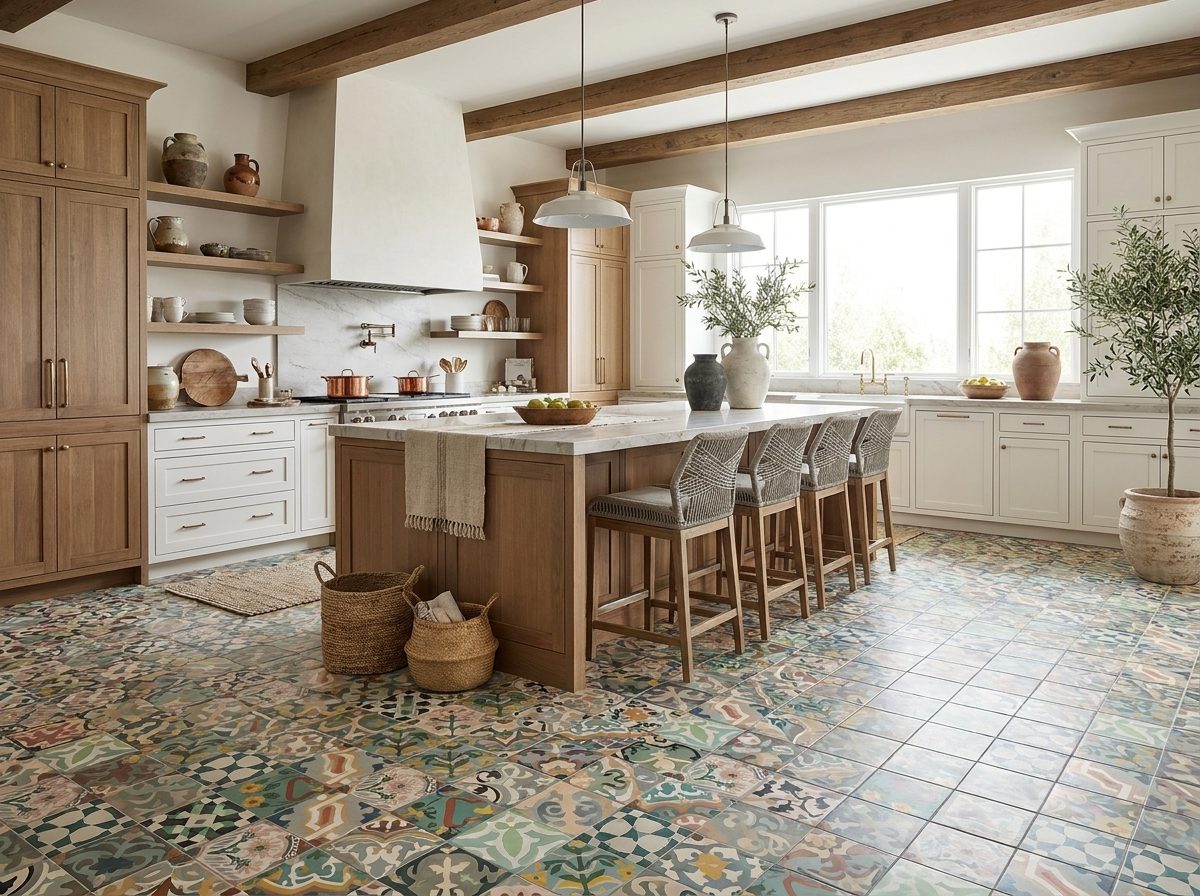
1) Mid-tone, multi-color patterns (the most forgiving choice)
Very light floors show every scuff. Very dark floors show dust instantly. Mid-tone, multi-color patterns hide both.
Best for:
- hotel lobby floors
- corridors
- elevator lobbies
- lounge zones
To plan a hotel-friendly palette, use the Cement Tile Color Palette.
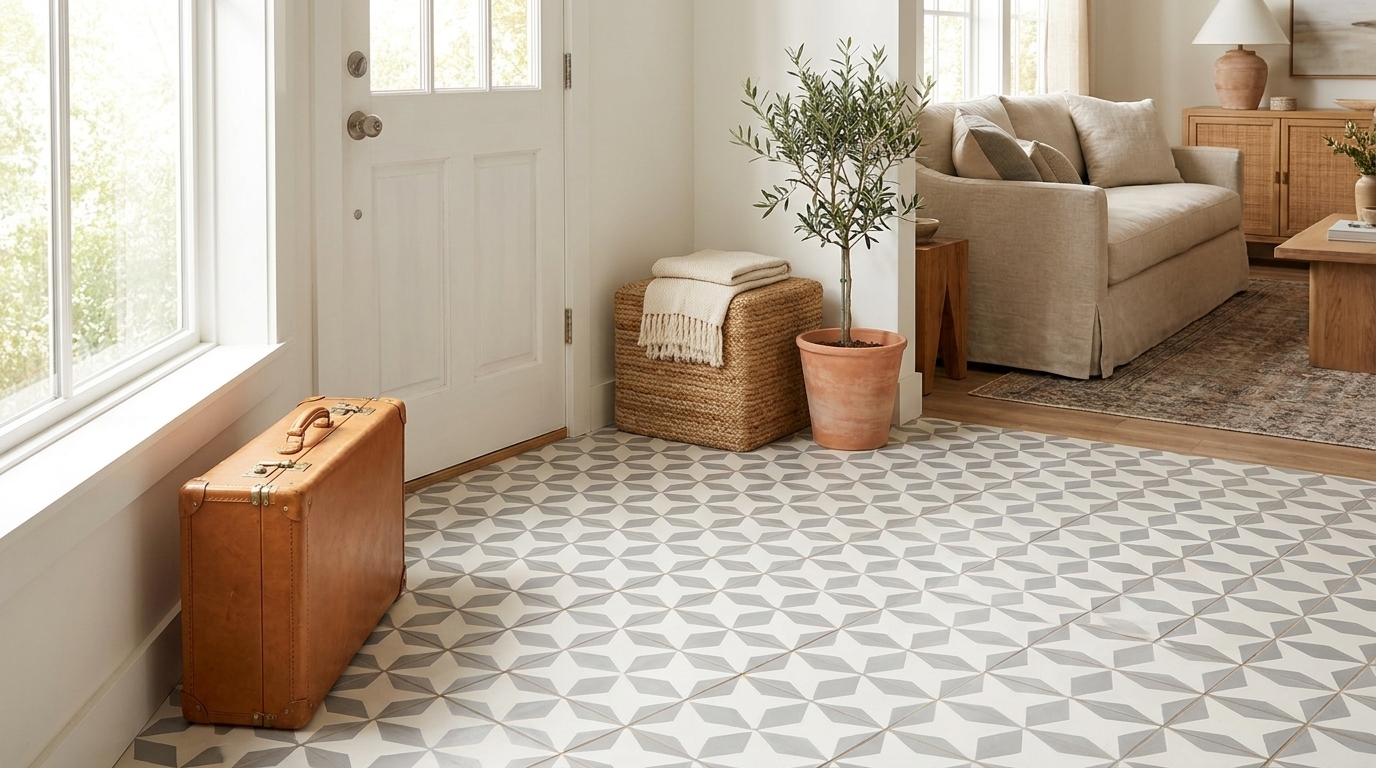
2) Geometric repeats (architectural, timeless, photogenic)
Geometry reads premium because it feels designed, not decorative. It also photographs beautifully—important for hotels.
Best for:
- modern boutique hotels
- city hotels with contemporary furniture
- lobby-to-bar transitions
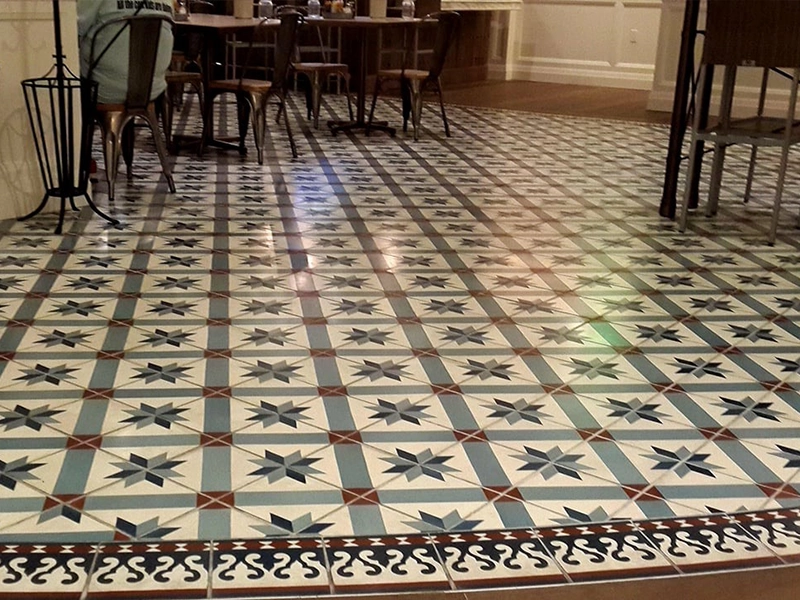
3) Border + field layouts (“tile rugs” and framed zones)
This is a signature boutique hotel move: frame seating and reception zones with borders. It creates luxury without adding walls.
Examples:
- framed reception “zone”
- lounge “tile rug” under seating
- corridor threshold framing near elevators
If you want custom borders or brand motifs, start with Custom Tiles.
4) Tonal patterns (luxury calm, minimal visual noise)
Tonal patterns are ideal for properties that want a quieter, higher-end feel. They hide wear while still looking intentional.
Best for:
- spa hotels
- wellness resorts
- high-end corridors and suites
5) Vintage-inspired motifs (established, warm, timeless)
Vintage patterns make hotels feel “collected,” not new-build generic. Pair vintage floors with modern lighting and clean furniture lines to keep it elevated.
Style Ideas & Trends for Hotel Tile Design
Moroccan tiles: boutique impact and instant identity
Moroccan-inspired patterns create that “destination hotel” feel fast.
Best applications:
- lobby feature zone
- elevator lobby
- bar entry threshold
- statement restroom floors
Design tip: keep surrounding finishes calm (plaster, wood, warm neutrals) so the pattern feels curated.
Mediterranean tiles: relaxed luxury that never feels trendy
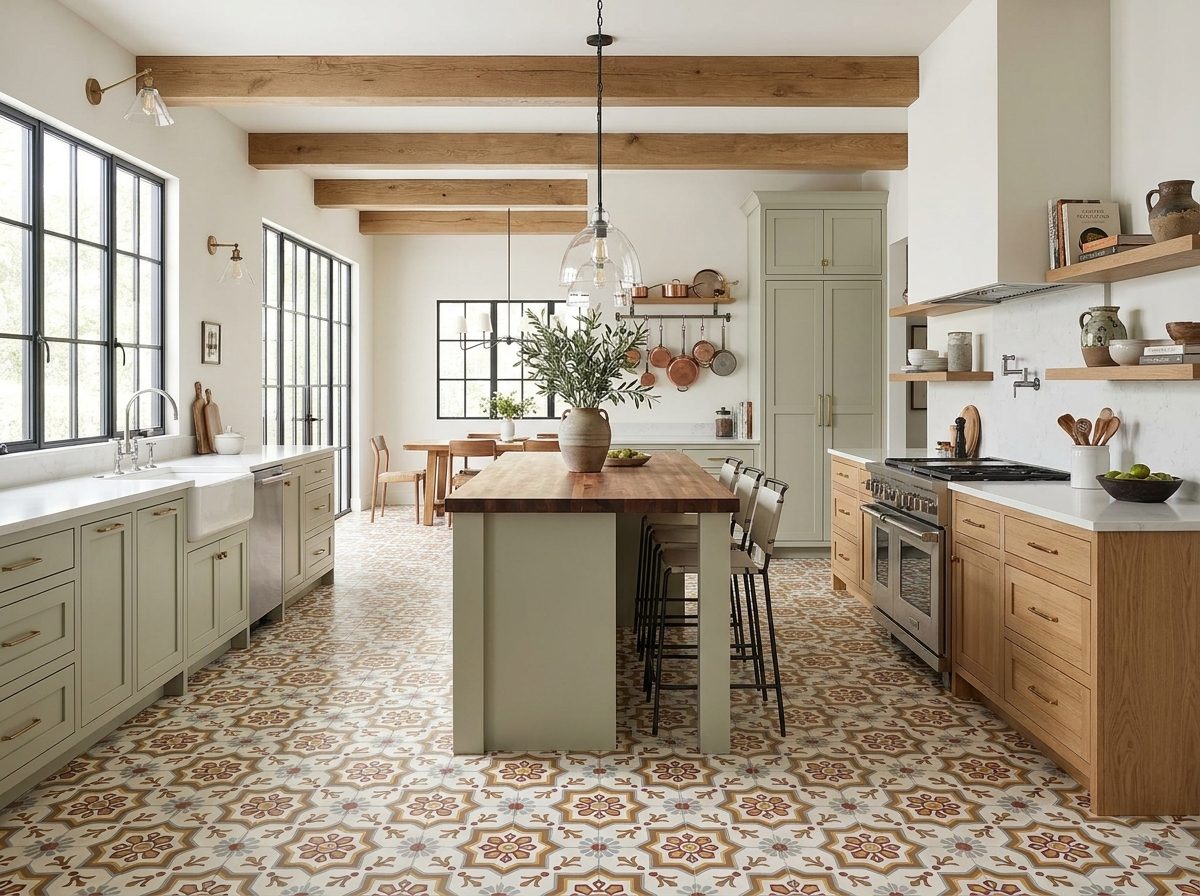
Mediterranean palettes (warm whites, sand tones, dusty blues, olives) are timeless—and they hide daily wear better than stark monochrome.
Perfect for:
- resort lobbies
- courtyards and patios
- spa corridors
- indoor-outdoor transitions
Spanish-style tiles: heritage warmth and courtyard romance
Spanish-style patterns shine in:
- courtyard hotels
- boutique historic renovations
- hospitality spaces with arches, wood, and plaster
Pairing tip: Spanish-style motifs look incredible near terracotta tiles tones for layered warmth.
Modern: clean geometry and strong contrast (used strategically)
Modern hotel floors often rely on:
- black-and-white statements
- crisp geometric repeats
- framed zones with borders
This is also where cement tile can complement terrazzo tile in adjacent zones (like corridors or lounge transitions).
Contemporary: balanced pattern and soft contrast
Contemporary hotel design often chooses patterns that feel premium but not loud—perfect for brands that want broad appeal without being generic.
See Trend Tiles: Browse now in Cement Tiles In Stock

Applications by Hotel Zone: Where Tile Decisions Matter Most
Lobby Floors (the first impression)
Your lobby is your brand. A patterned lobby floor can:
- create a “photo moment”
- define reception vs lounge zones
- guide traffic intuitively
- make the property feel boutique instantly
This is where hotel lobby tiles deliver the highest ROI: one surface can elevate the entire guest experience.
Start browsing quick-ship options in Cement Tiles In Stock.
Corridors (the most trafficked area)
Corridors take constant traffic and repeated cleaning. Choose patterns that:
- hide wear between deep cleans
- avoid extremely light solids
- maintain visual calm (especially for long hallways)
Mid-tone geometric or tonal patterns are ideal here.
Elevator Lobbies + Transition Areas
These “pause points” are perfect for signature pattern moments:
- a framed border at elevator lobbies
- a pattern shift between wings
- a branded motif at key thresholds
If branding is important, consider custom tiles via Custom Tiles.
Guest Bathrooms (boutique experience inside the room)
Bathrooms are where guests judge quality instantly. A patterned floor can make the room feel upgraded even if the rest of the finishes are simple.
Use bathroom tiles strategically:
- patterned floor + calm wall finishes
- vanity wall accent
- niche backdrops
Showers (shower wall tiles that feel custom)
Cement tiles can be used as shower wall tiles in design-forward projects, but success depends on waterproofing, sealing, and maintenance planning.
Before specifying cement in wet zones, align your installer with:
- Installation Guidelines
And set housekeeping expectations using: - Cement Tile Maintenance
Hotel Restaurants and Bars (connected hospitality experience)
Many hotels rely on restaurants and bars for identity. Coordinating tile across lobby + restaurant creates continuity.
For restaurant tile design inside hotels:
- use patterns that hide traffic and chair movement
- zone bar vs dining with border layouts
- echo colors from the lobby floor for brand cohesion
Outdoor Patios and Courtyards (high-value experience zones)
Outdoor spaces are marketing. For outdoor patio tiles, choose patterns that:
- hide dust (mid-tone best)
- coordinate with interior palette
- feel timeless (Mediterranean and Spanish-style motifs are ideal)
Commercial Design Strategy: High-Traffic Solutions That Still Feel Boutique
Hotels are commercial environments with residential expectations. Guests want comfort and warmth, but operations need durability.
A smart hospitality tile strategy often looks like this:
- patterned cement tile in guest-facing hero zones (lobby, lounge, elevator lobbies)
- calmer tonal patterns in long corridors
- bold patterns in restrooms for “moment” design
- operationally simplified materials in back-of-house zones when needed
For multi-property brands, custom patterns can unify identity across locations. Start with:
- Custom Tiles
- Visualize layouts with the Design Studio
Contact Us for Custom Tile Designs: Custom Tiles
Cement Tile vs Ceramic Tile for Hotels
The cement tile vs ceramic tile decision is typically about identity vs operations.
Cement tiles (best for boutique impact)
Choose cement tile when you want:
- handmade depth and premium character
- stronger pattern presence and authenticity
- custom design capability for brand identity
Ceramic/porcelain (best for ultra-low absorption and BOH simplicity)
Choose ceramic/porcelain when you want:
- simplified maintenance in extreme wet zones
- BOH performance requirements
- large-format minimal looks
Many hotels use both strategically:
- cement tile in guest-facing identity zones
- porcelain in BOH or extreme wet areas
For guidance on where cement performs best in your property, reach out via Contact Us.

Installation & Maintenance: Protect the Look After Opening Day
Installation essentials
Most failures come from rushed installation or unclear expectations. Before install day, share:
Key best practices:
- stable, flat substrate (prevents lippage and cracking)
- dry layout planning for borders and thresholds
- blending tiles from multiple boxes (avoids patchy appearance)
- sealing steps coordinated with grout
Sealing and cleaning (housekeeping reality)
Hotels need a practical care plan:
- frequent grit removal (especially at entries)
- pH-neutral cleaners
- immediate spill response in lounges and restaurants
- avoiding harsh acids that degrade sealers
Set housekeeping expectations using:
Mistakes to Avoid in Hotel Tile Design
- Choosing very light solid floors in high-traffic zones (shows scuffs instantly)
- Choosing very dark solid floors (shows dust and water spotting)
- Using patterns that are too small for large lobbies (visual noise)
- Not planning grout color (it changes the whole look)
- Skipping borders and transitions (space feels unfinished)
- Installing cement tiles box-by-box without blending
- Sealing errors (skipping pre-seal, inconsistent sealing, wrong cleaners)
- Ignoring entry mat systems (grit destroys finishes over time)
Order Samples: Start with In-Stock Cement Tiles
FAQs: Hotel Tile Design
1) What are the best hotel lobby tiles for heavy traffic?
The best hotel lobby tiles combine durability, maintenance planning, and strong design identity. Mid-tone patterned cement tile layouts are popular because they hide wear and create a boutique first impression.
2) Are cement tiles durable enough for hotels?
Yes, when installed and sealed correctly. Cement tiles are frequently used in guest-facing hospitality zones because they combine premium aesthetics with long-term performance.
3) What tile patterns hide wear best in hotels?
Mid-tone multi-color patterns, geometric repeats, tonal patterns, and border layouts hide scuffs and dirt better than flat solids—especially in lobbies and corridors.
4) Do cement tiles need sealing in hotels?
Yes. Sealing improves stain resistance and maintenance. Align installation with Installation Guidelines and housekeeping routines with Cement Tile Maintenance.
5) Can patterned cement tiles be used in hotel bathrooms?
Yes. Bathroom tiles with pattern are a common boutique hotel move because they elevate suites quickly. Pair patterned floors with calm walls for a premium feel.
6) Cement tile vs ceramic tile: what’s better for hotels?
Cement tile often wins for brand identity and boutique character in guest zones, while ceramic/porcelain often wins for simplified maintenance in BOH or extreme wet zones. Many hotels use both strategically.
7) Can hotels create custom tile designs for branding?
Yes. Hotels can develop custom patterns, borders, and signature motifs through Custom Tiles and visualize options in the Design Studio.
8) Do you have in-stock options for hotel timelines?
Yes. Browse Cement Tiles In Stock and order samples to confirm scale and color under your lighting.