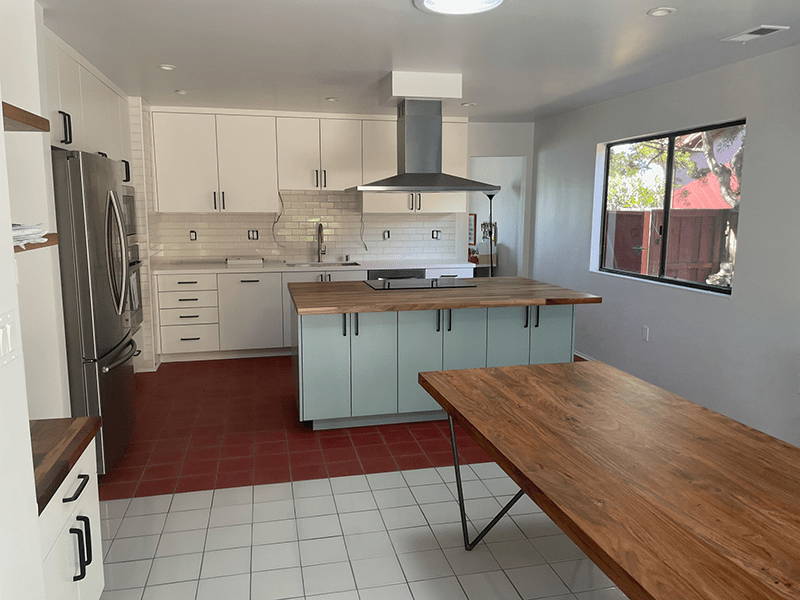

What if one material could deliver color, character, and commercial-grade durability—while still feeling handmade and timeless? In 2026, kitchen tiles are doing exactly that, with cement tiles at the center of the conversation. From zellige-style shimmer and terrazzo speckle to oversized checkerboards and softly textured matte finishes, this year’s kitchens balance minimal lines with artisan warmth. In this guide, you’ll find the most important color stories, finishes, and sizes—plus practical tips for layouts, sealing, and maintenance—so you can specify (or install) a kitchen that looks fresh today and stays beautiful for years.

Why Cement Tiles Lead Kitchen Trends in 2026
1) Handmade quality you can see and feel
Each cement tile is crafted in a mold, pigment layer by pigment layer, then hydraulically pressed and cured. The result is a buttery, stone-like surface that feels substantial underfoot and luxurious on a backsplash.
2) Design freedom for every style
Whether your kitchen leans minimalist or Mediterranean, cement tiles can be bold or quiet, graphic or tonal. Patterns range from Moroccan stars and Spanish borders to modern geometrics, stripes, and terrazzo-look fields.
3) Durable for busy kitchens
Cement tiles are dense and thick. With proper sealing, they handle daily foot traffic, splashes near the range, and the inevitable dropped spoon. They also develop a soft patina that adds character rather than looking “worn.”
4) Sustainable and long-lasting
Cement tiles are not fired, which reduces energy usage in production. Their thickness means they can be refinished (lightly honed) years down the road if needed.
The Big 2026 Kitchen Tile Trends
A. Warm Minimalism: Creams, beiges, and biscuit whites
When cabinetry is simple, a warm neutral tile adds depth without noise. Think pale sand, almond, and bone—often in matte finishes that read soft and sophisticated. Pair with natural woods, unlacquered brass, and limestone counters.
Try it:
- Soft checkerboard in clay and cream.
- Herringbone layout with two close neutrals for a quiet, woven effect.
B. Zellige-Style Sheen, the Modern Way
Everyone still loves that rippled, hand-pressed shimmer—but 2026 is doing it more intentionally: pairing zellige-style walls with solid cement tile floors for balance. The gloss reflects light; the concrete-like floor grounds it.
Use it: Range wall splash, scullery walls, coffee bar niche.
C. Terrazzo Texture (Fine Speckle)
Terrazzo-look cement tiles bring lively movement without a busy pattern. In a medium-warm palette (sand, oatmeal, taupe), the floor becomes the feature—especially under a clean, slab-front island.
Use it: Full kitchen floors, pantry floors, or continuous kitchen-to-mudroom runs.
D. Oversized Checkerboards & Borders
Big-scale checkerboards (8×8 or 10×10) feel architectural this year. Designers are also framing kitchen floors with border patterns—a classic move from Mediterranean villas that looks striking in open-concept homes.
Pro tip: Choose a quiet, coordinating field tile in the working zone and a bolder border at the perimeter or under the dining table.
E. Earthy Greens & Coastal Blues
Forest and eucalyptus greens pair beautifully with soapstone and walnut; sea-glass blues bring calm to bright, sunlit kitchens. These colors feel “of nature,” not trendy.
Palette ideas:
- Eucalyptus + bone + brass hardware
- Sea-glass + chalk white + satin nickel
- Indigo + cream + natural oak
F. Texture > Pattern (But Both Win)
Texture is a trend on its own—micro-pitted matte surfaces, subtle relief, or artisan brush-wash effects. Use texture where you’d normally choose a plain field tile to make “simple” feel elevated. Then layer pattern selectively (one wall, an island face, or a framed backsplash panel) for impact.

Best Places to Use Cement Tiles in the Kitchen
1) Kitchen Floors
Cement tiles excel here. They’re dense, comfortable underfoot, and visually define the kitchen from surrounding spaces.
Go-to floor layouts:
- Large checkerboard (8×8) for a timeless statement
- Basketweave with tonal contrast
- Chevron or herringbone in two softly different neutrals
- Terrazzo-look field with a solid border
2) Backsplashes & Range Walls
Backsplashes are your storytelling zone. A patterned cement tile adds artistry; a zellige-style wall adds glow. Try a patterned focal over the range and keep the rest of the run in a coordinating solid hue.
3) Island Faces & Peninsulas
Tile a single face of the island with a graphic pattern for a boutique-hotel vibe—and keep floors neutral. Edge-frame it with plain trims for a custom, furniture-like feel.
4) Butler’s Pantry & Coffee Nooks
Small spaces love personality. Use bolder encaustic patterns inside a pantry, or wrap a coffee bar niche in a miniature checkerboard for a surprise moment.
Finish Choices: Matte vs. Glossy (and How to Pair Them)
- Matte cement tiles (floors): Non-glare, forgiving, and modern. Perfect for work zones and open plans; they photograph beautifully.
- Glossy or zellige-style (walls): Reflects light, adds motion, and highlights handmade character.
- Balanced pairing: Matte floor + glossy wall = layered texture that feels intentional.
Size Trends for 2026
- 8×8 patterns remain the sweet spot for floors and big statements.
- 4×4 and 6×6 are perfect for backsplashes, checkerboards, and powder rooms.
- Hexagons are back—especially in solid colors that outline an island footprint.
- Custom sizes are increasingly popular in commercial kitchens or show homes to align grout lines with cabinetry or lighting grids.
Design Ideas by Kitchen Style
Modern Minimal
- Floor: Large neutral checkerboard (bone + chalk)
- Splash: Slim glossy tiles in a stacked-bond layout
- Metals: Brushed steel or satin nickel
- Counters: Honed quartzite, minimal veining
Mediterranean & Spanish-Style
- Floor: Patterned encaustic cement tiles with a geometric border
- Splash: Zellige-style in sea-glass or sky blue
- Accent: Terracotta tile moments (windowsill, shelf ledge)
Farmhouse & Ranch
- Floor: Soft plaid or checkerboard in warm gray + cream
- Splash: Handmade look in off-white with uneven edges
- Hardware: Unlacquered brass; wood beams or open shelving
Contemporary Urban
- Floor: Micro-speckle terrazzo-look in charcoal + warm gray
- Splash: Monochrome glossy field tile, stacked vertically
- Island face: Narrow stripe pattern for subtle movement

Planning a Foolproof Kitchen Tile Layout
- Start with the floor “anchor.” Choose the floor first, then select wall and island tiles to complement it.
- Mind your sightlines. In open plans, the floor pattern should align with major architectural axes—doors, windows, or the island centerline.
- Scale matters. Big rooms can handle large-scale patterns; small kitchens look great with tighter repeats or 4×4 checkerboards.
- Border like a pro. A 1–2 tile-wide border around the room perimeter frames the design and makes the center read like a “rug.”
- Sample under your lighting. Warm LEDs can shift creams to peach; cool LEDs can make blues go icy.
Installation & Maintenance (Made Simple)
Before You Start
- Layout dry-fit: Mock up the pattern to confirm direction and centering.
- Batch check: Expect slight tone variation—that’s the handmade charm. Blend cartons before installing.
Setting & Grouting
- Thinset: Use a quality thinset appropriate for cement tiles.
- Joint size: 1/16″–1/8″ is common; keep joints consistent for a clean read.
- Grout color: Match a dominant tile tone for seamlessness; contrast for graphic pop.
- Test first: Always make a small sample board with grout to confirm you love the combo.
Sealing (Non-negotiable for Kitchens)
- Pre-grout sealer: Apply a penetrating sealer to protect the pigment layer from grout haze/staining.
- Post-grout sealer: A second penetrating coat locks in protection.
- Finish: Most designers prefer natural-matte; use a satin enhancer only if you want deeper color.
Daily Care
- pH-neutral cleaner: Avoid acidic products.
- Mats & felt pads: Protect high-traffic zones and chair legs.
- Patina mindset: Expect a soft, beautiful lived-in look over time.
Mistakes to Avoid
- Skipping the sealer. Kitchens demand sealing—before and after grout.
- Not blending boxes. Install from multiple cartons at once for even variation.
- Using harsh cleaners. Acidic products can etch; stick to pH-neutral.
- Ignoring scale. A tiny repeat in a huge room can look busy; scale up for larger spaces.
- Forgetting expansion joints. Follow industry standards to prevent tenting in big areas.

Commercial Kitchens & Hospitality: Spec Notes for 2026
Cement tiles are showing up beyond residences—think chef’s counters, boutique hotel cafés, and bakery floors. Why?
- Traffic-ready thickness and dense body when sealed properly
- Branding potential with custom colors, borders, and custom logo tiles
- Zoning: Pattern “rugs” to separate ordering lines from seating
- Acoustics: The dense surface helps reduce “tinny” sound that glossy ceramics can amplify
Spec tips:
- Use slip-balanced finishes and mats at the entrance and dish-wash zones.
- Choose colorways that hide crumbs between cleanings (mid-tone neutrals).
- Confirm maintenance plan: daily pH-neutral clean + periodic reseal.
Customization: Make the Design Yours
Have a brand palette, client monogram, or architectural motif? With the right partner, you can customize pattern, color, size, and borders—even reproduce historic designs for restorations or period-inspired new builds.
- Custom colorways for checkerboards and geometrics
- Scaled patterns to align with cabinetry and lighting
- Logo inserts at the hostess stand, coffee bar, or pantry floor
- Historic revivals for Spanish Revival and Mediterranean-style kitchens
➡️ Explore custom design options here: Custom Cement Tiles
Visual Inspiration & Real Projects
Browse complete kitchens—from coastal pantries to modern farmhouse ranges—and save favorites for your mood board. Pay attention to how designers balance pattern vs. texture, matte vs. glossy, and floor vs. wall.
➡️ See real spaces and styled vignettes: Cement Tiles Gallery
Step-by-Step: From Sample to Installed Kitchen
- Collect 2–3 samples in your top palettes/patterns.
- Test under real light—morning, afternoon, evening.
- Lock your layout (checkerboard, border, rug inset).
- Order with 10–15% overage for cuts and future repairs.
- Schedule install and confirm sealing plan with your contractor.
- Photograph the reveal—you’ll want the receipts for that before-and-after!

Kitchen Tile FAQs (2026 Edition)
Q1: Are cement tiles good for kitchen floors?
Yes—when properly sealed, they handle daily traffic and clean up with pH-neutral cleaners. Their thickness and density make them ideal for hard-working kitchens.
Q2: Can I use cement tiles on a kitchen backsplash?
Absolutely. They’re stunning over the range or as a full-run splash. Just seal the tiles and grout to protect against splatters.
Q3: Matte or glossy for small kitchens?
Do matte on the floor (visually grounding) and glossy/zellige-style on the wall to bounce light and make the room feel bigger.
Q4: How often should I reseal a kitchen floor?
Frequency depends on traffic and products used; many homeowners reseal every 1–3 years. If water stops beading on the surface, it’s time.
Q5: What grout color works with patterned cement tiles?
Match a dominant hue for a seamless, cohesive read. Use contrast only if you want the grid to become part of the design.
Q6: Do cement tiles stain easily?
When unsealed, yes. When sealed correctly before and after grouting, routine splashes and spills aren’t a problem.
Q7: Can cement tiles be used with radiant heat?
In many cases, yes—cement tile’s mass works well with radiant systems. Always follow the heating system manufacturer’s guidelines and your installer’s recommendations.
Q8: What’s the waste/overage I should order?
Plan 10–15% extra for cuts, color blending, and any future repairs.
Quick Color Pairings for 2026 Kitchens
- Bone + Biscuit + Oak (warm minimal)
- Sea-Glass + White + Brushed Nickel (coastal modern)
- Eucalyptus + Cream + Brass (organic luxe)
- Charcoal Terrazzo + Greige + Black (contemporary urban)
- Indigo + Linen + Walnut (heritage modern)
Your 3 Next Steps
- Order Samples and test them in your space.
- Map the Layout—decide on checkerboard, border, or terrazzo look.
- Talk to a Tile Specialist to confirm sealing, grout, and lead times.
➡️ Ready to start your project? Contact Us