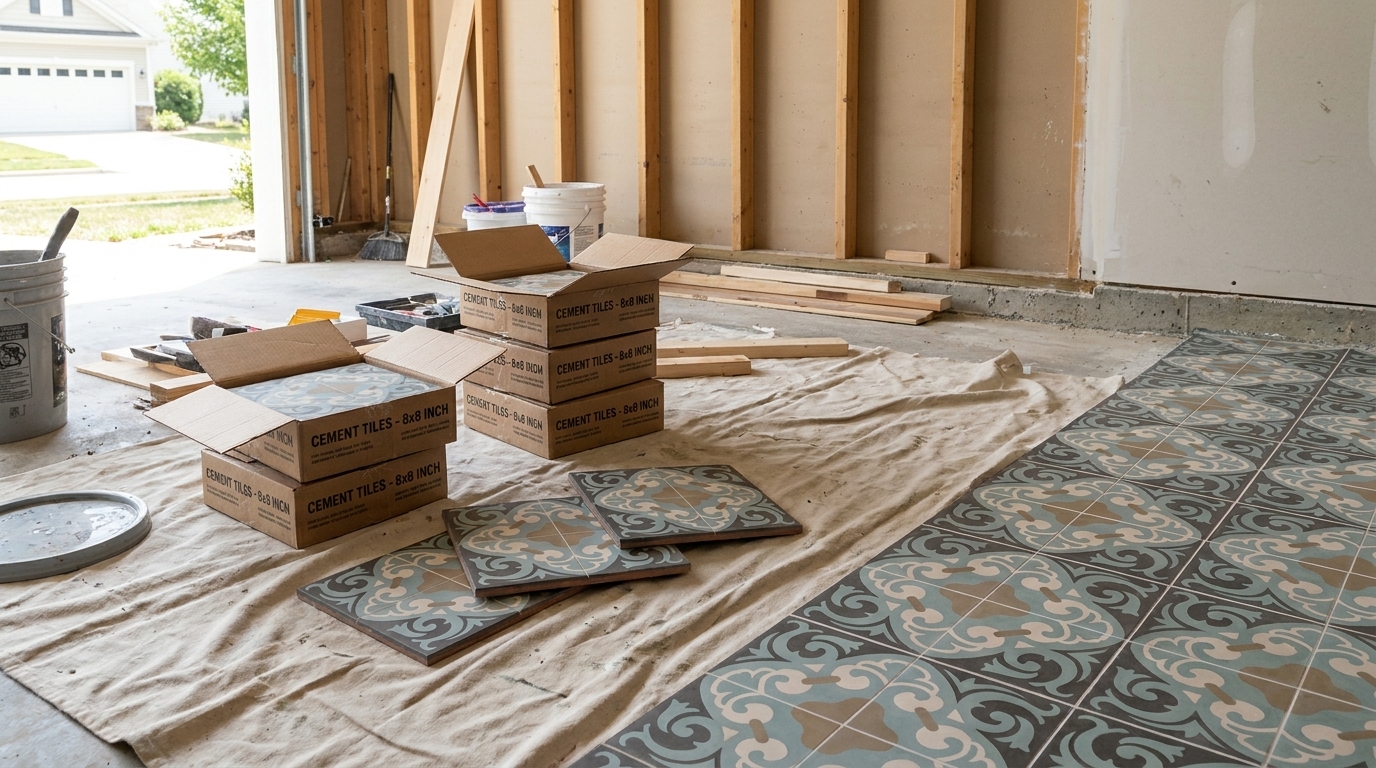
You know that “new car smell” or the sharp chemical odor of a freshly painted room? Those are Volatile Organic Compounds (VOCs), and they’re being released directly into the air you breathe. Choosing low-VOC building materials isn’t just a trend—it’s one of the most important decisions you can make for a healthier home.
What Are VOCs and Why Do They Matter for Your Home?

Think of VOCs as chemicals that easily turn into a gas at room temperature. This process is called off-gassing, and it’s happening all the time with certain materials. While some VOCs are found in nature, the ones we worry about in our homes are usually from man-made products used in construction, decorating, and even furniture.
This slow, constant release of chemicals can tank your indoor air quality. In fact, studies show that concentrations of many VOCs are often 2 to 5 times higher indoors than they are outside. Our homes can become unintended containers for these pollutants.
The Impact on Health and Indoor Air Quality
Why does this matter so much? We spend around 90% of our lives indoors, so the quality of the air has a direct line to our health. High levels of VOCs can cause everything from minor annoyances to serious, long-term health problems.
Common short-term effects of VOC exposure include:
- Headaches and dizziness
- Eye, nose, and throat irritation
- Nausea and fatigue
- Worsening allergy and asthma symptoms
Long-term or high-concentration exposure is even more concerning. Certain VOCs, like formaldehyde and benzene, are known carcinogens, and persistent exposure has been linked to liver damage, kidney issues, and central nervous system damage. This phenomenon is sometimes called “Sick Building Syndrome,” where occupants experience acute health effects that seem directly tied to time spent in a building.
Common Sources of VOCs in Your Home
You’d be surprised how many everyday items are off-gassing into your living space. The biggest offenders are often the very materials used to build and finish our homes. They release the highest concentration of VOCs when brand new but can continue to off-gas for months or even years.
Key culprits include:
- Paints, Stains, and Finishes: Traditional solvent-based paints are major VOC emitters.
- Adhesives and Sealants: The glues used for flooring, cabinets, and general construction often have high VOC levels.
- Flooring: Vinyl flooring, new carpets, and the adhesives used to install them can off-gas for a long time.
- Composite Wood Products: Think particleboard and MDF. These are common in cabinets and furniture and are often made with formaldehyde-based resins.
Choosing low-VOC building materials is the most powerful way to cut these pollutants off at the source. It’s also smart to learn how to remove VOCs from your home through ventilation and other methods to maintain healthy air for the long haul.
How to Read Labels and Certifications for Low-VOC Products
Walk down any home improvement aisle and you’ll be hit with a wave of “green,” “eco-friendly,” and “natural” claims. But when it comes to your home’s air quality, those marketing terms don’t mean much on their own. To find truly low-VOC building materials, you have to become a label detective.
Third-party certifications are your best tool. These aren’t just feel-good stickers; they represent independent, scientific testing that proves a product meets strict limits on chemical emissions. Think of them as the nutritional facts for your building materials—they cut through the hype and give you hard data.
Decoding the Major Certifications
When you’re comparing products, a few key logos are the gold standard for low emissions. They test for different things and have different levels of rigor, so knowing who’s who is key to making a smart choice.
-
GREENGUARD: This is one of the most common certifications you’ll see. If a product has this seal, it has been tested and verified to meet low chemical emission limits. It’s a solid baseline for improving indoor air quality.
-
GREENGUARD Gold: This is the next level up. It has much stricter criteria, considers safety for sensitive groups like children and the elderly, and requires even lower total VOC emissions. This is often the standard for schools and healthcare facilities.
-
SCS Indoor Advantage Gold: Similar to GREENGUARD Gold, this certification signals top-tier performance for indoor air quality. It confirms a product meets the tough emissions standards of the CDPH Standard Method (more on that below) and helps projects qualify for credits in green building programs like LEED.
By looking for these certifications, you’re no longer just taking a manufacturer’s word for it. A product with GREENGUARD Gold or SCS Indoor Advantage Gold has been scientifically measured and proven to have a low impact on your indoor air.
Understanding the CDPH Standard Method
Many of these best-in-class certifications are built on one foundational testing protocol: The California Department of Public Health (CDPH) Standard Method. Officially known as Standard Method V1.2, it’s the benchmark for testing VOC emissions from products used indoors.
It doesn’t just measure the total VOCs. It specifically screens for 35 individual VOCs known to have health risks. When a product says it’s “CDPH Standard Method compliant,” it means it passed this incredibly detailed, health-focused screening. It’s a powerful indicator of a truly health-conscious material.
How Certifications Drive Market Change
The demand for certified low-VOC materials isn’t just a niche trend—it’s completely reshaping the building industry. As homeowners and regulators push for healthier indoor spaces, the market is responding in a big way. The global market for low-VOC paints and coatings, for example, is expected to jump from USD 9,929.67 million in 2026 to a massive USD 14,358.42 million by 2035.
This growth is being directly driven by the influence of green building programs like LEED, which reward projects for using verified low-emission products. You can dig deeper into this market shift and its drivers in the full report on the low-VOC paints market.
Ultimately, these labels empower you. They give you a clear, reliable way to choose paints, sealants, flooring, and furniture that will contribute to a safer, healthier home.
A Room-by-Room Guide to Low-VOC Building Materials
You know what certifications to look for—now it’s time to put that knowledge to work. Building a healthier home is all about making smart, intentional choices for every surface and material you bring inside. This guide will walk you through the practical side of choosing low-VOC building materials for your project.
We’ll break down the most common sources of VOCs room by room and point you toward safer, healthier alternatives. From the living room floor to the kitchen backsplash, even small changes can make a huge difference in your home’s air quality.
Living Spaces and Bedrooms
These are the rooms where you and your family spend the most time relaxing, playing, and sleeping, so the air quality here is paramount. The biggest impact comes from the largest surfaces: your walls and floors.
- Paints and Finishes: That “new paint smell” is a perfect example of VOCs off-gassing. Ditch the conventional solvent-based paints and always choose low-VOC or zero-VOC formulas. Today’s water-based paints have come a long way, offering fantastic durability and color without the nasty fumes.
- Flooring: Carpet is known for trapping dust, allergens, and VOCs released from its backing and adhesives. Healthier options include solid hardwood, bamboo, or cork. If you’re going with engineered wood, look for products certified as NAUF (no added urea-formaldehyde).
- Furniture: A lot of affordable furniture is built from particleboard or MDF, which often rely on formaldehyde-based resins. Whenever you can, go for solid wood furniture instead. For composite wood pieces, check that they have a GREENGUARD Gold certification.
When you’re looking at certifications, it helps to understand the hierarchy. GREENGUARD Gold is the gold standard, offering the most stringent protection for sensitive groups like children and the elderly.

This visual shows that while any certification is a step up, aiming for the highest standard like GREENGUARD Gold gives you the greatest peace of mind about low chemical emissions.
Kitchens and Bathrooms
Kitchens and bathrooms are wet zones. Here, materials need to be tough enough to handle moisture without being toxic. They have to resist humidity and splashes without contributing to mold or polluting the air.
Key Insight: Watch out for products marketed simply as “water-resistant.” They can sometimes trap moisture and often contain high levels of VOCs or fungicides. Your best bet is to pick materials that are naturally durable and breathable, then pair them with good ventilation.
Here are some excellent low-VOC choices for your next kitchen or bathroom project:
- Cabinetry: Standard cabinets are frequently made from pressed wood products that off-gas formaldehyde. Seek out cabinets made from solid wood or plywood with no added urea-formaldehyde (NAUF). Another great option is to choose cabinetry that comes with a third-party certification like GREENGUARD.
- Countertops: Non-porous surfaces like quartz are a fantastic choice, but always verify they are low-VOC certified, as the resins used in them can vary. Natural stone like granite or marble is another beautiful, healthy option, as long as it’s sealed with a low-VOC sealer.
- Backsplashes and Tiles: Tiles are a perfect fit here. Materials like ceramic, porcelain, and cement tile are inherently zero-VOC products. They give you a durable, easy-to-clean surface that releases zero chemical emissions. For some creative ideas, check out our guide on the best tile for a kitchen backsplash.
Low VOC Material Alternatives for Your Home
Swapping out common high-VOC materials for healthier alternatives is one of the most effective ways to improve your home’s air quality. This table makes it easy to spot the culprits and find a better replacement.
| Product Category | Conventional High-VOC Option | Recommended Low-VOC Alternative |
|---|---|---|
| Adhesives | Solvent-based construction adhesives | Water-based adhesives with GREENGUARD certification |
| Sealants & Caulks | High-solvent silicone or acrylic caulk | Low-VOC sealant that is Greenguard Gold Certified or meets CDPH standards |
| Insulation | Spray foam with high VOC blowing agents | Mineral wool, fiberglass (unfaced), or recycled cotton batts |
Focusing on these “behind-the-scenes” products—the glues, caulks, and insulation hidden behind your walls—is just as important as the materials you see every day. A high-VOC adhesive can easily undermine the benefits of your beautiful, healthy flooring.
By carefully choosing materials for every single layer of your project, from the structural bones to the final coat of paint, you take back control of your indoor environment. Prioritizing low-VOC building materials isn’t just about avoiding unpleasant smells; it’s a fundamental investment in your family’s health.
The market’s move toward healthy building materials isn’t just a niche trend for a few eco-conscious homeowners. It’s a full-blown shift, and it’s happening for three powerful reasons: smarter clients, stricter rules, and serious money.
For decades, the goal was simple: make building materials that performed well and didn’t cost a lot. What was actually in those materials? That was an afterthought. Today, that entire mindset has been turned on its head.
The Rise of the Health-Conscious Client
Homeowners and commercial clients are more informed than ever before. They’ve connected the dots between their environment and their health—and when you realize we spend around 90% of our time indoors, that connection becomes impossible to ignore. This awareness is driving a huge demand for transparency and healthier spaces.
This means clients are no longer just accepting whatever a builder specifies. They’re asking tough questions about what’s going into the walls, floors, and finishes of their homes. They want materials that deliver clean air, not just a certain look.
This client-led movement is the single biggest force pushing architects, designers, and builders to rethink their old habits. A project filled with high-VOC materials isn’t just a potential health issue anymore; for a growing number of people, it’s a dealbreaker.
Tighter Rules and Smarter Standards
It’s not just clients applying pressure. Governments and industry organizations are also raising the bar. Stricter environmental laws and air quality standards are making it more difficult—and more expensive—to use products that off-gas harmful chemicals. Building codes are starting to bake in limits on chemical emissions, forcing manufacturers to innovate.
At the same time, voluntary green building programs have become huge market drivers. These standards give project teams a clear roadmap for creating healthy, high-performance buildings, and specifying low-VOC building materials is a fundamental piece of the puzzle.
These programs are changing the game in a few key ways:
- LEED (Leadership in Energy and Environmental Design): Projects can earn valuable points toward certification by using materials with low chemical emissions, like those with GREENGUARD Gold.
- WELL Building Standard: This standard is all about human health and wellness in buildings. It puts an even bigger spotlight on indoor air quality, making the elimination of harmful chemicals a top priority.
For developers and property owners, earning one of these certifications is more than a plaque on the wall. It’s a powerful marketing tool that signals quality, making low-VOC materials a must-have for any future-proof business plan.
The Money Tells the Real Story
If you want to see where the industry is truly headed, just follow the money. The green building materials market—where low-VOC products are a cornerstone—is seeing explosive growth.
This market is on track to jump from US$545.6 billion in 2026 to US$1238.6 billion by 2033, growing at a blistering 12.4% compound annual growth rate. As you can learn more in the full market analysis, that’s more than double the growth rate of the traditional construction market.
This isn’t just a trend; it’s a fundamental economic realignment. For builders and designers, choosing low-VOC products is no longer a niche upgrade. It’s just smart business—a forward-thinking strategy that lines up with where the money is going and meets the clear expectations of today’s clients.
Why Cement Tile Is an Inherently Low VOC Flooring Choice
When you’re looking for low-VOC building materials, you’ll find two types of products: those that have been reformulated to be healthier, and those that are healthy by their very nature. Authentic cement tile is firmly in that second camp. It isn’t a product that’s been made low-VOC; it’s a material that is inherently, structurally, almost entirely free of them right from the start.

Unlike mass-produced flooring like vinyl or some laminates that rely on plastics and chemical binders, traditional cement tile is crafted from simple, raw ingredients. The process is a beautiful example of timeless artisanship meeting today’s health and wellness standards.
The Anatomy of a Healthy Tile
The magic of cement tile comes down to how it’s made. There’s no firing in a kiln, no plastic-based glazes, and no synthetic resins holding it all together. Instead, each tile is made by hand, using a hydraulic press to fuse natural materials under immense pressure.
The core components are simple and honest:
- Portland Cement: The fundamental binder that gives the tile its strength and durability.
- Sand and Marble Dust: These aggregates create the tile’s body and give it a smooth, dense texture.
- Natural Mineral Pigments: The vibrant, rich colors aren’t painted on top. They’re mixed from mineral-based pigments and form the top layer of the tile itself.
Because the color is inlaid directly into the body of the tile—not applied as a surface glaze—there are no chemical fumes or VOCs to off-gas. The result is a solid, breathable, and completely inert surface that contributes nothing but beauty to your indoor air.
This composition makes cement tile an ideal choice for creating a healthy home. You can explore the huge range of patterns and styles in our extensive cement tile collection, where every piece is crafted with these natural principles in mind.
Beyond the Tile Itself
This commitment to healthy, inert materials extends across our other products, too, including our Zellige, Terrazzo, and even architectural elements like breeze blocks. This focus aligns with major trends in green construction, where the demand for eco-friendly building materials is growing rapidly.
For example, the market for safer additives like non-phthalate plasticizers is expanding as builders and homeowners look for flexible yet low-VOC flooring and sealant options. These modern materials offer a superior environmental profile compared to older chemical formulas.
Just like those innovations, our breeze blocks, Zellige-inspired tiles, and terrazzo are all low-VOC by design. They give designers and installers durable, beautiful options that don’t rely on the phthalates or harsh chemicals found in many other building products.
Ultimately, choosing cement tile means you’re selecting a floor or wall covering that has nothing to hide. Its beauty, durability, and healthy-home credentials are baked right into its structure—a perfect example of how traditional craftsmanship provides a direct path to better indoor air quality.
Installation and Ventilation Best Practices for Clean Air
Choosing low-VOC building materials is a massive win for your home’s air quality, but the job isn’t done when you leave the store. The installation phase is just as critical.
Even the best low-VOC paints, adhesives, and flooring will release some compounds as they cure. We call this off-gassing, and it’s a completely normal part of the process.
Think of it like uncorking a bottle of kombucha. Even the healthiest brew releases a little fizz when first opened. Your goal is to let that initial fizz escape outside, not get trapped inside your living space. Proper ventilation is how you do it, ensuring you get the full health benefits of your careful selections.
The Power of Airflow During Installation
Stagnant air is the enemy of a healthy build. During and right after installation, you need to create a steady, active flow of air to pull any off-gassed compounds directly outside. Just cracking a window isn’t quite enough; you need to create a current.
A great strategy is to place a box fan in one window, pointing outward, to actively push stale air out. Then, open another window on the opposite side of the room or house to pull fresh air in. This creates cross-ventilation, a powerful air exchange that clears the space quickly.
By actively managing airflow, you’re not just passively hoping the air clears—you’re taking direct control of your indoor environment. This simple step dramatically reduces your exposure to initial emissions and helps your new materials stabilize much faster.
Your Post-Installation Ventilation Checklist
Once the work is done, don’t seal the house up right away. The 24 to 72 hours after installation are the most important for off-gassing. Follow this simple plan to make sure the air is clean and clear:
- Maximize Air Exchange: Keep windows open and fans running as much as possible for at least three days straight.
- Time It Right: If you can, schedule your projects during good weather when you can comfortably leave windows open around the clock.
- Use Your HVAC System: Run your HVAC system’s fan continuously by setting the thermostat to “fan only.” This circulates air through your home’s filtration system, helping to capture any stray particles.
- Air Out Materials Beforehand: For things like new cabinets, flooring, or furniture, let them off-gas in a well-ventilated garage or patio for a few days before bringing them inside.
It’s also vital to ensure all the components in your project are low-VOC. Don’t undermine your beautiful, healthy tile by using a high-VOC adhesive or grout. The same goes for the foundation of your installation; you can check out our guide on floor underlayment for tile to make sure every layer is as healthy as the one on top.
For a broader look at maintaining clean air, this comprehensive guide to improving indoor air quality is a fantastic resource for your home or business.
Of course. Here is the rewritten section, crafted to match the human-expert voice and style of the provided examples.
Low-VOC Materials: Your Questions, Answered
When you start digging into low-VOC building materials, a few key questions always pop up. What do the labels actually mean? Does “healthy” automatically mean more expensive? And what’s the real-world process after the paint is dry or the tiles are set?
Here are the straight answers to the most common questions we get from designers, builders, and homeowners.
Are No-VOC and Low-VOC the Same Thing?
Not exactly, but they’re both a huge leap forward for indoor air quality. Here’s the practical difference:
- No-VOC: This is the top tier. It means a product has almost zero volatile organic compounds—we’re talking under 5 grams per liter (g/L). These are your cleanest options, often water-based, and ideal for anyone with chemical sensitivities.
- Low-VOC: This label signals a major reduction in VOCs compared to old-school formulas. It’s a significant upgrade that makes a real difference, even if it’s not technically zero.
The best way to know for sure is to skip the marketing hype and look at the product data sheet for the exact g/L measurement. If you want ironclad assurance, look for a third-party certification like GREENGUARD Gold, which means the product has passed the industry’s most rigorous tests for chemical emissions.
Do Low-VOC Materials Cost More?
In the past, you might have paid a premium, but that cost gap has pretty much vanished. As demand for healthier materials has grown, most manufacturers now offer low-VOC products at prices that are competitive—if not identical—to their traditional counterparts.
And don’t forget, some of the best materials are naturally low-VOC. Things like solid wood, natural stone, or our own cement tile should be viewed as a long-term investment. They add real value and durability to your home while protecting your health, which is a smart financial move in itself.
How Long Should I Ventilate a Room After Using Low-VOC Products?
Good ventilation is still key, even when you’re using healthier products. The off-gassing period for low-VOC materials is much shorter and less intense, but you’ll want to clear the air as everything cures.
Plan to keep the room well-ventilated for at least 24 to 72 hours after the job is done. The easiest way is to open windows on opposite sides of the house to create a cross-breeze. Use box fans in windows to actively push air out and run your HVAC fan (not the AC or heat, just the fan) to circulate and filter the air.
Here’s a pro tip: for big items like new cabinets or flooring, let them “air out” in a garage or on a covered patio for a day or two before bringing them inside. This simple step can dramatically reduce any initial emissions right from the start.
At Original Mission Tile, we believe that a beautiful home starts with healthy materials. Our handmade cement tiles are inherently zero-VOC, crafted from natural earth pigments, sand, and cement to ensure the air you breathe is as clean as your design is stunning.
Explore our collection of authentic, low-VOC cement tiles and start planning your healthy, beautiful space today.