Mexican tile is having a moment—but it’s not just a trend.
Designers and hospitality brands are choosing Mexican tiles because they instantly communicate warmth, craftsmanship, and a sense of place. One patterned floor can make a restaurant feel “destination.” One backsplash can turn a simple kitchen into a story. One entryway can set the tone for an entire home.
But here’s the open loop most projects don’t solve until it’s too late: the tile that looks most “Mexican” on Pinterest isn’t always the tile that performs best in real life—especially in wet zones, kitchens, outdoor patios, and high-traffic commercial spaces.
That’s why this guide focuses on the practical side of Mexican tiles: what they are, how to use them room-by-room, how to choose the right material for each application, and how Original Mission Tile helps you get the look—without compromising durability, maintenance, or commercial performance.
Along the way, we’ll cover cement tiles, encaustic cement tiles, Moroccan and Mediterranean influences, Spanish-style heritage, modern-vintage trends, and the installation details that protect your investment.
If you want to start exploring options while you read, browse in-stock patterned cement tiles here: Cement Tiles In Stock and review custom capabilities here: Custom Tiles.

What Are “Mexican Tiles” (Really)?
When people say Mexican tiles, they might mean a few different things:
1) Talavera-style tiles (hand-painted look)
Often associated with Puebla and classic blue-and-white or multi-color floral motifs, Talavera-style tiles are frequently used for:
- kitchen backsplash statements
- bathroom accent walls
- decorative stair risers
- fireplace surrounds
If you’re specifically looking for that Talavera vibe in the home, this classic reference is a good read: Mexican Tile Backsplash Ideas.
2) Mexican cement tiles (encaustic look, patterned floors)
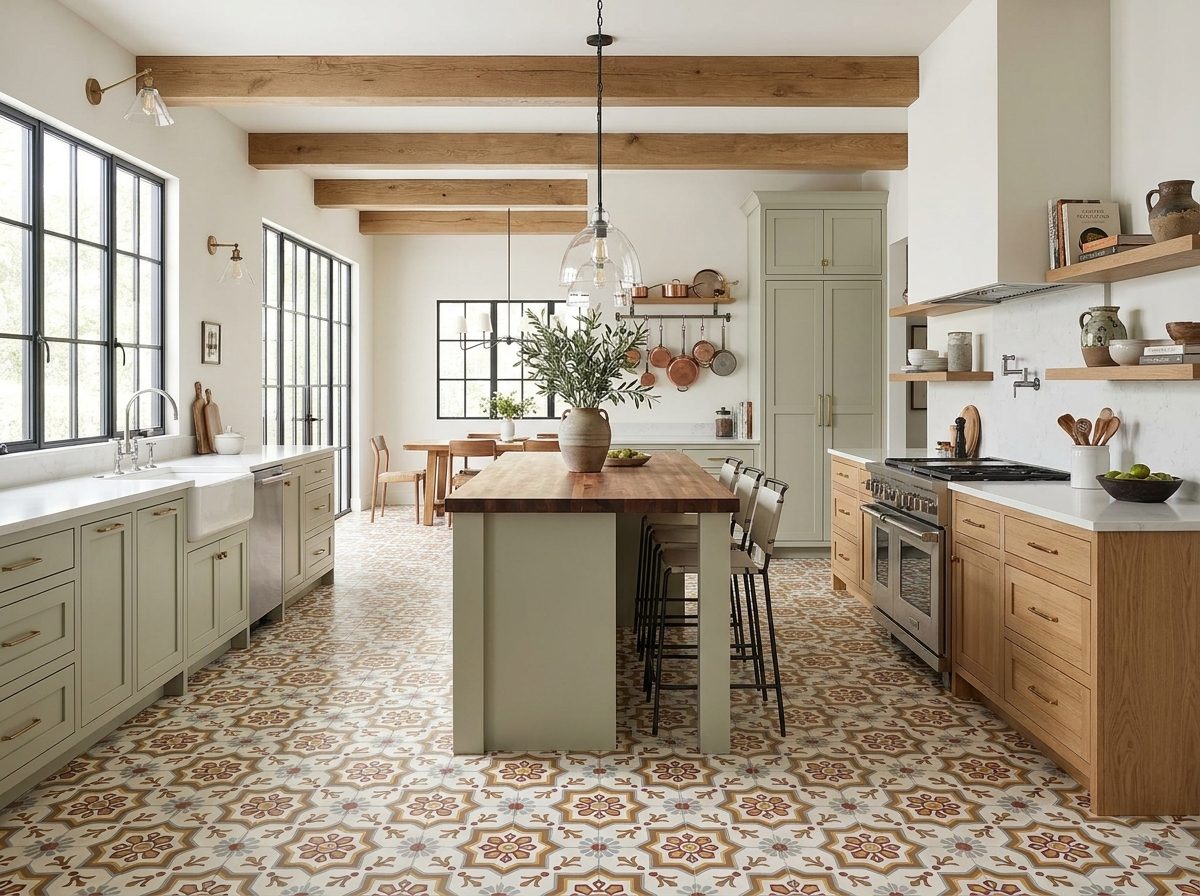
This is where many “Mexican tile” interiors get their most iconic floors: encaustic cement tiles (also called patterned cement tiles)—matte, pigment-rich, and design-forward. These tiles are especially popular for:
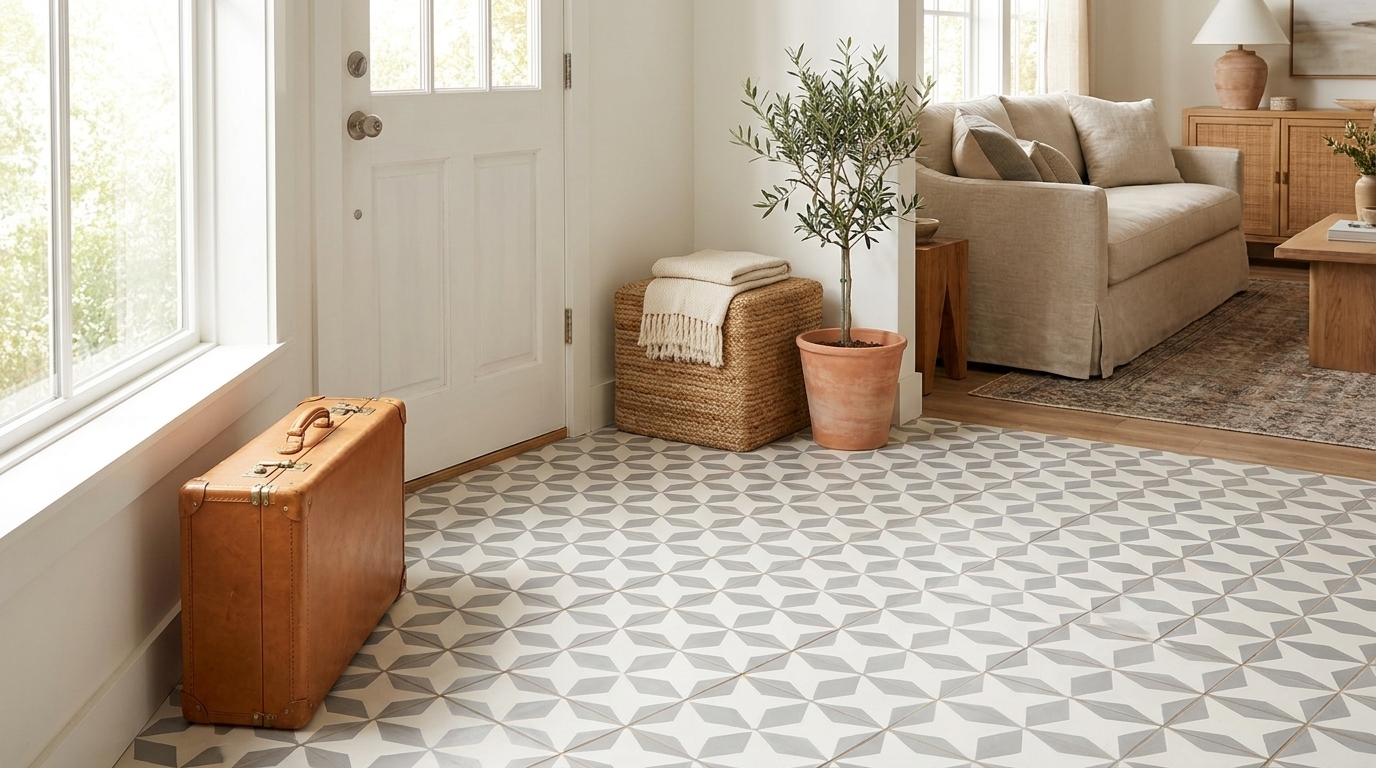
- entryway “tile rugs”
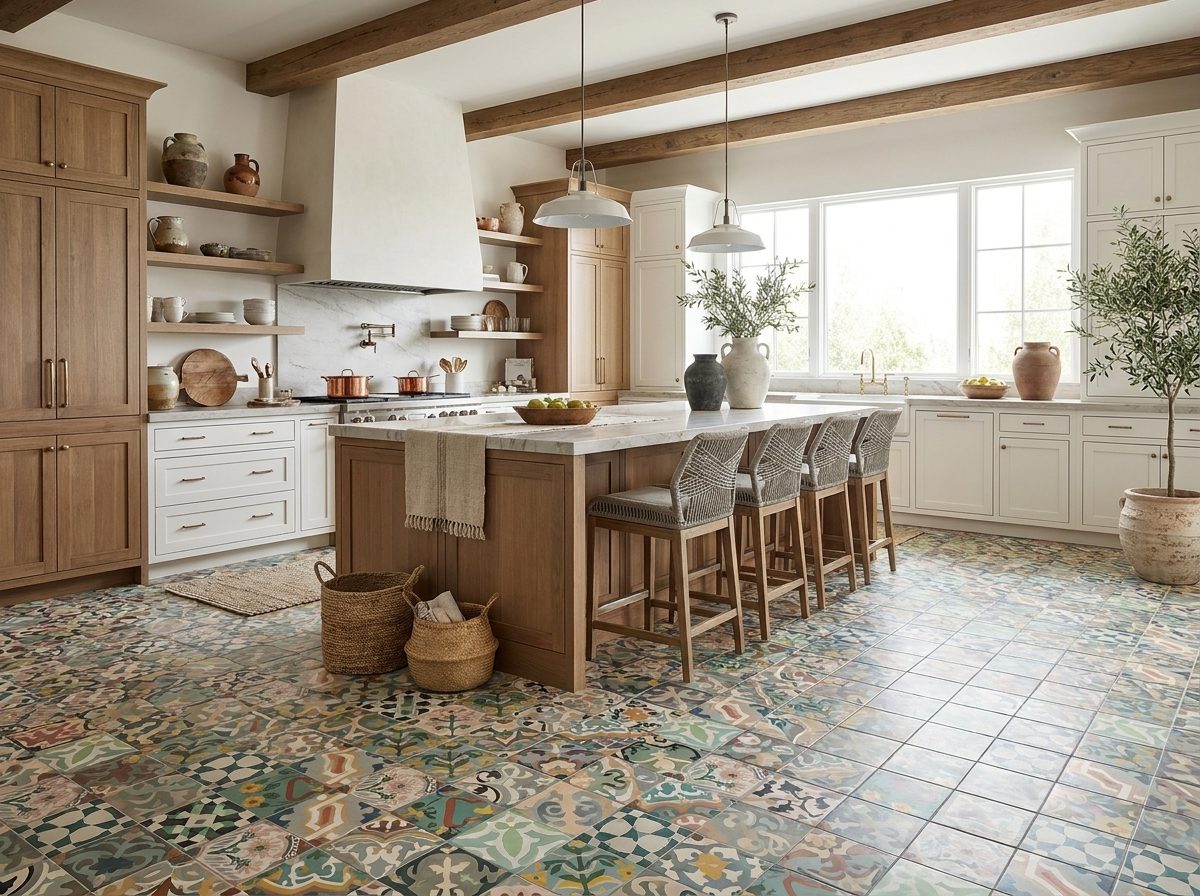
- kitchen floors
- restaurant tile flooring
- patios and courtyards
- boutique hospitality spaces
3) Mexican-inspired patterns (Spanish-style + Mediterranean + Moroccan influences)
Much of what we think of as “Mexican tile style” is a fusion of influences:
- Spanish-style tiles and colonial-era motifs
- Mediterranean tiles (sun-washed palettes, relaxed repeats)
- Moroccan tiles (geometry, stars, lattice patterns)
This blended design language is exactly why patterned cement tiles feel so timeless: they connect to history, but they still feel current in modern homes and commercial interiors.
Why Cement Tiles Are a Top Choice for Mexican Tile Style
If you want the visual impact of Mexican tiles with a surface that can be specified confidently across residential and commercial projects, cement tile is often the strongest choice.
Benefits of Cement Tiles
Durability for real-life traffic
Cement tiles can be an excellent solution for patterned floor tiles in active homes and high-traffic spaces when installed correctly and sealed properly. That includes:
- kitchens
- entries
- corridors
- restaurants and cafés
- boutique hotel public areas
For high-traffic planning, many pros start by browsing a proven lineup of patterns and neutrals in Cement Tiles In Stock.
Handmade character that looks authentic (not printed)
Handmade cement tiles have a depth and softness that reads artisanal and premium—especially under warm lighting. That authenticity is a big reason designers choose cement tiles when they want Mexican style without looking mass-produced.
Sustainability + long-life value
Many clients want materials that last and age with character. Cement tiles can support that “buy better, keep longer” mindset—especially when paired with the right care plan and sealing strategy.
Style versatility (from bold to minimal)
Mexican tile style doesn’t have to mean “busy.” Cement tiles can support:
- vibrant, story-rich patterns
- calm Mediterranean neutrals
- sharp black-and-white geometry
- modern tonal repeats
- vintage-inspired layouts that feel original to the architecture
Customization (pattern, palette, branding)
If you’re trying to match a concept, a historic reference, or a brand palette, custom cement tiles are where Mexican tile style becomes a controlled design system—not a guess. Start here: Custom Tiles and explore color planning here: Cement Tile Color Palette.

Mexican Tile Style by Room: Where It Works Best
Mexican tiles are powerful because they can create continuity across a home—or become a signature “moment” in one key space.
Bathrooms: Boutique impact in a small footprint
Bathrooms are one of the best places to use Mexican tile style because the square footage is small, and the payoff is big. Use bathroom tiles to create:
- patterned floors with a border (classic “tile rug”)
- wainscot walls that feel old-world
- accent walls behind vanities
- niche backdrops for boutique detail
Design tip: if the floor is patterned, keep wall finishes calm (plaster, warm paint, simple tile) so the room feels curated, not chaotic.
Kitchens: Floors and bold backsplash moments
Mexican tile style shines in kitchens because it balances the “solids” (cabinetry, counters, appliances). Two high-impact moves:
- a patterned cement tile kitchen floor with a calmer perimeter
- kitchen backsplash tiles with a Talavera-inspired vibe behind the range or coffee station
If you want to explore pattern directions quickly, browse Cement Tiles In Stock and shortlist 3–5 patterns to sample and compare under your lighting.
Showers: Cement tile looks custom—when specified correctly
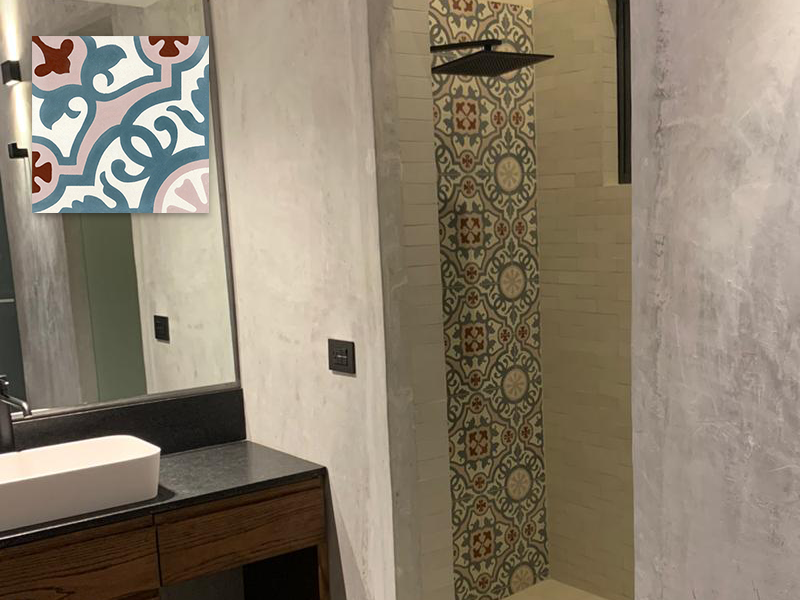
Cement can be used for shower wall tiles in many design-forward projects, but success depends on:
- proper waterproofing system
- correct sealing approach
- realistic maintenance expectations
Before specifying cement in wet zones, align installer approach with the brand’s Cement Tiles Installation Guidelines and set long-term care expectations with Cement Tile Maintenance.
Entryways: The classic “Mexican tile rug” floor
If you want a single space to carry Mexican style with maximum impact, make it the entry. A framed pattern instantly delivers:
- warmth
- heritage
- a sense of place
A strong entry composition uses:
- a border to frame the field
- mid-tone contrast to hide daily grit
- intentional transitions to adjacent flooring
Patios and courtyards: Outdoor Mexican tile style
Mexican tile style is naturally suited for outdoor life—courtyards, covered patios, outdoor dining, and breezeways. For exterior projects, plan installation and sealing with your installer and factor in weather exposure.
If you’re building a cohesive indoor-outdoor story, start with palette planning using the Cement Tile Color Palette and then select patterns through Cement Tiles In Stock.
Commercial spaces: Restaurants, hotels, and high-traffic environments
Mexican tile style is a hospitality favorite because it creates atmosphere instantly—without relying on decor that needs constant updates.
Where it works best:
- restaurant tile design (dining rooms, bars, entries)
- boutique hotel restaurants and lounges
- corridors and thresholds
- branding moments for hotel lobby tiles
For hospitality groups and multi-location brands, custom patterns can be reproduced across sites while adjusting colors to local context using Custom Tiles and the Design Studio.

Ready to bring Mexican tile home? Browse our Mexican cement tiles in stock, ready to ship from Texas, and order a sample of your favorite.
Style Ideas & Trends: How to Use Mexican Tiles Without Overdoing It
Mexican tiles are expressive. The goal is to use that expression strategically.
Moroccan tiles influence: Bold geometry with global edge
Moroccan-inspired geometry is popular in Mexican-style interiors because it feels artisanal and architectural. Use it for:
- entry floors
- bar zones
- statement bathrooms
- boutique hotel corridors
Best practice: keep Moroccan pattern in one hero zone, then echo its colors in quieter solids nearby.
Mediterranean tiles influence: Calm, sun-washed, timeless
Mediterranean palettes (creams, sands, dusty blues, olive greens) are an elegant way to do Mexican tile style with restraint. Ideal for:
- coastal homes
- airy kitchens
- boutique hospitality concepts that want relaxed luxury
Spanish-style tiles: Heritage warmth and courtyard romance
Spanish-style motifs are a natural fit for Mexican-inspired architecture and are especially strong in:
- patios and courtyards
- arched entryways
- historic renovations
- warm-toned restaurants
Spanish-style tile stories pair beautifully with terracotta tiles accents (or terracotta-adjacent colorways) when you want layered warmth.
Modern and contemporary: Mexican style, but cleaner
Modern Mexican tile style often looks like:
- simplified geometry
- tonal patterns (less contrast, more texture)
- black-and-white layouts that feel architectural
- borders that frame seating zones or entries
This is also where cement tiles can complement terrazzo tile in adjacent spaces for a refined, modern hospitality aesthetic.
Vintage: “Looks original to the home”
Vintage Mexican tile style is trending because it feels like it belongs—especially in older homes. The best vintage looks use:
- borders and framed fields
- warm neutrals with one accent color
- layouts that respect symmetry and thresholds

Commercial Design Strategy: Mexican Tiles for Restaurants and Hotels
Mexican tiles aren’t just aesthetic; they’re a commercial tool.
Restaurant tile flooring: Pattern that performs and markets
For restaurant tile flooring, the floor must do two things:
- handle traffic, chairs, spills, constant cleaning
- create atmosphere that guests remember and photograph
Patterned cement tiles are popular because they can:
- define zones (bar vs dining)
- hide daily wear better than flat, uniform surfaces
- become the signature visual identity of the brand
A practical approach:
- choose a mid-tone pattern for the main dining floor
- use a bolder pattern at the entry or bar zone
- keep transitions intentional with borders or pattern breaks
To browse commercial-friendly patterns, start with Cement Tiles In Stock. For branding or multi-location consistency, explore Custom Tiles.
Hotel lobby tiles: Mexican style as a signature experience
In boutique hospitality, hotel lobby tiles set the tone before guests even check in. Mexican tile style works exceptionally well in:
- lobby thresholds
- lounge zones
- elevator lobbies
- courtyard entries
If you want the lobby and restaurant to feel like one cohesive concept, use shared palette colors and border logic across both areas.
Custom logo tiles: Branding without signage
For restaurants and hotels, custom logo tiles can elevate identity when used subtly:
- a medallion at entry
- a small mark near host stand
- a border monogram in a patterned field
If branding is part of the plan, visualize concepts in the Design Studio and coordinate feasibility through Talk to a Tile Specialist.

Cement Tile vs Ceramic Tile in Mexican Tile Projects
Clients often ask: what’s better for Mexican style—cement or ceramic?
When cement tiles are the better choice
Cement is ideal when you want:
- handmade depth and artisanal character
- bold patterns that don’t look printed
- custom reproduction capabilities
- a premium, boutique feel in guest-facing spaces
When ceramic/porcelain might be better
Ceramic/porcelain can be a strong option when you prioritize:
- ultra-low absorption (especially porcelain)
- simplified maintenance in certain extreme wet zones
- back-of-house operational requirements
Many high-end projects combine both: cement for identity spaces, porcelain for purely functional zones. For a deeper comparison, review: Cement Tiles vs Ceramic Tiles.
Installation & Maintenance: How to Protect Mexican-Style Cement Tiles
Mexican tile style looks best when it ages well—and that depends on correct installation and care.
Sealing: The step that protects color and pattern
Cement tile is porous. Sealing helps with:
- stain resistance (kitchens, restaurants)
- easier cleaning (daily maintenance)
- consistent appearance over time
Before installation starts, share the brand’s Cement Tiles Installation Guidelines with your installer. This is especially important for:
- mixing tiles from multiple boxes (prevents patchy appearance)
- ensuring a flat, stable subfloor (reduces cracking and lippage risks)
- preventing moisture-related surface issues
Cleaning: Keep it simple and consistent
A strong routine typically includes:
- frequent sweeping/vacuuming (grit control)
- pH-neutral cleaner
- soft pads and microfiber
- immediate spill cleanup in kitchens and restaurants
Set expectations with your team or homeowner using Cement Tile Maintenance.
Mistakes to Avoid When Designing With Mexican Tiles
Mistake 1: Choosing pattern before defining the concept
Mexican tiles can go rustic, modern, Mediterranean, or bold Moroccan-inspired. Define the vibe first, then pick patterns.
Mistake 2: Over-patterning every surface
If everything is patterned, nothing feels special. Choose one hero surface per room:
- floor OR backsplash
- floor OR feature wall
- entry field OR stair risers
Mistake 3: Skipping samples
Lighting changes everything. Samples help you validate:
- color under your actual lighting
- grout color impact
- sealer effect on tone
Start pattern shortlisting here: Cement Tiles In Stock.
Mistake 4: Not planning transitions and borders
Mexican tile style looks most premium when borders frame zones and thresholds feel intentional—especially in entries, dining rooms, and patio transitions.
Mistake 5: Treating cement like ceramic during cleaning
Harsh cleaners can degrade sealers and alter appearance. Use the maintenance guide and train staff early in commercial spaces: Cement Tile Maintenance.

Shop the look: Mexican cement tiles in stock
Handmade cement tiles, made in Mexico and ready to ship from our Texas warehouse. Each tile is pressed, never fired, and the pattern is a thick layer of pigmented cement, not a surface print. Order a sample to see the colors in your own space before you decide.


FAQs: Mexican Tiles
1) What are Mexican tiles?
Mexican tiles can refer to Talavera-style decorative tiles, Mexican cement tiles (encaustic-style patterned floors), or Mexican-inspired patterns influenced by Spanish, Mediterranean, and Moroccan design.
2) Are cement tiles considered Mexican tiles?
They can be—especially when patterns and palettes reflect Mexican heritage or Mexican-inspired design. Cement tiles are a common choice for Mexican-style floors, entries, patios, and hospitality interiors.
3) Can Mexican-style tiles be used on kitchen floors?
Yes. Mexican-style patterned floor tiles are often used in kitchens for warmth and character. For cement tiles, correct sealing and cleaning routines are key for stain resistance.
4) What are the best Mexican tiles for a kitchen backsplash?
Talavera-inspired looks and patterned cement designs both work well as kitchen backsplash tiles. Choose a palette that complements cabinets and counters, and keep adjacent surfaces calmer for a premium feel.
5) Can cement tiles be used in showers?
Cement can be used as shower wall tiles when waterproofing, sealing, and maintenance are specified properly. Review Cement Tiles Installation Guidelines and align care expectations with Cement Tile Maintenance.
6) Are Mexican tiles good for outdoor patios?
Yes—Mexican style is especially popular outdoors. For cement tiles, plan installation and sealing based on exposure and usage, especially in freeze/thaw climates or heavy rain environments.
7) Cement tile vs ceramic tile: which is better for Mexican tile style?
In the cement tile vs ceramic tile comparison, cement often wins for handmade authenticity and customization, while ceramic/porcelain often wins for ultra-low absorption and simplified cleaning. Many projects combine both strategically. See: Cement Tiles vs Ceramic Tiles.
8) Can Mexican tiles be customized for restaurants or hotels?
Yes. Custom cement tiles can reproduce patterns, match brand colors, and incorporate custom logo tiles for hospitality branding. Start with Custom Tiles and visualize options in the Design Studio.