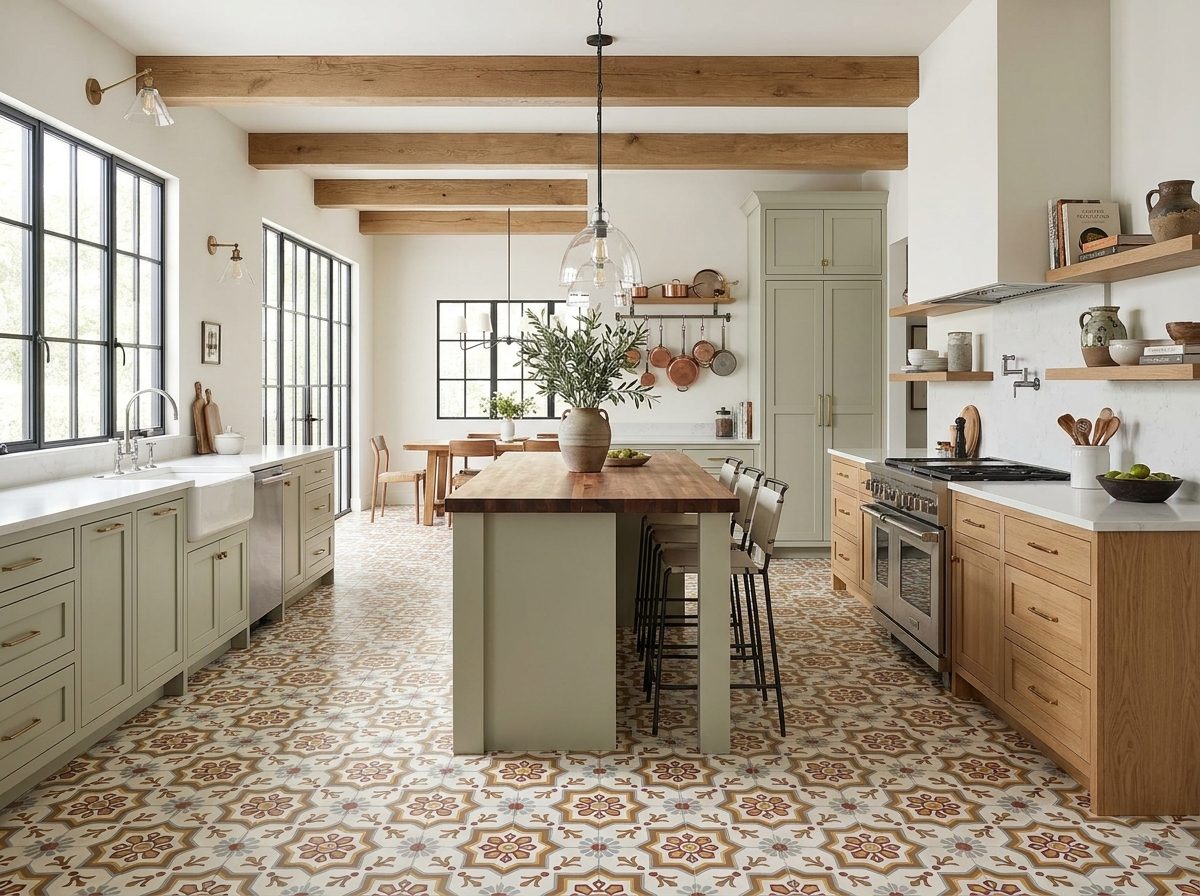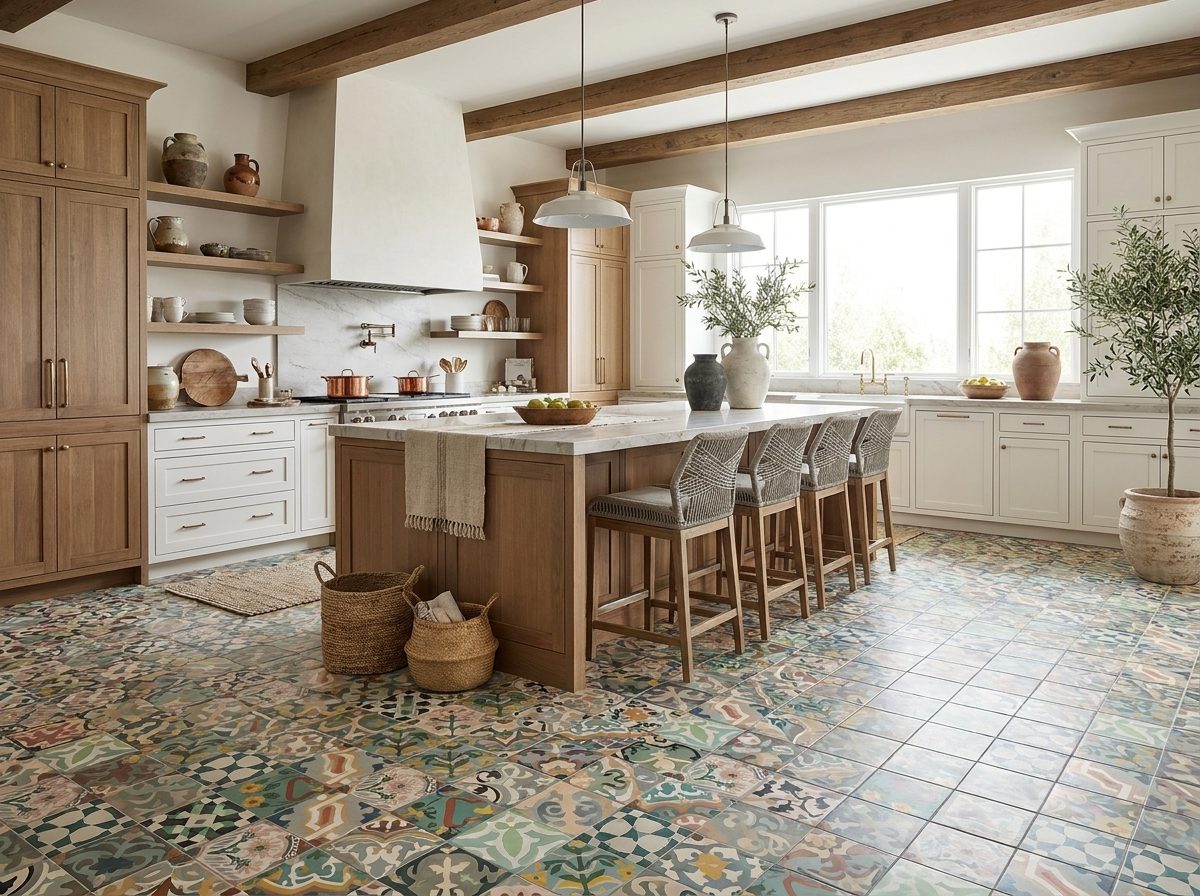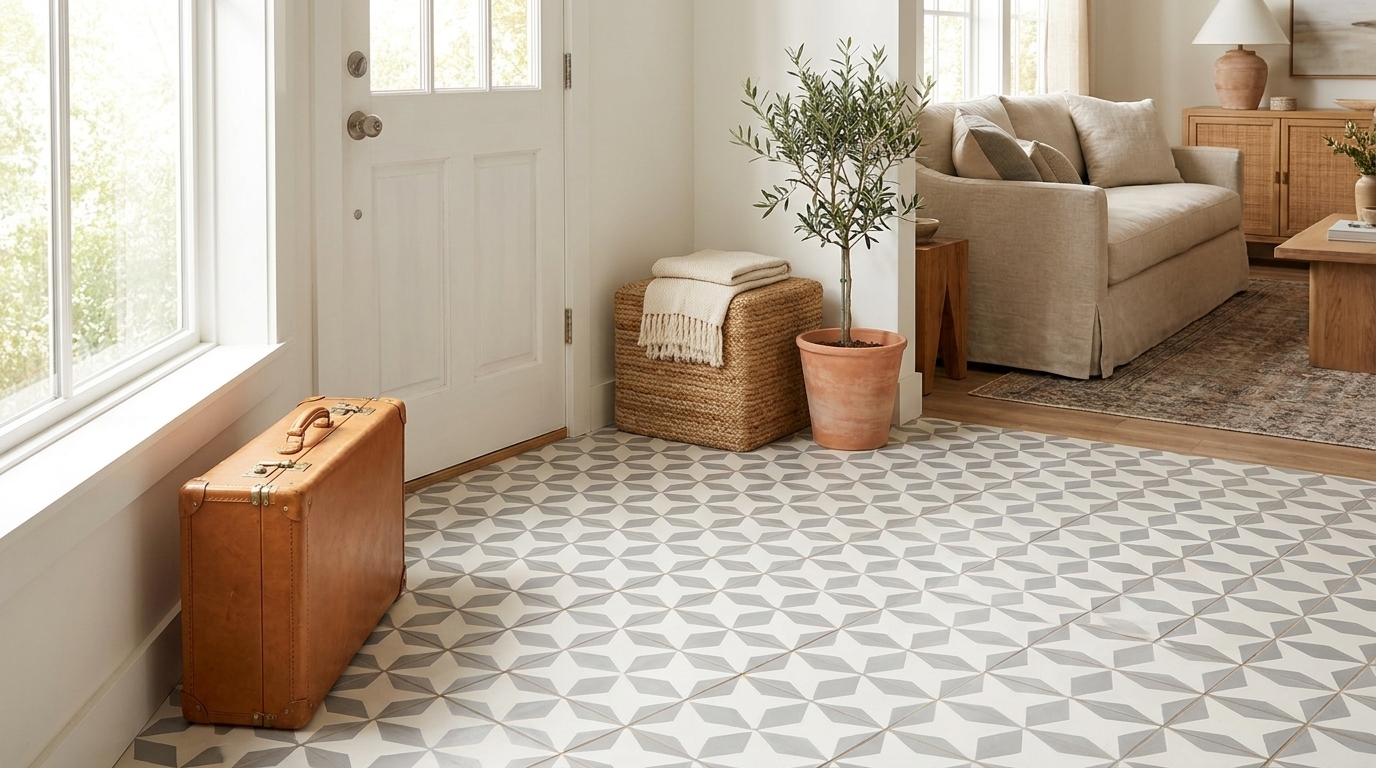
At its heart, mission tile is a handmade cement tile, celebrated for its intricate inlaid patterns and a signature matte finish that feels soft underfoot. Unlike ceramic or porcelain, its story is one of pressure, not fire, which gives it a character and durability all its own.
What Is Mission Tile
Mission tile is far more than just a building material; it’s a piece of functional art with a story to tell. The name itself brings to mind heritage and craftsmanship, and for good reason. These tiles are fundamentally different from the mass-produced ceramic options you see everywhere, and that difference starts with how they’re made.
While ceramic tiles are clay fired in a kiln, mission tiles are born from a hydraulic press. This cold-press method fuses natural materials—Portland cement, fine sand, marble dust, and mineral pigments—into a single, solid piece under immense pressure.
The Beauty Is More Than Skin Deep
Think of it like terrazzo or a slice of natural stone. The vibrant, intricate pattern on a mission tile isn’t a glaze painted on the surface; it’s an integral part of the tile itself. The pigmented layer runs several millimeters deep, which means the design won’t fade, chip, or wear away with foot traffic.
Instead, the tile develops a graceful patina over time, aging beautifully and telling the story of the space it inhabits. This unique construction gives it that velvety, matte texture—a stark contrast to the glossy sheen of many kiln-fired tiles and a quality that has made it a favorite for those seeking authentic, handmade character.
A Legacy of Craftsmanship
The story of this tile is deeply tied to the Arts and Crafts movement’s love for handmade goods. Established in 1900, Original Mission Tile continues this century-old tradition, preserving the techniques that make each tile a unique creation.
Today, that demand for authenticity is stronger than ever. The global cement tiles market, largely defined by mission-style designs, was valued at USD 35 billion in 2024 and is projected to reach up to USD 55 billion by 2035. This growth is fueled by a desire for authentic, unglazed materials in modern homes and renovations. You can explore the full cement tiles market research to see its full trajectory.
The true magic of mission tile is its permanence. Because the pattern is inlaid, it becomes part of the home’s story, evolving with the space rather than diminishing over time. It’s a choice for longevity and timeless style.
Mission Tile vs. Ceramic Tile At a Glance
So, what are the key differences when you’re standing in a showroom? While both can look beautiful on day one, their construction, feel, and aging process are worlds apart. This table breaks down the fundamentals.
| Attribute | Mission Tile (Cement) | Ceramic Tile |
|---|---|---|
| Construction | Hydraulically pressed cement, sand, and pigment. Pattern is inlaid. | Clay fired in a kiln. Pattern is a surface glaze. |
| Finish | Naturally matte, velvety, and soft. Develops a patina. | Typically glossy or satin. The finish can wear or chip over time. |
| Durability | Extremely durable; pattern won’t wear off. Ages gracefully. | Can be brittle; surface glaze can crack or chip, revealing the clay body. |
| Feel | Solid, substantial, and earthy underfoot. | Lighter and often feels cooler or more “glassy.” |
| Uniqueness | Handmade, with slight variations that add character. | Mass-produced for uniformity. |
| Maintenance | Requires sealing to protect against stains. | Generally low-maintenance; glazed surface is non-porous. |
Ultimately, choosing mission tile means opting for a material that wears in, not out. It’s a surface that gathers character with every footstep, making it a living part of your home’s architecture.
The Art of Crafting Handmade Cement Tiles
Every one of our tiles begins its journey not in a fiery kiln, but in the hands of a skilled artisan. The process is a delicate dance between chemistry and artistry, turning humble raw materials into a piece of functional, durable art. It all starts with a simple yet precise blend: Portland cement, fine sand, and powdered marble dust.
This dry mixture forms the base layer—the body of the tile—giving it structural integrity. It’s the foundation upon which the beautiful, colorful pattern will be built. Think of it as preparing a canvas before the artist even picks up a brush.
Pouring Color and Life into a Mold
The real magic happens when the pigments come in. Unlike a painted or glazed tile where color is just a surface treatment, a mission tile’s pattern is inlaid, becoming a core part of its structure. Artisans start by setting a heavy, ornate metal mold, known as a trepa, into a square frame. This mold acts like a stencil, creating separate little compartments for each color in the design.
With a steady hand and remarkable precision, they pour a liquid slurry of mineral pigments—mixed with white Portland cement and marble dust—into these compartments. Each color is poured individually, slowly filling the pattern’s intricate voids. This colored layer is only a few millimeters thick, but because it’s fused right into the tile body, it’s permanent.
This diagram breaks down the core stages, from mixing raw materials to the final, cured tile.

As you can see, this is a “cold-cured” process. Pressure and time—not heat—are the key ingredients.
Once the color layer is complete, the artisan carefully lifts the metal mold, revealing the crisp, liquid pattern. They then sprinkle a fine, dry layer of cement and sand over the wet pigments to absorb any excess moisture before filling the rest of the frame with the foundational gray cement mixture. At this stage, the tile is just a delicate sandwich of wet and dry powders.
The Power of Pressure and Patience
This is where the transformation from powder to solid stone happens. The filled mold is placed under a hydraulic press, which exerts an immense amount of pressure—often over 2,000 pounds per square inch. This incredible force compacts and fuses the layers together into a single, dense tile without any heat at all.
This “cold-cured” technique is the secret behind the tile’s signature velvety matte texture and its eco-friendly credentials, as it uses significantly less energy than kiln-firing. After being pressed, the tiles are carefully stacked and moved to a curing room.
“The most critical step is the pigment mix. Too much water and the colors will bleed; too little and they won’t flow into the fine details of the mold. It’s a balance learned over years, and it’s what ensures the deep, consistent colors that define our craft.”
The final step is all about patience. The tiles are submerged in water baths and then left to cure naturally for several weeks. This slow hydration process allows the cement to achieve its maximum strength and hardness, resulting in a finished product that will last for generations.
Beyond the Square: Exploring Formats, Finishes, and Customization
While the classic 8×8 square is a true icon, the world of mission tile is so much bigger than a single shape. Because these tiles are handmade, the design freedom is incredible. It’s your chance to move way beyond standard-issue options and create surfaces that are genuinely yours. You get to treat floors and walls not just as parts of a building, but as massive canvases for your vision.
That flexibility starts with the format. Forget the rigid constraints you find with mass-produced tile. Here, you can explore a whole portfolio of shapes that can completely change the energy and flow of a room.

From the interlocking geometry of hexagons to the soft, curving lines of arabesques and fish scales, every format tells a different story. These aren’t just shapes; they add movement and visual texture, turning a simple surface into a captivating feature.
More Than Just Flat Surfaces
But the creativity doesn’t stop with two-dimensional patterns. The beauty of working with cement is its versatility, which lets us create specialty architectural pieces that bring depth, texture, and function into a space. These formats include:
- 3D Tiles: These pieces have raised or sculpted surfaces that play with light and shadow, creating dynamic, tactile walls that practically beg to be touched. They’re perfect for a feature wall, the front of a bar, or anywhere you need a bold statement.
- Architectural Breeze Blocks: Also known as screen blocks, these perforated cement blocks are a brilliant way to build decorative partitions, privacy screens, or ventilated facades. They filter sunlight beautifully and add an instant touch of mid-century modern or tropical flair.
- Bricks and Pavers: Handmade cement bricks offer a rustic yet refined alternative to traditional clay. You get a much wider range of colors and a smoother, more consistent finish that works just as well for interior walls as it does for exterior walkways.
These specialty formats show that mission tile isn’t just for covering surfaces—it’s for building unique architectural features from the ground up.
The Impact of a Good Finish
Just as format shapes the overall design, the finish determines how a tile feels and how it interacts with light. Since mission tile isn’t glazed, its surface has a natural, almost stone-like quality. The standard finish is a silky matte, which feels soft and velvety to the touch and gives a contemporary, non-reflective look.
If you’re after a little more luster, we can achieve a lightly polished sheen. This finish gives a gentle glow that highlights the tile’s rich colors without the high-gloss shine of a ceramic tile. The finish you choose can completely transform a pattern, making it feel either more organic and earthy or more refined and elegant.
The beauty of handmade cement tile lies in its perfect imperfections and its capacity for personalization. It’s a material that invites collaboration, allowing a designer’s unique vision to be pressed directly into the final product.
The Ultimate Personal Touch
This is where mission tile really sets itself apart: the power of complete customization. You are not stuck with a catalog of pre-set designs. With today’s tools, designers and homeowners get to be the artists, creating entirely unique patterns and color palettes from scratch. Understanding the properties and aesthetic impact of various materials, such as mission tile, is crucial for any design project; for more insights into material selection, read about selecting the right materials for luxury home design.
Imagine taking a traditional Moroccan pattern but coloring it in a minimalist grayscale palette for a modern interior. Or, you could design a completely new geometric motif to match a company’s brand identity. This level of control means your final installation is a one-of-a-kind masterpiece, tailored exactly to the project.
You can learn more about how to create your own unique patterns by exploring our selection of custom-made cement tile designs.
How to Install and Maintain Mission Tile
Putting in handmade mission tile is a whole different ballgame than working with its ceramic cousins. Because cement is naturally porous, the entire process—from prep to long-term care—requires a specific touch to get that beautiful, long-lasting finish.
Get these steps right, and you’re not just installing a floor; you’re protecting an investment that will look incredible for decades.
The real work starts before you even open a box of tile. A properly prepped surface isn’t just a good idea; it’s non-negotiable. Your substrate must be perfectly level, solid, and clean. Even small cracks or uneven spots will eventually telegraph right through your finished floor.
The Installation Process Step by Step
Unlike standard ceramic tile that works with almost any thin-set, our cement mission tile is heavier and needs a high-quality, polymer-modified thin-set mortar. This creates the powerful bond needed to support the tile’s weight and unique character.
- Pick the Right Mortar: Always choose a white, non-staining thin-set. Gray mortar can sometimes bleed through the porous tile and discolor lighter patterns, so it’s best to play it safe.
- Get Your Mortar Application Right: Trowel an even layer of thin-set onto your substrate. Then, take the extra step to “back-butter” each tile—apply a thin, smooth coat of mortar to the back. This critical step ensures 100% coverage, eliminating air pockets that can lead to cracks down the road.
- Set and Level as You Go: Gently press each tile into the mortar with a slight twist. Use spacers to keep your grout lines consistent. A 1/16″ to 1/8″ gap is perfect for a clean, classic look. Keep your level handy and check your work constantly.
By far, the most common installation mistake is not getting enough mortar under the tile. Back-buttering isn’t a suggestion; it’s a must-do for cement tile to guarantee a rock-solid bond and prevent hollow spots.
Sealing and Grouting Your Mission Tile
This is where the process for mission tile really parts ways with ceramic. Sealing isn’t just a final touch—it’s an essential part of the installation itself, protecting the tile from stains during grouting.
First, apply a high-quality penetrating sealer to your clean, dry tiles before you grout. Think of this as a primer. It sinks into the tile and creates a barrier, stopping grout pigments from soaking in and staining the beautiful colors.
Once that initial sealer has fully cured, apply a grout release agent. This is a temporary coating that makes cleaning up excess grout infinitely easier and adds another layer of stain defense. Always use an unsanded grout to avoid scratching the tile’s surface. Work in small, manageable sections, applying the grout and then wiping away the excess right away with a damp sponge.
After the grout is completely cured (give it 48-72 hours), it’s time for the final seal. Apply two or three more coats of your penetrating sealer over the entire floor, including the grout lines. This locks everything in and gives you robust, long-term protection against water, oil, and other spills. For more on getting your floor ready, check out our complete guide to choosing the right underlayment for tile floors.
Long-Term Care and Maintenance
With the right care, your mission tile will stay beautiful for a lifetime. The secret is simple: be gentle and consistent, and stay away from harsh chemicals.
- Routine Cleaning: Sweep or vacuum regularly to get rid of abrasive dirt that can scratch the finish. When you mop, use a pH-neutral cleaner mixed with warm water. These gentle cleaners won’t strip away the protective sealer.
- Avoid Acidic Cleaners: Never use products with acid, ammonia, or bleach. Things like vinegar or citrus-based cleaners are far too acidic; they will etch the tile surface and break down the sealer, leaving your floor vulnerable to stains.
- Wipe Up Spills Immediately: Since the tile is porous, it’s important to clean up spills right away, especially acidic ones like wine, coffee, or juice. Blot the spill with a soft cloth instead of wiping to avoid spreading it.
- Know When to Re-Seal: Your floor will need to be re-sealed every 2-5 years, depending on how much traffic it gets. Here’s an easy way to check: drop a little water on a tile. If it beads up, your sealer is still doing its job. If it soaks in and darkens the tile, it’s time to re-seal.
Design Inspiration for Every Room
This is where the magic happens—when a single tile goes from a sample in your hand to a living, breathing part of your space. The real beauty of mission tile is its versatility. It can anchor just about any design style you can dream up, transforming everyday rooms into showcases of pattern and color.
The trick is knowing how different patterns, formats, and colorways can completely shift the mood. A classic, intricate pattern might restore historic charm to a Craftsman entryway, while bold geometrics can define a modern restaurant’s entire brand from the moment you walk in.

Let’s dig into how these tiles can elevate specific spaces, from the heart of the home to high-traffic commercial settings.
Residential Retreats: The Kitchen and Bathroom
In any home, the kitchen and bathroom are prime canvases for mission tile. A backsplash behind the stove is the perfect spot for a burst of color, creating a focal point that’s as durable as it is beautiful. Think about a repeating star-and-cross pattern or a lively floral motif to inject personality into an otherwise neutral kitchen.
Bathrooms open up even more possibilities. A floor covered in hexagonal mission tile creates a captivating honeycomb effect, while a shower niche lined with a vibrant pattern offers a delightful surprise. If you’re looking for fresh concepts, exploring broader bathroom tile remodel ideas can show you just how patterned tiles can anchor an entire design.
- Kitchen Backsplash: Go for a bold, repeating pattern to create a statement piece that’s incredibly resilient and a breeze to clean.
- Bathroom Floor: Choose a geometric or arabesque format to add movement and visual interest, which can make the space feel much larger.
- Shower Walls: A vertical installation of fish scale tiles can evoke a serene, spa-like atmosphere.
Welcoming Outdoor Living Spaces
Because they’re made of cement, our tiles are exceptionally well-suited for outdoor areas, from covered patios to courtyard fountains. The natural, matte finish blends seamlessly with stone, wood, and greenery, creating an organic flow between your indoor and outdoor living spaces.
A classic black-and-white checkerboard on a patio floor can define an outdoor room, making it feel like a true extension of your home. Better yet, the tile’s inherent durability means it can handle foot traffic and the elements, all while developing a beautiful, natural patina over time.
By using the same tile pattern for an interior mudroom and the adjoining covered porch, you create a seamless visual flow that connects your home to the outdoors and makes both spaces feel more expansive.
High-Impact Commercial and Hospitality Design
In commercial spaces, mission tile makes a powerful first impression. Its durability and endless customization options have made it a go-to for designers creating unforgettable hotels, restaurants, and retail environments. In these high-traffic settings, the tile’s through-body color is a massive advantage—even after years of use, the pattern will never wear away.
The global demand reflects this. In commercial applications, the market for cement tiles has hit USD 10 billion. Unglazed mission tile variants have seen a 15% jump in popularity for their authentic matte finish. In Asia-Pacific, which commands over 40% of the market, mission-inspired hexagons and fish scales have surged 25% in commercial hubs.
Imagine a hotel lobby with a grand, custom-designed floor medallion, or a boutique cafe with a branded pattern on the wall behind the counter. These applications don’t just look stunning; they help build the establishment’s unique identity. By exploring different cement tile designs by style, designers can find the perfect motif to tell their client’s story.
Your Mission Tile Questions Answered
Choosing the right tile is a big deal, and when you’re looking at a unique, handmade material like mission tile, it’s smart to have questions. This is where we clear things up, answering the most common queries we hear from homeowners, designers, and contractors alike.
Think of this as your final checklist. We’ve gathered the practical details on everything from durability and cost to lead times and tricky installations, so you can feel totally confident bringing this beautiful, artisanal tile into your space.
How Durable Is Mission Tile, Really?
This is one of the first questions everyone asks, and the answer is simple: it’s incredibly durable. The magic is in how it’s made. The pattern isn’t just painted or glazed on the surface; it’s inlaid, with the colored layer running several millimeters deep.
This means the pattern can’t wear off. Even after decades of heavy foot traffic in a busy entryway or commercial space, the design will be just as vibrant as the day it was installed. Instead of wearing out, the tile wears in, developing a beautiful, natural patina over time—much like aged stone or hardwood. It’s a material built to last a lifetime.
Can I Use Mission Tile in Wet Areas Like a Shower?
Absolutely, but there’s one critical step: it must be sealed properly. Our mission tile is made from cement, which is naturally porous. Without a high-quality penetrating sealer, it will absorb water and can be prone to staining.
For a shower that looks great for years, the tile has to be sealed before you grout to protect it from pigment stains. Then, it needs a few more coats of sealer after the grout has cured. This creates a tough barrier against moisture. When it’s sealed and maintained correctly, mission tile is a fantastic choice for showers, bathroom floors, and even outdoor patios in milder climates.
Is Mission Tile Slippery When Wet?
By nature, mission tile has a matte, unglazed finish that gives it more grip than a glossy ceramic or porcelain tile. That soft, velvety texture offers better traction underfoot, making it a solid choice for areas that can get wet, like kitchens, bathrooms, and entryways.
While no floor is completely slip-proof, the natural finish of cement tile generally provides a safer surface than its high-gloss cousins.
The inherent honesty of mission tile is its greatest strength. It’s a solid, natural material that doesn’t pretend to be anything else. Its durability and tactile finish make it a practical and beautiful choice for spaces that are meant to be lived in.
What Is the Typical Lead Time for an Order?
Lead times really depend on whether you’re choosing an in-stock tile or creating a custom design. Here’s how it usually breaks down:
- In-Stock Tiles: For our ready-to-ship patterns and solid colors, we can often get orders prepped and shipped within a few business days. This is your best bet for projects on a tight timeline.
- Custom Orders: If you’re designing a unique pattern or colorway, the process is much more hands-on. Every single tile is made by hand to your exact specs, a process that can take anywhere from 8 to 14 weeks. This includes time for creating the mold, pouring the tiles, and letting them cure properly.
For any custom project, we always recommend ordering well in advance to account for the artisanal production schedule.
How Does the Cost Compare to Other Tile Types?
Handmade mission tile is a premium product, and its price reflects the artistry, labor, and quality materials that go into it. You’ll find it’s generally more expensive than mass-produced ceramic or porcelain tile, but often in the same ballpark as high-end natural stone or designer glass tile.
It’s helpful to think of the cost as a long-term investment. With its incredible durability and timeless style, this is a material that will last for the life of your home, so you won’t have to worry about replacing it down the road. The initial outlay might be higher, but its longevity delivers serious value over time.
Can I Install Mission Tile Myself?
While a skilled DIYer might be able to tackle it, we strongly recommend hiring a professional installer who has specific experience with cement tile. The process is quite different from installing standard ceramic tile and requires a unique set of skills to get it right.
A few key differences include using a specific type of thin-set mortar, the critical step of sealing before grouting, and using unsanded grout to avoid scratches. An experienced pro will know how to handle these nuances for a flawless, lasting installation. Investing in a professional is the best way to protect your investment in the tile itself.
Ready to bring the timeless beauty of handmade cement tile to your next project? At Original Mission Tile, we’ve been crafting authentic, artisanal tiles since 1900. Explore our in-stock collections or start creating your own one-of-a-kind design. Visit us at https://originalmissiontile.com to see the possibilities.