You’re probably looking at a bathroom plan right now and feeling the same tension most clients feel. The layout is resolved, the plumbing is where it needs to be, and then the surfaces start to matter. This is the point where a room either becomes another clean, forgettable bath, or it becomes the space people remember.
That’s where handmade Moroccan cement tile earns its place. In a moroccan tiles bathroom, the floor and walls don’t just finish the room. They set the character, control the visual rhythm, and give even a compact bath a sense of permanence that standard glossy field tile rarely delivers.
The challenge is that most advice online blends all Moroccan tile types together. It treats cement tile and zellige as if they install the same way, age the same way, and ask the same things from a wet bathroom. They don’t. If you’re specifying handmade cement tile, the details matter. Substrate prep matters. Sealing matters. Pattern planning matters. Budgeting matters too.
Original Mission Tile has been manufacturing handmade cement tile since 1900, and that kind of history shapes how you talk about bathrooms. You learn quickly that beautiful rooms come from disciplined decisions made before the first tile is set.
Why Moroccan Tiles Define Statement Bathrooms in 2026
A strong bathroom doesn’t need to be oversized. It needs a point of view.
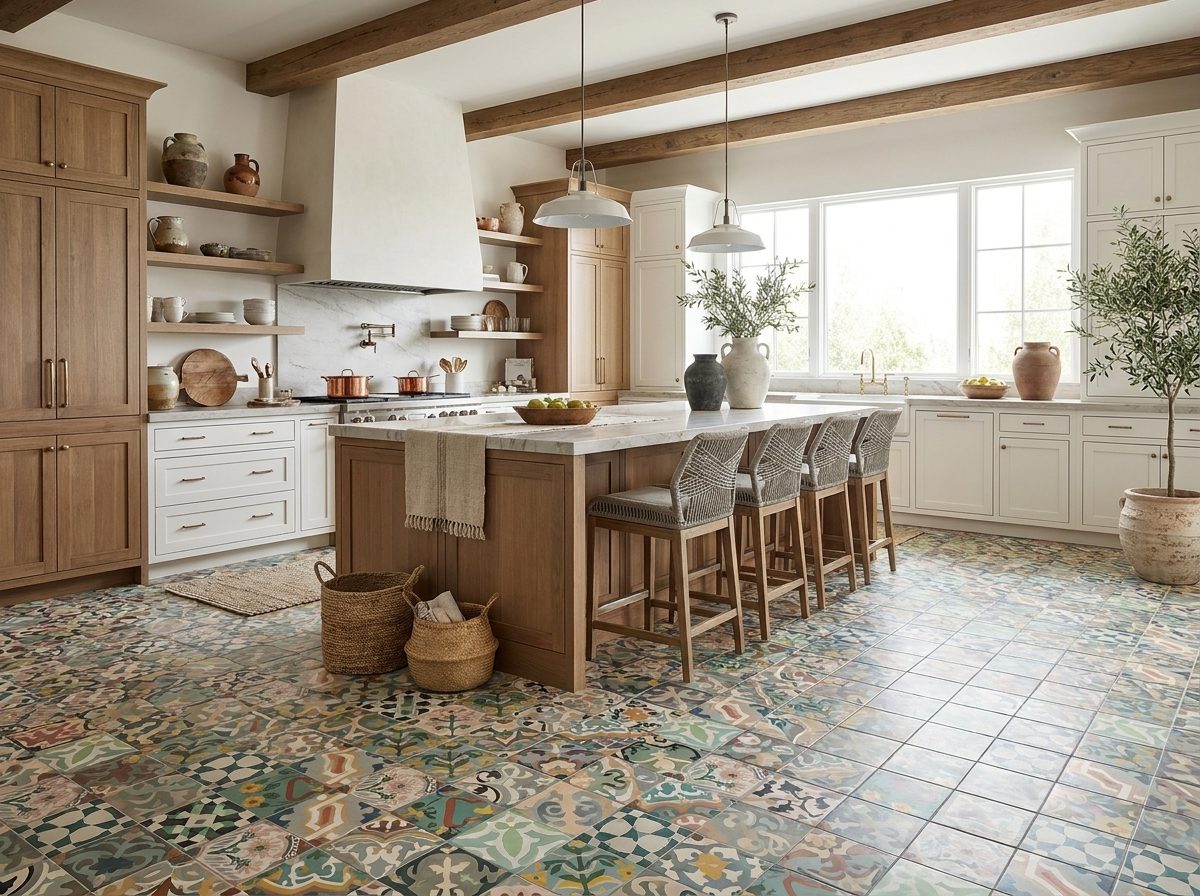
That’s why Moroccan tile keeps showing up in serious bathroom work. It gives a room movement, craft, and pattern without making it feel staged. The right installation can feel old-world, architectural, or subtly modern depending on the colors, grout, and surrounding materials.

Heritage gives the look its weight
The appeal isn’t accidental. Moroccan tiles, originating from the ancient Zellige mosaic technique, trace their history to the 10th century in Morocco, with roots firmly established in North African artistry that spread across the Mediterranean by the 14th century, influencing architecture and today’s interiors, as noted by this history of Moroccan tiles.
That long lineage matters in design because it changes how a bathroom reads. A patterned cement floor doesn’t feel like a passing motif pulled from a seasonal catalog. It feels anchored. It has visual memory behind it.
Why bathrooms suit this material so well
Bathrooms benefit from contrast. Hard stone, bright chrome, frameless glass, and painted drywall can make a room feel thin if every finish is sleek and uniform. Handmade cement tile interrupts that sameness.
It brings in:
- Matte depth that softens reflective surfaces
- Inlaid color that reads richer than printed pattern
- Slight variation that makes a room feel made, not manufactured
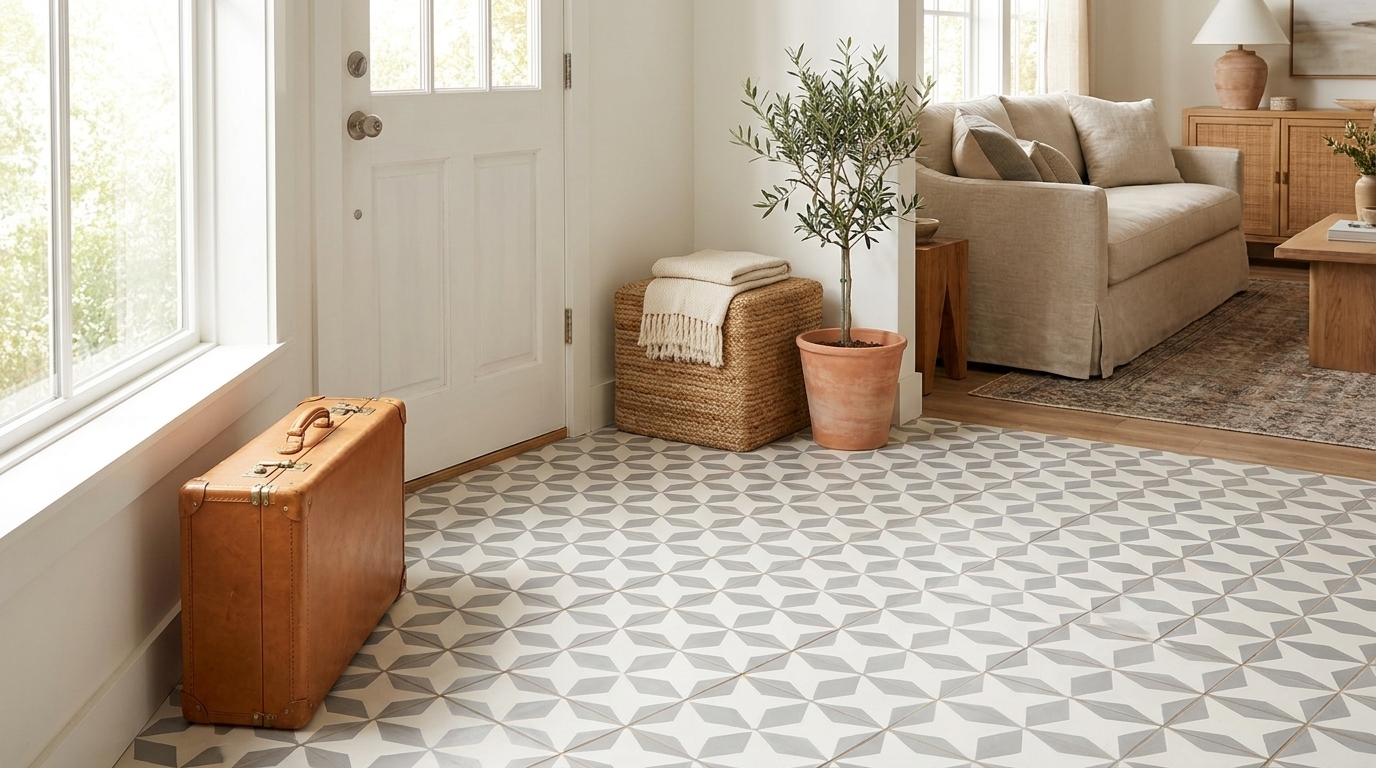
- Graphic structure that can organize small footprints beautifully
A statement bathroom doesn’t come from adding more finishes. It comes from choosing one finish with enough character to carry the room.
Timeless, not trendy
A moroccan tiles bathroom works when the tile does one big job well. Sometimes that’s the whole floor. Sometimes it’s a shower wall, a vanity backdrop, or a wet-room transition that continues the pattern from dry zone to shower.
What doesn’t work is treating handmade tile like wallpaper. If the pattern is busy, the plumbing trim should quiet down. If the colors are deep, the room needs breathing space somewhere else. Good bathrooms balance force with restraint.
That’s the reason these tiles keep defining statement baths. They deliver soul without sacrificing function, provided you choose the right Moroccan tile type for the application.
Understanding Handmade Cement Tiles vs Zellige
The first mistake buyers make is assuming all Moroccan tiles behave the same way in a bathroom. They don’t.
A handmade cement tile and a traditional zellige tile may share design ancestry, but they’re different materials with different installation habits and different visual results. If you’re planning a moroccan tiles bathroom around cement tile, that distinction needs to be clear from the start.
They look related but they’re built differently
Traditional zellige comes from hand-cut clay pieces that are fired and glazed. Cement tile is made by layering cement, sand, marble dust, and natural mineral pigments in a hydraulic press. No clay. No firing. No glaze.
That difference shows up immediately in use.
Zellige tends to give you shimmer, surface variation, and a more reflective face. Cement tile gives you a silky matte surface and pattern color that runs through the wear layer rather than sitting like a printed image on top.
By the 14th century, Moroccan tile design introduced cooling colors like green, blue, and yellow to help regulate temperature in hot climates, and modern cement-based versions are valued in bathrooms because they resist bacteria adhesion and cool down faster after showers, according to this overview of Moroccan tile applications.
Performance follows the material
Think of the comparison like this. Zellige is expressive because of glaze and irregular reflection. Cement tile is expressive because of body, pigment, and pattern weight.
That affects where each one shines.
- Use cement tile when you want a grounded floor, a matte wet-room look, or a pattern that feels architectural.
- Use zellige when you want light bounce, tonal variation, and a more liquid-looking wall surface.
- Don’t assume the care is identical. Cement tile needs its own sealing and maintenance logic. Zellige follows another path.
If you're still narrowing the broader selection criteria for a remodel, this guide on How to Choose Bathroom Tiles is a useful companion because it helps frame the practical questions before you lock into a finish.
For readers comparing formats beyond floors, this page on zellige tile backsplash options shows the kind of wall application where a glazed clay product makes more sense than cement.
Cement Tile vs. Zellige Tile At a Glance
| Attribute | Handmade Cement Tile (OMT) | Traditional Zellige Tile |
|---|---|---|
| Base material | Cement, sand, marble dust, natural mineral pigments | Clay |
| Manufacturing method | Hydraulic pressed | Hand-cut, kiln-fired, glazed |
| Surface look | Matte, velvety, inlaid | Glossy or reflective, glazed |
| Pattern character | Crisp graphic pattern with depth | Luminous variation and irregular shine |
| Best bathroom use | Floors, feature walls, curbless transitions, statement zones | Shower walls, backsplashes, reflective wall areas |
| Care approach | Sealing and gentle cleaning are central | Care depends on the specific glazed product |
| Visual mood | Grounded, tailored, architectural | Shimmering, organic, jewel-like |
Trade-off to remember: If you want sparkle, cement tile won’t fake it. If you want a matte floor with visual weight, zellige won’t replace it.
Preparing Your Bathroom for Cement Tile Installation
Most cement tile failures don’t start with the tile. They start below it.
A bathroom can have beautiful handmade tile and still age badly if the substrate moves, the waterproofing is careless, or the floor plane isn’t corrected before installation. Cement tile rewards precision. It punishes shortcuts.
Start with the right base
In wet areas, the tile assembly needs a stable, appropriate substrate and a real waterproofing system. Shower walls, shower floors, wet-room zones, and splash-prone areas should never rely on tile and grout alone to stop water. They won’t.
The substrate must be flat, sound, and suited to the environment. If the surface has dips, humps, or soft areas, handmade cement tile will telegraph those flaws. You’ll see it in lippage, inconsistent joints, and pattern lines that drift.
Here’s the practical rule installers should follow:
- Remove weak layers. Don’t tile over compromised surfaces just because they look mostly solid.
- Flatten before setting. Pattern tile exposes uneven planes fast.
- Use proper backer and waterproofing in wet zones. Drywall logic doesn’t belong inside a shower assembly.
- Confirm drain strategy early. Center drain and linear drain layouts affect slope and tile planning.
Understand what the performance data actually means
Moroccan cement tiles can achieve water absorption rates below 0.5% after sealing and a matte finish with DCOF exceeding 0.42, meeting residential safety standards for shower floors and wet areas, based on this cement tile performance sheet.
That’s useful data, but it gets misunderstood all the time.
It does not mean you can skip waterproofing because the tile performs well after sealing. It means the tile can perform as part of a properly built bathroom assembly. The waterproof layer still belongs behind or beneath the tile surface where the system requires it.
Where installers get into trouble
A few recurring mistakes show up in bathroom remodels with handmade cement tile:
- Setting on an uneven floor: The pattern magnifies every hump.
- Treating cement tile like porcelain: Porcelain can hide sloppy assumptions better. Cement tile won’t.
- Ignoring movement and transitions: Doorways, curbless entries, and changes in plane need planning before tile arrives.
- Late pattern decisions: If the layout starts after setting begins, cuts get awkward fast.
The more geometric the tile, the less room you have for improvisation on site.
Plan the layout before the first cut
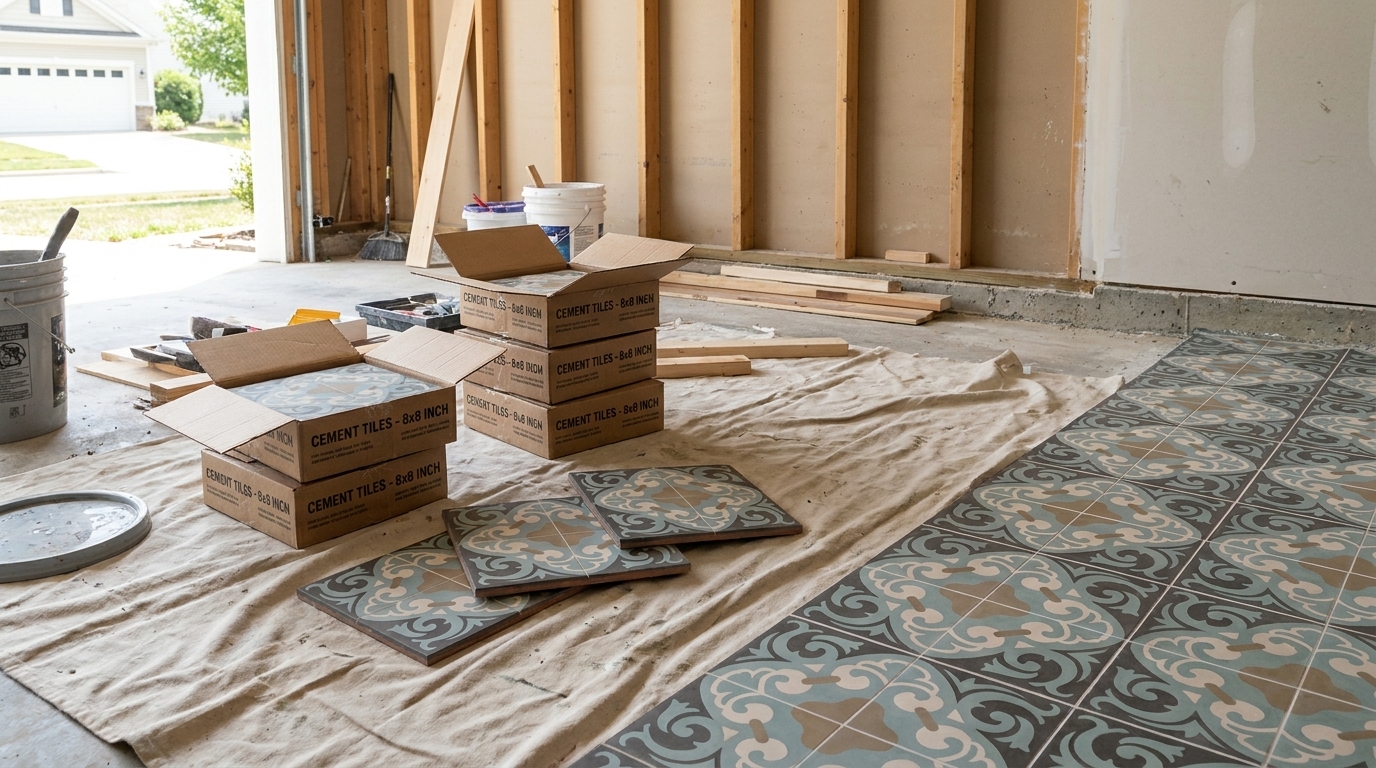
Patterned cement tile should be dry-laid on paper before it’s set in mortar. In bathrooms, that means checking how the pattern lands at the doorway, vanity, tub apron, niche, and drain.
A few layout priorities matter more than commonly understood:
| Bathroom area | What to check before installation |
|---|---|
| Entry | Whether the first full tile or a cut tile is seen from the doorway |
| Vanity wall | How the pattern centers on the room’s strongest sightline |
| Shower threshold | Whether the motif breaks awkwardly at the transition |
| Drain zone | How cuts are distributed so slope doesn’t destroy the visual order |
Wet rooms need more discipline, not less
Curbless and wet-room bathrooms look effortless when they’re done right. The hidden reality is that they demand tighter coordination between tile setter, waterproofing installer, plumber, and designer.
In these spaces, the sequence matters. The slope must be right. The membrane must be continuous. The tile layout must account for drains and pitch without turning the pattern chaotic. If any one of those parts is handled casually, the room may still look fine on day one and disappoint later.
That’s why experienced installers treat prep as part of the finish. In a cement tile bathroom, it is.
How to Seal and Clean Your Moroccan Bathroom Tiles
Sealing scares a lot of homeowners because it sounds technical. It isn’t complicated. It’s just important.
With handmade cement tile, sealing is the step that protects all the design work that came before it. Skip it, rush it, or use the wrong cleaner afterward, and you create problems that people often blame on the tile itself.
Why sealing matters
For cement tiles in bathrooms, proper sealing creates a hydrophobic barrier that prevents staining, and maintenance stays simple when you clean with mild soap and water because harsh chemicals can damage the sealer and react with the tile’s mineral pigments, as explained in this bathroom cement tile maintenance guide.
That’s the core principle. Cement tile doesn’t need fussy treatment. It needs correct treatment.

A practical sealing routine
The exact sealer and timing should follow the tile maker’s instructions and the installer’s system, but the general job sequence stays consistent.
- Seal a clean surface: Dust, grout haze, or jobsite residue trapped under sealer will stay there.
- Treat sealing as protection, not shine: Cement tile should retain its matte character unless a specific finish is intended.
- Cover evenly: Uneven application can create patchy absorption and visual inconsistency.
- Respect cure times: Putting a bathroom into service too quickly causes avoidable issues.
What doesn’t work is grabbing an aggressive store-bought gloss product because the tile looks “dry.” Handmade cement tile isn’t supposed to look like glazed ceramic.
Daily cleaning should stay boring
That’s a good thing. The safest maintenance routine is usually the simplest one.
Use:
- Mild soap and water
- Soft cloths or non-abrasive tools
- Regular wipe-downs in shower areas
- Prompt cleanup of soaps, dyes, or cosmetic spills
Avoid:
- Acidic cleaners
- Harsh degreasers
- Abrasive powders
- Anything that promises to strip buildup fast
Field note: If a cleaner is strong enough to etch stone or strip finish aggressively, it’s too strong for a sealed cement tile bathroom.
The matte finish is part of the performance
Some homeowners expect a bathroom tile to glow under overhead lights. Cement tile does something else. Its matte face diffuses light rather than bouncing it sharply. That’s part of why it feels calm underfoot and visually dense on the wall.
The finish also supports traction and hides water spotting better than many glossy surfaces. That’s a practical advantage in a bath used every day.
If you want product-specific care guidance, this cleaning cement tiles resource covers the maintenance approach in more detail.
What good maintenance looks like over time
A well-kept cement tile bathroom doesn’t look factory-new forever, and that’s not the goal. It should look settled, rich, and clean. The color should stay full. The surface should keep its soft character. The room should age with use, not deteriorate from neglect.
That happens when sealing is handled as part of the installation, and cleaning stays disciplined afterward.
Designing with Pattern Layouts and Color Palettes
A moroccan tiles bathroom succeeds or fails on layout before it succeeds or fails on color.
Patterned cement tile can make a small powder room feel intentional, a primary bath feel personalized, or a hospitality bath feel memorable. But that only happens when the scale of the pattern, the spread of the color, and the placement of the tile match the room’s architecture.

A small room can carry more pattern than you think
Small bathrooms often benefit from a bolder floor than large ones do. A compact footprint gives the pattern a defined boundary. It feels deliberate instead of sprawling.
A powder room is a good example. Run a strong cement pattern across the whole floor, keep the wall finish quiet, and the room instantly feels composed. The tile becomes the architecture.
If you want more visual references before locking the layout, these diverse bathroom tile pattern ideas are useful for comparing directional layouts, framed zones, and feature applications.
Three layout moves that work in real bathrooms
Floor-first in a compact bath
This is the most dependable move for homeowners who want impact without overcommitting.
Use the patterned cement tile on the floor only. Let the vanity, wall color, mirror, and plumbing trim stay restrained. The room feels designed, but not overworked.
This works especially well when the floor is the first thing visible from the doorway.
A feature wall behind the vanity
A vanity wall can handle pattern if the mirror and lighting don’t fight it.
The trick is editing the rest of the room. If the wall tile is active, choose simpler sink shapes and cleaner hardware lines. One decorated plane is usually enough to carry the room.
In bathrooms, repetition is powerful. Overstatement happens when every surface asks for attention at the same volume.
Continuous pattern into the shower
This is one of the most artful uses of cement tile in a modern bath. The floor continues into the shower zone and dissolves the boundary between dry and wet areas.
It can make a narrow bathroom feel longer and calmer. It also demands precise prep and layout because every break in level, slope, and alignment becomes visible.
Color choices should follow the room’s job
Color isn’t just mood. It changes how the bathroom handles light, scale, and contrast.
| Color direction | What it does in a bathroom |
|---|---|
| Deep blues and greens | Build a cool, enclosed, spa-like atmosphere |
| Warm earth tones | Add softness and pair well with brass, plaster, and wood |
| Black and ivory contrasts | Sharpen geometry and create a more graphic, tailored room |
| Quiet neutrals | Let the handmade surface read subtly without dominating |
Bathrooms with limited natural light often benefit from a simpler palette with strong pattern. Bright rooms can support deeper color more easily.
Mixing patterned and solid tile
At this stage, many strong schemes either come together or fall apart.
A patterned floor often pairs well with a solid shower wall. A patterned vanity wall can sit comfortably above a plain floor. When every plane carries motif, the room can turn visually noisy.
For designers developing custom combinations, these tile pattern ideas are a good reference point for balancing field tile, borders, repeats, and focal areas.
One practical source for this kind of planning is Original Mission Tile, which offers in-stock handmade cement patterns, patchworks, plain colors, and a Design Studio for custom layouts. That’s useful when a project needs a traditional Moroccan rhythm but a more project-specific palette.
What usually doesn’t work
A few design choices consistently weaken bathroom installations:
- Tiny busy patterns in every zone
- Competing wall paint colors
- Ornate hardware mixed with ornate tile
- No visual rest area anywhere in the room
The best bathrooms let the eye land, move, and pause. Handmade tile gives you the movement. The rest of the room should provide the pause.
Budgeting and Sourcing Your Handmade Tiles
Recognizing a preference for handmade tile is straightforward. The harder question is how far to carry it.
Should the tile cover the full bathroom floor? Continue into the shower? Stay on one accent wall? Go custom or choose an in-stock pattern? Those are budgeting decisions as much as design decisions, and they should be made early.
Start with scope, not square footage alone
A full floor installation reads differently from a feature wall. A floor plus shower floor reads differently from a floor plus shower walls. The labor changes. The waterproofing coordination changes. The cutting and layout time change too.
That means the material cost is only part of the picture.
In handmade cement tile work, the budget usually moves through these layers:
- Tile material itself
- Waste allowance and attic stock
- Installation labor
- Layout complexity
- Waterproofing and prep
- Sealer and maintenance products
If a client compares cement tile only to a commodity tile price, the comparison will be incomplete from the start.

In-stock versus custom
This choice shapes both schedule and cost exposure.
In-stock tile
In-stock patterns work well when the project needs a cleaner path to procurement and a quicker design decision. They also reduce the risk of endless revisions, which is common when clients discover how many custom color combinations are possible.
A good in-stock pattern is often the right answer for guest baths, powder rooms, and remodels with firm construction schedules.
Custom tile
Custom becomes worth it when the room needs a very specific palette, brand expression, historical reference, or one-of-a-kind pattern logic.
That can make sense in hospitality work, signature primary baths, or homes where the bathroom is being designed in direct conversation with stone, cabinetry, and architectural color. It also requires more discipline from the client team. Decisions need to be finalized. Approval cycles need to stay organized.
Handmade tile is rarely where a project should chase impulse changes. The more custom the design, the more important early certainty becomes.
Don’t forget attic stock
Bathrooms are small, but replacement risk is real. Keep extra tile from the original run. Future repairs, plumbing access, accidental breakage, and renovation changes are easier when matching tile is already on hand.
This matters even more with handmade material because variation is part of the character. Exact future matching may not be straightforward.
Where the value actually sits
The value of cement tile isn’t just in decoration. It’s in the combination of craft, durable inlaid color, and the fact that the pattern becomes part of the architecture of the room. A plain bath can rely on fixtures to feel special. A tiled bath can get much of that character from the surface itself.
That’s why smart budgeting starts with prioritization.
Ask these questions first:
- Where will the tile have the strongest visual impact?
- Which areas justify the extra labor of pattern alignment?
- Does this project need custom color, or just a strong standard pattern?
- Have you allowed for extra material and proper installation products?
The best budgets don’t try to tile everything. They put handmade tile where it will do the most work.
Bringing Your Moroccan Tile Bathroom Vision to Life
A good moroccan tiles bathroom isn’t built on trend chasing. It’s built on choosing the right tile type, preparing the room correctly, sealing it properly, and designing the layout with intention.
That’s why handmade cement tile keeps earning serious attention in bathrooms. It brings weight, pattern, and material honesty to a room that often gets over-simplified. When the prep is disciplined and the design is edited well, the result doesn’t feel decorative for decoration’s sake. It feels resolved.
This is also where patience pays off. Dry-layout planning, careful waterproofing, disciplined sealing, and restrained finish selection are what separate a beautiful bathroom on installation day from a beautiful bathroom years later.
If you’re refining a project now, gather the actual room dimensions, identify the strongest sightline, decide where pattern will matter most, and narrow the palette before ordering anything. Bathrooms reward clear decisions.
Frequently Asked Questions About Moroccan Bathroom Tiles
Can cement Moroccan tiles be used in a shower
Yes, they can, provided the shower assembly is built correctly. The waterproofing system, slope, substrate, setting materials, sealing, and drain planning all matter. The tile should never be treated as the waterproof layer.
Are Moroccan cement tiles slippery in bathrooms
They can be appropriate for wet areas when the product selected is rated for that use. The matte surface is part of why cement tile is often specified on bathroom floors. Always confirm the product’s suitability for the exact application and drain condition before installation.
Do cement Moroccan tiles need sealing
Yes, cement tile in a bathroom should be sealed according to the manufacturer’s instructions and the installer’s system. That protection helps prevent staining and supports long-term maintenance.
Are zellige and cement tile interchangeable in a bathroom design
No. They may share Moroccan design roots, but they are different materials with different surfaces, installation habits, and maintenance needs. Choose them based on the job each surface has to do, not just on appearance in photos.
Can you use handmade cement tile with underfloor heat
In many projects, yes, but the whole floor assembly should be reviewed by the installer and product supplier before work begins. Heated floors introduce expansion and sequencing questions that should be resolved before tile is ordered and scheduled.
What grout approach works best with patterned cement tile
That depends on tile size, edge condition, layout, and application. In general, grout should support the pattern rather than compete with it. Bathrooms with strong geometric cement tile usually benefit from grout choices that stay visually quiet.
What causes a cement tile bathroom to look disappointing even when the tile is beautiful
Usually one of three things. Bad prep, weak layout planning, or too many competing finishes. Handmade tile needs a flat base, a disciplined pattern plan, and a room that lets it lead.
If you’re planning a bathroom remodel and want handmade cement tile options, care guidance, or pattern inspiration, explore Original Mission Tile to review available formats and project resources before finalizing your specification.