Outdoor Patio Designs Using Cement Tiles
Outdoor patios are no longer an afterthought.
Today, the patio is the “second living room”—the place where people host dinners, sip morning coffee, and build the moments that make a home feel complete. For hospitality projects, patios are even more strategic: they’re revenue-generating square footage, photo-ready atmosphere, and a signature experience guests remember.
But here’s the open loop most patio projects don’t resolve until it’s too late: the most beautiful patio surface can become a maintenance headache if it isn’t specified for real outdoor conditions—sun exposure, rain, temperature swings, spills, grit, and constant traffic.
That’s why choosing outdoor patio tiles is not just a design decision. It’s a performance decision.
In this guide, you’ll learn how to create outdoor patio designs using cement tiles and encaustic cement tiles, how to choose patterns that feel timeless (not trendy), and how to plan installation and maintenance so your patio stays beautiful year after year. We’ll also cover style directions—Moroccan, Mediterranean, Spanish-style, modern, and vintage—plus room-by-room applications that help you extend your patio look into kitchens, bathrooms, entryways, and commercial spaces.

Why Outdoor Patio Tiles Matter More Than Most People Think
Patios are exposed to conditions that interior floors never face:
- direct UV light that can shift how colors read
- moisture from rain, sprinklers, and humidity
- temperature changes that expand and contract substrates
- grit and debris that act like sandpaper underfoot
- food and drink spills that can stain if not sealed correctly
So while patios can be designed like a magazine photo, they must be specified like a commercial surface.
A strong outdoor patio design should be:
- visually intentional (pattern scale and layout matter)
- practical (slip resistance, cleanability)
- durable (proper substrate and sealing)
- cohesive with the home or brand identity
The best patios balance “wow” with “works.”
See Trend Tiles: Start pattern scouting with Cement Tiles In Stock
Benefits of Cement Tiles for Outdoor Patio Designs
When people hear “cement tile,” they often think “indoor only.” In reality, cement tiles can be a beautiful option for patios and outdoor living spaces when the project is designed correctly.
Durability for real outdoor use
Cement tiles can perform well outdoors—especially in covered patios, courtyards, and outdoor areas with smart drainage and correct installation. The key is not just the tile, but the system:
- stable substrate
- correct slope and drainage
- quality waterproofing where needed
- appropriate sealing and maintenance
Handmade quality that elevates outdoor spaces
Outdoor areas often rely on furniture and landscaping for character. Handmade cement tiles add architectural value and texture even when furniture changes. They make a patio feel “built,” not staged.
Sustainability and long-life value
Clients increasingly want materials that last and age beautifully. Cement tiles support long-life design thinking—especially when the pattern and palette are chosen to feel timeless rather than trendy.
Style versatility: from bold statement patios to calm courtyards
Cement tiles can support many outdoor aesthetics:
- Moroccan tiles: bold geometry, global warmth
- Mediterranean tiles: relaxed coastal palettes
- Spanish-style tiles: heritage warmth, courtyard romance
- modern minimal: tonal geometry, clean borders
- vintage: “looks original to the home”
Customization for outdoor branding or signature design
For hospitality patios, rooftops, restaurants, and boutique hotel courtyards, custom cement tiles and custom logo tiles can become part of the brand experience. If your patio is guest-facing, the floor is marketing.
Explore custom options here: Custom Tiles and visualize layouts in the Design Studio.
Outdoor Patio Design Foundations: Start With Layout, Not Pattern
Before choosing the pattern, define your patio plan. A beautiful tile can fail visually if the layout ignores traffic and focal points.
Step 1: Define your patio “zones”
Most patios include:
- dining zone
- lounge zone
- circulation paths
- thresholds (doors, steps, outdoor kitchen, pool access)
Tile can define these zones without walls. A pattern shift or border frame can create “rooms” outdoors.
Step 2: Choose your hero moment
Pick one main visual moment:
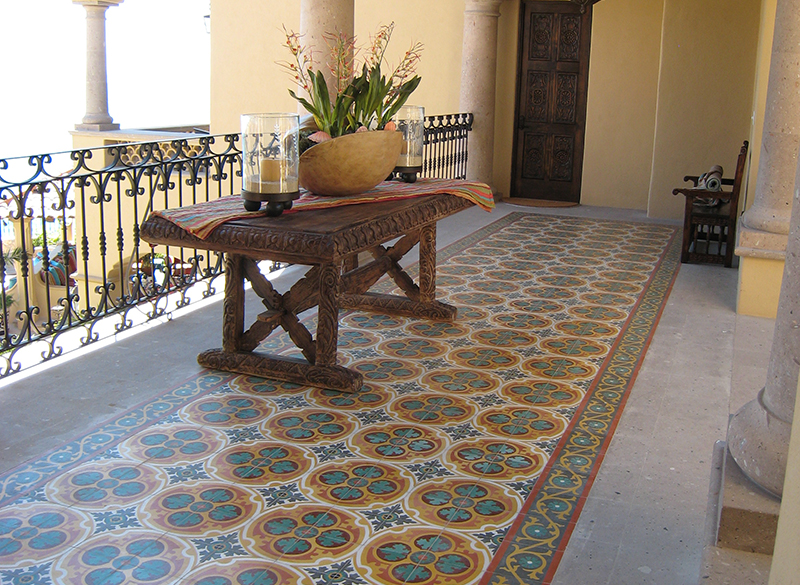
- a central “tile rug” under the dining table
- a framed lounge zone around a fire feature
- a corridor-style runner path from door to garden
- a courtyard perimeter border with a calm center field
Step 3: Plan transitions like a designer (not a contractor)
Transitions make patios look premium:
- patio → indoor floor
- patio → pool deck
- patio → outdoor kitchen
- patio → garden paths
Borders, breaks, and pattern direction keep the design intentional.
If you want quick pattern reference for outdoor-scale planning, browse Cement Tiles In Stock and shortlist 3–5 designs.

Outdoor Patio Tile Style Ideas & Trends (Moroccan, Mediterranean, Spanish-Style, Modern, Vintage)
Moroccan patio designs: statement geometry outdoors
Moroccan tiles shine outdoors because geometry reads beautifully in natural light. Use Moroccan-inspired patterns for:
- courtyards
- covered patios
- outdoor dining zones
- hospitality terraces
Pro tip: If the pattern is complex, pair it with calmer furniture and warm neutrals so the tile remains the hero.
Mediterranean patios: relaxed luxury with sun-washed palettes
Mediterranean tiles work best when:
- contrast is soft
- palettes lean warm and coastal (cream, sand, dusty blues, olive greens)
- finishes feel natural: plaster walls, wood pergolas, linen textiles
This style is perfect for outdoor living spaces that need to feel calm and timeless.
Spanish-style patios: courtyard romance and heritage warmth
Spanish-style tiles are a natural fit for:
- hacienda-style homes
- courtyard projects with arches and ironwork
- warm-toned outdoor kitchens
- terracotta-adjacent color stories
Spanish-style patios also pair beautifully with terracotta tiles accents (even when the main field is cement tile).
Modern patios: clean borders, tonal pattern
Modern outdoor patios often use:
- simplified geometry
- tonal patterns (less contrast, more texture)
- framed layouts that define dining/lounging zones
This is also where cement tiles can complement terrazzo tile in adjacent areas for a refined, contemporary outdoor look.
Vintage patios: “looks original to the architecture”
Vintage patterns outdoors feel best when:
- the layout includes borders and corners (not random field tile)
- the palette is slightly muted (less “new,” more “established”)
- the design respects symmetry around doors and features
Applications by Room: Extend Your Patio Design Into the Entire Property
One of the most sophisticated design moves is creating indoor/outdoor continuity. Cement tiles make that possible because patterns and palettes can be coordinated across rooms.
Patios and courtyards (the main event)
Your patio floor should be designed with:
- appropriate pattern scale for the size of the space
- mid-tone palettes that hide outdoor dirt
- transitions that feel intentional
- sealing and cleaning planning from day one
For palette planning, use: Cement Tile Color Palette
Entryways (carry the patio story inside)
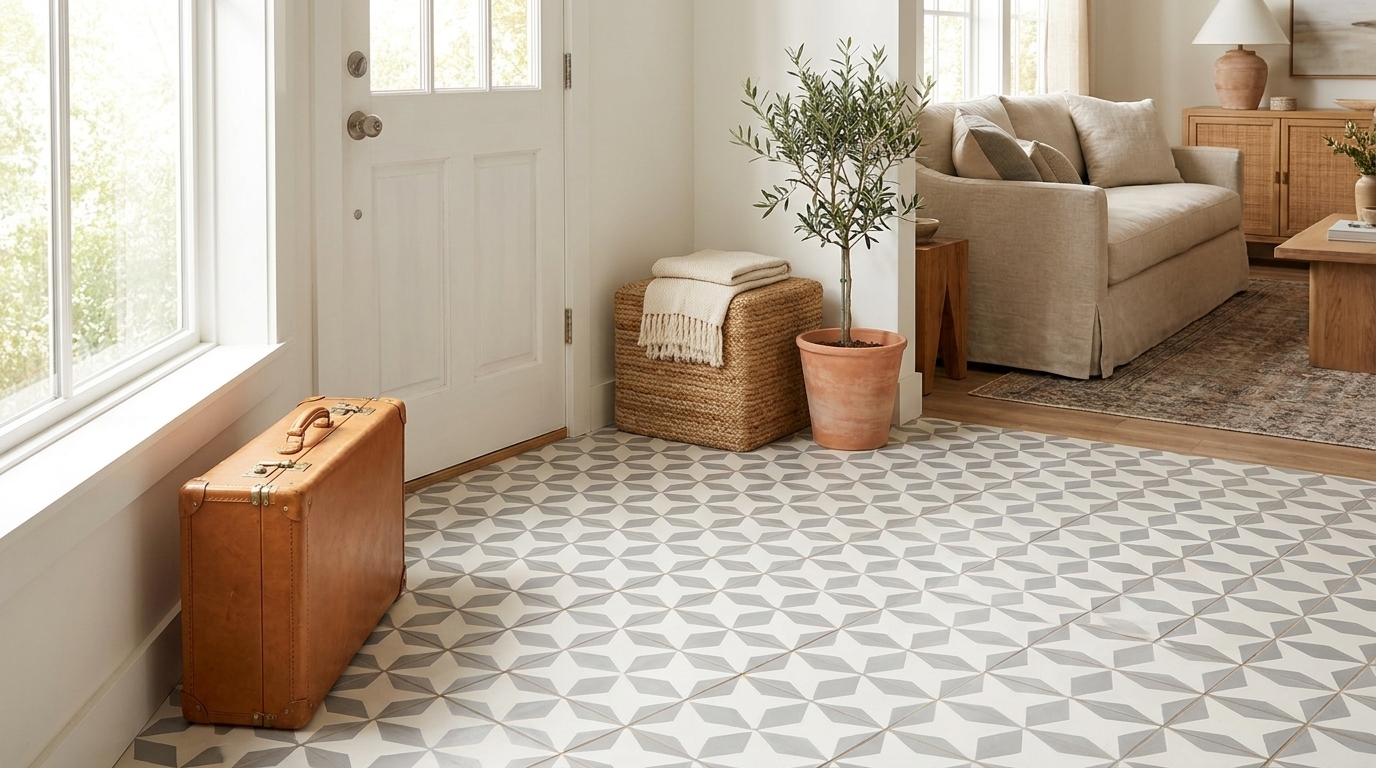
Patio-to-entry continuity feels premium. Use patterned cement tile in:
- indoor entry “tile rug”
- mudroom transitions
- breezeways and garden rooms
This creates a cohesive story: outside and inside feel like one design.
Kitchens (outdoor kitchen + indoor kitchen coordination)
If you have an outdoor kitchen, cement tile can add identity:
- outdoor kitchen backsplash
- serving bar front
- indoor kitchen backsplash tiles that echo patio tones
This is a small-square-footage detail with a big payoff.
Bathrooms (pool baths and guest baths)
Bathrooms near patios (pool baths, guest baths) benefit from coordinated pattern:
- bathroom tiles that echo patio palette
- framed floors with a border for a boutique feel
Showers (outdoor showers and wet areas)
Cement can be used for shower wall tiles when waterproofing, sealing, and maintenance are planned properly—especially in outdoor showers or pool-adjacent spaces.
Always align installer approach with: Installation Guidelines and set care expectations using: Cement Tile Maintenance
Commercial spaces (restaurant patios and hospitality terraces)
Outdoor dining patios are commercial zones. They need:
- high-traffic durability
- patterns that hide wear
- maintenance routines that staff can actually execute
For hospitality projects, patio floors often connect to indoor restaurant tile design and even hotel lobby tiles in adjacent spaces.

Commercial Design Section: Outdoor Patio Tiles for Restaurants, Hotels, and High-Traffic Hospitality
Outdoor hospitality is big business. And the floor is one of the most visible brand assets.
Restaurant patio flooring: atmosphere that sells seats
For restaurant patios, outdoor patio tiles do more than look good—they influence:
- perceived quality
- guest comfort and experience
- photo and social media identity
A strategic approach:
- use a mid-tone pattern for the main dining zone (hides daily wear)
- create a “signature moment” at the entry threshold
- frame the bar or host stand zone with borders or pattern shifts
If your restaurant brand wants consistency across locations, custom tile reproduction can repeat the same patio look with slight color changes city-to-city. Start with Custom Tiles and visualize in the Design Studio.
Boutique hotels: patios that connect to hotel lobby design
In boutique hospitality, patios are often extensions of the lobby lounge. If the hotel uses statement hotel lobby tiles, the patio can echo:
- the palette
- border logic
- simplified geometry derived from the lobby pattern
This creates a cohesive brand story across indoor and outdoor guest experiences.
Branding moments with custom logo tiles
For hotels and restaurants, custom logo tiles can elevate identity:
- entry medallions
- subtle monograms in borders
- signature marks near bars or lounge zones
To plan a branded patio floor, begin with Talk to a Tile Specialist.
Cement Tile vs Ceramic Tile Outdoors: What You Need to Know
This is one of the most common questions: cement tile vs ceramic tile for outdoor patios.
Cement tile advantages outdoors
- handmade character and depth
- bold pattern presence that looks artisanal (not printed)
- customization and branding capability
- strong compatibility with Mediterranean, Spanish-style, and Moroccan patio aesthetics
Ceramic/porcelain advantages outdoors
- very low absorption (especially porcelain)
- often simpler maintenance in extreme exposure conditions
- broad availability of outdoor-rated products
Many projects combine both:
- cement tiles in covered patios and courtyards where the aesthetic payoff is highest
- porcelain in fully exposed areas or where operations demand ultra-low absorption
For more context, use: Cement Tiles vs Ceramic Tiles
Installation & Maintenance for Outdoor Patio Cement Tiles
Outdoor performance is not just about the tile—it’s about the system.
Installation: do it once, do it right
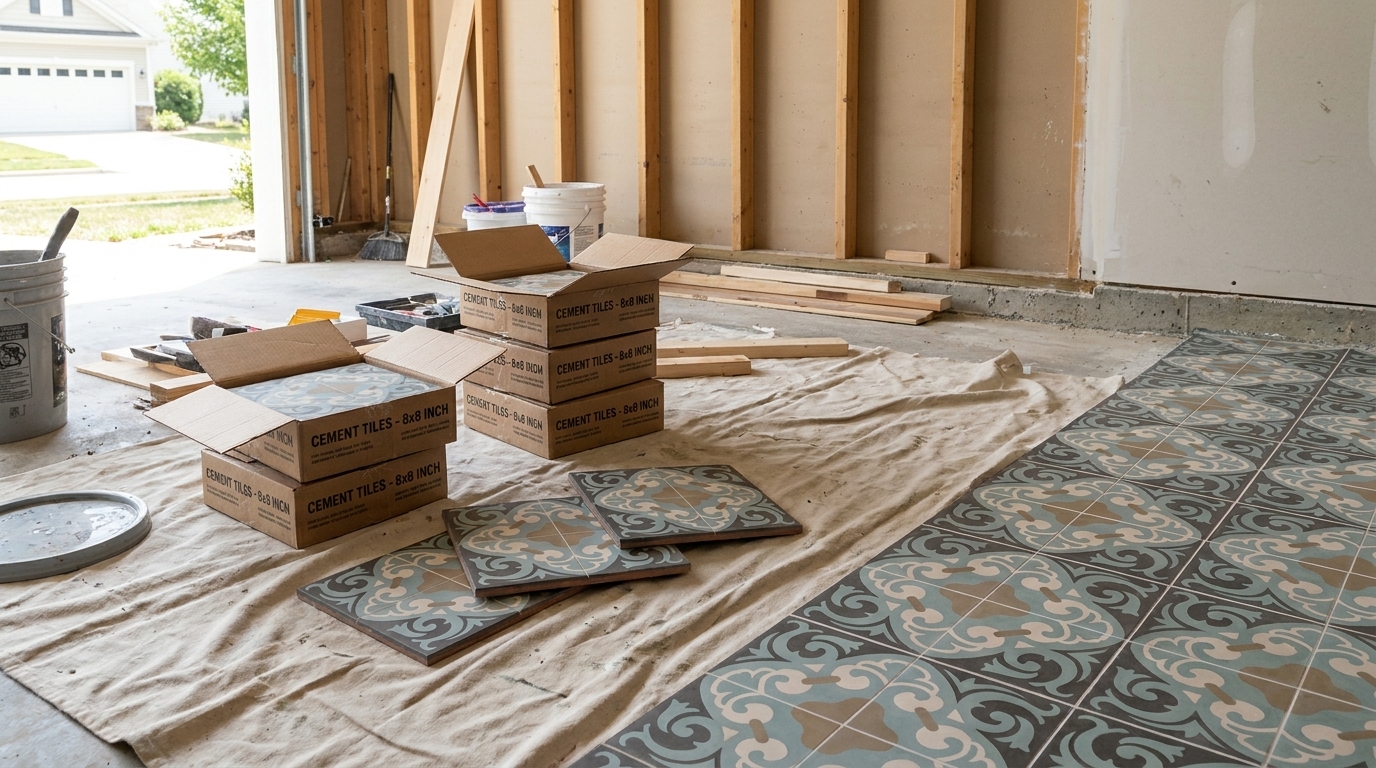
For cement tile projects, align your contractor and installer early. Start with the brand’s: Cement Tiles Installation Guidelines
Key patio considerations:
- substrate stability (cracking is usually a system issue, not a tile issue)
- slope and drainage planning
- movement joints where needed
- edge detailing at transitions (door thresholds, steps)
- blending tiles from multiple boxes for balanced variation
Sealing: essential for outdoor patios
Outdoor patios face staining risk (food, wine, oils), moisture, and UV exposure. A proper sealing plan helps:
- improve stain resistance
- simplify cleaning
- support consistent appearance over time
Cleaning: build a routine that matches outdoor life
Best practices:
- sweep/blow off grit regularly (grit is the enemy of long-term finish)
- use pH-neutral cleaners
- avoid harsh acids that can degrade sealers
- rinse properly after cleaning
For clear care planning: Cement Tile Maintenance
Mistakes to Avoid With Outdoor Patio Tiles
Mistake 1: Choosing a pattern that shows dirt instantly
Outdoor patios get dusty. Very light, high-contrast designs can show debris quickly.
Better strategy: choose mid-tone patterns with multiple colors for camouflage.
Mistake 2: Ignoring drainage and slope
Standing water is never your friend. Drainage planning is as important as pattern selection.
Mistake 3: Skipping samples in natural light
Outdoor light is different. Always view samples outdoors where they’ll be installed.
Use in-stock patterns to shortlist and sample quickly: Cement Tiles In Stock
Mistake 4: Treating cement tiles like ceramic during installation
Cement requires specific sealing and handling steps. Align installer approach using: Installation Guidelines
Mistake 5: Sealing mistakes
Common issues:
- no pre-seal before grout
- inconsistent sealing
- wrong cleaning chemistry that breaks down sealers
Mistake 6: Over-patterning the entire outdoor area
If everything is patterned, the patio can feel visually busy. Use one hero zone and calmer adjacent zones for a premium look.

FAQs: Outdoor Patio Designs Using Cement Tiles
1) Are cement tiles good for outdoor patio tiles?
They can be, especially in covered patios, courtyards, and outdoor spaces with proper installation, drainage, sealing, and maintenance planning.
2) Do outdoor patio cement tiles need to be sealed?
Yes. Sealing is important for stain resistance and long-term maintenance. Align installation steps with the Installation Guidelines.
3) What style of outdoor patio tiles are trending right now?
Top trends include Moroccan geometry, Mediterranean sun-washed palettes, Spanish-style courtyard motifs, modern tonal patterns, and vintage framed layouts with borders.
4) Cement tile vs ceramic tile: what’s better outdoors?
In the cement tile vs ceramic tile comparison, cement often wins on artisanal character and customization, while ceramic/porcelain often wins on very low absorption and simplified maintenance. Many projects combine both. Reference: Cement Tiles vs Ceramic Tiles
5) Can cement tiles be used around outdoor kitchens?
Yes, especially for backsplashes, bar fronts, and covered flooring zones. Plan sealing and cleaning for oils, sauces, and spills.
6) How do you clean outdoor cement patio tiles?
Regular grit removal (sweeping/blowing) plus pH-neutral cleaners is ideal. Avoid harsh acids. Use: Cement Tile Maintenance
7) Can outdoor patio tiles match indoor tiles for continuity?
Absolutely. Using coordinated palettes and patterns is one of the most premium design moves. Start with color planning using the Cement Tile Color Palette.
8) Can I create custom cement tiles for a restaurant patio or hotel courtyard?
Yes. Custom cement tiles and custom logo tiles can create branded outdoor experiences for restaurants and hotels. Start with Custom Tiles and visualize options in the Design Studio.