The restaurants and bars that are fully booked six weeks out, that get photographed a thousand times a night, that guests describe not by the food but by how the space made them feel — they all have one thing in common. And it’s not the chef.
It’s the design. More specifically, it’s the surfaces. The floors guests walk across from the moment they enter. The walls their eyes travel along as they settle into their seats. The bar face they lean against while ordering their first drink. The entry that either stops them in their tracks or lets them slide past without a second glance.
In 2026, the most successful restaurant and bar designers in the US have arrived at a shared understanding that has been quietly reshaping the hospitality industry: tile is not a background material. It is the brand. It is the atmosphere. It is the reason someone takes out their phone, photographs the floor, tags the location, and tells three friends they have to go.
This guide is for the restaurateurs, bar owners, interior designers, architects, and commercial contractors who are ready to use tile the way the best hospitality designers do — not as a surface covering, but as a storytelling medium. Here is everything you need to know about restaurant and bar tile design in 2026, from concept to installation.
Why Tile Is the Defining Material in Restaurant and Bar Design Right Now
There has always been a connection between exceptional hospitality design and exceptional tile work. The great café cultures of Europe — Vienna, Lisbon, Barcelona, Marrakech — built their identities on extraordinary tiled surfaces. The azulejo walls of Portuguese restaurants. The encaustic cement tile floors of Moroccan riads repurposed as boutique dining rooms. The Moorish geometric patterns running floor-to-ceiling in Andalusian tabernas. These were not decorative afterthoughts. They were load-bearing elements of the brand experience.
American hospitality design is catching up to that tradition in 2026, and the results are transforming how guests experience — and remember — restaurants and bars.
Three forces are driving this shift. First, the social media visual economy has made photography-worthy interiors a genuine business asset. A striking handmade tile floor or a Moroccan-patterned bar wall generates organic marketing every time a guest posts. Second, guests are increasingly sophisticated about design and materials, and they can tell the difference between a space that was designed with intention and one that was assembled from a big-box catalog. Third, the economics of restaurant design have shifted: surfaces that last 20 to 30 years with minimal maintenance outperform cheaper alternatives that need replacing every five to seven years.
Handmade cement tiles, encaustic tiles, terracotta tiles, terrazzo tile, Zellige tiles, and decorative mosaic surfaces are at the center of this hospitality design renaissance — and for good reason.

The Materials Driving 2026 Restaurant and Bar Design
Encaustic Cement Tiles: The Workhorse of Hospitality Design
No material in the current hospitality design landscape has more versatility, more visual impact, or a stronger combination of beauty and durability than encaustic cement tiles. Handmade from natural pigments, marble powder, and cement — with the pattern and color cast through the full depth of the tile rather than applied as a surface glaze — these tiles deliver a level of visual richness and material authenticity that no ceramic or porcelain tile can match.
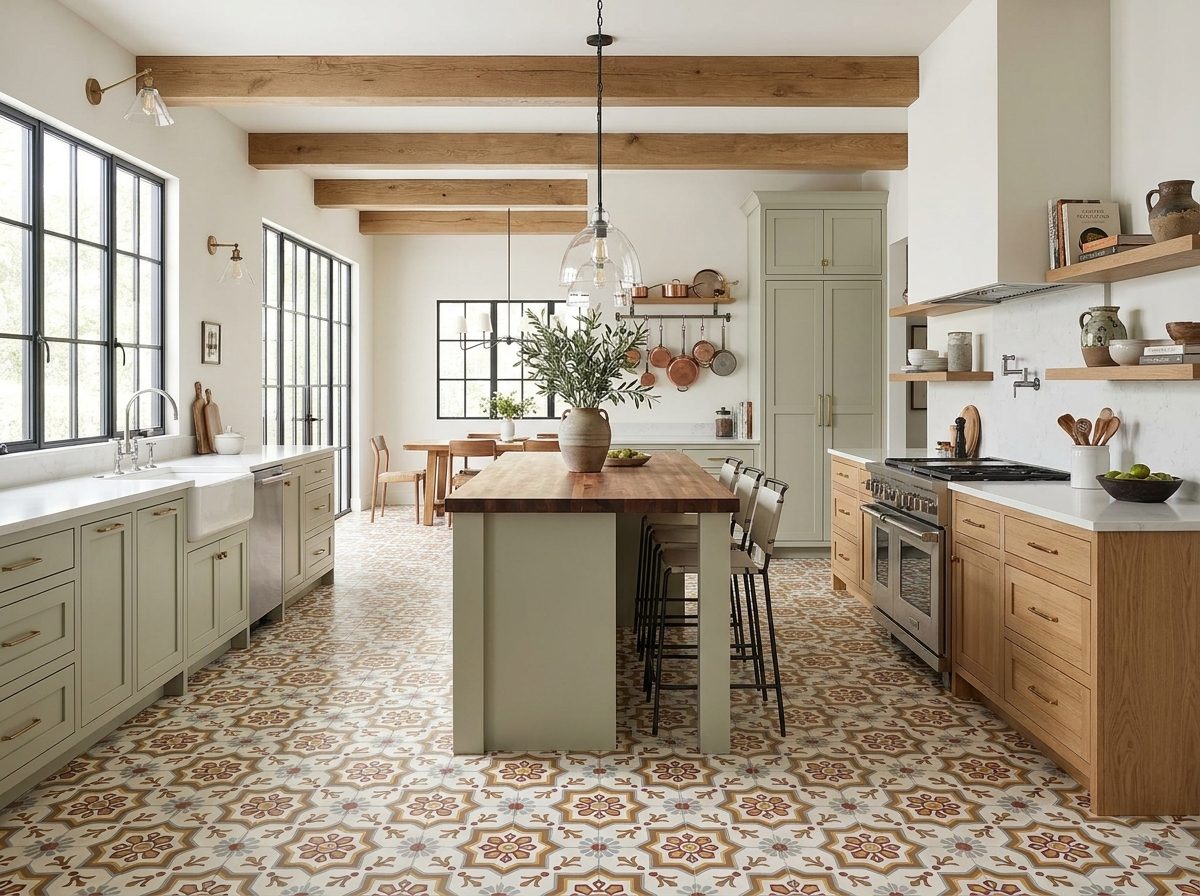
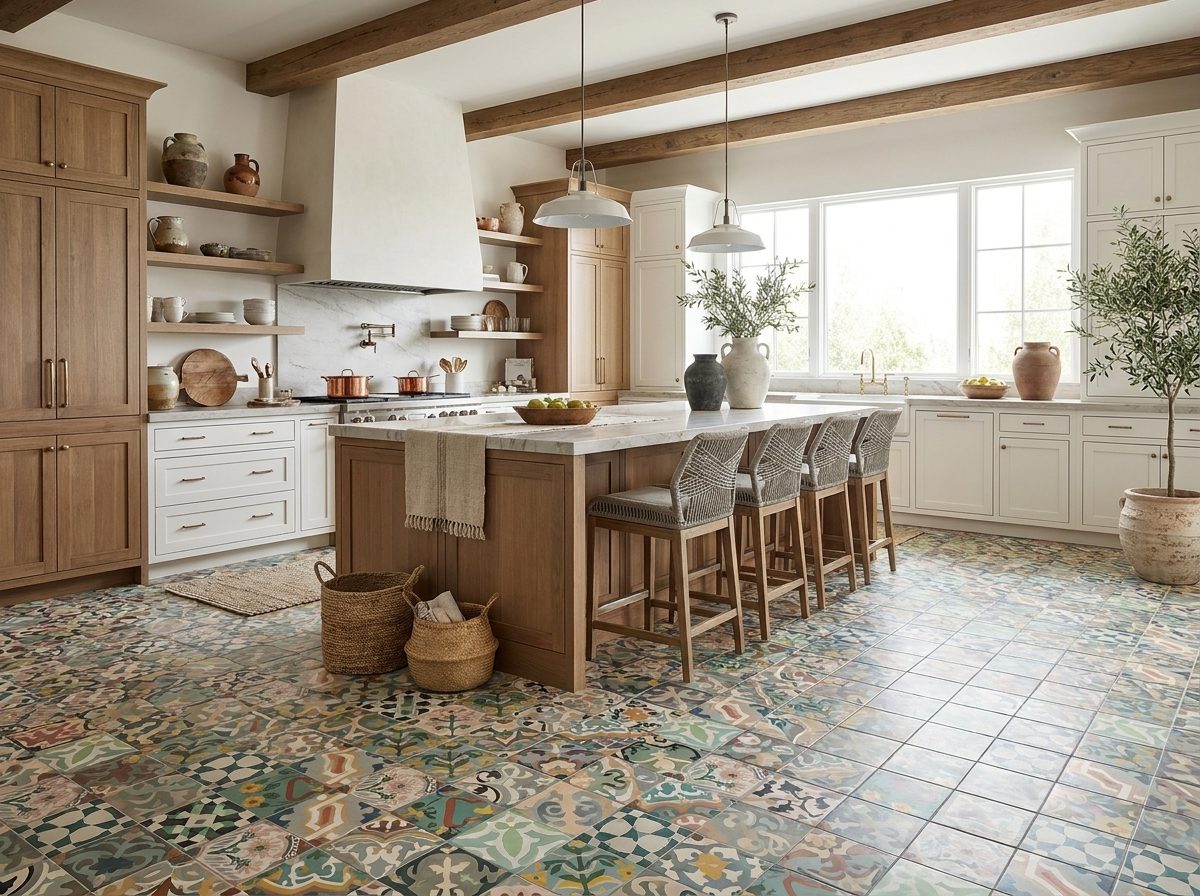
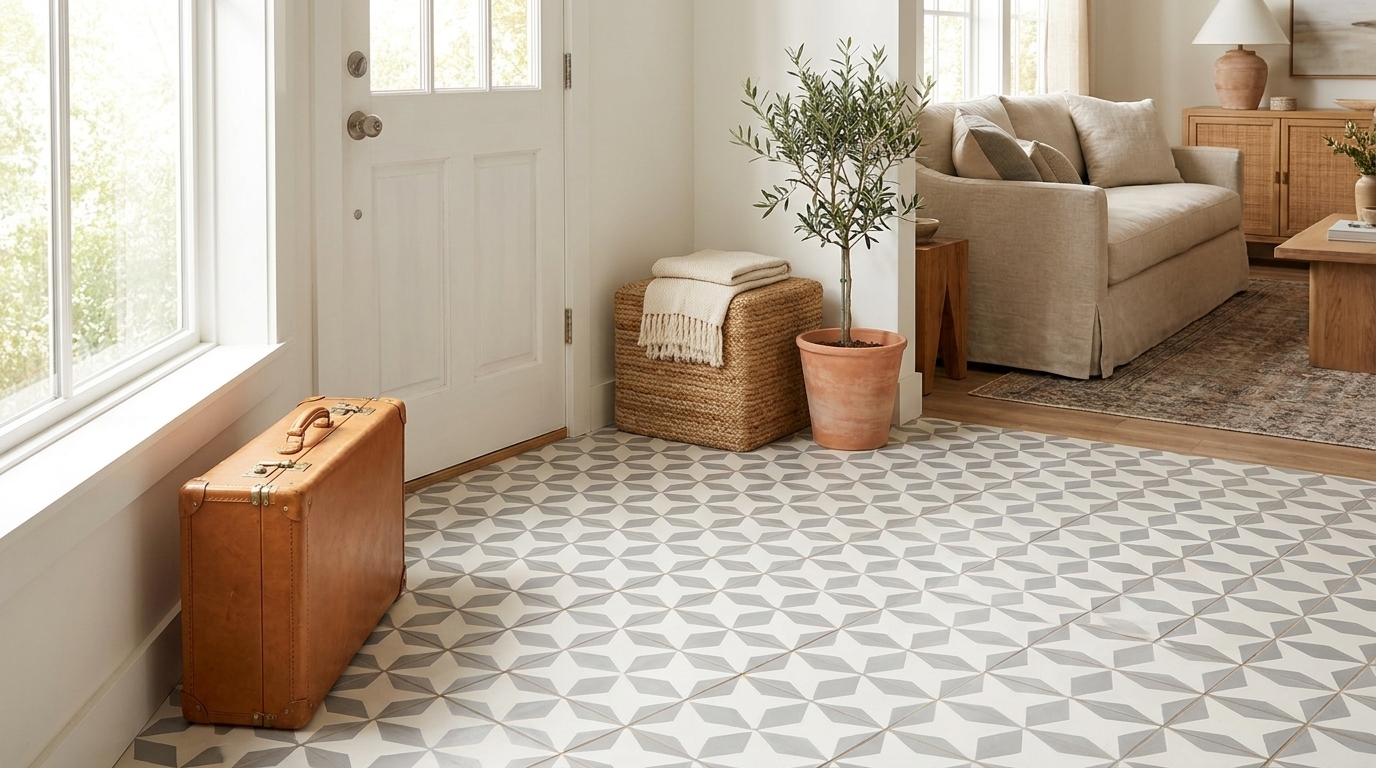
For restaurant floors, bar areas, entry sequences, and feature walls, encaustic cement tiles offer designers complete creative freedom: intricate Moroccan geometric patterns, warm Spanish-style terracotta compositions, bold Mediterranean florals, clean modern geometrics, vintage-inspired repeats, or fully custom designs built around a restaurant’s specific brand identity and color palette.
Critically for commercial applications, encaustic cement tiles perform under pressure. Their through-body construction means years of high foot traffic, spills, cleaning, and daily service do not degrade their appearance — they develop a natural patina that deepens the material’s character and communicates the kind of honest, lived-in quality that resonates with contemporary dining guests.
Zellige Tiles: Organic Luxury for Bars and Feature Walls
Zellige tiles — the hand-cut, individually glazed Moroccan clay tiles with their characteristic irregular surface, color variation, and luminous depth — are having a major moment in 2026 hospitality design. Their organic imperfection and jewel-like quality make them the ideal material for bar faces, back-bar walls, host station features, and intimate dining alcoves where close visual contact and tactile richness matter most.
The color range available in Zellige — from deep cobalt and emerald to warm honey, dusty rose, and aged ivory — gives designers an extraordinary palette for creating bar environments that feel simultaneously ancient and completely of the moment.
Terrazzo Tile: The Sophisticated Commercial Floor
Terrazzo tile has completed its evolution from retro reference to genuine contemporary material choice, and in 2026 restaurant design it is being used with a sophistication that honors its mid-century origins while serving firmly modern design intentions. Large-format terrazzo fields in warm, earthy palettes — cream and amber, charcoal and rose, sage and ivory — create commercial floors of extraordinary visual refinement that handle the demands of daily service with ease.
For upscale restaurants, hotel dining rooms, and bar environments where the floor needs to communicate quality without demanding constant attention, terrazzo tile is the 2026 material of choice.
Terracotta Tiles: Warmth, Authenticity, and Enduring Appeal
The terracotta revival shows no signs of slowing in 2026, and its applications in restaurant and bar design are expanding beyond the obvious. Beyond traditional Spanish-style floors and Mediterranean wall treatments, designers are using terracotta tiles in contemporary applications — geometric large-format terracotta floor tile in modern dining rooms, terracotta mosaic walls in bar niches, hand-painted terracotta backsplash tiles in open kitchen environments — that honor the material’s warmth and authenticity while placing it in entirely contemporary design contexts.

Design Applications: Restaurant Zones and Bar Spaces
The Entry: Set the Expectation from the First Step
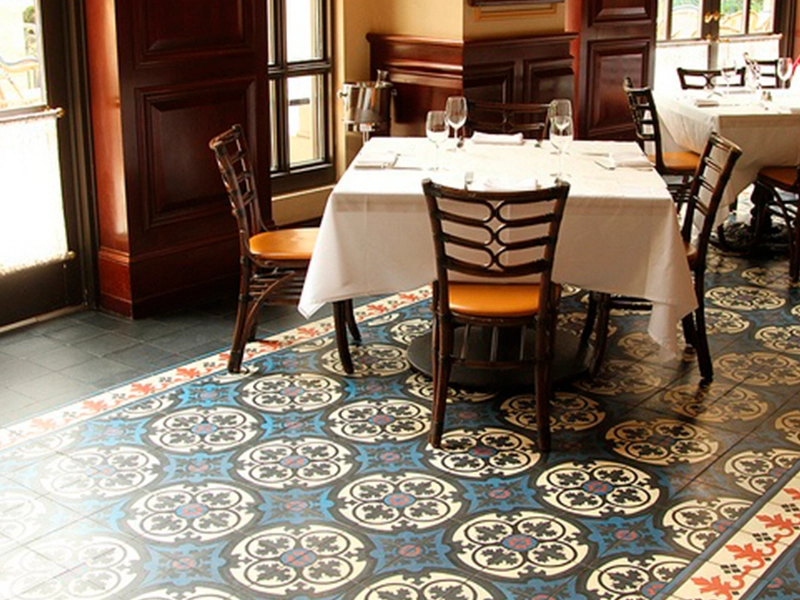
The restaurant entry is the most critical design moment in the guest experience — the transition from the street to your world — and it is where tile makes its most immediate and lasting impression. A custom encaustic cement tile floor in the entry, whether a dramatic Moroccan medallion, a bold geometric pattern in brand colors, or a seamlessly flowing repeat that guides guests inward, communicates quality, intention, and design intelligence before a single word is spoken.
For high-volume restaurants where the entry experiences intense daily traffic, handmade cement tiles in properly sealed commercial specification are among the most durable floor tile choices available. They handle the punishment of daily service while growing more beautiful with age — which cannot be said of any ceramic or porcelain alternative.
The Dining Room Floor: The Largest Canvas in the Restaurant
The dining room floor is the single largest uninterrupted design surface in any restaurant, and in 2026 the most successful hospitality designers are treating it as a primary brand expression rather than a neutral background.
Patterned floor tiles in encaustic cement — particularly Moroccan geometric patterns, Mediterranean repeat compositions, and Spanish-style terracotta-palette designs — create dining environments with the visual depth, warmth, and cultural resonance that guests are increasingly seeking. A beautifully tiled dining room floor anchors the entire interior design composition, making furniture, lighting, and wall treatments feel more intentional and more cohesive.
For commercial floor applications, Original Mission Tile’s decorative cement tiles are specified by leading hospitality designers across the US precisely because they deliver this level of visual impact while meeting the durability demands of daily commercial service.
The Bar: Where Detail Creates Desire
The bar is the most photographed element in any restaurant or cocktail lounge, and in 2026 it is also where the most creative tile work is happening. Bar faces in Zellige tile — with their organic surface variation catching the light differently at every angle — create an almost irresistible visual quality that makes guests want to sit closer, touch the surface, and inevitably photograph it.
Back-bar walls in full Moroccan tile installations, floor-to-ceiling in deep indigo or warm terracotta, transform what is typically a utilitarian storage display into a dramatic design feature that defines the entire room. Custom encaustic tile patterns on bar floors — sometimes incorporating a logo or brand motif — announce with complete clarity that this is a space where design has been taken seriously.
The Kitchen: Open Kitchens Demand Better Tile
The open kitchen has made the kitchen itself a design element in the restaurant experience, and the tile choices in an open kitchen are now as visible and as important as any other surface in the space. Kitchen backsplash tiles in handmade cement — bold geometric patterns behind a wood-fired oven, Mediterranean floral tiles framing a pass-through window, clean Zellige surfaces running the full height of the cooking line — transform the kitchen from a functional workspace into a visual anchor for the dining room.
Wall tiles in open restaurant kitchens need to handle heat, moisture, and grease while maintaining their appearance through daily cleaning. Properly sealed cement tiles and glazed Zellige tiles meet these demands while delivering a visual richness that no commercial ceramic wall tile can approach.
Bathrooms: The Unexpected Brand Touchpoint
Restaurant bathrooms are criminally underdesigned in most hospitality spaces, and they represent one of the highest-return opportunities available to restaurant designers. A fully patterned Moroccan tile bathroom — floor and walls in coordinating encaustic cement designs — creates a destination experience that guests seek out, photograph, and talk about. In a social media landscape where every guest is a potential content creator, a remarkable restaurant bathroom is free marketing that keeps compounding.
Bathroom tiles in cement, properly sealed for moisture environments, handle the demands of a commercial restroom while delivering the kind of design impact that elevates the entire restaurant’s perceived quality.
Outdoor Spaces: Patios, Terraces, and Courtyards
Outdoor dining has become a permanent fixture of the American restaurant experience, and outdoor tiles in cement and terracotta are the materials best suited to creating exterior spaces that feel as designed and intentional as the interior. Spanish-style terracotta floor tiles, Mediterranean geometric patterns, and sealed encaustic cement tile in weather-appropriate applications bring the restaurant’s interior design language into the outdoor environment, creating a seamless guest experience from inside to outside.
For covered patios and protected terrace applications, the full range of decorative cement tiles is available. Our team can advise on the right specification for your specific climate and outdoor exposure conditions. Talk to a tile specialist to discuss your outdoor dining tile project.

Custom Tile Design: Your Brand Embedded in Every Square Foot
The highest expression of restaurant and bar tile design in 2026 is the custom installation — tiles designed specifically for the space, incorporating the restaurant’s brand colors, logo motifs, or signature pattern language into every surface.
Original Mission Tile’s custom tile manufacturing makes this level of brand integration accessible for commercial projects of all scales. Whether you want to reproduce a historical pattern referenced in your restaurant’s concept, create a custom color palette that matches your brand identity precisely, or design a signature floor medallion for your entry, our team can manufacture it.
Custom tile lead times typically run 6 to 10 weeks. For new openings and major renovations, planning the tile specification early in the design process is essential.
Style Directions for 2026 Restaurant and Bar Design
Moroccan and North African
Rich geometric patterning, deep color contrasts, and the meditative visual complexity of Moroccan tiles create restaurant and bar environments with extraordinary atmosphere. This direction works beautifully for Mediterranean restaurants, cocktail bars, boutique hotel dining rooms, and any hospitality concept with a cultural, artisanal, or globally inspired identity.
Mediterranean Coastal
Warm blues, sandy neutrals, terracotta tones, and the floral and geometric patterns of Mediterranean tile traditions bring a sun-drenched, coastal warmth to restaurant interiors. Ideal for seafood restaurants, wine bars, resort dining, and any concept where the guest experience is built around warmth, ease, and the pleasure of being at the table.
Spanish and Latin Heritage
Spanish-style tiles — bold geometric compositions, warm terracotta palette, hand-pressed encaustic quality — are defining a wave of restaurant and bar designs that celebrate Latin culinary and cultural heritage with material authenticity. From taquerias to fine-dining Spanish restaurants to mezcal bars, this direction grounds the design in a specific and deeply appealing craft tradition.
Contemporary Artisan
The most sophisticated direction in 2026 restaurant design pairs modern architectural minimalism with artisan tile materials — clean-lined spaces where a single surface of extraordinary handmade tile becomes the entire design statement. A modern dining room anchored by a terrazzo floor in a warm organic palette. A minimal bar whose only decoration is a back wall of luminous Zellige in deep green. A contemporary restaurant entry punctuated by a single custom encaustic medallion. These are spaces where restraint and craft combine to produce something genuinely memorable.

Installation and Maintenance for Commercial Tile Projects
Sealing for Commercial Performance
Every cement tile, terracotta tile, and encaustic tile installation in a commercial environment must be properly sealed before and after grouting. In restaurant applications — where food oils, acidic liquids, and daily cleaning chemicals are constant factors — a penetrating sealer plus a topcoat sealer provides the protection necessary for long-term performance. Establish a sealer maintenance schedule based on traffic intensity and cleaning frequency.
Commercial Cleaning Protocols
Sealed cement and encaustic tiles clean easily with pH-neutral cleaners and warm water. In commercial kitchens and bar areas, avoid acidic degreasers, bleach-based cleaners, and abrasive tools that degrade the sealer surface. Train service and cleaning staff on approved cleaning products before opening.
Substrate and Installation Standards
Commercial tile installations require a flat, stable substrate — any flex or unevenness leads to cracked tiles under the load of daily commercial service. Use white polymer-modified thin-set mortar, maintain tight grout joints of 1/16″ to 1/8″ for patterned tiles, and always conduct a full dry-lay for patterned and custom tile installations before setting. Engage an installer with specific experience in cement and encaustic tile for commercial projects.
Mistakes to Avoid in Restaurant and Bar Tile Projects
Specifying tile without confirming commercial suitability. Not all decorative tiles are appropriate for all commercial applications. Confirm slip resistance ratings for floor tiles, moisture specifications for wet areas, and sealer requirements for food service environments before finalizing specifications.
Ordering in multiple batches. Natural color variation between production batches is characteristic of handmade tile. Order the full project quantity from a single production run, and always include a 10–15% overage for cuts, breakage, and future repairs.
Skipping the dry layout for custom and patterned tiles. Pattern flow, orientation, and symmetry in a large commercial space must be confirmed visually before a single tile is set. Errors discovered after setting are expensive, time-consuming, and potentially project-delaying.
Underestimating lead times for custom tile. Custom tile manufacturing requires 6 to 10 weeks. For restaurant openings with fixed dates, tile specification and ordering must happen early in the project timeline — not after the construction schedule has already been set.
Choosing tile from a screen without ordering samples. Color, texture, and surface quality in handmade tile are impossible to evaluate accurately from photographs. Always order samples before finalizing commercial tile specifications.

Frequently Asked Questions: Restaurant and Bar Tile Design
1. What are the most durable tile options for restaurant floors? Properly sealed encaustic cement tiles and terrazzo tiles are among the most durable commercial floor options available, handling daily high foot traffic while aging with a natural patina that improves their appearance over time.
2. Can handmade cement tiles be used in commercial kitchens? Yes. Properly sealed cement tiles perform well in commercial kitchen environments as wall tiles and backsplash tiles. Confirm slip resistance ratings for floor applications in kitchen and wet areas.
3. How do Moroccan tiles hold up in high-traffic restaurant environments? Moroccan encaustic cement tiles are through-body tiles — the pattern and color run the full depth of the tile — which means they do not show wear at a surface glaze layer the way ceramic tiles do. With proper sealing and maintenance, they are an excellent commercial specification.
4. What is the lead time for custom tile for a restaurant project? Custom tile manufacturing at Original Mission Tile typically requires 6 to 10 weeks depending on design complexity and order volume. Contact our team early in your project timeline to confirm availability.
5. Are Zellige tiles appropriate for bar face applications? Yes. Zellige tiles are an excellent choice for bar faces and feature wall applications. Their hand-cut, individually glazed surface creates extraordinary visual depth and luminosity at close range.
6. How do I choose between terracotta, cement, and terrazzo for a restaurant floor? The choice depends on the design direction, budget, and functional requirements of the space. Terracotta suits warm, heritage-inspired concepts; encaustic cement offers maximum pattern versatility; terrazzo delivers sophisticated neutrality for contemporary environments. Our design team can help you navigate the decision.
7. Can Original Mission Tile reproduce a custom pattern for a restaurant brand? Yes. Our custom manufacturing capability allows us to reproduce virtually any pattern, color palette, or logo-based design. Contact us for custom tile designs to discuss your project.
8. What cleaning products are safe for cement tiles in restaurant environments? pH-neutral cleaners and warm water are the standard recommendation. Avoid acidic cleaners, bleach, and abrasive products that degrade the sealer. Consult with our team for specific product recommendations based on your installation type.
The Floor Is the Brand. Make It Count.
The restaurants and bars that guests remember, return to, and recommend are the ones that made a decision about their design and committed to it fully — in the materials, the surfaces, the tile underfoot and on every wall. In 2026, that commitment means choosing materials that have earned their place in hospitality design over centuries: handmade encaustic cement tiles, Zellige, terracotta, terrazzo, and the full vocabulary of global tile craft traditions that are being reinterpreted for contemporary American hospitality design.
Your restaurant or bar has a concept, a culture, a reason for existing. The tile is how that reason becomes visible, tactile, and unforgettable.
See Trend Tiles — explore the patterns and materials defining 2026 hospitality design.
Order Samples — evaluate quality, color, and texture before committing to your commercial specification.
Talk to a Tile Specialist — get expert guidance on commercial tile selection, custom design, and installation specifications.