Spanish-Style + Mediterranean Interiors
If you want Spanish-style and Mediterranean Interior Design to feel authentic (not themed), don’t start with furniture—start with the floor.
Most “Mediterranean” rooms feel off for one reason: the tile pattern is either too modern, too perfect, or in the wrong scale for the architecture.
Spanish-style and Mediterranean interiors are having a major moment in remodeling, hospitality, and new builds across the U.S.—especially in California, Texas, Florida, and the Southwest. But there’s a big difference between a space that feels genuinely rooted in heritage and one that feels like a Pinterest imitation.
Authenticity comes from materials that look like they belong: matte finishes, warm pigments, handcrafted variation, and pattern layouts that follow classic architectural logic (borders, courtyards, thresholds, “tile rugs,” and framed zones). That’s why designers lean so heavily on cement tiles and encaustic cement tiles for Spanish-style and Mediterranean projects: they deliver the depth, texture, and pattern language that makes the style feel real.
In this guide, you’ll learn the tile patterns that make Spanish-style + Mediterranean interiors feel authentic, how to use them room-by-room (bathrooms, kitchens, showers, entryways, patios, commercial spaces), what trends matter now (including Moroccan influence, modern/vintage balance, and terrazzo/terracotta pairings), and the installation and maintenance decisions that protect the look long-term.

What Makes Spanish-Style + Mediterranean Tile Feel Authentic?
Authentic Mediterranean and Spanish-style interiors follow a few core principles—whether you’re designing a coastal villa, a desert hacienda, or a boutique hotel courtyard.
1) Warm pigments and matte finishes
Mediterranean style isn’t glossy. It’s sun-washed, textured, and natural. Cement tile’s matte finish supports that instantly.
2) Pattern that follows architectural logic
Authentic spaces use pattern with intention:
- borders that frame rooms
- thresholds that mark transitions
- courtyard layouts that create “rooms” outdoors
- stair landings and corridor runs that guide movement
3) Slight variation that feels handmade
If a Spanish-style space looks too perfect, it often feels modern and flat. Handmade cement tiles bring subtle variation that reads “real” instead of factory-perfect.
4) Materials that age gracefully
Mediterranean design is meant to feel lived-in. The best finishes are the ones that still look good after years of use—especially in high-traffic zones.
Benefits of Cement Tiles for Spanish-Style + Mediterranean Interiors
Durability (with the correct system)
When installed correctly and protected with the right sealing plan, cement tiles can perform beautifully in busy homes and hospitality environments—especially in the exact spaces where Mediterranean design shines: entryways, kitchens, patios, corridors, and guest baths.
Handmade quality that looks high-end
Encaustic cement tiles and decorative cement tiles bring depth and texture that feels artisan—perfect for plaster walls, arched openings, warm woods, and natural stone.
Sustainability and long-life value
Mediterranean design favors materials that last. Cement tile supports long-life design thinking when paired with a consistent care routine.
Style versatility (Spanish, Mediterranean, Moroccan influence, modern/vintage balance)
Cement tile works beautifully for:
- Spanish-style motifs and warm heritage palettes
- Mediterranean coastal patterns and sun-washed tones
- Moroccan-influenced geometry (especially in southern Spanish references)
- modern Mediterranean interiors (cleaner pattern, tonal contrast)
- vintage-inspired layouts with borders and “tile rugs”
If you need a specific historic reference or a custom palette, start with Custom Tiles.

The Tile Pattern Families That Feel Most Authentic
1) Courtyard motifs and classic repeats (Spanish-style foundation)
Spanish-style interiors often use:
- floral-medallion variations
- classic repeating motifs
- border tiles that frame fields
- warm palettes with clay, cream, charcoal, and muted color accents
These are the patterns that feel “built into the architecture,” not added later.
2) Mediterranean geometry (soft contrast, relaxed rhythm)
Mediterranean interiors typically feature:
- calmer contrast
- sun-washed palettes
- patterns that feel airy rather than busy
These are perfect for kitchens, powder rooms, and indoor-outdoor transitions.
3) Moroccan influence (used strategically)
Moroccan geometry is authentic to many Mediterranean references—especially in southern Spain. But in Spanish-style homes, it’s best used in focused zones:
- entry tile rugs
- bar zones
- powder rooms
- niche walls
4) Checkerboard and tonal grids (modern Mediterranean)
If you want Spanish/Mediterranean authenticity with a cleaner edge, use:
- warm checkerboards
- tonal grids
- subtle geometric repeats
The key is choosing warm, natural tones rather than stark modern contrasts.
5) Border + field layouts (the “authenticity multiplier”)
If there’s one layout decision that instantly makes tile feel Spanish-style or Mediterranean, it’s a border.
A border:
- frames the room
- makes the floor feel architectural
- creates classic “tile rug” logic in entries, corridors, and dining zones

Style Ideas & Trends: Spanish + Mediterranean Interiors in 2026
Warm minimal Mediterranean (calm, modern, still authentic)
A major trend is blending Mediterranean warmth with modern simplicity:
- quieter patterns
- tonal palettes
- fewer competing surfaces
- lots of plaster, wood, and natural textiles
Spanish-style revival (heritage motifs, but refined)
Spanish-style interiors are trending toward:
- warm neutrals and clay tones
- muted, elegant patterns
- arched details and layered natural materials
Terracotta and terrazzo pairings
Spanish and Mediterranean interiors pair beautifully with:
- terracotta tiles tones for warmth
- terrazzo tile in adjacent zones for a refined modern mix
The floor can be patterned cement tile, while nearby transitions use terrazzo or terracotta-adjacent tones for texture layering.
Contemporary “boutique hotel” Mediterranean
Hospitality-inspired Mediterranean interiors are all about:
- statement entries
- patterned corridors
- calm suites and bathrooms
- indoor-outdoor lounge continuity
Applications by Room: Where Tile Makes Spanish + Mediterranean Feel Real
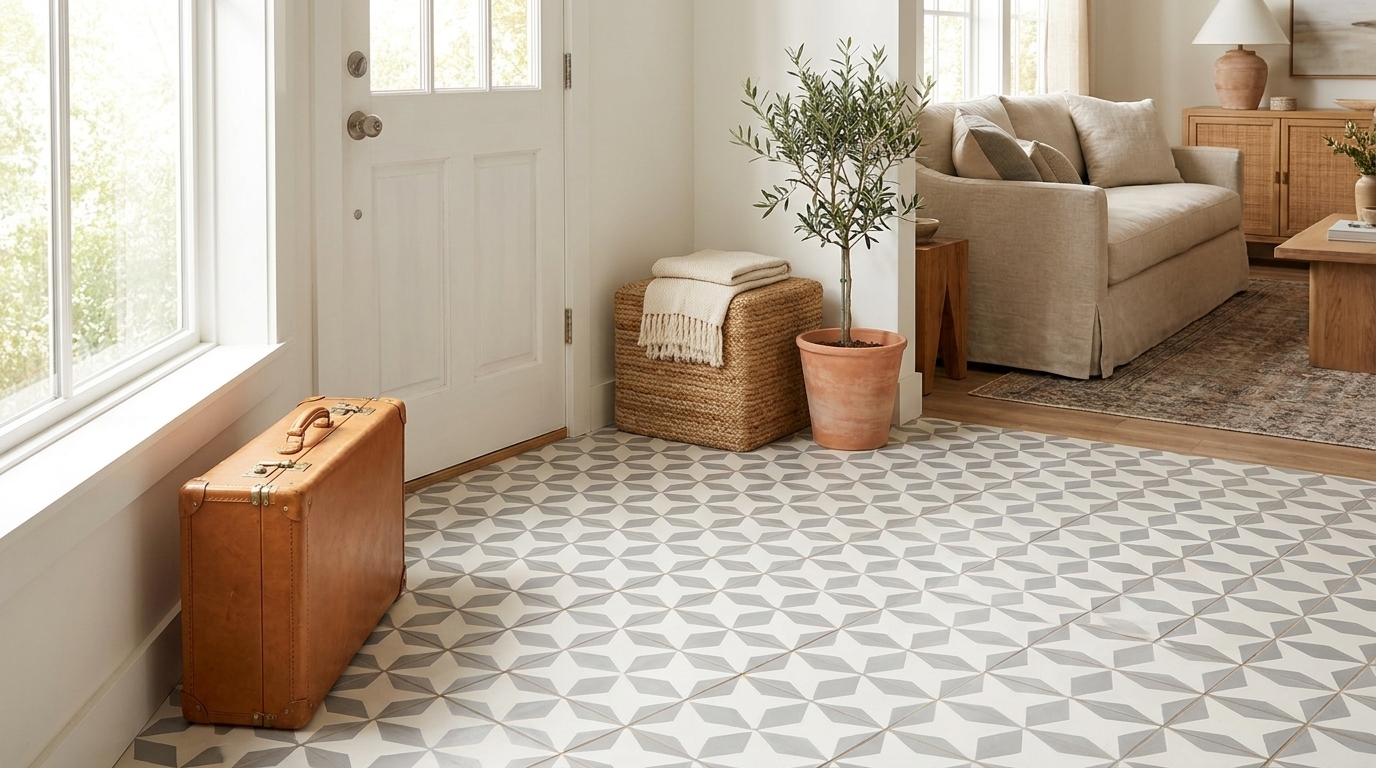
Entryways: the Spanish/Mediterranean “tile rug” moment
The entry is the highest ROI place to use pattern. Authentic entry floors often feature:
- a framed field with a border
- mid-tone palettes that hide daily grit
- symmetry aligned with the front door
To move fast, start with Cement Tiles In Stock.
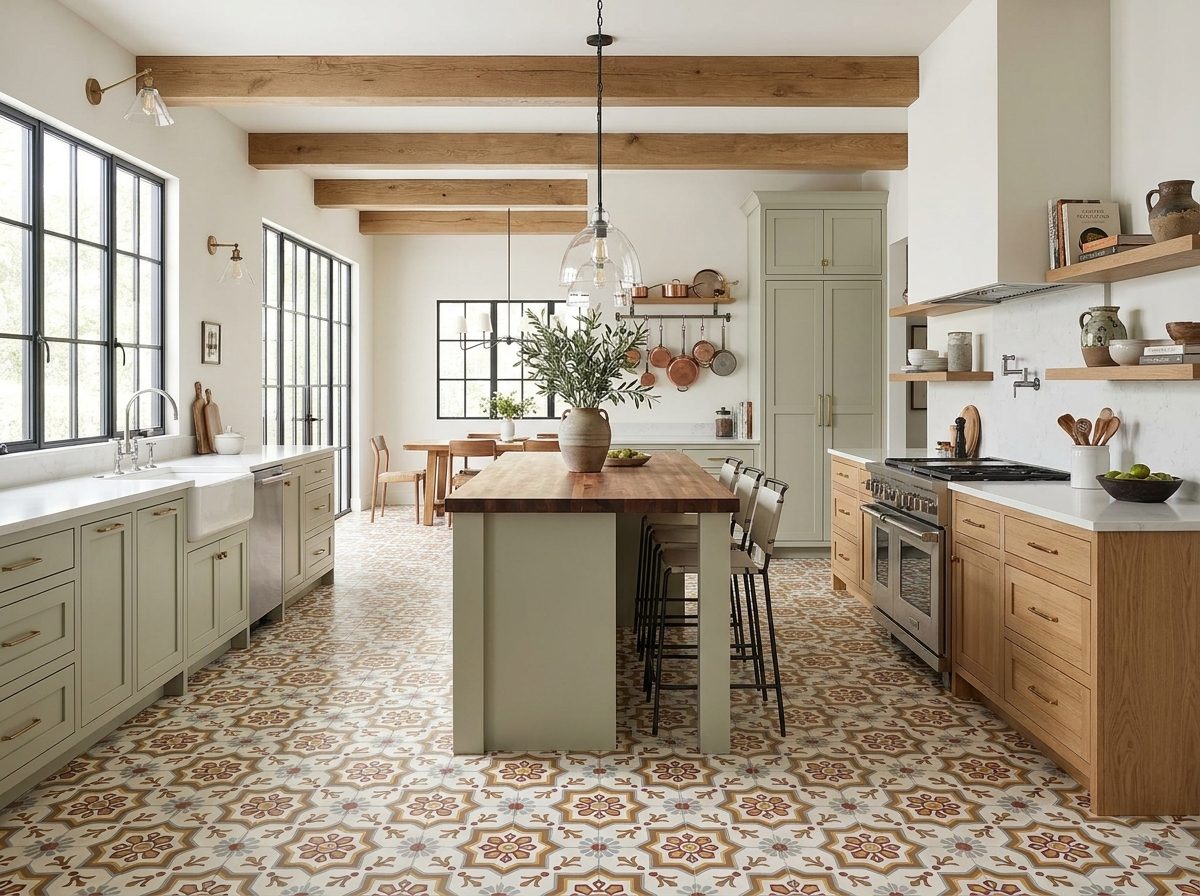
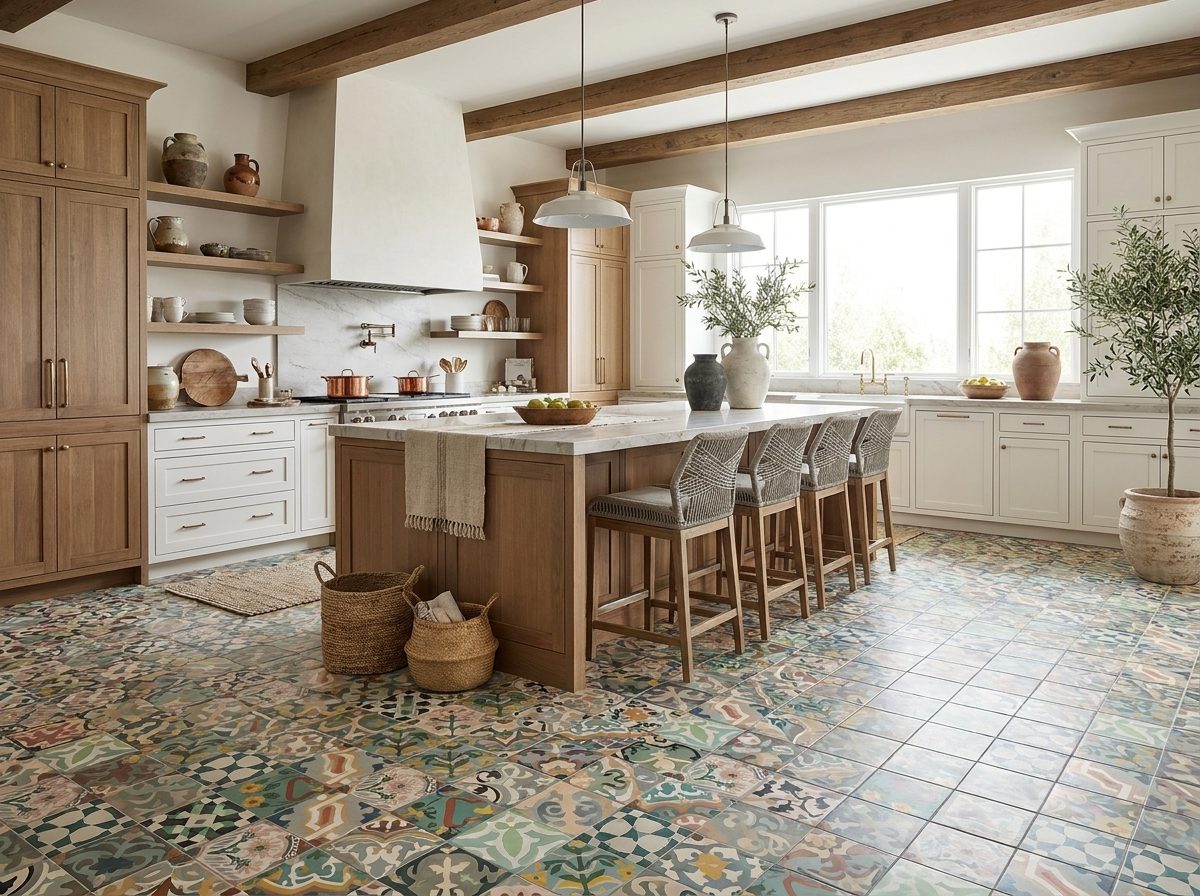
Kitchens: warm floors + kitchen backsplash tiles that feel artisan
Mediterranean kitchens look best when:
- cabinets are simple
- hardware is warm
- the floor or backsplash carries the “story”
Two strong options:
- patterned cement tile floor + calm backsplash
- calm floor + statement kitchen backsplash tiles behind the range
If you want to match a historic reference, use Custom Tiles.
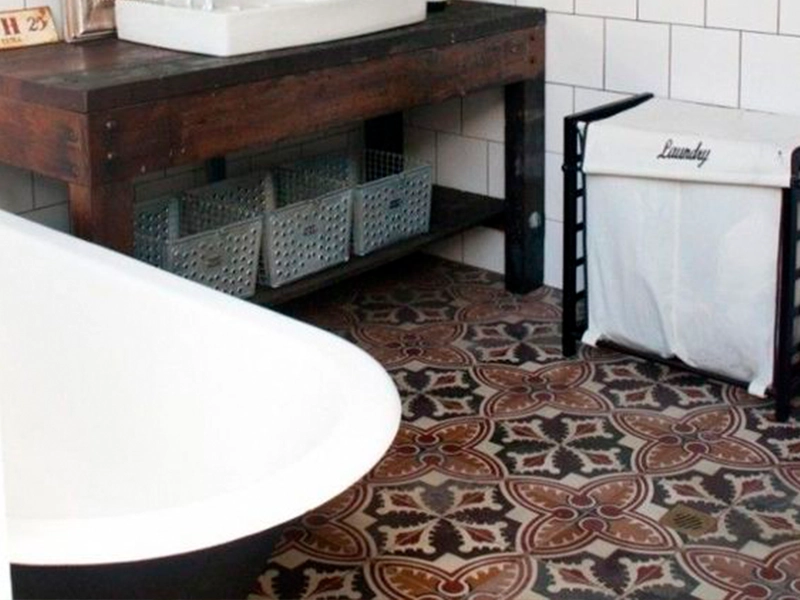
Bathrooms: small footprint, big authenticity
Bathrooms are perfect for Spanish/Mediterranean pattern because the space is compact. Use bathroom tiles as:
- patterned floors with borders
- vanity wall accents
- niche backdrops
Designer rule: bold floor + calmer walls keeps the room premium, not busy.
Showers: shower wall tiles that feel like a boutique villa
Cement can be used as shower wall tiles in design-forward projects when waterproofing and maintenance are planned correctly. For guest bathrooms and suites, patterned shower walls can create a hotel-level experience.
Patios and courtyards: outdoor patio tiles that complete the story
Patios are where Spanish and Mediterranean style truly comes alive:
- courtyard layouts
- pergola shade patterns
- indoor-outdoor continuity
For outdoor patio tiles, choose mid-tone patterns that hide dust and feel timeless. Mediterranean and Spanish-style motifs are ideal here.
Commercial spaces: restaurants, hotels, and retail hospitality
Spanish/Mediterranean interiors are extremely popular in hospitality because they create atmosphere instantly:
- restaurant tile design uses patterned floors to set mood and hide traffic wear
- hotel lobby tiles create first-impression identity and photo-ready moments
- patios and outdoor lounges become destinations
If your commercial project needs a signature pattern, Custom Tiles is the fastest path to brand-level differentiation.

Commercial Design Section: How Spanish + Mediterranean Tile Works in Hospitality
Spanish-style and Mediterranean interiors translate beautifully into commercial environments because they feel warm, established, and “transportive.”
Restaurants: destination atmosphere that hides wear
Patterns that work best:
- mid-tone geometric repeats
- border-framed dining zones
- Moroccan-influenced accents at entries or bars
This approach supports traffic, chair movement, spills, and frequent cleaning routines while staying premium.
Hotels: lobby-to-courtyard continuity
For boutique hotels, the most authentic approach is a cohesive tile story:
- patterned lobby floor (first impression)
- calmer corridor patterns (visual quiet)
- high-impact bathroom floors (boutique feel)
- patio/courtyard tile that echoes the interior palette
These decisions make a property feel curated instead of “assembled.”
Cement Tile vs Ceramic Tile in Spanish/Mediterranean Projects
The cement tile vs ceramic tile question usually comes down to authenticity vs operational simplicity.
Cement tiles
Best when you want:
- handmade depth and matte finish
- patterns that look historic and architectural
- custom capability for true Spanish/Mediterranean authenticity
Ceramic/porcelain
Often chosen when you want:
- ultra-low absorption
- simplified maintenance in extreme wet zones
- certain back-of-house requirements in commercial projects
Many premium projects combine both:
- cement tiles in identity zones (entry, kitchen, dining, lobby, corridors)
- porcelain in extreme wet or operational zones
Installation & Maintenance: Keep the Authentic Look for Years
Spanish-style and Mediterranean interiors only look authentic when the tile ages well. That means planning care from day one.
Sealing (non-negotiable for cement tile)
Cement tiles should be sealed to improve stain resistance and long-term maintenance—especially in kitchens, entries, bathrooms, restaurants, and patios.
Cleaning routine (simple and consistent wins)
A practical routine:
- frequent grit removal (sweep/vacuum)
- pH-neutral cleaners
- quick spill cleanup in kitchens and dining zones
- avoid harsh acids that degrade sealers
Mistakes to Avoid (That Make Spanish/Mediterranean Look Fake)
- Choosing patterns that are too modern for the architecture
- Using glossy finishes (Mediterranean style should feel matte and natural)
- Skipping borders and thresholds (the room loses classic logic)
- Choosing the wrong scale (tiny patterns in large rooms feel busy)
- Over-patterning every surface (one hero per zone is best)
- Installing without blending tiles (handmade variation becomes patchy)
- Sealing errors or harsh cleaners that damage the finish
- Not coordinating indoor-outdoor palettes (patios should feel connected)
Order Samples: Start with Cement Tiles In Stock

FAQs: Spanish-Style + Mediterranean Interiors
1) What tile patterns look most authentic in Spanish-style interiors?
Patterns with borders, warm neutrals, heritage motifs (florals/medallions), and courtyard-style repeats feel most authentic—especially in entryways and patios.
2) What’s the difference between Mediterranean tiles and Spanish-style tiles?
Mediterranean tile style often leans calmer and sun-washed, while Spanish-style tile motifs tend to feature warmer heritage patterns and classic courtyard logic. Both styles benefit from matte, handcrafted finishes.
3) Are cement tiles authentic for Spanish and Mediterranean design?
Yes. Cement tiles and encaustic cement tiles are one of the most authentic ways to achieve the matte depth and pattern language associated with Mediterranean and Spanish-style floors.
4) Can cement tiles be used in kitchens and bathrooms?
Yes, when installed and sealed correctly. Cement tiles are commonly used for kitchen floors, bathroom tiles, and statement walls in Spanish/Mediterranean remodeling projects.
5) Can cement tiles be used in showers?
Cement tiles can be used as shower wall tiles in design-forward projects when waterproofing, sealing, and maintenance are planned properly.
6) What are the best outdoor patio tiles for Mediterranean courtyards?
Mid-tone patterns with Mediterranean or Spanish-style motifs are ideal because they hide outdoor dust and feel timeless in natural light.
7) Can I customize a Spanish-style tile pattern?
Yes. Custom patterns and colorways can be developed through Custom Tiles to match historic references or create a brand-specific look.
8) Do you have in-stock patterns for Spanish/Mediterranean remodels?
Yes. Browse Cement Tiles In Stock to find fast-ship options and order samples.