Some materials earn their place in design history by being new. Terracotta earned its place by being true.
Fired from the earth, shaped by hand, colored by minerals that have been pulled from the ground for thousands of years — terracotta tiles carry a warmth that no manufactured surface has ever convincingly replicated. And in 2026, after years of interiors defined by cool grays and frictionless whites, designers and their clients are returning to that warmth with open arms.
This isn’t nostalgia. It’s discernment. The best terracotta-influenced tile work appearing in contemporary interiors right now doesn’t look like a Mediterranean farmhouse or a 1990s Southwest kitchen — it looks like exactly what it is: a considered choice by a designer who understands that warmth, texture, and earthiness are not trends. They are enduring qualities of beautiful space. This guide explores how to specify terracotta tiles with confidence in 2026 — where to use them, how to combine them, and why handmade cement tiles in terracotta palettes offer something the mass market simply can’t match.
Why Terracotta Is the Defining Palette of 2026 Interiors

The terracotta renaissance didn’t arrive overnight. It’s been building for several years across fashion, ceramics, architecture, and interior design — a collective pivot toward materials that feel grown rather than manufactured. In 2026, it has reached full maturity as a design language.
Several forces are converging to drive this moment:
The warmth correction. A decade of cool, gray-dominant interiors has created a genuine appetite for warmth. Terracotta tones — clay, burnt sienna, dusty rose, warm ochre, rust — are the antidote. They make a room feel inhabited rather than staged, welcoming rather than austere.
The craft premium. Clients who invest in interior design are increasingly asking where their materials come from and how they’re made. Terracotta, as both a color family and a material tradition, carries deep craft associations — with Mediterranean courtyard culture, with Mexican Talavera traditions, with the ancient hand-forming techniques that produce tiles no two of which are exactly alike.
Sustainability alignment. Earth-toned, mineral-based, kiln-free materials align with the sustainability narrative that more and more design clients are prioritizing. Cement tiles in terracotta palettes — pressed rather than fired, pigmented with natural minerals — sit comfortably within that story.
The photography factor. Terracotta surfaces photograph beautifully. The warmth of the tones, the way they interact with natural light, the richness of the texture — all of it translates compellingly to the visual platforms where design work is discovered and shared.
Terracotta Cement Tiles: What Makes Them Different

Not all terracotta tiles are created equal — and for designers who work at the level where material quality is visible and meaningful, the distinction matters.
Glazed ceramic terracotta tiles offer consistent color and a predictable surface, but they lack the depth of natural pigment and the variation that makes a terracotta floor feel like it belongs to the earth rather than to a production run.
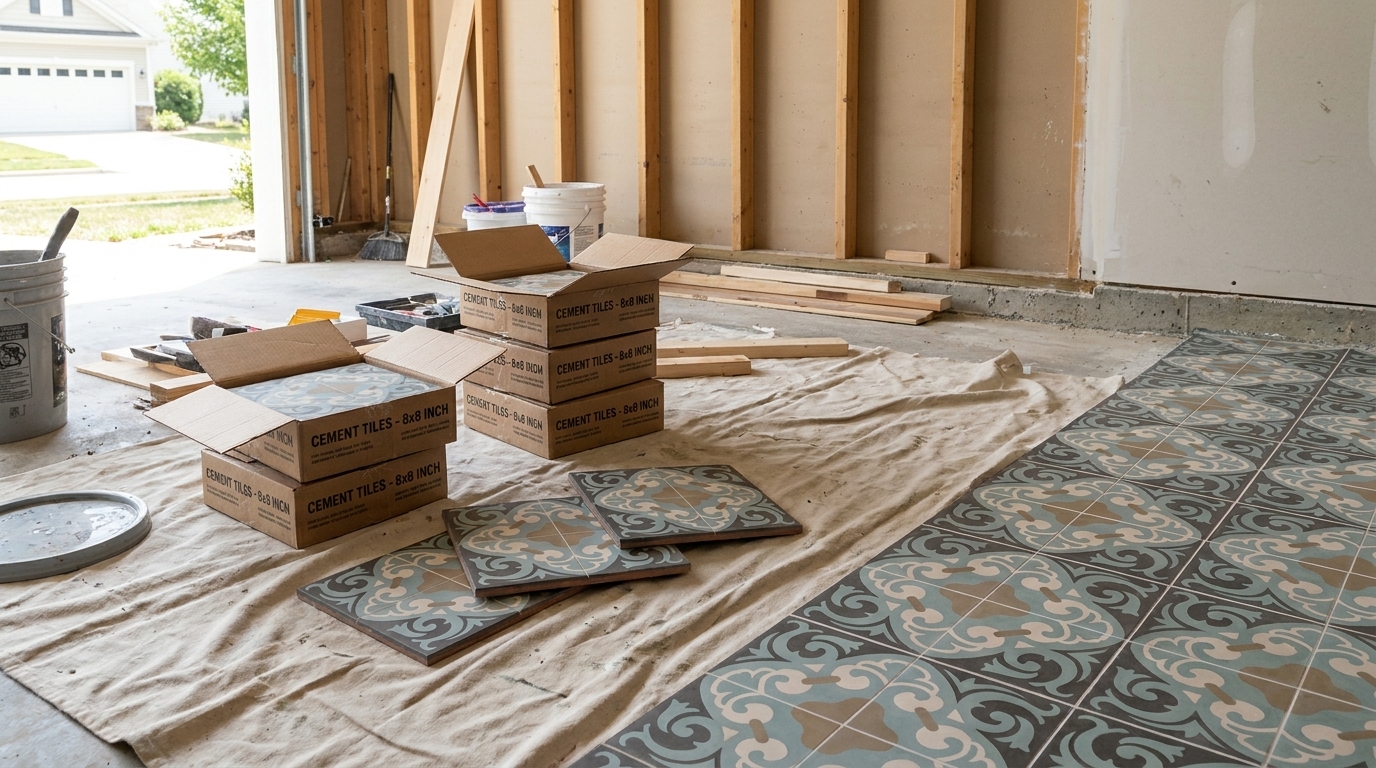
Handmade cement tiles in terracotta palettes — like those available through Original Mission Tile — offer something categorically different: mineral pigments that penetrate the full wear layer of the tile, natural variation between tiles from the same dye lot, and a matte surface with micro-texture that interacts with light in a way that glazed tiles simply don’t.
The result is a floor or wall that reads as warm and alive rather than printed and static. And because the pigment runs through the tile rather than sitting on top of it, chips and wear develop into patina rather than damage — which is exactly how terracotta surfaces have behaved for centuries.
Explore terracotta-palette options in the In-Stock Collection, or develop a custom colorway through the Custom Made Collection for projects that call for a specific tone or pattern.
Where to Use Terracotta Tiles in 2026 Interiors
Kitchens: The Warmth That Makes a Room

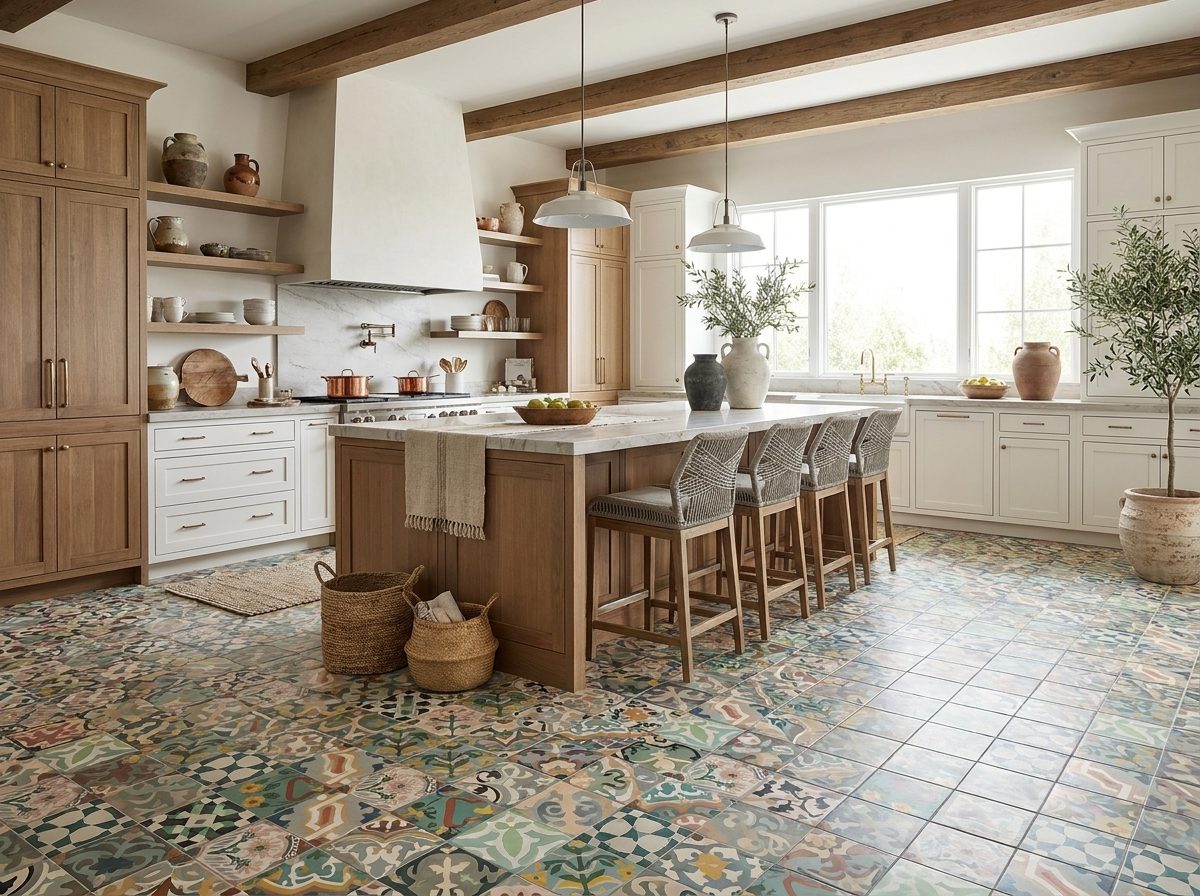
The kitchen is where terracotta tiles are making their strongest statement in 2026. The color family’s inherent warmth transforms kitchens that might otherwise feel cold or clinical — and the combinations being used right now are genuinely exciting: terracotta floors against deep forest green or navy cabinetry, warm clay backsplash tiles behind a white Shaker kitchen, burnt ochre geometric patterns anchoring an open-plan kitchen-dining space.
For floors, terracotta-adjacent cement tiles work particularly well in traditional encaustic patterns — star and cross, simple geometric repeats, or the classic diamond grid. For backsplashes, a solid terracotta field tile with a contrasting border pattern creates a layered, artisan quality that clients respond to powerfully.
Designer note: Terracotta floors are forgiving in a kitchen environment. The warm tones absorb the visual impact of everyday cooking life — crumbs, spills, the general lived-in quality of a working kitchen — in a way that white or light-colored floors simply don’t.
Bathrooms: Warmth Meets Sanctuary
The bathroom-as-sanctuary trend has been building for several years, and in 2026, terracotta tiles are one of its primary expressions. A terracotta cement tile floor in a primary bathroom creates a quality that cooler tiles rarely achieve: the sense that the space was designed to be deeply, physically comfortable rather than merely beautiful.
The most compelling bathroom applications in 2026 are pairing terracotta floors with warm white plaster walls and unlacquered brass or warm bronze fixtures — a combination that reads as earthy and luxurious simultaneously. For smaller bathrooms and powder rooms, a terracotta encaustic pattern used floor-to-ceiling creates the kind of enveloping warmth that makes a modest space feel intentional and precious.
Outdoor Spaces: Terrace, Patio, Courtyard
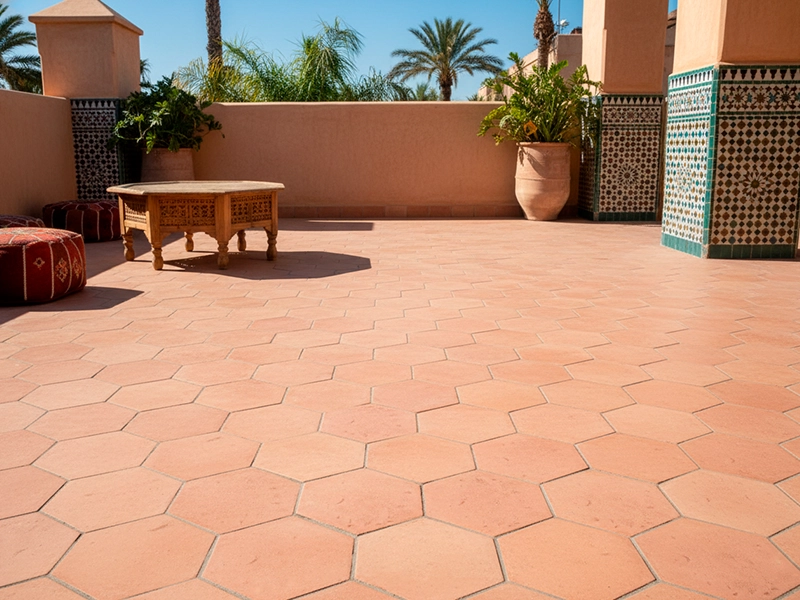
Terracotta’s cultural home — the Mediterranean courtyard, the Moroccan riad, the Spanish hacienda — has always been outdoors, and in 2026, designers are returning terracotta tiles to their natural habitat with renewed confidence.
For covered terraces and patios, cement tiles in terracotta palettes create a visual and material bridge between interior and exterior spaces — particularly when the indoor floor carries a complementary pattern or palette. The warmth of the terracotta reads especially beautifully in natural light and against lush greenery.
For outdoor applications, consult with the Original Mission Tile team for guidance on appropriate sealing and substrate preparation for specific climates and exposure conditions.
Entryways: First Impressions in Earthy Color
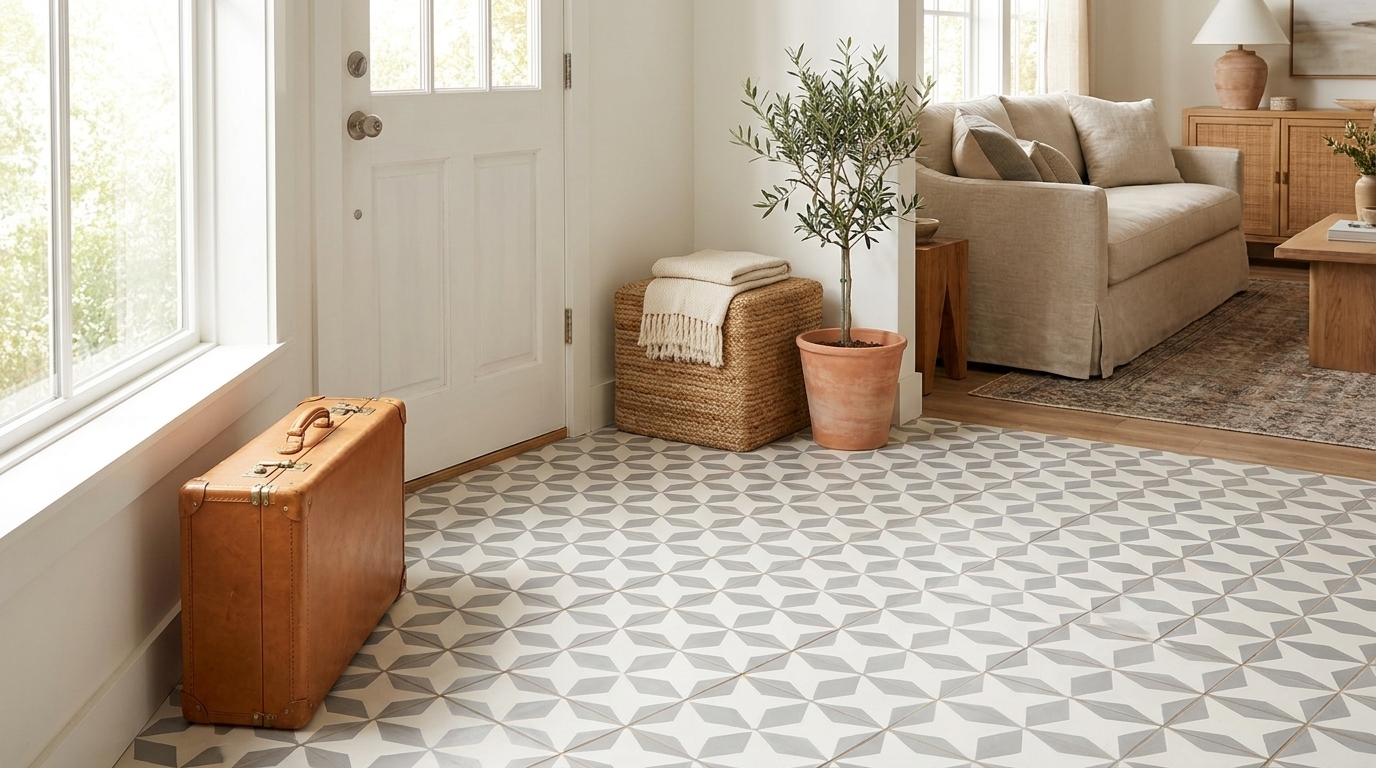
The entryway is one of the highest-impact applications for any tile, and terracotta cement tiles make a particular kind of statement at a front door: immediate, warm, and unmistakably considered. A terracotta geometric pattern in an entryway tells the story of a home before a word is spoken — and it ages beautifully under the foot traffic that entryways experience.
Combining Terracotta Tiles With Other Materials
Part of what makes terracotta palettes so versatile in contemporary design is their ability to coexist with an unusually wide range of other materials without conflict.
With natural stone: Terracotta and unlaquered travertine, warm limestone, or honey-toned marble share a mineral warmth that creates layered, harmonious spaces. Use terracotta on the floor and a warm stone on countertops or vanity tops for a combination that feels genuinely connected to the earth.
With deep greens and blues: The contrast combinations that are generating the most design attention in 2026 — terracotta with forest green, with deep teal, with navy — are striking precisely because the warmth of the terracotta and the depth of the cool tones intensify each other. Specify terracotta tiles in these contexts and let the floor do the heavy lifting.
With natural wood: Terracotta and warm wood tones (walnut, oak, teak) are natural companions — both carry the warmth of organic materials, and the combination creates the kind of interior that feels like it could only belong to the specific person who lives there.
With white plaster and limewash: The classic Mediterranean combination — terracotta tile floor, white or off-white plastered walls — is classic because it works. In a contemporary context, it benefits from simple, quality furniture and very good lighting.
Use the Design Studio to visualize terracotta palettes in combination with other materials before presenting options to clients — it’s the fastest way to test combinations and build client confidence.
Specification Notes for Terracotta Cement Tiles
- Sealing: Always specify a penetrating sealer before and after grouting. Terracotta-toned tiles, like all cement tiles, benefit from sealing that protects the mineral surface without altering its matte quality
- Grout color: Warm-toned grouts — sandy beige, warm gray, or a tone pulled directly from the tile palette — integrate naturally with terracotta colors; bright white grout can create a jarring contrast that flattens the warmth of the installation
- Sample in natural light: Terracotta tones shift meaningfully under different lighting conditions; always view samples in the actual space before final specification
- Ordering: Specify a 10–15% overage for cuts and future repairs; maintaining dye lot consistency is important for any future patching work
FAQ: Terracotta Tiles for Interior Designers
Are terracotta cement tiles different from traditional fired terracotta tiles? Yes — cement tiles in terracotta palettes are hydraulically pressed and air-cured rather than kiln-fired, which gives them different technical properties (more consistent thickness, smoother surface, greater pattern flexibility) while achieving similar warm, earthy color tones. They require sealing, as do fired terracotta tiles.
Will terracotta tiles look dated in a few years? The terracotta color family has appeared continuously in great interiors for thousands of years. The specific contemporary interpretations — the combinations with deep greens, the encaustic patterns, the pairing with natural materials — may evolve, but the underlying warmth of terracotta as a material language has never gone out of design relevance and shows no signs of doing so.
Can terracotta cement tiles be used in high-traffic areas? Yes. The mineral pigment in cement tiles runs through the full wear layer, meaning high-traffic areas develop patina rather than showing through to a different substrate color. Terracotta tones in particular are visually forgiving — they absorb the evidence of use in a way that reads as character rather than wear.
Where can I see completed projects using terracotta cement tiles? The Projects Gallery features a wide range of completed installations across residential and commercial applications — browse by space type to find examples most relevant to your current project.
Conclusion: The Color That Brings a Room Home
In 2026, the most alive interiors are the ones that feel warm — not in temperature, but in spirit. They feel like they were made for the people who live in them, from materials that carry meaning and history and the evidence of craft. Terracotta tiles, in all their earthy, mineral richness, are one of the most powerful tools available for creating that quality.
Whether you’re specifying a terracotta cement tile floor for a kitchen that needs to feel like the heart of a home, a bathroom designed for genuine rest, a terrace that extends the warmth of the interior into the open air, or an entryway that says something true about who lives inside — the color is there, the craft is there, and the enduring rightness of it has been proven across centuries.
All that remains is choosing the pattern.
Ready to bring terracotta warmth to your next project?
Browse earthy palettes and encaustic patterns in the In-Stock Collection, develop a custom terracotta colorway through the Custom Made Collection, visualize combinations in the Design Studio, or find inspiration in the Projects Gallery.
Contact the Original Mission Tile design team for samples and expert project guidance →