There’s a moment every designer knows — when a material stops being a specification and starts being the soul of a room. Cement tiles live in that moment.
They’ve graced the floors of Moroccan riads and Andalusian courtyards for over 150 years. Today, they’re showing up in Michelin-starred restaurants, award-winning residential renovations, and the kinds of boutique hotels that earn their own Instagram hashtags. And for good reason: in a design landscape saturated with polished porcelain and digital-print ceramics, handmade cement tiles offer something increasingly rare — authenticity.
This guide is written for interior designers and architects who want to go beyond the basics. Whether you’re specifying cement tiles for the first time or deepening your expertise, you’ll find everything here: how to choose patterns for kitchens, bathrooms, and floors; how to specify with confidence; how to collaborate on custom work; and how to present cement tile to clients in a way that converts curiosity into commitment.
Let’s start with what makes these tiles genuinely different.
What Sets Handmade Cement Tiles Apart — And Why It Matters to Designers

When a client asks why they should choose cement over porcelain, the answer isn’t just aesthetic — it’s philosophical.
Cement tiles are pressed, not fired. Each tile begins as a carefully measured mixture of Portland cement, marble powder, and mineral pigments poured by hand into a metal mold. A hydraulic press fuses the layers under thousands of pounds of pressure. No kiln. No digital printing. No two tiles are ever exactly alike.
That last point is the one that resonates most in design conversations. The subtle variation in color depth, the faint ghosting of a craftsman’s touch, the way a field of tiles catches light differently as the day moves through a room — none of that can be replicated on a production line. Cement tiles don’t just fill a surface. They animate it.
For designers, this has practical implications beyond aesthetics:
- Pigment runs through the full wear layer — chips and scratches are far less visible than on printed-surface tiles, making them genuinely suited for high-traffic residential and commercial applications
- Surface texture is naturally matte and slip-resistant — an important specification advantage in bathrooms, hospitality spaces, and any wet area
- Pattern variety is essentially unlimited — especially when custom work is on the table (more on that below)
- Age beautifully — a properly installed and maintained cement tile floor develops patina and character over decades, rather than simply looking worn
The tradeoff, as any experienced specifier knows, is that cement tiles require sealing and slightly more mindful maintenance than glazed ceramics. That’s worth communicating clearly to clients upfront — and it’s rarely a dealbreaker once they understand why.
Explore the Original Mission Tile In-Stock Collection → https://originalmissiontile.com/in-stock-cement-tiles
Cement Tiles in Kitchens: How to Specify With Intention

The kitchen is often where cement tiles make their most dramatic statement — and where clients are simultaneously most excited and most nervous. Your job as the designer is to channel that energy toward confident decisions.
Choosing the Right Pattern
Kitchen applications tend to fall into two camps: backsplash as focal point and floor as foundation.
For backsplashes, bolder geometric and Moroccan-inspired patterns tend to perform exceptionally well. A high-contrast pattern — think an eight-pointed star in charcoal and cream, or a classic Zellige-adjacent grid in cobalt and white — reads beautifully against simple shaker or flat-front cabinetry. The tile becomes the art, and the rest of the kitchen quiets around it.
For kitchen floors, the calculus shifts slightly. Consider:
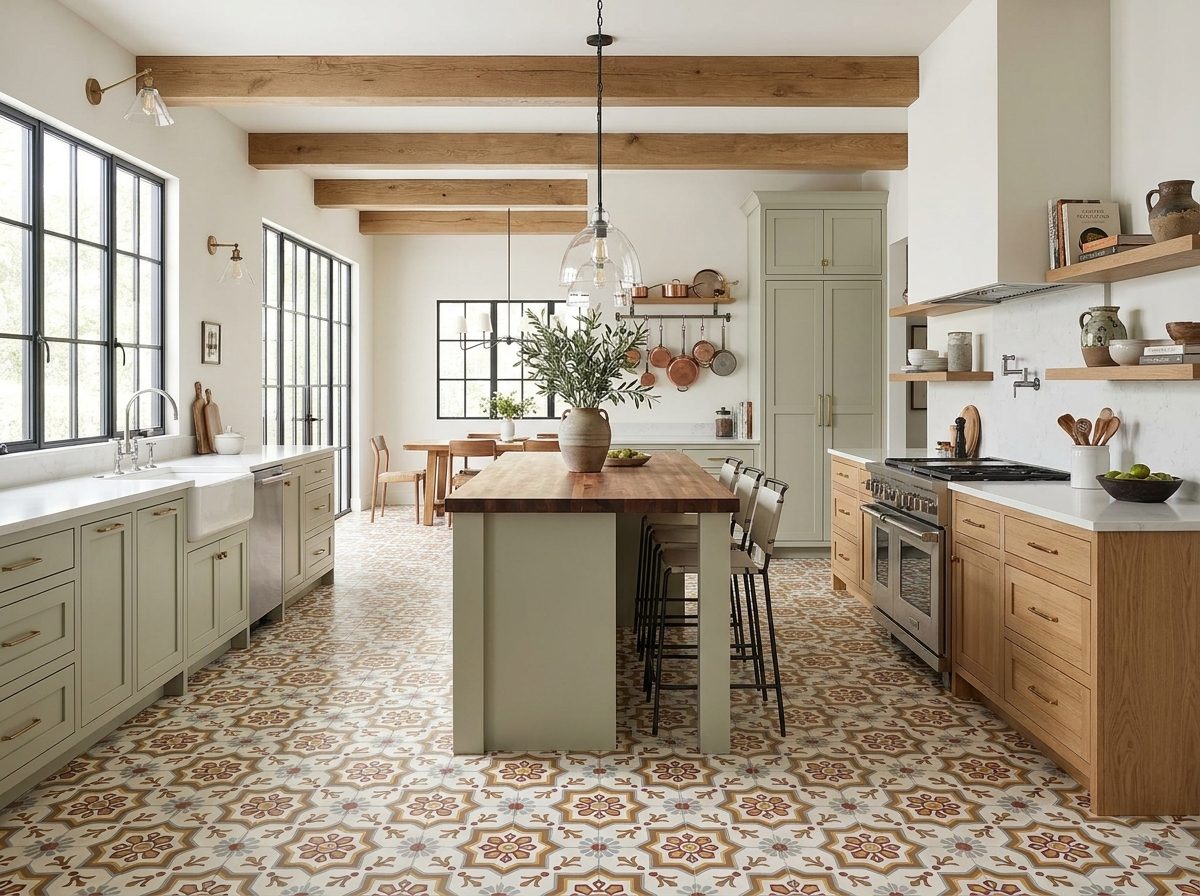
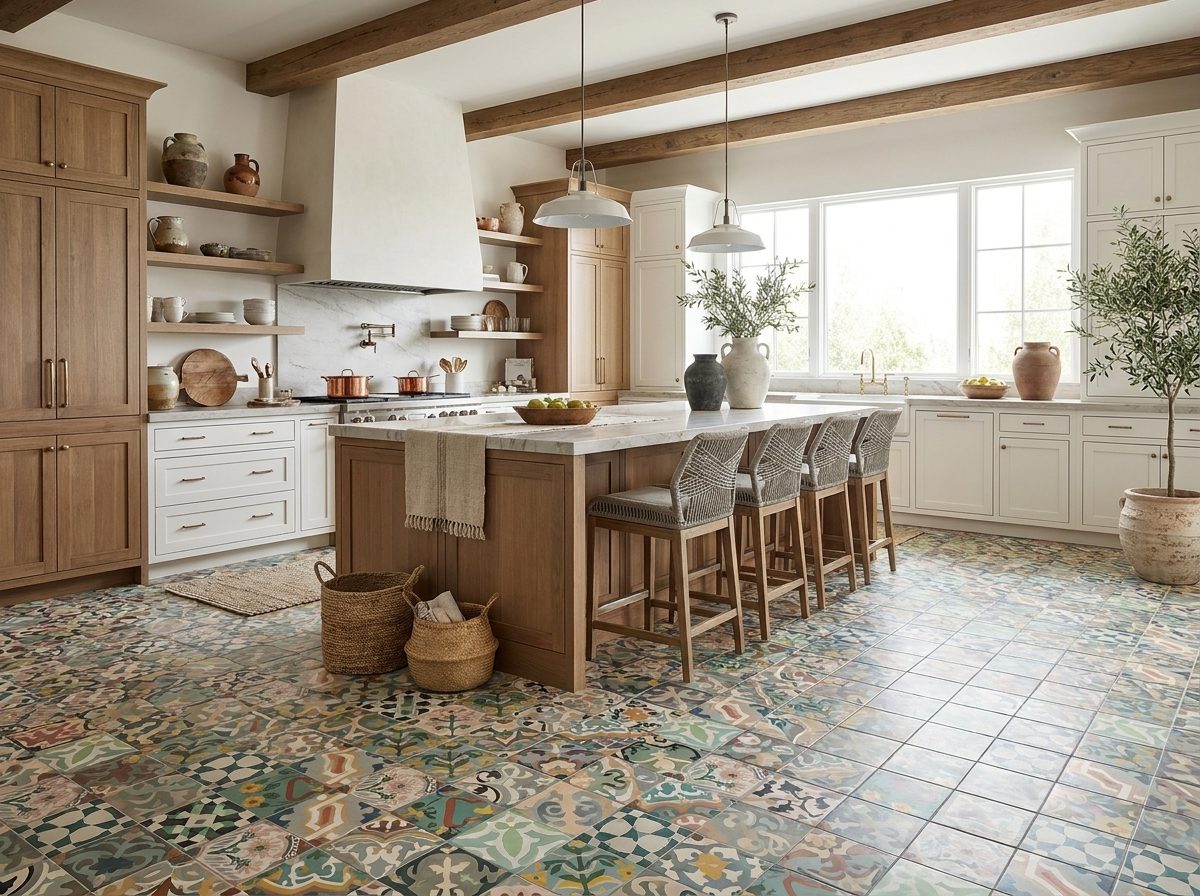
- Scale of the pattern relative to the room — a large-scale medallion in a small galley kitchen can feel overwhelming; that same pattern in an open-plan kitchen becomes an anchor
- Color relationship to cabinetry and countertops — cement tile floors benefit from being tied to at least one other element in the room; pull a secondary color from a stone countertop or a cabinet paint color to create cohesion
- Traffic flow and maintenance expectations — kitchens are hard-working spaces; seal properly and choose colors that forgive the realities of cooking life

Practical Specification Notes for Kitchens
- Grout joint width: For most geometric patterns, 1/16″ to 1/8″ works well. Wider joints can interrupt the visual continuity of intricate designs.
- Sealing: Specify penetrating sealer application before grouting and again after — this is non-negotiable in a kitchen environment. Share this as a standard specification note with your contractor.
- Grout color: This is an underrated decision. White grout emphasizes the grid; a tinted grout that closely matches one of the tile’s secondary colors creates a more immersive, continuous effect.
- Ordering overage: Always specify a 10–15% overage for cuts, waste, and future repairs. Cement tiles from the same dye lot are the ideal match for repairs years down the line.
View completed kitchen projects in the Original Mission Tile Gallery → https://originalmissiontile.com/cement-tiles-gallery
Cement Tiles in Bathrooms: Where Craft and Atmosphere Meet

If kitchens are where cement tiles make a statement, bathrooms are where they create atmosphere. The enclosed scale of most bathrooms means that tile becomes the dominant visual element — and the texture, pattern, and color you choose will define the entire mood of the space.
Pattern Strategies for Bathrooms
The statement floor: A single bold pattern across the entire bathroom floor is one of the most reliably stunning moves in residential design. Choose a pattern with strong contrast — a classic Moroccan fish-scale, a geometric star, or an Art Deco-influenced diamond — and let it do the work. Keep walls simple: white or light plaster, subway tile, or a solid-color field tile that echoes the cement tile’s palette.
The feature wall: Cement tiles on a bathroom wall — particularly a shower wall or the wall behind a freestanding tub — create an intimacy and richness that’s hard to achieve with any other material. For shower walls specifically, ensure proper waterproofing behind the installation and specify a penetrating sealer formulated for wet environments.
The mixed-material approach: Some of the most sophisticated bathroom designs use cement tiles in focused applications — a band of pattern along the base of a white wall, a tiled niche within a shower, or a mosaic-style arrangement on a vanity back panel — rather than covering every surface. This restraint can make the cement tile feel more precious and intentional.
Slip Resistance and Safety Specifications
Bathroom applications often trigger slip-resistance questions from clients. Cement tiles, with their natural matte surface, perform well in this regard — particularly compared to polished stone or high-gloss porcelain. For shower floors and wet-area floors, the naturally textured surface of cement tiles provides adequate grip. If a client or project code requires a specific COF (coefficient of friction) rating, verify with the supplier — Original Mission Tile’s team can provide technical specifications for individual patterns.

Small Bathroom, Big Impact
One of the most common hesitations designers hear: “Is a bold pattern too much for a small bathroom?” In our experience — and in the experience of the design community broadly — the answer is almost always no. In a powder room or a compact primary bathroom, a strong cement tile pattern creates the sense that the space was intentionally designed rather than merely finished. It becomes a destination rather than an afterthought.
Cement Tile Flooring: Specifying for Living Spaces, Entryways & Commercial Projects

Beyond kitchens and bathrooms, cement tile flooring opens up a wider conversation about how pattern, scale, and material can define the character of an entire home or commercial space.
Residential Floors: Setting the Tone for a Home
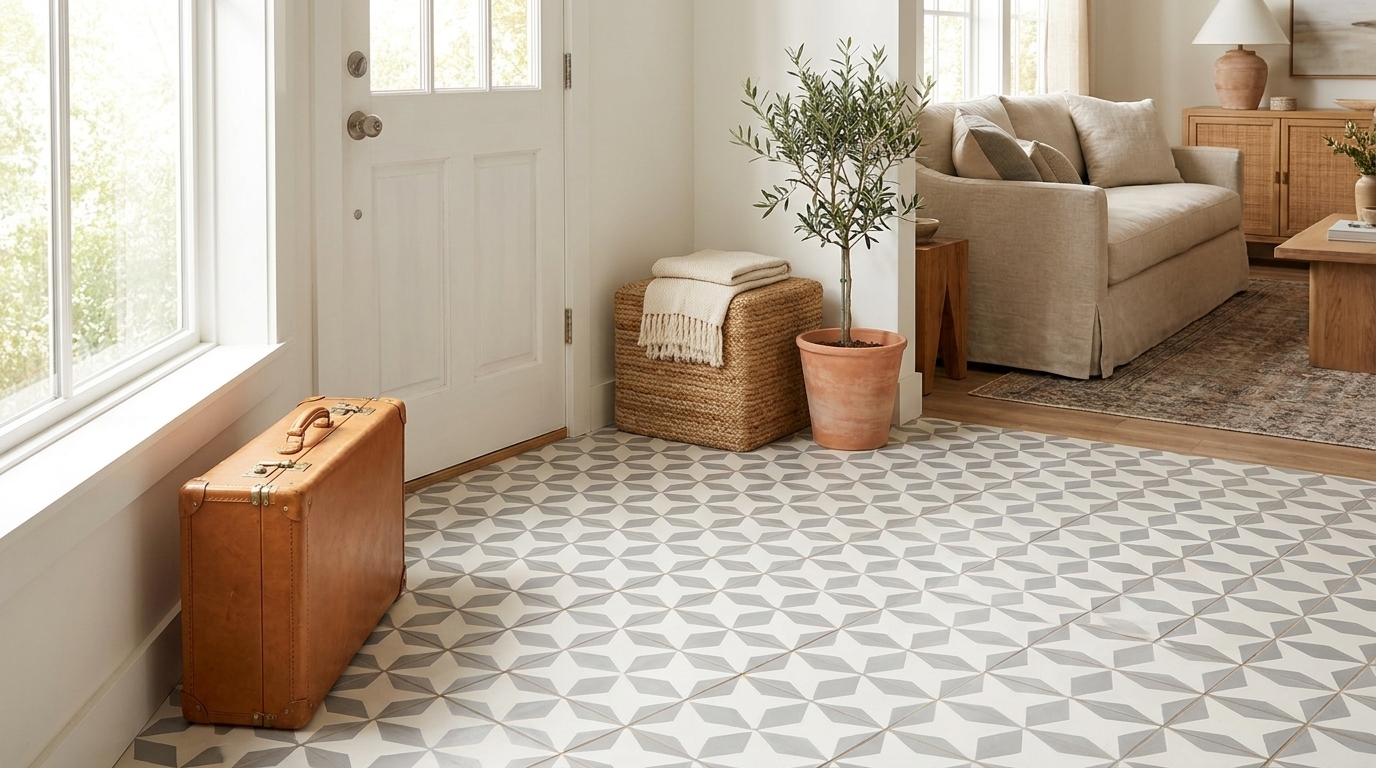
Entryways and hallways are perhaps the highest-ROI application for cement tile flooring in residential design. The entry is a client’s first full-body experience of their home — and a distinctive cement tile floor communicates craft, intentionality, and a kind of quiet confidence before a single piece of furniture is in place.
Living rooms and open-plan spaces benefit from the way cement tiles anchor a room. A strong geometric floor pattern — particularly one that references the room’s color story — can eliminate the need for a large area rug and create a more cohesive, layered feeling throughout the space.
Design considerations for large-format residential floors:
- Use layout planning to center patterns optically within the room — this is especially important for medallion or radial patterns
- Consider transition zones carefully where cement tile meets wood, stone, or carpet; a clean metal strip or a natural material transition works better than a forced grout-line match
- For open-plan spaces, cement tile can be used to define zones — a dining area, a sitting nook, a reading corner — without the visual disruption of a raised threshold
Hospitality and Commercial Applications
Cement tiles have earned their place as a specification staple in hospitality design, and for good reason. A restaurant floor or hotel corridor that uses handmade cement tiles tells guests something about the establishment before a word is spoken: that someone made considered choices, that craft matters here, that the experience will be worth paying attention to.
High-traffic commercial specifications:
- Sealing is even more critical in commercial settings — specify a penetrating sealer plus a topcoat appropriate for the traffic level
- Consider field tiles paired with border patterns for corridors — it creates a sense of movement and direction while controlling visual complexity
- Work with the Original Mission Tile design team early in the project: for large commercial installations, custom colorways and patterns that align with a brand’s visual identity are entirely achievable
Explore Original Mission Tile Custom Made Collection → https://originalmissiontile.com/custom-tiles
Working With Original Mission Tile: From Specification to Installation

One of the most common barriers designers encounter with specialty tile is the gap between inspiration and execution. With handmade cement tiles, that gap can feel wider — because the stakes of getting it right feel higher. At Original Mission Tile, the goal is to be a real creative and technical partner through every phase of the project.
In-Stock Collection: When the Timeline Is Tight
The In-Stock Collection is curated for designers who need proven patterns, reliable availability, and fast turnaround. These are the patterns that have been specified across hundreds of projects — the geometric classics, the Moroccan mainstays, the black-and-white combinations that never date. If you’re working against a contractor deadline or a client who needs to see real tiles quickly, this is your starting point.
Custom Made Collection: When the Project Demands Something Singular
For projects where the tile is the concept — where the pattern needs to be derived from an architectural detail, a client’s heritage, a brand’s visual language, or simply a combination that doesn’t yet exist in any catalog — the Custom Made Collection is the answer.
The custom process at Original Mission Tile is genuinely collaborative. Designers bring a direction — a color palette, a reference image, a sketch, a mood board — and the team works to translate it into a production-ready tile design. Custom lead times are a real consideration and should be built into project schedules early.
Design Studio: Interactive Pattern Exploration
The Original Mission Tile Design Studio is a tool built specifically for designers who want to explore pattern and color combinations before committing. Visualize layouts, experiment with colorways, and generate presentations for client approval — all in one place. It’s the fastest way to move from “I have an idea” to “here’s what it will actually look like.”
The Project Gallery: Your Most Useful Selling Tool
When a client needs to see cement tiles in context — in real rooms, real homes, real hospitality spaces — the Original Mission Tile Projects Gallery is the resource to share. Organized by application and style, it gives clients the visual evidence that cement tiles work, that they age well, and that they can look like exactly what the project needs.
How to Present Cement Tiles to Clients Who Are On the Fence
Even designers who love cement tiles know the conversation that comes next: “They’re beautiful, but aren’t they hard to take care of?” or “Won’t they look dated in five years?”
Here are the talking points that move hesitant clients toward confident decisions.
On maintenance: “Cement tiles need sealing — once before installation, once after, and a refresh every year or two depending on use. Beyond that, they just need neutral-pH cleaners and common sense. The tradeoff is a floor that looks more alive and interesting than anything that came out of a factory.”
On longevity: “There are cement tile floors in Portugal, Mexico, and Morocco that are over a hundred years old and still being walked on daily. The question isn’t whether they’ll last — it’s whether your other design decisions will age as well.”
On trends: “The reason cement tiles appear in every design decade from the 1880s to the 2020s is that they don’t really belong to any decade. A geometric cement tile floor reads differently in a Victorian townhouse, a mid-century bungalow, and a new-build contemporary home. They adapt because they’re made by hand, not manufactured to match a trend.”
On investment: “The cost of cement tiles reflects the craft involved. But the right question isn’t the per-square-foot price — it’s the cost of replacing something in ten years that didn’t hold up, versus living with something that keeps getting better.”
FAQ: Cement Tiles for Designers and Architects
Can cement tiles be used in wet areas like showers? Yes. Cement tiles can be used in showers and wet areas with proper waterproofing behind the substrate and a penetrating sealer formulated for wet applications. The natural matte surface provides good slip resistance. Always specify a professional installation in wet areas.
What is the standard size for cement tiles? The most common size is 8″ × 8″ (20cm × 20cm), which is the traditional hydraulic tile format. Other sizes are available and can be produced on custom orders. The 8″ format works well for most residential and commercial applications.
How far in advance should I order for a custom project? For in-stock patterns, lead times are significantly shorter. For custom designs, plan for a minimum of 8–12 weeks depending on complexity and volume. Build this into your project schedule early — cement tiles are worth planning around.
Are cement tiles suitable for radiant heat floors? Yes — cement tiles are compatible with in-floor radiant heating systems. The installation requires a flexible adhesive and proper acclimation of materials. Consult with your installer and the Original Mission Tile team before specifying for radiant heat applications.
Can I mix multiple patterns in the same space? Absolutely — and it can be extraordinary when done well. The key is to establish a shared color palette across patterns, and to use transitions (borders, grout-line breaks, or threshold changes) to clearly delineate where one pattern ends and another begins. The Design Studio is a great tool for previewing multi-pattern layouts.
Do cement tiles work outdoors? Yes, for covered outdoor spaces and applications where the tiles won’t experience freeze-thaw cycles or prolonged direct weather exposure. Contact the Original Mission Tile team for guidance on specific outdoor applications.
Conclusion: The Case for Choosing Materials That Have Something to Say
Design trends move fast. Materials that feel essential one season can look tired the next. Cement tiles have survived more than a century of those cycles — not because they’re impervious to fashion, but because they occupy a category that sits beneath trend: craft.
When you specify handmade cement tiles for a kitchen floor, a bathroom wall, or a hotel lobby, you’re choosing a material that carries the evidence of its making. You’re choosing variation over uniformity, longevity over disposability, story over surface.
For designers and architects who believe that interiors should feel like they were made for a specific person in a specific place — rather than assembled from a catalog — cement tiles are one of the most powerful tools available.
The only remaining question is which pattern, which color, which room.
Ready to specify for your next project?
Explore the Original Mission Tile In-Stock Collection for proven patterns with fast availability, or begin a custom design conversation for projects that demand something entirely your own. Use the Design Studio to visualize layouts and present options to clients — and browse the Projects Gallery to see what’s possible.
Our design team is here to support your project from first concept through final installation.
Contact us for samples, technical specifications, and expert guidance → https://originalmissiontile.com/cement-tiles-contact