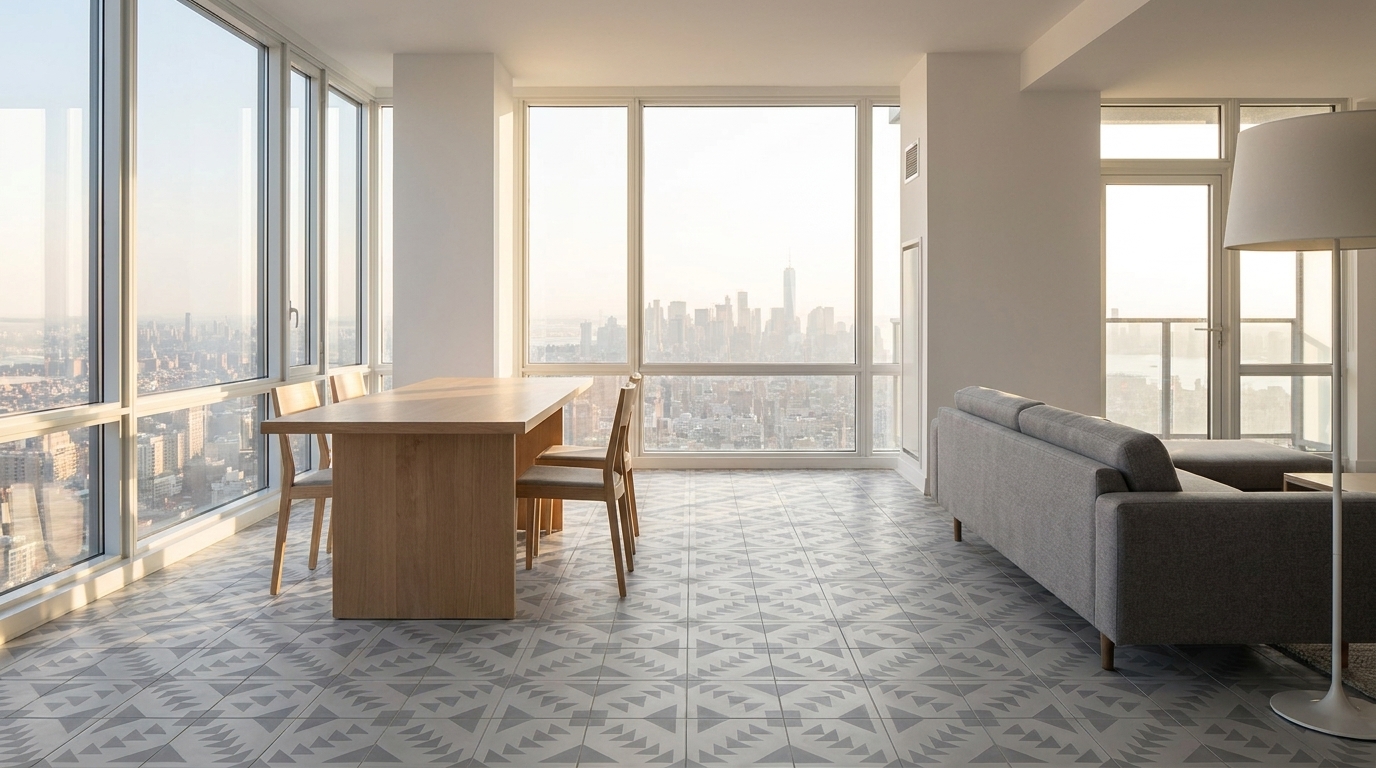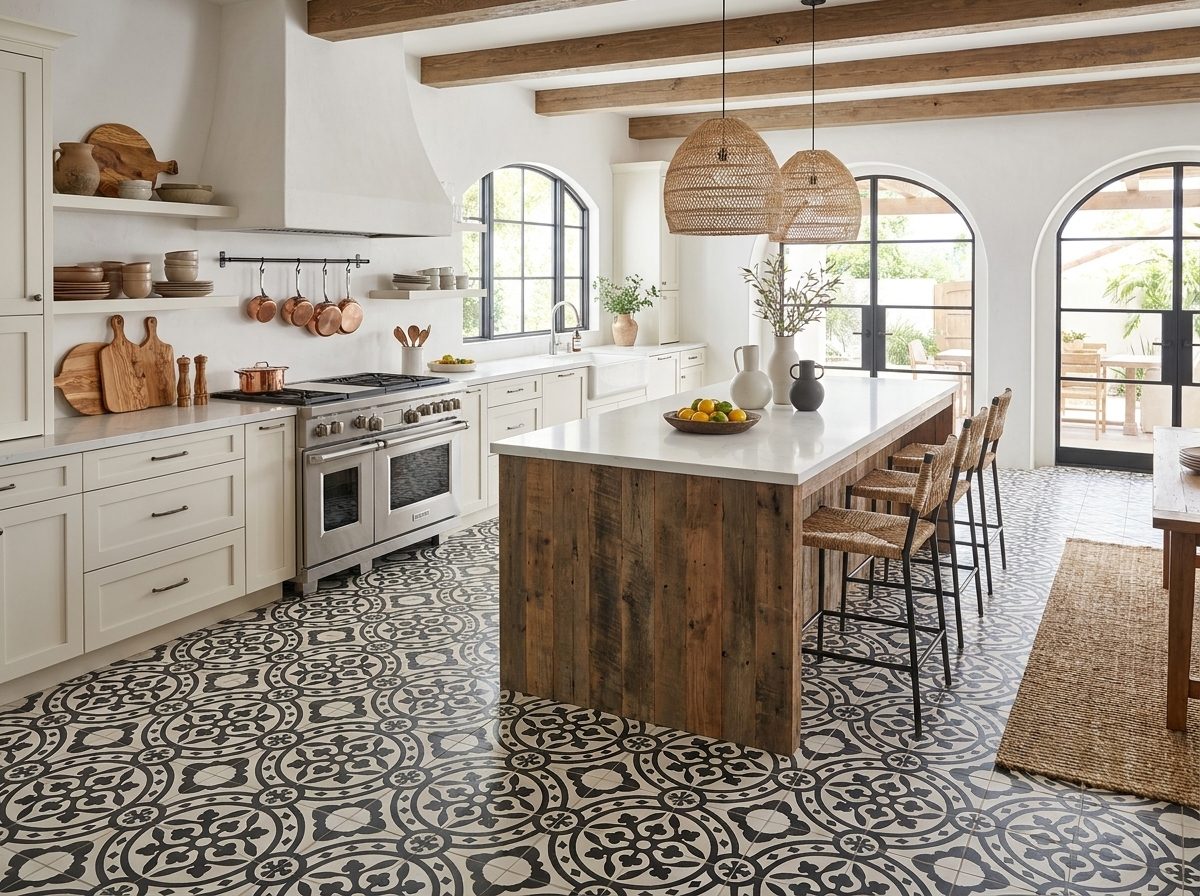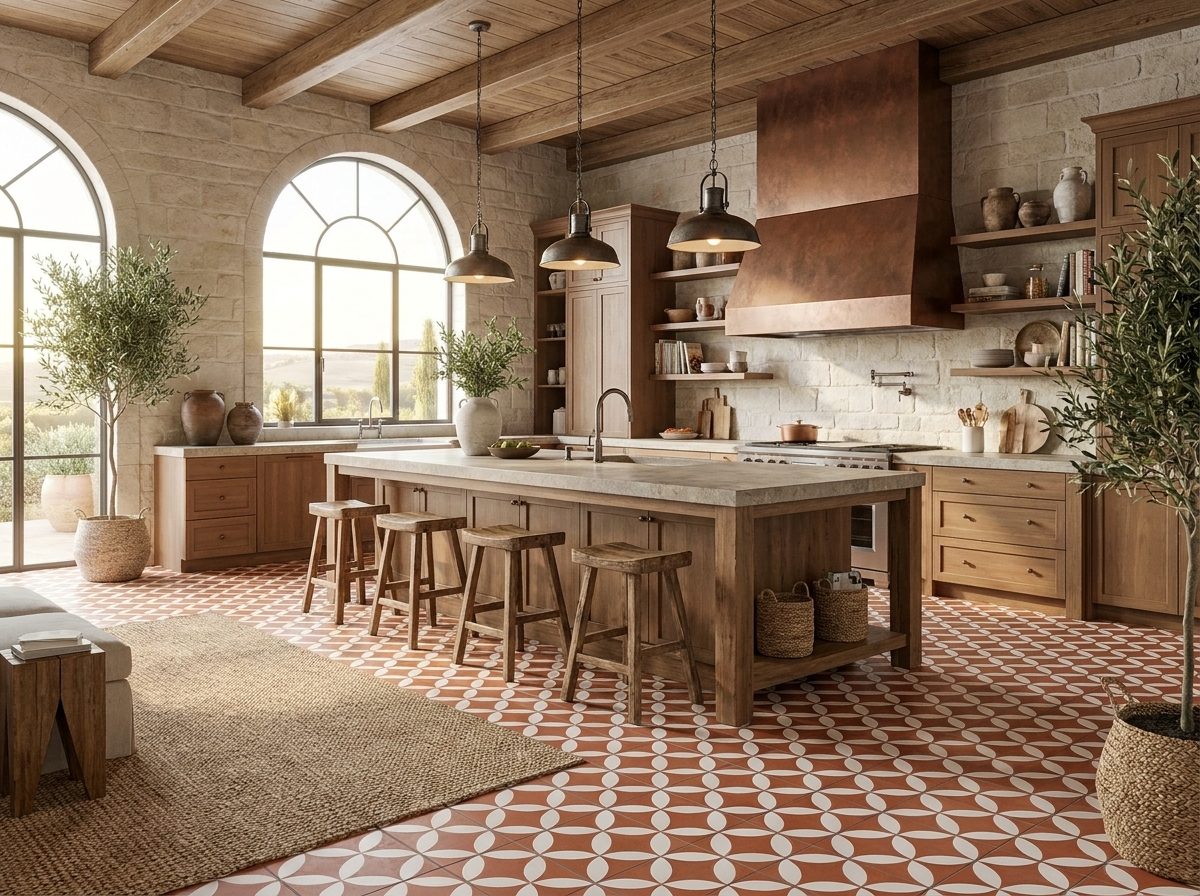
Choosing a tile isn’t just about picking a color or pattern; it’s a foundational choice that sets the entire mood and character of a space. The main types of tile fall into a few big families, like the durable workhorses of Ceramic and Porcelain, the one-of-a-kind luxury of Natural Stone, and the story-rich beauty of handmade Artisanal tiles.
Each family brings a unique blend of looks, durability, and cost to the table. Making the right choice is a key part of the creative process.
Navigating the World of Tile
Think of choosing a tile as casting the lead role in your room’s story. Are you looking for the rugged, dependable hero that can handle anything? Or the elegant, artistic lead that steals the show? The answer is in understanding the real differences between the major tile categories.
This guide is your roadmap. We’re here to help you move past just surface looks and understand what makes each material tick—and why one might be perfect for your project while another is a total mismatch. We’ll cover everything from the nearly indestructible nature of porcelain to the unique veining of natural stone. For any designer, builder, or homeowner, getting this right is everything.
Understanding Tile Families
The world of tile can be broken down into a few key groups, each with its own personality and strengths.
-
Ceramic and Porcelain: These are the most common players, both made from clay fired in a kiln. Think of them as cousins—they look similar, but crucial differences in density and water absorption dictate where they work best.
-
Natural Stone: This is exactly what it sounds like—materials quarried straight from the earth. Marble, travertine, and slate fall into this category. Every single piece is unique, offering a timeless beauty that also requires specific sealing and care.
-
Artisanal and Specialty: This is where you’ll find handmade options like cement, Zellige, and terracotta tiles. We choose them for their character, their beautiful imperfections, and the rich, human story they bring to a room.
To help you get started, we’ve put together a quick high-level comparison of the most common tile families.
Quick Guide to Major Tile Categories
Use this table as a starting point to see which materials might fit your project’s needs for style, durability, and budget. It’s a simple way to quickly navigate to the sections that matter most to you.
| Tile Category | Key Characteristic | Best For | Typical Cost |
|---|---|---|---|
| Ceramic & Porcelain | Durable & Versatile | High-traffic areas, wet rooms, general use | $-$$ |
| Natural Stone | Unique & Luxurious | Statement floors, elegant bathrooms, kitchens | $$$-$$$$ |
| Handmade & Artisanal | Character-Rich & Bespoke | Feature walls, backsplashes, low-traffic floors | $$-$$$ |
Now that you have the big picture, let’s dive into the specifics of each tile type. We’ll break down the pros, cons, and best uses for each one so you can choose with confidence.
The Unsung Heroes: Understanding Ceramic and Porcelain
When you think of tile, ceramic and porcelain are probably the first things that come to mind. They’re the undisputed workhorses of the design world, showing up everywhere from backsplashes to airport floors. And while they’re often mentioned in the same breath—both start as humble clay fired in a kiln—treating them as interchangeable is a classic rookie mistake.
Think of them less as twins and more as cousins with very different skill sets. The real story is in how they’re made, which dictates exactly where and how they perform best.

Ceramic Tile: The Reliable Classic
Ceramic tile is your go-to classic. It’s made from a coarser, more porous clay, fired at a lower temperature, and is generally less dense. This process makes it softer, much easier for installers to cut on-site, and a lot friendlier on the budget—which helps explain its staggering popularity.
In fact, ceramic is the heavyweight champion of the global tile market. In 2023, worldwide production hit an incredible 15.9 billion square meters. The global ceramic tile sector, valued at USD 200.81 billion in 2024, is on track to reach USD 410.81 billion by 2034, proving its staying power. You can dig into these market trends and production forecasts to see just how dominant it is.
Because the underlying clay body is porous, nearly all ceramic tile is finished with a durable glaze. This top layer is where you get the color and pattern, and it provides a solid-enough barrier against water and stains for most residential uses.
Porcelain Tile: The High-Performance Powerhouse
Porcelain, on the other hand, is built for battle. It’s made from a much finer, purer, and denser clay that’s blended with materials like feldspar. Then, it’s fired at scorching-hot temperatures, often hitting 2,500°F. This intense process vitrifies the tile, making it incredibly hard, dense, and non-porous.
This isn’t just a trivial distinction; it has huge implications for where you can confidently spec these tiles. The industry has a clear-cut rule for this.
Key Takeaway: The 0.5% Rule
To earn the porcelain name, a tile must have a water absorption rate of less than 0.5%. This is the non-negotiable standard that makes it virtually waterproof and, crucially, frost-proof.
That near-zero absorption rate makes porcelain the only logical choice for demanding spots like shower floors, steam rooms, and outdoor patios in climates that see freeze-thaw cycles. Its built-in toughness also means it can take a beating from heavy commercial foot traffic without breaking a sweat.
Decoding Durability with the PEI Rating
So, how do you know if a tile is tough enough for the job? One of the most useful tools you have is the PEI (Porcelain Enamel Institute) rating. This scale grades the glaze’s resistance to abrasion, helping you match the right tile to the right application.
- PEI 1: Wall use only. This tile can’t handle any foot traffic.
- PEI 2: Light traffic. Think residential bathroom floors where you’re usually barefoot.
- PEI 3: Light to moderate traffic. The standard for all residential floors.
- PEI 4: Moderate to heavy traffic. Tough enough for light commercial use, like a small boutique.
- PEI 5: Heavy to extra-heavy traffic. Built for the most demanding commercial spaces.
A classic glazed ceramic subway tile for a backsplash might have a PEI 1 rating—perfect for a wall, but a disaster on a floor. That sleek porcelain tile you’re eyeing for a busy restaurant entryway? It better have a PEI 4 or 5.
The Final Verdict: Ceramic vs. Porcelain
Deciding between the two really comes down to three things: budget, location, and your design goals.
Choose Ceramic Tile When:
- Budget is a top concern. It’s consistently the more affordable option.
- You’re tiling walls. Its lighter weight and softer body make it easier to install.
- It’s for a low-traffic residential floor. A PEI 3 ceramic tile holds up perfectly well in most homes.
Choose Porcelain Tile When:
- The area gets wet. A lot. Think bathroom floors, shower walls, laundry rooms, or anywhere outdoors.
- Durability is non-negotiable. For busy entryways, kitchens, or any commercial project.
- You want a “through-body” color. Many porcelain tiles carry their color all the way through the body, so if you do get a chip, it’s far less noticeable.
- You need a convincing mimic. Advanced digital printing lets porcelain replicate the look of natural stone, wood, and concrete in large, convincing formats that ceramic can’t match.
Exploring the Timeless Elegance of Natural Stone
Where ceramic and porcelain offer engineered precision, natural stone invites you into a world of raw, untamed beauty. Each piece is a unique slice of geological history, quarried directly from the earth and then cut and finished for your design.
When you choose natural stone, you’re not just picking a material. You’re investing in a one-of-a-kind surface that brings millions of years of natural artistry right into your space.
Unlike manufactured tiles, no two pieces of natural stone will ever be identical. The story of its formation is written right into the surface—in its mineral veins, fossil traces, and color variations. This means every installation is a completely bespoke work of art with unmatched depth and character.

The Most Beloved Natural Stone Types
While the earth offers countless varieties, a few stand out as perennial favorites in the design world. Each one brings a totally distinct personality to a room.
-
Marble: The very definition of luxury. Known for its soft, elegant veining and cool touch, marble can transform a primary bath into a spa-like retreat or a grand entryway into a statement of classic style. Its downside? It’s a softer stone, making it more susceptible to scratching and etching, especially from acids like lemon juice or wine.
-
Travertine: Characterized by its warm, earthy tones and naturally pitted surface, travertine evokes the enduring beauty of ancient Roman architecture. These pits are often filled and honed for a smoother, more refined finish, making it a popular choice for spaces where a comfortable, rustic elegance is the goal.
-
Slate: With its rich, textural surface and deep, moody color palette, slate delivers an organic, grounded feel. Its naturally slip-resistant texture makes it an excellent candidate for entryways, mudrooms, and even shower floors.
-
Granite: This is one of the hardest and most durable natural stones you can get. Its dense, crystalline structure makes it incredibly resistant to scratches and heat, which is why it has long been a top choice for busy kitchen countertops and high-traffic floors that need to stand up to anything.
The Non-Negotiable Rules of Natural Stone
The singular beauty of natural stone comes with a critical trade-off: porosity. Because these materials are formed in nature, not a factory, they have microscopic pores that can absorb liquids. If left unprotected, this can lead to stubborn stains, discoloration, and permanent damage.
The Golden Rule of Stone Care: Seal, Seal, and Reseal
All natural stone tile must be sealed upon installation and then resealed periodically. The schedule depends on the stone and how much traffic it gets, but it’s typically every 1-3 years. Think of sealer as a protective jacket—it stops spills from soaking in and becoming permanent marks.
This maintenance is absolutely non-negotiable if you want to preserve the stone’s integrity. Just as important, always use pH-neutral cleaners. Acidic or harsh chemicals can easily etch the surface and strip away its beautiful finish.
Making the Right Choice for Your Space
When you’re comparing the different types of tile, especially natural stone, think about both the look you want and the job it needs to do. A polished marble floor might be breathtaking in a formal living room, but it’s likely too slippery and delicate for a busy family bathroom.
For that same bathroom, a honed or tumbled finish—which is matte and less reflective—offers much better slip resistance and a more forgiving surface.
Durable granite is a fantastic workhorse for a bustling entryway that sees heavy foot traffic. The rustic texture of slate can create a beautiful and functional floor in a mudroom or on a covered patio.
Ultimately, choosing natural stone is about embracing its unique story, understanding its needs, and celebrating the perfect imperfections that make it truly exceptional.
Discovering Handmade and Artisanal Tiles
There’s a point where tile stops being just a building material and starts telling a story. Beyond the machine-made world of perfect edges and uniform color lies a family of tiles defined by their soul, character, and the human hands that made them.
These are the tiles you choose when you want a surface to have a personality. They bring a narrative of craft, tradition, and raw materials into a space, creating a look that mass production simply can’t touch. Let’s get to know some of the most compelling members of this artisanal family.
The Inlaid Beauty of Handmade Cement Tiles
Handmade cement tile is in a league of its own, mostly because of how the pattern is created. Unlike a ceramic tile where the design is printed or glazed on top, a cement tile’s pattern is integral to its body.
Think of it like a layer cake for your floor. Artisans pour a vibrant mix of mineral pigments, marble dust, and cement into a custom metal mold, one color at a time. This top layer, about 1/8-inch thick, is what you see and live on. It’s then backed with layers of cement and sand and fused together under thousands of pounds of hydraulic pressure. No kilns, no firing, no glaze.
Key Insight: A Living Finish
The color in a cement tile is physically part of its body. As the tile wears down over decades of foot traffic, the pattern doesn’t fade—it just develops a soft, silky patina that grows more beautiful with time. This “living finish” is the soul of authentic cement tile.
This process gives cement tiles their signature velvety, matte finish and incredible durability. Because they are naturally porous, they must be sealed to guard against stains, but that simple step preserves their unique character for a lifetime. To see how this traditional craft has evolved, you can explore the rich history and design potential of Original Mission Tile.
Zellige: The Gem of Moroccan Tile
If cement tile is about crisp, inlaid patterns, Zellige is a celebration of organic flow and imperfection. These traditional Moroccan tiles are born from a special clay found only in the Fez region. Each tile is shaped, cut, and glazed by hand before being fired in an old-world kiln.
The real magic happens in that kiln. The heat distribution is uneven, so tiles near the fire get scorched while those farther away are baked more gently. This creates stunning, subtle variations in color, texture, and gloss—even within the same batch. When installed, these differences create a surface that shimmers and shifts with the light, full of texture and life.
Terracotta: The Soul of ‘Baked Earth’
Terracotta, Italian for “baked earth,” is one of the most ancient and honest building materials we have. Made from natural, iron-rich clays, these tiles are fired at low temperatures, which gives them their classic reddish-brown hue and incredibly warm, rustic feel.
Terracotta instantly brings a sense of history and earthy warmth to a space. It’s the perfect foundation for a Mediterranean villa look or for adding a grounded, organic touch to a modern farmhouse. Much like cement and stone, terracotta is porous and needs to be sealed, but its timeless appeal is well worth the effort.
Modern Terrazzo: The Sustainable Composite
Terrazzo is back in a big way, having evolved from a classic flooring material into a modern design superstar. It isn’t quarried from the earth but is a composite material made by mixing chips of marble, quartz, granite, or glass into a cement or resin binder. The mixture is then poured, cured, and polished to a perfectly smooth finish.
The beauty of terrazzo lies in its limitless customization. You can dictate the binder color and the aggregate’s size, type, and density to create anything from a quiet, neutral surface to a bold, confetti-like explosion of color. It’s also an incredibly durable and sustainable choice, often incorporating recycled materials.
Architectural Breeze Blocks
Finally, moving beyond surfaces, we have breeze blocks. These are decorative concrete blocks with open, geometric patterns that function as both structure and art. While not a “tile” in the traditional sense, they are an essential part of the artisanal family, used to build stunning feature walls, partitions, and building facades.
Breeze blocks are all about the beautiful interplay of light and shadow. They provide privacy and ventilation while adding a strong, sculptural element to interiors and exteriors alike. They prove that even humble concrete can have a soul.
Comparing Tile Types for Your Project
Picking the right types of tile can feel like a high-stakes game. You’re trying to balance aesthetics, performance, and the bottom line. What looks incredible on a low-traffic feature wall might be a total disaster in a wet, busy bathroom. This section is designed to cut through the noise and compare the major players side-by-side.
Think of this as the spec sheet for your design. It’s where you can weigh the pros and cons based on hard data and real-world performance. This isn’t just about what looks good right now; it’s about matching the right material to the unique demands of the space for years to come.
Weighing Your Options: Durability and Maintenance
At the heart of any tile decision are two fundamental questions: How well will it hold up, and how much work is it going to be to maintain? The answers couldn’t be more different across the board.
For instance, porcelain is a true set-it-and-forget-it champion, while a gorgeous natural stone demands a long-term commitment to sealing and very specific cleaning routines.
Porcelain’s incredible performance is a huge reason for its market dominance. It’s praised for its practically nonexistent water absorption rate—under 0.5%—making it far tougher than standard ceramic for demanding areas like outdoor patios or commercial floors. In fact, the global tile market, which hit USD 265.21 billion in 2024, is projected to climb to USD 587.72 billion by 2035, with porcelain’s popularity being a major driver of that growth.
For a quick gut check on which artisanal styles might fit your project’s vibe, this decision tree can help point you in the right direction.

This visual guide helps you quickly narrow down options based on the aesthetic you’re after, whether it’s bold and patterned or earthy and rustic.
Detailed Tile Characteristics Comparison
To get into the weeds, you have to see how these materials stack up on paper. This table provides an in-depth look at how different tile types perform across key attributes that are critical for both design and construction.
| Tile Type | Durability | Water Absorption | Stain Resistance | Maintenance | Typical Cost ($/sq ft) | Best Use Cases |
|---|---|---|---|---|---|---|
| Cement | High (develops patina) | High (porous) | Low (without sealer) | Regular sealing, pH-neutral cleaners | $15 – $40 | Floors, walls, backsplashes, patios |
| Ceramic | Moderate | Moderate | High (with glaze) | Low; easy to clean | $2 – $15 | Walls, light-traffic floors, backsplashes |
| Porcelain | Very High | Very Low (<0.5%) | Very High | Very Low; minimal care | $4 – $25 | Floors, walls, outdoor, high-traffic |
| Natural Stone | Varies (High with care) | Varies (porous) | Low (without sealer) | Sealing required, specific cleaners | $10 – $100+ | Luxury floors, walls, countertops |
| Terracotta | Moderate | Very High | Low (without sealer) | Requires sealing, develops patina | $5 – $20 | Rustic floors, patios (in warm climates) |
| Terrazzo | Very High | Low to Moderate | High (when polished/sealed) | Periodic resealing | $20 – $70 | High-traffic floors, countertops |
| Glass | Moderate (can chip) | Impervious | Very High | Low; shows fingerprints | $15 – $50 | Backsplashes, shower walls, pools |
| Zellige | Moderate | Moderate | Moderate (uneven glaze) | Gentle cleaning, check sealer needs | $20 – $50 | Walls, backsplashes, low-traffic areas |
By seeing the trade-offs clearly, you can move from just liking a tile’s look to knowing if it’s the right functional choice for the application you have in mind.
Navigating the Key Trade-Offs
Every tile choice is a compromise. If you fall in love with the intricate, custom patterns of handmade cement tile for a bathroom floor, you also have to be ready for regular sealing and the beautiful, unique patina it will develop over time.
On the other hand, if zero maintenance is your absolute top priority, a porcelain look-alike offers a practical alternative. Just know that it will never have that soulful “living finish” that makes an authentic material like cement tile so special.
It’s the same story with a kitchen backsplash. The decision between sleek, easy-to-clean glass and imperfect, handmade Zellige boils down to your own priorities. Is easy upkeep more important than the one-of-a-kind character that an artisanal tile brings to the space? For more guidance on this, our guide on the best tile for kitchen backsplash can help you decide.
It’s also worth seeing how tile compares to other flooring options like carpeting. Putting tile in that broader context helps confirm if it’s truly the best material for your project’s lifestyle and functional needs.
Ultimately, this is about empowering you to choose with confidence. When you understand the strengths and weaknesses of each material—from slip resistance and water absorption to cost and installation—you can select a tile that not only looks stunning on day one but also performs beautifully for years to come.
Caring For Your Handmade Cement Tiles
Handmade cement tiles bring a soulful, one-of-a-kind character to a project that no other type of tile can match. But their artisanal nature means they have a personality—and their own specific care routine. Understanding how they’re installed and how they live over time is the key to specifying them with confidence.
Unlike ceramic or porcelain tiles that are fired in a kiln, cement tiles are porous. This is what gives them that signature velvety matte finish we love, but it also means they can absorb liquids. Proper handling and sealing from day one isn’t just a suggestion; it’s essential.

The Sealing and Installation Process
Hiring an installer who has experience with handmade cement tile is the single most important decision you’ll make. These aren’t your standard ceramic tiles. They require a specific touch and a real understanding of how the material behaves.
The most critical step happens long before grout even enters the picture. The tiles must be sealed before grouting. A high-quality penetrating sealer creates an invisible barrier, stopping grout pigment from bleeding into the tile’s porous body and causing permanent stains.
The Installer’s Mantra: Seal Before You Grout
Skipping the pre-sealing step is the number one mistake made during a cement tile installation. It’s what protects the crisp pattern and rich color from being permanently hazed over by grout, ensuring a clean, beautiful finish for years to come.
After the grout is applied and has fully cured, your installer will apply several more coats of the same sealer. This seals the entire surface, including the grout lines, creating a complete layer of protection that becomes the foundation for a lifetime of beauty.
Long-Term Maintenance and Patina
Once installed and sealed, taking care of your cement tile is surprisingly simple. The golden rule is to avoid harsh, acidic, or abrasive chemicals completely. Cleaners with a low pH—think anything with vinegar or lemon—will literally eat away at the sealer and etch the tile’s surface.
Instead, your routine should focus on two simple habits:
- Regular Sweeping: Getting rid of grit and dirt is the best way to prevent tiny surface scratches.
- pH-Neutral Cleaners: Wash your floors with a gentle cleaner specifically made for natural stone and cement. This keeps the surface clean without stripping its protective finish.
Over time, your tiles will develop what we call a “living finish.” Small marks or slight etching from daily life isn’t damage—it’s character. This process creates a soft, silky patina that deepens the tile’s story and makes the installation uniquely yours. This is the beautiful evolution that makes every handmade cement tile floor a true original. For more detailed instructions, you can read our complete guide to cleaning cement tiles.
Finally, bringing your vision to life has never been easier. With online design tools, you can create completely custom patterns, choosing from endless color combinations to craft a bespoke surface. This level of personalization is why cement tile remains the ultimate choice for personality-driven spaces that tell a story no other material can match.
Frequently Asked Questions About Tile
Even after you’ve explored all the options, a few practical questions always come up right before you pull the trigger. Here are some quick, clear answers to the things designers and homeowners ask us most, helping you finalize your choices with confidence.
What Is the Best Type of Tile for a Bathroom Floor?
For a reliable, do-it-all bathroom floor, it’s hard to beat porcelain tile. Its water absorption rate is incredibly low (under 0.5%), making it perfect for wet areas. Plus, its durability and the availability of slip-resistant finishes make it a safe, low-maintenance workhorse. Just look for a DCOF rating above 0.42 to ensure you have good traction underfoot.
But what if you want more character? If you’re dreaming of a more artisanal, handmade look, our sealed cement tiles are a showstopper. Natural stones like honed travertine also bring a beautiful, spa-like feel, as long as they are properly sealed to handle the moisture.
Can I Use Wall Tile on the Floor?
The short answer is no—you should never use a tile made specifically for walls on a floor. Wall tiles are thinner and simply not built to handle the stress, weight, and abrasion of daily foot traffic. They will crack.
On the other hand, you can almost always use a floor tile on a wall. It’s all about the tile’s PEI rating, which measures its hardness and durability. A floor tile needs a rating of PEI 3 or higher for home use, whereas wall-only tiles are often rated PEI 1 or 2.
How Important Is Sealing Tile and Grout?
Sealing is absolutely critical for any porous material. Think of it as a protective coat for materials like natural stone, handmade cement tiles, and terracotta. It creates an invisible barrier that stops water, dirt, and oils from soaking in and causing permanent stains.
Because grout is cement-based, it’s also porous and should always be sealed to prevent it from absorbing grime and growing mildew.
Key Reminder: Non-porous materials like porcelain and glazed ceramic do not need to be sealed, but the grout lines between them still do. For more intensive cleaning or restoration needs, such as addressing stubborn stains or deteriorating grout, you might consider professional Tile Grout Service.
Ready to bring the unique, soulful character of handmade tile to your next project? At Original Mission Tile, we’ve been crafting beautiful, durable cement tiles since 1900. Explore our in-stock collections or create a completely custom design at https://originalmissiontile.com.