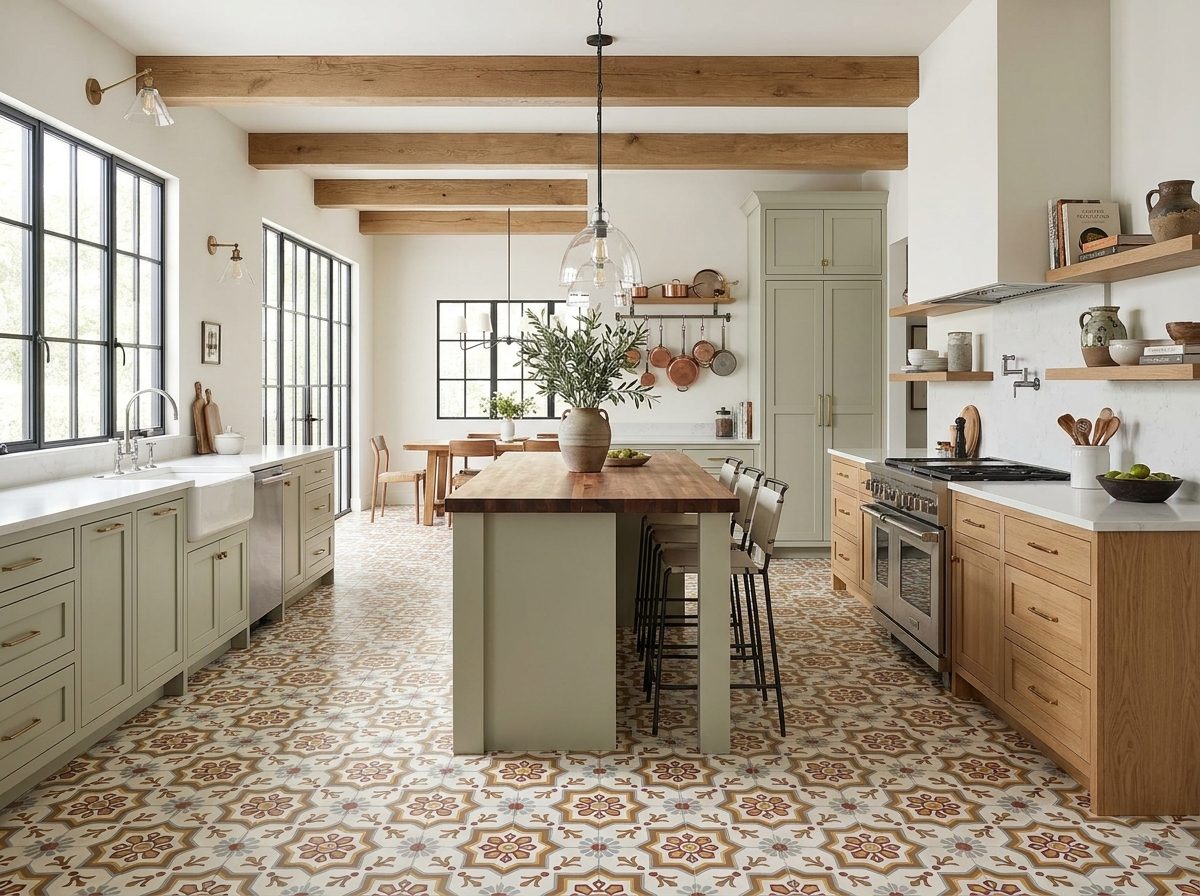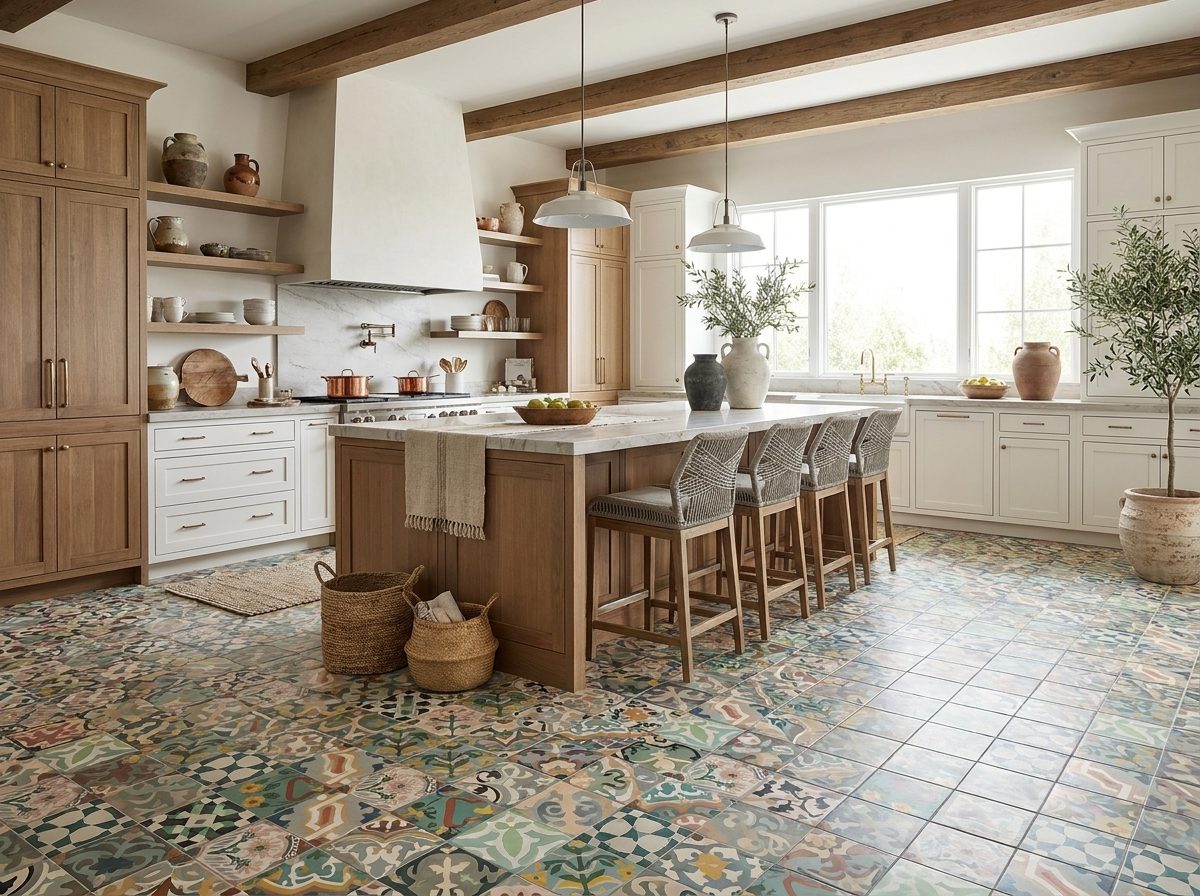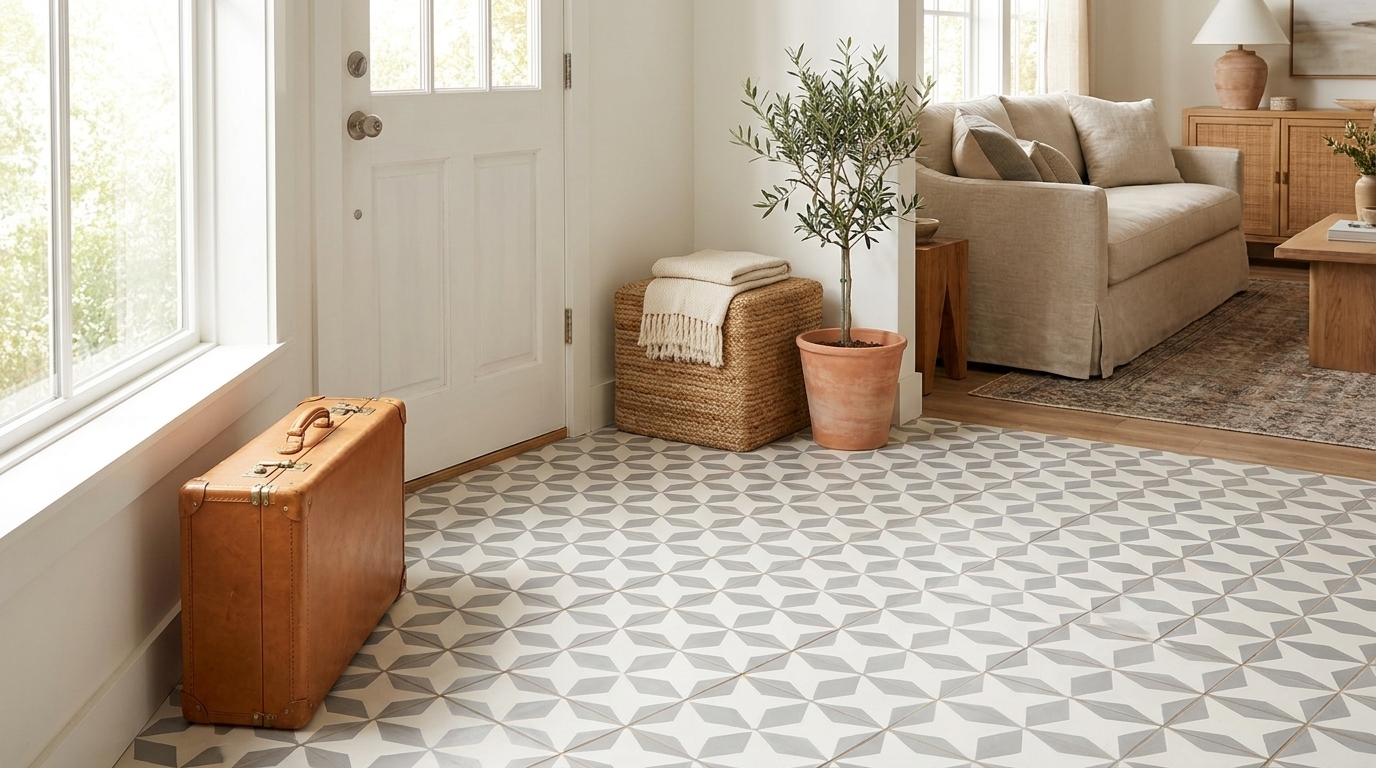
You’re probably here because you’ve seen a wall, backsplash, or shower wrapped in zellige mosaic tile and had a widely shared reaction. It doesn’t look flat. It doesn’t look factory-made. It looks alive.
That reaction is exactly why zellige keeps pulling designers, homeowners, and hospitality teams back in. Light skims across the surface, catches one edge, drops into a small pit, flashes on the glaze, then goes soft again on the next tile. A simple color suddenly has depth. A plain wall starts acting like a crafted surface instead of a finish material.
That beauty is real. So are the trade-offs.
I love zellige for the right project. I also talk clients out of it when the installation crew expects perfect uniformity, when the schedule can’t absorb the realities of handmade material, or when the application demands a different kind of durability and consistency. Honest specification matters more than romance. If you understand what zellige is, how it behaves, and where it excels, you can use it beautifully. If you treat it like standard ceramic, the job usually gets tense fast.
An Introduction to Zellige's Living Texture
A good zellige installation changes over the course of a day. Morning light makes the glaze look crisp. Evening light makes the same wall feel deeper and softer. In a powder room, that can turn an ordinary envelope into the focal point. In a kitchen, it can make a single-color backsplash feel layered without needing a busy pattern.
That’s the appeal of zellige mosaic tile. It isn’t just about shape or color. It’s about surface movement. Even when the layout is simple, the finish never reads as static because handmade pieces reflect light in different directions.
Clients often think they’re shopping for a tile color. They’re really choosing a level of variation. Some people want that shimmer and tonal change because it gives a room soul. Others see the same variation and read it as inconsistency. Both reactions are valid. The difference comes down to expectations.
Practical rule: If you want a wall that looks uniform from every angle, zellige probably isn’t the material you want.
The strongest zellige projects usually share three traits:
- They let the surface be the feature. A restrained palette often works better than competing patterns and finishes.
- They pair craft with restraint. Simple cabinetry, limewash, plaster, stone, and warm metals all give zellige room to breathe.
- They accept variation on purpose. The irregularity isn’t a flaw to manage away. It’s the whole point.
That’s why zellige works so well in spaces meant to feel collected rather than polished to sameness.
The Story of Zellige From Morocco to Modern Homes
Zellige didn’t begin as a trend piece for kitchens and boutique bathrooms. It began in 10th-century Morocco, where it developed as an adaptation of Greco-Roman mosaics within Islamic artistic traditions, which favored geometric expression over figurative imagery. Early zellige was mostly brown and white, then expanded in color and complexity over time. A major spread of the craft followed the Moorish presence in Spain, with the Almoravides, Almohads, and Berber Marinids helping popularize it across Al-Andalus, as described in this history of zellige tilework.

By the 14th century, zellige had become the signature decorative medium for elite Islamic architecture. The Alhambra Palace is the well-known example, but the same visual language appears in major madrasas and religious buildings where pattern, rhythm, and craftsmanship carried spiritual and cultural meaning.
How the craft evolved
The palette widened over centuries. What began in a restrained color range became a richer, polychromatic art form, with artisans adding yellows, blues, and dark manganese tones. That shift mattered because it allowed more intricate geometric compositions and gave architects a broader visual vocabulary.
The technique eventually fell out of fashion in most places after the 15th century. Morocco is the major exception. Production continues there today, preserving nearly 600 years of uninterrupted cultural practice, which is one reason zellige still carries real weight as a traditional craft rather than a revived look.
Why this history still matters
When a client chooses authentic zellige, they aren’t only choosing a glossy handmade tile. They’re buying into a lineage of geometry, hand labor, and regional knowledge that has survived where many decorative traditions have not.
That context also explains why authentic material behaves differently from a standardized product. It wasn’t invented to satisfy modern expectations of batch-perfect sameness. It was developed as a hand-crafted system of assembled pieces.
For designers who want the look with a stronger grounding in traditional craft, it helps to study actual handmade zellige tiles before making assumptions based on mass-market imitations. The visual language might be copied often, but the original logic of the craft is much older and much more disciplined than most showroom displays suggest.
The best zellige installations still feel architectural, not decorative for decoration’s sake.
What Makes Zellige Unique The Art of Imperfection
Authentic zellige looks the way it does because the process never tries to erase the hand of the maker. Each tile is made from terracotta clay sourced from Morocco’s Atlas Mountains, then shaped, glazed, fired, and finished by hand. The word zellige means “little polished stone” in Arabic, which fits the way these pieces catch light and read as both refined and irregular at once, as explained by Zellige Home’s overview of the craft.
The process is the product
Think of zellige the way you’d think of naturally leavened bread from a great bakery. The flour matters. The water matters. The person handling it matters. The result is never identical from loaf to loaf, and that’s part of the value.
Zellige works the same way.
- The clay body matters. Traditional makers use Moroccan clay rather than a generic industrial blend.
- Hand cutting matters. Edges won’t have the machine precision of porcelain or standard ceramic.
- Glaze application matters. Surface depth, tonal pooling, and slight irregularities come from human handling and firing, not from a printed finish.
Why imperfections aren’t defects
People use the word “imperfect” loosely. In zellige, it needs to be understood correctly. Variation in sheen, edge, thickness, and surface texture is inherent to the craft. If every piece looked laser-cut and dead even, that would be a sign you were looking at something else.
That doesn’t mean every irregularity is acceptable in every setting. It means the installer and specifier need to read the material properly. A handcrafted tile asks for curation during layout. It doesn’t reward a box-by-box, assembly-line installation mindset.
Here’s what clients usually notice first:
- Luminous glaze that shifts under changing light
- Subtle texture instead of a perfectly flat face
- Organic variation in tone, reflection, and edge profile
What you’re paying for
With zellige, you’re paying for labor, material specificity, and a production method that has remained handmade for over a thousand years. That’s why it feels different from a tile that merely imitates handcraft with a printed surface and a distressed edge.
When clients say they want zellige, I ask one follow-up question. Do you want handcrafted variation, or do you want the image of handcrafted variation? Those are different products.
That distinction saves a lot of bad purchases.
Zellige vs Key Alternatives Ceramic Cement and Porcelain
Most buyers don’t choose between zellige and nothing. They choose between zellige and other materials that solve similar design problems. That’s where a lot of online advice falls short. Plenty of articles praise the look. Very few help you decide whether authentic zellige is the right specification for the project.
There’s also a documented gap in practical comparisons between authentic glazed ceramic zellige and cement tile alternatives, especially for high-traffic commercial settings and long-term maintenance planning, as noted in this discussion of the durability information gap.

First comparison against standard ceramic and porcelain
If your priority is consistency, standard ceramic and porcelain usually make life easier. They arrive more uniform, install more predictably, and generally demand less interpretation on site.
Zellige is different. It offers more visual movement and craft character, but it also introduces more variability in sizing, thickness, and finish. That’s a feature in the right room and a headache in the wrong one.
For clients still sorting through broader flooring categories, this Albany Capital Region flooring guide is a useful starting point because it frames material choices by practical trade-offs rather than pure aesthetics.
Here’s the simplest way I explain it:
- Ceramic works well when you want affordability, ease, and a broad style range.
- Porcelain is the choice when you need a harder, more standardized material with low day-to-day fuss.
- Zellige is what you choose when surface character matters more than uniformity.
- Cement tile enters the conversation when you want handcrafted presence but need a different set of design and performance options.
Authentic zellige versus zellige-inspired cement tile
This is the comparison more people should be having. Authentic zellige is a fired, glazed ceramic product. Handmade cement tile is a different material system entirely. It’s made without clay, glazing, or firing. The finish, feel, maintenance profile, and visual effect all change.
A cement tile won’t give you the exact jewel-like glaze of zellige. What it can offer is a matte, inlaid-color surface with strong pattern flexibility and, depending on the producer, more control over customization.
| Feature | Authentic Zellige | Zellige-Inspired Cement Tile (e.g., Original Mission Tile) |
|---|---|---|
| Material type | Hand-cut glazed terracotta ceramic | Handmade cement-based tile with inlaid color |
| Surface character | Glossy, light-reactive, irregular | Matte or silky-matte, soft variation |
| Visual appeal | Organic shimmer and depth | Graphic richness and handcrafted character |
| Pattern flexibility | Best when embracing available shapes and traditional variation | Better suited to bespoke motifs and color-driven pattern work |
| Uniformity | Lower, by design | More controlled than zellige, though still handmade |
| Best-fit use case | Feature walls, backsplashes, low-abrasion statement surfaces | Floors, walls, hospitality settings, custom pattern programs |
| Scheduling fit | Can be limiting for tight custom timelines | Often better when speed and custom development both matter |
What works in real projects
In a residential kitchen backsplash, authentic zellige often earns its keep because the wall gets light, close-up visibility, and relatively forgiving wear. In a commercial restaurant floor, the conversation changes. Maintenance routines, replacement planning, visual consistency across a larger field, and installation speed all matter more.
That’s one reason many specifiers compare handmade materials before committing. If your project sits between old-world character and practical performance needs, a side-by-side review of cement tile vs porcelain tile can also help clarify where handmade cement fits relative to more standardized options.
A beautiful material can still be the wrong material. The best specifications come from matching the tile’s behavior to the room’s demands.
Designing with Zellige Mosaic Tile Application Ideas
Zellige performs best when the design lets the surface do some of the work. You don’t need to overcomplicate it. In many rooms, one strong color, a disciplined layout, and good lighting are enough.
Kitchens that need warmth
A kitchen backsplash is often the safest entry point. The wall gets enough light to show off the glaze, but the square footage is manageable. Deep green, chalky white, blue, and earthy neutrals all work because the surface itself carries movement.
What works best is restraint. If the cabinetry already has heavy grain, ornate hardware, and dramatic stone, zellige can push the room into visual noise. If the surrounding materials are quieter, the tile reads as intentional and rich.
A good reference point for planning scale, placement, and finish is a focused look at a zellige tile backsplash rather than a generic inspiration gallery.
Bathrooms that benefit from light play
In bathrooms, zellige can create a cocooning effect without making the room feel flat. Shower walls, vanity walls, and niche backs are especially effective because water and light both animate the glaze.
Use a single hue when you want calm. Mix tones when you want a more obviously mosaic effect. The mistake I see most often is using a highly active tile on every surface in a compact bath without giving the eye a resting place.
- For dark rooms: choose tones that bounce light instead of swallowing it.
- For small baths: run one color across a full wall to make the envelope feel continuous.
- For statement showers: let the tile carry the mood and keep fixtures quieter.
A quick visual walkthrough helps here:
Architectural features that deserve emphasis
Fireplace surrounds, bar fronts, built-in niches, and accent walls all suit zellige because they benefit from changing reflection and close viewing distance. These are the places where handmade irregularity reads as luxury rather than inconsistency.
The design principle is simple. Use zellige where people will experience the surface, not just register the color.
If the room depends on texture, zellige helps. If the room depends on precision, another tile may serve it better.
How to Select and Specify Zellige Tile
Specifying zellige isn’t a matter of choosing a color and checking out. It’s a curation process. If you skip that mindset, the project usually ends up over budget, behind schedule, or disappointing on install day.
Authentic zellige has a high degree of variation, with approximately 15 to 20% of tiles showing imperfections such as cracks, crazing, or chips. Installers and designers are also advised to order 20 to 25% extra for blending and selection, according to this zellige installation guide.
Start by specifying variation, not fighting it
A lot of problems begin when the client approves one sample tile and assumes the delivered order will look like a scaled-up version of that exact piece. That’s not how zellige works.
You need to decide what level of variation the project can absorb:
- High variation welcome for old-world, textured, or visibly handcrafted interiors
- Moderate variation acceptable for refined residential spaces with some tolerance for movement
- Low variation required for tightly controlled contemporary projects, where authentic zellige may not be the right material
Order more than feels comfortable
That overage recommendation isn’t optional. It allows the installer to blend boxes, pull out pieces that don’t suit the visible field, and keep the composition balanced. Without enough extra material, every decision on site becomes more constrained.
This matters even more when the installation sits in a focal area like a range wall or a full shower enclosure. A handmade field needs editing.
Specification note: The overage on zellige isn’t just waste protection. It’s part of the design process.
Ask the right questions before you approve
Don’t just ask for color. Ask for project reality.
What does the full batch range look like?
You want to see variation across multiple pieces, not a hero sample.Who is installing it?
A crew that only knows standardized tile may fight the material instead of reading it.What is the lead time for the exact look you want?
Traditional hand-cut production has real constraints.Do you need custom colors or a bespoke pattern?
Many teams encounter significant challenges. Handmade zellige carries production limitations that many retail pages gloss over.
There’s a real content gap around those customization and scheduling realities. Designers working on deadline often need to know whether they can get a specific palette, motif, or quantity within a narrow construction window. Traditional zellige may not be the most flexible answer when the brief is highly bespoke and time-sensitive.
Know when to pivot
If the project demands exact repeatability, broad custom patterning, or faster movement through procurement, it’s worth considering a material that channels the handcrafted spirit without depending on the same production logic. That isn’t a compromise by default. It’s good specification discipline.
The smartest clients don’t ask, “Is zellige beautiful?” They ask, “Is zellige right for this job?”
Installation and Maintenance A Practical Guide
Zellige rewards skill and punishes assumptions. The installer has to understand that the tile won’t behave like a flat, tightly calibrated ceramic. Surface prep, layout, leveling, and finishing all matter more.

Zellige also brings structural considerations. It weighs 16 to 22 kg per square meter at 11 to 12 mm thickness, which makes it significantly heavier than typical wall ceramics and something that deserves proper attention on vertical applications, according to this zellige technical sheet.
Installation realities on site
The first thing I tell contractors is simple. Slow down. Handmade tile needs a layout-first mentality.
A few points matter immediately:
- Wall readiness: The substrate needs to be sound, flat, and appropriate for a heavier handmade finish.
- Box blending: Never install one box at a time. Pull broadly and constantly.
- Leveling attention: Thickness variation means the setter has to manage lippage actively.
- Joint expectations: Tight joints may look traditional, but they can complicate installation and cleaning depending on the format.
Authentic zellige may also show irregular flatness and edge conditions. That means the setter needs judgment, not just speed.
Sealing and grout decisions
Not every zellige scenario is identical. Unglazed natural variants require more careful sealing before grouting to reduce moisture issues and efflorescence risk. Glazed pieces are different, but that doesn’t make the assembly carefree.
For floors, reduced mesh-mounted grout spacing can create problems if the layout leaves joints too tight for cleaning and long-term maintenance. In some cases, installers remove pieces from mesh sheets to gain better spacing control.
Here’s the practical approach I prefer:
- Use the manufacturer’s guidance for the exact product. Don’t assume all zellige behaves the same.
- Mock up grout color first. Grout can either unify the field or make every irregular edge stand out.
- Plan maintenance before install day. That includes cleaner compatibility and sealing needs where applicable.
The tile is only half the specification. The installation method is the other half.
Daily care and long-term expectations
Maintenance should be gentle and consistent. Harsh cleaners are a bad idea on artisanal tile assemblies, especially when grout, sealers, and finish variation are all part of the system. In wet areas, routine wiping and sensible ventilation do more good than aggressive chemical cleaning.
What doesn’t work is expecting a handmade wall to behave like a lab-perfect, low-variation porcelain panel. If you want handcrafted texture, you also accept a bit more care and a lot more installer responsibility.
Frequently Asked Questions About Zellige Tile
Is zellige expensive?
It usually sits in a premium category because the process is labor-intensive and handmade. I’m not going to throw out a made-up square-foot number. Pricing varies by source, format, color, availability, and freight. The important point is this: budget for the tile, the extra quantity, and the added installation labor together.
Is zellige good for floors?
It can be used on floors, but I’m selective about it. Handmade irregularity, thickness variation, and maintenance expectations make it a better fit for some floors than others. For high-traffic commercial settings, I’d evaluate alternatives very carefully instead of defaulting to zellige for aesthetic reasons alone.
Can a homeowner install zellige as a DIY project?
A small backsplash might tempt an experienced DIYer, but I don’t usually recommend it. This material asks for layout judgment, blending, and careful handling. If you’re spending on authentic zellige, it makes sense to hire an installer who understands handmade tile.
Are chips and cracks normal?
Some imperfections are inherent to the product, which is part of why extra material should be ordered for selection and blending. If damage appears over time, the response depends on whether it’s superficial, isolated, or part of a broader installation issue. Save leftovers from the original order. Repairs are always easier when you have matching stock.
Can zellige be fully customized?
That’s one of the least discussed parts of the buying process. A lot of online content focuses on finished retail offerings and inspiration photos, but it often skips the production constraints of traditional hand-cut ceramic. If your project needs a very specific custom motif, exact palette matching, or a compressed timeline, traditional zellige may not be the easiest path. That’s where modern alternatives, including handmade cement tile with design-studio customization and ready-to-ship options, can be more practical.
What’s the biggest mistake people make with zellige?
They buy it for the image of imperfection, then get upset when the material arrives with variation. The second biggest mistake is hiring a crew that treats it like ordinary ceramic.
Where does zellige work best?
My short list is backsplashes, shower walls, powder rooms, fireplace surrounds, niches, and accent walls where light can animate the glaze and the surface can be appreciated up close.
If you love the old-world spirit of zellige but need more flexibility for custom patterns, tighter timelines, or demanding floors and commercial applications, take a look at Original Mission Tile. Their handmade cement tile approach offers a different material language, not a fake substitute. That can be the smarter choice when a project needs handcrafted character with more control over customization and specification.