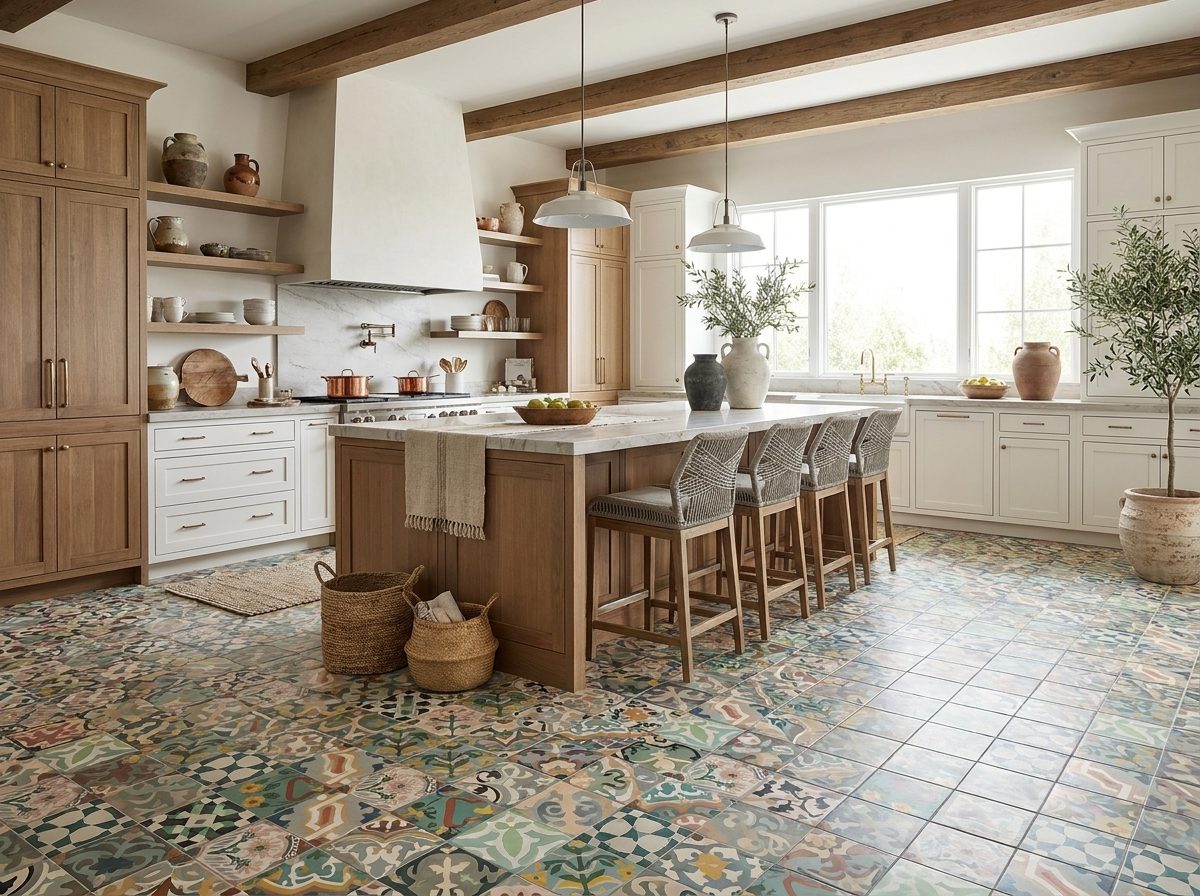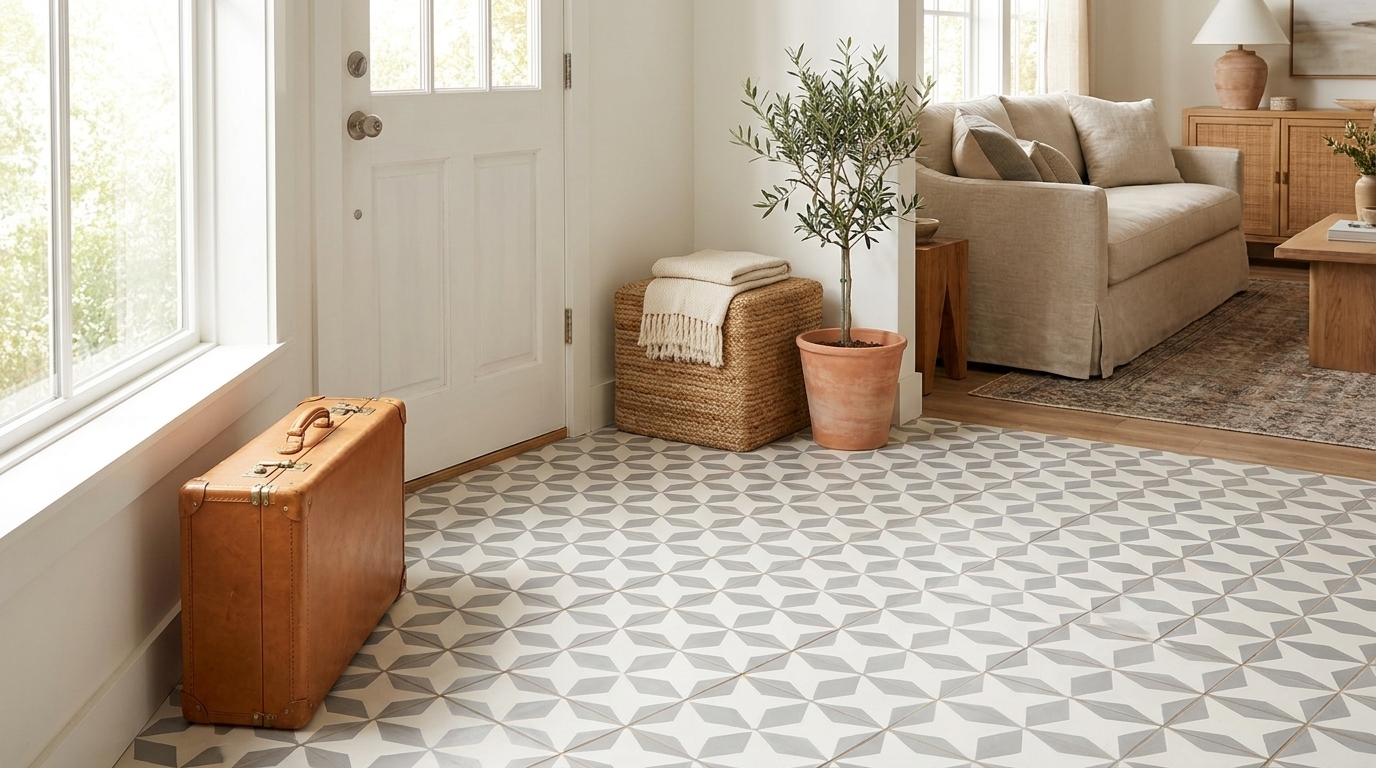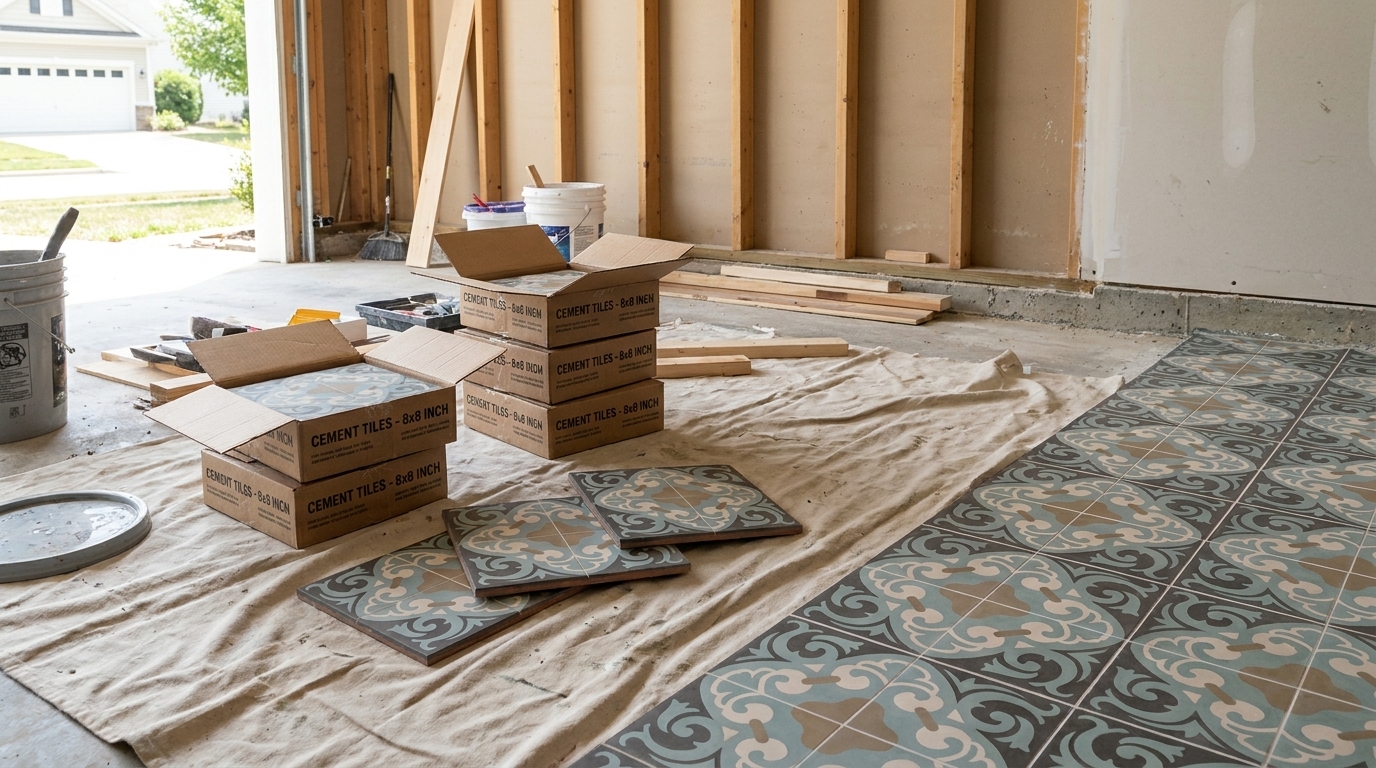
You’ve probably stood in a showroom or scrolled through project photos and felt the split decision immediately. Porcelain seems easy. Stone feels familiar. But the cement tile shower is the one you keep returning to because it doesn’t look manufactured. It looks composed. It has depth, a soft matte finish, and patterns that feel collected rather than printed.
Then the practical question lands. Can a handmade, porous tile really belong in a shower that gets soaked every day?
It can. But only when the installation respects what cement tile is. This isn’t a material you treat like basic glazed ceramic and hope for the best. A successful cement tile shower depends on disciplined waterproofing, careful setting, the right sealing sequence, and maintenance that protects both appearance and traction. When those pieces line up, the result is a shower that feels architectural, personal, and durable.
Your Dream Cement Tile Shower Starts Here
A lot of shower projects begin with disappointment. The homeowner wants something with soul, but every “safe” option feels flat. The architect wants pattern, but the installer warns that anything handmade is risky in a wet area. The builder wants a clean schedule, so the conversation gets pushed back toward standard materials.
That’s usually the moment cement tile enters the room.
A cement tile shower changes the feel of a bathroom because the surface reads differently. Color sits within the tile rather than on a glossy printed layer. The finish is matte, not slick-looking. Patterns can be bold or restrained, but even plain cement tile has a depth that machine-made surfaces often miss.
The confusion comes from one true fact that gets oversimplified. Cement tile is porous. Some people hear that and assume the tile can’t go in a shower at all. What matters is whether the whole shower assembly has been built correctly. The tile itself is a finish surface. Protection is provided by the waterproofing behind it and the sealing strategy on top of it.
A good cement tile shower doesn’t rely on luck. It relies on sequence.
I’ve seen beautiful shower designs succeed because the team respected the material from the first slope line to the final coat of sealer. I’ve also seen avoidable failures caused by rushing, over-buffing, using the wrong sealer, or treating artisan tile like commodity tile.
If you want the art of cement tile without the headaches, you need both design judgment and trade discipline. That’s where this guide lives.
Understanding Cement Tile Suitability for Wet Areas
A cement tile shower succeeds or fails on one simple truth. Cement tile can live in a wet area for decades, but only when the installer treats it as a breathable finish layer over a properly built shower system.
That distinction clears up a lot of bad advice. Cement tile absorbs water more readily than glazed ceramic, so it behaves more like natural stone than porcelain. That does not make it a poor shower material. It means the shower has to be detailed with the material in mind, especially at the surface where water lands every day and at the assembly behind the tile where mistakes stay hidden until damage appears.
I explain it to clients this way. A raincoat keeps you dry because the fabric, seams, and closures all work together. A shower works the same way. The tile contributes appearance, texture, and wear surface. The waterproofing system protects the structure. The sealer helps manage how water and soap interact with the face of the tile.
Why cement tile can perform well underfoot
Shower floors ask for two things at once. They need grip, and they need a surface that still looks good after years of water, soap, and cleaning. Cement tile can answer both needs because its matte finish has a natural traction that many glossy surfaces do not.
That is one reason seasoned installers usually avoid polishing cement tile in a shower. The soft, velvety face is part of the appeal, and it supports safer footing. For homeowners comparing patterns, field tile sizes, and coordinating wall options, these bathroom shower tile options make it easier to judge beauty and practicality together rather than as separate decisions.
What the material is actually good at
Cement tile handles daily water exposure well when the installation respects its strengths and limits. It offers rich color because pigment is pressed into the wear layer, not printed onto a glaze. If the surface picks up the slight patina that handmade materials develop over time, that change usually reads as character rather than failure.
Its porosity does create rules.
Cement tile needs a penetrating sealer suited to wet environments. It also needs installers who understand cure times, grout selection, cleaning chemistry, and moisture movement through the assembly. A shower built for porcelain can hide a few careless habits. Cement tile is less forgiving. It rewards precision.
Where shower projects usually go wrong
The tile itself often gets blamed for problems that begin elsewhere. The common trouble spots are familiar in the trade. Water sits where the floor pitch is too flat. Moisture lingers where the setting materials did not cure before sealing. Edges darken where harsh cleaners strip the sealer. White residue appears when moisture carries salts to the surface and cannot dry properly.
Those are installation and maintenance problems, not proof that cement tile does not belong in a shower.
Transitions matter too. Curbs, benches, niches, and wall-to-floor joints need careful detailing because water always tests the weakest point first. Good perimeter containment is part of that discipline, including proper metal or membrane terminations and code-compliant barriers such as those discussed by Awesim Building Consultants on water stops.
Three ideas worth keeping straight
Homeowners, designers, and even some installers often mix up material terms that mean very different things in practice:
- Porous means the tile can absorb moisture and stain if left unprotected.
- Durable means the tile body can hold up to wear when it is installed and maintained correctly.
- Waterproof describes the shower system behind the tile, not the tile itself.
Keep those definitions straight, and the material starts to make much more sense.
A cement tile shower is a good choice for someone who wants handcrafted depth and is willing to respect the technical side. It is not the easiest shower surface to install. It is one of the most rewarding when the craft is there.
Waterproofing and Substrate Preparation for Showers
If the shower body isn’t watertight before tile goes in, the surface material doesn’t matter. You can set the most beautiful pattern in the world over a weak shower pan and you’ll still end up with trouble. Moisture will find every shortcut the installer took.
The first thing I tell clients is simple. Tile and grout are not the waterproof layer. They’re the visible finish. The actual defense lives underneath, in the membrane, the slope, the drain integration, and the treatment of seams and transitions.

Membrane choice and why it matters
Installers usually work with one of two membrane approaches.
| System | What it does well | What needs attention |
|---|---|---|
| Sheet membrane | Gives a consistent manufactured thickness and clear overlap details | Requires careful seam treatment and disciplined drain detailing |
| Liquid-applied membrane | Adapts well to odd shapes, niches, and site-built conditions | Coverage must be uniform, with no thin spots at corners or transitions |
Either method can work in a cement tile shower. The failure point usually isn’t the category. It’s execution. Corners, pipe penetrations, bench transitions, and drain connections are where showers earn or lose their reliability.
For readers comparing assembly details, this guide on how to waterproof shower walls is useful because it separates waterproofing from tile setting, which many people mistakenly blend together.
The foundation has to be boring
A well-built substrate looks unremarkable. That’s a compliment.
You want a surface that is:
- Clean and stable so the mortar bonds evenly
- Properly sloped so water moves to the drain instead of lounging in corners
- Reinforced at seams where movement and leakage tend to show up first
- Flood tested before tile work starts
One small but often neglected detail is containment at transitions. In threshold zones and vulnerable joints, a properly considered stop detail can help control water migration. This practical primer on water stops in showers from Awesim Building Consultants is worth reviewing if your project includes open entries or complex wet-room conditions.
Practical rule: If the installer says the waterproofing is “basically handled” once cement board is up, stop and ask for the full membrane and drain plan.
Curbless showers over concrete slabs
Curbless showers are clean-looking and highly functional, but they remove the forgiveness that a curb can provide. On a slab, every slope decision becomes more consequential because the entry is visually open and physically continuous.
For modern curbless showers using cement tile, a pre-sloped mortar bed is essential. The available installation guidance notes that these builds typically require enough depth to create proper drainage, and for cement tile there’s an extra issue: unsealed tiles can wick moisture from the mud bed during curing. That’s why a 72-hour non-use curing period after installation before sealing is important in this assembly, especially to reduce the risk of trapped moisture, lippage from handmade thickness variation, and drainage problems, as discussed in this curbless shower installation video reference.
That point gets missed all the time. People understand slope, but they don’t always understand how porous handmade tile behaves while the setting bed is still releasing moisture.
What prep mistakes usually look like
The most common problems aren’t mysterious:
- Flat spots in the pan that hold water
- Weak drain transitions where waterproofing was improvised
- Membrane breaks at corners or niches
- Rushed tile setting over damp assemblies
- No flood test before finish materials arrive
A cement tile shower rewards precision. If the waterproof shell is disciplined, the surface work has a fighting chance to age beautifully.
A Step-by-Step Cement Tile Installation and Sealing Workflow
The shower pan has passed its test. The walls are ready. This is the stage where a beautiful cement tile shower can either come together with discipline or start collecting problems that stay hidden until the bathroom is in daily use.
Cement tile rewards patience. The material behaves more like fine stone than factory-glazed ceramic. It has color depth, softness of surface, and slight variation from piece to piece. That beauty is exactly why the installation sequence matters.

Dry layout before mortar
Start on the floor with a full dry layout.
Lay out the pattern, rotate pieces into their intended orientation, and study how the field meets the drain, corners, bench faces, and niche returns. A dry layout is the dress rehearsal. It shows you where a border gets too skinny, where a motif falls off center, or where one tile with slightly different tone should move to a less prominent spot.
This step matters even more in a shower because the eye catches alignment errors quickly. A line that drifts at the floor will usually look worse when it turns up the wall.
If the design continues from floor to wall, mark that transition before mixing mortar. Cement tile patterns often read as one composed surface, not separate planes, so the layout has to be resolved as a whole.
Setting mortar and placement
Once the layout is approved, mix only as much thin-set as can be used while it is still fresh and workable. White mortar is usually the safer choice under cement tile, especially with light colors, because it reduces the risk of shadowing through the face.
Spread mortar evenly. Then back-butter each tile so the setting bed supports the full piece. In a shower, hollow spots are invitations for trouble. Full coverage supports the tile, limits stress at corners, and helps the finished surface feel solid underfoot.
Joint width should stay consistent and restrained. As noted earlier, cement tile is produced with enough consistency to allow fine joints when the setter is careful, but handmade material still asks for judgment, not force. The goal is visual calm, not a mechanical grid pushed beyond what the tile wants to do.
A few field habits make a major difference:
- Lower each tile into place carefully. Sliding it around too much can smear mortar into the joint and stain the face.
- Tap lightly with a rubber mallet or beating block. You are bedding the tile evenly, not driving it downward.
- Check plane constantly. Handmade tile can vary slightly, and small adjustments are easier before the mortar begins to firm up.
- Clean mortar from the surface and joints as you work. On porous tile, yesterday’s residue becomes today’s repair problem.
Grouting and protecting the surface
Good grout work starts before the grout is mixed. Cement tile can grab pigment and hold onto haze, so the face is often protected with the pre-seal or grout-release method recommended by the sealer manufacturer. That temporary protection works like painter’s tape on finished wood. It does not make the surface bulletproof, but it reduces the chance that grout becomes part of the design.
Choose a grout color that supports the tile instead of fighting it. In many cement tile showers, the pattern should read first. Heavy contrast at every joint can break the field into small pieces and distract from the composition.
Pack joints fully, then clean with control. Too much water during cleanup can pull pigment, weaken fresh grout at the joint, and create a cloudy surface film that is harder to remove from cement tile than from glazed ceramic.
For room-scale planning beyond the tile surface, the Wet room installation Eastbourne guide is useful for understanding how drainage layout, room transitions, and enclosure choices affect the finish work.
Judge the installation by the quiet details. Straight joints, balanced cuts, clean niche edges, and crisp drain transitions usually tell you the setter understood the material.
A visual walk-through can help if you want to see the rhythm of installation before talking with your setter.
The sealing sequence that protects the shower
Sealing should be treated as a system, not a single last-minute coat.
First, make sure the tile surface is clean and dry enough for the chosen sealer schedule. In many failed showers, sealer was applied over residual moisture, grout haze, or construction dust. The result is uneven absorption, blotching, or a finish that never looks settled.
Second, use the right type of sealer for a wet area. Some products are meant to reduce staining while preserving the natural matte look. Others add more visible surface effect, which can change slip resistance and alter the character of the tile. A shower floor and a shower wall do not always need to be treated with the same priorities.
Third, respect cure times. Cement tile and grout need time to release moisture before final sealing and regular use. Rushing that step is like trapping steam under a lid. The assembly may look finished, but it has not finished drying.
Original Mission Tile provides handmade cement tile along with installation and maintenance guidance for shower applications. That mention matters for one practical reason. Cement tile should be installed and sealed according to product-specific instructions, not generic assumptions carried over from porcelain or glazed wall tile.
Common installation mistakes
The failures I see most often are process failures, not material failures.
| Mistake | What it causes |
|---|---|
| Skipping the dry layout | Off-center patterns, awkward cuts, and misaligned transitions at niches or benches |
| Poor mortar coverage | Hollow spots, weak support, and a floor or wall that feels uneven over time |
| Overworking the tile during setting | Chipped edges, stained faces, and inconsistent joint lines |
| Aggressive grout cleanup | Haze, washed joints, and discoloration on the cement surface |
| Applying sealer before the assembly has dried properly | Blotchy appearance, trapped moisture, and a finish that ages poorly |
| Choosing a topical finish without considering slip and appearance | A surface that looks artificial or feels less secure under wet feet |
A cement tile shower can last for decades and still look richer with age. That result comes from sequence, restraint, and respect for the material at every step.
Inspiring Shower Design Patterns and Layout Ideas
Once the technical side is handled, cement tile opens up a different kind of design freedom. The shower doesn’t have to be a blank enclosure anymore. It can become the focal surface in the room, or it can become the quiet element that lets light, brass, plaster, or stone do the talking.

The patterned shower that carries the room
Some bathrooms need a strong center. In those projects, a patterned cement tile shower wall can do the heavy lifting for the whole design. I’ve seen this work especially well when the rest of the room stays disciplined. Plain plaster, restrained hardware, simple vanity lines.
Patchwork compositions can feel collected rather than repetitive. They suit houses that already have texture and history. In a newer build, that same patchwork can prevent the bathroom from feeling overly polished.
A useful strategy is to run the pattern across the floor and up one wall. That “waterfall” move creates continuity and helps the enclosure read as an architectural plane rather than a boxed insert.
The quiet shower that still feels rich
Not every cement tile shower needs a loud motif. Some of the most refined rooms use a single color or a subtle geometry.
Shapes influence mood more than people expect:
- Hexagon reads orderly and grounded
- Fish scale softens the room and adds movement
- Plain square tile gives the eye a rest and lets materiality speak
- Arabesque or curved formats can make a compact shower feel more composed
A monochromatic shower in a soft mineral color can feel almost spa-like without losing the handmade character that draws people to cement tile in the first place.
A strong design doesn’t always need a louder pattern. Sometimes it needs a quieter shape.
Layout choices that change the architecture
The same tile can feel entirely different depending on layout. That’s where many cement tile shower designs either become memorable or become busy.
Here are a few layout ideas that consistently work:
- Patterned niche with plain field tile keeps maintenance simple while giving the eye a focal point.
- Full-height feature wall works well in long, narrow showers where one plane deserves emphasis.
- Floor-only pattern lets walls stay calm, especially in bathrooms with expressive wallpaper or millwork outside the wet area.
- Half-wall transition can help bridge a shower zone into the rest of the room when the bathroom is part of an open suite.
Matching design to the homeowner
I always ask a simple question. Do you want your shower to greet you, or disappear behind the rest of the room?
If you want it to greet you, choose stronger contrast and a more defined motif. If you want it to disappear, choose a tonal palette and let the handmade matte finish carry the interest. Cement tile is generous that way. It can be theatrical or quiet without losing its identity.
Long-Term Care and Maintenance for Cement Tile
Cement tile doesn’t have a plastic, sealed-off personality. It has what many of us call a living finish. That means the surface develops character with use, but it also means you need to care for it with the right chemistry.
Harsh cleaners are where many owners accidentally damage a cement tile shower. Acidic products, aggressive scrubbers, and heavy-duty descalers can attack the sealer or alter the surface. Once that protective layer is compromised, the shower becomes more vulnerable to staining and uneven wear.
Cleaning without damaging the finish
For routine care, keep it simple.
- Use pH-neutral cleaners made for sealed stone or cementitious surfaces
- Rinse away soap residue rather than letting it build in corners and low spots
- Use soft cloths or non-abrasive pads instead of harsh scouring tools
- Spot test unfamiliar products in a hidden area first
If you need a reference for day-to-day care methods, this guide on cleaning cement tiles covers the basic maintenance mindset these surfaces need.
Resealing and traction
Resealing isn’t just about stain resistance. In a shower, it also affects safety.
The sealer choice matters because some finishes can change how the floor performs when wet. According to this discussion of shower use at Stone Tile Depot, updated 2025 accessibility codes place emphasis on R11+ slip ratings in wet areas, and some topical sealers can reduce slip resistance to an R9 to R10 rating. The recommendation there is to use matte-finish penetrating sealers to preserve the tile’s higher wet traction.
That aligns with what good installers have learned in practice. If you cover a cement tile shower floor with the wrong topcoat, you can undo one of the material’s great strengths.
How to tell when maintenance is due
You don’t need to guess blindly. Watch the shower.
| Sign | What it may mean |
|---|---|
| Water darkens the tile quickly | The sealer may be wearing thin |
| Soap residue clings more than usual | Surface protection may be diminishing |
| Floor feels different underfoot after a coating product | Traction may have changed |
| Color looks blotchy after use | Moisture movement or uneven sealer wear may be present |
A cement tile shower should age with dignity, not neglect. Gentle cleaning and smart resealing are what keep that balance.
Owners who understand that rhythm usually love living with cement tile.
Evaluating the Pros Cons and Overall Cost
Cement tile rewards people who want character and are willing to respect process. It isn’t the right answer for every project, and pretending otherwise doesn’t help anyone. This decision ultimately comes down to whether you value handmade surface quality enough to accept a more demanding installation and care routine.

A balanced look at the trade-offs
| Pros | Cons |
|---|---|
| Distinctive pattern and color depth that feels handcrafted | Needs an experienced installer familiar with handmade cement tile |
| Matte surface character that suits both historic and modern rooms | Requires sealing and periodic maintenance |
| Strong wet-area design potential for floors, walls, niches, and curbless concepts | Installation is less forgiving than standard glazed tile |
| Long material history and architectural credibility | Schedules can be longer when custom work is involved |
| No kiln firing in production, which supports its eco-conscious appeal | Not ideal for clients who want a zero-maintenance mindset |
One point many people appreciate is the material’s manufacturing heritage. Cement tiles were invented in the mid-19th century as an energy-efficient alternative to kiln-fired tiles, and their modern appeal still rests partly on that no-fire process using natural materials like cement, sand, and mineral pigments, as described in this history of encaustic cement tile.
Cost means more than purchase price
I’m not going to invent square-foot figures that vary wildly by region, pattern complexity, labor market, substrate condition, and shower design. In practice, a cement tile shower usually carries a higher total investment than an ordinary ceramic shower because the labor expectations are higher and the workflow is slower.
The meaningful cost categories are:
- Tile selection including stock versus custom pattern work
- Waterproofing assembly especially in curbless or slab conditions
- Installer skill level because this isn’t a novice material
- Sealer system and follow-up care
- Project complexity such as benches, niches, drains, and pattern alignment
If you’re budgeting a broader remodel, this Northern Beaches bathroom renovation guide from Voyager Plumbing is a useful reminder that shower finishes should be evaluated as part of the whole bathroom scope, not as an isolated line item.
Who should choose cement tile
A cement tile shower tends to make sense for people in these camps:
- Design-led homeowners who care about finish character
- Architects and interior designers looking for a material with historical and tactile depth
- Hospitality projects where memorable bathrooms are part of the guest experience
- Builders with skilled tile setters who can execute the details cleanly
It may not be the right fit for someone who wants the fastest install, the lowest-maintenance surface, or a purely standardized product experience.
The honest bottom line
If you want a shower that feels unlike everyone else’s, cement tile offers something very few materials can. But it asks for commitment in return. The value isn’t just in the tile itself. It’s in the assembly, the craftsmanship, and the discipline that keeps the shower working long after the photo day is over.
Start Your Project with Original Mission Tile
A shower often looks finished the day the grout is cleaned. Its real test starts months later, when daily steam, soap, movement, and cleaning cycles begin working on every detail of the assembly. Cement tile rewards projects that respect that reality from the first selection conversation, not after problems appear.
That is why sourcing matters. Handmade cement tile is not a plug-and-play surface. It has character, variation, and a porous face that must be handled correctly at each stage, from layout planning to pre-sealing and final cure. A good tile partner helps you choose a pattern that fits the room, but also helps you avoid preventable mistakes such as poorly aligned motifs, incompatible sealers, or tile selections that fight the drain geometry.
Original Mission Tile approaches cement tile the way an experienced craft shop should. The focus is not only color and pattern, but also how the tile will live in a real shower. That includes practical guidance on scale, slip awareness, layout flow, and the installation sequence needed to protect a handmade surface.
Start with the room itself. A compact shower may need a simpler repeat or a smaller-scale motif so cuts at the perimeter do not weaken the design. A larger enclosure can carry a bolder pattern, a framed rug effect, or a full-height feature wall. The goal is the same in both cases. The pattern should look intentional once benches, niches, valves, and the drain interrupt the field.
Then line up the technical team early. Cement tile in a shower works like a finely crafted wood door on a well-built frame. The surface can be beautiful, but the result depends on what supports it, how it is fitted, and how it is protected from moisture over time. Installer experience matters here because the margin for error is smaller than it is with many factory-finished tiles.
If you’re planning a cement tile shower and want help choosing patterns, formats, or installation-ready options, explore Original Mission Tile. You’ll find handmade cement tile collections, custom design resources, and practical guidance for turning a strong design idea into a durable shower assembly.