You’re likely making this choice with samples spread across a table, a budget open in one tab, and a lot of conflicting advice in your head.
One tile promises easy upkeep and a familiar path. The other promises depth, character, and a floor that can outlive trends. That’s why cement tile vs ceramic tile is rarely a simple style decision. It’s a lifecycle decision. The right answer depends on where the tile is going, how hard the space will work, and what kind of maintenance story you’re willing to live with for years.
The mistake I see most often is judging these materials by the invoice alone. That’s the shortest part of the story. What matters more is how the surface ages, what happens when traffic gets heavy, whether damage is repairable, and whether the tile still looks right after daily use has done its work.
Choosing Your Surface a Tale of Two Tiles
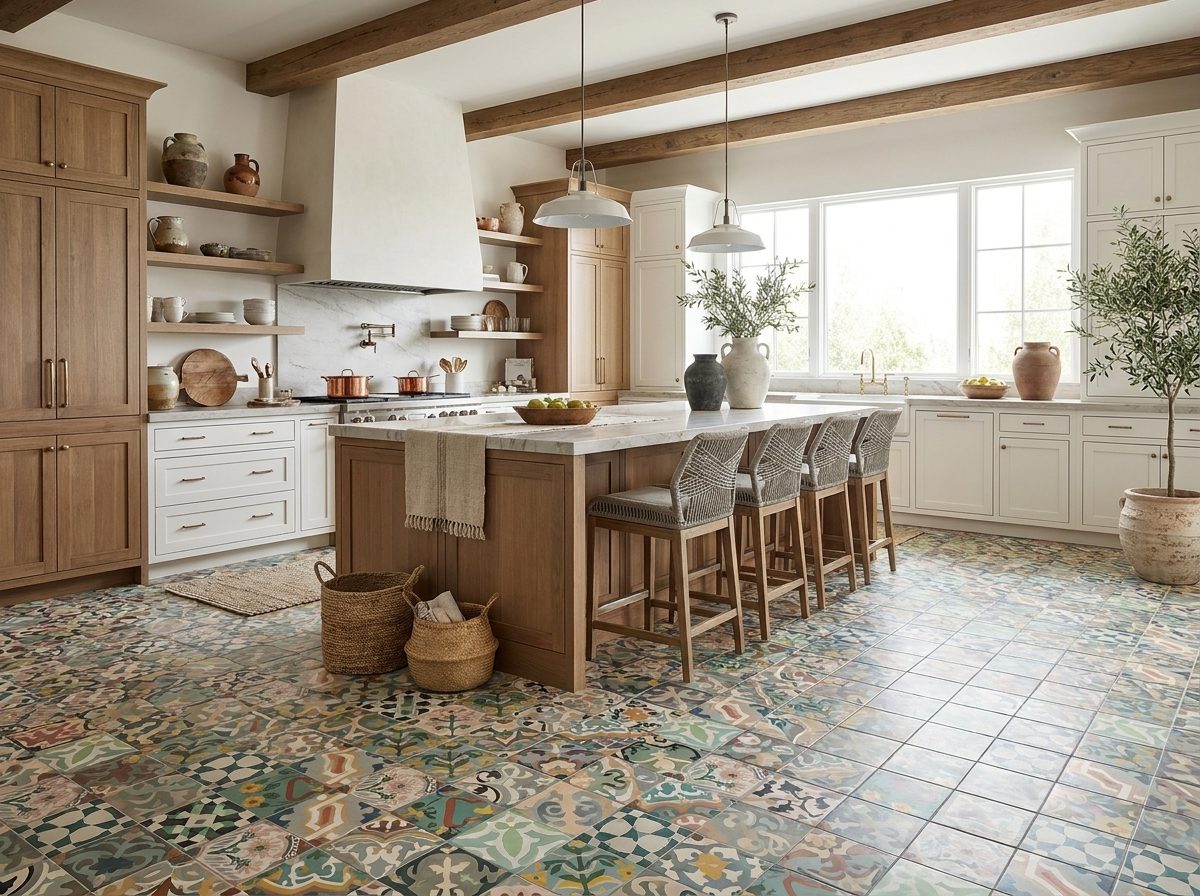
A designer walks into a showroom looking for a patterned floor for a restaurant entry. A homeowner is reworking a kitchen and wants something with more presence than a standard glazed field tile. A builder is trying to balance a client’s taste with a schedule and labor reality. They all end up in the same place, holding two samples that may share a shape and pattern language but behave very differently.
One sample feels dense and substantial in the hand. Its finish is matte, almost silky, and the color seems part of the material rather than laid on top of it. The other sample is lighter, cleaner at first glance, and sealed behind a glossy or satin glaze that reads as finished the moment you see it.
That split matters.
Ceramic often wins the quick decision because it feels familiar. Cement wins the long look because it rewards attention. If you’re comparing options for floors, walls, backsplashes, commercial entries, or hospitality spaces, the key consideration isn’t which one is prettier on day one. It’s which one still makes sense after traffic, cleaning, moisture, and time have all had their turn.
For many clients, that’s the moment the conversation changes. They stop asking only about style and start asking better questions. What happens when a chair drags across it? What happens when grease, wine, sand, or wet shoes show up every day? What happens when the finish wears?
If you’re still sorting through formats, finishes, and applications, this guide to different types of tile is a useful place to compare categories before you narrow the material.
The right tile doesn’t just match the room. It matches the way the room will be used, cleaned, and lived in.
That’s the lens worth using here. Not showroom lighting. Not a staged photo. Real use.
The Making of a Tile From Pigment and Pressure to Clay and Kilns
The biggest differences between these materials begin long before installation. They’re born from two different traditions.
Ceramic belongs to the world of clay and fire. Cement belongs to the world of pigment, mineral body, and pressure. Once you understand that, the performance differences stop feeling mysterious.
Ceramic starts with clay and heat
Ceramic tile traces back to 4,000 BCE, with fired processes used by ancient Egyptians, Romans, and Babylonians. Modern ceramic still follows that core logic. Clay is formed, dried, and fired in a kiln. Many ceramic tiles then receive a glaze that provides color, pattern, sheen, and surface protection.
That glaze is one of ceramic’s great strengths. It gives the tile a wipeable surface and allows for crisp visual effects, from glossy solid colors to printed patterns. It also explains one of ceramic’s limitations. The decorative finish lives at the surface.
For walls, backsplashes, and many lighter-duty applications, that’s a practical advantage. For heavy-use floors, surface wear becomes part of the conversation.
Cement starts with mineral ingredients and a press
Cement tile came later. It originated in Catalonia, Spain, in the 1850s as a more durable and easier-to-produce alternative to handmade glazed ceramic tile, and unlike ceramic it requires no kiln firing. Instead, it’s made from Portland cement, sand, marble dust, and pigments, then hydraulically pressed at around 2,000 pounds of pressure with the color embedded into the tile itself, according to the historical record on cement tile.

That no-kiln process is more than a manufacturing footnote. It shapes the surface, the density, and the way the tile ages. Cement tile doesn’t depend on a fired glass layer for its look. Its pattern sits in an inlaid wear layer, which is why well-made cement tile develops patina instead of looking “printed through” when it matures.
Why the process changes the result
If you’re choosing between cement tile vs ceramic tile, don’t think only in terms of composition. Think in terms of where the beauty lives.
With ceramic, the visual story is often carried by the glaze. With cement, the visual story is integrated into the tile body. That changes four practical things:
- Wear pattern: Cement tends to mellow and develop character. Ceramic can remain clean-looking for years, but once glaze damage becomes visible, the look usually doesn’t improve with age.
- Tactile feel: Cement reads softer and more architectural underfoot. Ceramic usually feels harder and slicker, especially in glossier finishes.
- Visual depth: Cement has a layered mineral look. Ceramic usually looks sharper and more uniform.
- Installation sensitivity: Cement asks more from the installer because the raw face needs protection during installation. Ceramic is generally more forgiving.
Practical rule: If you want a floor that can age like stone or leather, look hard at cement. If you want a surface that arrives sealed and ready for easy wipe-down use, ceramic has the advantage.
Old-world craft, different priorities
These materials also come from different design instincts.
Ceramic is excellent when precision, sheen, and low-maintenance surface performance matter most. Cement makes sense when the project needs visual depth, custom pattern, and a handcrafted floor or wall with a matte finish that doesn’t feel mass-produced.
Neither one is automatically “better.” But they are not interchangeable.
A Side-by-Side Analysis of Cement and Ceramic Tile
A homeowner chooses ceramic for the lower ticket price, then replaces worn floor tiles years later because the finish cannot be renewed. Another owner pays more for cement up front, keeps up with sealing, and restores the surface instead of tearing it out. That is the comparison that matters in practice.
| Criteria | Cement tile | Ceramic tile |
|---|---|---|
| How it’s made | Hydraulically pressed from cement, sand, marble dust, and pigments | Formed from clay and fired in a kiln, often with glaze |
| Surface feel | Matte, dense, substantial | Smooth, often glossy or satin, lighter in hand |
| Durability profile | Dense wear layer with color and pattern built into the body | Hard fired body with a finished surface that does much of the visual work |
| Maintenance | Requires sealing and careful product selection for cleaning | Usually simpler routine cleaning on glazed surfaces |
| Upfront cost | Typically higher per square foot | Usually available across a wider budget range |
| Best fit | Statement floors, hospitality, entries, custom pattern work | Walls, backsplashes, many budget-sensitive installs, wipeable glazed surfaces |

Durability and feel under real use
A showroom sample only tells part of the story. Floors fail under chairs, grit, rolling loads, dropped pans, sloppy cleaning, and years of foot traffic.
Studio Cement Tile’s comparison of cement and ceramic tiles notes a basic truth installers already know. These materials wear differently because they are built differently. Cement has a decorative wear layer that is part of the tile itself. Ceramic often depends on the condition of the finished surface, especially in glazed products.
That distinction shows up over time. Cement can pick up patina, soften visually, and in many cases be refinished if the face loses its original crispness. Ceramic often looks clean and stable for years, but once glaze wear, scratching, or chipping becomes obvious, there is no practical way to restore the original factory finish. Replacement is usually the fix.
Cement also carries more physical presence underfoot. It reads heavier, quieter, and more architectural. Ceramic tends to feel sharper and more uniform, which can be exactly right for walls, baths, and projects where surface neatness matters more than depth.
Where each material earns its keep
Ceramic is a smart choice for locations where wipeability, color consistency, and straightforward upkeep carry the most weight. Backsplashes, shower walls, laundry rooms, and many rental properties fit that profile well. If the surface is vertical or sees light wear, ceramic often delivers strong value.
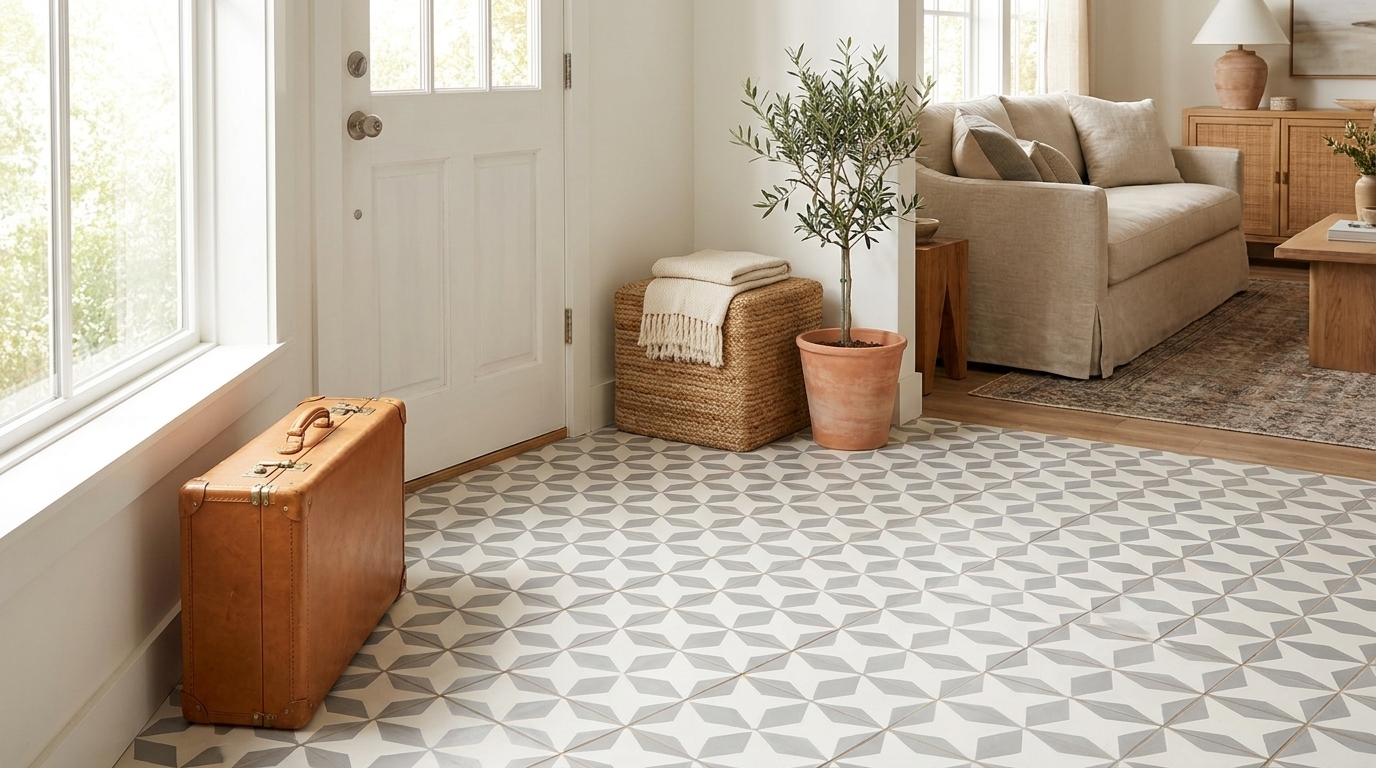
Cement earns its keep in places where the floor is part of the design, not just a finish. Entries, kitchens, restaurants, corridors, and pattern-heavy rooms benefit from the depth of pigment and the fact that honest wear does not immediately destroy the look. Owners who accept routine care often get a longer design life from the installation.
I have seen this play out repeatedly. Ceramic usually wins the short-budget conversation. Cement often wins the long-horizon conversation.
Upfront cost is only the first line item
Material price still matters. Cement tile generally costs more to buy, and it often costs more to install because the surface needs protection, the layout usually matters more, and the setter needs good habits from the first dry lay to the final cleanup.
Ceramic gives buyers more price flexibility. There are many entry-level options, many crews know the material well, and the installation process is usually faster. That can make ceramic the right answer for projects with tight construction budgets or broad square footage.
But the cheap tile is not always the low-cost tile over its full life. If a ceramic floor loses its finish in the traffic paths, the money already spent on installation is gone along with the tile. A cement floor asks for periodic care, yet the surface itself remains serviceable in a different way. That is a major ownership difference.
Maintenance requirements and finish longevity
Cement tile needs sealing. It also needs the right cleaners and realistic expectations. That maintenance is part of the bargain, and owners should know it before the order is placed. For anyone comparing protective options, this practical guide to ceramic tile sealers helps clarify how surface protection differs across tile types and finishes.
Ceramic usually asks less of the owner day to day, especially on glazed walls and light-duty surfaces. Routine cleaning is simple, and a general resource on effective tile cleaning and maintenance is useful for setting good habits around gentle cleaners and residue control.
The long-term trade-off is straightforward. Cement requires planned maintenance, but the visible surface can often be refreshed. Ceramic often requires less routine attention, but once the glaze is visibly spent, restoration is limited and replacement is the only option.
Understanding the Total Cost of Ownership
Most tile comparisons stop at material price. That’s where a lot of bad decisions begin.
The better way to judge cement tile vs ceramic tile is to ask what the surface will cost you to keep looking right. That includes routine maintenance, the consequences of neglect, and what your options are when visible wear arrives.

Cement asks for maintenance you can plan for
Cement tile has an unglazed face, so sealing is part of ownership. That’s not a defect. It’s the maintenance contract that comes with the material.
Owners need to understand that sealing is part of preserving stain resistance and surface performance. In return, the surface remains serviceable for the long haul. If it dulls, if life leaves marks, if the floor needs to be brought back, the material still gives you options.
For teams building a maintenance plan, practical routines matter. Even a general guide to effective tile cleaning and maintenance can help establish better habits around gentle cleaning methods, residue control, and avoiding the kind of harsh products that shorten the life of decorative surfaces.
Ceramic is easy until the finish is spent
Ceramic’s glazed face is the easier day-to-day story. It’s more resistant to routine messes, and ordinary cleaning is straightforward. That’s why it remains a strong choice for many walls, baths, and budget-driven projects.
The problem is what happens when a high-traffic ceramic floor starts to show irreversible surface wear. Once the glaze is worn down, “there's not really much you can do about that, except replace the tile,” as noted in Brookfield Residential’s discussion of tile types.
That sentence captures the ownership gap better than any sales pitch could. Cement requires periodic resealing, but its surface can be maintained indefinitely. Ceramic often needs less along the way, yet may force a full replacement decision when the visible finish is gone.
A floor that can be maintained is a different financial asset than a floor that must eventually be removed.
Budgeting like an owner, not a shopper
For a forever home, a boutique hotel, or a restaurant with heavy foot traffic, the useful budgeting questions are these:
- Can the finish be renewed? Cement usually gives you a maintenance path. Ceramic often doesn’t once glaze wear is obvious.
- Will downtime matter? Replacement is more disruptive than scheduled upkeep.
- Does the project need a long visual lifespan? If yes, refinishability matters.
- Can the maintenance team follow the material’s rules? Cement rewards disciplined care. If that won’t happen, ceramic may be the safer specification.
A sealer strategy also needs to be chosen with care. If your project includes ceramic surfaces that need protection guidance, this practical reference on ceramic tile sealers helps clarify where sealers make sense and where the glaze already does the work.
The short version is simple. Cement usually costs more to own in routine attention. Ceramic can cost more later if wear forces replacement. Which one is cheaper depends on whether you value low effort now or longer serviceability over time.
Installation Nuances and Environmental Impact
A good tile can fail because of a bad installation. With cement and ceramic, the installation logic is not the same, and treating them as if they behave the same is one of the fastest ways to create callbacks.

Cement installation is less forgiving
Cement tile needs an installer who understands the material before the first tile is set. The face is porous. Grout haze and staining are real risks. Timing matters. Sealing matters.
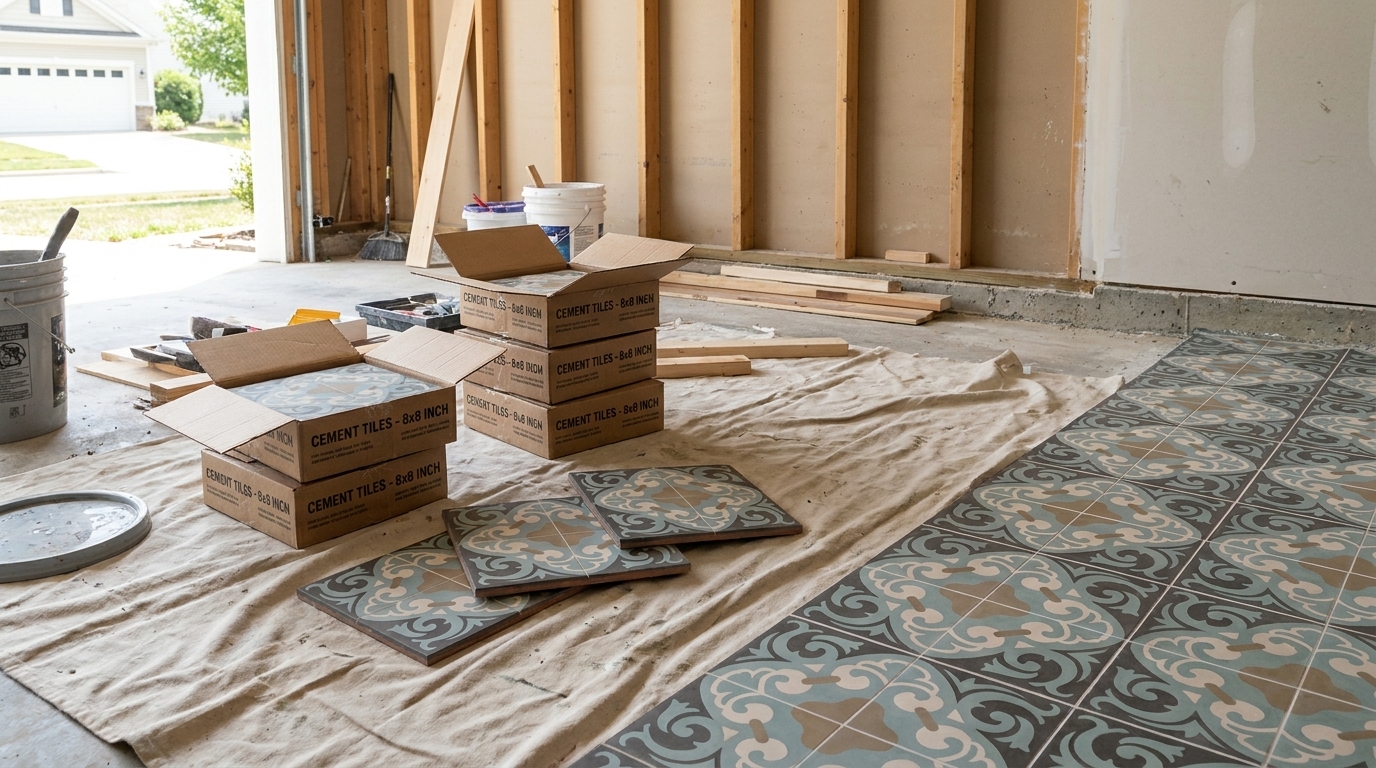
One practical difference from ceramic is the finishing sequence. Cement requires sealing after setting but before grouting, and the full process can take 10+ days including dry times, while ceramic usually follows a more direct bedding or adhesive route, according to this comparison of cement and ceramic tile installation.
That longer sequence is not wasted time. It’s protection against permanent mistakes.
Three essential considerations apply with cement tile:
- Protect the face before grouting. The penetrating sealer step prevents the grout from becoming part of the tile.
- Respect cure time. Rushing traffic onto a fresh installation causes avoidable problems.
- Use the right crew. A pattern floor magnifies every alignment error.
Ceramic usually moves faster
Ceramic is generally easier for more installers to handle well. It’s lighter, often thinner, and more familiar on a broad range of jobs. That’s one reason contractors like it when schedules are tight and detailing is straightforward.
That doesn’t mean ceramic installs itself. Layout, substrate prep, movement accommodation, and application-specific material choice still matter. But the average risk of staining the tile during installation is lower, and the sequence is usually simpler.
For teams that want to see process details visually, this installation video is useful context before finalizing methods and expectations.
Climate limitations are real
Outdoor use is where loose advice causes expensive failures.
The porosity of cement tile matters. It is not recommended for exterior use in areas that regularly experience below freezing temperatures because it can absorb water and suffer damage in freeze-thaw cycles, according to Fireclay’s note on ceramic vs cement tile.
That doesn’t make ceramic universally suitable outdoors. It means certain non-porous ceramic formulations are less vulnerable to that specific problem. The exact tile body and application still have to match the climate.
On the jobsite: Don’t specify cement outdoors in freeze-thaw conditions and hope the sealer will save you. It won’t change the basic material logic.
Environmental impact starts at the factory
This is another place where the manufacturing difference matters.
Ceramic depends on kiln firing, which is energy-intensive by nature. Cement tile avoids that stage. Its hydraulic press method uses no kiln, no glazing, and no firing. For designers and owners who care about embodied energy, that’s a meaningful distinction.
There’s also a second sustainability issue that doesn’t get enough attention. Longevity is environmental performance. A surface that stays in service and can be maintained for decades avoids the waste stream longer than one that must be removed when the finish is spent.
That doesn’t automatically make cement the right answer for every project. But if a client wants durable material with a handcrafted look and a lower-energy production path than fired ceramic, cement belongs in the specification conversation.
Making the Final Decision Your Use-Case Guide
A client stands in the showroom and asks the same question we hear every week. Do I spend more now on cement, or save money with ceramic and call it done?
The right answer depends on what that floor or wall will cost you over its full service life, not just what it costs on delivery day. Upfront price matters. So do sealing, cleaning methods, repair options, traffic, replacement disruption, and whether the surface can be renewed or only replaced once the finish is worn through.
That last point separates these materials in a practical way. Ceramic often asks less of the owner day to day, but glaze wear is permanent. Cement asks more at the start and over time, yet the surface can often be cleaned, refinished, and kept in service much longer.
Choose cement tile when character and service life matter most
Cement belongs in projects where the tile is meant to be part of the architecture, not background material.
It is a strong fit for patterned entries, dining rooms, hospitality floors, statement kitchens, and other spaces where depth, matte color, and hand-made variation are part of the design intent. It also earns its keep in long-hold properties, where owners care more about decades of use than the lowest first invoice.
One option in this category is Original Mission Tile, which offers handmade cement tile in stock and custom formats for residential and commercial projects.
Choose cement tile when these points describe your job:
- You plan to keep the property for years. Lifecycle value matters more than lowest installed cost.
- The tile is a feature, not filler. Pattern, pigment, and surface depth carry design weight.
- The owner accepts maintenance as part of ownership. Sealing and proper care are built into the plan.
- Replacing the floor later would be expensive or disruptive. Restoration is easier to live with than demolition.
- A little patina is welcome. Wear reads as age and use, not failure.
Consider ceramic tile when simplicity leads the brief
Ceramic is often the better tool for spaces that need predictability, speed, and low routine care.
It works well for backsplashes, many wall applications, bathrooms, and projects where the owner wants a surface that wipes clean without a maintenance schedule. It also makes sense when the budget is tight at the beginning, the installer pool is broader, and a uniform finish matters more than hand-crafted depth.
Ceramic is usually the better answer when:
- The client wants straightforward cleaning.
- The application is mostly vertical or lightly used.
- The project is budget-sensitive at the start.
- The design calls for gloss, sharp uniformity, or a highly controlled finish.
- Future replacement is acceptable if the finish eventually shows wear.
If the owner will not maintain cement correctly, ceramic is the safer specification, even if cement would deliver a richer result on day one.
Homeowner checklist
Homeowners should answer a few blunt questions before choosing either material.
- How hard will the room be used? Kids, pets, grit, wet shoes, and heavy cooking all change the calculation.
- Do you want a surface that develops character, or one that stays more consistent until it does not? Cement changes gradually. Ceramic usually looks stable until chips or glaze wear become noticeable.
- Will you keep up with sealing and proper cleaners? Good intentions do not protect tile.
- Are you renovating for resale soon, or for your own long-term use? Short ownership often favors easier maintenance. Long ownership often favors renewability and service life.
Designer and architect checklist
Good specifications match the material to the client as much as the concept.
- Does the design need visual depth and a matte surface, or precision and uniformity?
- Will the owner appreciate patina, or submit warranty calls over normal aging?
- Is the room a showpiece or a support space?
- Can the maintenance plan survive contact with real life once the project turns over?
A beautiful tile choice that the owner cannot maintain becomes a bad choice fast.
Contractor and builder checklist
Installers usually spot the true risk first. Listen to that instinct.
- Does the crew know the material and setting requirements?
- Is the schedule realistic for layout, curing, sealing, and protection?
- Will follow-on trades damage the surface after installation?
- Does the site condition match the material’s limitations?
The best cement installations come from patience, protection, and a client who understands ownership. The best ceramic installations come from choosing the right body and finish for the actual wear conditions.
The short answer is simple. Choose cement when you want a surface with depth, long service life, and the option to restore rather than replace. Choose ceramic when you want lower day-to-day care, a faster path to completion, and a finish that fits the job without much owner involvement.
If you’re weighing materials for a home, hospitality project, or custom specification, Original Mission Tile is a practical place to explore handmade cement tile options, technical guidance, and pattern-driven solutions with the long view in mind.