You’re probably looking at an outdoor space that has good bones but no identity yet. A patio slab behind the house. A courtyard that gets beautiful light and still feels unfinished. A pool surround that needs more character than plain concrete can give it.
That’s where cement tiles outdoor can change the entire mood of a project. The right pattern brings structure. The right color gives warmth. The right installation system makes that beauty practical, not fragile.
I’ve seen people hesitate because they’ve heard two opposite claims. One side says cement tile belongs only indoors. The other says you can lay it anywhere and forget about it. Neither is correct. Outdoor cement tile works when you respect the material, the climate, and the installation beneath it.
The Allure of an Outdoor Cement Tile Patio
A good outdoor floor does more than cover ground. It sets the rhythm for the whole space.
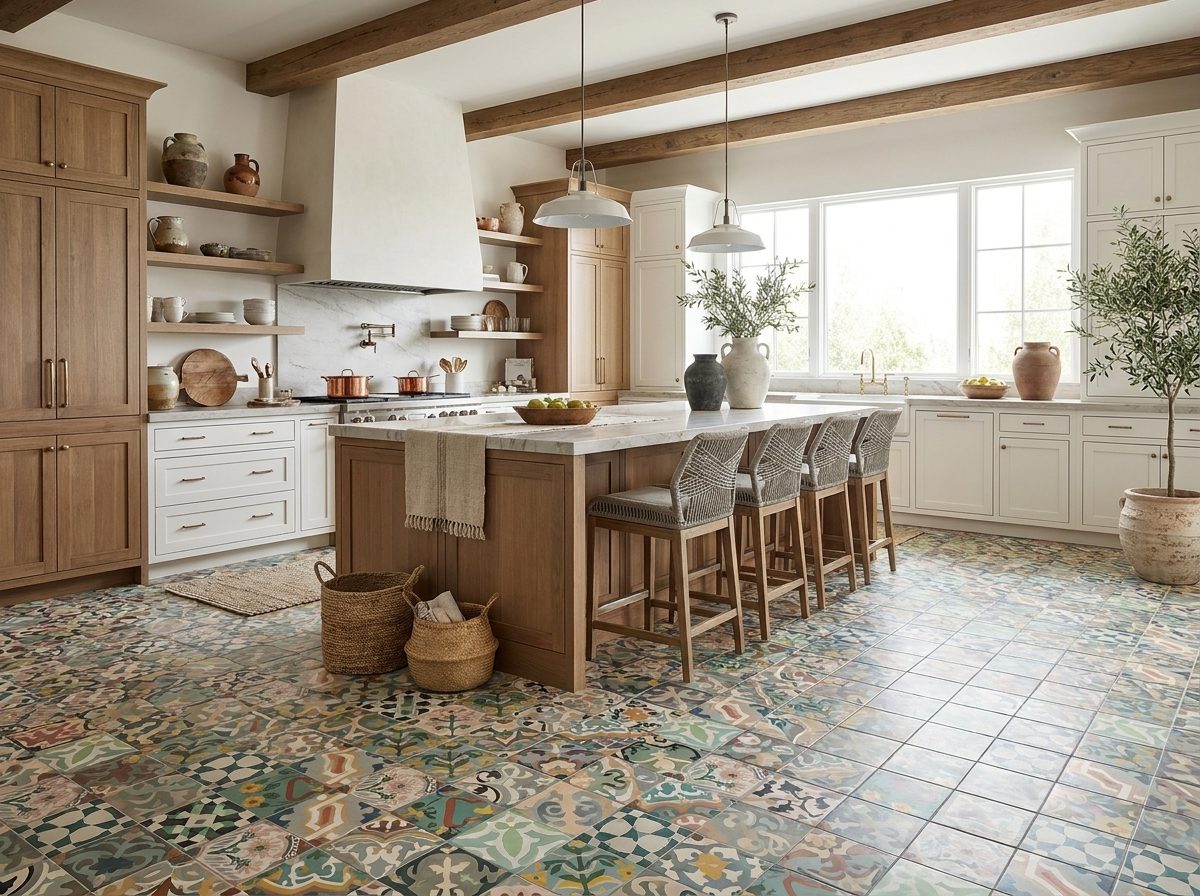
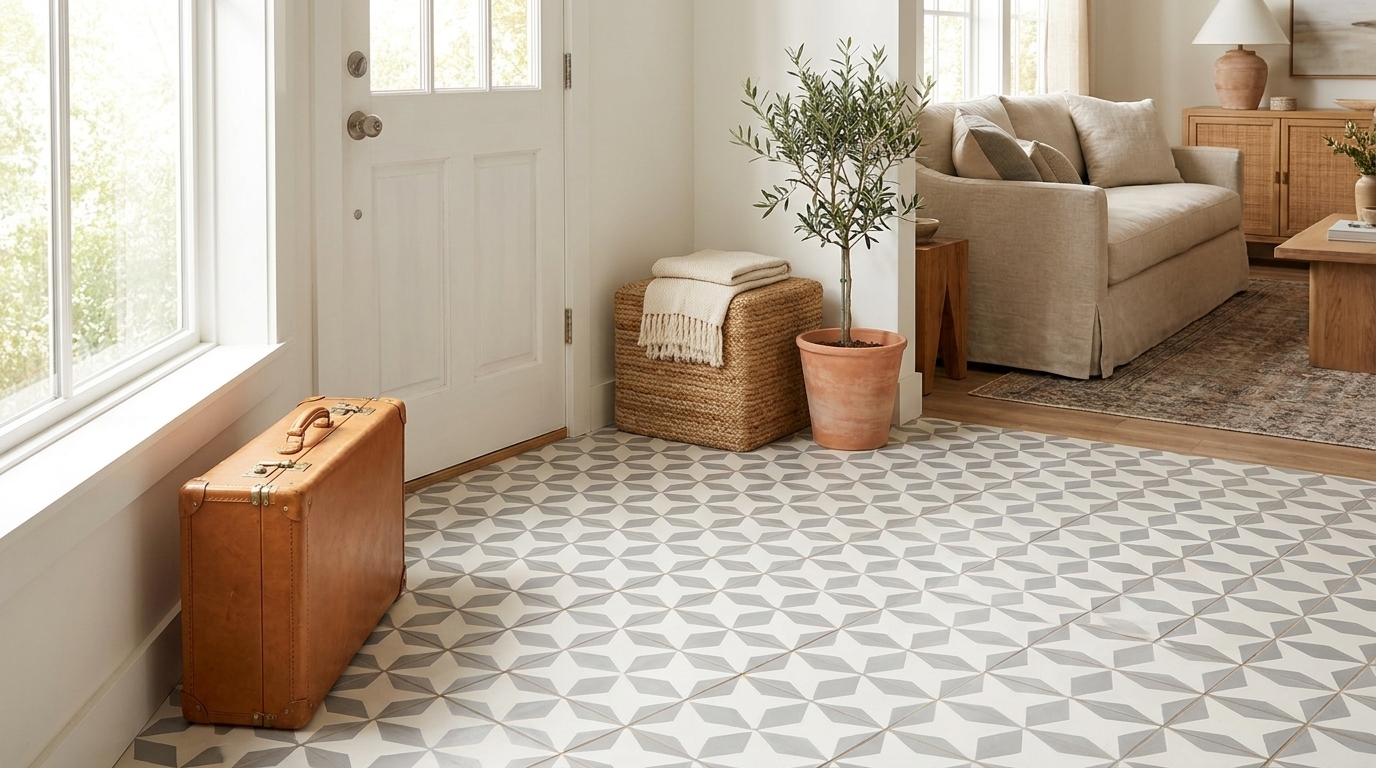
A patterned cement tile patio can make a small backyard feel like a courtyard. A solid-color field tile can quiet a modern terrace and let the planting do the talking. On a front walk, the right geometry gives the approach to a house a sense of intention before anyone reaches the door.

Why this material still pulls people in
Cement tile has a surface you read differently from glazed tile. It’s matte, soft in sheen, and grounded. The color isn’t printed on top. It lives in the tile itself, which is why even bold patterns feel architectural rather than flashy.
That character is part of why the material has returned so strongly in outdoor design. The resurgence of cement tiles since 2000 has been tied to green flooring trends and their no-fire manufacturing process, while their long record in historical estates and coastal architecture continues to support outdoor use when properly sealed, including service lives of 50+ years with proper sealing according to Villa Lagoon Tile’s history overview.
Outdoor beauty still needs planning
The dream version of an outdoor room isn’t just about the tile. It also involves drainage, thresholds, guardrails, and in some cases local approvals. If your project includes a raised deck, terrace, or structural changes, it helps to review understanding outdoor project planning permission before finishes are finalized.
Practical rule: The floor pattern is the easy part. The hard part is making sure water has somewhere to go.
Where cement tile feels most at home
I like cement tile outdoors when the setting asks for warmth and permanence. It fits especially well in spaces such as:
- Courtyards: Patterned fields make enclosed outdoor rooms feel established.
- Garden paths: Repeating motifs create visual direction without looking rigid.
- Poolside lounges: Matte surfaces and mineral-rich color palettes feel calmer than shiny finishes.
- Hospitality terraces: Handmade variation keeps large expanses from looking flat or commercial.
A well-designed outdoor tile floor should feel like it belongs to the architecture, not like it was dropped on top of it. Cement tile does that better than most materials. But only if the system under it is handled with discipline.
Answering the Question Can Cement Tiles Be Used Outdoors
Yes. Cement tiles can be used outdoors.
The better answer is this. Cement tiles outdoor are a system, not a simple material choice. If the climate is right, the substrate is prepared correctly, and the tile is sealed and maintained properly, outdoor cement tile can perform beautifully. If any one of those pieces is ignored, failure usually follows.
What makes cement tile different
Cement tile is not porcelain. It is not glazed ceramic. It behaves more like a dense, handcrafted architectural surface with natural porosity.
That matters because many people judge all tile by porcelain standards. They assume every tile can sit exposed, unsealed, and unaffected by standing moisture. Cement tile doesn’t work that way.
A better comparison is butcher block or full-grain leather. Both are durable. Both age well. Both need the right protection and the right care.
Why outdoor use makes historical sense
This material wasn’t invented for sterile interiors. Cement tiles originated in the mid-19th century in Southern France and Spain, where their hydraulic-press production allowed intricate designs that held up in patios, garden paths, and public spaces, later becoming the predominant flooring in Art Nouveau architecture across the Mediterranean, as described in this history of cement tile.
That historical origin tells you something important. Cement tile developed in climates where outdoor living mattered, and where wet winters didn’t necessarily mean hard freeze cycles.
The three conditions that decide success
Outdoor cement tile usually succeeds or fails on three conditions.
Climate
This is the first filter, not the last. If the installation is exposed to regular freeze and thaw, cement tile becomes a risky choice. Water enters a porous material, temperatures drop, expansion happens, and damage starts from inside.
In a mild or warm climate, the same tile can be an excellent fit.
Installation
Even a beautiful tile will fail on a bad slab. Outdoor installations need drainage, movement accommodation, and a bond coat that can deal with moisture and temperature swings.
The installer has to build for weather, not just for alignment.
Sealing and care
Sealing is not a cosmetic add-on. It is part of the assembly.
Without the right sealer, moisture and staining become harder to control. With the right penetrating protection and routine maintenance, cement tile becomes much more stable in everyday outdoor use.
Cement tile outdoors works best when the installer thinks like a builder first and a decorator second.
What this means in practice
If you’re choosing cement tile for an uncovered patio in a non-freezing climate, the answer is often yes. If you’re planning an exposed terrace where winter moisture freezes hard, the answer is often no, or at least not without accepting meaningful risk.
That’s the trade-off people need stated plainly. Cement tiles outdoor are not universally appropriate. They are highly rewarding in the right environment and unforgiving in the wrong one.
Choosing the Right Tile for Outdoor Performance
Choosing outdoor cement tile starts with the tile body itself. Before anyone talks about pattern scale or border layouts, the material has to suit the site, the traffic, and the amount of water the surface will see over time.

Read the tile like a working material
A good outdoor cement tile is judged by a few practical traits.
- Slip resistance: The surface has to feel secure under wet shoes and bare feet. Outdoor use calls for texture and grip, not a slick face chosen for showroom appeal.
- Water absorption: Cement tile is porous by nature. That porosity gives it depth and character, but it also means the tile has to be specified as part of a larger moisture-control system.
- Wear layer thickness: Traditional cement tile has color pressed into the face, not printed on top. A healthy wear layer gives the pattern long service life, even in active courtyards and entries.
- Abrasion resistance: Patios, outdoor kitchens, and commercial courtyards all grind dirt across the surface. A tile that looks beautiful on day one still needs to stand up to that abrasion.
One point deserves blunt language. Cement tile is not a universal exterior product. In exposed freeze-thaw settings, the material carries real risk, and no pretty sample board changes that.
Match the tile to the use, not just the climate
Two patios in the same city can need different tile specifications. A covered veranda with light foot traffic is one kind of job. A pool surround with constant splash-out, sunscreen, furniture drag, and afternoon sun is another.
I always sort outdoor selections by use first.
For poolside patios, underfoot traction and stain resistance usually decide the field tile. For front entries, dirt load and repeated wet-dry cycles matter more than decorative complexity. For restaurant courtyards or hospitality spaces, I pay close attention to wear, service access, and how easily the pattern will hide everyday soiling between cleanings.
If you are comparing cement tile with porcelain, quarry tile, and other exterior finishes, this guide to outdoor patio tile options helps frame those material trade-offs clearly.
Climate suitability at a glance
| Climate Zone | Suitability & Key Requirements |
|---|---|
| Mediterranean or coastal mild climate | Strong fit. Prioritize drainage, penetrating sealer, and regular maintenance. |
| Hot dry climate | Strong fit. Good choice for patios, walkways, and courtyards if substrate prep is correct. |
| Humid non-freezing climate | Good fit with careful sealing and water management. Watch for standing moisture and organic buildup. |
| Mixed climate with occasional frost | Caution. Exposure level, drainage, and project risk must be reviewed closely. |
| Regular freeze and thaw climate | Poor fit for unsheltered use. Choose another material for fully exposed installations. |
Pattern, format, and finish choices
Once performance is settled, design can do its work.
Patterned fields
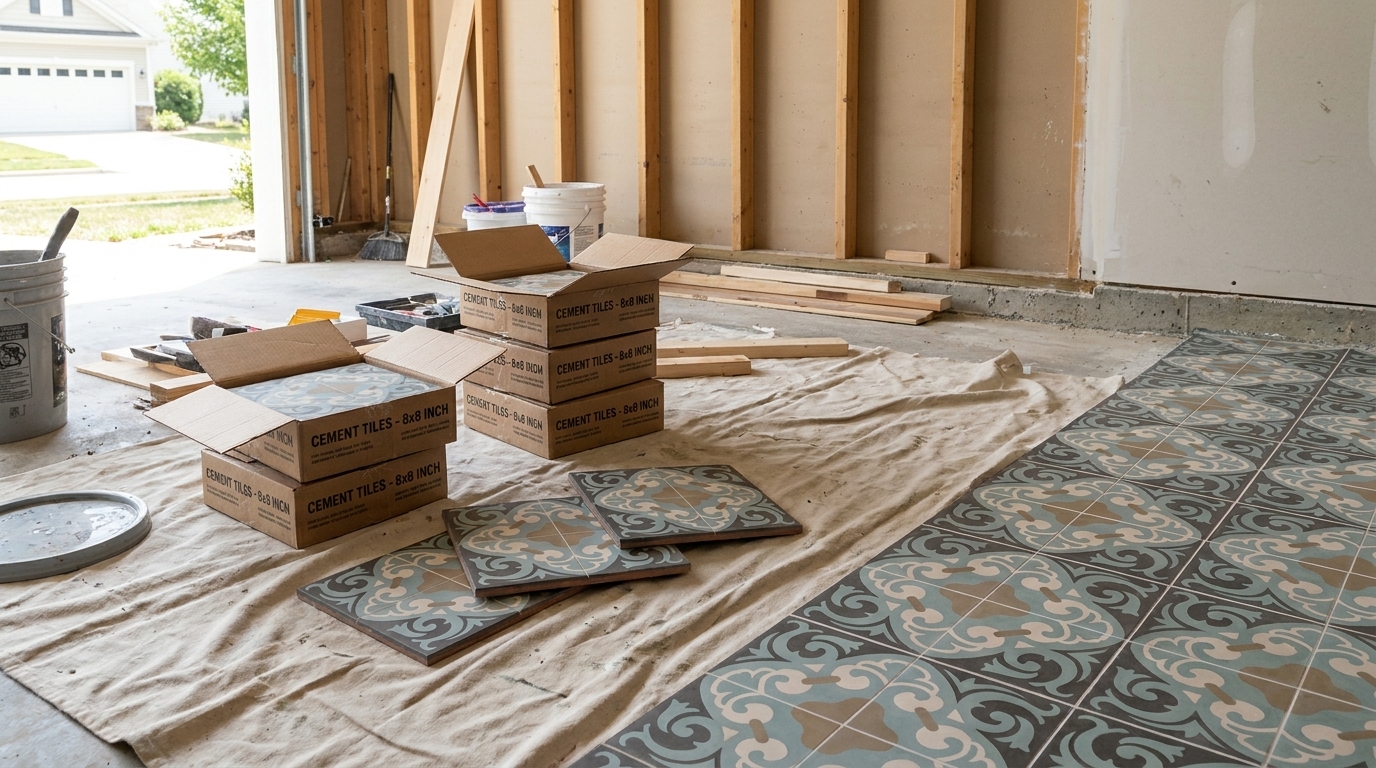
Traditional 8×8 cement tiles remain one of the most effective outdoor formats. They read well at patio scale, and repeating motifs can define an outdoor room without extra borders, medallions, or abrupt material changes.
Solid colors and quieter layouts
Plain field tiles often serve contemporary exteriors better than a dense pattern. They let planting, architecture, and furniture take the lead while still giving the floor the soft, hand-made character cement tile is known for.
Specialty shapes
Hexagons, arabesques, fish scale tiles, and star-and-cross layouts can be beautiful outdoors. They also ask more from the installer. More joints, more cuts, and tighter alignment tolerances leave less room for an uneven substrate or sloppy layout control.
Simple formats are often the wiser choice on demanding sites.
Selection mistakes that cause trouble later
The biggest specification errors usually happen before the first tile is ordered.
- Choosing from a small sample only: A sample can show color, but it will not show how a pattern reads across a full patio or how the surface behaves when wet.
- Ignoring the finish underfoot: Outdoor tile has to feel safe in real use, not just look refined in a design presentation.
- Using the same tile everywhere: A covered porch, an exposed terrace, and a pool apron may need different surfaces, even within one project.
- Treating maintenance as an afterthought: Cement tile outdoors performs best for owners who accept sealing, cleaning, and periodic care as part of the material.
A strong outdoor specification respects both beauty and consequence. Cement tile can last for decades outside and gain character with age, but only when the tile, the setting, and the maintenance plan are chosen as one system.
Building a Bulletproof Outdoor Tile Foundation
Most outdoor tile failures start below the tile. The pattern gets blamed, the sealer gets blamed, even the weather gets blamed. But the substrate is usually where the trouble began.

The slab must shed water
According to TCNA and ANSI guidance, exterior tile needs a substrate sloped 0.25 inch per foot and flat within 1/4 inch over 10 feet, and an improved modified dry-set mortar meeting ANSI A118.15 is used for exterior bond durability with bond strengths over 200 psi, as outlined in this TEC exterior installation guide.
That slope is not optional. Outdoor tile should never invite water to linger.
If you’re still early in construction, broad patio layout and base planning often starts before tile enters the conversation. A practical overview like how to build a patio can help frame the structural side before finish materials are chosen.
A reliable sequence for outdoor prep
I prefer a disciplined order of operations on cement tile exteriors.
Check the substrate first
Before mortar comes out of the bag, verify:
- Drainage: The slab or mortar bed has the required slope away from structures.
- Flatness: Surface irregularities stay within the tolerance for the tile size being installed.
- Soundness: Weak patches, cracks, bond breakers, and contamination are addressed first.
For installers who need a refresher on subfloor basics before exterior detailing, this guide on subfloor preparation is a useful reference point.
Choose the mortar for weather, not convenience
Exterior cement tile needs a mortar that can tolerate movement, moisture, and temperature change better than a basic interior adhesive. That’s why ANSI A118.4 or, better yet, ANSI A118.15 mortars are the right family to specify for exposed work.
I don’t like seeing outdoor handmade tile set with whatever thinset happened to be left over from an interior job. That shortcut usually reveals itself later.
Respect movement
Exterior assemblies move. Concrete moves. Tile moves. Sun exposure varies across the same surface.
Expansion joints need to be planned, not improvised. Follow TCNA EJ171 guidance, and don’t bridge movement areas with wishful thinking and extra grout.
Set the job so water exits and movement is absorbed. If the assembly can’t do those two things, the finish layer won’t save it.
Mortar, grout, and setting habits
A strong assembly also depends on how the installer handles the tile itself.
Mortar application
Use an exterior-appropriate modified mortar and trowel consistently. Full, even support matters. Voids below an outdoor tile become trouble spots under moisture and traffic.
Grout choice
Use a grout compatible with exterior exposure and the tile’s porosity. The right grout should support the assembly, not stain the face or trap avoidable moisture problems. On cement tile, mockups are worth the time because grout color can change the whole look of the floor.
Handling handmade tile
Hydraulically pressed cement tile has tight tolerances, but it is still a handmade material. The installer needs to watch pattern alignment, face protection, and clean working habits carefully. Smearing grout carelessly across an unprotected face creates avoidable cleanup problems.
One manufacturer option among many
For projects where design and material sourcing happen together, Original Mission Tile supplies handmade cement tile in outdoor-suitable formats such as classic 8×8 patterns, field colors, hexagons, and custom designs, which can help architects and contractors coordinate specification and visual intent from one source.
What a bulletproof foundation looks like
A good outdoor system is quiet. No hollow spots. No standing water. No tile lippage telegraphing every low point in the slab. No mystery mortar.
That’s what clients don’t notice, and that’s exactly the point.
The Essential Guide to Sealing and Long-Term Care
A well-built outdoor cement tile floor can last for decades. The part that gets overlooked is that tile, grout, mortar, slope, and sealer all work together. Sealing is not a cosmetic add-on. It is part of the outdoor system.
Use a penetrating sealer that works with the tile
Cement tile needs a penetrating sealer formulated for porous mineral surfaces. The goal is to reduce water and stain absorption while keeping the face breathable. Outdoors, that matters. Moisture has to move through the assembly without getting trapped under a shiny coating.
Avoid film-forming topical sealers in most exterior applications. They can change the appearance more than expected, wear unevenly in traffic paths, and peel or cloud as weather and moisture cycles do their work. A patio may look richer for a short period, then age badly in patches.
A penetrating treatment gives a more honest result. The tile keeps its natural matte character, and maintenance stays simpler.
Seal in the right sequence
Timing matters as much as product choice.
After installation, let the tile and grout cure fully, then clean the surface carefully and allow it to dry before sealing. Apply the sealer evenly, including edges and grout joints if the manufacturer calls for it. Wipe off residue instead of letting it dry on the face. Missed spots and puddled sealer rarely show up on day one. They show up after the first season outside.
On handmade cement tile, I always advise a small test area first. Some sealers deepen color slightly. Others leave the surface almost unchanged. That difference is not a flaw, but it should be approved before the whole patio is treated.
A maintenance routine that actually holds up
Outdoor cement tile does not need fussy care. It needs consistent care.
Sweep grit off the surface before it gets ground in under furniture and foot traffic. Wash with a pH-neutral cleaner and clean water. Skip acidic cleaners, strong degreasers, and anything marketed for etching mineral deposits unless the sealer manufacturer specifically approves it for cement tile. Those products can dull the face and shorten the life of the protective treatment.
Re-sealing is part of ownership. The schedule depends on climate, sun exposure, use, and the product originally applied. Dining areas, grill zones, and entry paths usually need attention sooner than covered corners of the patio.
The outdoor cement tile floors that age best are usually the ones cleaned gently, resealed on schedule, and protected from avoidable abuse.
Early signs that maintenance is due
Outdoor floors usually give warning before they develop real problems.
Watch for these changes:
- Water darkens the tile quickly instead of sitting briefly on the surface
- Food, leaf tannins, or oil mark the floor faster than they used to
- The color looks flat or dry after cleaning
- Traffic lanes stand out from the surrounding field
Those signs often point to a tired sealer, not a failed installation. Catching that stage early is what keeps routine care from turning into stain removal or surface restoration.
Small habits that protect the floor
Long-term performance often comes down to ordinary decisions. Use pots with feet instead of flat-bottom planters that trap moisture. Add protective pads under metal furniture. Clean up fertilizer, wine, cooking oil, and wet leaves before they sit on the surface for days. In freezing climates, avoid de-icing salts unless the tile and setting system were specified for that exposure.
That is the practical trade-off with outdoor cement tile. It asks for periodic maintenance, but in return it gives depth, character, and a surface that does not look generic after a few years outside. If the foundation was built correctly and the sealer is maintained, the care routine stays straightforward and the floor keeps getting better with age.
Outdoor Design Inspiration with Cement Tile
The technical side matters because it protects the design. And the design is why people choose cement tile in the first place.

Courtyards that feel inherited
Some outdoor spaces look better when they don’t feel freshly decorated. They need a floor that suggests age, craft, and permanence.
That’s where traditional 8×8 patterns earn their place. A star-and-cross composition or a repeating Mediterranean motif can make a new courtyard feel rooted to the architecture. In Spanish Colonial, Mission, and old-world garden settings, that visual language feels natural.
For examples of how handmade patterns translate to exterior rooms, this gallery of outdoor patio cement tile designs is a strong starting point.
Cleaner layouts for modern exteriors
Not every outdoor floor wants ornament. Some spaces need restraint.
Solid-color hexagons, quieter field tiles, and low-contrast patterns work well on modern terraces, outdoor dining zones, and minimalist paths. These formats let the surroundings and furniture do more of the visual work while the floor still provides texture and craft.
A few combinations I like:
- Soft charcoal and warm gray: Good for contemporary patios with black steel or teak furniture.
- Clay neutrals and sand tones: Useful where stone walls, stucco, or terracotta planting pots are already in play.
- Muted blue-greens: Strong near water, especially where the goal is calm rather than high contrast.
Beyond the floor plane
Cement tile outdoors doesn’t have to stop at horizontal surfaces.
An outdoor kitchen backsplash can carry the same motif as the patio in a tighter expression. A garden wall can take a simpler field pattern. Breeze blocks can form a privacy screen that filters light while connecting the outdoor environment to the architecture.
This short video gives a good sense of how handmade cement surfaces can shape an outdoor atmosphere:
Hospitality and larger-format thinking
In restaurants, boutique hotels, and pool lounges, the smartest outdoor cement tile schemes usually balance one expressive area with one quiet area. A patterned arrival zone, for example, can transition into a calmer field under tables and lounge seating.
That approach keeps the material from overwhelming the space. It also makes long runs of outdoor flooring easier to live with visually.
A successful outdoor tile design gives the eye places to rest as well as places to land.
The best projects use cement tile as architecture, not decoration. When the pattern belongs to the site, the floor looks settled from the first day.
Avoiding Common Mistakes in Outdoor Projects
Most outdoor cement tile failures are predictable. They don’t come from bad luck. They come from a decision made too casually, too early, or too late.
The mistakes I see most often
The first is choosing cement tile for the wrong climate. If the site faces regular freeze and thaw, an exposed installation is asking the material to do something it isn’t rated to do.
The second is building a flat surface outdoors. Water that sits will always find a weakness. Once it does, every other part of the installation starts working harder than it should.
The third is treating sealing like an upgrade instead of part of the assembly. Outdoor cement tile needs that protection built into the plan from the start, including future maintenance.
The hidden one under everything else
Improper subfloor preparation remains a frequent failure point, and one source discussing outdoor cement tile notes that contractor forum data suggests uncoupling membranes can reduce failure rates by up to 40% even though this detail is often missing from online advice, as described in this discussion of whether cement tiles can be used outdoors.
That matches what experienced installers already know. Problems often begin where no one sees them.
Final checklist before you commit
Run through this list before materials are ordered or installed:
- Climate check: Is the project in a non-freezing or low-risk environment for this material?
- Drainage check: Does the substrate move water away instead of holding it?
- Mortar check: Is the setting material specified for exterior use, not borrowed from an interior job?
- Movement check: Are expansion and movement joints part of the layout?
- Sealer check: Is a penetrating sealer part of the scope, with a plan for reapplication?
- Cleaning check: Will the owner use pH-neutral products instead of acidic cleaners?
- Use check: Is the area pedestrian only, not exposed to vehicle loading?
If those answers are solid, cement tiles outdoor can last and age beautifully. If they’re vague, pause the job and fix the specification before the tile arrives.
If you’re planning an outdoor patio, walkway, pool surround, or hospitality terrace and want handmade cement tile specified with the material’s real requirements in mind, explore the collections and project guidance at Original Mission Tile.