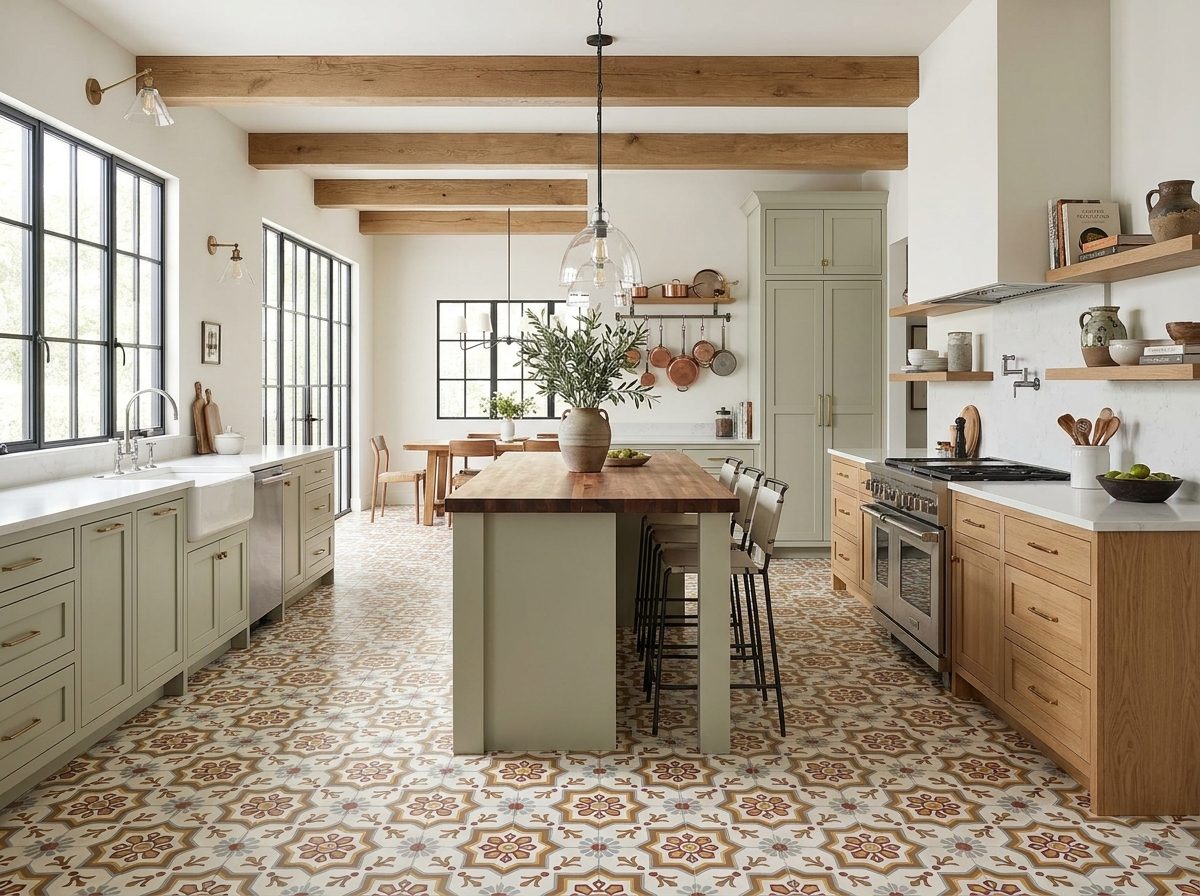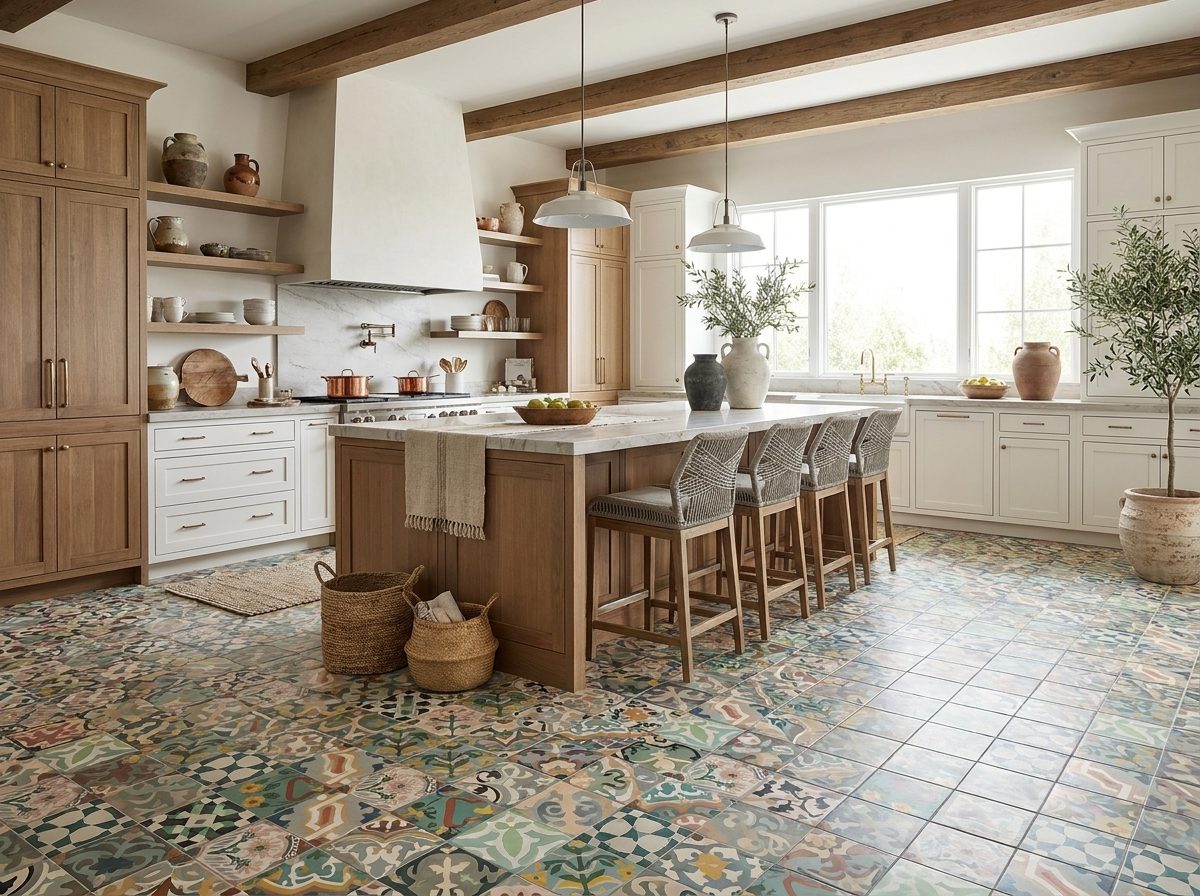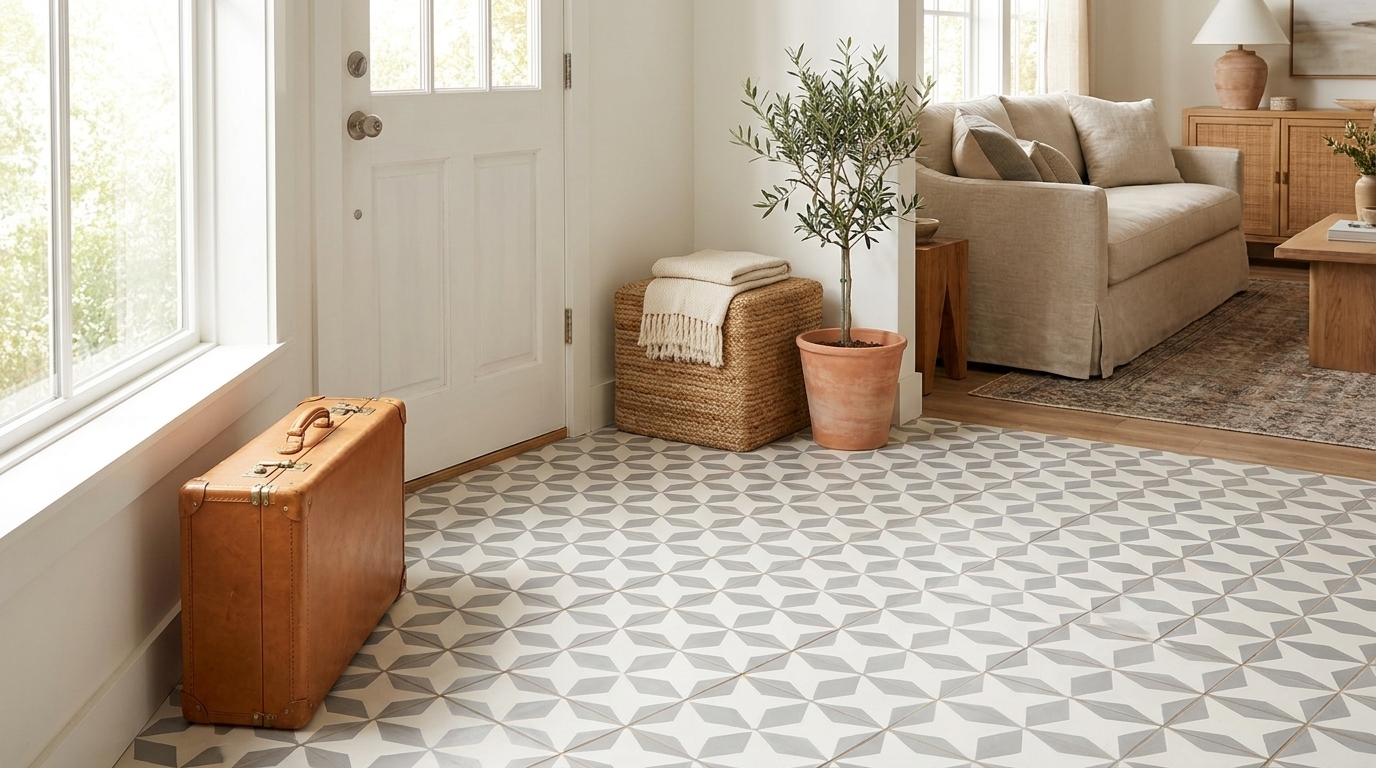
You’ve probably seen the photo already. A powder room floor with a worn-in pattern that looks like it belongs in an old European townhouse. Or a shower wall with a matte, chalky depth that glazed tile can’t quite fake. The look is memorable, and for many homeowners and designers, it turns a bathroom from functional to soulful.
Then the practical questions show up. Will it stain? Is it too porous for a shower? Will it be slippery? Will it age beautifully, or just become a maintenance headache?
Those are the right questions. An encaustic tile bathroom can be stunning and durable, but only when the design decision is matched by the right material choice, the right installation sequence, and a sealing routine that respects what cement tile is. Most failures aren’t aesthetic failures. They’re technical ones.
Your Guide to a Stunning Encaustic Tile Bathroom
The typical path goes like this. A homeowner saves a patterned floor to a project board. A designer pulls samples for a vanity wall or a shower niche. Everyone loves the look, then someone in the room says, “I’ve heard cement tile is risky in bathrooms.”
That concern isn’t wrong. It’s incomplete.
A bathroom is one of the hardest rooms in the house because beauty has to survive water, soap, humidity, cleaning products, and daily traffic. Cement encaustic tile can do that, but it doesn’t behave like porcelain and shouldn’t be treated as if it does. The most successful rooms come from understanding the trade-offs before the first tile is ordered.

What makes this material worth the effort is simple. It brings warmth to a room full of hard surfaces. It softens a modern bath, gives period homes the right kind of character, and creates pattern without the glossy, printed look that many factory-made products have.
Practical rule: If you want a bathroom that looks untouched forever, choose porcelain. If you want a bathroom with depth, variation, and a handmade surface that rewards good detailing, cement tile belongs on the table.
The key is knowing where authentic cement shines, where porcelain may be the smarter answer, and what absolutely cannot be skipped during installation. That’s where the art and the science meet.
The Enduring Appeal of Encaustic Cement Tile
The easiest way to understand encaustic cement tile is to stop thinking of it as a glazed surface. A glazed ceramic tile is like an image applied to the exterior. Cement encaustic is closer to an inlaid painting. The pattern is formed in pigmented cement at the face of the tile, so the design has physical depth rather than sitting like a printed skin on top.
What the tile is made of
Authentic cement encaustic tile is made from cement, sand, marble dust, and mineral pigments. It’s formed under pressure rather than fired in a kiln. That difference matters because it gives the tile its characteristic matte finish, soft feel underfoot, and subtle tonal movement from piece to piece.
The surface doesn’t read as shiny or brittle. It reads as mineral. That’s why it pairs so well with unlacquered brass, painted millwork, old wood, plaster walls, and stone countertops. A polished material bounces light. Cement tile tends to absorb it in a gentler way.
If you want a deeper background on how the material is made and why it behaves differently from ceramic, this overview of what encaustic tiles are is useful.
Why it still feels relevant
Encaustic tile has lasted as a design language because it isn’t tied to one era. Its roots are much older than current bathroom trends. Encaustic tiles emerged as a dominant architectural material during the 12th and 13th centuries in Western Europe, and the material became so central that “no self-respecting Abbey, Monastery, or Royal Palace” would have been without tiled floors. The Victorian revival brought the craft back at scale, and by 1900, hundreds of makers were producing these tiles. Many still show their beauty after 100 years of wear, which says a lot about the material’s staying power when it’s properly made and used well, as noted in Granada Tile’s history of ceramic encaustic tiles.
A good encaustic floor doesn’t look trendy after a few years. It looks settled.
What gives it character
Three qualities draw people in.
- Depth of color. The finish has body. The pattern feels embedded, not sprayed on.
- Silky matte texture. Bathrooms often need something that counters the hard shine of glass, chrome, and glazed wall tile.
- Variation. Handmade surfaces carry slight shifts that keep a room from feeling repetitive.
That last point matters more than many people expect. Repetition can flatten a patterned bathroom. Slight variation keeps it alive.
Bathroom Design with Encaustic Tile Patterns
Patterned cement tile works best in a bathroom when it has a job to do. The strongest rooms don’t scatter it randomly. They use it to anchor the floor, frame a vanity, define a wet zone, or turn one wall into the focal point.
Floor patterns that hold the room together
On a bathroom floor, encaustic tile often acts like a rug built into the architecture. That approach works especially well in front of a vanity, in the center of a small room, or in a long bath where you want the eye to pause.
A patterned field can also make plain fixtures feel more intentional. White sanitaryware, simple brassware, and painted cabinetry all gain presence when the floor carries visual weight.
A few floor strategies tend to work reliably:
- Tile rug layouts. Use a central field pattern with a plain perimeter or border if you want the room to feel composed rather than busy.
- All-over pattern. This is strongest when the walls stay quieter. Think plain wall tile, plaster, or painted millwork.
- Zoned pattern. Run pattern on the dry side of the bath, then transition to a simpler companion tile where visual calm helps.
Walls that need one strong move
A full patterned wall can be beautiful, but it needs discipline around it. If the vanity wall carries the pattern, simplify the mirror shape, keep hardware clean-lined, and avoid adding another competing decorative field nearby.

The most effective wall applications are usually one of these:
- Behind the vanity for a furniture-like backdrop.
- Inside a shower niche where a small area can carry color without overwhelming the room.
- On a feature wall in a powder room, where the visual impact outweighs the maintenance concerns of a daily shower.
A bathroom doesn’t need more pattern. It needs pattern placed where the eye naturally lands.
Scale matters more than room size
People often assume a small bathroom needs a small pattern. That isn’t always true. Fine, fussy motifs can make a compact room feel busier than a bolder, simpler repeat. Large-scale pattern can calm a small space because the eye reads fewer interruptions.
A useful way to think about scale:
| Application | Pattern approach | Why it works |
|---|---|---|
| Small powder room floor | Larger repeat with restrained colors | Keeps the room from feeling choppy |
| Main bath floor | Medium repeat | Balances detail and usability |
| Shower niche or backsplash | Tighter motif | Reads as jewel-box detail |
| Full vanity wall | Broader, organized geometry | Supports fixtures without visual noise |
Mixing patterned and plain tile
A good encaustic tile bathroom usually includes some visual silence. Plain field tile gives the eye a rest and helps the patterned area read as intentional. That contrast can come from plain cement colorways, ceramic wall tile, stone, or painted surfaces.
The combinations that tend to age well are the restrained ones:
- Pair a busy floor with a simple wall tile.
- Use a patterned vanity wall above calmer flooring.
- Repeat one color from the encaustic pattern in the paint, trim, or textiles so the room feels edited.
The material has enough personality on its own. It doesn’t need every surrounding surface to compete for attention.
Choosing the Right Tile Authentic Cement vs Porcelain
This is the decision that shapes everything else. Both materials can deliver the encaustic look, but they don’t deliver the same experience in use. In a bathroom, that difference becomes obvious very quickly.
Two materials, two priorities
Authentic cement encaustic tile offers the handmade surface, soft matte finish, and subtle variation that people usually fall in love with first. It also asks for more from the installer and the homeowner. It’s porous, it needs sealing, and it will show age in a way that many people find charming and some find frustrating.
Porcelain encaustic-look tile moves in the opposite direction. It is lower-porosity, more fade-resistant, and generally easier to live with in wet, high-traffic environments. It doesn’t develop the same handcrafted patina, but it also doesn’t demand the same maintenance routine. That trade-off is described clearly in Olde English Tiles’ guide to encaustic tiles.
For a deeper side-by-side overview, this guide to cement tile vs porcelain tile is a helpful reference.

Comparison for bathroom use
| Feature | Authentic Cement Tile | Porcelain Look-Alike Tile |
|---|---|---|
| Material character | Handmade, mineral, matte, gently varied | Factory-made, consistent, patterned to resemble encaustic |
| Moisture behavior | Porous and needs regular sealing | Low-porosity and easier in wet rooms |
| Aging | Develops patina and may show use more readily | Holds a more uniform appearance |
| Installation sensitivity | Demands careful handling, sealing, and setting | More forgiving for typical tile crews |
| Cleaning routine | Requires pH-neutral cleaners and care | Lower maintenance overall |
| Best fit | Clients who want authenticity and accept upkeep | Clients who want the look with less involvement |
When cement is the right answer
Choose authentic cement when the material itself matters to the project. Period homes, hospitality bathrooms, statement powder rooms, and designer-led spaces often benefit from the tactile quality and tonal complexity of authentic cement.
It also suits clients who understand that age is part of the finish, not a defect. Cement doesn’t stay frozen in time. It settles, softens, and records use more directly than porcelain.
When porcelain is the smarter call
Porcelain is often the better answer for a daily-use family bathroom, especially one with frequent showers and a maintenance-light household. It’s also practical when the installer is more familiar with standard tile work than with cement-specific prep.
If you love the pattern but not the maintenance conversation, porcelain is usually telling you something.
That isn’t a compromise in every case. It’s often the correct specification.
Installation and Waterproofing Best Practices
A cement tile bathroom rarely fails because of the pattern. It fails because someone rushed the prep, skipped the soak, ignored tile absorption, or treated a wet area like a dry floor. The visible surface gets the attention, but the hidden work decides whether the room lasts.

Start with a stable, level substrate
Cement encaustic tile is substantial. Authentic cement tiles are 5/8 inch (16 mm) thick, with a 3 to 4 mm wear layer, and they’re hydraulically pressed at 1,700 psi. They also have 9.5 to 10.9% water absorption, which is why they need a more disciplined installation sequence than many standard tiles, according to these technical specifications for cement tile.
The substrate has to be flat, sound, and ready to accept a waterproofing system where required. On bathroom floors, that means no telegraphing dips, no unstable backer work, and no assumption that the tile will somehow bridge flaws.
For shower applications, use a proper waterproofing membrane. Liquid-applied systems and sheet membranes can both work when detailed correctly. What doesn’t work is relying on tile and grout as the waterproof layer. They aren’t.
Respect the tile’s porosity during setting
Because cement tile absorbs moisture readily, installers need to prevent it from robbing the setting material of the water it needs to cure properly. The practical method is to soak tiles in water before thinset application, then set with full, even support.
Key site rules matter here:
- Use white thinset so the setting bed doesn’t influence the face color.
- Aim for 100% coverage under the tile.
- Use a 1/2-inch notch trowel where appropriate for coverage.
- Install level to avoid lippage, especially with patterned fields where even small height changes catch the light.
For wet areas, this guide to a cement tile shower is one practical reference point.
Site note: Cement tile is not the material to “figure out as you go.” Every crew member should know the setting sequence before the first box is opened.
Handle movement, joints, and sequencing carefully
Bathrooms are tight spaces with lots of interruptions. Doorways, shower thresholds, plumbing penetrations, and changes in plane all need clean detailing. A beautiful pattern can be undermined by awkward cuts or poor transitions.
A disciplined sequence usually looks like this:
Dry-lay and inspect
Blend tiles from boxes, study tonal variation, and confirm pattern orientation before setting.Map focal lines
In a vanity wall or floor field, center what the eye will notice. Don’t center from an arbitrary wall if the room geometry is off.Control joints and edges
Plan how tile dies into trim, thresholds, or adjacent flooring before installation day.
Here’s a useful visual for the process in action:
Pre-grout sealing is not optional
Because the tile is porous, pre-grout sealing helps prevent grout haze and moisture-related blotching from becoming part of the finish. Skipping this step is one of the most common avoidable errors on cement jobs.
A few habits separate good cement tile installations from regrettable ones:
- Seal before grouting so the face is protected.
- Allow proper drying time before grouting to avoid trapping moisture.
- Use compatible cleaners only during cleanup.
- Check full support continuously by lifting occasional tiles early in the install.
If a bathroom has steam, heavy splash zones, or daily family use, these details matter even more. In an encaustic tile bathroom, the installation isn’t background work. It is the performance system.
Sealing and Maintaining Your Cement Tile Bathroom
Many people talk about sealing as if it’s a fussy extra. It isn’t. In a cement tile bathroom, sealing is part of the finish system. Without it, you’re leaving a porous, cement-based surface exposed to soap, moisture, pigments, and routine bathroom messes.
What sealing actually does
Sealer doesn’t turn cement tile into porcelain. It helps manage how the tile responds to water and staining. That distinction matters because unrealistic expectations cause most frustration later.
The major mistake is simple. People either skip sealing altogether or use products and cleaning methods that work on other surfaces but damage cement. As noted in Avance Floors’ article on using encaustic patterns in small bathrooms, proper sealing protocols and pH-neutral cleaning are essential in a humid bathroom environment, and acidic cleaners can etch the cement surface.
A maintenance routine that actually works
A workable routine is straightforward if you stay disciplined.
- Seal before grout so the face is protected during the messiest stage.
- Clean with pH-neutral products only after installation.
- Wipe standing water and product residue instead of letting soap or cosmetics sit.
- Monitor the surface over time and reseal when the tile stops repelling moisture the way it once did.
What should never go on the tile:
- Acidic cleaners such as vinegar-based solutions or other acid-heavy products.
- Harsh descalers intended for different bathroom surfaces.
- Aggressive abrasives that can dull or scar the finish.
The right cleaner protects the tile. The wrong cleaner changes it.
If you’re helping a client build a realistic care plan, it can also help to point them toward a professional cleaning checklist. For households that want a benchmark for routine bathroom upkeep, this guide to book reliable bathroom cleaning is useful for understanding what regular, surface-safe maintenance should include.
Think of maintenance as finish preservation
The owners who stay happy with cement tile usually understand one thing early. They are caring for a mineral surface, not a factory-sealed, low-porosity product. Once that mindset clicks, the routine feels less like extra work and more like preserving a material they chose for its character.
A well-kept cement tile bathroom doesn’t need to look brand new. It needs to look well cared for.
Understanding Slip Resistance and Bathroom Safety
Bathroom flooring has to do more than look good. It has to feel secure under bare feet, with water on the floor, in real daily use. It is in these conditions that the matte surface of cement encaustic tile offers a practical advantage when the right product is specified and maintained correctly.
What the ratings mean in plain language
Slip resistance data can feel abstract, but the basic question is simple. Does the tile keep enough grip when wet?
For encaustic cement tile used in wet-area applications, the answer can be yes. The material’s unpolished wet DCOF is >0.68, which is well above the >0.42 requirement, and it reaches an R10 ramp test rating, which classifies it as suitable for public toilets and showers. The reason is the micro-texture created by the matte cement and marble dust surface, as documented in Sark Tile’s wet-area performance data for encaustic cement tiles.
That’s the technical version. The everyday version is this: the surface has tooth.
Why finish matters more than pattern
People often assume slip resistance comes from the printed design or the visual busyness of the tile. It doesn’t. The key factor is surface texture. A matte, lightly textured cement face gives the foot more purchase than many slicker finishes do.
Safety in an encaustic tile bathroom depends on a few practical decisions:
- Choose an appropriate finish. Matte is the working finish for wet-area confidence.
- Keep the tile properly sealed so surface performance isn’t undermined by moisture problems.
- Avoid residue buildup from soaps and wrong cleaning products, which can change how the floor feels underfoot.
A safe bathroom floor is not just about what tile you buy. It’s also about how clean and properly finished that surface stays.
Where caution still belongs
Good slip resistance doesn’t excuse poor detailing. Standing water, poor drainage, sloppy transitions, and neglected maintenance can still create unsafe conditions. Shower floors need proper slope. Thresholds need clean transitions. Cleaning products shouldn’t leave film.
In practice, that means cement tile can be a sound bathroom-floor choice when the product, installation, and maintenance are all working together. Safety isn’t coming from one number alone. It’s coming from the whole system.
Budgeting and Ordering Your Bathroom Tile
A bathroom tile order can look right on paper and still fail on site. The usual culprit is not color or pattern. It is an order placed before the layout, waterproofing details, and finish heights are fully resolved.
That matters more with encaustic cement tile than many buyers expect. Cement tile is chosen for character, but it rewards precision. If the shower entry, drain placement, niche dimensions, and transition to wood or stone are still undecided, hold the order until they are. A few days of planning costs less than reordering material or forcing a pattern to die into an awkward cut.
What drives the budget
Material price is only one part of the spend. Significant budget shifts stem from four decisions: in-stock or custom production, pattern complexity, amount of cut work, and how much installer time the layout demands.
A simple repeating floor in a small bath is usually straightforward. A room with a shower curb, bench, recessed niche, border, vanity splash, and multiple outside corners is not. Every interruption creates waste, slows installation, and increases the number of tiles that must be selected for a specific location.
Custom tile has clear advantages. It can match the room scale, the period of the house, and the surrounding finishes far better than an off-the-shelf pattern. It also requires earlier sign-off. Once production starts, changes are expensive in both time and money.
How to measure for an order that holds up in the field
Use field measurements, not only the drawing set. Old houses move. New bathrooms still end up slightly out of square after framing, backer board, and waterproofing are complete.
A reliable takeoff includes:
Each surface measured separately
Break out the main floor, shower floor, each wall, niche backs and returns, bench faces, and backsplash areas.Every special condition marked
Include drains, curbs, outside corners, plumbing penetrations, sloped ceilings, windows, and door thresholds.Waste based on the actual layout
Straight-set field tile needs less overage than a pattern that must center on the room, wrap a niche, or align through a doorway.Finish heights confirmed before purchase
Tile thickness affects transitions, trim choices, and where the finished floor lands against adjacent materials.
This is where experienced installers save clients money. They do not just count square feet. They study where cuts will fall, whether the pattern should center on the vanity or the room, and how the tile meets waterproofed shower details without looking forced.
Questions to settle before placing the order
Good orders answer a few practical questions up front:
- Where do full tiles need to land? At the doorway, under the vanity, or centered to the room.
- Is the pattern carrying the room, or supporting other finishes? That changes how much visual precision the layout needs.
- Will tiles be blended from several boxes during installation? Handmade material should be mixed as it is set.
- Are trim and transition pieces already chosen? If not, thickness and edge conditions can become a site problem.
- Is there attic stock for future repairs? Bathrooms are hard on finishes, and matching a handmade run years later is not always possible.
Original Mission Tile offers both in-stock handmade cement tile and custom pattern development. That gives buyers two workable paths. One suits projects that need material quickly. The other suits bathrooms where scale, color, and period character need tighter control.
Order with the wet area in mind
Bathroom tile should be ordered as part of the assembly, not as decoration added at the end. Shower floors may need smaller formats for slope. Main floors may need a different quantity allowance because pattern cuts around the toilet flange, tub apron, and doorway create more waste than a clean rectangle would.
I also advise clients to order only after the waterproofing strategy and substrate build-up are confirmed. Cement tile performs beautifully in bathrooms, but only when the installer knows the exact build from substrate to setting bed to finished face. That affects thickness, edge detailing, drain transitions, and how the room feels underfoot when complete.
A careful order reduces improvisation on site. In a bathroom, that is what keeps the pattern clean, the transitions sensible, and the finished work worthy of the material.