You're probably looking at pool tile with an initial focus on its visual appeal. You see color, shimmer, pattern, and the way the water might look at noon or in the evening with the lights on. You picture the first step into the pool, the line where water meets tile, and the whole setting working as one calm surface.
That instinct is right, but it's incomplete.
Good pool tile design isn't just decoration. It's a high-exposure finish in a chemically treated, wet, sun-beaten environment. The tile has to look right, clean well, resist the abuse of constant immersion and splash, and stay safe underfoot in the zones where people move. A tile that looks beautiful on a sample board can become a maintenance burden in the wrong location. A finish that's stunning on a feature wall can be a poor choice for steps. A handmade surface with depth and character can be exactly right in one application and exactly wrong in another.
That's why the smartest pool designs are built zone by zone, not selected as one broad aesthetic package.
The Art and Science of Pool Tile Design
Pool tile has always lived at the meeting point of utility and beauty. The use of tile in water architecture goes back thousands of years. The Great Bath of Mohenjo-daro, dated to around 2600 BCE, was made watertight with fitted bricks, plaster, and tar, and measured about 12 meters long, 7 meters wide, and 2.4 meters deep according to this history of swimming pools. Much later, the first public indoor swimming pool in England opened in 1828, helping shift pools from purely functional structures toward public recreation and design in that same historical account.
That evolution still defines the work today. Tile in a pool has to do two jobs at once. It has to perform as part of a durable water environment, and it has to shape how the whole vessel feels.
Where design usually goes wrong
Most mistakes happen when the pool is treated like one uniform surface. It isn't. The waterline, steps, tanning ledges, benches, walls, and floor all see different kinds of wear. Some zones collect scale and oils. Some need clearer footing and better edge visibility. Some are judged mostly by how they affect water color and reflect light.
A strong design starts by asking a practical question first. What does this tile need to survive here?
Practical rule: In pool tile design, beauty that ignores maintenance usually becomes short-lived beauty.
What a well-designed pool tile scheme does
The best work balances several demands at once:
- Visual tone: The tile influences whether the water reads bright, muted, deep, reflective, tropical, or architectural.
- Durability: Materials need to hold up under immersion, cleaning, sun, and pool chemistry.
- Safety: Texture, contrast, and edge clarity matter most where people enter and exit the water.
- Maintenance: Some finishes show every deposit. Others hide buildup until it becomes harder to remove.
There's also a market reason this level of care matters. One industry report projects the U.S. pool tile market to reach $614.8 million in 2025, with a 4.1% CAGR from 2025 to 2032, and notes that suitable pool tile should meet technical criteria including less than 0.5% water absorption in demanding environments, as summarized in this U.S. pool tile market report. That doesn't mean every project needs the same material. It means buyers and specifiers are paying closer attention to performance, not just appearance.
The real craft of pool tile design
As a design problem, a pool is closer to exterior architecture than to a decorative bathroom wall. Light changes the color. Water magnifies surface differences. Mineral deposits reveal every shortcut. Installation errors that might go unnoticed indoors become obvious fast in a submerged setting.
That's why the art and the science can't be separated. The pattern matters. The body of the tile matters. The finish matters. The zone matters most of all.
Comparing Pool Tile Materials and Performance
Material choice should narrow the field before color and pattern do. If the body of the tile isn't right for wet service, no amount of visual appeal will rescue it.
A key benchmark is simple. Pool-suitable tile should meet strict technical criteria, including water absorption below 0.5%, and waterline tiles are commonly specified at about 6 mm to 10 mm thick in a 6-inch band around the pool perimeter, according to this waterline tile guidance. That tells you something important: in pools, material density and dimensional stability are not secondary issues.

A quick side by side view
| Feature | Porcelain Tile | Glass Tile | Handmade Cement Tile |
|---|---|---|---|
| Water performance | Dense and reliable for wet use when properly specified | Non-porous body and well suited to submerged visual applications | Better reserved for selective applications where sealing and maintenance are understood |
| Chemical and UV exposure | Strong candidate for broad pool use | Strong resistance, especially for waterline and decorative submerged work | Depends heavily on location, finish, care routine, and exposure |
| Slip and texture options | Wide range of finishes available | Often smoother, so texture choice matters | Matte character can be attractive, but use requires careful zone selection |
| Appearance | Versatile, from clean minimal looks to patterned surfaces | Luminous, reflective, and responsive to light | Soft, artisanal, matte, and custom-friendly |
| Maintenance burden | Generally straightforward | Grout and mineral visibility need attention | Higher maintenance commitment, especially if exposed to frequent splash and residue |
| Installation sensitivity | Familiar to most qualified installers | More demanding, especially with mosaics and surface prep | Requires installers who understand cement tile behavior and sealing |
| Best use case | Broad utility across many pool zones | Waterline bands, accents, mosaics, and visually rich submerged surfaces | Decorative adjacent zones and carefully considered specialty applications |
Porcelain as the workhorse
Porcelain earns its reputation because it solves many problems at once. It's a practical choice for clients who want design freedom without adding unnecessary maintenance. It can read crisp and modern, classic and restrained, or richly patterned depending on the finish and format.
For many projects, porcelain is the default material to beat. It offers a broad aesthetic range and usually integrates well with the technical demands of the shell and setting system.
Glass for light and depth
Glass tile changes the character of water more than almost any other finish. It catches light, throws color differently through depth, and creates that layered shimmer many clients want. It's often the right move when the goal is a luminous waterline, an iridescent detail, or a mosaic field that feels alive as the sun moves.
It's not effortless, though.
Glass rewards precision. If the substrate is imperfect or the layout is careless, the tile won't hide it.
Handmade cement tile with clear limits
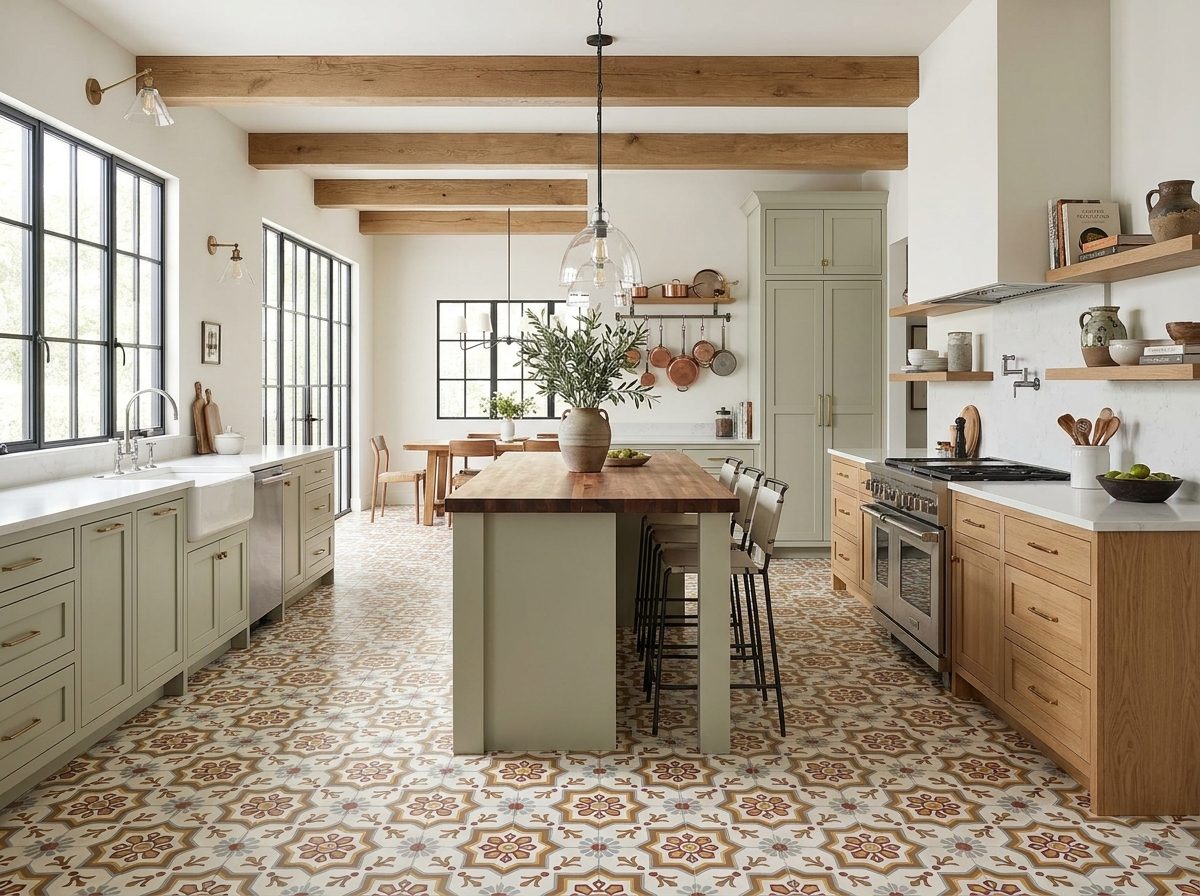
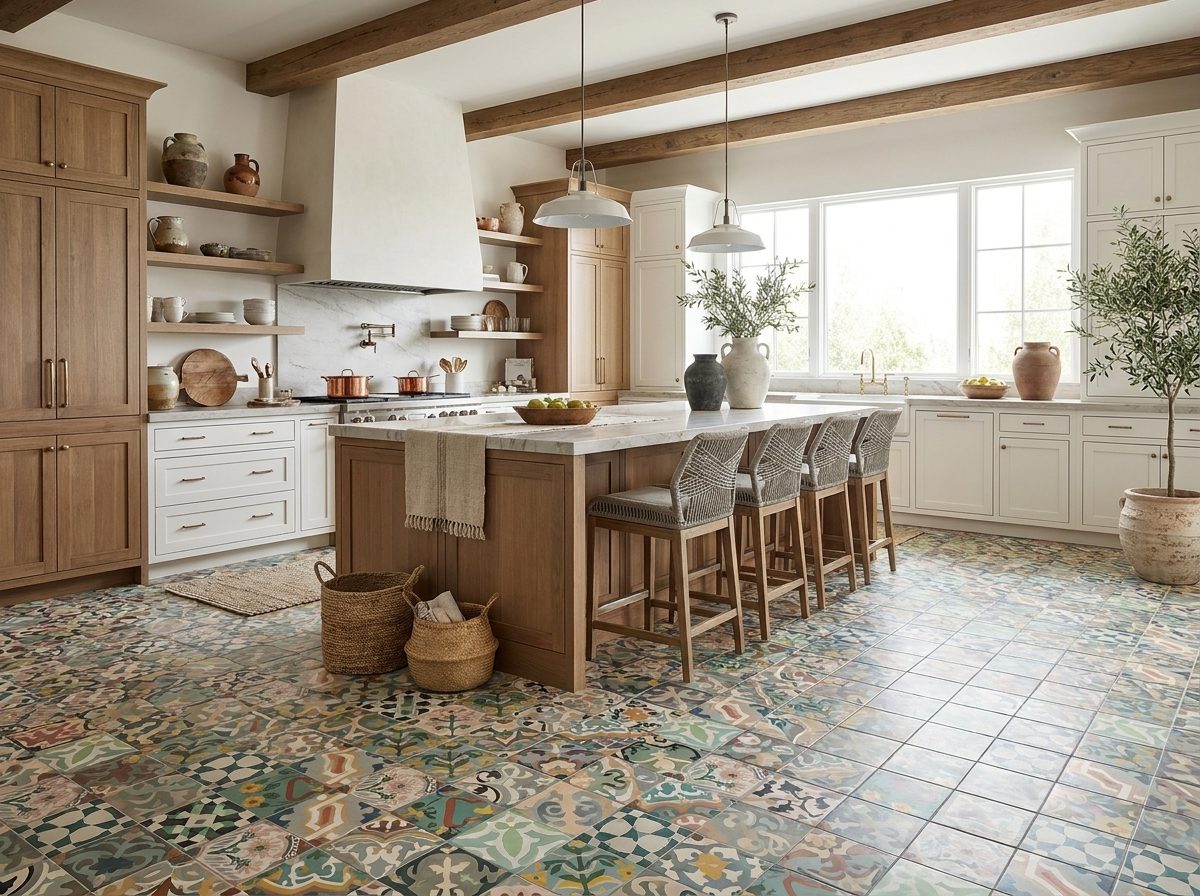
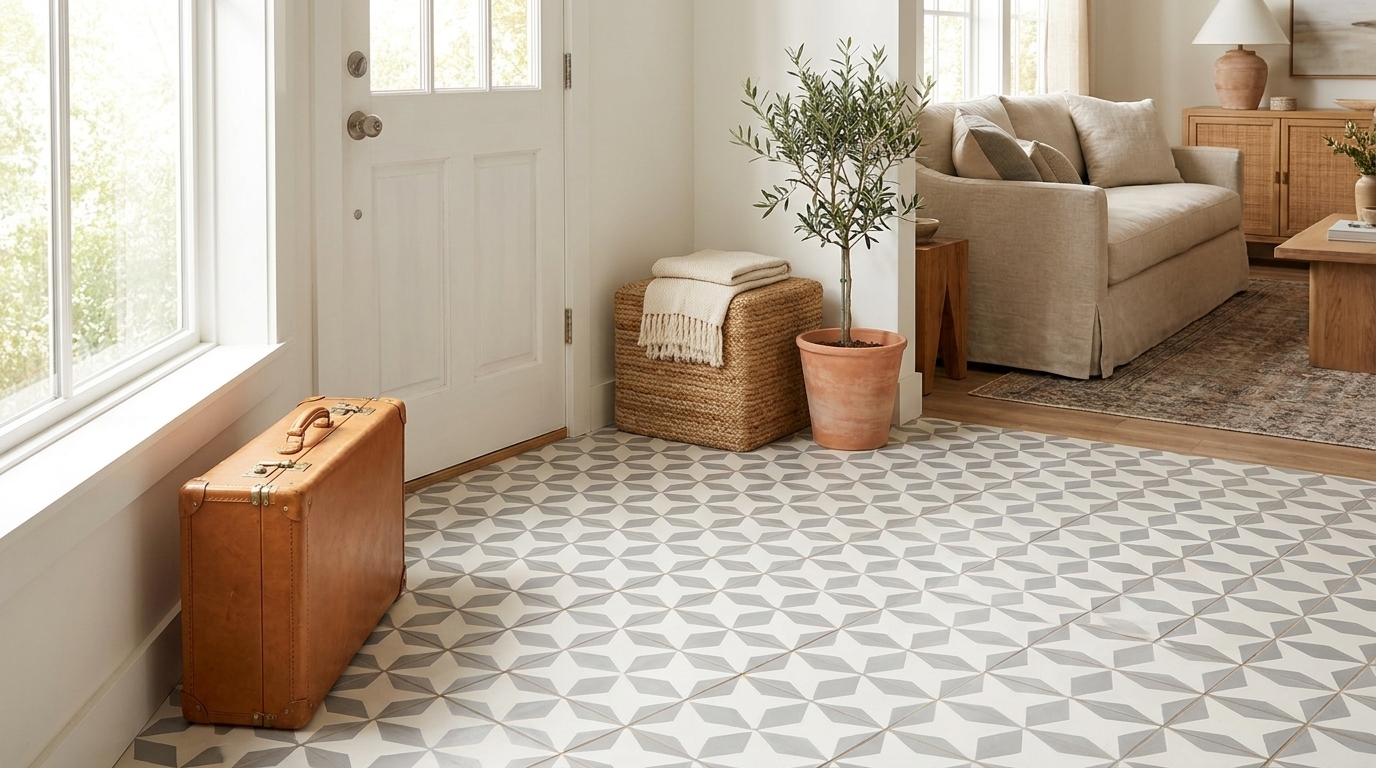
Handmade cement tile occupies a different category. It offers a matte, inlaid look that fired tile can't really imitate. It's a good fit when you want pattern, pigment depth, and a handcrafted surface with visual warmth. But it should be specified with discipline, not romance.
In pool environments, the key question isn't whether cement tile is beautiful. It is. The question is where it belongs. For many designs, it works better in adjacent entertaining areas, feature walls, outdoor showers, and surrounding architecture than in the most demanding submerged or constantly splashed zones. If you're weighing the aesthetic and performance tradeoffs, this comparison of cement tile vs porcelain tile is a useful starting point.
What works in practice
A simple material hierarchy usually keeps projects on track:
- Choose porcelain when you want broad utility, easier upkeep, and flexible design language.
- Choose glass when the visual effect of light in water is central to the concept.
- Choose handmade cement tile when the project calls for custom pattern and artisanal character in zones that suit its maintenance profile.
The wrong move is selecting one material for the entire project just to keep the palette uniform. Smart pool tile design often uses more than one surface language, even if the transition is subtle.
How Color and Pattern Shape Your Pool's Look
Color doesn't sit still in a pool. It passes through water, reflects the sky, changes with depth, and reacts to the deck material around it. That's why a tile sample viewed dry in your hand never tells the whole story.
A pale tile can produce water that feels bright and crisp. A deeper tile can make the pool look quieter, more reflective, and visually cooler. Grout matters too. A close grout color usually reads calmer and more continuous, while stronger contrast can sharpen geometry and make pattern stand out.
Reading water color correctly
The most reliable way to think about pool color is to stop thinking only about tile color. Think about the whole visual stack:
- Tile hue: This sets the base tone under the water.
- Pool depth: Deeper areas read darker and richer.
- Sunlight exposure: Direct sun amplifies brightness and sparkle.
- Surrounding materials: Pale coping, greenery, stone, and sky all influence what the water appears to be.
A soft blue-gray tile may read serene in shade and much brighter in full sun. A dark teal or charcoal mix may give an infinity edge a mirror-like look from some angles and a saturated lagoon effect from others.

Pattern should have a job
Pattern is strongest when it's placed intentionally. Not every pool needs all-over ornament. In fact, too much pattern across every surface can flatten the design instead of enriching it.
A few pattern placements tend to work especially well:
- Waterline border: A repeating band gives the pool a finished architectural edge without overwhelming the vessel.
- Sun shelf panel: A localized motif can act like an outdoor rug beneath shallow water.
- Step markers: Subtle contrast or rhythm helps define entry points.
- Feature wall or raised beam: Pattern can become a focal surface where it's easier to appreciate dry and up close.
Subtle pattern often lasts longer visually
Bold motifs can be beautiful, but they need context. A highly graphic pattern in a small backyard may dominate the whole scene. In hospitality work, that can be an advantage if the pool is meant to be a signature feature. In a residential setting, many clients end up happier with movement, texture, and variation rather than a loud central statement.
The pool should still look good on an ordinary Tuesday, not just in the reveal photos.
If you want handmade character, use it where the eye naturally pauses. That might be a waterline band, a spa face, or a nearby fountain wall. If you want the water itself to be the star, keep the field tile more restrained and let light do the decorative work.
Designing for Waterlines Steps and Submerged Surfaces
Good pool tile design goes beyond showroom selection. Different zones need different priorities. A tile that behaves beautifully at the waterline may be poor on a step tread. A finish that looks elegant on a submerged wall may become annoying on a bench that sees sunscreen, body oils, and frequent contact.
The waterline needs easy cleaning first
The waterline is the most exposed maintenance band in the pool. It collects the residue everyone notices first. Scale, oils, and chemical scum tend to announce themselves there, especially on textured or highly irregular finishes.
For that reason, the best waterline tiles usually share a few traits:
- Dense body: Lower porosity helps the assembly resist water-related problems.
- Cleanable face: Not overly rough, not severely pitted, not fussy to scrub.
- Stable color: The band remains visible year-round, so fading or surface breakdown is hard to ignore.
- Appropriate thickness: The detailing has to work with the shell and edge condition, not just the visual design.
In many projects, a glass or dense porcelain waterline band gives the right balance of appearance and upkeep. If you love a more handcrafted look, it's worth studying examples of Moroccan tile around pools while also asking which parts of that aesthetic belong in the actual wettest, most residue-prone areas.
Steps and benches need traction and clarity
People don't experience steps as decorative surfaces first. They experience them with wet feet, changing depth perception, and often in motion.
That changes the specification immediately.
You want step tile and bench surfaces that help with footing, but texture alone isn't the whole answer. Excessively rough surfaces can be harder to clean and uncomfortable for regular contact. Step edges also benefit from visual definition. A slight shift in tone, a trim detail, or a pattern break can make the edge easier to read underwater.
Site judgment: If a finish looks lovely but makes the step edge disappear, it's the wrong finish for that location.
For commercial and hospitality projects, this zone deserves extra discipline. Safety, code interpretation, and maintenance demands usually push the design toward more restrained, highly legible choices.
Fully submerged walls and floors carry the visual mood
The submerged field is where water color is built. This is the area that determines whether the pool reads bright and airy, reflective and dark, or somewhere in between.
The tile here should be judged on three things:
- How it influences water tone
- How easily it reveals dirt, debris, and algae
- How stable it remains under continuous exposure
Small-format mosaics can be beautiful on floors and walls because they conform well to curves and complex shapes. They also broadcast substrate problems if the prep is poor. Larger formats can create a calmer visual field, but only when the geometry and detailing support them.
One pool can use several tile strategies
Uniformity isn't the only mark of sophistication. Some of the most successful pools use a disciplined mix:
- a crisp, easy-clean waterline
- safer, better-defined step surfaces
- a deeper-toned submerged field
- a decorative accent reserved for a focal wall or shelf
That approach tends to age better because each material is being asked to do the job it's suited for.
Creating a Custom Motif for Your Pool
Custom tile sounds more intimidating than it is. In practice, the process becomes manageable once the idea is broken into clear design decisions. The important part is knowing whether the motif is decorative only, architectural, or part of the pool's wayfinding and visual rhythm.
Start with the right kind of inspiration
Not every reference image should become a literal pool pattern. Good starting points often come from architecture, textiles, historic paving, ironwork, garden geometry, or regional craft traditions. The strongest motifs usually have enough structure to repeat cleanly and enough restraint to live comfortably near water.
A few directions tend to translate well:
- Geometric repeats: Strong for waterlines, spa bands, and formal pools.
- Organic curves: Better for softer environments and resort-style settings.
- Medallions and panels: Good for sun shelves or focal walls.
- Abstract murals: Best where the pool design has a clear viewing angle.
Refine the motif before you refine the color
A pattern should work in black and white before color enters the conversation. If the geometry feels unresolved, color won't fix it. Once the motif is clear, the palette can do the emotional work. Cooler combinations tend to support calm, reflective water. Earthier tones link the pool more closely to deck materials, planting, and adjacent architecture.

Sample first, then commit
Reviewing physical samples, not just digital renderings, saves many projects. Handmade surfaces in particular can shift in mood depending on light, grout, neighboring materials, and the amount of water reflection nearby.
A solid approval workflow usually looks like this:
- Define the use area. Waterline, shelf, mural wall, adjacent terrace, or spa face.
- Select the motif scale. A repeat that works on paper may be too busy once wrapped around a pool perimeter.
- Edit the palette. Fewer colors often read more confidently in water environments.
- Review strike-offs or samples. Look at them outdoors if possible.
- Coordinate installation drawings. Custom work fails quickly when layout isn't documented.
For projects that require a bespoke pattern rather than an off-the-shelf field tile, manufacturers with custom capabilities can help turn a concept into a production-ready design. One example is Original Mission Tile, which offers custom handmade cement tile patterns and color development through its design tools for architectural projects.
Keep the motif in proportion to the setting
The smartest custom pools don't always shout. Sometimes the most memorable result is a restrained border, a subtle shelf panel, or a small motif placed exactly where it will be seen and appreciated. Custom design works best when it supports the architecture instead of competing with it.
Ensuring Longevity Through Proper Installation and Care
Even the right tile will fail on the wrong substrate. That's the blunt truth. Pool tile is not forgiving of sloppy prep, uneven shells, or product substitutions made late in the job.
Expert installers treat the assembly as a system, not just a surface. Guidance from pool installation specialists notes that substrate flatness should stay within about 1/8 inch in 10 feet to avoid lippage and stress points, especially with mosaics, and that the pool build needs coordinated waterproofing and materials rather than a finish-only mindset, as explained in this installer-focused pool tile discussion.
Flatness isn't cosmetic
Clients often hear “flat substrate” and assume it's an aesthetic detail. It isn't. In a submerged setting, unevenness affects load distribution, grout joint consistency, and stress at tile edges. Small tile makes the problem more visible, but larger tile suffers too if the shell and setting bed aren't doing their job.
A disciplined installer checks:
- Shell condition: No guessing, no tiling over unresolved substrate defects.
- Waterproofing compatibility: Membranes, mortars, and grout need to work together.
- Layout before setting: Especially at steps, benches, corners, and spillways.
- Movement and transitions: Changes in plane need thoughtful detailing.
The cleaning routine should match the finish
Maintenance begins with choosing a surface you can realistically live with. Some finishes hide residue better. Some announce every mineral deposit. Some tolerate aggressive scrubbing better than others. If your water chemistry tends to leave buildup, a highly textured or heavily varied tile may give you more work than you expected.
For owners dealing with hard-water residue at the waterline, this guide to solving pool calcium deposits is a useful practical reference because it focuses on the common cleanup issue most visible pool bands eventually face.
A pool doesn't stay beautiful because the original tile selection was expensive. It stays beautiful because the installation was precise and the care routine fits the surface.
Cement tile needs extra discipline
If handmade cement tile is part of the wider project, installers and owners need to respect its specific requirements. That includes sealing strategy, cleaning compatibility, and the difference between decorative exterior use and severe wet-service conditions. This guide to installing cement tile is helpful for understanding the level of preparation and product coordination handmade tile demands.
What holds up over time
The pools that age best usually have three things in common:
- They were detailed by zone. No one material was forced into every role.
- They were installed by people who understood submerged assemblies.
- The owner's maintenance habits matched the finish selection.
That combination does more for long-term appearance than any trend-driven tile choice ever will.
Pool Tile Examples and Project Planning Guide
Most clients decide faster when they can place themselves inside a design language. Not every pool should look like a resort, and not every resort pool should feel residential. The material palette, pattern scale, and finish all need to fit the architecture around the water.

The Classic Riviera
This look relies on a restrained waterline band, luminous blues, and a field that keeps the water bright rather than dramatic. Glass mosaics or clean porcelain in blue and blue-green families work well. The pattern is usually repetitive and calm, with enough variation to keep sunlight moving across the surface.
It suits traditional homes, white stucco architecture, and hospitality spaces that want elegance without heavy ornament.
The Modern Minimalist
This pool uses fewer gestures and sharper control. The waterline may be nearly tone-on-tone with the coping. The submerged field often leans into grays, deep blue-grays, or darker reflective hues. Step edges are handled with subtle contrast rather than decorative emphasis.
Finish selection matters most. As trend-driven pool content often overlooks, finish has a direct effect on resistance to chlorine, UV exposure, mineral scaling, and algae, as noted in this discussion of maintenance and finish tradeoffs in pool tile trends.
The Bohemian Courtyard
This approach mixes craft and structure. The pool itself may stay relatively disciplined, while nearby walls, fountains, benches, or outdoor showers carry more pattern and hand-finished character. That keeps the pool practical while still giving the space personality.
For custom homes, it often helps to plan the pool and surrounding architecture as one composition. Teams coordinating site work, structure, and outdoor living at the same time may find this perspective on building a new home and pool together useful because sequencing decisions early usually leads to cleaner material transitions later.
A short visual reference can help when you're narrowing the feel of the project:
A practical planning checklist
Before final selections are approved, run through these questions:
- Define each zone clearly: Waterline, step treads, benches, submerged field, and adjacent decorative surfaces should each have a reason for the tile chosen.
- Review samples outdoors: Dry showroom light can mislead you badly.
- Ask who is installing it: Pool tile requires a crew that understands wet assemblies, not just general tile setting.
- Match design to maintenance habits: If you want low fuss, avoid finishes that constantly advertise buildup.
- Document the layout: Borders, corners, returns, step transitions, and focal motifs should all be drawn before installation starts.
Good pool tile design always looks effortless in the finished project. However, it only gets there through careful decisions, made early, with equal respect for performance and appearance.
If you're developing a pool, spa, fountain, or adjacent outdoor space and want a handcrafted pattern element that fits the architecture, Original Mission Tile offers handmade cement tile collections and custom design options that can be evaluated as part of the broader material palette.