You’re probably looking at a pool that still feels unfinished. The shell may be in, the hardscape may be taking shape, and now the big question lands where it always does. What tile gives the water edge character without creating a maintenance headache a few seasons later?
That’s where Moroccan tile enters the conversation. It has the romance people want, but a moroccan tile pool isn’t just a style decision. It’s a materials decision, a climate decision, and an installation decision. When those align, the result feels effortless. When they don’t, even beautiful tile can become a problem.
The Enduring Allure of a Moroccan Tile Pool
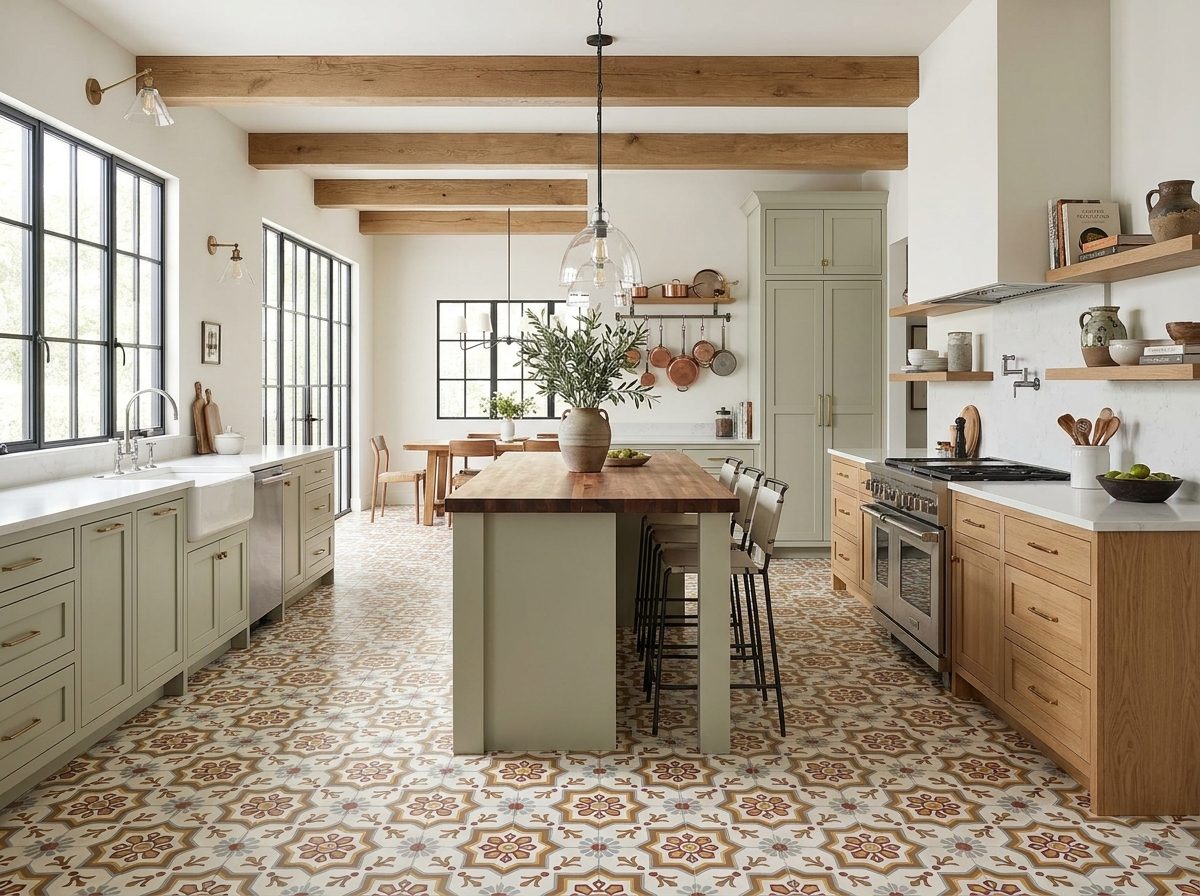
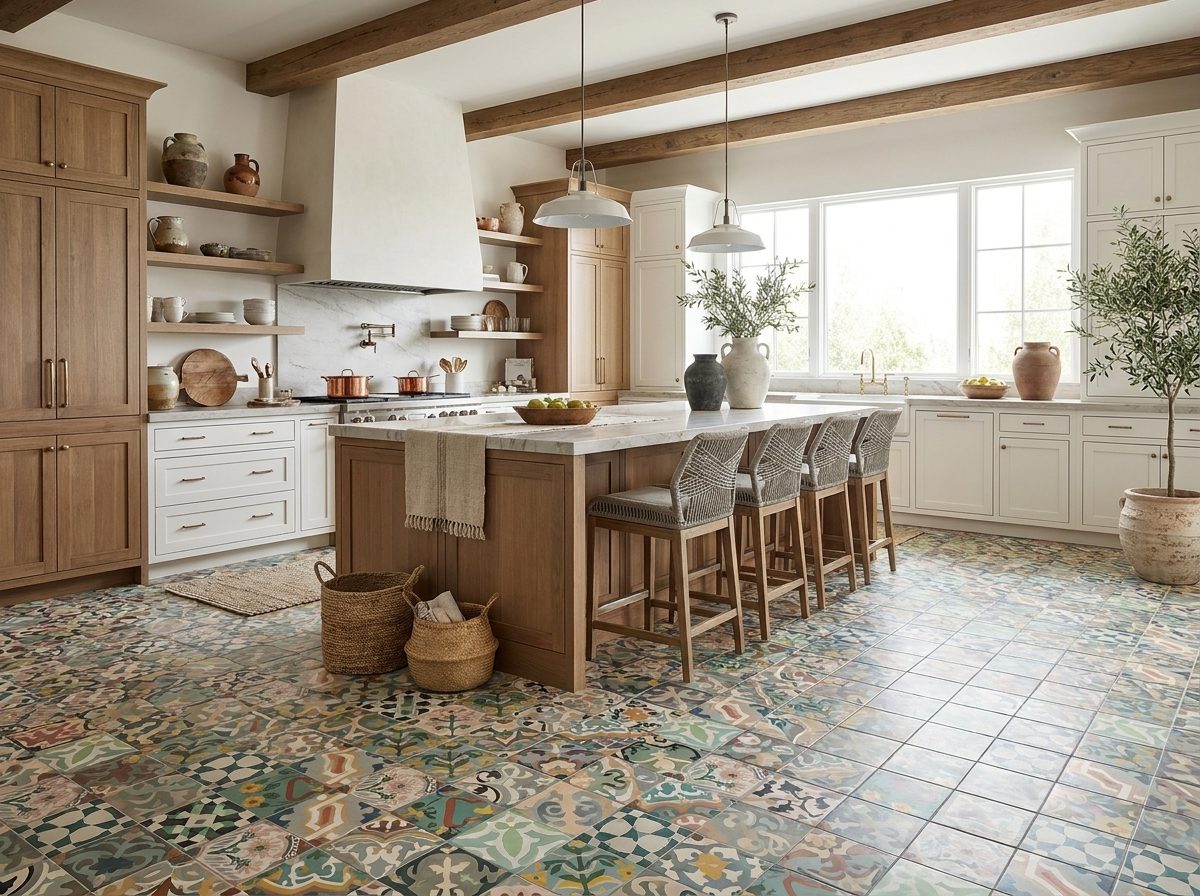
A Moroccan-inspired pool works because it doesn’t look mass-produced. The surface catches light differently. The pattern has rhythm. The border feels crafted rather than printed. Even a narrow band at the waterline can change the whole atmosphere of a yard, especially when the rest of the palette is restrained.

That visual language isn’t a recent trend. Moroccan tile, or zellige, originated around the 9th to 10th century in Fez, Morocco, where Islamic artistic traditions favored complex geometric pattern over figurative representation. The term comes from “al-zillij,” meaning “small polished stone,” and the earliest documented palettes were plain white and brown before green, blue, and yellow expanded the range in the 14th century, as described in this history of Moroccan tile from Riad Tile.
Why the style still feels current
The old work still speaks to modern design because geometry ages well. A good star pattern, interlocking field, or restrained border doesn’t depend on fashion. It depends on balance, contrast, and surface character.
For pools, that matters. Water already adds movement. Moroccan pattern gives it a framework.
Practical rule: The strongest pool designs usually don’t cover every surface in ornament. They place pattern where the eye naturally lands, at the waterline, on step risers, at a fountain wall, or in a framed deck panel.
Beauty needs a technical backbone
Many projects often go wrong here. Clients fall in love with the image of glossy handmade tile around water, then assume any Moroccan-look surface can go anywhere. It can’t.
A moroccan tile pool has to perform in several zones at once:
- Submerged areas need a material and setting method that tolerate constant exposure.
- Waterlines need surfaces that clean well and hold their edge detail.
- Coping and steps need slip awareness first, not last.
- Decking has to handle weather, foot traffic, and heat.
The visual reward is real. So is the risk if the wrong tile ends up in the wrong location.
That’s why the best pool work doesn’t start with color. It starts with asking what the tile must survive, then choosing the handmade look that fits that demand.
Choosing the Right Tile for Your Pool Application
A pool in Palm Springs, a mountain project in Colorado, and a courtyard plunge pool in Miami should not get the same Moroccan tile specification. They may share a visual reference, but they do not share the same climate, water chemistry, or traffic pattern. Good pool work starts with that reality.
For a moroccan tile pool, the primary decision is choosing the right material for each zone. Traditional zellige and glazed ceramic bring shimmer, reflection, and edge variation that can look extraordinary at the waterline or on a feature wall. Handmade cement tile offers a different set of strengths. It gives better visual control across larger surfaces, a matte finish under strong sun, and far more freedom with custom pattern and color. That distinction gets overlooked far too often.

Match the tile to the zone
I break pool projects into four working areas because each one asks something different from the finish.
| Pool zone | Primary performance concern | Material direction that usually makes sense |
|---|---|---|
| Fully submerged interior | Water exposure, bond reliability, chemical stability | Glazed ceramic or other wet-rated tile systems, with careful detailing |
| Waterline | Cleanability, crisp pattern, resistance to splash and residue | Zellige-inspired or glazed Moroccan-look tile |
| Coping and steps | Footing, edge definition, comfort under bare feet | Textured surfaces with proven slip resistance |
| Surrounding deck and outdoor rooms | Sun, weather, traction, repairability, visual continuity | Handmade cement tile in the right finish and assembly |
That chart is simple on purpose. Pool failures usually come from treating all four areas as one surface.
Traditional zellige and ceramic have a clear role
Zellige earns its reputation. The slight lippage, tonal variation, and irregular cut catch light in a way machine-made tile cannot. In the right place, that movement is the whole point.
I prefer that language in controlled areas: a waterline band, a spa face, a fountain wall, or a vertical accent where the eye comes close enough to appreciate the handwork. Glazed ceramic Moroccan-look tile can also perform well in wet conditions because the surface is easier to clean and less absorbent than cement. That practical side matters at the waterline, where oils, minerals, and treatment residue collect first.
The trade-off is installation tolerance. Irregular handmade surfaces ask more from the setter, especially around corners, step returns, and tight layout conditions. On broad walking surfaces, the same beautiful irregularity can become a maintenance or traction problem if it is specified carelessly.
Handmade cement tile deserves a more serious place in pool design
Cement tile is often treated as a decorative extra. In outdoor pool design, it can be a primary architectural finish.
The benefit is not that it copies zellige. It does something else. Handmade cement tile reads flatter, quieter, and more grounded. It handles large patterned fields well. It can be produced in custom colorways that match plaster, stucco, stone, or natural surroundings materials without relying on a glossy glaze. For architects who want Moroccan geometry without turning the project into a pastiche, that flexibility is valuable.
It is especially strong in these applications:
- deck panels and poolside terraces
- outdoor showers and garden walls
- lounge zones framed as patterned "rugs"
- transitions between pool coping and adjacent living areas
- custom outdoor compositions using handmade Moroccan outdoor cement tiles for exterior spaces
That customization matters. A pool project often needs restraint more than spectacle. Cement tile gives pattern without glare, and that can be the difference between a space that still feels composed in five years and one that feels busy after one season.
Climate changes the specification
I see the biggest mistakes here.
A warm-climate detail does not automatically belong in a freeze-thaw region. A tile that performs well on a shaded courtyard deck may struggle on a fully exposed coping in a place with severe winter cycling. Cement tile can be excellent outdoors, but only when the substrate, drainage, finish, sealing approach, and climate are considered together. Zellige and ceramic have their own limits too, especially if the installation does not account for movement, saturation, and edge exposure.
Water treatment matters just as much. Salt systems, chlorine, acidic cleaners, and neglect will test grout joints and sealers long before they ruin the tile face. Specifying the tile without specifying the maintenance reality is incomplete work.
Traction should be decided before the tile is ordered
For steps, tanning ledges, and coping, surface finish comes before pattern. A honed or brushed cement tile can be comfortable and attractive underfoot, but the finish needs to suit wet barefoot traffic. The same goes for ceramic and zellige-inspired products used near entries and raised spillways. Ask the manufacturer for wet-area performance documentation for the exact finish being specified, not for a similar product in the same collection.
I also advise clients to review the pattern at full scale. Dense geometry can disguise puddling, slope errors, or cut lines. That is useful in some areas and a problem in others.
A better selection approach
The strongest moroccan tile pool projects usually combine materials instead of forcing one tile to do every job. Use zellige or glazed ceramic where light reflection and handcrafted variation will be seen up close. Use handmade cement tile where the project needs traction, a matte surface, and custom pattern carried across larger exterior planes.
That balance also fits the broader design logic behind creating stylish rooms with patterns. The same principle applies outdoors. Pattern works best when it is placed with discipline.
If I had to reduce the specification mindset to one rule, it would be this: assign each material to the place where its strengths are real, not just where the sample looks beautiful.
Designing Your Poolside Oasis with Pattern and Color
The strongest Moroccan pool designs don’t start with a catalog page. They start with the architecture already on site. A crisp modern rectangle wants a different pattern language than a courtyard pool wrapped by stucco walls, arches, and deep planting. The tile should answer the building, not compete with it.

Three ways to use pattern well
Use a narrow waterline band for focus.
If the pool shell is already dominant, keep the Moroccan element concentrated. A patterned band gives the water a crisp visual edge and lets the rest of the finishes stay quiet.
Create a tile rug beside the pool.
This works especially well with handmade cement tile. Frame a seating area, chaise zone, or outdoor dining pad in pattern while leaving surrounding paving plain. It gives the project a crafted center without overloading the eye.
Reserve a hero moment.
A raised spa face, outdoor shower wall, fountain niche, or garden bench can carry a denser motif than the pool itself. That keeps the composition layered.
Color decisions that age gracefully
The old Moroccan palette still works because it’s rooted in materials and light. White and brown read calm. Blue and green naturally reinforce water. Yellow can energize a small accent area. Red is powerful, but I use it with discipline outdoors because sun, planting, and water already create plenty of visual activity.
A simple rule helps. Let one element lead:
- the water can be the strongest blue,
- the tile can be the strongest pattern,
- or the surroundings can be the strongest color story.
Don’t ask all three to dominate at once.
If you’re refining how multiple prints and motifs can coexist, this guide to creating stylish rooms with patterns offers a useful way to think about balance, repetition, and visual pacing. The same logic applies outdoors.
Custom work without guesswork
Many retailers stop at stocked collections. That’s fine for straightforward jobs, but it leaves architects and homeowners stranded when the project needs something site-specific. One of the clearest market gaps is the lack of guidance around custom Moroccan tile design, from first sketch through production and installation, as noted in this overview of Moroccan waterline tile design needs.
Here’s the cleanest way to approach a custom pattern:
Start with the architecture
Pull from arches, ironwork, plaster profiles, garden geometry, or existing paving joints.Reduce the motif
A good pool pattern usually needs simplification. Fine linework that looks great on paper may disappear at waterline distance.Choose the scale by viewing distance
A deck panel can take a larger repeat. A waterline border usually needs tighter rhythm.Mock the transitions
Corners, drains, skimmers, step returns, and coping breaks should be part of the drawing early.Confirm the application zone
Don’t finalize color and finish before you know whether the tile sits underwater, at the edge, or under bare feet.
For projects that need a broader library of exterior-ready handmade options, Moroccan outdoor tiles from Original Mission Tile show how this style can move beyond a stock border into deck fields, fountains, and custom outdoor compositions.
Good custom tile design solves the corner before it celebrates the center.
Essential Preparation for a Flawless Installation
A pool can look perfect on delivery day and still fail early if the shell prep was rushed. I see this more often on projects that treat handmade Moroccan tile like standard porcelain. Cement tile, and even zellige-inspired ceramic, will expose every dip, crack, wet spot, and weak transition underneath.
Pool preparation starts with a simple rule. The tile layer should inherit a surface that is flat, cured, clean, and already waterproofed for submerged use.
Build the right base for the tile type
This is one of the biggest differences between traditional ceramic or zellige and handmade cement tile. Glazed ceramic is often more forgiving visually because the surface reflects light and disguises minor substrate inconsistency. Cement tile does not. Its matte face, crisp pattern edges, and thicker body make lippage, telegraphing, and moisture-related discoloration easier to spot.
For pools, that means the receiving surface has to be corrected before tile layout begins. Concrete wall waterproofing for tile installations outlines the kind of substrate and membrane planning that matters here, especially where concrete, moisture pressure, and decorative finishes meet.
A shell that is still being patched during tile setting is not ready.
Waterproofing has to be treated as part of the assembly
The tile is the finish. It is not the waterproofing layer.
That distinction matters even more with handmade cement tile because the material is porous by nature. Used well, it delivers a depth and softness that ceramic cannot fake. Used carelessly in a freeze-thaw climate, on a poorly detailed shell, or around fittings with weak sealing, it can become the surface that reveals every mistake below it.
The trouble spots are predictable:
Changes in plane
Wall-to-floor intersections, bench faces, step risers, and inside corners move and concentrate stress.Penetrations
Returns, lights, drains, and fittings need deliberate detailing before tile work starts.Perimeter transitions
Coping interfaces, overflow edges, and deck-to-pool joints need movement planning that respects the structure.Moisture-prone substrate repairs
Soft patches, laitance, dust, and contaminated bond surfaces shorten the life of the installation.
Good crews do not brush membrane over these areas and hope for the best. They build them out as reinforced parts of the waterproofing system, with materials that are compatible from primer to setting bed.
Climate changes the preparation standard
This point gets overlooked in Moroccan-style pool design. A glazed ceramic tile and a handmade cement tile may both suit the look, but they do not ask the same questions of the shell.
In hot, dry regions, the main risk is often moisture movement, rapid curing, and surface salts showing through weak prep. In freeze-thaw regions, trapped moisture becomes much more destructive. That does not automatically rule out cement tile for a pool, but it does raise the bar for waterproofing, drainage design, movement joints, and product selection. Some projects are better served by ceramic at the waterline and cement tile in adjacent dry zones where the pattern can still carry the design.
That is the kind of trade-off worth making on paper, not after the pool is filled.
Sequence matters because each layer depends on the one below it
A sound prep workflow usually follows this order:
Inspect the shell or substrate closely
Check flatness, plane changes, shrinkage cracks, patch quality, and all penetrations before surface prep begins.Remove weak material and contamination
Dust, laitance, curing residue, sealers, and loose repairs all interfere with bond and waterproofing performance.Correct the surface first
Flatten low spots, true the corners that need to be true, and resolve transitions before membrane application.Install the full waterproofing system
Use the specified components together, including reinforcement at corners, joints, and penetrations.Respect cure times
Membranes and patch materials need to stabilize before tile setting starts.
Skipping steps usually saves a day and costs months later.
What proper preparation prevents
Owners notice the finish. Builders live with the consequences of what sits behind it.
Careful preparation reduces the risk of:
- leaks around lights and returns
- tile release from damp or unstable areas
- cracking concentrated at corners and steps
- moisture migration that shows up as staining, efflorescence, or a darkened cement surface
For architects and homeowners choosing between zellige, ceramic, and handmade cement tile, the decision then becomes practical. Cement tile offers more control over color, pattern, and custom composition. It also asks for stricter prep discipline, especially in demanding climates and fully submerged conditions. If the substrate is right, the result feels permanent. If it is not, the pattern will not hide the problem.
Installation Methods for Lasting Beauty
A pool is often where good tile work gets judged hardest. Midday sun hits the waterline, raking light catches every edge, and any weak bond or uneven plane shows up fast. Handmade cement tile can look extraordinary in that setting, but it has to be installed with methods that respect the material. Zellige and glazed ceramic can forgive certain surface irregularities because their variation is part of the visual language. Cement tile is different. It carries hand-made character, but it also asks for tighter control in wet, high-exposure conditions.

Blend first, then set
Open several boxes and mix the tile before a single piece goes down. Handmade cement tile can vary in tone, pigment saturation, and thickness from batch to batch. If an installer works straight through one carton at a time, the pool wall or deck can develop visible patches that read like installation mistakes, even when the tile itself is beautiful.
That blending step matters with zellige-style layouts too, but for a different reason. Ceramic and zellige variation usually creates sparkle and movement. Cement tile variation affects pattern continuity and color balance more directly, especially in repeating motifs and framed borders.
Full mortar contact matters
Pool work leaves no room for hollow spots. Water pressure, thermal movement, and chemical exposure will find any void behind the tile.
Set with a mortar suited to submerged or poolside conditions, comb it in one direction, and back-butter each piece so the underside is fully supported. I tell crews to lift and check tiles early, not after half the wall is finished. If coverage is weak at the start, it will not improve by hope or pressure.
A hollow-backed tile can stay in place for a while. Then a season changes, the shell moves slightly, or water gets where it should not, and the failure shows up at the face.
The setting checklist I’d hand any crew
Comb mortar consistently
Straight ridges collapse more predictably than swirled mortar.Back-butter every tile
Handmade cement tile needs support across the full back, not just at the high points.Set with firm, even pressure
Push the tile into plane without hammering the edges.Check bond coverage often
Pull a piece, inspect it, and adjust before the pattern gets ahead of the installer.
Manage variation instead of fighting it
Handmade cement tile rarely behaves like factory porcelain, and that difference affects installation speed. Joint spacing often needs slight adjustment to keep the surface looking true, especially at waterlines, corners, and stair faces where the eye reads every inconsistency. The goal is not rigid uniformity. The goal is a surface that feels intentional.
This is one of the significant trade-offs between materials. Zellige can absorb irregularity because the craft tradition expects shimmer, edge play, and minor movement in the joints. Cement tile gives you more control over color, scale, and custom patterning, but poor plane control looks more obvious. A careful installer watches lippage constantly and corrects it tile by tile.
A visual reference helps crews see the hand-setting pace this kind of work needs:
Set the pattern in the right order
Patterned pool work should be built from the composition outward. Start with the focal geometry, establish the borders, then cut in the surrounding field. That sequence keeps the design centered where people see it, whether they are standing at the coping, looking across the spa wall, or viewing the pool from the house.
Dry-lay the difficult areas before mortar touches the surface. I especially recommend that at:
- inside corners
- step fronts
- spa spillways
- waterline returns
- drain and fitting locations
Handmade pattern exposes small layout errors. If the geometry drifts early, the border will make it obvious later.
Grouting and final protection
Grout choice should match the exposure, the tile body, and the maintenance plan. In many pool applications, installers prefer higher-performance grout systems because they resist water absorption and pool chemistry better than basic cement grout. The right choice depends on where the tile sits, whether it is submerged or only exposed to splash-out, and how the waterproofing and sealer system were specified.
Color matters too. With Moroccan patterns, I usually prefer a grout color that supports the design rather than outlining every piece unless the pattern calls for stronger definition.
Before grouting, make sure the face is properly protected for that step. After grouting, clean residue thoroughly and follow the sealer and cure sequence specified for cement tile. For a practical reference on protecting the surface after installation and maintaining it correctly over time, see this guide to cleaning cement tiles. That final phase is where a strong installation keeps its depth of color instead of picking up haze, staining, or blotchy absorption.
Long-Term Care and Maintenance for Your Tile
A moroccan tile pool stays beautiful when maintenance matches the material. Handmade cement tile, in particular, asks for a different mindset than glossy factory tile. You don’t preserve it by scrubbing harder. You preserve it by sealing correctly, cleaning gently, and watching the details that signal trouble early.
Seal with purpose
For handmade cement tile in or around pool environments, sealing isn’t optional. The usual sequence is to protect the tile before grouting, then seal again after the grout has cured and the surface is clean. That reduces staining risk and helps the tile face resist water and pool chemistry.
If you need a practical reference for product compatibility and routine upkeep, guidance on cleaning cement tiles is useful for understanding how penetrating sealers and pH-conscious cleaning fit into long-term care.
Clean gently and consistently
Routine maintenance should be simple:
- Use pH-neutral cleaners when possible, especially on sealed cement tile.
- Remove residue early so scale, film, and mineral deposits don’t build into a bigger cleaning job.
- Avoid harsh acidic cleaners unless the tile system specifically allows them.
- Use soft tools first rather than aggressive abrasives.
Small, regular cleaning beats infrequent deep cleaning every time. Poolside surfaces collect splash-out, sunscreen residue, and general outdoor soil. None of that is dramatic if it’s handled early.
Pay attention to seasons
In cold climates, winter care matters as much as summer use. Standing water, saturated joints, and neglected edge conditions become bigger risks once freezing weather arrives. The practical goal is simple. Keep the system sealed, keep drainage working, and don’t let minor cracks or open joints carry over from one season into the next.
For owners, the smartest maintenance habit is inspection. Walk the pool edge. Look at corners, fittings, and transition points. If something changes, address it while it’s local.
A pool tile problem is cheapest when it’s still small enough to point at with one finger.
Common Pitfalls and Expert Solutions
A pool can look excellent on install day and still be headed for trouble. I usually see the warning signs before the first season ends. A hairline crack at a corner, a faint hollow sound underfoot, a damp band that should not be there. Handmade Moroccan-style surfaces reward good judgment, but they expose shortcuts fast.
The first mistake is choosing a look without respecting the material. Zellige and glazed ceramic bring a luminous, irregular surface that works beautifully at waterlines and vertical features, but they behave differently from handmade cement tile underfoot and in freeze-thaw conditions. Cement tile gives designers far more freedom with color, scale, and pattern continuity across the pool deck, spa surround, steps, and outdoor rooms. That freedom comes with tighter demands on substrate prep, sealing strategy, and moisture control.
Failures that show up again and again
Ignoring thickness and density variation
Handmade cement tiles are not pressed out to the same visual and dimensional uniformity as mass-produced porcelain. If the installer treats them like factory tile, lippage, hollow spots, and inconsistent bond strength start to appear. The fix is methodical sorting, careful mortar adjustment, and constant plane checks during setting.
Using the wrong material in the wrong zone
This is a design error as much as an installation error. Cement tile can be a strong choice for pool decks, coping surrounds, fountains, and adjacent outdoor living surfaces, but full-time submerged applications require much closer review of the tile body, finish, sealer system, and water chemistry. In many projects, the best result comes from combining materials. Ceramic or glass where permanent immersion demands it, handmade cement where pattern depth, slip resistance, and custom color matter more.
Underbuilding corners, steps, and transitions
Flat areas get attention. Change-of-plane conditions are where systems tend to fail first. Corners, step returns, drain areas, skimmer cuts, and material transitions need precise detailing because movement and water both concentrate there. A beautiful pattern cannot hide weak waterproofing.
Practical fixes before a small issue becomes a tear-out
- Tap-test suspect areas and mark any hollow-sounding tile for review before bond loss spreads.
- Inspect corners and penetrations first when you see staining, movement, or recurring moisture.
- Check drainage patterns after heavy use or rain so water is leaving the deck instead of collecting at edges and joints.
- Match the setting system to climate. Freeze-thaw exposure, high sun, salt, and splash-out all affect mortar, grout, and sealer performance.
- Plan safety as part of the finish package. If the pool area is being updated as a whole, FenceScape's pool safety solutions are a useful companion resource for compliant perimeter protection and safer circulation.
One more hard truth. DIY pool tile work often fails for the same reason ambitious design work fails. Too many variables get stacked at once. Handmade materials, wet-area detailing, movement joints, drainage, and sealer compatibility all need to work together.
The projects that age well are usually the ones where the material choice matches the climate and the installer understands what handmade tile asks for. If you are specifying a Moroccan tile pool look with handmade cement tile, Original Mission Tile offers handmade cement tile options, custom pattern capabilities, and application guidance that can help you evaluate what fits your project.