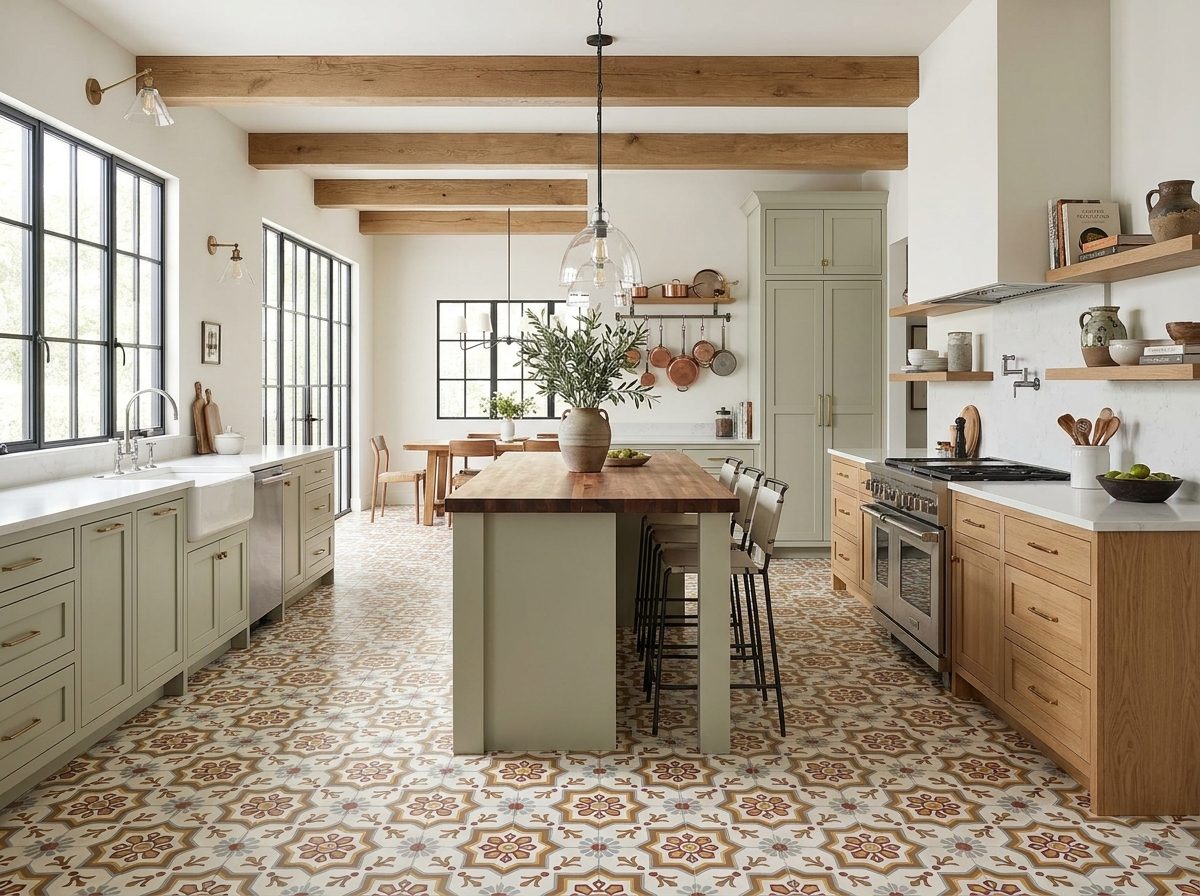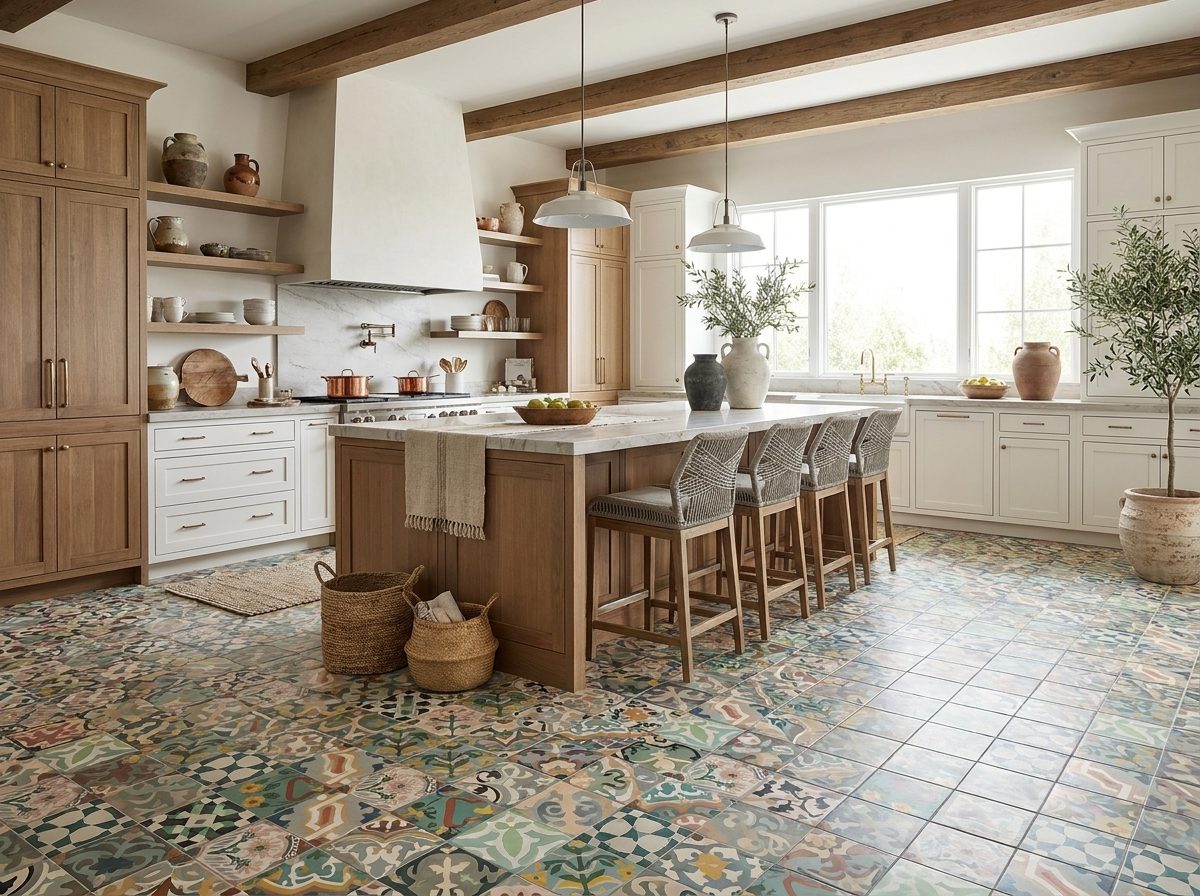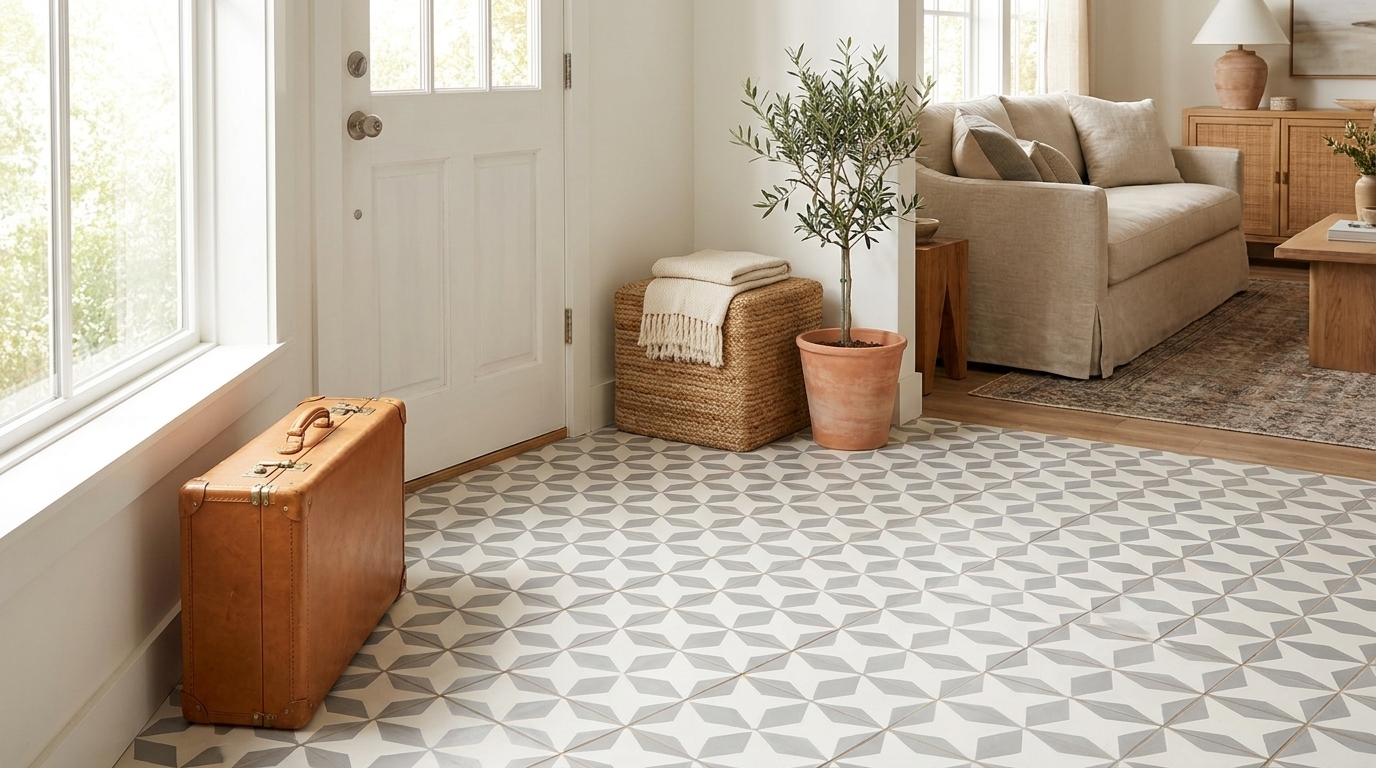
You're likely looking at a collection of samples, attempting to resolve a common design challenge. You want a surface with personality, but you do not want something that will feel outdated in a short time. You want pattern, but not disorder. You want craftsmanship, but you also require a floor or wall that can function in daily life.
That's where star and cross cement tile earns its place.
Few patterns do as much work at once. It reads as historic and fresh. It can feel quiet in a soft monochrome palette or graphic in black and white. It suits old houses, modern remodels, boutique hospitality spaces, and hardworking family kitchens. Just as important, it isn't only a look. It's a system of shapes, a handmade material, and an installation process that asks for thoughtful planning.
An Introduction to Timeless Tile Design
The appeal of star and cross cement tile starts with a simple tension. Many homeowners want a room to feel memorable, but they also want it to age well. That usually means avoiding surfaces that are either too plain to hold the room together or too trendy to live with for the long haul.
Star and cross solves that problem better than most patterned surfaces. The geometry is recognizable at a glance, yet it doesn't shout unless you ask it to. The pattern creates movement, but it also brings order. In practice, that makes it one of the rare tile choices that can anchor a whole space without overwhelming the architecture around it.

Why this pattern keeps showing up in good projects
Designers return to this pattern because it gives them options.
- As a quiet field tile it can bring texture and rhythm with very little contrast.
- As a statement floor it can define an entry, bath, or kitchen in one move.
- As an architectural accent it can create a border, inset, or feature wall that feels built into the room rather than added on later.
The pattern also works across a wide range of palettes. Bright color can push it toward a more traditional North African or Mediterranean mood. Muted tones can make it feel almost refined.
A good star and cross floor doesn't rely on novelty. It relies on proportion, color discipline, and clean installation.
What matters before you buy
This is not the kind of tile to choose only from a thumbnail on a screen. The shape relationship matters. The finish matters. The edge quality matters. The sealer strategy matters. Cement tile rewards people who think beyond the sample and all the way to the installed surface.
That's the design journey worth understanding. The pattern has deep roots. The material has a distinct making process. The layout changes how the room feels. The installation details affect whether the floor looks crisp for years or starts fighting you early.
The Art and Soul of Star and Cross Cement Tile
A client stands over two loose pieces on the studio table, one star and one cross, and the pattern still has not revealed itself. Then we dry-lay a few full repeats, step back, and the room begins to appear. That moment matters. Star and cross is never just a tile order. It is a design journey that starts with geometry, sharpens through color choices, and only reaches its full character once the floor is pressed, set, and sealed by hand.
Star and cross is a two-piece interlocking pattern made from alternating star-shaped and cross-shaped tiles that join into a continuous mosaic. The eye reads the composition as a field rather than a grid of individual units. That distinction gives the pattern its staying power. It comes from a long tradition of geometric design rooted in Persian, Moroccan, and Spanish precedents, so it carries history without feeling stuck in the past.

How the pattern creates its effect
A printed square tile repeats on the face of each piece. Star and cross builds the drawing through the joints themselves. That physical interlock is what gives the layout its rhythm.
Three things happen when the pattern is handled well:
- The surface reads as one composition. Your eye moves across the floor instead of stopping at square boundaries.
- The geometry carries both focus and movement. The star anchors the pattern, while the cross pulls the eye into the next repeat.
- Color choices affect the whole field. Change the hue of one shape, and the balance of the room shifts with it.
That is why I never judge this pattern from a single sample alone. A white star against a clay-toned cross feels different from the same colors reversed. On paper the palette may look minor. On the floor, it changes the weight, contrast, and pace of the entire installation. Designers working through those combinations usually benefit from studying a wider range of star and cross tile pattern ideas before settling on a final direction.
Why cement changes the character
The material does half the design work. Cement tile has a matte, mineral surface and inlaid color rather than a fired glaze sitting on top. That gives star and cross a quieter, more architectural presence than glossy ceramic usually can.
The traditional making method still matters here. As described in Original Mission Tile's history of cement tile, artisans pour pigmented cement into molds, press the tile, then cure it without a kiln. Handmade production leaves small variation in tone, edge, and surface texture. In the right project, those are strengths, not defects. They give the pattern depth and keep a large field from feeling flat or synthetic.
Handmade character you can see
A good cement star and cross floor has a soft, dense presence. Light settles into it rather than bouncing off the surface. Photographs rarely capture that fully.
A few practical truths come with that beauty:
- It should not look machine-perfect. Slight variation is part of the craft.
- The pattern needs enough area to read well. One or two loose pieces cannot show the finished effect.
- Palette restraint usually gives better results. Too many competing colors can weaken the geometry.
- Installation quality shows immediately. Uneven joints or poor alignment break the pattern faster than they would on a simple square tile.
Craft note: Star and cross succeeds when the maker, designer, and installer treat it as a full composition from the first sample review to the final coat of sealer.
That is the part many buyers miss at first. They see a beloved historic pattern. We see a sequence of decisions. Shape proportion, pigment choice, pressing, curing, dry layout, setting, grouting, and sealing all contribute to the finished floor. Get those steps right, and star and cross cement tile carries handwork, history, and daily use with remarkable grace.
Exploring Pattern and Layout Possibilities
A star and cross floor usually starts with a simple question from a client: should the pattern read subtly across the room, or should it greet you the moment you step through the door? That decision shapes every one that follows. Color, border treatment, room proportions, and even where the cuts fall at the perimeter all change the character of the installation.
That is why I treat this pattern as a design journey rather than a tile order. The geometry is fixed. The finished effect is not. A restrained palette can give the room a grounded, architectural calm. A sharper contrast can pull the pattern forward and make the floor part of the room's identity.

Three strong ways to use the pattern
Star and cross has survived for so long because it adapts well without losing its character. Some approaches consistently work because they respect the scale and rhythm of the two shapes.
A restrained palette lets the interlock carry the pattern. High contrast makes the geometry read faster and with more force.
Monochrome field
Use related tones when the room already has strong materials such as figured stone, painted cabinetry, heavy wood grain, or expressive plaster. The pattern stays visible, but it sits lower in the hierarchy.Classic contrast
Black and white, charcoal and cream, or terracotta and ivory make the star and cross structure unmistakable. This approach suits entries, powder rooms, and dining spaces where the floor is meant to set the tone.Custom color composition
Mineral greens, dusty blues, clay neutrals, and softened ochres can shift the pattern away from a graphic look toward something more layered and atmospheric. This is often the right move in older homes and hospitality interiors where the floor should feel settled into the architecture.
Borders, insets, and room definition
Full-field installation is only one option. Some of the most memorable star and cross projects use the pattern as a framed composition within the room.
A rug-style inset can anchor a bath or entry without taking the tile to every wall. A bordered field can define the working zone of a kitchen while keeping the perimeter quieter. At a doorway, the pattern can mark a threshold with more intention than a simple material change. On a wall, it becomes a shaped surface with shadow and rhythm rather than a floor pattern turned vertical.
For early concept work, it helps to review a range of tile pattern ideas for floors and walls before settling on the final composition. The tile shapes stay the same. The surrounding decisions determine whether the result feels formal, relaxed, historic, or clean-lined.
Layout planning changes the result
Star and cross is a modular pattern, and it rewards careful layout. Centering the field, balancing the border widths, and deciding where partial pieces will land should happen before material is ordered, not while the installer is opening boxes.
Straight-set layouts usually give the pattern a steadier, more architectural read. They also make it easier to coordinate with cabinet runs, tub faces, and room edges. Diagonal layouts create more movement and can make a small room feel less boxy, but they ask for better perimeter planning and usually produce more waste. I reserve diagonal work for rooms where the added motion serves the architecture, not just the drawing.
| Layout approach | Visual effect | Practical trade-off |
|---|---|---|
| Straight set | Ordered, architectural, easy to read | Cleaner perimeter cuts and simpler transitions |
| Diagonal | More movement and visual energy | More cutting, more waste, tighter layout control |
| Inset with border | Framed, custom, intentional | Field size and border proportions must be resolved early |
What leads to a strong installation
Good results come from commitment to the whole composition. Give the pattern enough uninterrupted area to read clearly. Use border materials and adjacent finishes that support it rather than compete with it. Dry-lay the repeat, study the joint lines, and confirm where the pattern starts and ends before setting begins.
Star and cross exposes hesitation quickly. If doorways, islands, vanities, and transitions are treated as afterthoughts, the geometry loses its authority. When those decisions are handled early, the floor feels inevitable, which is exactly how a historic pattern should feel in a well-made room.
Technical Specifications for Designers and Builders
Star and cross cement tile asks for proper specification early. If you wait until the installer is on site to think about thickness, substrate flatness, or adjoining floor heights, the project gets harder than it needs to be.
The first number most professionals need is thickness. Star and cross cement tiles typically range from 5/8" (about 16 mm) to 3/4" (about 19 mm), with a 2–3 mm color layer pressed into a core of cement, sand, and marble dust, according to technical details on star and cross cement tile construction. That thickness has direct consequences for transitions, door clearances, and setting-bed planning.
Material build and why it matters
These tiles are made by hydraulic press, not by firing. Because there is no glaze and no vitrified ceramic body, the tile's performance comes from density and compression within the cement-based matrix.
That means a few things for the specifier:
- The wear surface is inlaid. Minor surface wear doesn't immediately reveal a different body color the way some coated products can.
- The finish is matte by nature. If the project calls for a slick, reflective surface, this isn't the right material language.
- Sealing is part of the system. It's not an optional afterthought.
Suitable uses and limits
The same technical source notes that star and cross cement tile is suitable for moderate-to-heavy residential and light commercial floors when it is properly installed and sealed. That makes it a strong fit for entries, kitchens, baths, hallways, corridors, and many boutique commercial settings.
It is less at home in spaces that combine heavy abrasion, poor maintenance discipline, and no protective sealer strategy. Cement tile can perform beautifully, but it expects a realistic match between material and use.
Substrate quality shows up on the finished surface. If the floor below moves, dips, or telegraphs unevenly, the pattern above won't hide it.
A practical specification checklist
Builders and designers usually need a fast read on the issues most likely to affect install quality. This is the short list I'd keep in front of the team.
Plan floor heights early
A tile in the 5/8" to 3/4" range needs coordination with adjacent wood, stone, or resilient flooring.Confirm substrate flatness
Handmade tile and interlocking geometry punish uneven substrates. Correcting the base after layout begins is expensive and frustrating.Choose the finish strategy upfront
Matte and honed presentations have different maintenance expectations. Sealer choice changes the final read of the tile.Match the tile to the traffic class
A residential bath and a commercial entry may both use the same pattern, but they don't always want the same finish, grout, or maintenance schedule.
If you're comparing options for a full-floor application, reviewing a focused guide to cement tile flooring for residential and commercial use can help align the design intent with actual site conditions.
Design Inspiration for Residential and Commercial Spaces
A front door opens, and before anyone notices the lighting or furniture, the floor has already set the tone. Star and cross cement tile does that well. It gives a room structure, mood, and a sense of authorship from the first step. That is why I treat this pattern as a design journey, not a decorative afterthought. The best results come from choosing scale, color, finish, and placement with the finished room in mind from the start.
The pattern carries a long architectural memory. Its geometric language traveled through Persian, Moroccan, and Spanish traditions, then found new life in American interiors. Today, the appeal is not nostalgia alone. Designers keep returning to star and cross because it can feel formal, relaxed, historic, or sharply modern depending on the palette and the way the field is framed.

In the home
Entries are often the right place to start. A modest foyer gives the pattern enough room to establish its rhythm without asking it to carry an entire open-plan house. In an older home, that can feel true to the architecture. In a newer home, it adds character that millwork and paint alone usually cannot supply.
Bathrooms reward careful use of this pattern. Run it wall to wall for a composed, enveloping effect, or confine it to a shower floor, tub apron zone, or central inset so it reads like a built-in carpet. The trade-off is visual weight. A high-contrast colorway can make a small bath feel richer and more dramatic, but it can also make the room feel busier. Soft contrast usually gives a longer-lasting result.
Kitchens ask for discipline. Star and cross pairs well with simple cabinetry because the floor already provides movement. Shaker doors, plain slab fronts, quiet stone counters, natural oak, and aged brass all sit comfortably beside it. If the cabinets, counters, backsplash, and floor all compete for attention, the room loses clarity.
Open-plan homes need another level of restraint. Sometimes the better move is to use star and cross in a defined zone, such as an entry, pantry, mudroom, or breakfast area, then transition into wood or stone. That choice often makes the pattern feel more intentional and helps the house age well.
In hospitality and retail
Commercial projects succeed when the pattern supports the brand without turning into branding. A café, tasting room, boutique hotel, or retail entry can use star and cross to create identity the old-fashioned way. Through material, craft, and repetition.
Color matters more in these settings. A bold field can energize a coffee bar or pastry counter, especially when the rest of the interior stays restrained. Muted combinations tend to wear better visually in hotel lobbies, corridors, and restaurants where the tile needs to feel established rather than loud. I usually advise clients to test the palette under the actual project lighting before they commit. Cement colors read differently in morning sun, warm sconces, and cool commercial LEDs.
Good commercial use also depends on what surrounds the tile. Calm millwork, clean transitions, and lighting that does not glare off adjacent finishes all help the pattern hold its shape. If the project team needs to connect the design idea to site execution, a practical guide to installing cement tile in real-world conditions helps keep the finished work aligned with the original concept.
Vertical applications that surprise people
Walls often give this pattern a second life. A fireplace surround gains order and depth. A backsplash can feel handmade without drifting into a rustic cliché. In powder rooms, a full feature wall lets the color and geometry read at eye level, which can be more striking than using the tile underfoot.
Some placements are consistently strong:
- Fireplace facings that use the pattern as an architectural frame
- Bar fronts where matte surface and geometry do the work instead of gloss
- Courtyard walls and garden rooms where the historic character feels natural
- Stair risers or low wainscot panels where a smaller field delivers enough pattern
What makes these spaces successful is proportion and commitment. Star and cross cement tile has presence. Give it a clear job in the room, build the palette around it, and carry that decision all the way from sample review to sealed surface. That is when the pattern stops being a motif and becomes part of the architecture.
A Practical Guide to Ordering and Installation
A star and cross floor usually goes wrong before the first tile touches mortar. The pattern is forgiving in style, but exacting in execution. If the order is short, the layout is improvised, or the installer treats cement tile like porcelain, the finished floor will show every shortcut.
Good results start at the planning table. This pattern is a design journey all the way through installation, not a product that gets dropped into a room at the last minute. Set the field dimensions, identify the visual center, decide where the pattern should start and die, and resolve cuts before material is ordered. A floor like this should already exist on paper before it exists on site.
Before the tile arrives
Order with enough tile for the room, the cuts, and the handmade work. Straight rooms need less reserve than spaces with out-of-square walls, tight penetrations, stairs, or border conditions. If a project includes custom color or a tuned ratio between star and cross pieces, verify those counts carefully. One missing module can stop an otherwise ready job.
When the shipment arrives, inspect it before anyone schedules installation.
Open more than one box
Handmade cement tile carries natural variation in tone, surface, and pigment density. Blend from multiple boxes from the start so the floor reads as one field.Check both shapes and quantities
Star and cross patterns depend on the balance between the two forms. Confirm the pieces match the approved layout and the ordered count.Dry-lay a full repeat on site
One complete repeat will tell you a lot. It confirms fit, joint consistency, and the visual rhythm of the pattern under actual site light.
If the installer has not worked with encaustic cement tile recently, review a proven cement tile installation guide for real jobsite conditions before the setting begins.
Setting the tile correctly
Flatness matters. So does discipline.
The substrate should be clean, stable, and flat enough to support a handmade tile with slight natural variation. In practice, installers need to keep checking the surface as they go, because star and cross layouts make lippage more visible than many straight-set fields. The pattern creates long visual lines. A small height change that disappears in a random layout will stand out here.
A sound installation sequence usually includes these steps:
- Prepare the substrate so it is clean, dry, properly cured, and free of bond breakers.
- Snap control lines for the full repeat rather than working off a single tile edge.
- Dry-check key intersections where stars and crosses meet, especially at borders and thresholds.
- Set from a reliable reference line and monitor joint consistency every few rows.
- Blend tiles continuously instead of emptying one carton at a time.
- Protect the surface before grouting with the sealer method specified for cement tile.
Bathrooms deserve extra care because layout, moisture exposure, and fixture locations all meet in a tight footprint. For homeowners comparing finishes and planning priorities, Choosing bathroom tiles in Highcliffe offers a useful consumer-side view of how selection decisions affect the finished room.
Grout and sealer are part of the installation
This material absorbs. That changes everything about grouting and cleanup.
Cement tile is not protected by a fired glaze, so grout haze, excess water, dark pigments, and rushed washing can mark the face of the tile or mute the color. Pre-grout sealing is often part of the installation system, not a cosmetic add-on at the end. The installer needs to choose grout and sealer with the tile body, joint width, and room use in mind.
Use clean water sparingly. Change rinse water often. Avoid acids and harsh cleaners. After the tile cures and the final sealer is applied, keep traffic off the surface until the floor is ready to perform as finished work, not active construction.
Patience shows in the result. A well-installed star and cross floor feels settled and architectural, as if it has always belonged there. A rushed one never does.
Customization and Long-Term Care for Lasting Beauty
One reason star and cross keeps earning new life is that it isn't trapped in one historical palette. The pattern has deep roots, but the color story can move with the project. Current design demand is expanding beyond neutrals into bolder colorways and patchwork schemes, while sustainability conversations are also becoming more specific. Reporting on the category notes that embodied carbon for cement tile production can range from 15–30 kg CO₂ per m², yet that information is rarely tied to specific star and cross offerings, creating room for better transparency and deeper customization, according to TileTell's discussion of star-and-cross tile trends and sustainability.
That matters for both designers and homeowners. If you're commissioning a custom floor, you want more than a pretty rendering. You want to know how the color will live in natural light, how the finish will age, and whether the maker can explain the material with integrity.
Why custom color is worth considering
A stock black-and-white star and cross floor can be beautiful. But custom work often produces the more convincing result because it allows the tile to respond to the room instead of forcing the room to match the tile.
That might mean:
- Soft mineral neutrals in a historic renovation.
- Earthy clay and sand tones for a Mediterranean or desert palette.
- Deeper greens or blues for a moody bath or bar.
- Patchwork-inflected combinations where the field stays ordered but the colors shift subtly.
For clients still sorting through broader bathroom choices, practical local guides can be useful too. A resource like Choosing bathroom tiles in Highcliffe is helpful because it frames tile selection around room use, maintenance, and design balance rather than trends alone.
The care routine that keeps the tile looking right
Maintenance for cement tile isn't difficult, but it does ask for consistency. Think of it as stewardship rather than repair. The goal is to protect the matte, inlaid surface so it develops character without being damaged by neglect.
Here's the routine I recommend in plain terms:
Use pH-neutral cleaners
Harsh acidic or highly alkaline products can interfere with the sealer and dull the finish.Wipe spills quickly
Cement tile is not the surface to leave standing wine, oil, dye, or acidic residue on for hours.Avoid abrasive pads and aggressive scrubbing compounds
The surface should be cleaned, not sanded.Monitor the sealer over time
High-use entries, kitchens, and baths may need attention sooner than low-traffic walls or powder rooms.
A well-kept cement tile floor doesn't look frozen in time. It looks lived with, protected, and respected.
Making the investment last
Thoughtful selections lead to lasting results. The right palette reduces visual fatigue. The right installer preserves the geometry. The right sealer protects the surface. The right cleaner keeps the finish from being slowly stripped away.
For projects that need custom pattern or color development, Original Mission Tile offers handmade cement tile and a Design Studio that allows designers and homeowners to develop custom compositions based on traditional cement tile methods. Used well, customization turns star and cross from a catalog selection into something far more personal.
The pattern has already lasted centuries. With thoughtful design, careful installation, and steady care, there's no reason your floor or wall can't remain one of the strongest surfaces in the project for years to come.
If you're planning a star and cross cement tile project and want to explore handmade options, custom color development, or technical guidance for specification and installation, visit Original Mission Tile.