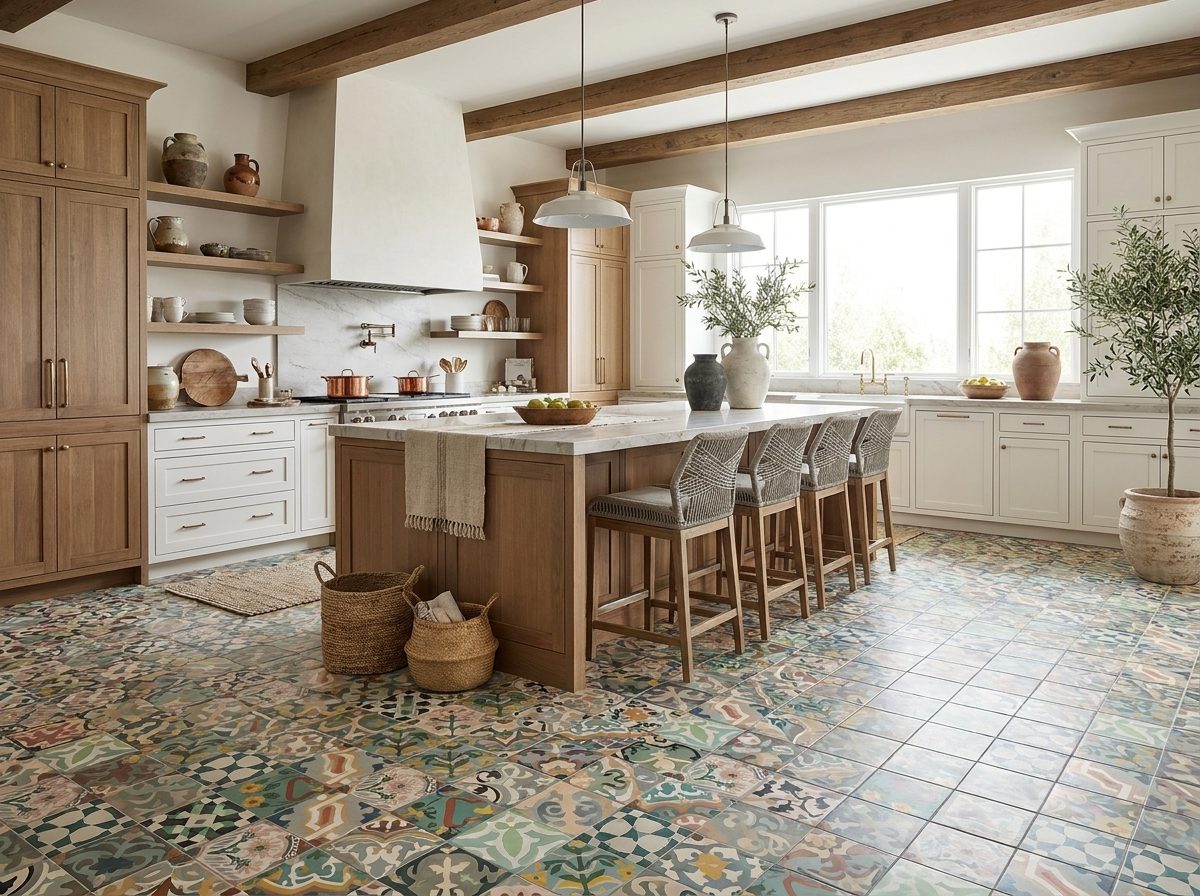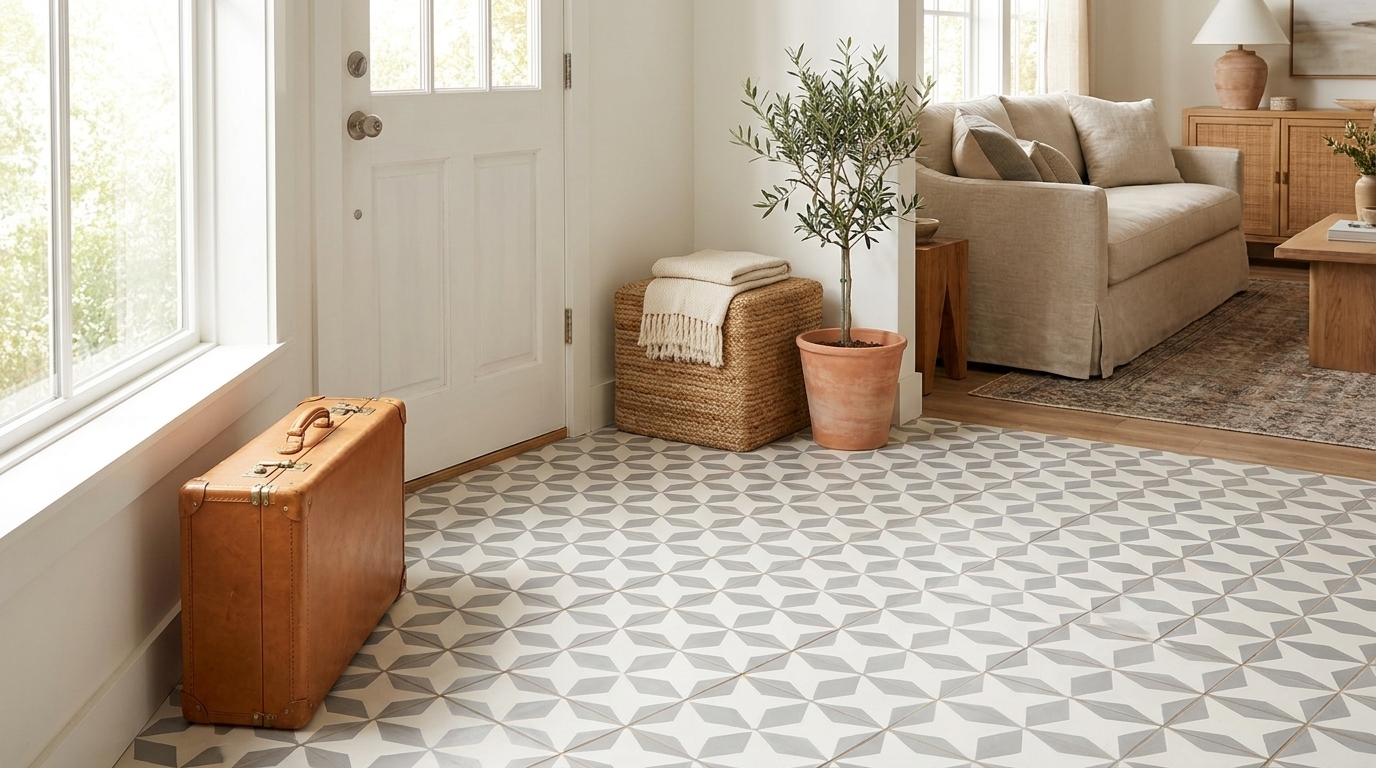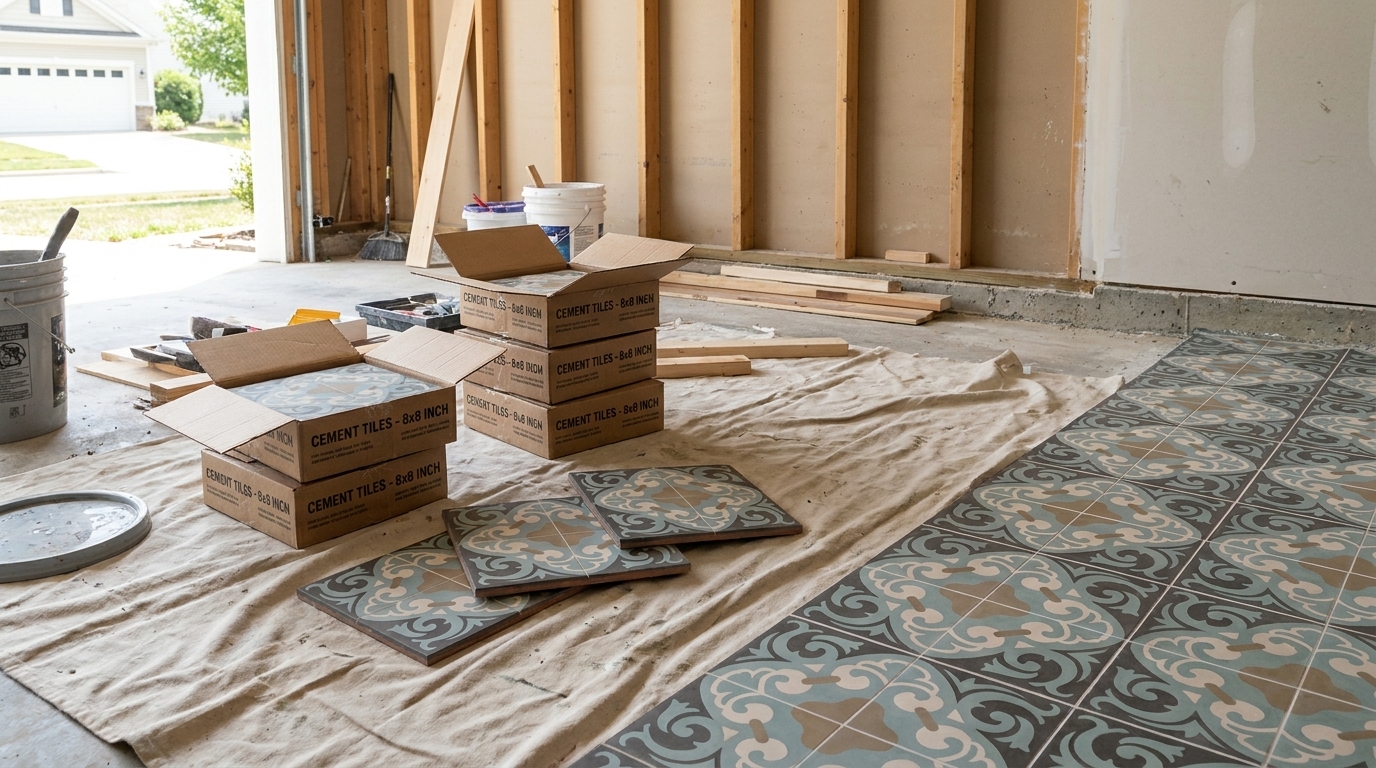
Wall tile patterns aren’t just about lining up squares in a grid. Think of layouts like herringbone, subway, or hexagon as a design language—the way you arrange your tiles speaks volumes, setting the mood and visual rhythm for the entire room.
The Power of a Great Wall Tile Pattern
It’s easy to think of tile as just a practical, waterproof surface. But the real magic happens when you move beyond color and material to the pattern itself. How you lay your tile is just as important as the tile you choose, turning a functional wall into a true design statement.
This is where you can really start to play with the feel of a space. A smart pattern can manipulate light, create a sense of motion, or even trick the eye into seeing a room as larger or cozier than it is. The right layout is often what elevates a design from nice to unforgettable.
More Than Just a Pretty Face
Let’s break down what a pattern can actually do:
- Create Illusions: A vertical stack bond pattern, where tiles are aligned in straight columns, draws the eye upward and can make a low ceiling feel taller. Laying the same tile horizontally in a narrow bathroom can make it feel wider and more spacious.
- Set the Mood: The energetic V-shapes of a herringbone pattern bring a dose of sophisticated energy, perfect for a lively kitchen backsplash. On the other hand, a simple, clean grid feels orderly and calm—a great choice for a spa-like bathroom retreat.
- Build Texture: With 3D or dimensional tiles, the pattern uses light and shadow to create literal depth. This turns a flat wall into a dynamic surface that shifts and changes as the light moves throughout the day.
The rule for hard finishes in any room is you get one pattern and that’s it. After that, all other surfaces must be as close to solid as you can possibly find. If you follow this rule, you will be happy with your kitchen or bathroom.
A Modern Take on a Timeless Craft
From the intricate zellige of Morocco to the bold encaustic floors of Victorian homes, patterned tile has been telling stories for centuries. Today, we’re in the middle of a modern revival of this tradition. Designers and homeowners are rediscovering that a simple shift in layout is a powerful way to express personal style.
Seeing how others have used patterns can spark incredible ideas for your own project. You can find a ton of inspiration and see how layouts work in real spaces by looking through different tile showroom display ideas.
This guide will give you the confidence to choose a pattern that truly defines your space, whether you’re creating a quiet escape or a vibrant hub for gathering.
Understanding Classic and Timeless Tile Layouts
Before we get into the wilder side of tile with exotic shapes and intricate motifs, it’s crucial to master the classics. These layouts are the absolute bedrock of tile design, bringing a timeless appeal and structural beauty that just works in almost any space.
Think of them as the basic grammar of your design language. Once you understand them, you can build sentences that feel calm and orderly or dynamic and full of energy. Their popularity isn’t an accident—these patterns are rooted in geometry and balance, creating a visual harmony that feels both familiar and sophisticated. They’ve stood the test of time because they’re adaptable, functional, and beautiful.
As you can see, your choice of tile pattern is more than just decoration; it’s a strategic tool for shaping how a room feels, how large it seems, and how it plays with light.

Choosing a layout is a powerful decision that directly shapes the human experience within a space.
For a quick overview of how these foundational patterns compare, here’s a simple reference table.
Comparing Classic Wall Tile Pattern Effects
| Pattern Name | Primary Visual Effect | Best For | Design Style |
|---|---|---|---|
| Subway (Offset) | Classic, balanced, horizontal flow | Kitchen backsplashes, shower walls | Traditional, Farmhouse |
| Subway (Stack Bond) | Modern grid, emphasizes direction | Making ceilings feel higher (vertical) or rooms wider (horizontal) | Modern, Minimalist |
| Herringbone | Dynamic movement, flowing energy | Feature walls, entry floors, shower surrounds | Transitional, Luxe, Classic |
| Chevron | Sharp, uniform zigzag, graphic impact | Large statement walls, modern backsplashes | Modern, Contemporary, Art Deco |
Each of these patterns offers a distinct personality, providing a solid foundation for any design you can imagine.
The Subway Pattern: A Versatile Classic
The subway tile, usually a 3×6 inch rectangle, is probably the most recognizable tile in modern design. Its true power lies in its simplicity and the surprising number of ways you can lay it out. Each variation tells a slightly different story.
The most common layout is the offset or running bond, where each tile is shifted by half its width from the row below. This creates that familiar, sturdy brick-like look that feels balanced and traditional. It’s perfect for kitchen backsplashes and bathroom walls where you want a clean, classic vibe.
Alternatively, the stack bond (or straight stack) arranges tiles in a neat grid. Aligning them vertically draws the eye upward, making ceilings feel higher—a fantastic trick for smaller bathrooms. A horizontal stack, on the other hand, emphasizes width, making a narrow space feel more expansive.
Herringbone and Chevron: Dynamic Movement
Looking to inject some energy? Herringbone and chevron are your go-to choices. People often mix them up, but they are distinct patterns with very different effects.
A herringbone pattern uses rectangular tiles set at a 45-degree angle to create an interlocking, V-shaped design. The result is a sense of continuous, flowing energy. It’s a sophisticated choice that adds a touch of luxury, making it a great fit for a feature wall or shower surround. The timeless appeal of a herringbone pattern adds an element of classic elegance.
Chevron, however, is created with parallelogram-shaped tiles. Their ends are cut at an angle so they meet to form a clean, unbroken “V.” This creates a sharper, more uniform zigzag that feels modern and graphic—an excellent choice for a seamless statement across a large wall.
Design Tip: The direction of your herringbone or chevron pattern matters. V-shapes pointing upward can create a sense of height and aspiration, while horizontal V-shapes can guide the eye across a room, making it feel longer.
These classic layouts are more in demand than ever. The ceramic wall tile market, which stood at USD 30.48 billion in 2024, is projected to hit USD 45.56 billion by 2035. This growth is fueled by a desire for sustainable materials and the fact that patterned tiles offer a beautiful, cost-effective alternative to natural stone.
The Role of Grout in Pattern Design
Never, ever underestimate the power of grout. Your choice of grout can either amplify or soften your tile pattern, completely transforming the final look.
- High-Contrast Grout: Using a dark grout with a light tile (or vice versa) makes each individual tile pop. This approach emphasizes the geometry of the layout itself, turning your wall into a bold, graphic statement. It’s perfect for making a simple subway pattern feel more intentional and contemporary.
- Low-Contrast Grout: Choosing a grout color that closely matches your tile creates a more subtle, textural feel. The individual tiles blend into a unified surface where the pattern is more felt than seen. This is ideal for a serene, monolithic look, especially with busier patterns like herringbone.
By understanding these classic layouts and the simple variables that influence them, you have the tools to design a wall that isn’t just covered, but thoughtfully composed.
Exploring Unique Shapes and Specialty Patterns
While classic layouts are timeless, the real fun begins when you move beyond the rectangle. This is where the tile shape does the heavy lifting, creating rhythm and personality all on its own. Instead of relying purely on the layout, the inherent geometry of specialty tiles—their curves, angles, and organic forms—turns a simple wall into a piece of art.
This isn’t just a passing trend. It’s a major shift in how we think about vertical surfaces. The global decorative wall tile market was valued at USD 28.5 billion in 2023 and is projected to hit USD 45.9 billion by 2032. That growth is fueled by a hunger for statement-making designs where unique shapes are the main event. You can discover more insights about the decorative wall tiles market and its incredible momentum.

The Organic Appeal of Hexagon Tiles
Hexagons are probably the most popular specialty shape out there, and for good reason. Their six-sided form naturally creates a honeycomb pattern that feels both geometric and organic at the same time. It’s this balance that makes them so versatile, fitting right into modern, rustic, or transitional spaces without missing a beat.
Hexagons add visual texture without the rigid feel of a square grid. Use them for a full feature wall, a dynamic backsplash, or get creative and let the edges trail off into a painted wall for a cool, cascading effect.
Grout Tip for Hexagons: With all those angles, grout is a big part of the design. A contrasting grout makes the honeycomb pattern pop for a bold, graphic statement. Matching the grout to the tile, on the other hand, creates a more subtle, textural surface where the shape feels more unified.
Elegant Curves with Arabesque and Lantern Shapes
Want a softer, more ornate look? Arabesque and lantern tiles bring in elegant curves inspired by Moroccan and Spanish design. These intricate shapes interlock to create a flowing, sophisticated pattern that feels both historic and handcrafted.
Their graceful lines are perfect for creating a luxurious focal point. Think about using them for:
- A stunning kitchen backsplash to provide a decorative counterpoint to clean, modern cabinets.
- A feature wall in a powder room for a touch of boutique hotel elegance.
- An accent niche in a shower where their unique shape can really shine.
Because these patterns are so intricate, you’ll want a skilled installer to get the lines just right. But when it’s done well, the result is absolutely worth it.
Fluid Motion with Fish Scale Patterns
Also known as scallop or fan tiles, the fish scale pattern creates a beautiful sense of fluid, overlapping movement. It’s a playful, decorative shape with Art Deco roots, making it a fantastic choice for any area connected to water, like bathrooms, showers, and pool surrounds.
The direction you lay them completely changes the vibe.
- Scales Pointing Down: This gives you that classic “mermaid” or cascading waterfall look.
- Scales Pointing Up: It creates a pattern of repeating fans or rising bubbles, which feels a bit more modern.
- Scales Pointing Sideways: This offers an unexpected, dynamic flow across the wall.
This pattern works especially well with tiles that have slight color variations, as it boosts the illusion of depth and movement—much like light reflecting off water.
Building Depth with 3D and Dimensional Tiles
For the ultimate textural experience, 3D tiles go beyond flat surfaces entirely. These tiles are sculpted with raised patterns, geometric reliefs, or wavy surfaces that play with light and shadow to create actual depth. A wall covered in dimensional tiles is never static; its look changes as the light shifts throughout the day.
This approach turns a wall into a dynamic architectural feature. They’re perfect for making a bold, contemporary statement in an entryway, on a fireplace surround, or as an accent wall. Just remember that installation and lighting are everything here—you need good overhead or sconce lighting to cast shadows and bring the pattern to life.
A Guide to Patterned and Encaustic Cement Tiles
Some tiles just have more soul. Beyond layouts and shapes, there’s a category where the pattern isn’t just printed on top—it’s baked right into its character. We’re talking about patterned cement tiles, often called encaustic-style, which offer a depth and feel that’s worlds away from glazed ceramic.
Their secret lies in how they’re made. Instead of a surface design, the patterns in cement tiles come from mineral pigments carefully poured and pressed deep within the tile itself. This hands-on, traditional method results in a tile with a signature silky, matte finish and incredible durability. As the tile wears down over the years, the pattern stays just as crisp and vibrant as the day it was installed.

The World of Cement Tile Designs
With cement tiles, the design possibilities are practically endless, ranging from faithful historical reproductions to sharp, contemporary graphics. Their rich history is enjoying a major comeback, which you can see in the explosive growth of the wider tile market. The ceramic tiles market, where patterns are everything, is valued at USD 226.41 billion in 2025 and is projected to hit USD 380.61 billion by 2033. This surge is fueled in part by the timeless appeal of styles like mission motifs, which live on in today’s handmade cement tiles.
Cement tile patterns generally fall into a few popular styles:
- Geometric: Think bold squares, crisp triangles, and interlocking lines that deliver a modern, graphic punch.
- Floral and Botanical: These designs bring in elegant, flowing motifs inspired by nature, perfect for adding an organic touch.
- Historical Reproductions: Many patterns are pulled from classic Victorian, Art Nouveau, or Spanish designs, lending a sense of history to a space.
- Patchwork: This eclectic look involves mixing and matching different patterns to create a totally unique, bohemian feature.
A great way to get inspired is by exploring the different cement tile designs by style.
Critical Care for Lasting Beauty
The handmade nature of cement tiles means they need a bit more TLC than standard ceramic, especially when it comes to installation and cleaning. Because they aren’t fired in a kiln like porcelain, they are naturally porous.
Understanding the porosity of cement tile is key. Without proper sealing, these tiles can absorb liquids and easily stain from spills, grout, or even the wrong cleaning products. Proper care isn’t just a suggestion; it’s essential to protect their beauty.
Sealing is the most important step. A high-quality penetrating sealer must be applied before grouting to keep the grout pigment from staining the tile. Once the installation is complete, a few more coats are needed to build up a durable, protective barrier for daily life.
Installation and Maintenance Best Practices
Installing cement tiles is a different ballgame. Here are a few key points to keep in mind for a successful project:
- Substrate Prep: Your wall surface has to be perfectly flat and stable. Any bumps or dips can lead to cracks down the road.
- Grout Release: Don’t skip this. Always apply a grout release agent before you start grouting. It acts as a temporary shield, preventing grout from settling into the tiny pores of the tile’s surface.
- Grout Spacing: Use thin grout lines—typically 1/16″—to let the beautiful pattern be the main event.
- Cleaning: Wipe away any extra grout immediately with a damp sponge. Never, ever let it dry on the face of the tile.
For long-term care, steer clear of harsh, acidic cleaners. Things like vinegar or abrasive scrubs can etch the surface and strip away the sealer. Instead, stick to a pH-neutral cleaner made for natural stone or cement. With the right care, these stunning wall tile patterns will keep their vibrant color and silky finish for a lifetime.
How to Choose the Right Pattern for Your Room
With endless options out there, picking a wall tile pattern can feel like a huge commitment. But it doesn’t have to be. The real secret is to stop worrying about trends and start thinking about your actual room.
I’ve found it helps to break the decision down into four simple questions about your space: how big is it, how do you want it to feel, what’s its style, and how does the light hit? By looking at scale, mood, architecture, and light, you can narrow down the choices and land on a design that feels like it was made just for you.
Consider Scale and Proportion
The relationship between your tile’s pattern and your room’s size is everything. It’s just like furnishing a room—you wouldn’t cram a massive sectional into a tiny den or stick a small armchair in the middle of a cavernous great room. The same logic applies to wall tile patterns.
A huge, dramatic pattern in a small powder room, for example, can feel chaotic and make the walls feel like they’re closing in. On the other hand, a tiny, intricate mosaic tile on a massive feature wall can just turn into a dizzying blur from a distance, losing all its beautiful detail.
- For Small Rooms: Stick with medium-sized tiles in simple, clean layouts like a stack bond or a classic subway offset. If you’re set on a bold pattern, use it as an accent in a contained space, like a backsplash or inside a shower niche.
- For Large Rooms: You’ve got room to play. Large-format tiles with a subtle pattern can create a wonderfully serene, seamless look. Or, you can go big with a graphic cement tile that acts as a stunning piece of art.
Match the Function and Mood
Every room has a job to do and a certain energy. Your tile pattern should support that vibe, not fight against it. The first question to ask is, “How do I want to feel when I walk in here?”
If you’re creating a spa-like bathroom retreat, you might lean toward a calm fish scale pattern in a soft, watery color. A simple vertical stack bond also feels orderly and relaxing. But for a busy, social kitchen, a dynamic herringbone or a colorful encaustic-style pattern on the backsplash can inject just the right amount of energy and personality. And when you’re zeroing in on specific zones, getting expert advice on choosing the best kitchen backsplash tile can make all the difference.
Here’s a rule I always follow: for hard finishes, you get one star pattern in the room, and that’s it. Every other surface needs to be as close to a solid color as you can find. This lets your chosen pattern shine without creating visual chaos.
Create Architectural Harmony
The best tile installations don’t just exist on their own; they feel connected to the home’s architectural style. A sleek, minimalist chevron might look jarring in a rustic farmhouse, just like a classic Spanish-style cement tile could feel out of place in an ultra-modern loft.
Take cues from your home’s bones.
- For Modern or Mid-Century Homes: Clean geometrics are your best friend. Think hexagons, sharp chevrons, or a crisp stack bond.
- For Traditional or Historic Homes: Classic layouts will feel right at home. Herringbone, basketweave, or historically inspired cement patterns are perfect fits.
- For Transitional Homes: This is where you have the most flexibility. A classic subway tile laid in a fresh pattern or a simple geometric can beautifully bridge the gap between traditional and contemporary styles.
Harness the Power of Light
Finally, and this is the one people forget most often, think about how light will play with your tile. This single factor can completely transform a room’s atmosphere, and the tile’s finish is just as important as the pattern itself.
Glossy tiles are your secret weapon for brightening up dark spaces, like a bathroom with no windows. Their surface bounces light all around, making the room feel instantly bigger and more open.
Matte finishes, in contrast, absorb light. This creates a softer, more grounded effect that’s fantastic for hiding minor imperfections on a wall. A matte finish is especially powerful with 3D or dimensional tiles, as it allows shadows to do the work, carving out the pattern and creating a rich, touchable texture.
Bringing Your Wall Tile Vision to Life
You’ve explored the language of tile, from the classic grid of subway to the handcrafted soul of encaustic cement. Now for the most exciting part: translating that vision into a real, tangible design that will live on your walls.
This is where your ideas meet the practical world of installation and long-term care. The goal is to balance what you love with the realities of the material, the skill of your installer, and a simple maintenance plan that keeps your tile beautiful for years. You’ve got this.
From Concept to Completion
Think of this as your final checklist—the small but crucial steps that ensure your project is a masterpiece that lasts. The right pattern doesn’t just look incredible on day one; it performs flawlessly for decades to come.
- Trust Your Instincts: You now understand how scale, light, and grout can completely change a pattern’s effect. Use this knowledge to double-check your choices and create a space that just feels right to you.
- Plan Meticulously: A beautiful installation starts with a solid plan. The non-negotiable first step is accurately measuring your space. You can find excellent, straightforward guidance on how to measure for tile to make sure you order the right amount and avoid costly last-minute headaches.
- Partner with a Pro: A skilled tile setter is your single greatest asset, especially when you’re working with complex layouts or specialty materials like handmade cement tile. Their expertise is what turns a good idea into clean lines, a perfect seal, and a truly professional finish.
Remember the cardinal rule of design: in any room with hard finishes, you get one star pattern. Every other surface should be as close to solid as possible. This is what allows your chosen wall tile pattern to shine without creating visual chaos.
Your walls are no longer just functional surfaces; they are a blank canvas. With the right palette and techniques now at your fingertips, you have everything you need to create something extraordinary. Go forward with the confidence that you aren’t just choosing tile—you’re crafting an experience.
Common Questions About Wall Tile Patterns
Choosing a tile pattern always brings up a few practical questions. Getting straight answers helps you lock in your design with confidence and sidestep those little issues that can pop up mid-project.
Design and Layout Questions Answered
Can I really use large format tiles in a small bathroom?
Yes, absolutely. It sounds backward, but large tiles can make a small bathroom feel much bigger. With fewer grout lines chopping up the view, you get a cleaner, more seamless look that visually expands the room. The trick is to stick with a simple layout—like a grid or offset pattern—to let the scale do the work without overwhelming the space.
What’s the best tile pattern to hide imperfect walls?
Patterns with a lot of movement are your best friend here. A busy herringbone, a dynamic chevron, or a varied patchwork of patterned cement tiles will naturally draw the eye to the design itself, distracting from any slight bumps or unevenness in the wall. A matte finish helps, too, since it won’t reflect light in a way that highlights imperfections.
Grout is a design tool. High-contrast grout makes each tile’s shape pop for a bold, graphic statement. Matching the grout color to the tile, on the other hand, creates a more subtle, textural feel for a unified, monolithic look.
Are patterned tiles just a trend, or are they a timeless choice?
While certain colors or shapes might have their moment, patterned tile itself is as timeless as it gets, with roots stretching back centuries. Classic geometric and encaustic-style patterns have been around for generations and still feel fresh today. The key is to choose a pattern that feels right for your home’s architecture—that’s how you get a look that lasts.
At Original Mission Tile, we’ve been handcrafting beautiful, durable cement tiles since 1900. Explore our collection to find the perfect pattern for your project at https://originalmissiontile.com.