You’re probably in one of two places right now. You’ve fallen for the look of zellige tiles in a kitchen, bath, or hospitality project, or you’re trying to stop a client from choosing them in the wrong place.
Both situations are common. Zellige has a rare mix of history, craft, and surface movement that machine-made tile usually can’t fake. But the same qualities that make it desirable also create real specification issues. Water absorption, thickness variation, layout tolerance, grout decisions, and maintenance all matter more with zellige than with standard ceramic wall tile.
That’s where many articles stop too early. They celebrate the romance, then skip the jobsite reality. For designers, builders, and homeowners, the core question isn’t whether zellige is beautiful. It’s which version of that look makes sense for the project: authentic handmade clay zellige, or a zellige-inspired cement tile that delivers a related visual language with a very different performance profile.
What Are Zellige Tiles An Introduction to the Art Form
Zellige tiles come from a long craft tradition rooted in Morocco and the western Islamic world. Their appeal isn’t just surface deep. These tiles carry a design language shaped by handwork, geometry, and architecture over centuries.
The story starts modestly. Zellige first appeared in Morocco in the 10th century, where the technique began with primarily brown and white tiles. By the 14th century, the craft had reached its highest level of development under the Nasrid and Zayyanid dynasties in Morocco and al-Andalus, when expanded color palettes including yellow, blue, and green enabled the complex geometric work seen in landmarks such as the Alhambra, according to this historical overview of zellige.

How the craft became architecture
What changed in the 14th century wasn’t only color. Zellige moved beyond elite symbolism and spread across a wide range of architectural settings, from palaces and fountains to baths, patios, and tombs. That broad use matters because it tells you what zellige has always been at its core: not just a decorative tile, but an architectural finish tied to light, pattern, and proportion.
In practice, that heritage still shows up in how designers use it today. Even when a project calls for simple square pieces rather than elaborate mosaic geometry, the reference point remains the same. Zellige is about surface richness and hand-made irregularity, not flat uniformity.
If you work across materials, it helps to place zellige within the broader field of handcrafted and architectural surfaces. A quick look at different types of tile used in design projects makes that distinction clear. Zellige sits in a category of its own because it asks the specifier to value variation rather than eliminate it.
Why no two pieces feel the same
Authentic zellige is made from terracotta clay, traditionally sourced in Morocco, then shaped, dried, glazed, fired, and cut by hand. That process is the reason the material feels alive on the wall. Every manual step leaves evidence.
A typical design client sees the finished tile and says it looks imperfect. A tile professional looks at the same surface and sees process. The slight edge irregularity comes from hand cutting. The tonal shifts come from glazing and firing. The uneven reflection comes from a surface that was never trying to behave like factory porcelain.
Practical rule: If a client wants perfect repeatability, they don’t actually want authentic zellige. They want the idea of zellige.
What designers are really specifying
When you specify zellige tiles, you’re not only choosing color and format. You’re choosing a craft standard. That means accepting that the material’s identity includes variation in shade, edge, thickness, and reflection.
That’s also why zellige has survived beyond its original context. It works because it adds depth without needing printed pattern. A plain glazed field of white, green, blue, or earthy neutral can carry a room because the handwork does the visual heavy lifting.
For design professionals, that’s the first key distinction to hold onto. Zellige is not a style label. It’s a handmade tile tradition with a specific historical lineage, a specific manufacturing logic, and a very specific visual result.
The Visual Signature of Handcrafted Zellige
The fastest way to judge authentic zellige tiles is to stop looking for uniformity. Start looking for movement.
A good installation reads almost like water under light. The surface shifts from tile to tile because each piece reflects differently. Some edges feel slightly softened, others more pronounced. The glaze may pool, thin, or deepen across the face. That’s not a defect to be corrected out of the material. That is the material.
What creates the shimmer
Three things usually define the zellige look.
- Surface undulation: Hand-shaped clay rarely settles into a perfectly even plane. Once glazed, those subtle highs and lows catch light differently across a wall.
- Shade variation: The same nominal color can range from quiet to saturated within one batch. That gives the installation depth instead of a flat painted effect.
- Edge irregularity: Authentic pieces don’t create the razor-sharp linework you’d expect from rectified porcelain. The joints feel more organic, and the field looks assembled rather than stamped out.
This is why zellige performs so well on vertical surfaces where daylight or side lighting can rake across it. The tile rewards changing light. Morning, afternoon, and evening can all produce a slightly different reading.
How to evaluate quality with the eye, not just the sample tag
A small sample often understates what zellige will do in a full installation. In a showroom, one tile can look charming. On a full backsplash or shower wall, the variation becomes the design feature.
When reviewing samples, look for these cues:
- Depth of glaze, not just color name. A green zellige tile should have tonal drift and reflected variation, not a dead uniform finish.
- Natural inconsistency across pieces. If every tile looks mechanically identical, it may be inspired by zellige rather than handmade in the traditional way.
- A face that changes under angled light. Move the sample. If the tile comes alive as the light shifts, that’s a good sign.
The best zellige walls don’t read as a pattern first. They read as a surface with atmosphere.
Beauty and resilience can coexist
Designers sometimes assume that a handmade tile must be delicate in service. That’s too simplistic. The durability of zellige comes from its terracotta clay composition, fired at 900 to 1100°C, with high silica content that contributes mechanical strength and scratch resistance, as described in this material explanation of zellige composition.
That said, beauty and durability don’t erase context. A scratch-resistant handmade tile can still be the wrong choice if the installation demands perfect alignment, low absorption, or minimal maintenance fuss. Material strength and specification suitability are not the same thing.
Where the look excels
Authentic clay zellige tends to look strongest in places where variation reads as texture rather than error:
- Backsplashes where changing daylight can animate the glaze
- Bathroom walls where the shimmer adds depth to smaller rooms
- Fireplace surrounds where the tile becomes a reflective focal plane
- Feature walls and niches where close-up viewing rewards the hand-made finish
If the project needs exact repetition, clean linear module control, or a matte graphic surface, this visual language may work against the design intent. That’s where the comparison with cement alternatives becomes useful.
Clay Zellige vs Zellige-Inspired Cement Tile A Comparison
Most clients don’t need a lecture on authenticity. They need help deciding what to buy.
That decision usually comes down to five issues: what the tile is made of, how it looks after installation, how much variation the installer must manage, how it behaves around moisture, and how forgiving it will be in daily use. These issues quickly separate authentic clay zellige and zellige-inspired cement tile.

Start with the material, not the mood board
Traditional zellige is handmade from clay, then glazed and fired. Its visual identity comes from that process. The surface tends to be glossy, reflective, and varied.
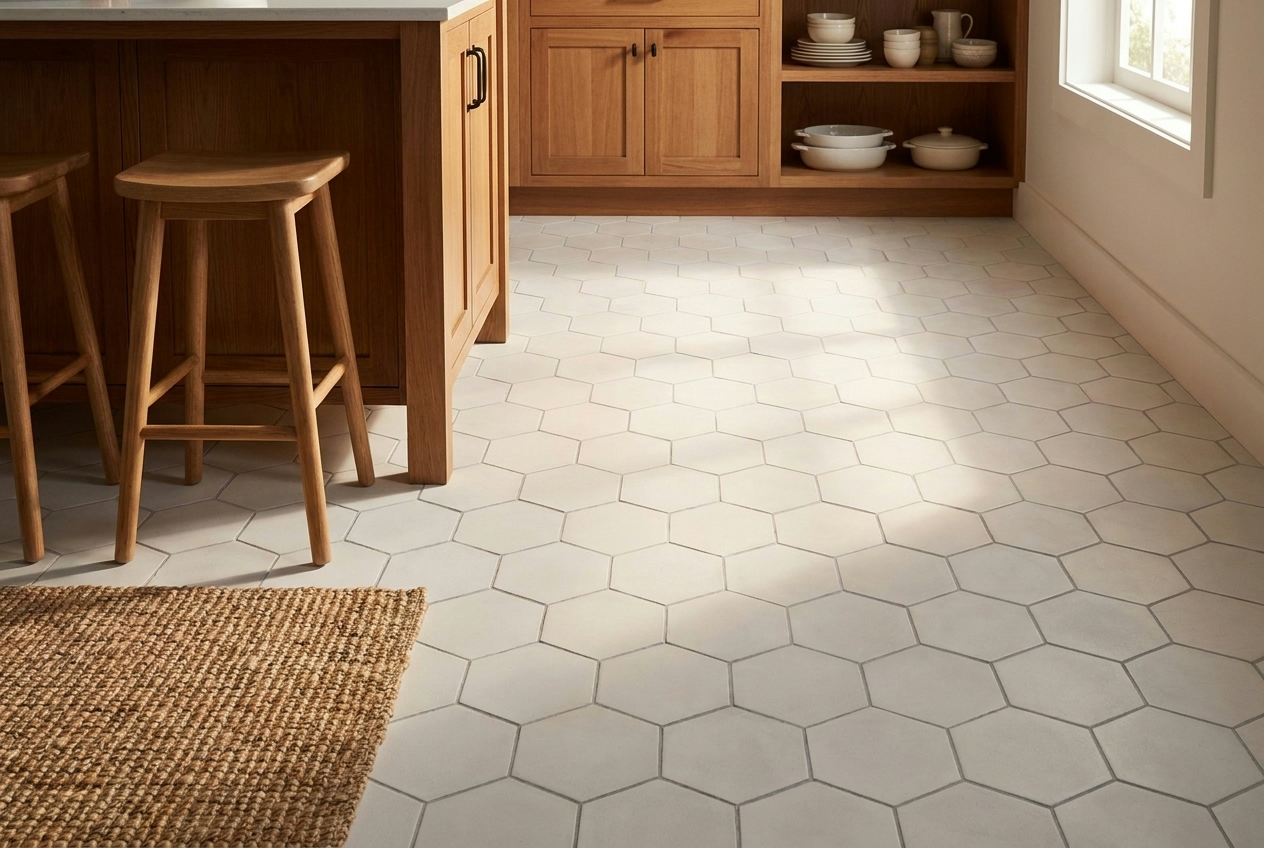
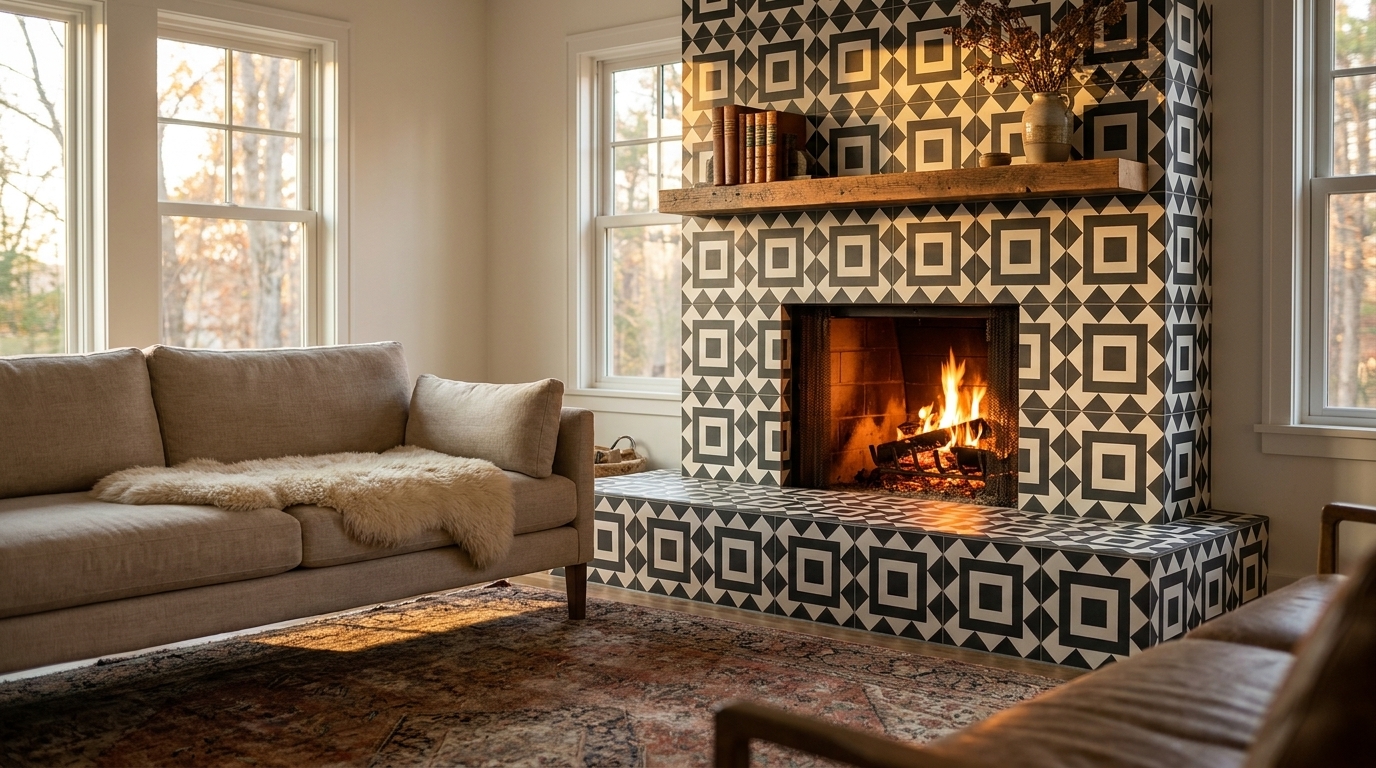
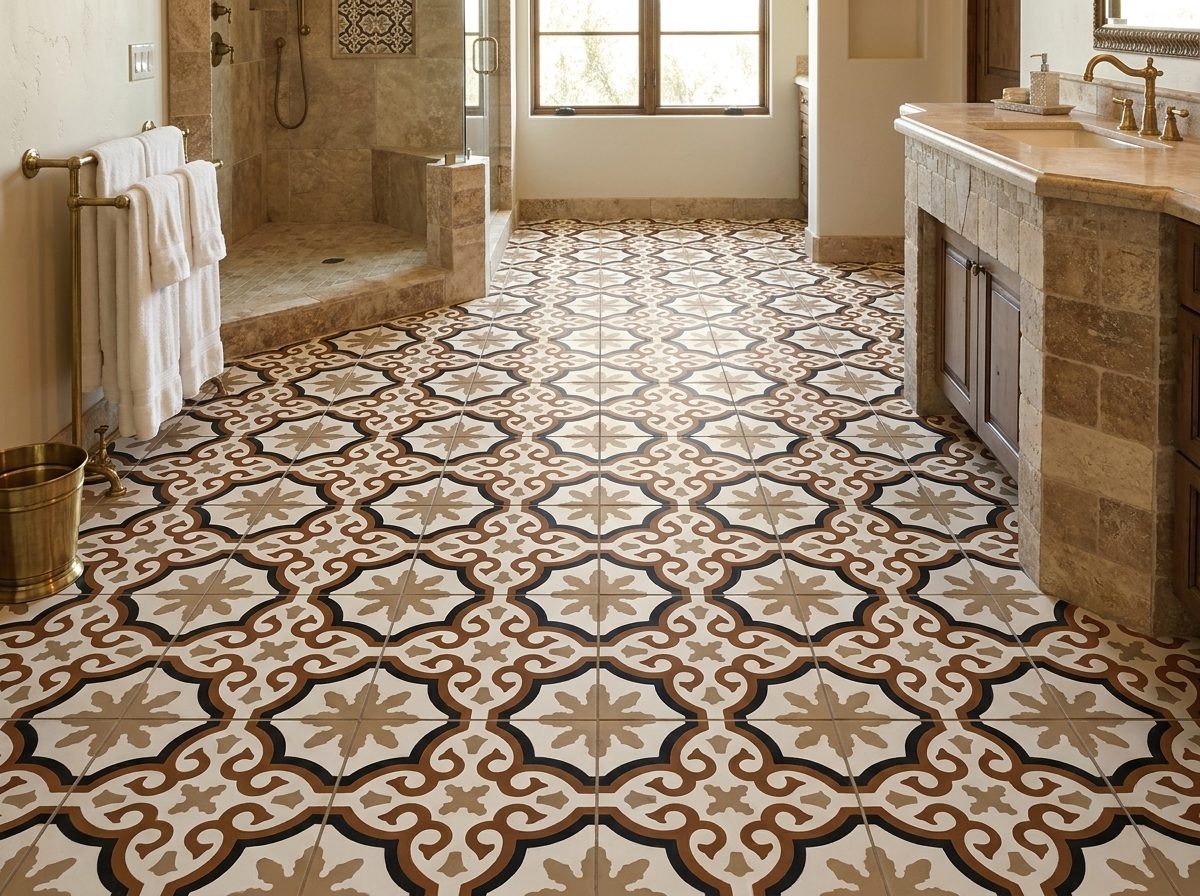
Zellige-inspired cement tile is a different product category. It uses hydraulic-press methods with cement-based ingredients and pigments, producing an inlaid matte surface with more controlled dimensions and a more predictable finish. For projects where the zellige aesthetic is the goal but exact material behavior matters more than strict historical authenticity, that distinction is useful. One option in that category is zellige-inspired cement tile from Original Mission Tile.
The performance trade-off that changes specifications
The biggest hard line is moisture behavior. Authentic glazed zellige has a water absorption rate of around 22.9%, which classifies it as non-vitreous and makes it unsuitable for freeze-thaw conditions, according to these zellige material guidelines. That’s a specification issue, not a style preference.
For design work, the implication is straightforward. Authentic clay zellige belongs in carefully chosen interior applications. If the project is a bathroom floor, a moisture-heavy area, or a location where environmental performance needs to be more forgiving, cement alternatives often make more sense.
Jobsite reality: The tile that looks right in a sample box can become the wrong tile once water exposure, cleaning habits, and installer tolerance enter the conversation.
Side by side comparison
| Attribute | Traditional Clay Zellige | Zellige-Inspired Cement Tile (Original Mission Tile) |
|---|---|---|
| Material | Handmade clay, glazed and fired | Cement-based tile made by hydraulic-press methods |
| Surface character | Glossy, shimmering, irregular | Matte, inlaid color, more controlled surface |
| Visual variation | High shade and edge variation | More consistent shape and appearance |
| Moisture behavior | High absorption, not for freeze-thaw use | Lower porosity than authentic zellige, often better suited to wet-area demands |
| Installation | Demands a setter comfortable with variation | More familiar installation rhythm for crews used to dimensionally consistent tile |
| Design effect | Historic, artisanal, reflective | Graphic, tailored, and easier to coordinate in custom motifs |
Installation affects cost more than many clients expect
Clay zellige often costs more than the tile invoice suggests because labor gets more complicated. The installer may need to sort pieces, adjust mortar constantly, and make visual decisions row by row. Layout control takes longer when every tile behaves a little differently.
Cement versions usually reduce that friction. The trade-off is visual. You gain precision, but you lose some of the glaze shimmer and hand-cut spontaneity that define authentic clay zellige.
That’s why I usually frame the choice this way:
- Choose clay zellige when the project can honor irregularity, when the wall is meant to glow, and when the installer understands handmade tile.
- Choose cement zellige-inspired tile when the project needs cleaner geometry, more predictable layout, and stronger practical alignment with modern wet-area or floor use.
Maintenance is also part of the comparison
Clients tend to ask about cleaning only after they’ve fallen in love with the look. That’s backwards. The glossy, textured surface of clay zellige can be beautiful, but it can also require more care in kitchens and heavily used spaces. Cement alternatives usually read more matte and controlled, which can simplify the maintenance conversation.
Neither option is universally better. They answer different project briefs. If the brief is “give me the soul of handmade tile,” authentic zellige is hard to replace. If the brief is “give me a related aesthetic with less installation and performance uncertainty,” cement is often the more disciplined specification.
Best Applications and Design Ideas for Zellige
Zellige tiles look strongest when the application lets light do part of the design work. That’s why some of the best uses are vertical, close-range, and intentionally simple.

A flat elevation drawing won’t tell the whole story. A backsplash in soft white or pale sand may look quiet on paper, then become the element that gives an otherwise restrained kitchen its depth. If you’re still narrowing options for that kind of project, this roundup of kitchen backsplash tile ideas is a useful companion because it helps place zellige among other backsplash directions rather than treating it as the default answer.
Where clay zellige shines
Authentic clay zellige usually earns its keep on surfaces viewed at eye level.
- Kitchen backsplashes: This is the classic use. A simple field tile in a restrained tone can warm up painted cabinetry, natural wood, or plaster walls.
- Bathroom feature walls: Deep greens, blues, and other saturated glazes create a cocooning effect without needing a busy pattern.
- Shower niches and vanity walls: Smaller moments often show the material better than trying to force it across every surface in the room.
- Fireplace surrounds: Zellige can make a quiet surround feel handcrafted rather than generic.
For inspiration focused specifically on backsplash applications, a gallery of zellige tile backsplash ideas can help clients visualize scale, color blocking, and how much variation they’re comfortable seeing on a wall.
Style pairings that work
The tile doesn’t belong to only one design language. It shifts depending on color, scale, and what surrounds it.
Organic modern
Pearlescent whites, off-whites, or pale celadon tones pair well with oak, limestone looks, unlacquered brass, and soft plaster colors. The room stays calm, but the wall still has depth.
Moody transitional
In a bath or bar area, jewel tones can add weight and atmosphere. The key is restraint elsewhere. Let stone, millwork, and metal finishes stay disciplined so the tile can carry the visual energy.
Earthy and wabi-sabi leaning
Terracotta-adjacent glazes and muted neutrals work well with rougher textures, limewash, weathered wood, and handmade accessories. The point isn’t polish. It’s tactile contrast.
A short visual reference often helps clients understand how much movement the surface really has in place:
Where a different tile may be smarter
Not every beautiful use on social media is a smart specification.
If the design depends on strict alignment across long runs, if the floor is highly visible and unforgiving, or if the client wants low-anxiety upkeep, a zellige-inspired cement tile may carry the concept better. It can preserve some of the handcrafted mood while fitting a more controlled layout and maintenance expectation.
Use authentic clay zellige where variation is the feature. Use a more controlled alternative where variation would be read as installation error.
How to Specify Install and Maintain Zellige Tiles
Most zellige failures don’t start with the glaze. They start before the first tile is set.
This material doesn’t forgive casual prep. Zellige tiles have dimensional tolerance of up to ±6mm, or about ±¼ inch, in thickness and size, with a Level 3 medium to heavy size variation rating, according to this technical sheet on zellige dimensional variability. On the wall, that means every substrate flaw and every layout assumption gets amplified.

Start with substrate discipline
If the wall is out, the tile will tell on you. Handmade variation doesn’t hide poor prep. It stacks on top of it.
Before installation, the crew should verify:
- Flatness across the field: Mortar can help accommodate tile variation, but it shouldn’t be asked to fix a bad wall.
- Layout at terminations and corners: Irregular tile edges make sloppy endpoint planning very obvious.
- Mockups in critical views: A small board can answer questions about joint treatment, visual rhythm, and acceptable variation before the main install begins.
Grout or butt joint
This is one of the most misunderstood parts of zellige work. Traditional installations often use butt joints, but that approach assumes both material familiarity and installer judgment. Because dimensional inconsistency is part of the product, the tighter the joint, the more every irregularity shows.
In many modern projects, a flexible approach to grout joints produces a cleaner final result than chasing historical purity too strictly. The right answer depends on tile batch, application, and the tolerance of the client and design team.
Here’s the practical breakdown:
- Use butt-joint logic only when the material and installer support it. If the tile lot has pronounced variation, forcing everything tight can make the work look more chaotic, not more authentic.
- Allow the setter visual discretion. Zellige isn’t a product you install by rigid module alone.
- Review a sample panel before final approval. A drawing won’t resolve the joint question. A mockup will.
Specification note: The more handcrafted the tile, the less useful it is to specify it as if it were rectified porcelain.
Setting expectations with clients
A lot of disappointment comes from the wrong benchmark. Clients compare handmade zellige to machine-made ceramic because both are called tile. That’s the wrong comparison.
Spell out these points early:
- Variation is intentional: Shade, edge condition, and reflection will shift.
- The surface won’t read perfectly flat: That’s part of the charm.
- Exact piece-to-piece consistency is not the goal: The installation should feel balanced, not identical.
This conversation matters as much as the installation method. If the client expects perfect repeatability, the project will feel wrong even if the installer does excellent work.
Maintenance that respects the material
Once installed, zellige usually does best with simple, non-aggressive care. Avoid harsh cleaning habits and anything abrasive that could dull or damage the glazed surface. In kitchen settings especially, clean residue before it builds up around joints and surface texture.
For long-term performance, think in terms of routine, not rescue:
- Wipe with mild cleaners rather than harsh chemicals
- Pay attention to grout maintenance in splash zones
- Address staining or buildup early, before it settles into the visual texture of the installation
The maintenance burden isn’t necessarily extreme, but it is different from a flatter, more standardized tile surface. Handmade materials ask for a little more respect.
Who should install it
An experienced tile setter isn’t optional here. Zellige rewards judgment, not just speed.
The right installer will sort pieces, adjust mortar depth, and make small visual corrections throughout the field. The wrong installer will fight the tile, trying to force a handmade product to behave like a dimensionally strict factory one. That’s when layouts drift, edges distract, and the final wall looks accidental instead of intentional.
Making the Right Choice for Your Design Project
The right choice usually becomes clear once you stop asking which tile is better and start asking which tile fits the brief.
Authentic clay zellige offers a glossy, shimmering finish, visible handwork, and the kind of historical continuity that designers often want when a space needs warmth and character. Zellige-inspired cement tile answers a different need. It provides a durable, matte, inlaid color surface with rectified edges, making it a strong fit for high-traffic floors, wet areas, and projects that need precise custom motifs, as noted in this discussion of clay zellige compared with cement alternatives.
A quick decision filter
Choose traditional clay zellige when:
- The project is centered on hand-made variation
- Gloss and light reflection are part of the design intent
- The application is appropriate for authentic clay performance
- The installer knows how to work with dimensional inconsistency
Choose zellige-inspired cement tile when:
- The layout needs tighter visual control
- The project includes high-traffic floors or demanding wet zones
- The client wants a more matte, graphic look
- Maintenance and installation predictability matter more than glaze shimmer
This is especially relevant in bathrooms, where material romance can clash with daily use. If you’re weighing broader finish choices for a bath remodel, this guide to choosing the right bathroom tile is a practical cross-check because it helps frame tile selection around application, upkeep, and user expectations.
The strongest specifications respect both traditions. Clay zellige deserves to be used where its irregularity reads as craft. Cement alternatives deserve consideration when the project needs the look translated into a more controlled and durable system.
A designer’s job isn’t to defend one camp. It’s to match the material to the room, the budget, the installer, and the client’s tolerance for variation. When those four line up, zellige tiles can be exceptional. When they don’t, the wiser move is to choose a tile that delivers the right mood without forcing the wrong performance profile.
If you’re comparing handmade surfaces for an upcoming project, Original Mission Tile is a practical place to review cement tile options, custom pattern capabilities, and sample-ready designs. Designers can explore materials that suit floors, walls, and detailed architectural applications, while homeowners can use samples to decide whether they want true clay irregularity or a more controlled zellige-inspired look.