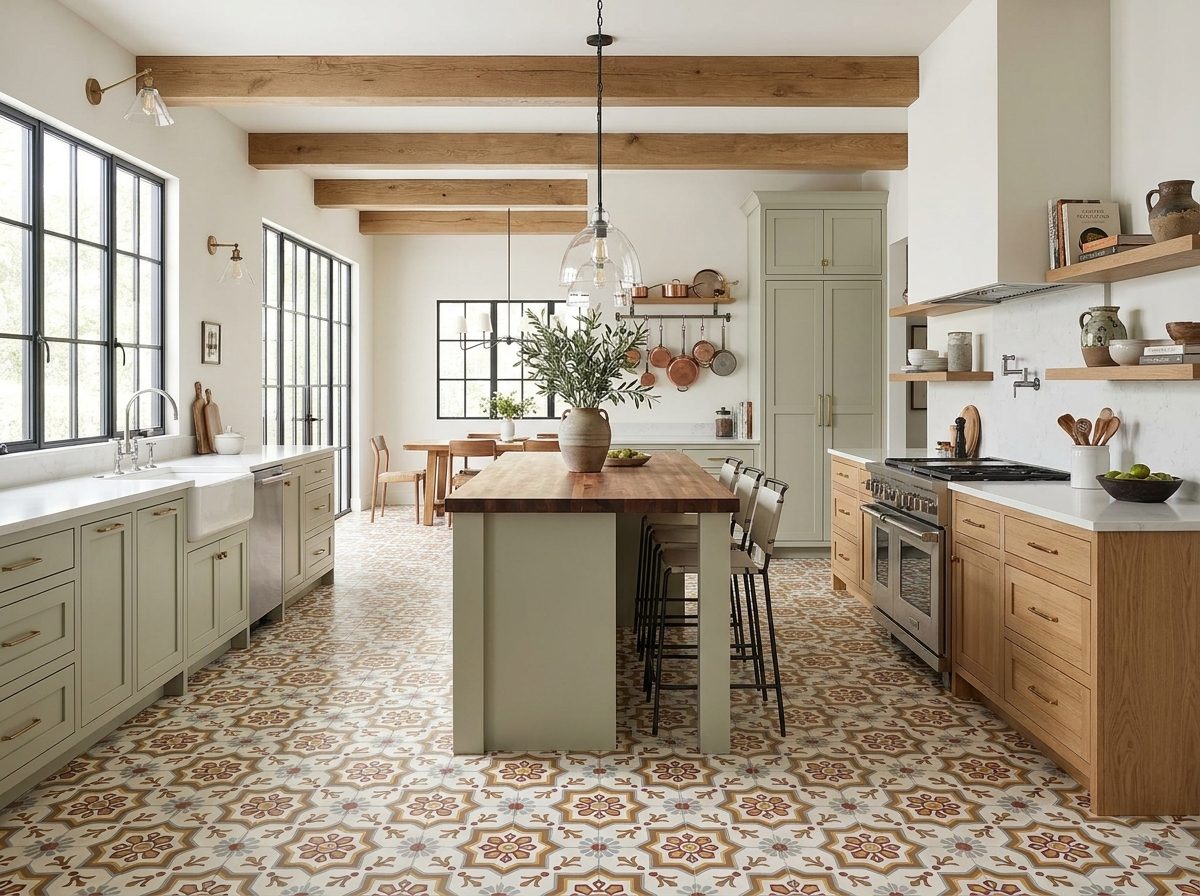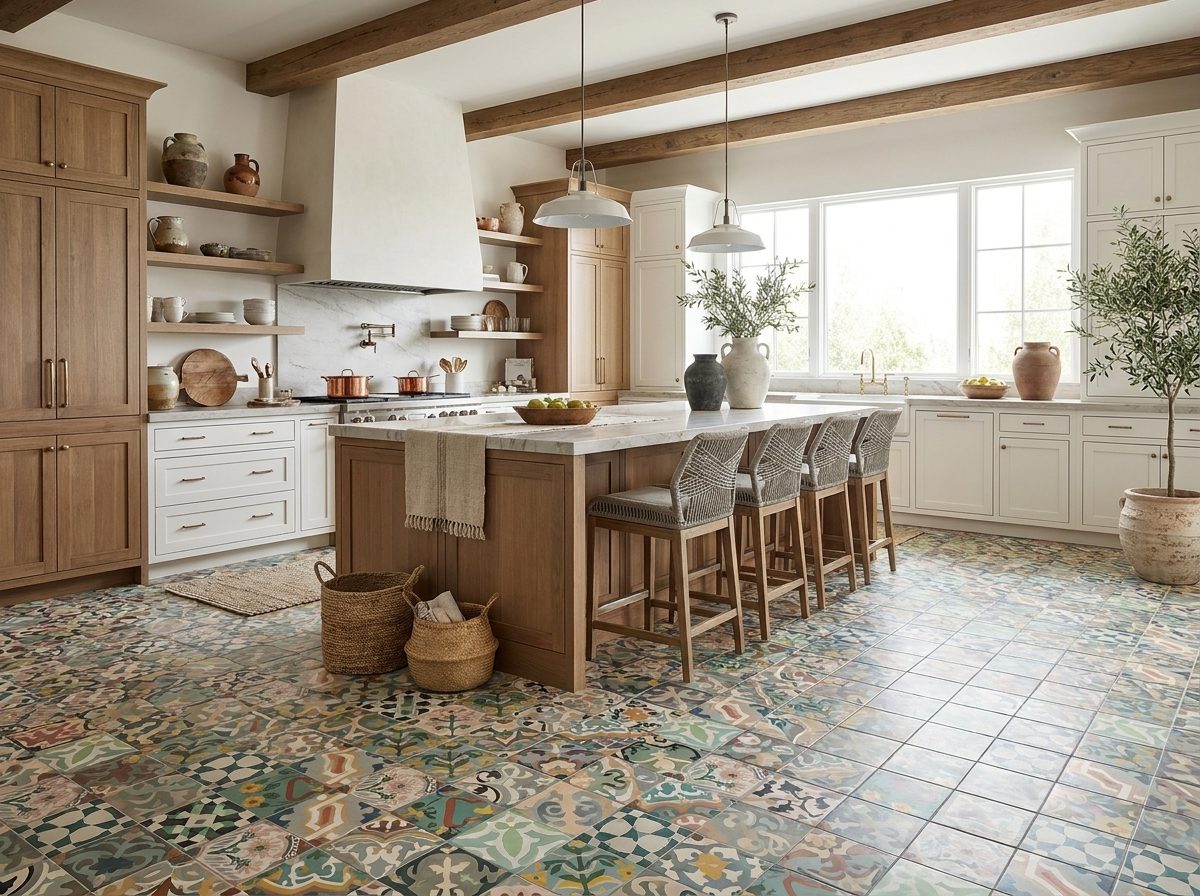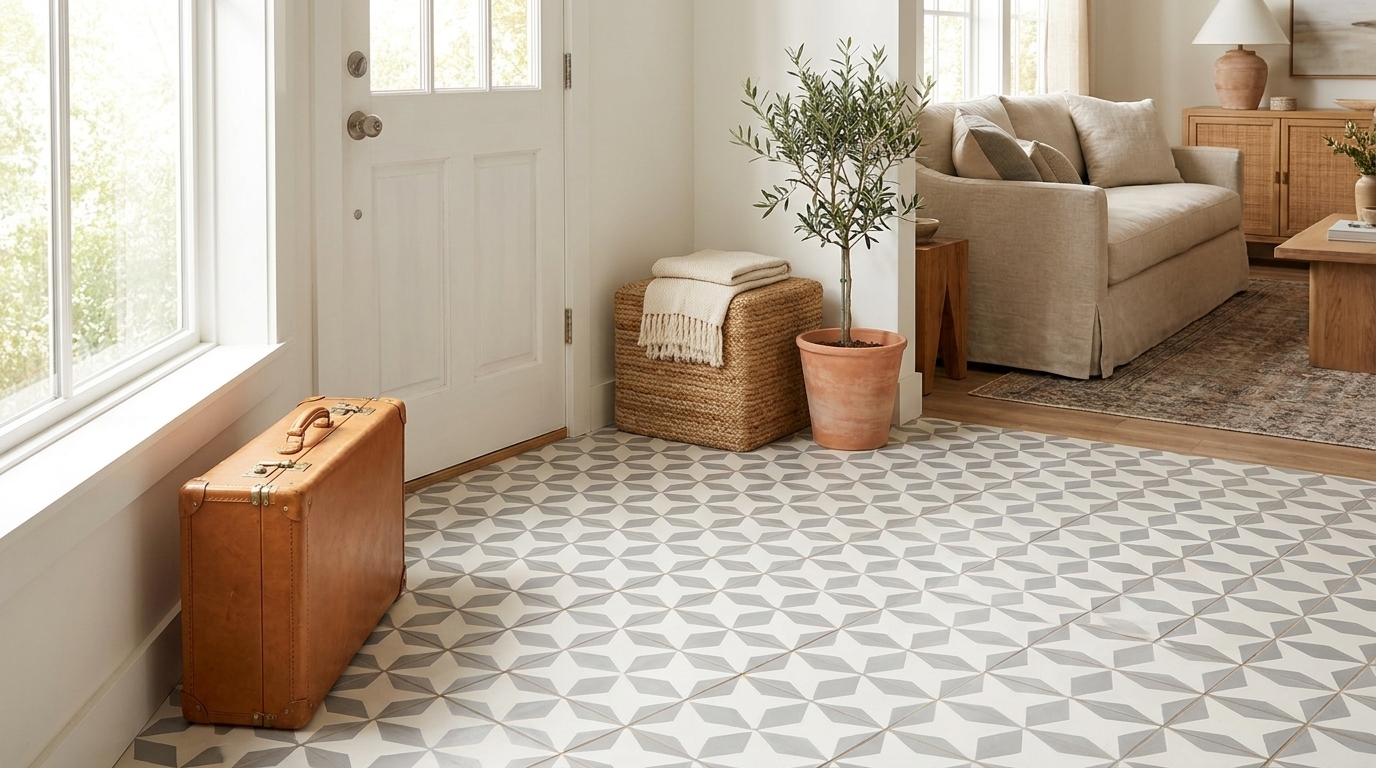
You're often standing in front of the same problem when a project starts to take shape. The layout is resolved, the cabinetry is chosen, the lighting is getting close, and then the surfaces let the whole room down. They're clean, efficient, and technically acceptable, but they don't have any memory in them. They don't soften with age. They don't carry the hand of the maker.
That's where handmade concrete tiles earn their place.
They suit people who want more than a wipe-clean finish and a catalog color. Designers use them when a room needs depth without gloss. Homeowners choose them when they want a kitchen floor, bath wall, or entry that feels grounded instead of generic. Builders and architects specify them when they need a material that can serve as both surface and statement.
Your Guide to Timeless Handmade Concrete Tiles
A room changes when the floor or wall has real material presence. You notice it first in the way light sits on the surface. Handmade concrete tiles don't flash like a glaze. They hold color with a soft, matte depth that feels calm, weighty, and architectural.

That matters when you're designing for permanence. A powder room can carry a bold pattern without feeling loud. A restaurant entry can read as handcrafted rather than themed. A kitchen can feel lived in from day one, then grow better as the surface settles into the house.
What people respond to most is often hard to describe until they see it in person. The face of the tile has a velvety finish. The color looks inlaid, not printed on. Small variations from piece to piece give the installation rhythm. The room stops feeling assembled and starts feeling made.
Handmade concrete tiles work best when you want the surface itself to do some of the design work.
Why they still matter
Mass-produced tile has its place. It's consistent, fast, and useful on many jobs. But consistency can also flatten a room. Handmade concrete tiles bring back the things many spaces are missing: texture, visual depth, and a sense that the material came from a craft tradition rather than a production line.
They also ask for better decisions. Pattern scale matters. Grout color matters. Sealing matters. Installation matters. That's part of their appeal. You don't choose them casually, and the result rarely feels casual either.
What Are Handmade Concrete Tiles
Handmade concrete tiles, often called cement tiles or encaustic cement tiles, are not ceramic and they aren't porcelain. They aren't fired in a kiln, and their pattern is not a glaze sitting on top of a biscuit body. They're built in layers, pressed under pressure, and cured in air.
That difference in manufacture is the whole story. It explains the look, the feel, and much of the performance.

The material itself
A handmade concrete tile is built from a few straightforward ingredients:
- Portland cement gives the tile its structure and binding strength.
- Fine sand adds body and stability.
- Marble dust refines the mix and helps create a smooth, dense face.
- Mineral pigments produce the tile's color.
- Water activates the cement and allows the materials to compact properly.
The most important part for the eye is the top layer. In handmade concrete tiles, the design sits in a pigmented cement layer rather than on a fired glaze. Think of it less like paint on a board and more like an inlay. That's why the color reads with depth and why the surface has that distinctive soft, silky character.
How the traditional method works
The historic process is old, and it still makes sense because it works. Handmade encaustic cement tiles first emerged in Southern Europe between 1855 and 1875, with documented production beginning in Southern France and Northeastern Spain. Makers hand-pressed a thin pigmented layer in a metal mold over a base of Portland cement, sand, and marble dust, then compressed the tile with a hydraulic press and let it air-cure rather than kiln-fire it, as described in this history of cement tile production.
That manufacturing sequence matters for two reasons. First, it allowed makers to reproduce complex decorative patterns without the cost of firing. Second, it created a material that belonged as much to architecture as to decoration. By the late nineteenth century, cement-tile factories had spread across France, Spain, and colonial markets, supplying public buildings, churches, and housing.
Why pressing matters
A handmade concrete tile is shaped by pressure more than by heat. The hydraulic press compacts the ingredients into a dense, unified body. The top pattern layer and the backing become one tile, not separate decorative and structural parts loosely married together.
Practical rule: If you want to understand why handmade concrete tiles feel different underfoot than glazed tile, start with the press. Pressure creates density. Density changes both wear and appearance.
This also explains why the surface has such visual quiet. There's no glassy coating reflecting every light source in the room. Instead, you get a mineral finish with depth and softness.
Why the old process still serves modern design
The nineteenth-century method didn't survive because of nostalgia. It survived because it gives designers and builders something factory-perfect products often can't. You get pattern clarity, saturated color, and a handcrafted finish without losing structural seriousness.
That old hydraulic-press process is the reason handmade concrete tiles can look both historical and modern. Put a classic motif in a Victorian renovation and it feels native to the architecture. Put a field of plain color or a restrained geometric in a contemporary interior and it feels sharp, spare, and grounded.
That's the paradox people love about them. The method is old. The result still feels current.
Exploring Your Design and Format Options
The design range is far broader than expected. Many come to handmade concrete tiles thinking in terms of a single patterned square. In practice, the material can move from restrained to ornate, from Mediterranean to modernist, from graphic to almost monolithic.

Pattern changes the room before furniture does
A bold repeat on the floor establishes movement and scale immediately. It can tighten a long corridor, energize a small bath, or anchor an open kitchen. A quieter pattern does something different. It gives the room texture without demanding attention from every other finish.
When choosing a pattern, start with the role you want the tile to play.
- Statement floors suit entries, powder rooms, bars, and dining areas where the surface can carry the composition.
- Low-contrast fields work well in kitchens and larger rooms where cabinetry, millwork, or furniture already provide plenty of visual structure.
- Border and inset layouts help define zones in open plans or highlight a vanity, island, or hearth.
For inspiration beyond cement alone, it also helps to browse stunning mosaic and large format tiles so you can compare how scale, grout lines, and pattern density change the mood of a room.
Shape matters as much as pattern
Square formats remain the classic expression of handmade concrete tiles, but they're only one language. Shape changes the reading of the surface even before color enters the conversation.
A few common approaches:
- Hexagons soften grids and make transitions feel more fluid.
- Arabesques bring a more decorative silhouette without relying on a heavy printed effect.
- Fish scale forms add movement on backsplashes, fireplace walls, and powder room statements.
- Star and cross layouts feel architectural and can lean either traditional or contemporary depending on color.
- Plain field tiles are often the smartest choice when you want all the handmade character without a patterned installation.
Custom work versus ready-to-ship
There's a real difference between designing a one-of-a-kind tile and selecting from an established collection. Bespoke work gives you control over motif, color balance, and project identity. In-stock patterns move faster and reduce decision fatigue.
The useful question isn't which route is better. It's which route fits the job.
A hospitality brand might want a recognizably custom motif repeated across several locations. A homeowner renovating one bath may be better served by a proven pattern in a colorway that already works. For people comparing available styles, this collection of patterned cement tile options gives a good sense of how broad the category has become.
Here's a short look at the craft in motion:
Specialty formats open new uses
Handmade concrete isn't limited to flat patterned floors. The category now extends into architectural pieces that solve different design problems.
- 3D tiles create shadow and relief on feature walls.
- Breeze blocks divide space while passing light and air.
- Brick and zellige-inspired forms let designers use a handmade concrete surface in more linear or irregular compositions.
- Brass-accented and terrazzo-related expressions introduce a more mixed-material language.
A good tile line shouldn't force every room to speak in the same accent. One project may need a patterned floor. Another may need a plain wall field with texture and weight.
The strongest interiors usually don't use every option available. They choose one clear direction and let the format support it.
Comparing Concrete Tile to Ceramic and Porcelain
Step into a century-old entry hall with original cement tile underfoot and you can read the making process in the surface itself. The color has depth because it was pressed into the face, not fired on as a glaze or printed on as an image. That old hydraulic-press method from the 19th century still explains why handmade concrete tile looks different, wears differently, and asks different things of the owner than ceramic or porcelain.
The comparison starts with manufacturing. Handmade concrete tile is formed in layers, then compressed in a hydraulic press so the pigmented wear face becomes part of the tile body. Ceramic and porcelain follow another path. They are kiln-fired products, often finished with glaze or highly controlled factory surface treatments. Neither method is superior in every setting. Each produces a different balance of character, density, maintenance, and visual consistency.
The technical picture
A well-made handmade concrete tile has a substantial pigmented wear layer rather than a decorative skin sitting on top. That matters on the job. Minor surface wear does not immediately erase the design, because the pattern has real depth. The trade-off is straightforward. Concrete tile is porous by nature and depends on correct sealing and appropriate cleaners to perform well over time.
Porcelain is usually the least demanding of the three in daily care. It is dense, stable, and familiar to nearly every installer. Ceramic can be an economical and sensible choice for many wall applications and lighter-duty spaces. Handmade concrete asks for more judgment, both in specification and aftercare, but it gives something the others rarely do. Its face has a softer, mineral look that comes from pressure and pigment, not from glaze.
Tile Material Comparison
| Attribute | Handmade Concrete Tile | Porcelain Tile | Ceramic Tile |
|---|---|---|---|
| Visual character | Matte, inlaid color, handcrafted variation | Uniform, often sharper and more manufactured in appearance | Broad design range, usually lighter-duty visual character |
| How pattern is expressed | Integral pigmented layer pressed into the face | Usually printed, glazed, or factory-finished surface | Usually glazed surface |
| Surface feel | Soft, velvety, mineral | Dense, often smoother or more glass-like | Usually smoother, glaze-led finish |
| Sealing needs | Required | Often minimal or none depending on product | Varies, often less demanding than concrete tile |
| Acid sensitivity | Needs care | Generally more forgiving | Generally more forgiving |
| Customization potential | Strong, especially for pattern and color expression | More limited to factory programs | More limited to factory programs |
| Aging | Develops patina and visual depth | Tends to stay visually stable | Tends to stay visually stable |
| Installation tolerance | Best with experienced tile setters | Familiar to most installers | Familiar to most installers |
Where handmade concrete tile earns its place
Use handmade concrete tile where the surface needs to carry architectural weight. Historic renovations, hospitality interiors, kitchens with strong natural light, and rooms where the floor is meant to be seen all benefit from that pressed-in depth. Slight variation is part of the material's language. In a good installation, those shifts read as craft.
That quality comes directly from the old production method. A hydraulic press compacts the ingredients without firing away the mineral softness of the face, so the finished tile keeps a quiet, velvety look that ceramic and porcelain usually do not have. Modern performance and old-world appearance are tied to the same manufacturing decision.
For specifiers weighing those differences carefully, this comparison of cement tile vs ceramic tile gives a useful side-by-side view of appearance, care, and application.
Where porcelain and ceramic make more sense
Porcelain is often the practical choice for projects that need speed, broad installer familiarity, and low day-to-day maintenance. Large commercial jobs, highly repetitive unit work, and spaces where consistency matters more than material presence often benefit from it.
Ceramic still has an honest place as well. It works well on many wall applications, especially where budget is tight and the design does not depend on the depth or patina of a pressed cement surface. Good specification is not about romance. It is about matching the material to the room, the client, and the maintenance habits that will exist five years after installation.
Choose handmade concrete tile when the surface should gain character with age. Choose porcelain or ceramic when visual control, lower upkeep, or installation speed matter more.
Cost and value are separate decisions
Handmade concrete tile often costs more at the start. That reflects labor, pressing, curing, and the slower pace of production. It should be judged against what it offers in return. The value sits in visual depth, repairability in the field of tile, and the way the material settles into a space over decades instead of looking frozen at day one.
Porcelain and ceramic often win the budget conversation. Handmade concrete often wins the long-view conversation. The right answer depends on whether the project needs an efficient finish or a surface with lasting presence.
Best Applications for Floors Walls and More
Some materials are versatile on paper and disappointing on the job. Handmade concrete tiles aren't one of them, but they do reward correct placement. Use them where their density, matte surface, and pattern depth matter. Don't force them into conditions the assembly can't support.

Floors that benefit most
Kitchen floors, mudrooms, powder rooms, entries, bars, and laundry areas are all natural fits. These are places where people see the floor clearly and where a surface with body and pattern can carry the room. In commercial work, lobbies, restaurant dining rooms, and boutique retail spaces also suit the material well when the specification and maintenance plan are realistic.
Thin grout joints are often the right move on well-made tiles because they help keep the field crisp and minimize visual interruption. On patterned installations, that restraint matters.
Walls where the material can shine
Walls are often the easiest entry point for handmade concrete tiles because they deliver all the character with less wear exposure. They work beautifully on:
- Kitchen backsplashes where a matte, mineral face offsets stone or painted cabinetry
- Bathroom feature walls that need depth without reflective glare
- Fireplace surrounds where the pattern becomes part of the architecture
- Reception walls and bars where branding can be expressed through material rather than signage
A full-height installation can be dramatic, but a wainscot, framed inset, or niche can be just as effective.
Wet areas and exterior use
Bathrooms, wet rooms, and showers are absolutely possible, but only when the installer treats waterproofing and sealing as essential parts of the system. A beautiful tile can't fix a bad substrate. In wet areas, every layer matters, from preparation to grout to final sealing.
For outdoor use, climate matters. Cement tile behaves more like concrete than porcelain in this regard. In freeze-thaw conditions, caution is necessary unless the assembly and finish are suited to that exposure. Warm, stable climates are generally friendlier to the material.
The tile is only one part of the result. In showers and exterior conditions, the unseen work determines whether the visible work succeeds.
Where not to force it
If the client wants harsh chemical cleaning, zero maintenance, and no concern about acidic spills, another material may fit better. The same is true for projects with rushed schedules, untested installers, or sites where no one wants to think about sealing at all.
That isn't a weakness in the material. It's proper specification.
Installation and Maintenance Essentials
The failures usually show up after the room is finished. A patterned floor looks sharp on day one, then a faint grout film dries into the face, a few corners sit proud, and the owner starts blaming the tile. In the workshop, we know where those problems begin. Handmade concrete tile asks for a different hand than glazed ceramic because the surface is formed from cement, mineral pigment, and pressure, not a fired glaze that shrugs off careless work.
That old hydraulic-press method still dictates how the tile should be installed today. The pigmented wear layer is dense and durable, but it remains absorbent. The body is strong, though it does not forgive a poor substrate or sloppy washing. Respect those facts and the tile will age with depth. Ignore them and even a beautiful pattern can look tired far too soon.
Installation priorities that matter
Start with the base. The substrate must be flat, stable, cured, and clean. Handmade tile has crisp edges and a visible pattern repeat, so even slight lippage or wandering joints read clearly once the floor is in service.
Layout deserves time. Dry-lay the key runs, check where borders die into walls and thresholds, and decide early how cuts will fall in the most visible areas. Good setters also blend from several boxes at once. That simple habit spreads natural shade variation the way the maker intended.
Before grout touches the surface, seal the face. That first coat helps control grout staining and pigment haze on a porous tile. Keep joints tight and washing restrained. Too much water during grouting can pull fine material across the surface and leave you cleaning a problem that should never have been created. If you want a manufacturer-specific sequence, this guide to installing cement tile lays out the order clearly.
A reliable install routine looks like this:
- Check flatness before setting begins. Pattern exaggerates unevenness.
- Blend tiles from multiple boxes. Variation should look natural, not patchy.
- Pre-seal the face before grouting. It reduces staining and cleanup risk.
- Use enough water to clean the joint, not flood the tile. Porous surfaces punish overwashing.
- Apply the final sealer after proper cure. Protection works best in stages.
Maintenance that protects the character
Owners do best with cement tile when they treat it like stone. The surface is hard-wearing, but it is not indifferent to acids, heavy alkalis, or aggressive scrubbing. Daily care is simple. Grit should be removed before it abrades the finish, spills should be wiped before they dwell, and cleaners should be pH-neutral.
Kitchens prove this point quickly. Olive oil, tomato sauce, lemon juice, and wine all leave different traces if they sit. In baths, soap residue and cosmetic products cause more trouble than water alone. The fix is not complicated. Clean gently, rinse properly, and reseal on a schedule that matches the traffic the room receives.
For readers comparing broader floor systems, this overview of durable concrete flooring for custom homes offers useful context on how concrete-based surfaces wear and why finish maintenance should be specified from the start.
Practices that serve the tile well
What helps:
- Soft brushes and microfiber cloths that lift dirt without scratching the sealer
- Regular dry cleaning so abrasive grit does not grind into walking paths
- Prompt attention to spills before oils or acids have time to mark the surface
- Periodic resealing based on use, sunlight, and cleaning frequency
- Testing any new cleaner on a spare tile before using it across the room
What shortens the life of the finish:
- Acid cleaners used for soap film, grout haze, or kitchen messes
- Harsh pads and stiff abrasive tools that wear through the protective sealer
- One cleaner for every stain type when oil, rust, and organic marks need different treatment
- Long delays before wiping spills in working kitchens and family baths
Sealer is part of ownership, not a one-time ritual.
The trade-off, stated plainly
Handmade concrete tile gives you something factory-perfect tile rarely can. Depth in the color. A surface that softens with age instead of looking printed. Pattern with a mineral richness that comes from pressure, cement, and hand work rather than a top glaze. The trade-off is care and competent installation.
For the right owner and the right project, that is a sound bargain. The craft used to make the tile in the 19th century still explains why it performs the way it does now, and why well-installed floors and walls can hold their beauty for decades.
Bringing Your Custom Tile Vision to Life
A good custom tile project usually starts in the room itself. You stand in the doorway, look at the light, the cabinetry, the stone, the distance across the floor, and decide what the tile must do. It may need to anchor the whole space, carry a border that gives the room its geometry, or sit back and let other materials speak.
That first decision saves trouble later. It tells you how bold the pattern should be, how much contrast the surface can carry, whether the format should feel fine-grained or architectural, and how much variation the room can absorb without turning restless.
With handmade concrete tile, those choices matter because the material has real visual weight. The color is pressed into the face layer under pressure, not printed onto a glaze. That old hydraulic-press method still shapes the result today. It gives custom work its depth, its crisp pattern edges, and the kind of surface that reads differently in morning light than it does at dusk.
A practical ordering path
For a custom project, the process usually works best in this order:
- Define the tile's role first. Feature floor, quiet field, border, stair riser, backsplash, or branded motif. Each asks for a different pattern strategy.
- Set the color family early. Pull from approved stone, wood, paint, metal finishes, or architectural details already fixed in the project.
- Review samples in the actual space. Concrete tile shifts with natural light, lamp warmth, and adjacent materials.
- Lay out a full repeat before approval. One sample tile shows color and surface. It does not show rhythm, scale, or how the eye travels across a floor.
- Match ambition to schedule. Stock patterns shorten timelines. Custom colorways and new motifs require more lead time, more approvals, and usually more discipline from everyone involved.
For firms and homeowners developing a custom motif or adapting a standard pattern, Original Mission Tile offers an online Design Studio as one route for building project-specific handmade cement tile layouts alongside in-stock options for faster schedules.
Custom work earns its keep when identity matters. Hospitality spaces use it to establish a signature. Period renovations use it to restore a room's original language. New builds use it to keep fresh architecture from feeling generic. Stock patterns, on the other hand, often solve the job neatly when the palette is already strong and the schedule leaves little room for revision.
I tell clients to be honest about where they want freedom and where they want certainty. Custom tile gives you authorship, but it also asks for decisions. You need sign-off on scale, repeat, color, field-to-border transitions, quantities, and waste before production begins.
That discipline is part of the value. Handmade concrete tile is still made with a 19th-century logic: pigment, cement, molds, pressure, curing, and hand inspection. When you use that process for a pattern built around a specific room, the result does not feel interchangeable. It feels made for the building, and that is usually what people are after when they choose custom work in the first place.
Answers to Common Concrete Tile Questions
Are handmade concrete tiles slippery
They don't behave like a glossy glazed tile. Properly sealed handmade concrete tiles can be suitable for wet-area use, and the technical data cited earlier shows wet DCOF results that exceed the common threshold referenced for commercial wet areas. Real-world slip performance still depends on the specific tile, sealer, maintenance, and site conditions, so on-site testing is the right habit.
Can they be used in a shower
Yes, but only with disciplined waterproofing, correct substrate preparation, and proper sealing. The tile itself is just one part of the assembly. If the installer treats it casually, the project will show it.
Do they stain easily
They can stain if left unsealed or if spills sit too long. With proper sealing and sensible care, they perform well. Kitchens, bars, and baths need an owner who will wipe up acidic or oily messes instead of letting them linger.
Will the pattern wear off
Not in the way a printed or glazed surface can fail visually, because the design is part of the tile's wear layer rather than a superficial coating. That's one of the core advantages of the material.
Are they hard to maintain
They're not hard. They're specific. Use the wrong cleaner and you can cause problems. Use the right cleaner and reseal when needed, and the care routine is straightforward.
Are they only for traditional interiors
No. Handmade concrete tiles are just as effective in modern work, especially in plain colors, restrained geometries, and large repeated fields where the material quality matters more than ornament.
If you're weighing handmade concrete tiles for a renovation, hospitality project, or custom home, Original Mission Tile is a practical place to start for pattern options, custom design tools, and installation guidance grounded in this traditional hydraulic-press craft.