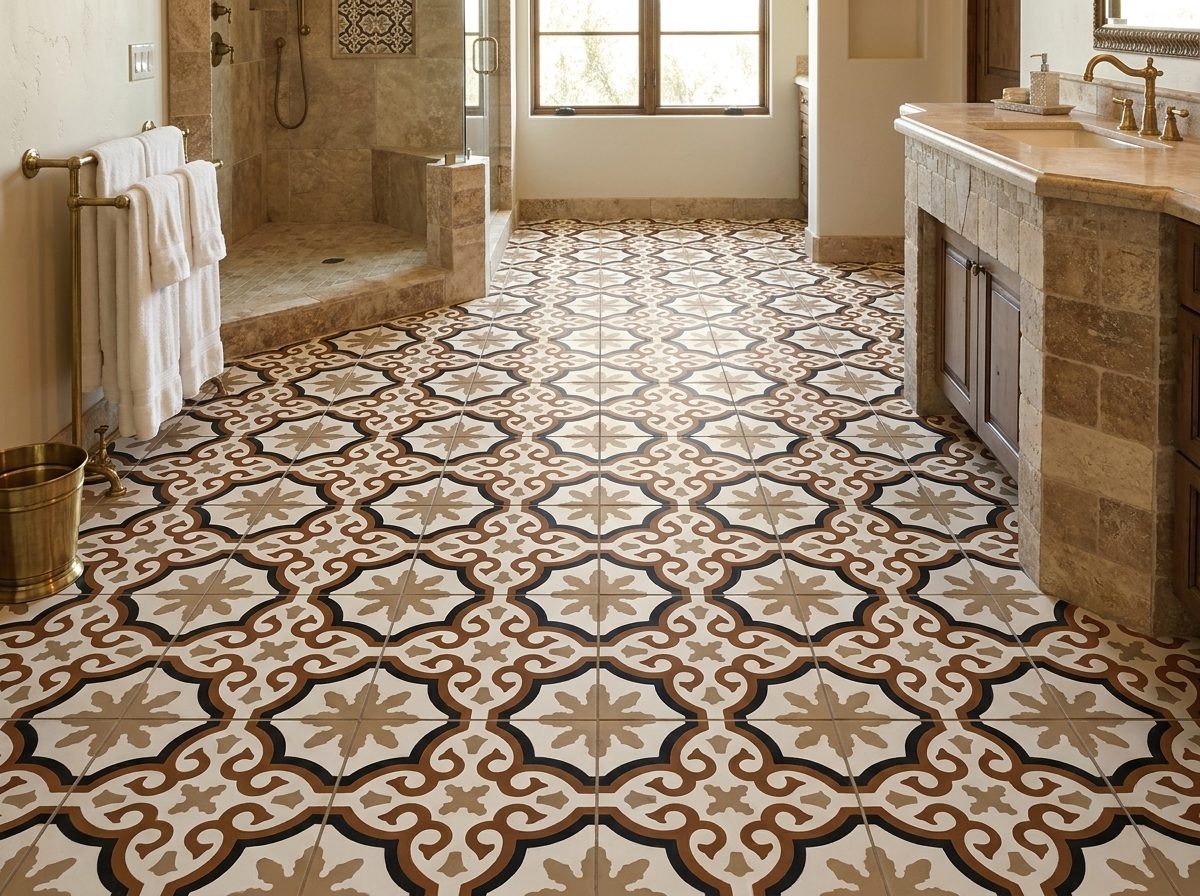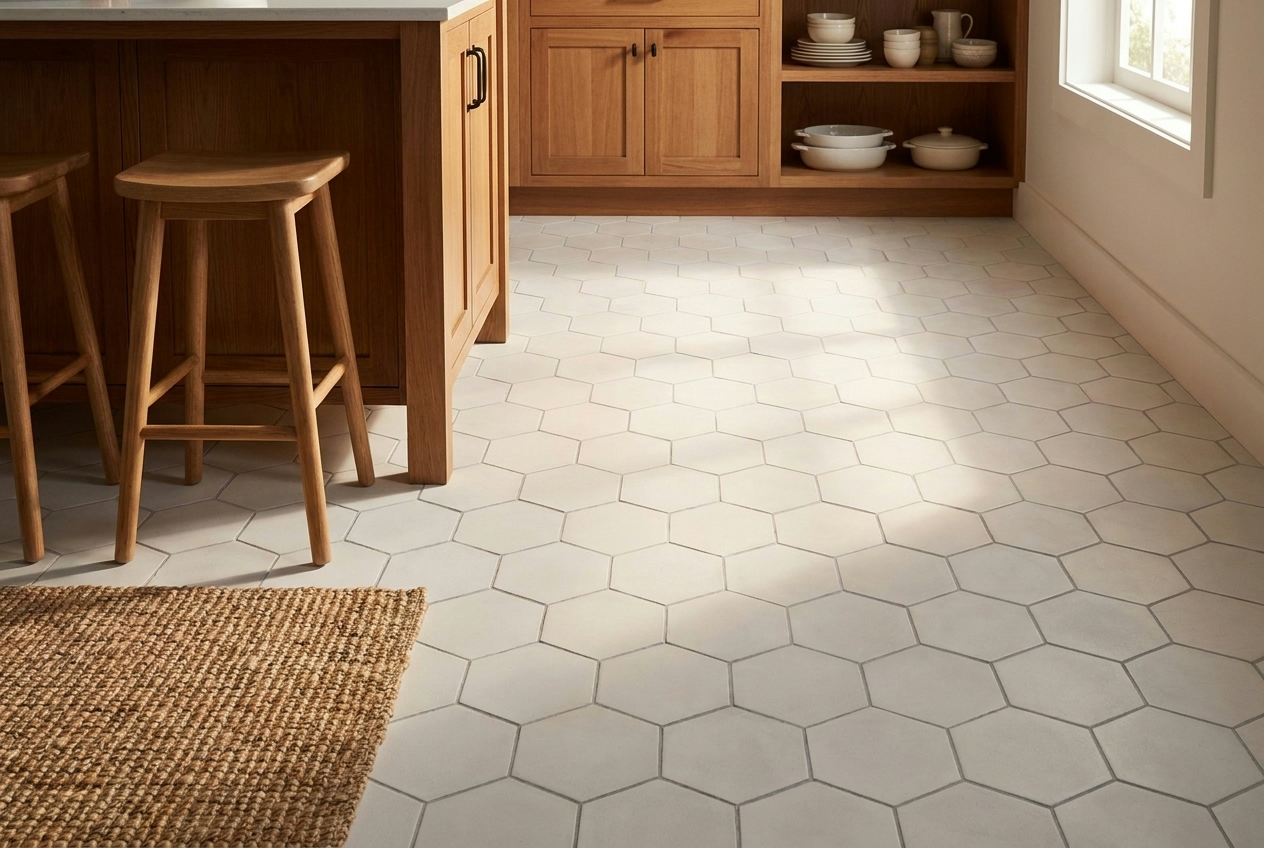
You've cleaned the shower door, buffed the faucet, or wiped the patio table, and the marks are still there. They catch the light as a chalky haze, a ring, or a constellation of pale dots that make a well-kept surface look neglected. That frustration is often answered with more pressure and a rougher cloth. That's usually where the damage begins.
The craft answer is simpler and more disciplined. Diagnose the spot before you try to remove it. Water spots aren't all the same, and the right remedy on glass can be the wrong one on handmade tile, brushed metal, or a clear-coated car. If you care for surfaces the way an artisan does, you treat the deposit first, the material second, and your own impatience last.
What Are Water Spots and Why Do They Form
Water spots begin when water evaporates and leaves something behind. In most homes, that “something” is a mineral residue from hard water. On many surfaces, those deposits sit on top like scale. On others, especially if the spot has been left in place, they can bond more tightly or even leave etching.
That distinction matters more than most cleaning advice admits. As trusted window cleaning advice often makes clear in practical terms, the mark you see may be a removable deposit, or it may be a changed surface. Those are different problems.
The most useful framework is this one: residue, scale, or etching. Independent detailing guidance notes that most advice focuses on fresh mineral deposits, but many people find themselves dealing with etched or bonded spots that simple wiping can't fix, and the remedy changes once minerals start damaging the surface rather than sitting on top of it (Southern Tint Detail Pros).
The two questions that save surfaces
Before you scrub, ask:
- Did the spot form recently? Fresh spots are often deposits.
- Does the surface still feel smooth and intact? If not, the material may already be etched.
- Is the surface porous, matte, or unglazed? Those finishes need a preservation-first approach.
- Did someone already try an aggressive cleaner? A failed first attempt often changes what's safe next.
Practical rule: If a spot looks white and chalky, it may be removable. If it looks ghosted into the finish, you may be dealing with etching.
People often think the harder job calls for harsher force. In practice, successful work starts with restraint. A removable mineral crust needs chemistry and dwell time. A damaged surface needs correction, concealment, or acceptance, depending on the material. Knowing which one you have is the whole game.
Your Essential Spot Fighting Toolkit
A good result starts before the cleaner touches the surface. Water spots come off more safely when the setup matches the material, especially on handmade cement tile, unglazed finishes, and matte surfaces that can stain, darken, or shed color if treated too aggressively.

The prep station
Keep these on hand:
- Spray bottle for controlled application. A light, even film gives the cleaner time to work without flooding grout joints, panel seams, or porous edges.
- Microfiber cloths for wiping, lifting, and drying. They pick up loosened residue well and are less likely to scuff delicate finishes.
- Distilled water for the final rinse on sensitive surfaces. It prevents new mineral marks while you clean.
- White vinegar for durable, non-porous surfaces where a mild acid is safe.
- Rubbing alcohol for selected glass cleanup jobs where the issue includes film, oil, or cleaner residue.
- Soft-bristled brush for texture. This matters on matte, unglazed, and lightly pitted surfaces where a cloth only skims the high points.
- Surface sealer for porous materials that need protection after the deposit is removed.
What each item is really for
Each tool has a job, and the job changes with the surface.
A microfiber towel lifts residue without dragging grit across the finish. A soft brush gets into low spots and surface texture with less risk than a scouring pad. Distilled water is especially useful on dark tile, matte glaze, and polished metal, where fresh spotting shows quickly. White vinegar can dissolve many mineral deposits, but it belongs only on surfaces that tolerate mild acid. On porous cement tile or unsealed natural materials, the safer choice is usually a pH-neutral cleaner and very controlled moisture.
That distinction matters. Many spot-removal guides are written for glass, chrome, and painted panels. Those methods can cause real damage on porous, unglazed, or matte-finish surfaces.
Always Test First
Test the method on a small, inconspicuous area before cleaning the whole surface.
That rule matters most on surfaces with pigment, patina, sealer, or handmade variation. A cleaner can remove the white mark and still leave a lighter patch, softened finish, or uneven sheen. In the tile trade, that counts as a failed repair.
Use this starting guide:
| Surface type | Safest starting point | What to avoid first |
|---|---|---|
| Glass and mirrors | Mild vinegar-based approach, test spot first | Dry scrubbing |
| Stainless and chrome | Soft cloth, gentle cleaner, light pressure | Harsh abrasive pads |
| Automotive paint | pH-balanced wash and inspection | Jumping straight to compound |
| Cement tile and matte porous surfaces | pH-neutral cleaner, minimal water | Acids and harsh alkalis |
For painted panels and exterior glass, these expert tips for car hard water stains are useful because they emphasize staged correction instead of rushing to the strongest method.
Start with the least aggressive option that still has a fair chance of working. That approach protects the finish, and on porous decorative surfaces, protecting the finish is the job.
Removing Spots on Glass Metal and Cars
Most readers looking up how to remove water spots need a direct working method for the hard, non-porous surfaces they see every day. On these materials, success often comes from controlled dwell time, light agitation, and a proper rinse.

Glass and mirrors
On household glass, vinegar remains a foundational method. One widely used consumer cleaning source recommends soaking affected areas in white vinegar for 15 to 20 minutes on many household surfaces, while another recommends 15 to 30 minutes depending on the surface, followed by gentle scrubbing and rinsing. For shower glass, the same guidance notes that spraying white vinegar and letting it sit for 5 to 10 minutes before scrubbing can work on lighter deposits, while tougher buildup may need a vinegar-and-baking-soda paste or repeat application because the mineral residue is largely calcium and magnesium and needs contact time to break down (Leaf Home).
For glass, use this sequence:
- Wash and dry first. Remove loose grime so you're treating the mineral spot, not rubbing soil around.
- Apply the vinegar solution and let it dwell. Don't rush this part.
- Work in small sections. That keeps the product from drying before it has done its job.
- Agitate lightly with microfiber. Let chemistry do the lifting.
- Rinse thoroughly and dry fully.
Chemical Guys' detailing guidance adds an important professional habit: wash and dry first, test a small area, work in small sections, use light controlled pressure, inspect from different angles, then finish with a full rinse and dry so dissolved minerals don't settle back onto the surface (Chemical Guys).
Keep your pressure low and your inspection standards high. Water spots often hide until the light hits at an angle.
Chrome and stainless steel
These surfaces tempt people into aggressive polishing because they look tough. They are tougher than glass in some respects, but they still scratch. Use a soft cloth, a gentle cleaner, and wipe with the grain on brushed finishes.
A sound routine is:
- Clean off soap and grease first so the mineral mark is exposed.
- Apply your cleaner with a damp microfiber, not a dripping rag.
- Use light, repeated passes instead of one hard scrub.
- Buff dry immediately to avoid fresh spotting.
If the finish is decorative, coated, or dark-toned, be even more conservative. What looks like a water spot may partly be a dulled finish.
Automotive finishes
Cars need a different mindset because paint can hold both removable deposits and actual defects. Modern detailing guidance breaks these into two practical categories: Type 1 spots are surface stains that can usually come off in a normal contact wash with a pH-balanced car shampoo, while Type 2 spots are embedded in the paint and require mechanical correction such as compounding or polishing. The same source advises neutralizing acid rain exposure with pH-balanced soap, polishing affected areas if needed, then protecting the finish with wax, synthetic sealant, or ceramic coating (Dr. Beasley's).
That gives you a clean decision tree:
| Car spot condition | First move | If that fails |
|---|---|---|
| Fresh surface spotting | pH-balanced wash | Spot remover or light polish |
| Bonded mineral residue | Dedicated remover, test spot | Machine polish |
| Etched paint | Inspect under good light | Compound or polish |
For a practical owner-level walkthrough, these expert tips for car hard water stains are useful because they help people avoid confusing residue with damage.
Here's a visual demonstration for vehicle surfaces and technique pacing:
The caution that matters most on cars also applies elsewhere. Don't let active products dry on the surface while you work. Once that happens, removal becomes less predictable and the finish bears more risk.
The Artisan Method for Unsealed Cement Tile
Most cleaning advice fails here. It borrows methods from shower glass or auto detailing and applies them to a handmade surface that behaves nothing like either one.
Unglazed cement tile is porous. It's often matte. Its beauty sits at the surface in a way that rewards care and punishes shortcuts. Acids are not a casual choice on this material. A method that dissolves mineral residue on glass can alter color, texture, and finish on cement tile.

What never belongs on unsealed cement tile
Avoid these without exception:
- Vinegar and lemon-based cleaners because acidity can etch and discolor the face.
- Strong alkaline cleaners because they can also disturb the finish and leave their own residue problems.
- Abrasive pads and powdered scrubbers because matte cement shows scuffing and burnishing.
- Flood rinsing because too much water can drive minerals and soil deeper into a porous body.
This is the place where preservation outranks speed. If the tile is handmade and the finish is part of the design, every cleaning choice should honor that.
The preservation-first method
Use a pH-neutral cleaner, very little water, and gentle movement.
A careful working sequence looks like this:
- Dry dust the area first. Grit under a sponge acts like sandpaper.
- Prepare a lightly damp cloth or sponge, not a soaked one.
- Apply pH-neutral cleaner sparingly to the cloth or sponge rather than flooding the tile.
- Blot and wipe gently. On matte tile, circular aggression often leaves a visible difference in sheen.
- Use a soft-bristled brush only where texture traps residue.
- Lift the dissolved material promptly with a clean, barely damp microfiber.
- Dry the area with a separate cloth so minerals don't settle back into the surface.
On cement tile, the goal isn't to strip the mark at any cost. The goal is to clean the tile without changing the tile.
When people ask why a spot keeps returning, the answer is often that the mineral was only smeared, or that too much rinse water was left behind. Porous materials punish excess. Restraint works better.
When a water spot isn't just a water spot
On unsealed tile, pale marks can be one of several things: mineral residue on the surface, moisture movement carrying salts, residue from previous cleaners, or a slight change in the finish caused by an incompatible product. Those conditions can look similar from standing height.
That's why the safe approach is conservative cleaning first, then observation. If the mark lightens with a pH-neutral method but doesn't disappear, stop and reassess before reaching for stronger chemistry. The proper care principles for this material are outlined in cleaning cement tiles, where the emphasis stays where it belongs: surface integrity.
Troubleshooting Stubborn Spots and Etching
A mark that survives careful cleaning needs a different question. You are no longer asking, “How do I scrub harder?” You are asking, “What am I looking at?”
On glossy glass or metal, the answer is often simple. On handmade cement tile, matte stone, and other absorbent finishes, a pale ring can mean several different failures. It may still be mineral residue. It may be cleaner residue left in the surface. It may be salt movement from moisture below. It may also be etching, where the finish itself has been changed. Those problems can look nearly identical until you inspect them closely.
Read the surface before you choose the remedy
Use the result of your first cleaning pass as a test.
| What you see after cleaning | What it usually means | Next move |
|---|---|---|
| Spot faded noticeably | Residue is lifting from the surface | Repeat the same method with better control |
| Spot looks the same but feels slightly rough or crusted | Mineral buildup is still bonded | Use a stronger spot-removal method only on durable, non-porous finishes |
| Ring remains but feels smooth | Surface may be etched or stained below the surface | Stop cleaning and assess the finish itself |
| Area turns dull, cloudy, or patchy | Cleaner or abrasion has altered the surface | Stop at once and avoid stronger chemistry |
One habit separates good cleaning from costly damage. Test with your eyes and fingertips, then stop as soon as the evidence changes. Repeating the same step five times rarely solves a misdiagnosed problem.
Escalate by material, not by frustration
Durable glass, chrome, and automotive paint can tolerate a longer correction ladder. If the deposit is still on the surface, another controlled application may work. If minerals have bonded tightly, clay, polish, or compound may be appropriate in trained hands.
Porous tile is a different craft entirely.
Unglazed cement tile does not forgive the trial-and-error approach that works on a windshield. Acids can pull at the cement binder. Abrasives can leave a permanent shift in color or sheen. Even vigorous rubbing with the wrong pad can create a clean spot that looks worse than the original mark because it no longer matches the surrounding field.
For that reason, a cleaner formulated for stone and tile surfaces is the sensible next step if a pH-neutral pass has reached its limit. The point is not stronger action for its own sake. The point is controlled action that respects a porous finish.
How to tell etching from leftover deposit
This is the distinction many water spot guides miss.
A deposit sits on the surface. Etching changes the surface. If a mark lightens, smears, or transfers slightly to a cloth, you are still dealing with residue. If the ring stays put, feels smooth, and catches light differently from the tile around it, the finish may already be altered.
On matte and handmade surfaces, that altered area often shows up as a pale halo or a dull patch instead of the sharp white crust seen on glass. No cleaner can reverse true etching. At that stage, the work shifts from removal to surface correction, and on decorative tile that may mean accepting a slight trace rather than risking broader damage.
A stubborn mark can be a cleaning problem, a moisture problem, or a surface problem. Each calls for a different hand.
That is the trade-off. Aggressive methods may remove more residue, but they can also remove the character of the material. Fine surfaces last longest when the cleaner knows where cleaning ends and repair begins.
Proactive Strategies for a Spotless Finish
The finest cleaning method is prevention. Water spots form slowly, then seem to appear all at once. Daily habits interrupt that cycle before minerals have time to settle and harden.
The habits that make the difference
- Squeegee shower glass after use. Removing the water removes the future deposit.
- Dry metal fixtures and sinks after splashing. Faucets spot because they stay wet.
- Rinse with better water when possible. A mineral-free final rinse helps on sensitive finishes.
- Keep outdoor surfaces from repeated overspray. If a sprinkler is the source, cleaning is only temporary.
- Maintain sealers on porous materials. Protection changes how water sits and how easily residue lifts later.
For tile, stone, and other absorbent finishes, sealing is less about shine than manageability. A protected surface is easier to dry, easier to clean, and less likely to hold onto mineral residue in the first place. Guidance on ceramic tile sealers is useful when you're planning that long-term maintenance rather than waiting for trouble.

Preserve first, polish second
The secret in how to remove water spots isn't force. It's sequence. Identify the spot, choose a method that suits the material, work patiently, and stop before “cleaning” becomes damage.
That's especially true with handmade surfaces. Glass can forgive. Chrome can often recover. Cement tile remembers every careless choice.
If you're caring for handmade cement tile, encaustic-style surfaces, or other architectural finishes that deserve a gentler hand, Original Mission Tile offers practical guidance rooted in long material knowledge. Their resources can help you clean thoughtfully, protect the finish, and avoid the common mistakes that turn a removable spot into permanent damage.