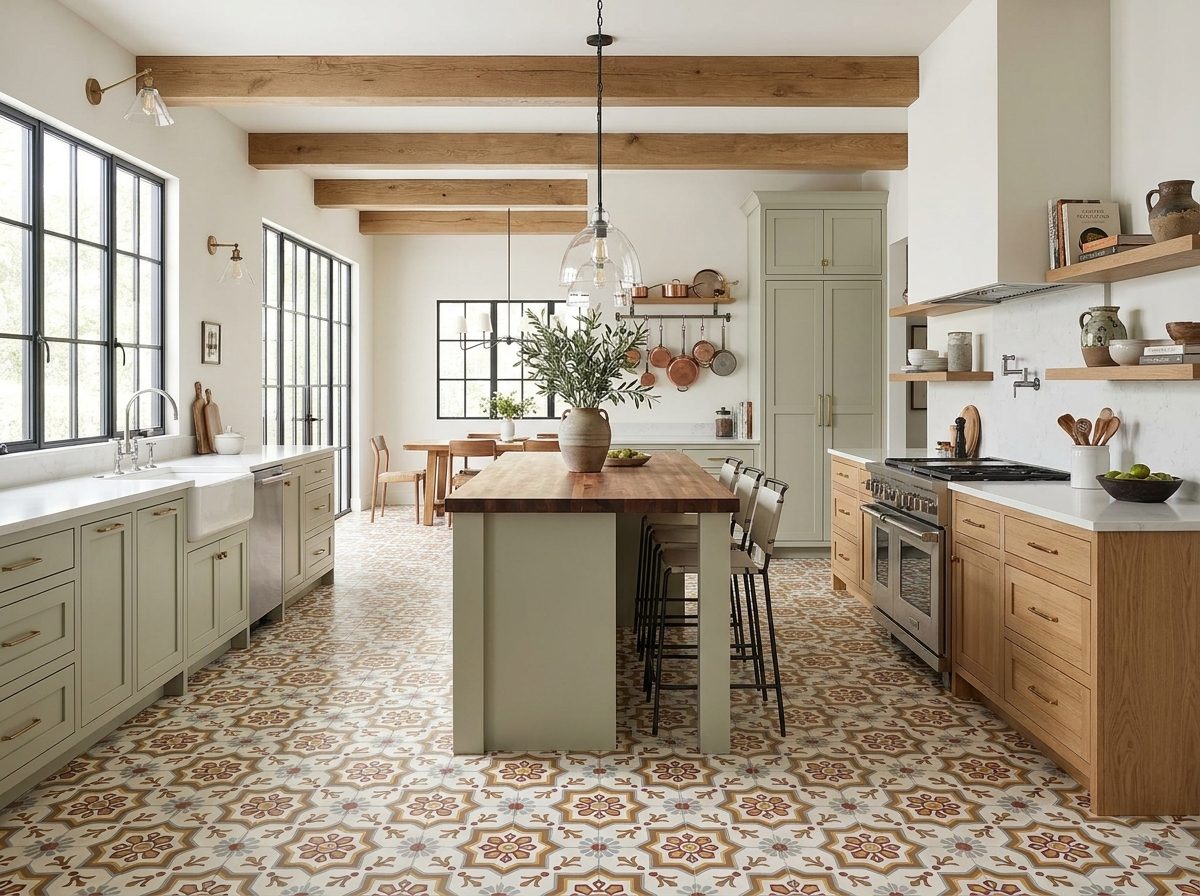
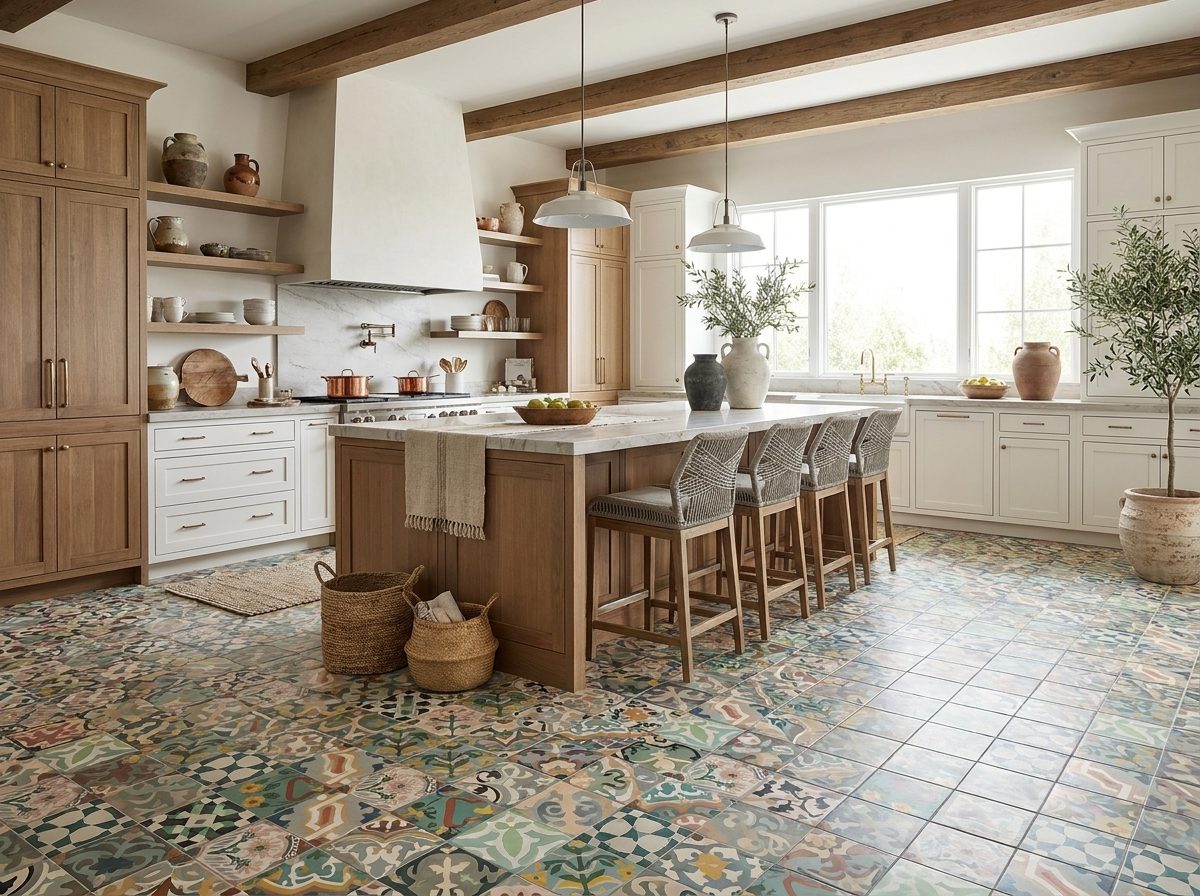
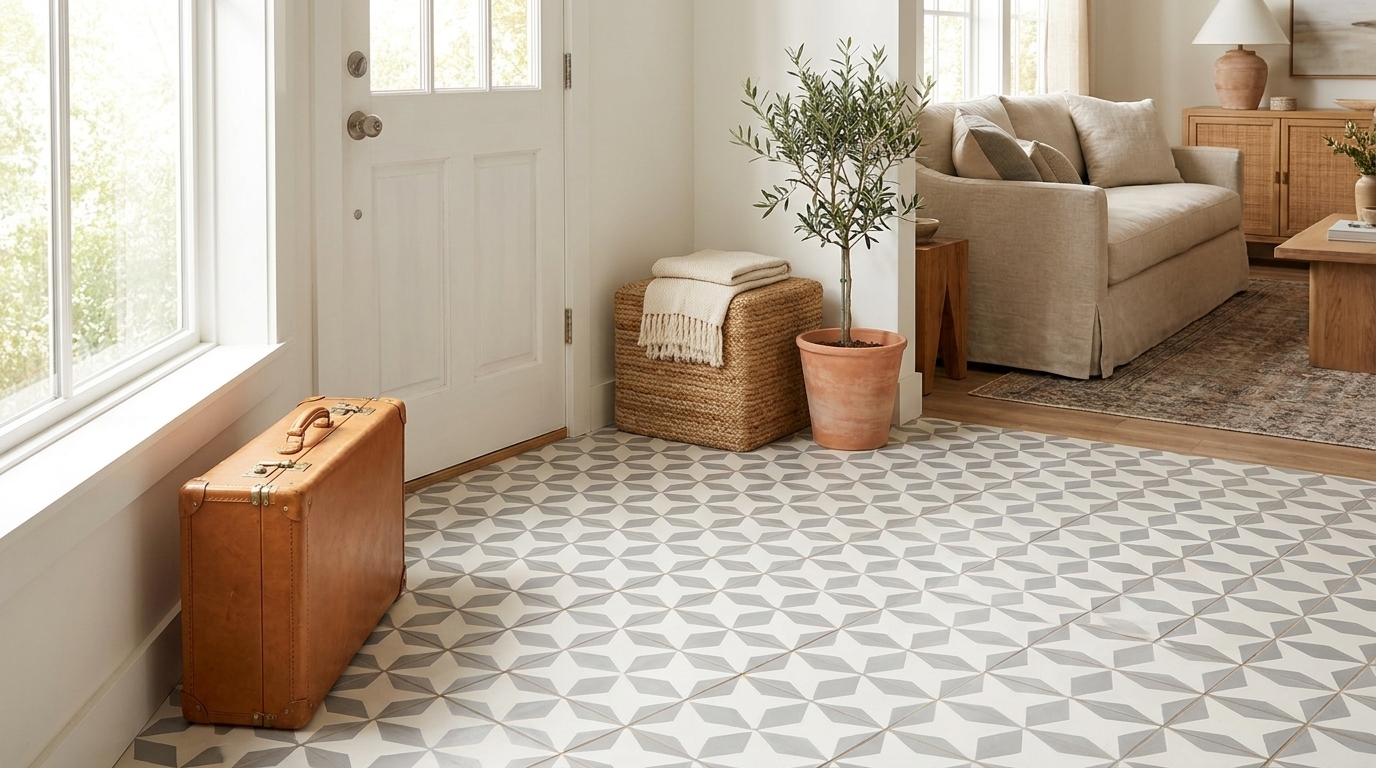
Tiling a kitchen backsplash is a process of preparing the wall, planning your layout, spreading adhesive, setting the tiles, and finishing it all off with grout and a good sealer. It’s a project that completely transforms a kitchen, turning a plain wall into a durable, beautiful surface that often becomes the room’s centerpiece.
Beyond the Basics: The Backsplash as a Design Statement

Before you even think about cracking open a bucket of thin-set, let’s talk about what a backsplash really is in a modern kitchen. It’s so much more than just a functional shield for your walls against spaghetti sauce. Today, the backsplash is the design anchor of the kitchen.
A thoughtfully chosen tile can completely redefine your space, taking it from purely utilitarian to a true statement piece that shows off your personal style. This is your chance to inject some real personality and texture right into the heart of your home.
From Function to Focal Point
The backsplash didn’t always get this much attention. Go back to the early 20th century, and you’d likely find just a simple four-inch lip made from the same stuff as the countertop. It was practical, but that’s about it. It wasn’t until the post-WWII housing boom that full-height tiled walls became a common sight in American kitchens.
What started as a small, hygienic barrier has exploded into a major visual element, now commanding a serious portion of a kitchen’s finish budget. Homeowners and designers know its power. You can see just how much this evolution has shaped today’s looks in our guide to the https://originalmissiontile.com/top-trends-in-kitchen-backsplash-designs/.
Why Your Tile Choice Matters
Picking the right tile goes way beyond just finding a color you like. The material itself is what truly sets the tone. Handmade cement tiles, for instance, offer a unique, velvety matte finish and a depth of color you just can’t replicate with mass-produced ceramics. Every single tile has subtle variations that come together to create a look that feels completely custom.
Your backsplash is a canvas. It’s the perfect place to be bold with pattern or introduce a texture that complements your cabinetry and countertops, creating a cohesive and intentional design.
To really get the ideas flowing, it helps to see what’s possible. For some great examples of how different materials and patterns can work in a real space, check out these timeless kitchen backsplash tile ideas.
This guide will walk you through the entire job, from that first spark of design inspiration all the way to wiping down the final sealed grout line, making sure your vision comes to life beautifully.
Laying the Groundwork: Wall Prep and Layout Strategy

A stunning tile installation is only as good as the wall it’s stuck to. This is where the pros really earn their stripes, because rushing the prep work is the single most common DIY mistake I see. It’s not the fun part, I get it. But every minute you spend here pays off tenfold when you’re admiring the finished product.
Before you even think about mixing thin-set, your wall needs to be clean, flat, and ready to grab onto that tile for good. Think of it like a painter’s canvas—you wouldn’t start a masterpiece on a dirty, lumpy surface.
Getting the Surface Just Right
First things first: clean that wall. Kitchens are notorious for accumulating a thin, invisible layer of airborne grease, which is the mortal enemy of tile adhesive. Grab a good degreasing cleaner like trisodium phosphate (TSP) or a dedicated kitchen degreaser.
Scrub the entire backsplash area, giving extra love to the wall behind the stove. Once you’re done, wipe it all down with a clean, damp cloth to get rid of any residue, and then let it dry completely.
Now, play detective with a straightedge or a level. Hold it flat against the wall to hunt down any high spots or little valleys. Fill any dings, old nail holes, or divots with spackle or joint compound. Sand it smooth once it’s dry. Your mission is to create a wall that is flat, solid, and structurally sound.
A perfectly flat wall is what prevents “lippage”—that annoying effect where one tile edge sits higher than its neighbor. It’s especially obvious with bigger tiles or those with sharp, clean edges.
If you’re dealing with glossy paint, you need to give the adhesive something to bite into. A quick once-over with medium-grit sandpaper is all it takes to knock down the sheen and create a much better bonding surface.
Figuring Out How Much Tile You Really Need
With a prepped wall, you can finally get an accurate measurement. Measure the height and width of each section of your backsplash, multiply them to get the square footage, and then add all the sections together for a grand total.
Now for the critical part: the overage. This extra tile is your insurance policy against mis-cuts, accidental drops, and those tricky little pieces you’ll inevitably need.
- For simple layouts (like a subway pattern): Order at least 10% extra.
- For complex patterns (like herringbone or mosaics): Bump that up to 15-20% extra to cover all the additional cuts you’ll be making.
Always, always order your extra tile at the same time as the main batch. This ensures every tile comes from the same production run, which helps you avoid subtle (but noticeable) variations in color or size. It’s a small detail that makes a massive difference.
The Power of a Dry Layout
Before you mix a single drop of mortar, you need a game plan. A dry layout—arranging your tiles on the floor or a big piece of cardboard cut to size—is your secret weapon. This is where you solve problems before they’re permanently stuck to your wall.
Laying it all out lets you finalize your pattern, see how tiles will land around outlets and corners, and most importantly, find your visual centerline. This isn’t always the mathematical middle of the wall. It’s the line that draws the eye from the main viewpoint in the kitchen, like the center of the sink, the range, or a big window.
Starting your pattern from this visual center is what makes the final job look balanced and intentional.
This planning stage is also your chance to avoid the ultimate tiling sin: those tiny, awkward sliver cuts at the end of a row. By shifting your starting point just a little bit, you can often make sure all your end cuts are at least half a tile wide. It looks infinitely more professional.
Common Layout Scenarios:
- A single, uninterrupted wall: Find the center point, draw a level line, and start your first row there, tiling out toward the edges.
- A wall with a window: Center your layout on the window. This creates a pleasing symmetry on both sides.
- Inside corners: Plan your layout so you don’t end with a miserable little sliver of a tile tucked into the corner.
Once you’ve nailed the dry layout, transfer your key reference lines to the wall with a level and pencil. A perfectly level horizontal line, drawn one tile height up from the countertop, will be your guide for that crucial first row. It guarantees everything that follows will be perfectly straight, even if your counters have a slight slope.
Your Tiling Toolkit: The Must-Haves and Nice-to-Haves
Walking into the tool aisle can feel like a pop quiz you didn’t study for. The sheer number of options is enough to make anyone second-guess their DIY ambitions. But here’s the secret: assembling the right toolkit isn’t about buying one of everything. It’s about knowing which specific items will make your project successful, saving you time and a whole lot of frustration.
Equipping yourself correctly is an investment in quality, and it’s where you’ll see a huge return. While the kitchen backsplash tile market is projected to hit US$1.19 billion by 2033, the real cost for most homeowners isn’t the tile itself—it’s the labor. Hiring a pro can account for 40–60% of the total installed cost. That’s a massive saving if you’re willing to do it yourself with the right gear.
The Non-Negotiable Essentials
Certain tools are simply required to do the job right. Think of these as your starting lineup. Without them, you’re just guessing, and a good tile job is all about precision. Getting these basics locked down is as important as picking the right tile—a fundamental we cover in our guide on the 8 tips for selecting tiles.
- Measuring Tape & Level: Accuracy is everything. Your tape measure confirms your square footage and every single cut mark. A good level is even more critical—it ensures your first row is perfectly straight, setting the stage for the entire installation.
- Notched Trowel: This isn’t just any trowel. The notches are designed to apply the perfect amount of adhesive, creating ridges that collapse to ensure full tile-to-wall contact. It’s the key to a strong, lasting bond.
- Buckets & Sponges: You’ll want at least two buckets—one for mixing your thin-set or grout and another filled with clean water for wiping down tiles. A large, high-quality tiling sponge is your best friend during grout cleanup.
- Tile Spacers: These little plastic pieces are your secret to consistent, uniform grout lines. Don’t try to eyeball it. Spacers are cheap, easy, and guarantee a polished, symmetrical finish that screams “professional.”
Adhesives: The Foundation of Your Backsplash
Choosing the right adhesive is one of the most critical decisions you’ll make. The two main players are thin-set mortar and mastic, and they are absolutely not interchangeable.
Mastic, the pre-mixed stuff in a bucket, might seem convenient. It’s fine for small, lightweight ceramic tiles in dry areas. But for a kitchen backsplash—especially with heavy materials like our handmade cement tiles—it’s the wrong choice. It never fully cures in moist environments and simply lacks the strength to hold heavier tiles on a vertical surface for the long haul.
Polymer-modified thin-set mortar is the professional standard, period. It comes as a powder you mix with water, and those added polymers give it superior strength, flexibility, and bonding power. This is non-negotiable for cement, natural stone, or any large-format porcelain tile.
Upgrading Your Toolkit for Easier, Cleaner Work
Once you have the essentials covered, a few extra tools can dramatically improve your efficiency and the quality of your cuts. These are the “nice-to-haves” that quickly become “how-did-I-live-without-this” items, especially on your second or third project.
A wet saw is the MVP for cutting tile. While a manual tile cutter can score and snap simple straight lines, a wet saw uses a diamond-coated blade and a stream of water to cut through even the hardest materials like porcelain cleanly and with minimal chipping. It’s what makes complex cuts—like L-shapes around cabinets or notches for outlets—incredibly precise and frustration-free. For drilling into tile for fixtures or plumbing, specialized diamond drill bits are a game-changer.
A grout float is another pro-level tool that’s worth its weight in gold. It’s a rubber-faced paddle designed specifically to press grout deep into the joints without scratching your tile faces. Using a sponge or your fingers just won’t pack the grout in as effectively, which can lead to cracks and voids down the road.
Before you start your project, it helps to see what you absolutely need versus what will just make the job smoother. Here’s a quick breakdown to guide your shopping list.
Essential vs. Recommended Tools for Tiling a Backsplash
| Tool Category | Essential Items | Recommended for Pro Results |
|---|---|---|
| Measurement & Layout | Measuring Tape, Level, Pencil | Chalk Line, Laser Level, Carpenter’s Square |
| Adhesive & Grout | Notched Trowel, 2 Buckets, Margin Trowel | Power Mixer (Drill Attachment), Grout Float |
| Cutting & Shaping | Utility Knife, Tile Nipper | Wet Saw, Angle Grinder with Diamond Blade |
| Setting & Spacing | Tile Spacers, Rubber Mallet | Tile Leveling System (Clips & Wedges) |
| Cleanup & Safety | Large Sponges, Rags, Safety Glasses | Knee Pads, Grout Haze Remover, Painter’s Tape |
Having the right tool for each step not only makes the work faster but also ensures the final product is something you’ll be proud of for years. The “pro results” column is where you’ll find the items that eliminate guesswork and solve the most common DIY frustrations.
All that careful planning and prep work has led to this exact moment—the most rewarding part of the entire project. This is where your design finally comes off the paper and onto the wall, turning a blank surface into something truly special. With your layout locked in, setting the tiles is a satisfying, methodical process, not a frantic scramble.
The secret to a strong, permanent installation is getting the adhesive right. You want to mix your thin-set mortar to what pros call the “creamy peanut butter” consistency. It needs to be thick enough to hold a ridge and stay on your trowel when turned sideways, but still smooth enough to spread without a fight.
Mastering the Mortar Application
Once your thin-set is mixed, let it sit for a few minutes. This is called “slaking,” and it’s a critical step that allows the chemicals to fully activate. Don’t skip it.
Now, you’re ready to get it on the wall. Technique matters just as much as the mix.
Start by scooping a manageable amount onto your notched trowel and, holding it at a sharp 45-degree angle, spread a thin, tight layer across a small section. Think two or three square feet at a time, max. This first pass, or “scratch coat,” gives the main layer of mortar something to really grab onto.
Immediately go back over that same area with the notched side of the trowel, keeping that same 45-degree angle. Comb the mortar in one single direction to create clean, uniform ridges. These ridges are everything. When you press a tile into them, they collapse and spread out, ensuring 85-95% mortar coverage for a rock-solid bond that won’t fail.
Pro Tip: Never spread more mortar than you can cover with tile in the next 15-20 minutes. If the surface starts to “skin over” and dry out, it loses its sticking power. A quick touch test will tell you what you need to know: if it’s still tacky, you’re good. If it’s dry, scrape it off and apply a fresh batch.
The Art of Setting and Spacing
With a fresh patch of mortar combed on the wall, it’s time to start setting your tiles. Begin with the bottom row, pressing each tile firmly against your level guide line. As you press, give each tile a tiny back-and-forth wiggle. This small movement is what collapses those mortar ridges and embeds the tile properly, preventing hollow spots that can lead to cracked tiles down the road.
Place your spacers at the corners as soon as each tile is set. Consistency here is non-negotiable if you want clean, uniform grout lines later. Push them in firmly so they hold the grid tight and true.
This is where all that dry layout work pays off. You’re not guessing where tiles go or stressing about cuts—you already have a map.
Keep a bucket of clean water and a sponge right next to you. Thin-set that dries on the face of a tile is a nightmare to remove later. Wiping away smudges as you work will save you hours of scrubbing and frustration.
Navigating Cuts and Obstacles
Let’s be real: no backsplash is a perfect, uninterrupted rectangle. You’ll definitely be making cuts to work around outlets, windows, and cabinets. A wet saw is your best friend here, giving you the cleanest, most professional cuts, especially for tough materials or tricky shapes.
Common Cuts You’ll Encounter:
- Straight Cuts: For finishing rows at walls or corners. Just measure the gap, mark the tile, and use your wet saw or a simple score-and-snap cutter.
- Outlet Cutouts: These are usually square holes in the middle of a tile. Mark the box outline, then use a wet saw to make a series of careful plunge cuts, or use an angle grinder with a diamond blade.
- L-Shaped Cuts: You’ll need these to fit tiles perfectly around cabinet corners. Mark both lines and make two straight cuts with your wet saw until they meet.
When measuring for any cut, always remember to subtract the width of your grout joint on all sides. Forgetting this tiny detail is a rookie mistake that throws the whole pattern off. If your project involves more complex patterns like mosaics, our guide on how to install a mosaic tile backsplash has more detailed tips.
After setting a few rows, you can gently tap the tiles with a rubber mallet and a small piece of wood (a “beating block”) to make sure everything is flush and fully embedded. This is key for getting a perfectly flat surface with no lippage.
Finally, give the installation at least 24-48 hours to fully cure before you even think about pulling spacers or starting to grout. Rushing this step is a critical error that can compromise all your hard work.
The Final Details: Grouting, Sealing, and Cleanup
The last tile is on the wall, but you’re not done yet. Far from it. This next part—grouting, sealing, and the final cleanup—is what transforms a grid of individual tiles into a durable, cohesive, and professional-looking surface. It’s the stage that protects all your hard work and really makes the backsplash pop.
Think of grout as more than just filler. It locks the tiles together, adds structural strength, and keeps moisture and kitchen grime from sneaking in behind them. Your first decision here is choosing the right grout.
Choosing the Perfect Grout
Grout selection really boils down to two things: type and color. The type you need depends entirely on how wide your grout joints are.
- Unsanded Grout: This is your go-to for tight grout lines, usually 1/8 inch or smaller. Its fine texture packs neatly into narrow spaces and won’t scratch delicate surfaces like glass or polished marble.
- Sanded Grout: For any joint wider than 1/8 inch, sanded grout is the industry standard. The sand adds bulk and strength, which helps prevent the grout from shrinking and cracking as it cures.
Color is where you get to play designer. A grout that matches your tile creates a seamless, monolithic look, letting the tile shape itself be the hero. On the other hand, a contrasting color makes the pattern pop and draws attention to the grid. Just a word of caution: lighter grouts can show stains more easily, especially in the high-splash zone behind a busy stove.
Applying Grout Like a Pro
Okay, spacers are out and the tile faces are clean. Time to mix and apply the grout. Follow the manufacturer’s directions to the letter, mixing until you have a smooth, paste-like consistency—think cake frosting. Let it “slake” (rest) for a few minutes, then give it one final stir.
Grab your rubber grout float and scoop up a healthy amount of grout. Holding the float at a 45-degree angle, smear the grout diagonally across the tile joints. That diagonal motion is key; it forces the grout deep into the gaps instead of pulling it right back out.
Work in small, manageable sections, using firm pressure to make sure every joint is packed solid. Once the joints are filled, turn the float to a steeper angle (almost 90 degrees) and scrape the excess grout off the face of the tiles.
The most common mistake I see is messing up the timing for the first cleanup. Too soon, and you’ll pull grout out of the joints. Too late, and you’ll be chiseling it off. The sweet spot is usually 15 to 30 minutes after you apply it. The grout should be firm to the touch but not rock hard.
Using a damp tiling sponge—and I mean damp, not soaking wet—gently wipe the tiles diagonally. Rinse your sponge often in a clean bucket of water to avoid just spreading a thin film of grout haze everywhere. Your goal is to clean the tile faces and start shaping the grout lines, not wash all your hard work out of the joints.
The Sealing Process for Porous Tiles
For a lot of tiles, like porcelain or ceramic, the job is pretty much done after grouting. But for porous materials like natural stone or our handmade cement tiles from Original Mission Tile, sealing is a non-negotiable, absolutely critical step. An unsealed cement tile is like a sponge—it will soak up oils, wine, and even the pigment from your grout, leaving you with permanent stains.
You’ll actually need to seal at two different points:
- Before Grouting: After the thin-set has fully cured, apply a few coats of a high-quality penetrating sealer to the face of the tiles. This creates an invisible shield that stops the grout from staining the tile surface. Let that sealer cure completely before you even think about mixing your grout.
- After Grouting: Once the grout is fully cured (check the bag, but it’s often 48-72 hours), you’ll seal the entire backsplash one last time. This final coat protects both the tile and the grout from all those future kitchen splatters.
This visual guide shows the core steps of how to tile a kitchen backsplash, leading up to this crucial finishing work.

This process—mix, comb, set—is the foundation. The finishing touches of grouting and sealing are what truly complete the job and protect your investment.
As people put more personality into their kitchens, materials that need this extra care are becoming more popular. Trend reports show a big move toward handcrafted tiles, with 60% of professionals expecting bold new colors in backsplashes. These high-impact designs make meticulous finishing more important than ever. You can see more on these evolving styles in recent trend reports on Homes & Gardens.
Final Cleanup and Curing
About two hours after your first grout cleanup, you’ll probably see a light haze on the tile surface. Don’t panic; this is normal. Just buff it off with a clean, dry cloth or a microfiber towel. If you have some stubborn spots, you can find specialty haze removers, but make sure it’s safe for your specific type of tile.
And finally, be patient. Give your new backsplash a few days to a full week to cure completely before you hit it with heavy moisture or cleaning chemicals. This allows the grout and sealer to reach maximum hardness, giving you a durable finish that will keep your beautiful work protected for years.
Common Questions We Get About Backsplashes
Even the best-laid plans can hit a snag. When you’re mid-project, a small question can feel like a huge roadblock. So, let’s tackle the most common questions we hear from DIYers tiling a kitchen backsplash.
These are the real-world issues that pop up when you’re elbow-deep in thin-set, and getting the answers right is what separates a decent job from a great one.
Can I Just Tile Over My Old Backsplash?
It’s the shortcut everyone wants to take, but the professional answer is almost always no. Think of it this way: your beautiful new tile is only as secure as the old tile’s bond to the wall. If those old tiles let go, they’re taking your new work with them.
For a bulletproof job that won’t cause headaches with outlets and cabinet trim being too shallow, you have to take the old stuff down. Starting with a clean, flat surface is the only way to guarantee a strong bond and a professional finish.
What’s the Best Adhesive for Heavier Tiles Like Cement?
For a heavy tile, you need a high-quality, polymer-modified thin-set mortar. Step away from the pre-mixed adhesive in a bucket! That stuff just doesn’t have the muscle to hold heavy tiles on a vertical surface, and you’ll risk sagging or outright failure down the line. A powdered thin-set that you mix yourself creates a rock-solid, permanent bond.
The single biggest mistake a first-timer can make is choosing the wrong adhesive. Always match your mortar to your tile’s weight and material—it’s the foundation of the entire installation.
How Long Do I Have to Wait Before Grouting?
This is where patience pays off. You have to let the thin-set cure completely, which typically takes 24 to 48 hours. Don’t just guess—read the instructions on the bag of thin-set, as the manufacturer’s recommendation is the final word.
If you jump the gun and grout too early, you trap moisture behind the tiles. That can weaken the bond and lead to loose tiles later. This waiting period is a non-negotiable step for a job that lasts.
Is Sealing Cement Tiles Really That Important?
Yes, one hundred percent. It’s absolutely critical. Porous by nature, unsealed cement tiles will drink up anything that hits them—grout pigment, cooking oil, a splash of spaghetti sauce—leaving permanent stains. The process is simple but has to be done in the right order, especially for handcrafted tiles from a maker like Original Mission Tile.
You’ll apply several coats of a penetrating sealer before you grout. This creates an invisible shield that stops the grout from staining the tile face. Once the grout has fully cured, you’ll seal the whole backsplash again, protecting both the tile and the grout lines from the realities of daily kitchen life.
Ready to bring timeless, handcrafted beauty to your kitchen? The artisans at Original Mission Tile have been creating stunning cement tiles since 1900. Explore our in-stock collections or design your own one-of-a-kind pattern today at https://originalmissiontile.com.