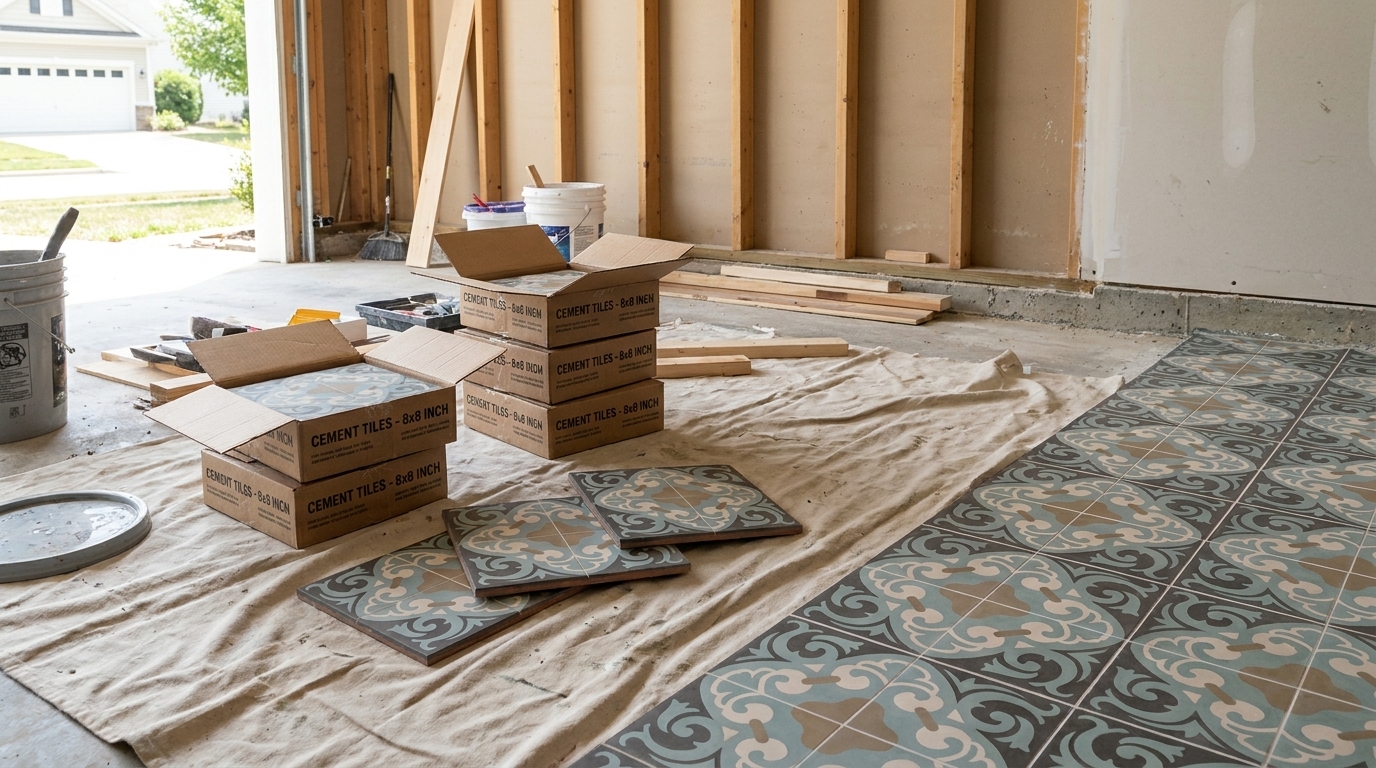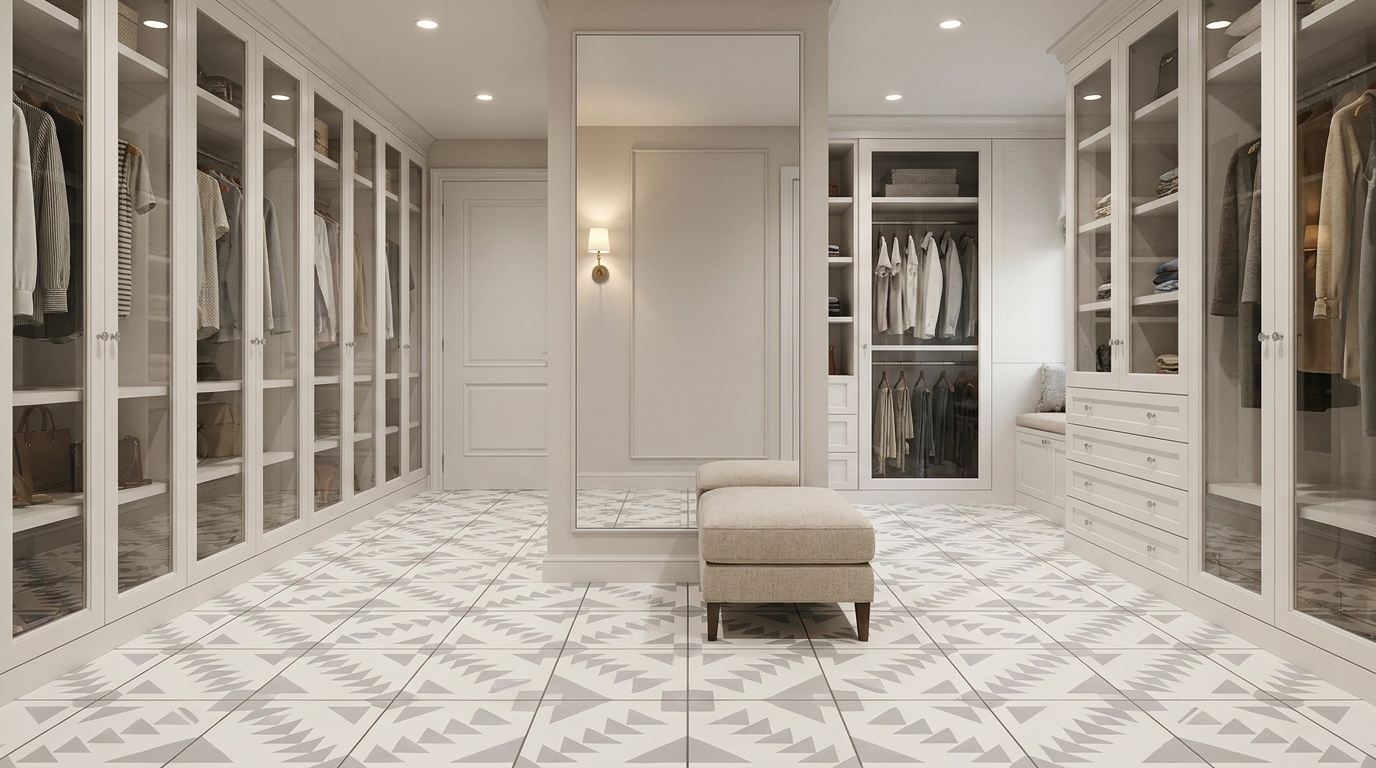
Installing handmade cement wall tile is less about speed and more about respecting the material. If you’re used to working with standard ceramic, you’ll need to adjust your process. These tiles are porous and aren’t fired in a kiln, which means they demand careful handling to prevent stains and ensure that beautiful, artisanal finish lasts.
This guide walks you through the critical steps for getting it right the first time.
The Art of Installing Handmade Cement Wall Tile

Before mixing a single bag of thin-set, you have to understand what makes these tiles so different from their mass-produced cousins. Each piece of Original Mission Tile is a small work of art, with unique character, subtle color shifts, and the beautiful quirks that come from being made by hand. You’re not just covering a wall; you’re installing a feature.
Their unique recipe—a mix of cement, sand, marble dust, and mineral pigments—means they are cured over time, not fired in a hot kiln. This creates a distinctively porous material, and that one fact drives every single decision you’ll make from here on out.
Know Your Material
The most important takeaway is this: cement tiles soak up moisture and pigments. If you don’t account for this, you’ll run into trouble. It’s the number one cause of installation heartbreak we see.
Here’s what that means for your project:
- Porosity: Your tile will readily absorb water, color from your adhesive, and especially pigment from your grout. This is why pre-sealing before you grout isn’t a recommendation—it’s a requirement.
- Weight: Cement tiles are significantly heavier than ceramic. Your wall must be solid and completely rigid. You’ll also need a high-strength, non-sag thin-set mortar to keep them from sliding.
- Color Variation: Because they’re handmade, tiles from different boxes will have slight differences in color. This is a feature, not a flaw. Always pull from several boxes at once to blend the tiles for a natural, cohesive look.
Understanding how the careful installation of materials contributes to the quality of high-end home finishes is key. The patience you put into handmade tiles directly translates to a premium result.
The biggest mistake we see is installers treating our tiles like common ceramic. They rush the grouting process without sealing first, leading to permanently stained tiles. Slowing down and following the correct sequence is everything.
A Quick Look at Key Differences
To avoid common pitfalls, it helps to see the major differences side-by-side. Treating cement tile like ceramic is where most projects go wrong.
Cement Tile vs Ceramic Tile Wall Installation Key Differences
| Installation Factor | Handmade Cement Tile (Original Mission Tile) | Standard Ceramic/Porcelain Tile |
|---|---|---|
| Pre-Installation | Must be handled carefully; edges can chip. Tiles should be blended from multiple boxes. | Generally more durable and uniform. |
| Cutting | Use a high-quality wet saw with a diamond blade for glass/marble. Tape cut lines to reduce chipping. | Can be cut with a wet saw or a score-and-snap cutter. Less prone to chipping. |
| Sealing | CRITICAL: Must be sealed before grouting to prevent grout pigment from staining the tile. | Typically not required before grouting as the surface is non-porous. |
| Adhesive | High-strength, non-sag, white thin-set mortar is required. Back-buttering each tile is a must. | Standard thin-set mortar is usually sufficient. Back-buttering is good practice but not always required. |
| Grout | Use unsanded grout. Work in small sections and clean immediately. Grout release is highly recommended. | Sanded or unsanded grout can be used depending on joint size. |
| Cleaning During Install | Use only water and a clean sponge. No acidic cleaners. Clean spills from the tile face instantly. | More forgiving; can tolerate a wider range of cleaning methods. |
This table highlights why a different mindset is needed. With handmade cement tile, the mantra is “prep, patience, and protect.”
A Roadmap for a Flawless Finish
This guide gives you a clear roadmap, from checking your wall’s integrity to applying that final coat of sealer. We’ll show you why certain techniques—like back-buttering every single tile—are so important for a strong, lasting bond on a vertical surface.
When you honor the tile’s handcrafted nature with the right methods, you get an installation that not only looks stunning today but will endure for a lifetime.
The appeal of unique wall tiles is growing fast. The global wall tile market hit US$ 138.2 billion in 2023 and is set to climb, driven largely by renovations. This trend shows a real appreciation for quality finishes that stand out. You can dive deeper into the history and making of our products in our guide to Original Mission Tile.
Preparing Your Wall for a Flawless Installation

Let’s be blunt: a perfect tile job starts with a perfect wall. This isn’t just a friendly suggestion. For heavy, handmade cement tiles, it’s the most important rule in the book. Unlike some mass-produced ceramics, our tiles have crisp, clean edges and a rich matte finish that will telegraph every single bump, dip, and wave from the wall behind them.
Think of it like this: if a house’s foundation is off, the whole structure suffers. It’s the same with wall tile. Any weakness or unevenness in your substrate will cause frustrating issues like lippage (uneven tile edges) and could even lead to a bond failure down the road.
Before you even think about mixing mortar, protect your space. Tiling is messy. Cover your floors, countertops, and cabinets with heavy-duty tarps or plastic sheeting. A few minutes of prep here will save you hours of dusty cleanup later.
Inspecting Your Wall Substrate
Your first real task is to play detective. Get up close and personal with your wall. It absolutely must be clean, structurally sound, and completely dry. Most importantly, it needs to be flat and rigid.
Look for tell-tale signs of trouble like water stains, crumbly drywall, or loose plaster. Now, press firmly on the wall in a few different spots. Does it give or flex? If you feel any movement, that wall isn’t strong enough to support the weight of cement tile. This is a common issue in older homes and has to be fixed before you go any further.
Common wall surfaces include:
- Cement Backer Board: This is the gold standard for any tile job, especially in wet areas like showers and backsplashes. It’s incredibly stable, won’t break down with moisture, and gives mortar an ideal surface to grip.
- Drywall (Gypsum Board): Regular drywall is only okay in completely dry areas. If you’re tiling a kitchen backsplash, you should be working with moisture-resistant “green board” at a minimum. Never, ever tile over standard drywall in a shower.
- Plaster: An old plaster wall needs to be in pristine condition—no crumbling, no spiderweb cracks, and no soft spots. If the plaster’s integrity is questionable, the best move is to tear it out and replace it with fresh cement backer board.
Achieving a Perfectly Flat and Plumb Surface
When we say “flat,” we don’t just mean smooth to the touch. It means there are no high or low spots across the entire installation area. Grab the longest, straightest edge you have—a 6-foot level is perfect—and hold it against the wall vertically, horizontally, and diagonally.
Use a pencil to mark any gaps you see between the level and the wall. For these tiles, even a tiny gap of 1/8 inch over 10 feet is too much.
The single most overlooked step is getting the wall truly flat. People think a quick skim coat will do the trick. For handmade tiles, you have to be meticulous. Spend that extra hour perfecting the wall now, and you’ll save yourself a full day of frustration trying to fix lippage tile by tile.
To correct these imperfections, you’ll need a high-quality patching compound or even thin-set mortar. Use a wide drywall knife to fill the low spots, feathering the edges out so they blend seamlessly. For high spots, you’ll need to sand them down. Your goal is a perfectly plumb (that’s vertically straight) and flat plane.
Once your patches are dry, clean every speck of dust off the entire wall. A quick wipe-down with a damp sponge is all it takes, but this step is critical for a strong bond. Finally, roll on a quality primer. This seals the wall, stops it from sucking the moisture out of your adhesive too fast, and gives the mortar something to really bite into.
The growing popularity of unique tiles like ours is part of a bigger shift in home design. The tile market is set to grow at a CAGR of 7.8% through 2035, fueled by homeowners who want sustainable, artisanal materials for their remodels. This move away from generic, mass-produced options is creating new energy around heritage products. You can dive deeper into these market trends in this detailed ceramic tiles market report on TheBusinessResearchCompany.com.
Planning Your Layout to Avoid Common Mistakes
This is where the magic happens, but rushing the layout is the fastest way to a disappointing finish. A little bit of planning now saves a ton of headaches later, especially with the unique character of handmade cement tiles. Before a single drop of adhesive hits the wall, you absolutely have to do a dry-fit. It’s the only way to see what you’re up against.
A dry-fit lets you see how your pattern flows across the wall, how the natural color variations play together, and most importantly, how to dodge those awkward, tiny sliver cuts in corners and along edges. For anyone looking to install wall tile, this step is non-negotiable.
Establish Your Reference Lines
First things first: find the true center of your wall. Never, ever trust that corners are perfectly square or that ceilings are perfectly level—they rarely are. Measure the wall’s width and height, then mark the exact center points.
Grab a level and draw a perfectly vertical (plumb) line and a perfectly horizontal (level) line that cross at your center mark. These are your reference lines, and they are your single source of truth. Starting from these lines guarantees a balanced, straight design, no matter how wonky the room is.
A rookie mistake is to start tiling from a corner or the floor. If that corner is even slightly out of square, every tile you lay will be off. The error compounds with each row, becoming painfully obvious by the time you’re halfway up the wall. Always work from the center out.
With your lines drawn, start the dry-fit. Lay a row of tiles with spacers along your horizontal line, and do the same along the vertical line. This instantly reveals the size of your cuts at the walls, ceiling, and floor. The goal is to end up with cuts that are at least half a tile wide. If you see you’re heading for a tiny 1-inch sliver, just shift your starting point slightly off-center to balance the cuts on both sides.
Work with Natural Variation and Patterns
Handmade cement tiles are prized for their subtle, beautiful variations in color and texture—it’s the hallmark of their artisanal quality. But if you just pull tiles from one box at a time, you risk creating unintentional “color blocks” on your wall that look like a mistake.
To get that beautifully blended, cohesive look, you have to mix tiles from several different boxes as you go. Before you even think about setting tile, open at least three to five boxes and lay them out.
Tips for a Professional-Looking Blend
- Open Multiple Boxes: Never work from a single box. Make it a rule to pull tiles from at least three different cartons simultaneously.
- Create a “Palette”: Lay out a large section of your pattern on the floor first. This is your chance to see the big picture and swap out any tiles to create a more balanced, organic distribution of shades.
- Rotate Plain Tiles: Even with solid color tiles, be sure to rotate them. The subtle shifts in surface texture and tone look far more natural when the tiles are oriented differently.
- Plan Intricate Patterns: If you’re installing a complex design like our Star & Cross, the dry-fit is your best friend. This is how you ensure the pattern repeats correctly and flows seamlessly from one tile to the next.
This blending process is what separates a good installation from a truly exceptional one. It’s how you let the handmade beauty of the material shine.
Final Layout Adjustments
With your tiles laid out, you can make those final, critical tweaks. Tiling a kitchen backsplash? You’ll want to avoid a tiny sliver cut right where it’s most visible, like under the cabinets. You might decide to start with a full tile at the countertop, letting any cut fall at the less conspicuous spot higher up. For a bathroom wainscot, you’d probably prioritize a full, clean tile at the top edge for a sharp finish line.
If you want to be extra precise with your project planning, you can learn more about how to measure for tile on our blog.
This entire planning phase is about solving problems before they’re permanently stuck to your wall. Taking the time now to map out reference lines, blend your tiles, and plan your cuts is the professional’s secret to a flawless finish that looks intentional and beautifully executed.
A Pro’s Guide to Cutting and Setting Cement Wall Tiles
This is where all your prep work pays off. Actually getting the tiles on the wall is the most rewarding part of the job, but with handmade cement tiles, your technique is everything. This isn’t like working with standard ceramic; precision, patience, and the right materials will make or break your installation.
The most common mistake we see is trying to cut cement tile with the wrong tool. These tiles are dense and will chip if you use a standard score-and-snap cutter. You absolutely need a high-quality wet saw fitted with a diamond blade made for stone, glass, or marble. This is the only way to get those clean, crisp edges that let the pattern shine.
The Right Adhesive: Your Key to a Lasting Bond
Because cement tiles are heavier than ceramics, they need an adhesive with serious holding power, especially on a vertical wall. Standard mastics or cheap mortars just don’t have the strength and can lead to tiles sagging over time.
Your go-to should be a high-quality, white, polymer-modified thin-set mortar.
Why white? Cement tiles are porous. The pigments in a gray mortar can sometimes bleed through and discolor lighter-colored tiles. Using white thin-set is an easy insurance policy against staining. Understanding your options, like Mapei tile glue, can give you the confidence you’re using a professional-grade product.
To get started, mix your thin-set until it has a smooth, creamy consistency, much like peanut butter. Then, using a notched trowel, comb an even layer onto a small, manageable section of the wall. Now for the most important step.
Back-buttering is non-negotiable. This means applying a thin, flat coat of mortar to the entire back of each tile right before you set it. It guarantees 100% mortar coverage, gets rid of air pockets, and is the single best way to prevent cracked tiles or bond failure down the road. It’s the pro’s secret to a forever installation.
This simple diagram shows how layout planning, blending, and your installation flow together.

As you can see, a great finish starts long before the first tile is set. It’s a process of establishing your grid, checking the pattern, and blending tile shades.
Setting, Aligning, and Cleaning as You Go
With the tile back-buttered, press it firmly into the mortar on the wall using a slight twisting motion. This collapses the trowel ridges and creates a powerful suction-like bond.
Use tile spacers to maintain consistent grout lines between each piece. On a wall, wedges are your best friend—use them along the bottom row to support the tiles and fight gravity while the mortar sets up.
Here’s a tip that will save you hours of frustration: clean as you go.
Some thin-set will inevitably squeeze out onto the face of the tiles. Keep a bucket of clean water and a good sponge handy at all times. You must wipe any excess mortar off the porous surface immediately. If it has a chance to dry, it can be nearly impossible to remove without marring the tile’s finish.
The global demand for tile is huge, with the Asia-Pacific region leading at a 44% market share. Europe and North America follow with 21% and 18%, respectively, driven heavily by renovation projects. It shows how much installation styles and material preferences are tied to local trends.
Work slowly and methodically in small sections. Rushing only creates messes and mistakes. A clean, careful approach is what ensures your beautiful cement tiles look just as good on the wall as you imagined.
Finishing Your Project with Grout and Sealer
Don’t rush the finish line. The final steps of grouting and sealing are what protect your beautiful handmade tiles and make their colors truly pop. This is especially true for porous cement tiles, where a single mistake with grout can lead to permanent, heartbreaking stains.
This is where all your hard work pays off. Let’s walk through the essential finishing process, focusing on the specific needs of Original Mission Tile to ensure a flawless, lasting result.
Pre-Sealing Before You Grout: The Most Critical Step
If you only take one piece of advice from this guide, let it be this: you must pre-seal your tiles before you grout. We really can’t say it enough. Cement tiles are naturally porous, and they will immediately drink up the pigments from your grout, causing stains that are virtually impossible to remove.
Think of it like spilling red wine on an un-treated fabric chair—once that color soaks in, it’s there for good. Applying a quality penetrating sealer first creates an invisible shield, stopping the grout color from bleeding into the tile body. This simple step makes cleanup a breeze and protects your pattern.
I’ve seen countless beautiful installations ruined by this one oversight. An installer, used to working with non-porous ceramic, applies dark grout directly to unsealed cement tile. The result is a hazy, stained mess that breaks the homeowner’s heart. This step is not optional.
Apply a high-quality, water-based penetrating sealer made for natural stone and cement. Use a foam brush or microfiber cloth to apply a thin, even coat across the tile faces. Just be careful not to let the sealer pool in the grout lines, as this can interfere with the grout’s ability to bond. Let it cure completely according to the manufacturer’s directions.
Grouting with Care: The Right Grout and Method
With your tiles protected by that crucial layer of pre-sealer, you’re ready to grout. For handmade cement tiles, your choice is simple: use unsanded grout only. The sharp aggregate in sanded grout will absolutely scratch the delicate, silky surface of your tiles, dulling the finish permanently.
For even easier cleanup and extra peace of mind, you can also apply a grout release over your sealed tiles just before you begin. This is a temporary, water-soluble coating that acts as a bond-breaker, ensuring any grout haze comes off the tile face with minimal effort.
Follow these steps for a clean, professional grouting process:
- Mix Small Batches: Grout sets up fast. Mix only enough to work in a small, manageable area, like a 3×3 foot section, at one time.
- Apply Diagonally: Using a rubber grout float held at a 45-degree angle, press the grout firmly into the joints. The diagonal motion ensures the joints are packed fully without pulling grout back out.
- Clean Immediately: After about 15-20 minutes, the grout will start to firm up. Use a clean, damp sponge to gently wipe the excess off the tile surface. Use a light touch, rinse your sponge often in a separate bucket of clean water, and be careful not to pull grout out of the joints.
Work methodically from one section to the next, cleaning as you go. This disciplined approach is the secret to preventing “grout haze,” a thin film of cement that’s a real pain to remove once it cures. If you’re new to the world of sealers, you can learn more about which ceramic tile sealers are best suited for different applications.
The Final Seal for Long-Term Protection
Once your grout has fully cured—which usually takes 48-72 hours—it’s time to lock everything in. This last step protects both the tile and the grout from future stains, moisture, and daily life. A final seal is non-negotiable, especially for a wall tile install in a high-moisture area like a kitchen backsplash or bathroom.
Apply one or two more thin coats of your penetrating sealer over the entire surface, covering both the tiles and the grout lines. This creates a unified, protected finish that makes maintenance a breeze and ensures your beautiful cement tile wall will look stunning for years to come.
Common Questions About Installing Cement Wall Tile
When you’re working with a handmade product like cement tile, a few questions are bound to come up. Our team fields them every day from designers, contractors, and DIYers diving into their first project. We’ve pulled together the most common ones to give you clear, straightforward answers from our decades of experience.
Can I Install Cement Tiles in a Shower?
Yes, absolutely. A cement tile shower is stunning, but it demands flawless waterproofing. This is one of the most popular applications for our tiles, and for good reason—when done right, the result is breathtaking.
Because cement tile is porous by nature, a bulletproof waterproofing system behind the tile is non-negotiable. This is not the place to cut corners. We’re talking about a liquid-applied membrane over cement backer board or a complete sheet membrane system like Schluter-KERDI. This creates an unbroken barrier, ensuring no moisture ever reaches your wall framing.
The tiles themselves also need to be sealed properly to handle a wet environment. Plan on sealing at three key stages:
- Before Grouting: This is the most critical step. It stops grout pigment from staining the face of the tile.
- After Grouting: A second coat seals the grout lines and the tile together, creating a unified, protected surface.
- Periodically: As part of your regular maintenance (usually once a year), a fresh coat of sealer keeps that protection topped up.
What Is the Biggest Installation Mistake to Avoid?
Without a doubt, the most common and costly mistake is failing to seal the tiles before grouting. The porous surface of an unsealed cement tile acts like a sponge, instantly soaking up pigment from the grout. The result is permanent, irreversible staining.
Think of it like spilling red wine on an unsealed stone countertop. Once it’s in, it’s in. Applying a quality penetrating sealer first is the only way to create that essential protective barrier.
A close second is improper wall prep. An uneven or bumpy wall is your enemy when installing tile, especially one with the crisp lines and matte finish of cement tile. Any imperfections will show up as lippage—where one tile edge sits higher than its neighbor. It looks amateur and feels terrible.
How Should I Handle Natural Color Variations?
Embrace them! Those subtle shifts in shade from one tile to the next are the signature of a truly handmade product. This is what gives the final installation a depth and richness you simply can’t get from mass-produced ceramic.
The key is to open several boxes at once and mix the tiles as you set them. Better yet, lay out a large section on the floor first. This allows you to arrange the different shades into a pleasing, random blend, ensuring the wall looks like a cohesive, artisanal surface—not accidental color-blocking.
This simple act of blending is what separates a good installation from a truly great one.
Why Do I Need a Special Type of Adhesive?
Cement tiles are heavy. They’re significantly denser than standard ceramic or porcelain, and a basic tile mastic just doesn’t have the bond strength or non-sag performance to hold them securely on a wall.
Using the wrong adhesive can cause tiles to slide down the wall during installation. Even worse, it can lead to a total bond failure months or years down the road.
That’s why we insist on using a high-quality, polymer-modified thin-set mortar. For larger format tiles (anything 8×8 inches or bigger), a medium-bed mortar is an even better choice. It’s formulated with more body to support the tile’s weight and prevent any sagging, guaranteeing a permanent, powerful bond.
Ready to bring the timeless beauty of handmade tile to your next project? The artisans at Original Mission Tile have been crafting stunning cement tiles since 1900. Explore our in-stock collections or create a one-of-a-kind pattern with our online Design Studio. Visit https://originalmissiontile.com to start your design journey.