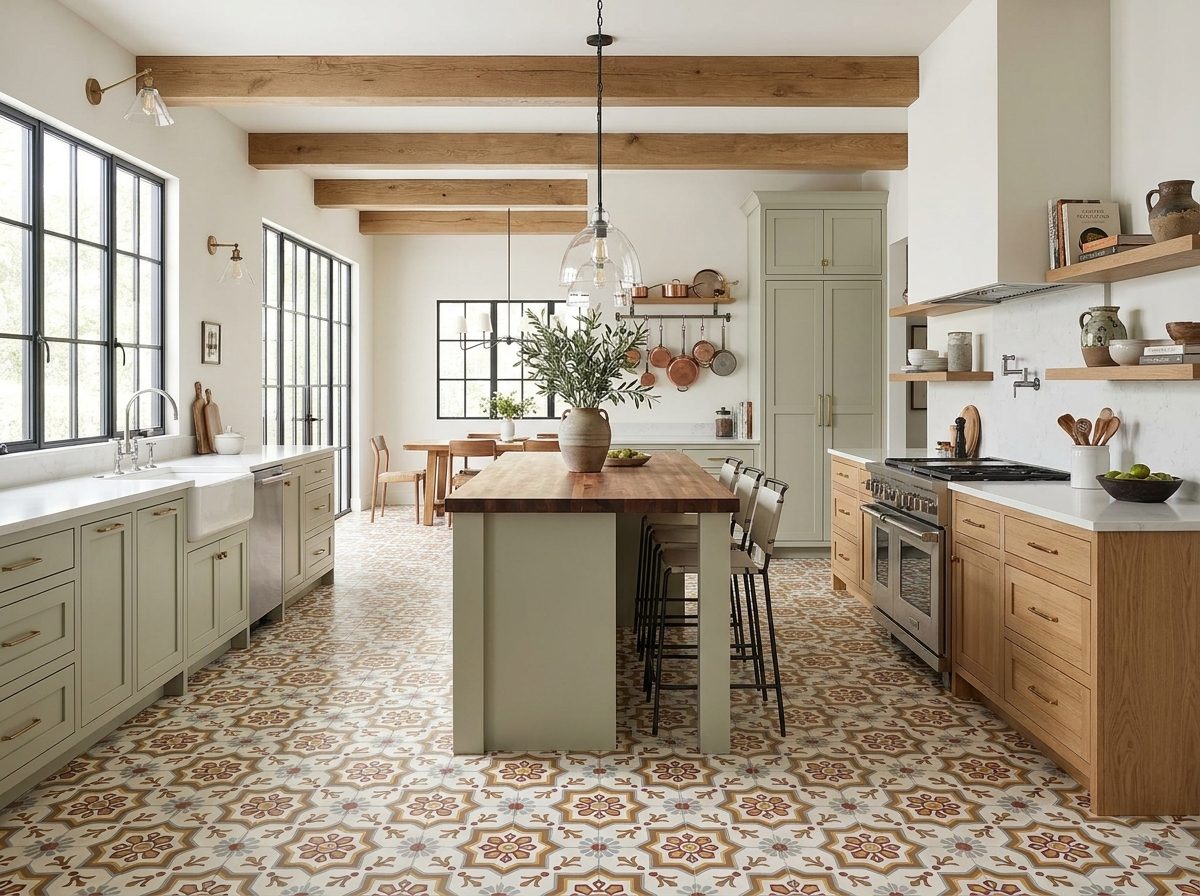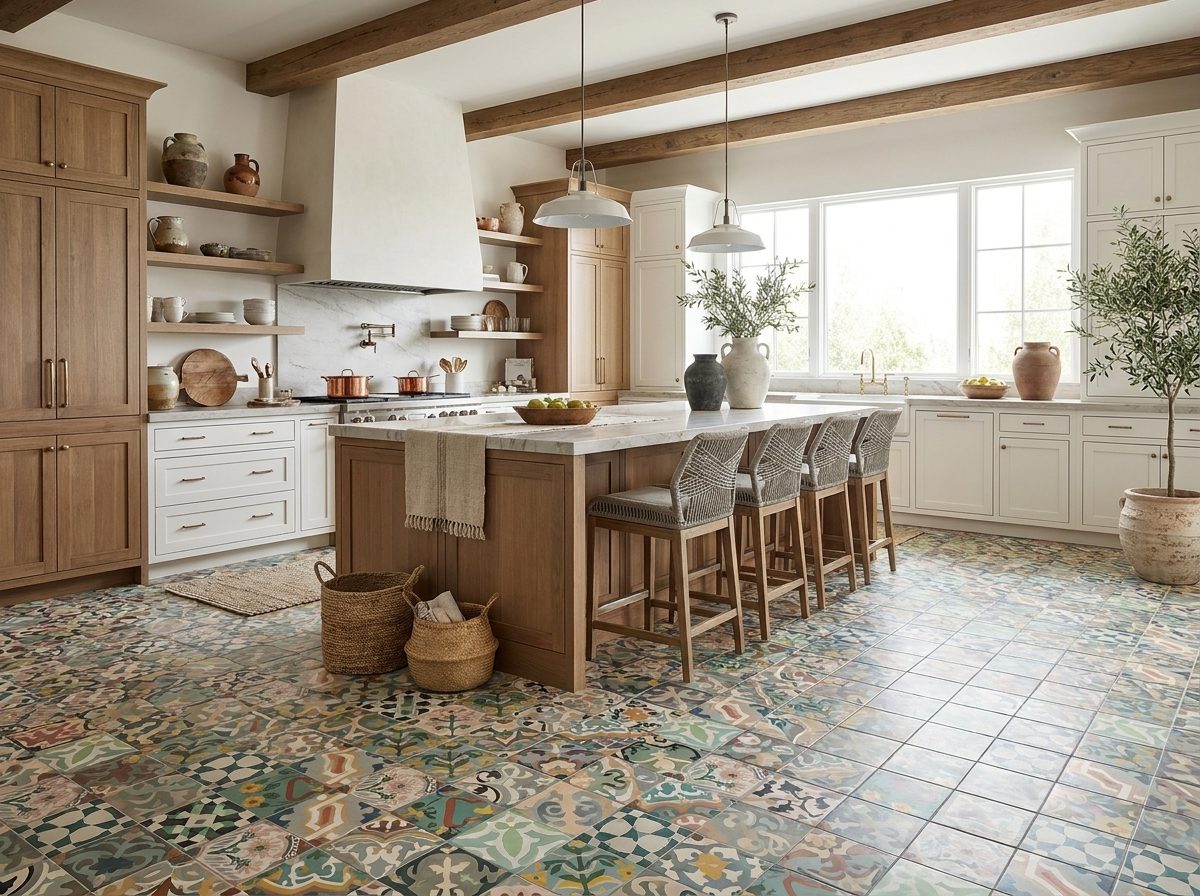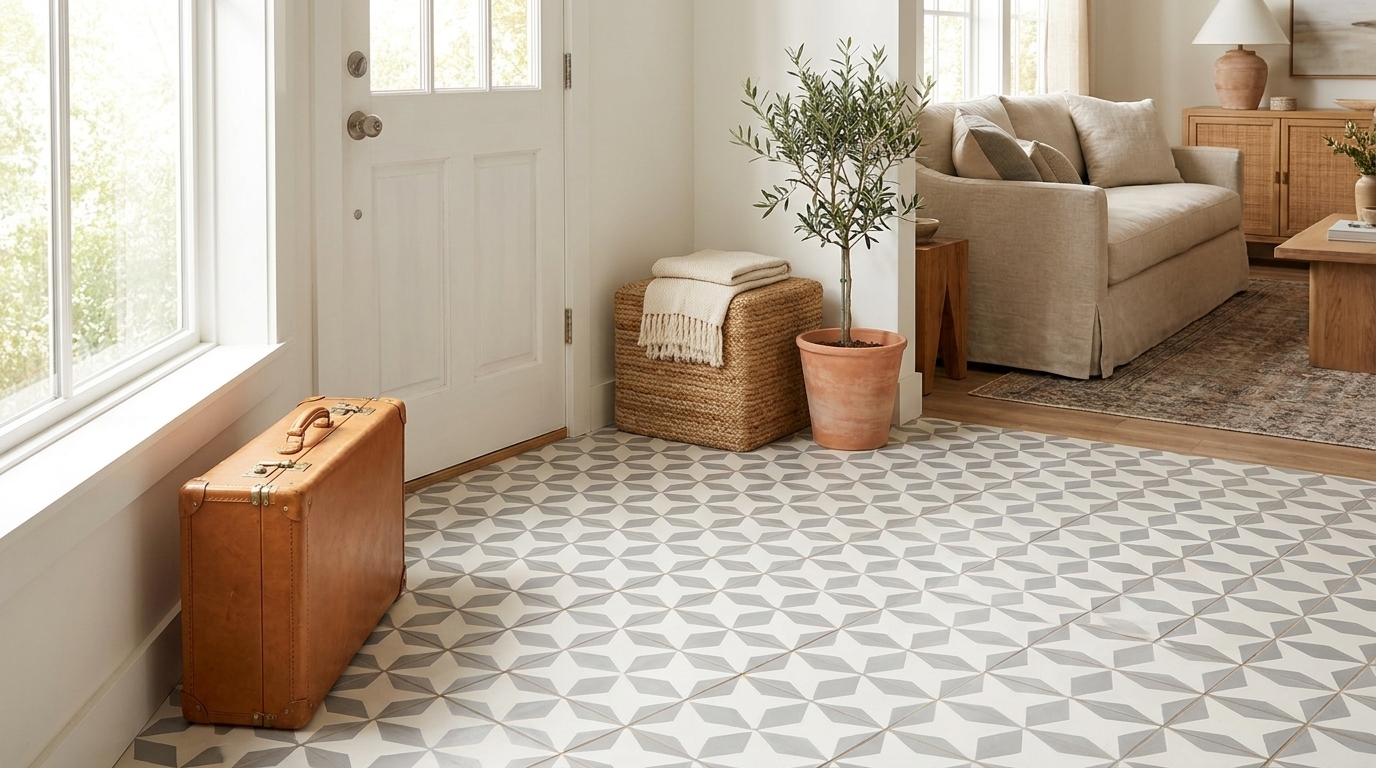
You're probably looking at a wall, floor, or splash zone that needs more personality than a large-format field tile can give. A kitchen backsplash wants a tighter pattern. A shower floor needs more grout joints for traction and a surface that can follow slope. A feature wall calls for something detailed without turning installation into a week of placing tiny pieces by hand.
That's where tiles on mesh backing enter the conversation. They've become the default modern answer for mosaic work because they package many small tiles into one manageable sheet. That convenience is real, but so are the compromises. The same backing that makes mosaics faster to place also changes how mortar bonds, how cuts are handled, and how forgiving the installation will be over time.
Designers, homeowners, and installers usually hear the easy version: mesh-backed tile is quicker, neater, and simpler. Sometimes that's true. Sometimes it isn't. On a clean rectangular backsplash, mesh sheets can be efficient and visually consistent. Around outlets, niches, corners, benches, and curved details, the promised speed often disappears.
Your Guide to Mesh-Backed Tile
A typical project starts the same way. The client wants the detail and texture of mosaic tile, the installer wants a format that can be set in reasonable time, and the designer wants the finished surface to look intentional rather than mass-produced. Mesh-backed tile can meet all three goals, but only when the format suits the room, the material, and the level of site adjustment the job will need.
This format should be judged as a full installation system. The tile matters, but so do the backing, adhesive, substrate, sheet alignment, cutting strategy, and grout joints. Small-format surfaces show every decision. If the wall is out, the sheets telegraph it. If the spacing drifts, the pattern gives it away.

Why this format became so common
Mesh-mounted mosaics solved a practical site problem. They let installers place many small pieces at once while keeping a repeated pattern broadly consistent across the field. On straightforward walls and splashbacks, that can save time and reduce the spacing variations that often happen with fully hand-set mosaics.
The convenience is real. So is the compromise.
A sheet-built mosaic is faster to handle than loose individual pieces, but it is less forgiving when the layout needs to change mid-installation. Around outlets, corners, niches, and uneven edges, the installer often ends up cutting the sheet apart, adjusting pieces by hand, and correcting spacing that looked perfect in the box but not on the wall.
What this guide helps you judge
The primary question is not whether mesh-backed tile is popular. It is whether it is the right format for the job in front of you. That decision depends on more than appearance. It depends on the substrate quality, the complexity of the layout, the tile material itself, and the finish standard expected at the end.
For designers and homeowners, mesh backing offers repeatability and speed. For installers, it can offer efficiency on clean runs and extra labour on detailed ones. For anyone comparing it with more traditional or artisanal formats, including individually set or handmade tiles, the trade-off is usually clear. Mesh-backed sheets bring convenience and consistency. Bespoke formats offer more freedom at edges, repairs, and custom composition, often with a more durable visual character because the design is not locked to a factory sheet.
Practical rule: Use mesh-backed mosaics where repetition helps the design. Reconsider them where the project depends on intricate cuts, irregular geometry, or a crafted, one-off finish.
What Exactly Are Tiles on Mesh Backing
A designer selects a mosaic for its pattern. The installer opens the box and sees sheets, not loose pieces. That distinction matters, because mesh-backed tile is not a different tile material. It is a delivery format that groups many small tiles into a manageable sheet so they can be set faster and with more consistent spacing.
The face is still made up of individual pieces. On the back, those pieces are fixed to a flexible mesh that holds the pattern together during transport, cutting, and installation. Once adhesive is spread, the installer beds the sheet into place and then adjusts it as needed before the setting material firms up.
That format became common for a practical reason. Small-format tile gives good grip underfoot, wraps curves more easily than large tile, and can produce detail that bigger units cannot. The drawback is labor. If every piece were set by hand, time rises quickly and joint lines start to wander unless the installer is very disciplined. Mesh backing reduces that handling without changing the finished look on the face.
Sheet size also affects design decisions early, not just installation speed. A repeated module helps with setting out splashbacks, shower walls, alcoves, and borders, but it also locks the pattern into a factory spacing and a fixed rhythm. If the room dimensions fight that module, the installer may need to split sheets, shift individual pieces, or disguise small cuts at the perimeter. That is one reason experienced specifiers look at the room before they fall in love with the sample.
For homeowners comparing formats, the trade-off becomes clear. Mesh-backed mosaics suit projects that benefit from repeatability and quicker coverage. Individually set or handmade formats give more freedom where edges, repairs, and one-off composition matter more than speed. If you are weighing those options, it helps to understand the broader types of tile used in residential and commercial projects before committing to a sheet-mounted product.
How the sheet behaves on site
A sheet arrives as one unit, but it rarely stays one unit for the whole job.
Clean wall runs are straightforward. Outlets, corners, niches, tap penetrations, drains, and sloping transitions are not. In those areas, the installer often cuts the mesh, removes individual tiles, and resets pieces by hand to keep joints looking even. Good sheets save time. Poor sheets, or sheets used in awkward layouts, can create extra correction work because the spacing on the factory mount does not always look right once it meets a real room.
What mesh-backed tile does and does not solve
Mesh backing helps control layout during handling. It does not correct a wavy wall, poor adhesive choice, or weak setting-out. It also does not guarantee a handcrafted result. In fact, on high-end work, the regularity of the sheet can be the very thing that gives the installation away if the repeats become visible.
Used in the right place, it is an efficient format. Used in the wrong place, it can behave like a hand-set mosaic with the added nuisance of undoing the sheet first.
Mesh-backed tile works best when the module suits the room and the sheet can stay largely intact. The more often the installer has to break the sheet apart, the less benefit the backing provides.
Comparing Common Types of Mesh-Backed Tiles
The backing may be similar, but the material on the face changes everything. Glass, natural stone, and porcelain or ceramic mosaics each ask for a different level of care. A good choice starts with the room, the maintenance expectation, and how exacting the finish needs to be.
Glass mosaics
Glass offers brightness, reflection, and color depth that other materials don't match. It works well when the goal is a crisp, luminous surface, especially on backsplashes and decorative wall areas.
Its downside is visual honesty. Glass tends to reveal irregularities in the substrate and the setting bed more readily than opaque materials. Any unevenness can telegraph through the sheet, so flat prep matters even more than usual.
Natural stone mosaics
Marble, travertine, and similar stones bring variation and softness. They can make a room feel layered and architectural, especially where you want movement rather than a factory-perfect look.
Stone also asks more from the owner and installer. Porosity, sensitivity during grouting, and finish variation all need attention. On the right project, that character is the point. On a low-maintenance brief, it may be the wrong fit.
Porcelain and ceramic mosaics
Porcelain and ceramic are often the most straightforward option in this category. They're versatile in style, generally easier to maintain than many natural stones, and available in a wide range of looks from plain field mosaics to patterned sheets.
They're often the practical pick when a client wants mosaic texture without the extra sensitivities that can come with translucent or porous materials.
Comparison of Mesh-Backed Tile Materials
| Material | Aesthetics | Average Cost | Key Installation Note |
|---|---|---|---|
| Glass | Bright, reflective, crisp | Varies by brand and design | Substrate flatness and clean mortar work matter because irregularities can show |
| Natural stone | Soft, organic, varied | Varies by stone and finish | Stone needs careful handling during setting and grouting |
| Porcelain or ceramic | Broad style range, reliable appearance | Varies widely | Usually the most forgiving choice for many standard residential applications |
If you're weighing broader material differences before narrowing down a mosaic, this guide to different types of tile materials is a useful reference point.
Which one suits which project
Choose glass when light play and color clarity matter most. Choose stone when the room needs depth, variation, and a more natural finish. Choose porcelain or ceramic when durability, maintenance, and straightforward specification sit at the top of the list.
That's the design side. The installation side can point in a different direction. A material may look ideal on a sample board but become difficult on a wall with multiple interruptions. That's why tile selection can't be separated from layout reality.
A Step-by-Step Installation Workflow
A mesh-backed mosaic often looks simple on the sample board. Then it reaches a real wall with outlets, corners, uneven light, and a tight deadline. That is usually the point where the format shows both its convenience and its limits.
A clean result depends more on preparation and layout discipline than on speed.

Start with the substrate
Small-format sheets read every defect in the surface. A dip that would disappear behind a larger field tile can telegraph straight through a mosaic. On vertical work, use a stable backer, check flatness carefully, and choose a mortar approved for the tile material and the setting.
This part decides whether the installation feels controlled or constantly corrective. If the wall is out of plane, mesh sheets rarely hide it.
Dry-lay before mixing mortar
Lay out the sheets first and establish control lines. Check how the pattern finishes at edges, how it meets inside corners, and what happens at outlets, valves, or niches. That dry run often decides whether the sheet format is saving time on this job, or whether parts of it will need to be hand-set anyway.
The best starting point is usually the area people notice first. Above a range, under a window, or on the main shower wall, visual balance matters more than ending with identical cuts in every low-visibility spot.
Trowel and mortar technique matter
Bond coverage is the technical issue that deserves the most respect. Mesh backing can reduce direct contact between mortar and tile, so mortar choice, notch size, and pressure all need to work together. TileLetter's guidance on face- and mesh-mounted mosaics advises keying mortar into the substrate first, then pressing sheets firmly enough to achieve proper coverage while avoiding excessive squeeze-through into the joints.
Too little pressure leaves voids. Too much pressure fills the joints with mortar and slows the whole job down at cleanup.
On walls, flattening the trowel ridges after combing often helps. It gives the back of the sheet more even contact and reduces the risk of lines showing through the finished surface.
Setting the sheets without the grid look
Visible sheet lines are the failure clients notice fastest. The pattern may be straight, the grout may be clean, and the wall can still read like a checkerboard of factory-sized panels.
Installers avoid that look by treating the sheet as a guide, not a fixed unit. Use control lines so the field stays true. Adjust individual joints where sheets meet. Trim or offset seams if the pattern allows it. Check plane constantly with a beating block, float, or another flat tool suited to the material.
For vertical applications, this guide to installing wall tile with proper layout and prep covers the alignment habits that matter even more with mosaics.
A visual walkthrough can also help before the first mix is made.
Cutting around outlets, corners, and edges
Many sheet-mounted products cease to be time-savers when faced with cutting. Cutting the mesh is easy. Keeping the pattern believable after the cut is the harder part.
Around an outlet, the cleanest result often means separating pieces from the sheet and resetting them by hand. Inside corners require a judgment call. Some patterns wrap well, some look better with a deliberate break, and some need the cuts centered so neither side looks accidental. There is no stock answer. The right choice depends on the tile, the room, and what the eye will catch first.
That is one of the key decision points for designers and homeowners. If the project has many interruptions, the convenience of mesh mounting may shrink quickly compared with a simpler field tile or a more intentional bespoke format.
Cure, grout, and finish
Keep the sheets stable while the mortar firms up. Spacers, wedges, or tape can help hold alignment where gravity or tile memory wants to shift the pattern. Let the setting bed cure according to the mortar manufacturer's instructions before grouting.
Grouting should finish the work, not correct it. If the sheets went in flat, stayed aligned, and were kept free of heavy mortar squeeze-through, the surface will read as one considered installation instead of a collection of patched adjustments.
The Real Pros and Cons of Mesh-Mounted Tile
Mesh-mounted tile has earned its place. It also gets oversold. The strongest projects are the ones where everyone understands both sides before the first sheet is ordered.

Where it genuinely helps
On flat, open runs, mesh sheets can save handling and preserve pattern spacing. That's the core advantage, and it's why this format became so common for backsplashes, shower floors, and decorative bands.
It also lowers the threshold for using detailed patterns. A homeowner who would never attempt a loose mosaic can often work with sheeted material if the layout is simple and the prep is right.
Where the promise starts to fray
Complex jobs expose the limits quickly. Guidance discussed in this video on cutting mesh-backed mosaic tile notes that while the mesh is easy to cut with a utility knife, fitting sheets around outlets, curves, corners, or other irregular details often means breaking the sheet apart and placing pieces individually to preserve alignment.
That's the hidden trade-off. The format sells speed, but bespoke geometry often pulls the project back toward hand-setting.
The pros and cons in practical terms
Speed on standard layouts: Full sheets cover straightforward areas efficiently.
Pattern consistency: Factory-mounted spacing helps keep the field organized.
Good fit for repeatable areas: Uniform backsplashes and simple wall panels benefit most.
Useful for intricate visuals: Small-format motifs become more accessible.
Bonding is less forgiving: Mortar contact has to be managed carefully because the backing affects the bond interface.
Sheet lines can show: If spacing between sheets isn't adjusted, the installation can read like a checkerboard of modules.
Complex cuts eat labor: The more obstacles in the surface, the less advantage the sheet provides.
Repairs can be fiddly: Replacing isolated pieces cleanly takes patience.
If the substrate itself needs attention before any mosaic goes down, this overview of tile floor underlayment considerations is worth reviewing. Mosaic sheets are especially unforgiving of movement and uneven base conditions.
A mesh-backed mosaic is efficient only while the sheet behaves like a sheet. Once the job turns custom, labor follows the complexity, not the packaging.
Mesh-Backed Sheets vs Individual Tile Formats
The most useful comparison isn't sheeted mosaic versus no mosaic. It's mesh-backed convenience versus individually set character.
Speed versus control
Sheet-mounted mosaics are designed for faster placement on surfaces that repeat. They're efficient when the pattern stays whole and the layout doesn't ask too many questions.
Individual tile formats slow the pace but increase control. The installer can respond to each edge, each transition, and each focal point without being constrained by a sheet module. That matters on heritage work, bespoke feature walls, and projects where visual continuity is more important than quick coverage.
System dependence versus material independence
Long-term performance in wet areas deserves sober thinking. Guidance from Atlas Ceramics on installing mesh-backed mosaic tiles emphasizes that durability depends on the setting system, waterproofing, and adhesive coverage, not on the mesh alone. In practical terms, the longevity of individually set tiles is well established, while mesh-backed systems rely heavily on rigorous prep to avoid problems tied to voids or moisture issues.
That doesn't make mesh-backed tile inferior across the board. It means the installation window is narrower. If the setting bed, substrate, and waterproofing are excellent, the result can be excellent. If they aren't, the small format makes the weaknesses harder to hide.
Aesthetic character matters too
Mass-market sheet mosaics often feel orderly, repeatable, and designed for convenience. Individually set and artisanal tile formats tend to feel more deliberate. They carry variation, depth, and a sense that the surface was composed, not automatically rolled out in modules.
That distinction matters for designers. Some rooms want a clean, modular finish. Others need material presence. If the brief calls for handcrafted depth, visible nuance, and a surface that improves with close inspection, individual formats often make more sense than a sheeted mosaic.
Making the Right Choice for Your Project
A kitchen backsplash on a clean, square wall calls for one kind of decision. A shower with niches, tight corners, and a client who wants real surface character calls for another. Mesh-backed tile works best when the project suits the format, not when the format is forced onto the project.
Choose mesh-backed tile for regular layouts, repeating patterns, and jobs where faster placement has real value. Backsplashes, simple shower floors, and contained feature areas are often good candidates. The sheets can save time, but only if the installer can keep joints consistent, avoid visible sheet lines, and achieve full mortar contact.
Choose individual tile formats when the design includes curves, many cuts, irregular transitions, or a more crafted visual brief. That is also the stronger option when close-up appearance matters as much as the overall pattern. Handmade and individually set materials usually carry more variation, more depth, and less of the modular look that sheet-mounted products can show.

For designers, installers, and homeowners, the useful question is not "Is mesh-backed tile good?" It is "What does this room ask from the material?"
A practical way to judge that is to ask six questions:
- Project type: Is this a simple field installation or a surface full of details and interruptions?
- Budget: Will sheet mounting reduce labor, or will trimming and adjustments eat up the time saved?
- Design complexity: Can most sheets stay intact, or will they need to be broken apart for much of the layout?
- Installer skill: Does the setter know how to correct for sheet drift, uneven spacing, and patchy bond coverage?
- Substrate condition: Is the base flat, rigid, and prepared well enough for small-format tile?
- Longevity expectations: Will the surface face constant moisture, movement, or heavy wear?
That last point deserves clear judgment. Small-format sheeted tile can perform very well, but it is less forgiving of poor prep than many larger or individually set formats. As noted earlier, the setting materials, substrate stability, waterproofing, and adhesive coverage do more to determine the outcome than the mesh itself.
If your project calls for something more bespoke than a standard mesh sheet can offer, Original Mission Tile makes handmade cement tiles with the kind of depth, durability, and design flexibility that suit statement walls, floors, and fully custom work. Their heritage approach is especially compelling when you want material character, not just coverage.