Most conversations about commercial tile focus on the obvious surface: the main dining room floor, the hotel lobby, the storefront entrance. However, the spaces that truly define a guest’s experience often live beyond that single, highly visible area.
Restroom floors. Staff corridors. Outdoor seating zones. Fitting room walls. Bar tops and host stands. These secondary spaces shape how a guest feels about a business just as powerfully as the main room does, yet they’re frequently treated as an afterthought in the specification process.
In 2026, the most successful commercial projects are extending design intention into every corner of a property. This guide walks through tile applications for the spaces beyond the obvious ones — helping interior designers, contractors, and renovators specify with the same care throughout an entire restaurant, hotel, or retail project.
Why Every Space Deserves the Same Design Attention

Guests form opinions quickly, and they form them everywhere. A diner who loves a restaurant’s main floor but encounters a generic, uninspired restroom will remember the inconsistency. Similarly, a hotel guest who admires a beautifully tiled lobby but finds a plain corridor floor leading to their room notices the gap in quality.
Consistency builds trust. When every space within a property reflects the same level of craft, guests sense that the brand cares about details they might never consciously notice. As a result, extending a strong tile specification beyond the main room isn’t simply an aesthetic choice — it’s a business decision that reinforces brand credibility throughout the entire guest journey.
Restaurant Spaces Beyond the Dining Room
Restroom Floors That Match the Brand
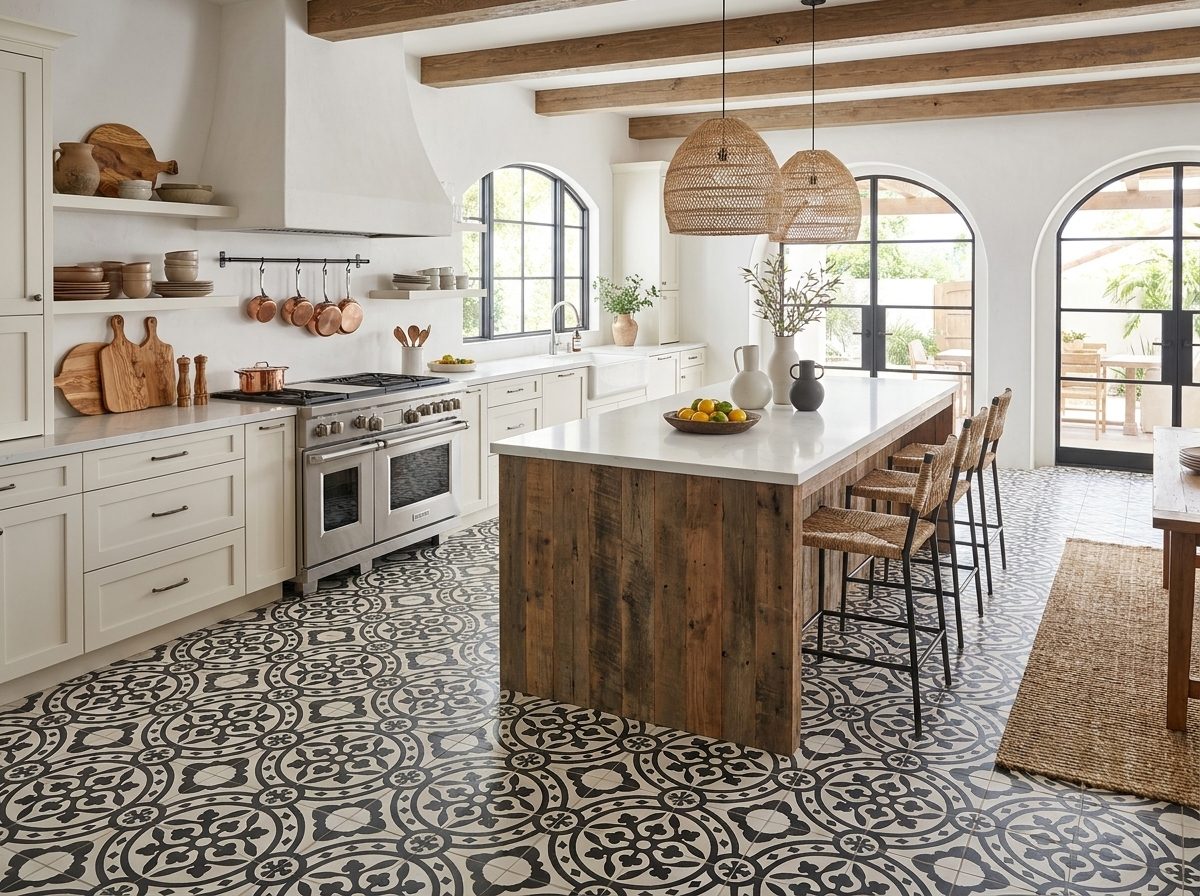
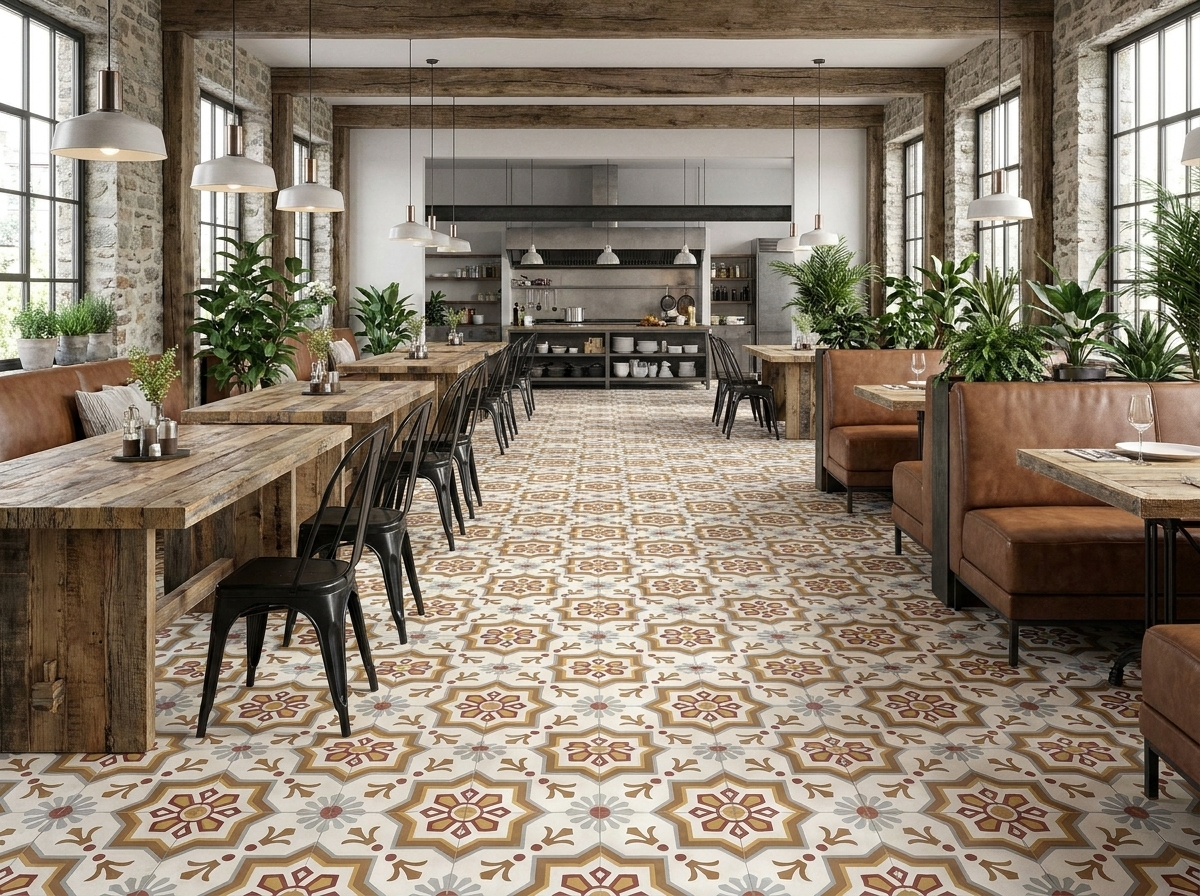
Restaurant restrooms have historically received minimal design investment, often finished with whatever standard tile was cheapest and fastest to install. In 2026, that approach is changing. Increasingly, restaurant owners are extending the same patterned cement tile used in the main dining room into the restroom, creating a cohesive experience from entrance to exit.
This continuity matters because restroom visits happen during every guest’s experience, regardless of how long they stay. Therefore, a beautifully tiled restroom floor reinforces the same impression the dining room created, rather than undermining it with a generic, forgettable surface.
Bar Tops and Service Stations
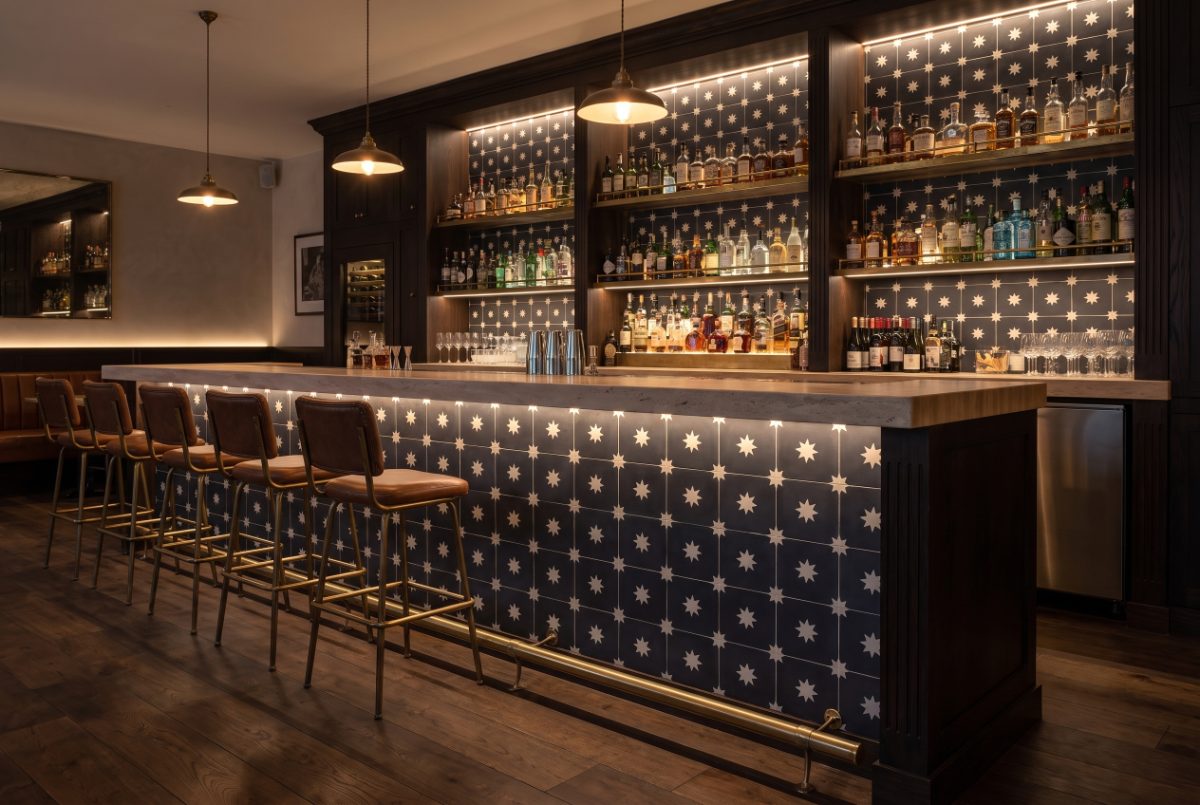
Beyond floors, cement tile is increasingly appearing on bar fronts, host stands, and service station surfaces. A patterned tile bar front, for example, creates a focal point that guests interact with directly while ordering drinks. Furthermore, this application requires less material than a full floor, making it an efficient way to introduce bold pattern on a tighter budget.
Explore patterns suited to both floor and accent applications in the In-Stock Collection.
Outdoor and Patio Dining Zones
Outdoor seating areas have become essential revenue-generating space for many restaurants. Consequently, the tile specification for a covered patio deserves the same consideration as the interior dining room. Moroccan and Mediterranean geometric patterns, paired with an outdoor-rated sealer, extend a restaurant’s design language seamlessly from inside to outside.
Hotel Spaces Beyond the Lobby

Corridors as a Journey, Not Just a Path
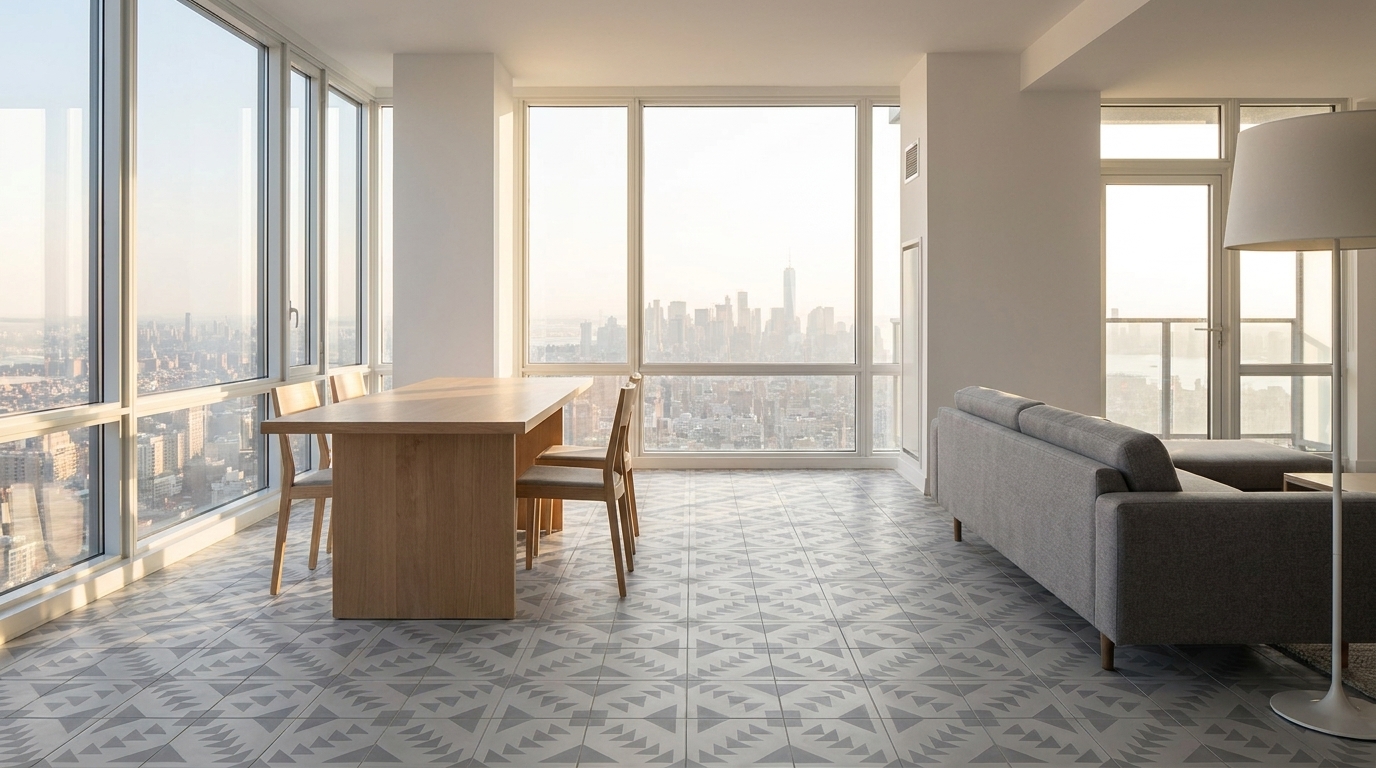
Hotel corridors are often the longest stretch of unbroken floor space in an entire property, yet they’re frequently finished with the most basic, budget-driven materials available. However, a patterned cement tile corridor floor transforms this transitional space into part of the overall guest experience rather than a forgettable hallway.
Designers can use pattern strategically here. For instance, a subtle change in colorway or border pattern at each floor’s elevator landing creates a sense of arrival and orientation, helping guests navigate intuitively while also elevating the design throughout.
Spa and Wellness Areas
Hotel spas and wellness centers benefit enormously from tile choices that reinforce a sense of calm and craft. Warm terracotta tones, paired with natural matte cement tile surfaces, create the grounded, earthy atmosphere that wellness-focused guests expect. Additionally, the natural slip resistance of cement tile makes it well-suited to spa wet areas, including shower zones and pool surrounds.
Staff and Back-of-House Considerations
While staff areas don’t require the same design investment as guest-facing spaces, durability still matters. Cement tile’s dense, pressed construction holds up well in high-traffic back-of-house corridors, offering a practical, long-lasting alternative to standard commercial vinyl.
Retail Spaces Beyond the Sales Floor

Fitting Rooms as Brand Moments
Fitting rooms are among the most underutilized design opportunities in retail. Customers spend focused, undistracted time in these small spaces, often deciding whether to purchase an item. A patterned cement tile floor or feature wall within a fitting room creates a memorable, brand-reinforcing moment precisely when a customer’s attention is most concentrated.
Storage and Transition Zones
Transition areas — the space between a store’s entrance and its main selling floor, for example — offer another opportunity to extend brand identity. A border pattern or color shift in the tile can subtly guide customers from the entry threshold into the primary shopping experience, creating intentional flow without requiring physical barriers.
Outdoor Retail Frontages
For retail spaces with outdoor entry areas, courtyards, or sidewalk café-style frontages, breeze blocks offer a distinctive design solution. The 8×8 Breeze Block Collection can create a screen wall or partition that filters light while reinforcing a retail brand’s visual identity from the street.
Specifying Consistently Across an Entire Property
Building a Cohesive Material Palette
Maintaining visual consistency across multiple spaces within a single commercial property doesn’t mean using identical tile everywhere. Instead, designers typically select a primary pattern for the most visible space, then choose complementary patterns or solid colorways from the same material family for secondary spaces.
For example, a restaurant might specify a bold geometric pattern for the main dining room, then use a simpler, single-color cement tile from the same palette in the restroom. As a result, the spaces feel connected without requiring the secondary area to compete visually with the primary one.
Working With the Design Studio Across Multiple Zones
The Design Studio allows designers to test multiple pattern and colorway combinations across different zones of a single project before finalizing specifications. This is particularly valuable for larger commercial properties with many distinct spaces requiring coordinated, but not identical, tile choices.
Custom Solutions for Brand-Specific Needs
For commercial brands developing a signature look across multiple locations or unique spaces within a single property, the Custom Made Collection supports bespoke pattern and colorway development. This approach ensures every space — from the main entrance to the smallest restroom — reflects a consistent, intentional brand identity.
Browse completed multi-space commercial installations in the Projects Gallery for inspiration.
Practical Considerations for Multi-Space Commercial Projects
Budget allocation matters. Rather than spending the entire tile budget on a single showpiece floor, consider allocating resources to extend quality, even modestly, into secondary spaces. A simpler, single-color cement tile in a restroom still communicates more craft than a generic, mass-produced alternative.
Sequencing installation efficiently. For larger properties with multiple tiled spaces, coordinate installation schedules so that contractors can move efficiently between zones rather than starting and stopping repeatedly.
Maintenance planning across spaces. Different zones experience different traffic levels and conditions. Therefore, sealing schedules and maintenance protocols should be tailored accordingly — a high-traffic restroom floor may need more frequent attention than a low-traffic back office corridor.
FAQ: Commercial Tile for Every Space
Should restroom tile match the main dining room or lobby exactly? Not necessarily. Many designers choose a complementary, simpler pattern or solid color from the same material family rather than an exact match. This approach maintains cohesion while allowing the secondary space to feel appropriately understated.
Is it worth investing in patterned tile for low-traffic spaces like staff corridors? Generally, durability matters more than pattern complexity in back-of-house areas. A simple, durable cement tile in a neutral tone typically offers the best value, since these spaces don’t require the same visual impact as guest-facing zones.
How do I keep costs manageable when extending tile quality throughout an entire property? Allocate the boldest, most expensive patterns to the highest-visibility spaces, and use simpler, more cost-effective colorways from the same collection elsewhere. This strategy maintains overall design consistency without requiring an identical budget across every zone.
Can breeze blocks be used for retail storefronts? Yes. Breeze blocks work particularly well for outdoor retail frontages, courtyards, and partition walls, where they provide both a distinctive visual identity and practical light filtration or privacy benefits.
Conclusion: A Commercial Project Is Only as Strong as Its Weakest Space
The most memorable commercial projects don’t simply impress guests in one standout area while neglecting everything else. Instead, they maintain a consistent level of craft and intention across every space a guest might encounter — from the main dining room to the restroom, from the lobby to the corridor leading to a guest room.
Handmade cement tiles offer the flexibility to achieve this consistency without requiring identical specifications everywhere. A coordinated palette, thoughtfully applied across primary and secondary spaces alike, communicates the same message throughout: that this business pays attention to every detail, not just the ones guests are most likely to photograph.
In 2026, that level of consistency is what separates commercial spaces that simply function from those that genuinely impress.
Ready to specify tile across your entire commercial project?
Explore patterns for primary and secondary spaces in the In-Stock Collection, discover outdoor and screen applications in the 8×8 Breeze Block Collection, and develop a brand-specific design through the Custom Made Collection.
Contact the Original Mission Tile design team for samples and expert project guidance →