A fireplace is the one wall in the house that gets judged from across the room. Cement tile fireplace surrounds and hearths bring in pattern, color and texture that plain drywall or stone can’t match. But a fireplace also throws real heat, sheds embers, and collects soot, so the design decisions here carry more weight than a backsplash or a bathroom floor. This guide walks through what actually matters: where cement tile belongs around a firebox, what codes require, and how to get a surround that looks as good in ten years as it does the day it’s installed.
Why Cement Tile Works for a Fireplace Surround
Cement tile is pigment set into a dense concrete body, then cured and polished. That process gives it a matte, slightly chalky surface with color that runs through the tile rather than sitting on top as a glaze. On a fireplace wall, that matters because the surround is often lit from below by firelight, and a matte finish reads warm instead of glaring back at the room.
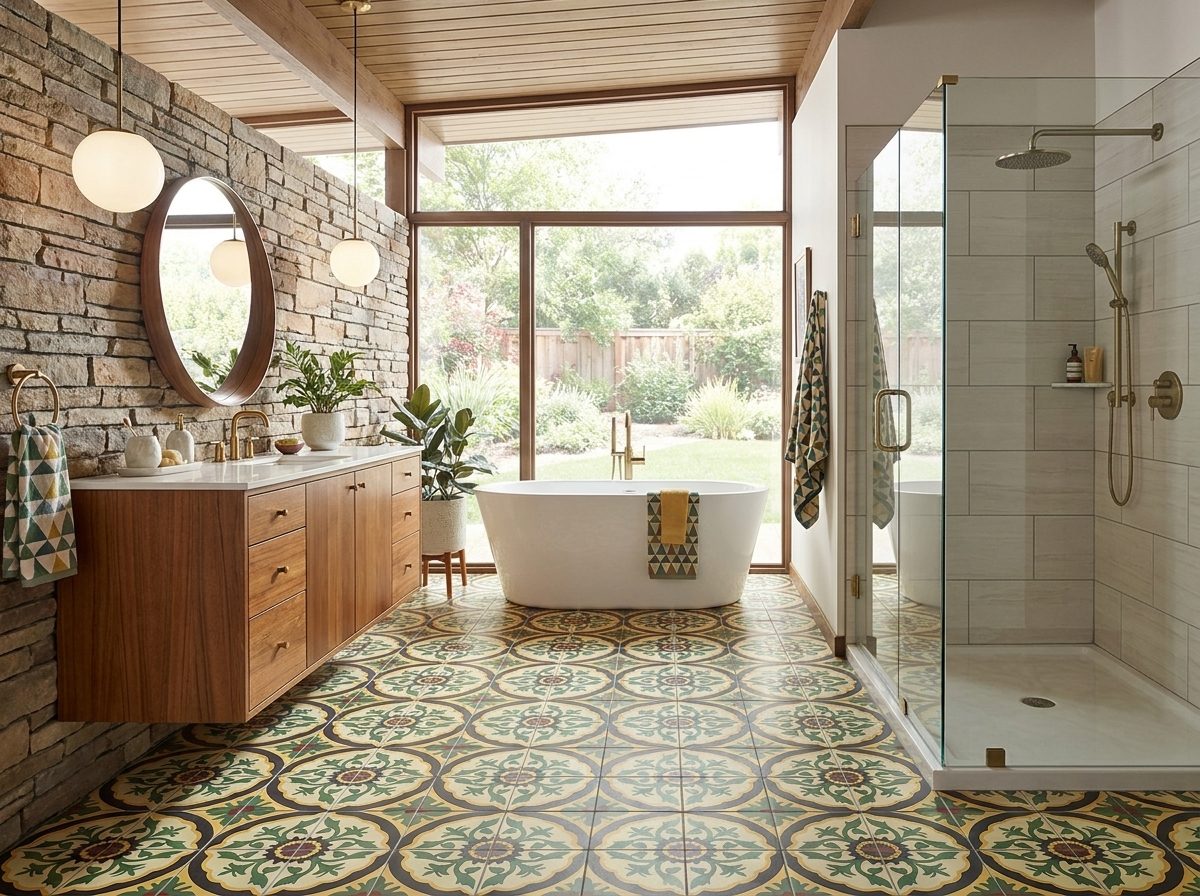
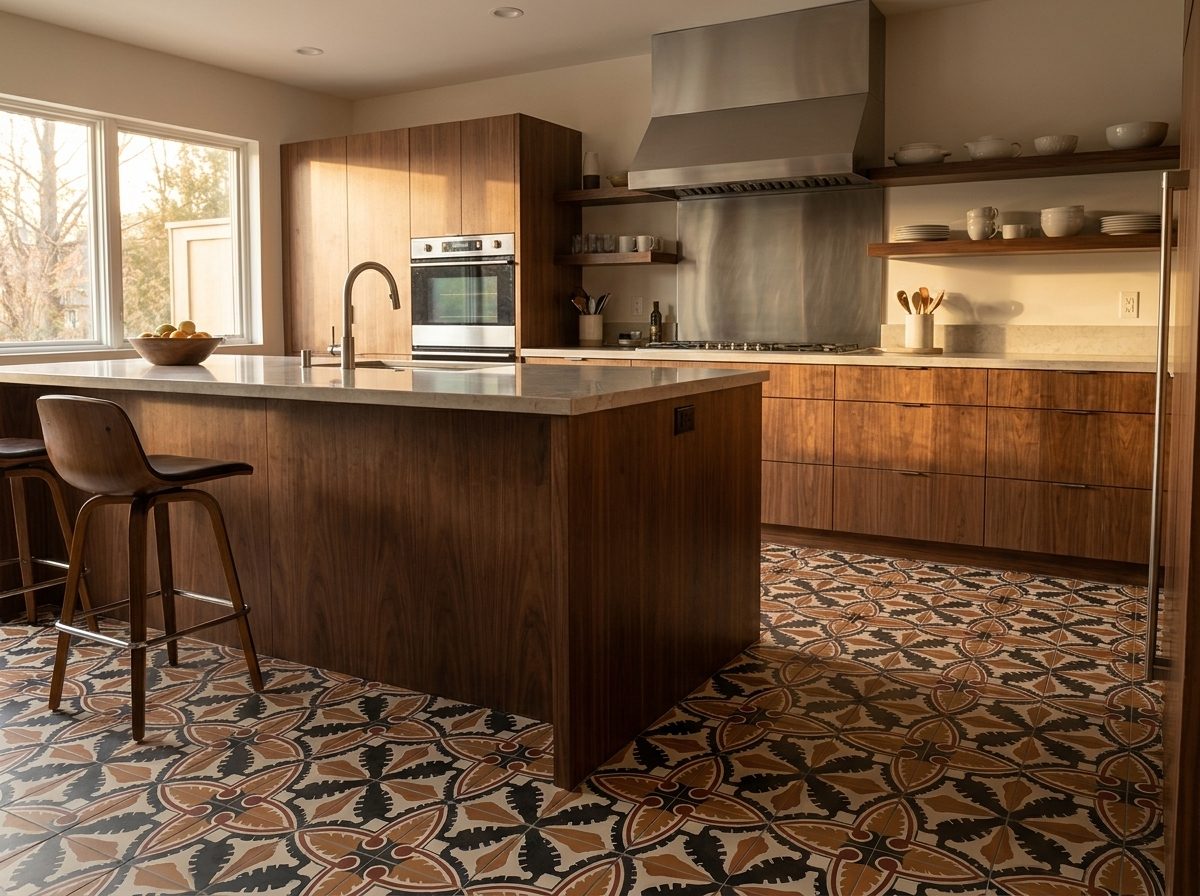
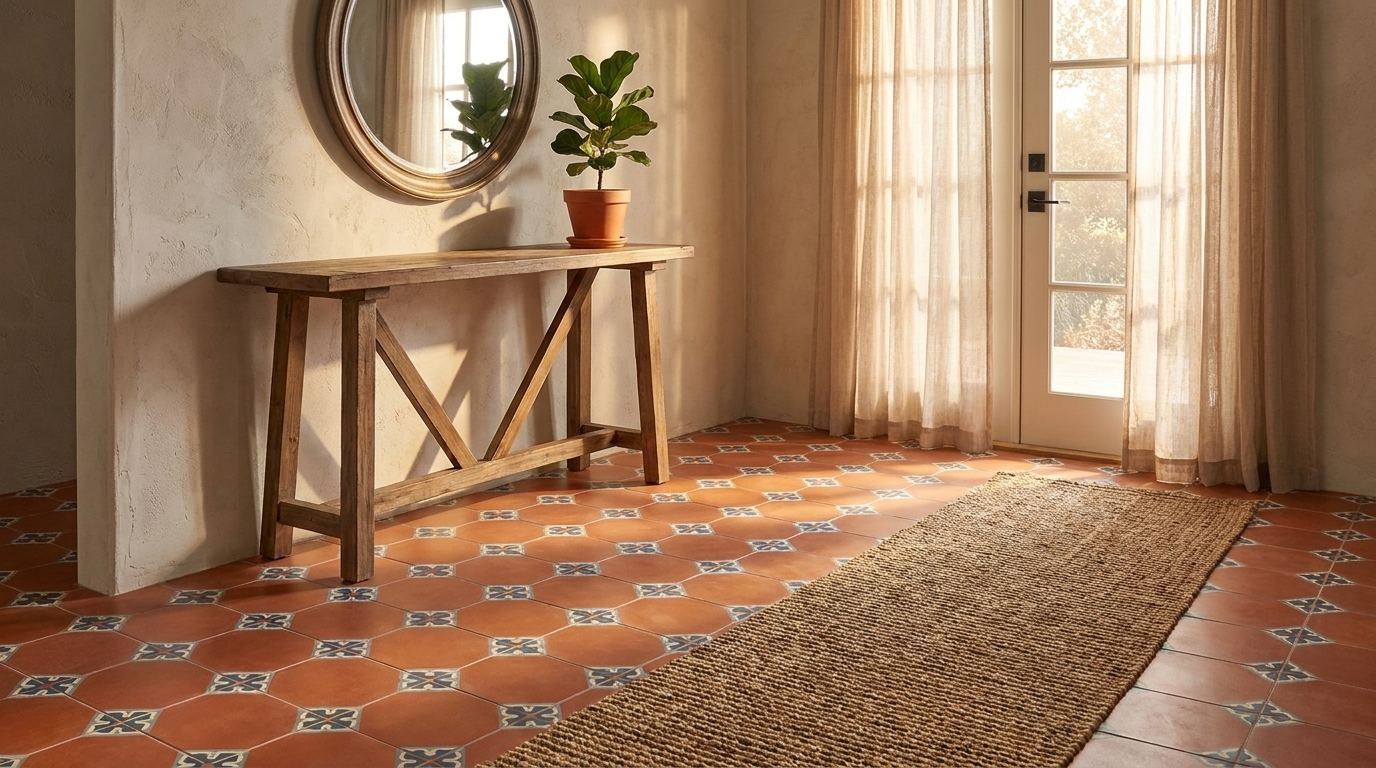
It’s also a material with real weight and presence. A patterned surround anchors a room the way a rug anchors a living space, because the eye lands on it first. If you already browse tile by hue for other rooms, the same cement tile designs by color collection is a good starting point for a fireplace wall, since color does more work here than almost anywhere else in the house.
One honest tradeoff: cement tile is handmade and porous compared to porcelain, so it needs sealing and occasional resealing, and it is not rated for direct flame contact. That’s not a flaw, it’s just a material fact you plan around, the same way you’d plan around the grain in wood.
Surround vs. Hearth: Two Different Jobs

People use “fireplace tile” loosely, but a surround and a hearth do different jobs and follow different rules. Getting this distinction straight up front saves a lot of confusion later.
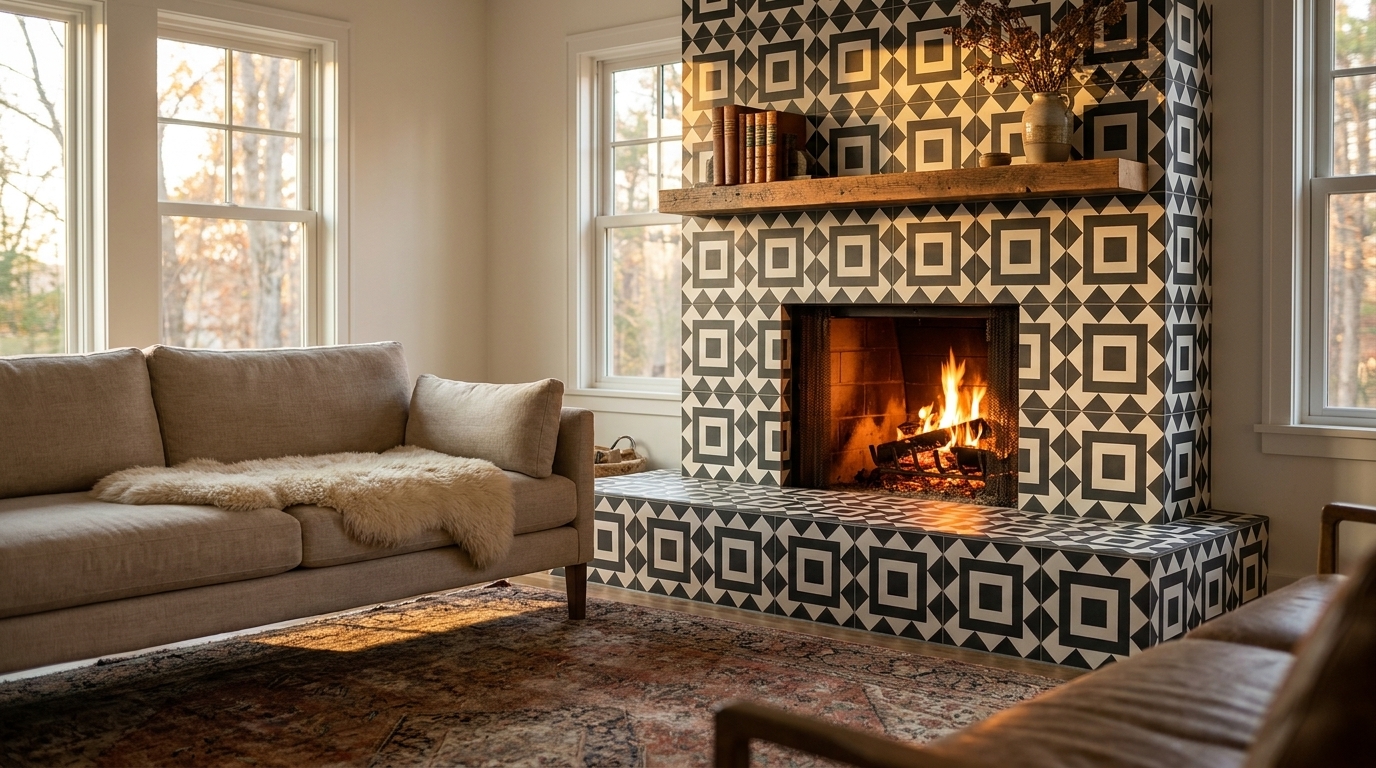
- The surround is the vertical facing around the firebox opening, sometimes extending up to a mantel or all the way to the ceiling. It’s decorative first, and it sits back from the actual flame.
- The hearth is the horizontal floor area in front of (and sometimes beneath) the firebox. Code requires it to be noncombustible, because it’s the surface that catches sparks, rolling embers and stray logs.
Cement tile works well in both roles, but the hearth is the spot that takes physical abuse: dropped logs, ash, foot traffic, the occasional dragged log carrier. Choose a darker or more heavily patterned tile there so wear and soot marks blend in rather than standing out against a light field.
What Building Codes Actually Require
Fireplace clearances are not a style choice, they’re safety rules, and they vary by jurisdiction. However, most US residential codes share a common backbone worth understanding before you design anything.
First, the hearth extension (the tiled floor area in front of the opening) must be noncombustible material, and it must extend a minimum distance from the firebox. Typical residential code calls for roughly 16 inches in front and 8 inches to each side of a smaller firebox opening, growing to about 20 inches in front and 12 inches to the sides once the opening exceeds 6 square feet. Cement tile satisfies the “noncombustible” requirement easily, since it’s cured concrete, not wood or vinyl.
Second, combustible trim, like a wood mantel, generally needs at least 6 inches of clearance from the firebox opening, with additional setback required as the trim projects further off the wall. That clearance is about the mantel material, not the tile, but it affects how you plan a surround that meets a wood shelf.
Third, and this is the part people miss: “noncombustible” and “heat-proof” are not the same thing. Cement tile won’t catch fire, but sustained exposure to temperatures much above roughly 570°F can start to degrade an untreated concrete body over time. That’s why the surround itself typically sits outside the firebox opening on the surrounding wall, not inside it or lining the firebox interior, which is a job for firebrick and refractory mortar instead.
Always confirm exact clearances with your local building department and, for gas inserts, the manufacturer’s installation manual, since factory-built units often carry their own listed clearances that differ from open masonry fireplaces.
Choosing Tile and Setting Materials for a Fireplace
Because a fireplace wall cycles through heat and cooling every time you light a fire, the setting materials matter as much as the tile itself. Use a polymer-modified thinset rather than mastic, because mastic softens under sustained heat and can let tiles slip. Ask your installer whether the project calls for a heat-rated thinset formulated for fireplace and wood-stove surrounds; for hearths set well back from the opening, a standard high-quality thinset is often sufficient, but it’s worth the conversation.
Grout choice matters too. A sanded, cementitious grout stands up to the mild heat cycling and repeated cleaning a hearth needs better than an epoxy grout, which can discolor near sustained warmth. If you’re unsure which grout tone will read best against a patterned cement tile, our installation guidelines cover surface prep and setting-bed basics that apply directly to a fireplace project.
On the backer board side, cement board rather than drywall or greenboard is the standard substrate near a firebox, since it won’t degrade from residual warmth the way paper-faced gypsum board can over years of use.
Design Ideas That Make the Surround the Focal Point

A fireplace is one of the few places in a home where going bold rarely reads as too much, because the fire itself, the mantel, and the furniture around it all frame the tile like a picture in a mat. A few approaches that work particularly well:
- Full-height statement walls. Running a graphic pattern like Liverpool Black 01 from hearth to ceiling turns the fireplace into the room’s architecture, not just an accessory.
- Contrast borders. A solid field tile with a patterned border, or the reverse, keeps a large surround from feeling busy while still giving it presence.
- Color-matched to the room, not the mantel. Because a surround is viewed at a distance, undertone matters more than exact match. Warm grays and blues, like Moorish Blue 01, sit comfortably against both cool and warm woods.
- A quieter hearth, a louder surround, or the reverse. Let one plane carry the pattern and keep the other simple, so the eye has a place to rest.
For inspiration on how patterns actually read at full scale rather than on a small sample, our installation gallery has real rooms, not renderings, which is the best way to judge how a busy pattern behaves across a large vertical surface.
Planning the Project: Sizing, Cuts and Lead Times
Fireplace surrounds involve more cuts than a straightforward floor, because you’re working around a firebox opening, a mantel shelf, and often an inside or outside corner where the wall meets an adjacent room. Because of that, order at least 15% over your measured square footage instead of the usual buffer, so you have enough whole tiles left for pattern-matching after the cuts around the opening.
An 8×8 box covers 5.17 square feet and holds 12 tiles, so a typical surround, say 30 square feet including a modest hearth extension, needs roughly 7 boxes once you build in that overage. If your pattern is directional or has a repeat, order a sample first: a $20 first sample (additional samples are $10, and shipping is free) lets you check the color and scale against your actual firelight and mantel finish before committing.
In-stock patterns typically ship within days, which matters if you’re coordinating a mason or installer’s schedule. If you want a pattern, size or custom color that isn’t in the current in-stock line, our custom made tiles are produced to order in about 4 to 6 weeks, so plan that lead time into any renovation timeline.
Living With It: Cleaning and Long-Term Care
A fireplace tile surface deals with two things a kitchen floor doesn’t: soot and ash dust. Both sit on the surface rather than staining immediately, so regular dry dusting and occasional damp mopping with a pH-neutral cleaner keeps a hearth looking fresh. Avoid acidic cleaners like vinegar solutions, because they can etch the cement surface and dull the sealer over time.
Reseal a fireplace hearth a bit more often than a low-traffic floor, since heat cycling and soot exposure both wear down sealer faster than foot traffic alone does. Our maintenance and cleaning guide covers the sealing schedule and product types in detail, and the same routine applies whether the tile is on your floor or your fireplace face.
If a stray ember does scorch a hearth tile, cement tile actually has an advantage here: because the color runs through the full body rather than sitting in a glaze, light surface marks can often be sanded and resealed rather than requiring a full tile replacement.
Frequently Asked Questions
Can cement tile go inside a wood-burning firebox?
No. The firebox interior needs firebrick and refractory mortar rated for direct flame contact. Cement tile belongs on the surround and hearth outside that opening, where code-required clearances keep it away from direct flame.
How close can cement tile sit to a gas fireplace insert?
That depends entirely on the manufacturer’s listed clearances for the specific insert, which can be tighter or looser than an open masonry fireplace. Always check the installation manual for your unit, because factory-built inserts are tested and certified for their own specific clearance zone.
Does a hearth need to be raised, or can it sit flush with the floor?
Either works from a design standpoint. A flush hearth blends into an open floor plan, while a raised hearth adds seating and a stronger visual line. Both still need to meet the same noncombustible hearth extension requirements in front of the opening.
Will the tile discolor from smoke over time?
Direct hearth-facing tile can pick up a light soot haze with heavy wood-burning use, which is why regular dusting matters. A well-sealed surface further back on the surround rarely sees enough smoke exposure to discolor at all.
See the tile in person before you commit
Photos only tell you half the story. Colors, texture and the handmade character of cement tile are best judged in your own light. Order a sample of any in-stock pattern for $20 (additional samples $10, free shipping) — or tell us about your project and we’ll help you narrow it down.
Browse in-stock cement tiles →
Talk to us about your project →