You’re standing in a showroom holding a sample of hand-poured cement tile, and the question isn’t whether you love it. It’s whether does cement tile increase home value, or whether you’re about to spend real money on a floor that only you will appreciate. That’s a fair question, and it deserves a real answer instead of a marketing slogan.
The honest truth: cement tile doesn’t add value the way a new roof does. No appraiser has a line item for “encaustic pattern, +$4,000.” Instead, it works the way a great kitchen island or a well-lit entry works. It changes how buyers feel the moment they walk in, and that feeling shows up in offers, days on market, and comparisons to the house next door. This guide breaks down where that effect is real, where it isn’t, and how to spend your renovation budget so the tile pays you back.
The Real Question: Does Any Flooring “Increase” Value?
Appraisers work from comparable sales, not material receipts. They look at square footage, bedroom count, lot size, and condition. Flooring rarely gets its own appraisal line. Because of that, no single tile choice will move an appraised value by a fixed dollar amount.
What flooring does influence is buyer perception, which drives the price a buyer is willing to offer. Real estate agents consistently report that distinctive, well-executed floors help a house stand out in listing photos and in person. That’s especially true for a small, high-visibility room like an entryway or powder room, where a patterned floor becomes the first thing a buyer remembers.
So the real question isn’t “does this tile add $X to my appraisal.” It’s “does this tile make my home sell faster, for closer to asking price, against similar homes.” For cement tile, used well, the answer is usually yes.
Where Cement Tile Pays Off Most

Not every room benefits equally. Some spaces are natural fits for cement tile’s visual impact and durability. Others are better left alone if resale is your main goal.
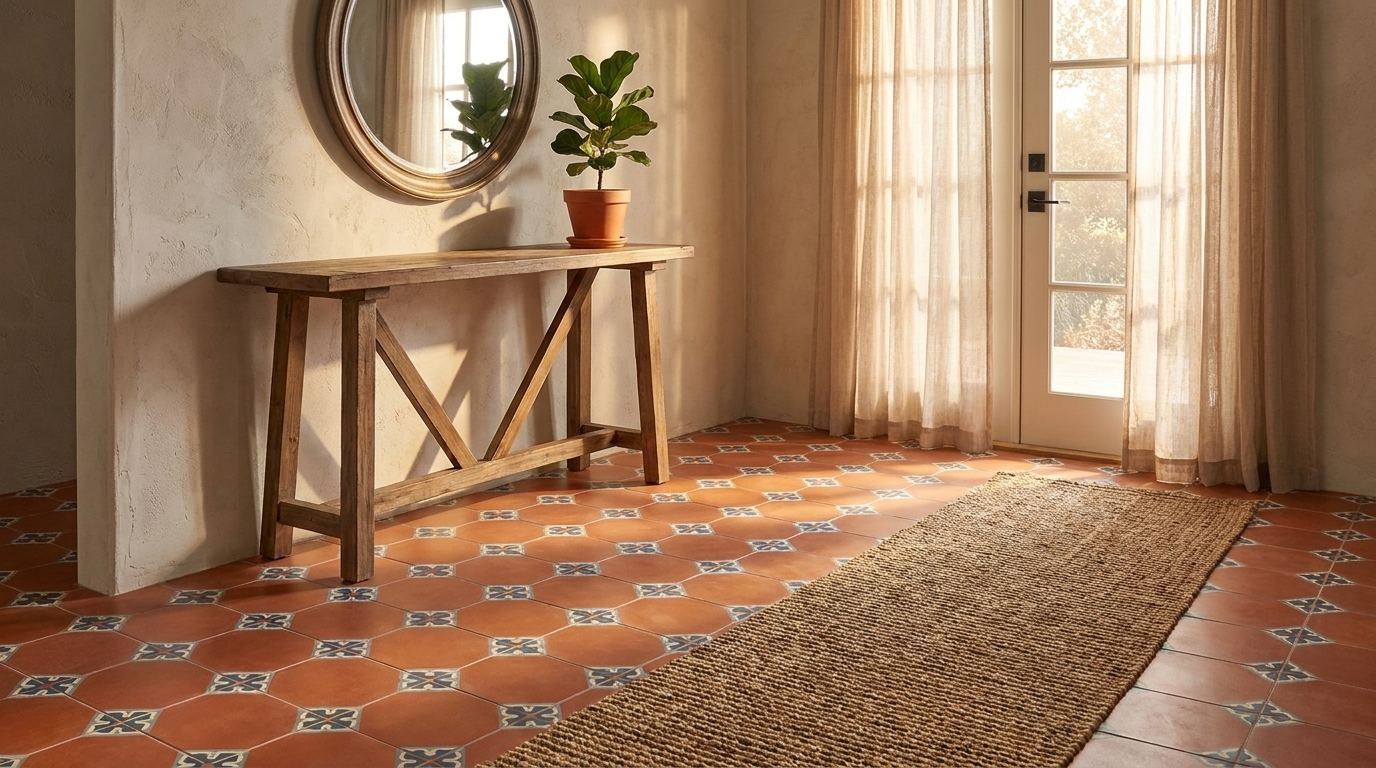
- Entryways and foyers. This is the highest-leverage spot in the house. A patterned floor here signals quality before a buyer even sees the kitchen.
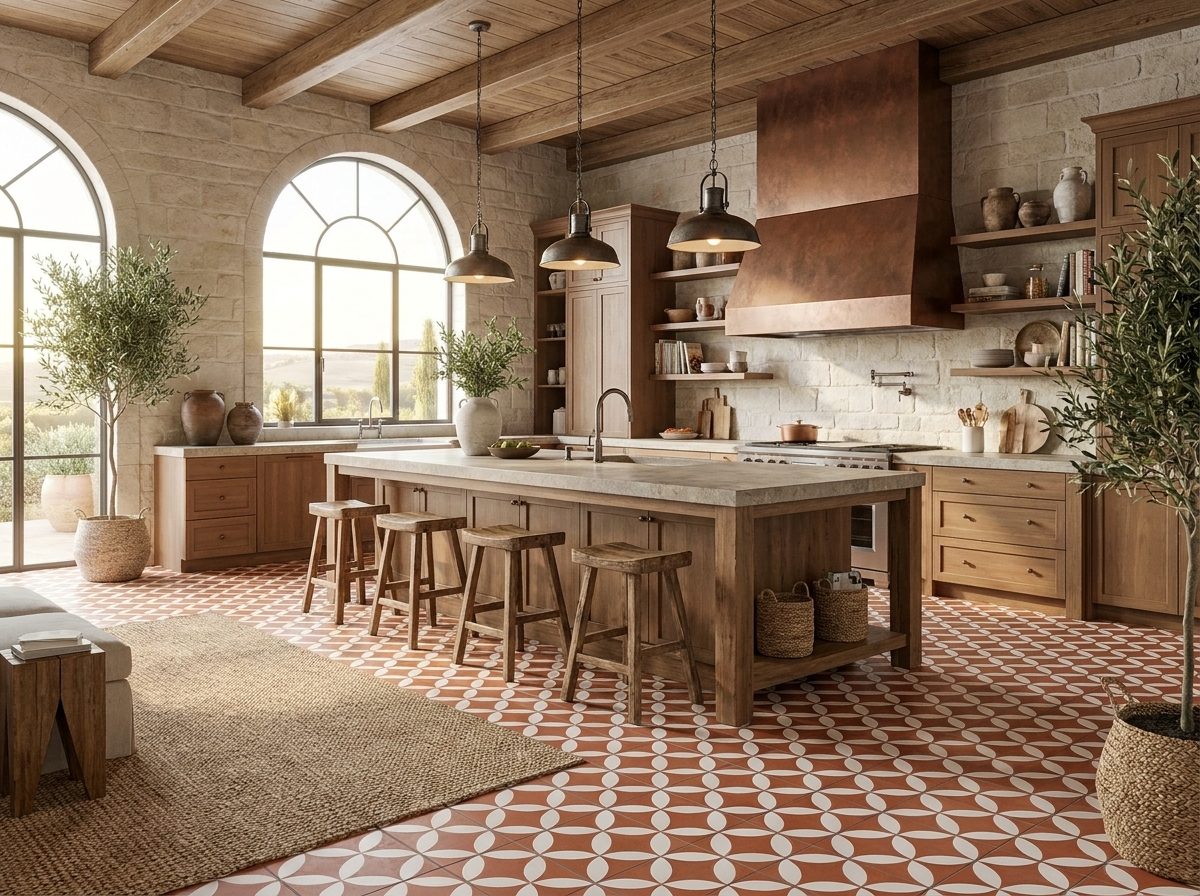
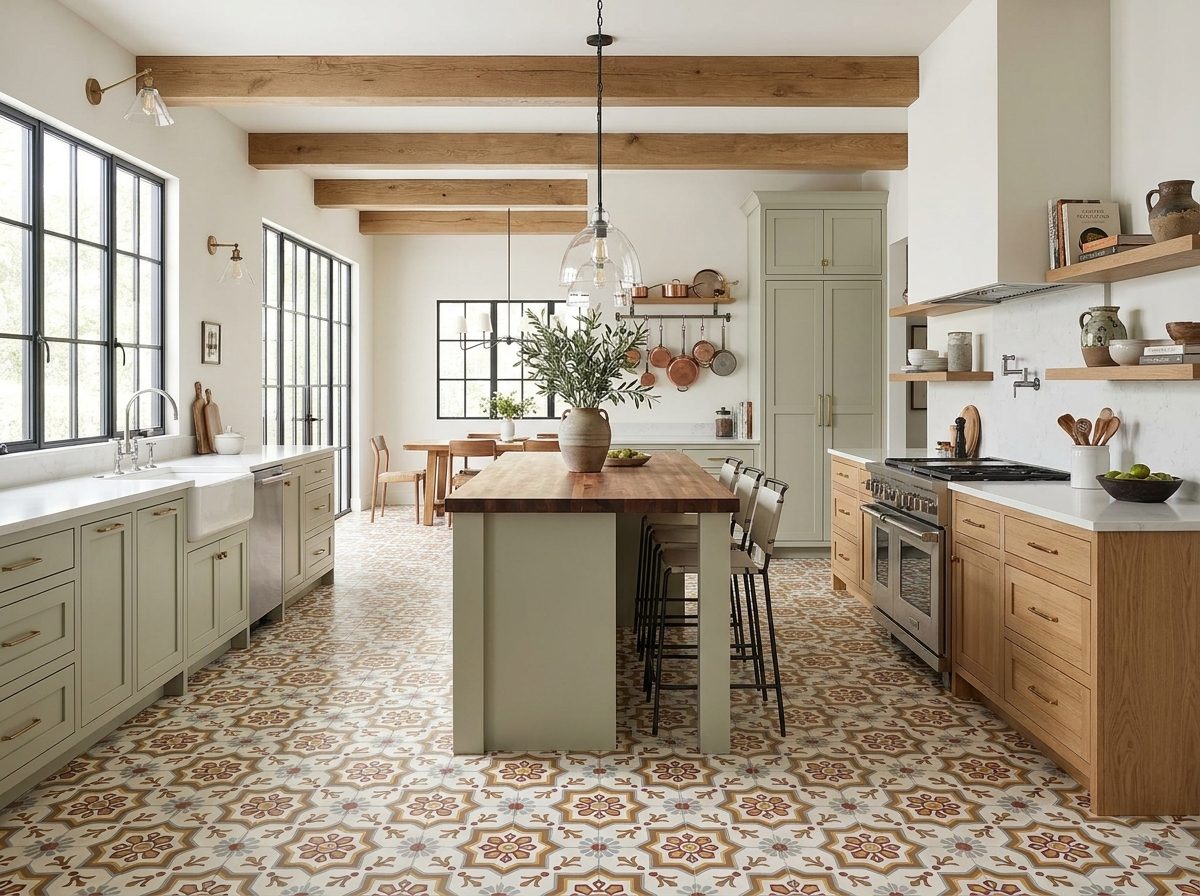
- Kitchens, especially as a runner or accent zone. A tiled kitchen floor or a tile “rug” under an island reads as custom and considered, not builder-grade.
- Powder rooms and small bathrooms. Because the square footage is small, you can use a bold pattern without a huge material cost, and small rooms tolerate bold choices better than open floor plans do.
- Outdoor entries, mudrooms, and covered patios. These transitional spaces often look unfinished in comparable listings, so a well-chosen tile here creates real separation from other homes on the market.
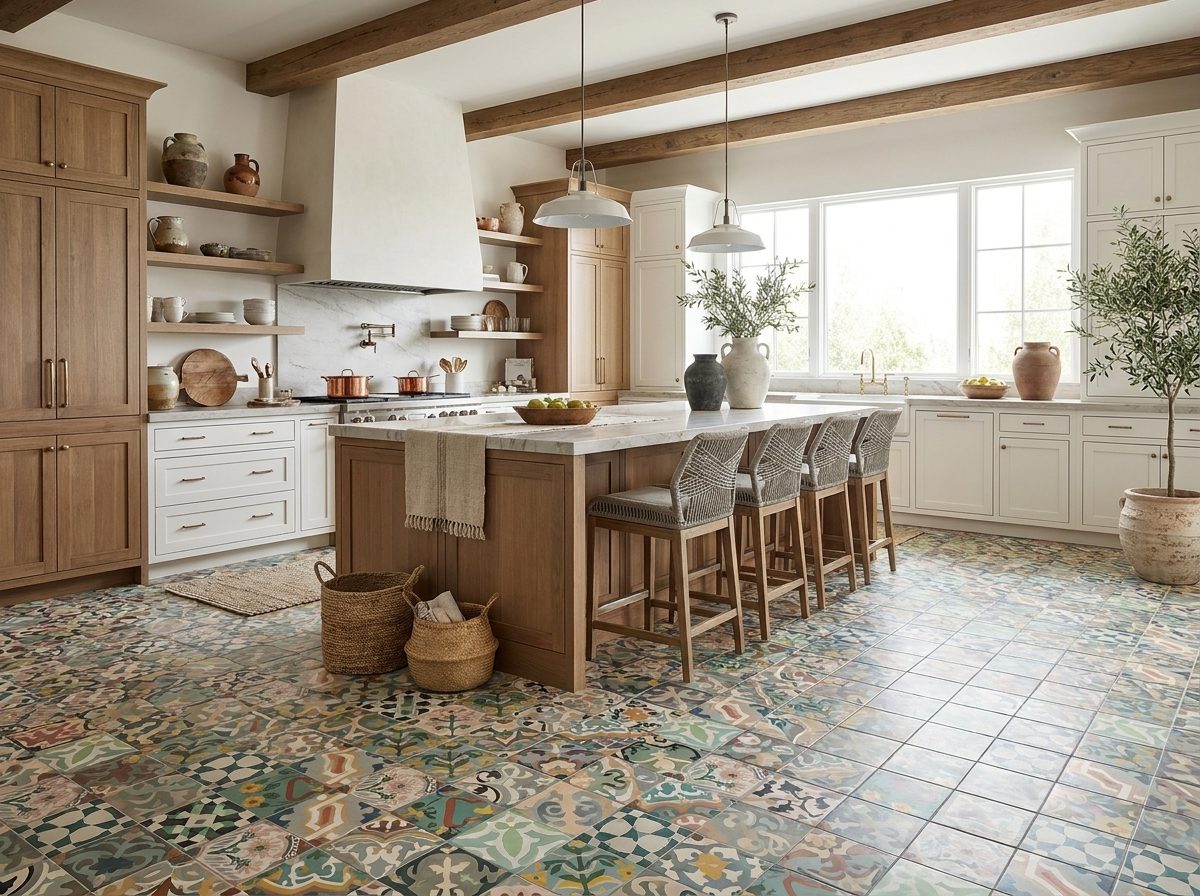
Large, open living areas and whole-house flooring are riskier bets for pure ROI. The upfront cost is higher, and a bold pattern across 800 square feet is a bigger taste commitment for the next owner than the same pattern in a 40-square-foot foyer. If you want the look everywhere, consider it for your own enjoyment, not as a value calculation. You can browse full room examples in our installation gallery to see how designers balance bold and neutral zones in the same home.
What Real Estate Agents and Appraisers Actually Look For
Agents who specialize in older or character-forward homes tell a consistent story. Buyers respond to two things: quality of execution and evidence of maintenance. A gorgeous pattern with sloppy grout lines or chipped edges reads as a red flag, not a feature.
That means installation quality matters as much as the pattern you pick. Hairline grout lines, consistent spacing, and clean transitions to adjacent flooring all signal a professional job. Our installation guidelines cover the sealing and setting steps that keep cement tile looking sharp for decades, which is exactly what a future buyer’s home inspector will notice.
Appraisers, for their part, care about condition and “effective age,” meaning how new the finishes feel regardless of the home’s actual age. A well-maintained cement tile floor can make a 1960s bathroom feel current, which supports a higher condition rating. That’s a quieter path to value than a flashy renovation, but it works.
The Cost Side of the ROI Equation
ROI is a ratio, so the denominator matters as much as the upside. Cement tile is a premium material, and pricing it correctly upfront keeps your project from becoming a money pit.
Start with our standard box math: an 8×8 tile box covers 5.17 square feet and holds 12 tiles. Because cement tile is cut on site and occasionally chips during handling, we always recommend ordering 15% over your measured square footage. That overage is cheap insurance against a delayed reorder mid-project, which costs far more in labor downtime than the extra tile itself.
From there, you have two paths. In-stock cement tiles ship within days, which keeps your contractor’s schedule tight and your labor costs predictable. If you want a pattern or colorway that doesn’t exist yet, custom made tiles are produced to order in about four to six weeks. Custom is worth it for a signature entry or a design-forward kitchen; in-stock is the smarter ROI play for secondary spaces where speed and budget matter more than a one-of-a-kind design.
Before committing a full room, order samples. At $20 for the first sample and $10 for each additional, with free shipping, it’s a small line item that prevents an expensive mismatch between the photo on your screen and the tile in your actual light.
How to Choose Patterns That Protect Resale Value

Bold pattern is the whole appeal of cement tile, but resale-minded buyers should think about it in layers rather than avoiding it altogether.
For high-traffic, whole-room floors, lean toward patterns with restrained contrast, like a subtle geometric or a solid field with a border. A tile such as Palace Gris 02 reads as elevated and neutral at once, which appeals to a wider range of future buyers than a high-contrast, saturated pattern would.
For a small, low-commitment space like an entry or powder room, go bolder. This is where a pattern like Colonial Doble Terracotta 01 can do real work, because the room is small enough that even a buyer who wouldn’t choose it themselves can appreciate it as a design moment rather than a daily commitment.
Color matters too. Warm neutrals and classic blues tend to age well across design cycles, while very trend-specific colors can date a room faster. You can browse options by shade in our tile designs by color collection if you want to compare undertones before you commit to a full order.
Maintenance and Longevity: The Hidden Value Driver
Durability is an ROI factor that’s easy to overlook. Cement tile isn’t fired like ceramic or porcelain; it’s pressed and cured, with color running through the top layer rather than sitting on a glaze. That construction is why tile made this way in 1900 still shows up in century-old buildings today, and it’s why we still make it the same way at our factory in San Luis Potosí, Mexico.
For a homeowner planning to sell in five, ten, or twenty years, that longevity is the real value story. A sealed, properly maintained cement tile floor doesn’t need replacement before a sale the way a worn laminate or stained carpet does. Following a simple routine, outlined in our maintenance and cleaning guide, keeps the surface resealed and protected, so the floor a buyer sees at a showing looks as good as the day it was installed.
That said, be honest about wear-and-tear zones. A mudroom or outdoor patio sees more grit and moisture than a formal living room, so budget a bit more attention to resealing in those areas. It’s a small maintenance cost against a much larger replacement cost down the line.
A Simple ROI Framework for Renovators
Instead of guessing, run your project through a short checklist before you order tile.
- Pick the room by visibility, not just by need. An entryway or powder room gets seen by every buyer who tours the house. A guest bathroom your family never uses gets skipped.
- Measure and add 15%. Use the 5.17-square-foot box coverage to calculate exactly how many boxes you need, then round up for cuts and breakage.
- Compare in-stock versus custom. If your timeline is tight or your budget is set, in-stock patterns get you 80% of the design impact at a fraction of the lead time.
- Order samples before you commit. Confirm the color and pattern look right in your home’s actual lighting, not just on a screen.
- Budget for professional installation. A crack, an uneven grout line, or a poor seal will cost you more at resale than a plainer, well-installed floor ever would.
- Plan your maintenance routine before move-in. A quick resealing schedule protects the investment for as long as you own the home, and for the next owner too.
If you’re not sure how a specific pattern or square footage pencils out for your project, our team can walk through the numbers with you. Request a quote and we’ll help you map material cost against the rooms where it matters most.
Frequently Asked Questions
Does cement tile increase home value more than ceramic or porcelain tile?
Not in a fixed dollar sense. All three can support value when installed well. Cement tile’s advantage is visual distinctiveness. Because each tile is handmade, the pattern and slight variation read as custom work, which tends to impress buyers touring multiple similar homes.
Is cement tile a good investment for a small accent area like a backsplash?
Yes, often the best ROI move available. A backsplash or small floor accent uses a fraction of the material a full room needs, so you can afford a striking, higher-end pattern without a large budget commitment.
Will an unusual or bold cement tile pattern hurt my home’s resale value?
It can, if it’s used across a large, permanent surface like a whole kitchen floor. Confine bold, high-contrast patterns to smaller rooms or accent zones, and keep larger square-footage rooms in more neutral patterns and colors.
How much should I budget per square foot to see good ROI from cement tile?
Budget varies by pattern and whether you choose in-stock or custom made tile. In general, in-stock patterns offer the strongest ROI because they ship in days and reduce labor scheduling costs. Custom patterns cost more and take four to six weeks, so reserve that spend for a room where the unique design will be the most visible to buyers.
See the tile in person before you commit
Photos only tell you half the story. Colors, texture and the handmade character of cement tile are best judged in your own light. Order a sample of any in-stock pattern for $20 (additional samples $10, free shipping) — or tell us about your project and we’ll help you narrow it down.
Browse in-stock cement tiles →
Talk to us about your project →