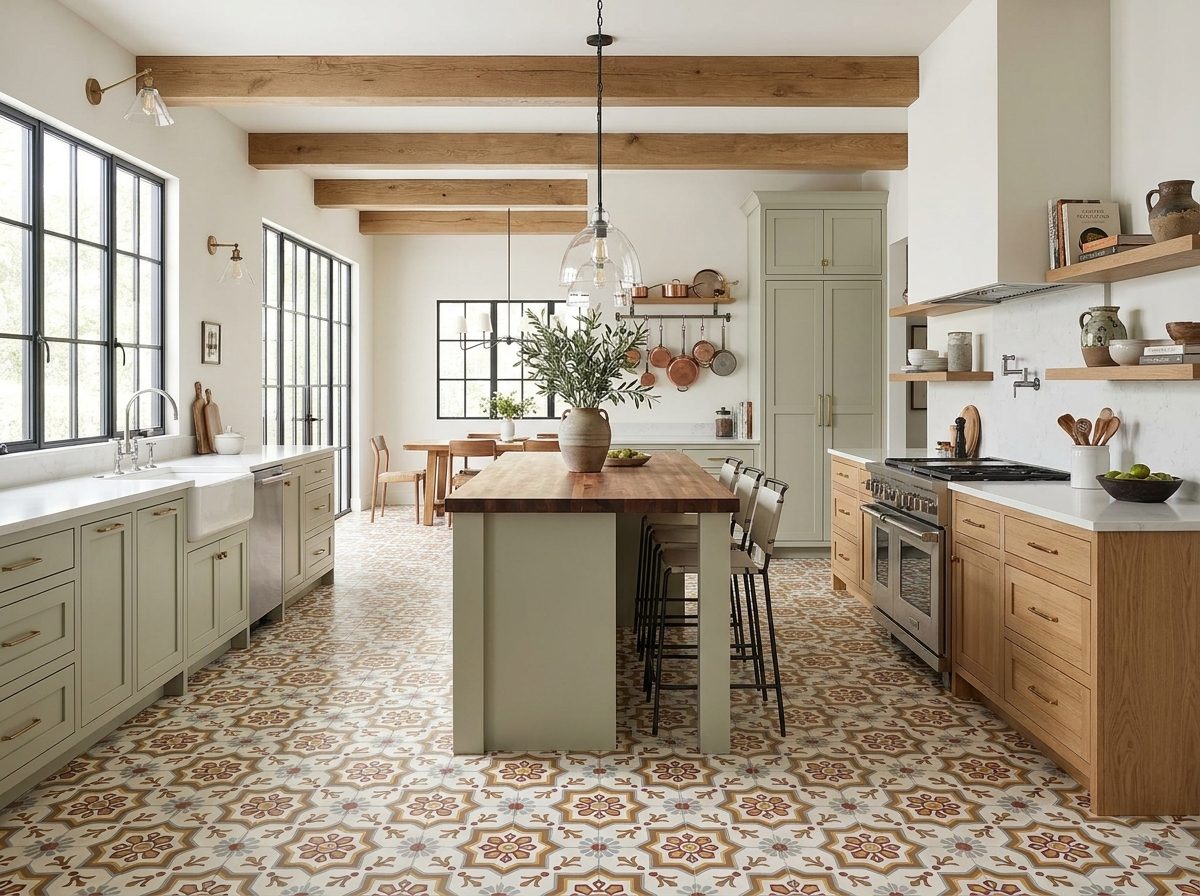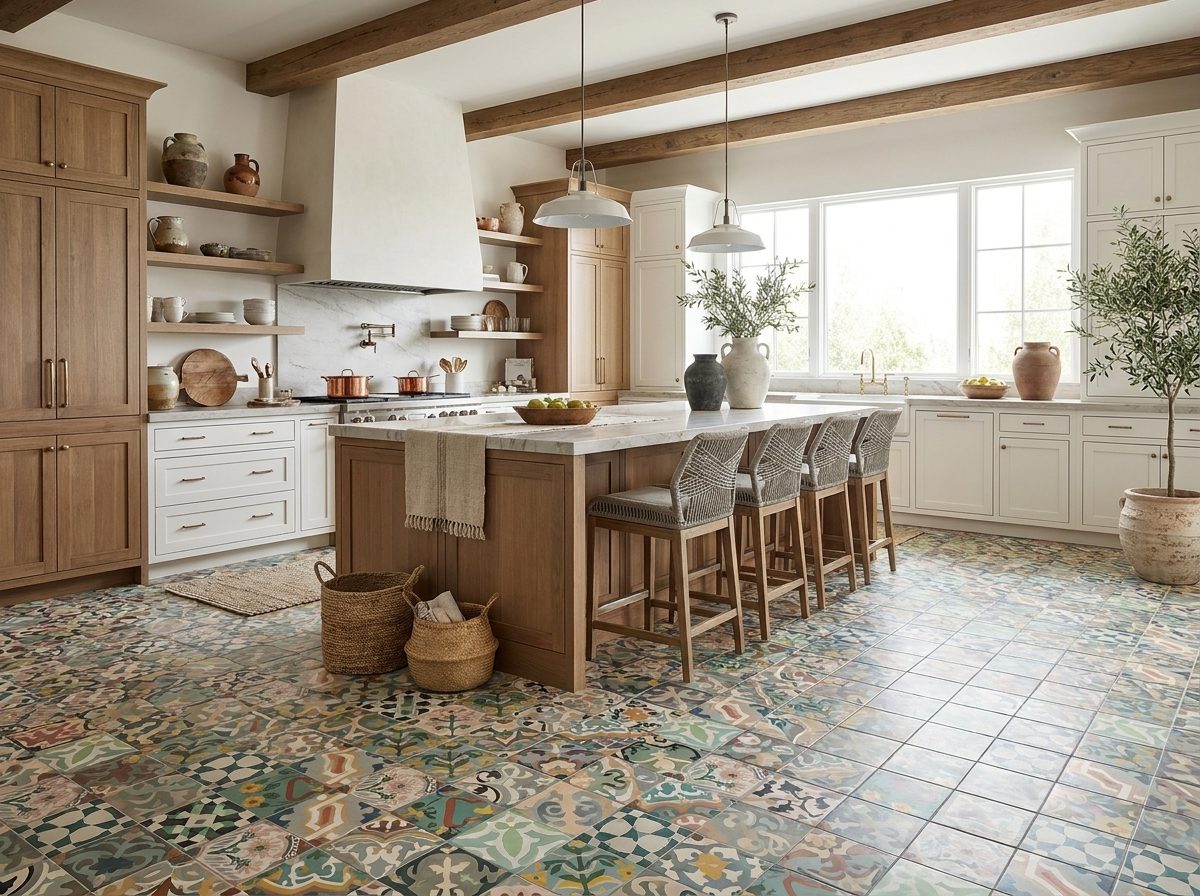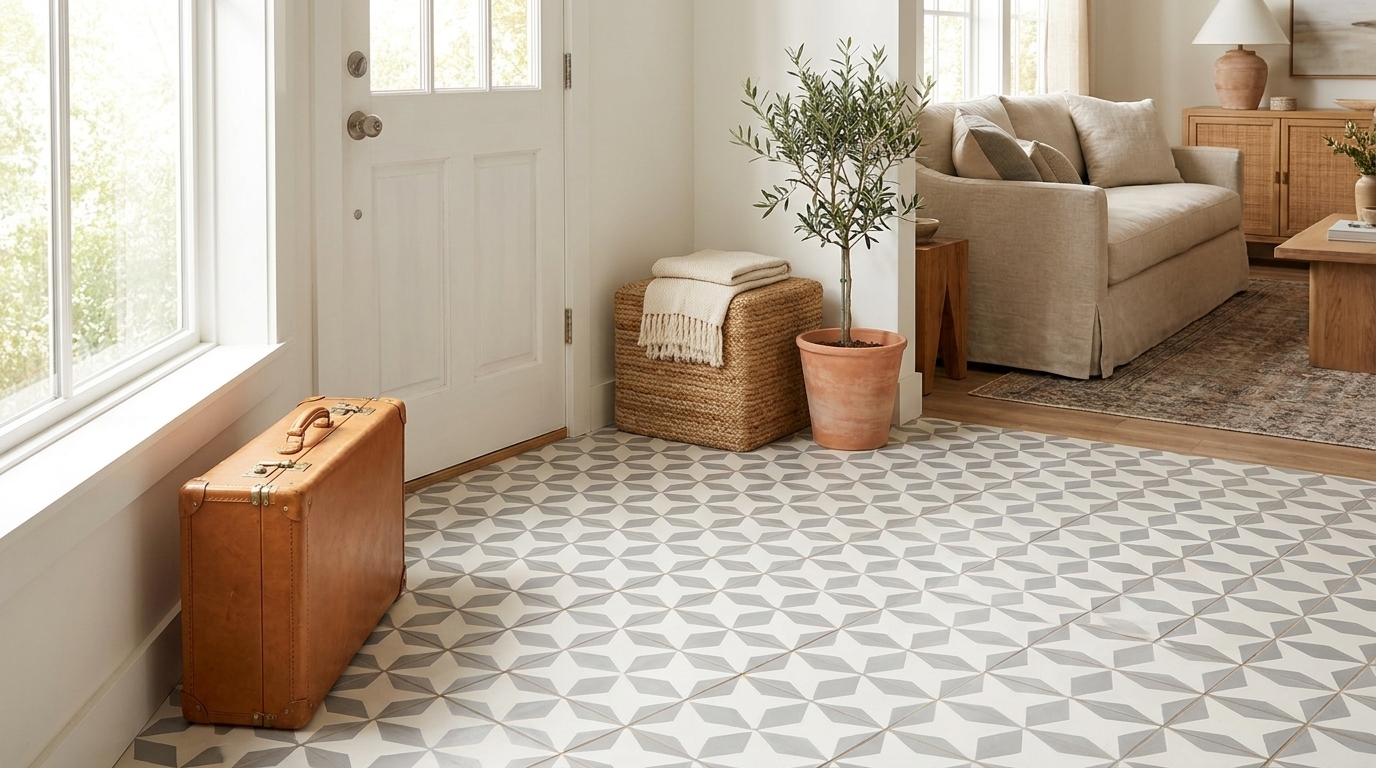
You’re probably balancing two competing pressures right now. The restaurant floor has to survive chairs scraping, staff traffic, spills, wet mopping, and constant visual scrutiny. At the same time, it can’t look like every other safe commercial specification pulled from the same shortlist of porcelain and quarry options.
That’s where cement tiles for restaurants deserve a more serious look. They aren’t just decorative surfaces for boutique cafes or photogenic entryways. When they’re specified for the right zones, installed correctly, and maintained with discipline, they can function as a hard-working commercial finish while giving the space a signature identity that commodity products rarely deliver.
Most flooring guides still don’t give handmade cement tile a fair comparison against common restaurant options, especially around wet-condition use, maintenance planning, and long-term ownership questions, as noted in this commercial kitchen flooring overview. That leaves many designers with a false choice between performance and personality.
Why Cement Tile is the Restaurant Designer's Secret Weapon
A restaurant designer can solve the flooring spec and still miss the room.
That happens when the floor is treated as a compliance item instead of a design tool. The material checks the boxes for traffic and cleaning, but it contributes nothing to the guest experience. In a dining room, bar, host stand, or restroom, that is a costly compromise. The floor covers too much visual territory to be neutral by accident.
Cement tiles for restaurants stand out because they answer two questions at once. Can the surface perform in active commercial use, and can it give the project a point of view? Handmade cement tile has done both for well over a century in hospitality, retail, and public interiors. Its staying power comes from the way it is made. The pattern is built into the wear layer itself, not printed on top, which gives the surface a different visual depth and a different aging profile than many commodity alternatives.
That history matters, but not as nostalgia. It matters because restaurant designers are often asked to choose between expressive materials and safe specifications. Cement tile closes that gap. It brings craft, pattern, and color into the project without defaulting to a surface that looks residential or fragile.
I specify it as a commercial finish with character.
Porcelain and quarry tile remain useful choices. They are familiar to contractors, easy to source, and often appropriate in the hardest-working back-of-house conditions. But they do not always help a restaurant feel distinct. Cement tile gives designers tighter control over scale, border layout, color balance, and matte texture, which is why it works so well in branded hospitality spaces and high-traffic commercial flooring applications.
A strong restaurant floor needs to do three jobs:
- Carry operational load: It has to tolerate guest traffic, chair movement, spills, and routine cleaning in the zones it serves.
- Build the concept: It should reinforce the cuisine, architecture, neighborhood, or brand story instead of fading into the background.
- Age gracefully: Good wear should read as use and patina, not instant visual breakdown.
That last point is one designers often underestimate. Cement tile develops character differently from glossy, image-driven surfaces. In the right setting, that is an advantage. The floor gains warmth and credibility over time, especially in restaurants that want a grounded, established feel rather than a polished chain-store finish.
Used thoughtfully, cement tile does more than decorate a restaurant. It helps define the place while meeting real commercial demands.
Key Performance Specs for Restaurant Environments
Restaurant floors get tested fast. Chairs scrape, ice melts, citrus spills, mop water sits too long at the bar, and the entry tracks in grit all day. Cement tile belongs in that conversation only if it is specified like a commercial material, with clear decisions about wear, slip, moisture, and maintenance.

Durability under real restaurant traffic
The first point to understand is construction. Cement tile is not a printed image fused onto a factory glaze. The color layer is part of the tile body, which gives it a different wear pattern from many image-driven surfaces. In a dining room or bar, that usually means abrasion reads as age and use rather than as a finish failure.
That distinction matters when designers compare cement tile with porcelain or quarry tile. Porcelain often wins on low absorption and standardized ratings. Quarry tile remains a workhorse in many utility areas. Cement tile earns its place where the project needs long service life and a floor with more visual depth, especially in guest-facing zones that benefit from a matte, handcrafted surface.
Zone selection still decides whether the specification succeeds.
Dining rooms, entries, bars, service counters, and restrooms are all common candidates. Back-of-house use takes more scrutiny because degreasers, aggressive washdown routines, and constant contamination can push the material past what makes sense for the application. Good specifications separate the visible hospitality zones from the hardest operational zones instead of assuming one tile should do everything.
Slip resistance and surface character
Slip resistance deserves a field-based review, not a showroom judgment. A dry sample board under soft lighting does not tell you how a sealed floor will behave with condensation near an entry, syrup at a beverage station, or repeated wet mopping before service.
Cement tile often starts with an advantage in guest areas because it has a matte surface rather than a glossy glaze. That does not make every cement tile automatically suitable for every restaurant condition. Surface behavior changes with sealer choice, cleaning residue, and the type of contaminant on the floor. A penetrating sealer and a film-forming finish do not behave the same way under foot traffic.
The practical approach is straightforward:
- Review each zone separately, especially entries, bar perimeters, dining aisles, restrooms, and kitchen-adjacent transition areas.
- Confirm how the selected sealer affects traction after cure.
- Test the tile under the cleaners and maintenance tools the operator will use.
- Include walk-off systems where weather and street grit are part of daily traffic.
- Use broader commercial flooring guidance for high-traffic hospitality settings as a starting point, then match the specification to the restaurant’s specific service conditions.
I would also insist on a mockup for any project where slip concerns are high. That is especially true for bars, entrances, and any space that shifts between dry and wet use throughout the day.
Specify the floor around the maintenance program you expect, not the photo the client approved.
Moisture behavior and sealing realities
Cement tile is porous by nature. That is part of how it is made, and part of why sealing and maintenance have to be written into the specification from the start.
In restaurant work, poor results usually come from treating cement tile like glazed ceramic. The tile needs an appropriate sealer, proper cure time, and cleaning products that do not leave buildup or attack the protective treatment. If that discipline is in place, the material performs well in many hospitality settings. If it is skipped, staining and uneven appearance show up early.
Moisture exposure also varies more than designers sometimes expect. A dining room has a different risk profile than a bar station. A restroom has a different maintenance cycle than an entry vestibule. A visible server path near the kitchen may look like front-of-house, but it can behave more like a utility zone once water, food soils, and rushed cleaning enter the picture.
| Zone | Cement tile fit | Main caution |
|---|---|---|
| Dining room | Strong | Keep sealer maintenance and cleaner chemistry consistent |
| Bar area | Strong with planning | Manage spills quickly and schedule resealing as needed |
| Entry | Strong | Control grit, moisture, and de-icing residue with walk-off systems |
| Restroom | Strong | Watch standing water and harsh cleaner use |
| Kitchen-adjacent visible zones | Case by case | Confirm cleaning methods, soil load, and slip conditions |
Acoustic value in open rooms
Flooring will not solve restaurant acoustics by itself. Ceiling treatments, upholstery, wall construction, and room volume all have more influence. Still, floor surface character affects how hard or soft a room feels, especially in open plans with lots of glass and plaster.
Here cement tile offers a quieter visual and tactile presence than many hard, reflective finishes. The matte surface helps avoid the sharp, shiny effect that can make a room feel louder than it is. In practice, that matters most in dining rooms where designers want energy without turning every conversation into background noise.
The specification question is simple. If the restaurant needs a floor that carries design weight and performs in active guest areas, cement tile is a serious commercial option. It just needs the same discipline you would apply to any other finish: choose the right zones, detail the installation properly, and match the maintenance plan to the way the restaurant operates.
Design Strategies Using Patterns Colors and Borders
Distinctive flooring has become part of restaurant identity. That’s especially true in hospitality projects where the guest experience depends on atmosphere as much as menu design. Handmade cement tile fits that shift well because it can act as both finish and storytelling device, as discussed in this hospitality tile design perspective.

Use pattern to define zones
A restaurant rarely functions as one uninterrupted room. Even a compact plan includes thresholds, pauses, and shifts in use. Cement tile lets you mark those transitions without adding physical barriers.
You can handle zoning in several ways:
- Entry as a focal field: A stronger pattern at the entrance creates an arrival moment and sets the tone immediately.
- Bar as a visual district: A separate motif around the bar helps that area feel intentional, even in an open plan.
- Dining as the calm center: If the host stand or bar carries more pattern energy, the main dining area can use a quieter geometry.
- Restroom as a release valve: Many restaurants use a bolder floor language there because the smaller footprint can support more drama.
This approach works particularly well when you’re trying to guide traffic without obvious signage. Guests understand the room through the floor.
Build the palette from the brand, not from trend
The most convincing cement tile schemes don’t start with “What pattern is popular?” They start with “What should this restaurant feel like?”
A heritage-driven concept might lean into smoky mineral tones, old-world geometry, and a border that feels archival. A coastal dining room may call for softer contrast and more breathing room in the pattern. A cocktail bar can usually tolerate stronger contrast and tighter repetition because the lighting and furniture support it.
The useful discipline is to limit the palette early. Most restaurant floors look stronger when the tile color story supports the brand rather than competing with every other finish in the room.
A floor shouldn’t ask for attention in every square foot. It should concentrate attention where the concept needs emphasis.
For practical inspiration on how flooring, walls, and architectural details can work together, restaurant teams often benefit from reviewing broader restaurant interior design ideas before finalizing a tile layout.
Borders and tile rugs still work
Designers sometimes avoid borders because they associate them with period reproduction or overly formal interiors. That’s too narrow a view. Borders are one of the most useful planning tools in restaurant floors.
They help you:
- Frame a dining room without building a visual fence.
- Create a “tile rug” under tables, banquettes, or host areas.
- Handle awkward room edges more gracefully.
- Transition between tile and another flooring material.
A border can be as restrained as a single-color band or as expressive as a repeating custom motif. The point isn’t ornament for ornament’s sake. The point is visual control.
Don’t stop at the floor
Cement tile is often strongest when used selectively beyond the main field. In restaurants, vertical applications can sharpen the concept without overloading the room.
Consider these placements:
- Bar fronts where the tile becomes part of the guest-facing identity
- Host stand cladding for a branded first impression
- Backsplashes in guest-visible service zones where matte texture adds depth
- Feature walls in restrooms or vestibules where the pattern can be more concentrated
The floor usually remains the anchor, but repeating the material in one or two strategic locations can make the whole project feel composed rather than themed.
Creating Custom Tiles with Original Mission Tile
Custom cement tile gets dismissed early in restaurant projects for two reasons. Designers worry the process will drift, and owners worry the result will cost more than it delivers. A disciplined custom program solves both problems. It gives the team a clear approval path, repeatable production, and a finished surface that carries brand identity without dropping into novelty.

Custom work performs best when the design starts with how the tile will be used. A vestibule medallion can handle more detail than a full dining room floor. A bar front can carry a tighter motif because guests read it at close range. A large floor field needs stronger geometry, clearer contrast, and repeats that still read from standing height.
That translation step matters. Brand marks, menu graphics, architectural references, and neighborhood cues rarely move straight onto tile without adjustment. Cement tile is handmade and precise, but it still depends on clean separations of color, workable line weights, and pattern logic that installers can set accurately in the field.
A practical custom brief usually starts with four inputs:
- A logo element simplified into a repeatable motif
- A local or cultural reference tied to the restaurant concept
- A border or corner condition that helps organize the room
- A controlled color palette drawn from the interior finish schedule
The strongest custom floors are edited. Restaurant designers who try to place the full identity system into the tile usually end up with visual noise and a harder install. A reduced motif, one signature border, or a restrained inset often carries the concept better and ages better.
The approval process should be equally controlled:
- Define the application and viewing distance.
- Confirm tile size, pattern repeat, and orientation.
- Test the palette under the project lighting conditions.
- Review a strike-off or physical sample.
- Finalize field transitions, border turns, and cut conditions before production.
For branded hospitality projects, custom logo tiles for restaurants, hotels, retail, and studios show how identity can be integrated into a floor, entry, or feature surface without sacrificing repeatability.
Original Mission Tile is useful here because the custom process stays grounded in specification, not just inspiration. The team can help convert a restaurant concept into a tile program that respects the handmade character of cement tile while meeting the practical demands of a commercial project.
Essential Installation and Long-Term Maintenance Guide
A restaurant floor usually fails long before the tile itself does. The trouble starts in the slab, in the setting materials, in rushed layout decisions, or in a cleaning program that was never matched to a porous handmade surface.

That distinction matters for designers comparing cement tile with porcelain or quarry tile. Commodity products often tolerate a sloppier process. Handmade cement tile rewards a disciplined one. In return, you get a floor with more visual depth, repairability, and design character than many mass-produced alternatives.
I tell project teams to specify the whole assembly, not just the finish tile.
Start with the substrate
Flat, stable, properly cured substrate work has more impact on long-term performance than the pattern selected for the field. Cement tile is rigid, the surface is matte, and handmade variation makes lippage and joint inconsistency easier to see under restaurant lighting.
Verify these items before the first tile is set:
- Flatness and levelness: Decorative surfaces make unevenness obvious, especially across large dining rooms and long sightlines.
- Moisture condition of the substrate: Excess moisture can interfere with bond performance, grout behavior, and sealer results.
- Movement accommodation: Perimeter conditions, changes in plane, large fields, and transitions need to be resolved in the layout and specification.
- Setting material compatibility: Use mortars and grouts suited to cement tile rather than defaulting to the products the installer uses on standard ceramic work.
Schedule pressure causes a lot of preventable failures. A rushed slab review can turn into shading problems, cracked grout, hollow spots, or a sealer that never performs the way the design team expected.
Set and grout with the tile's porosity in mind
Cement tile should be installed like a porous architectural finish, not like a glazed tile pulled from warehouse stock. That affects handling from the first dry layout through final cleanup.
A careful crew will usually:
- Blend tiles from multiple boxes so natural shade variation reads as part of the floor instead of pooling in one area
- Dry-lay key areas first to confirm centering, border turns, cuts at thresholds, and how the pattern meets focal points
- Keep faces clean during setting because cement residue, pigment transfer, and site dirt become harder to remove once they sit
- Test grout color and application method before full installation, since grout can shift the look of a pattern more than many teams expect
Restaurant work clearly distinguishes experienced installers from general tile labor. A dining room floor may only get one chance to look intentional.
Sealing should be specified early
Sealer selection changes appearance, stain resistance, maintenance frequency, and sometimes slip perception. It should be discussed during design development, not at turnover when the owner is asking why one sample looked dry and another looked richer.
Use this checklist during specification review:
| Decision point | Why it matters |
|---|---|
| Pre-seal timing | Reduces grout staining and jobsite contamination |
| Sealer type | Affects stain resistance, maintenance cycle, and visual finish |
| Finish level | Changes how light reads across the tile surface |
| Reseal schedule | Determines how well high-use zones hold up in service |
Penetrating sealers are often the safer choice when the goal is to keep the natural matte character of cement tile. Topical systems can add more visual change and may work in some settings, but they require stricter maintenance discipline and closer review in greasy or abrasive service areas.
A short visual refresher can help teams align around technique and expectations:
Cleaning protocols that actually protect the floor
Restaurant operators clean constantly. That does not mean they clean correctly. I have seen beautiful cement tile damaged faster by the wrong nightly routine than by years of guest traffic.
A practical maintenance plan should include:
- Dry grit removal first: Sand and tracked debris scratch and dull the surface under foot traffic.
- Neutral-pH cleaners for routine work: They are the safe baseline for cementitious surfaces and most sealers.
- Immediate spill response: Oil, wine, citrus, coffee, and syrups should not sit and soak.
- Product approval and staff training: The janitorial team needs a short, specific list of allowed chemicals and tools.
Avoid these common mistakes:
- Acidic cleaners that etch the cementitious face or shorten sealer life.
- Aggressive degreasers used without review because commercial-strength chemistry is not automatically tile-safe.
- Dirty mop water and residue-heavy cleaning that leave the floor looking hazy.
- Resealing by guesswork instead of watching wear patterns in the busiest zones.
Owners who manage multiple properties often benefit from broader facility planning, not just a tile care sheet. Property maintenance budgeting advice from SnapFixNow is a useful reference for building a maintenance budget that reflects real service conditions.
Maintain by zone, not by building
A host stand, bar front, restroom corridor, dining room, and back-of-house transition do not age the same way. They should not be cleaned or resealed on the same cycle.
Entry areas collect abrasive grit. Bar zones deal with sugars, alcohol, acids, and stools dragging across the floor. Server paths wear differently from perimeter seating. The best maintenance plans map those conditions and assign inspection, cleaning intensity, and reseal timing by zone.
That is one reason cement tile remains a strong commercial choice. It asks for informed installation and informed care, but it gives designers a material with historic character and serious service life when the specification is handled properly.
Budgeting Lead Times and Code Compliance
The budget conversation around cement tiles for restaurants is often too narrow. Teams focus on material price and skip the rest of the ownership picture. That’s how good materials get rejected for the wrong reasons, and how bad specifications get approved because they looked cheaper on bid day.
Think in ownership, not just purchase
Cement tile usually asks for more discipline up front. There’s design review, sample approval, installation care, sealing, and a maintenance plan that has to be realistic. For some projects, that added complexity is worth it because the floor becomes part of the restaurant’s identity and can stay relevant for a very long time.
There’s also a sustainability angle worth noting. In reuse cycles, cement tiles reduce associated CO2 emissions by approximately 9.95 kg/m² per reuse cycle, compared to 2.32 kg/m² for ceramic tiles, according to this life cycle assessment study. In single-use scenarios, concrete tiles release more CO2 and generate more disposable material by weight than ceramic, which means the long-life and reuse case matters.
That’s why owners should ask a better question than “What costs less today?” A better question is “Which floor still makes sense after years of service, maintenance, and design relevance?”
Lead times need early decisions
Cement tile is not always the right fit for a compressed schedule. If the project needs an immediate ship date, the team may need to work from stocked patterns and colors rather than custom production. If the floor is central to the concept, those decisions need to happen early, before the restaurant is already in permit review or late-stage procurement.
A few planning habits help:
- Approve samples early: Color hesitation late in the schedule creates avoidable delay.
- Resolve layout with the floor plan: Don’t separate tile design from architectural coordination.
- Distinguish stock from custom clearly: They belong to different schedule conversations.
- Coordinate with installers before arrival: A rushed crew can erase the benefits of a carefully selected product.
For owners and operators working across larger properties or mixed-use assets, broader property maintenance budgeting advice from SnapFixNow can help frame long-term maintenance planning in a more operational way.
Compliance needs project-specific review
Code compliance is where some otherwise strong cement tile specifications get vague. That’s risky.
Restaurant teams need to verify the actual requirements that apply to the project, including slip-related expectations, accessibility concerns, local health department requirements, and the cleanability standards expected for each zone. Guest-facing dining areas, service corridors, bar perimeters, and kitchen-adjacent spaces may not be judged the same way.
If a flooring decision affects safety or sanitation, don’t rely on material folklore. Match the exact tile, finish, sealer, and location to the governing code and authority having jurisdiction.
The safest approach is straightforward. Review the selected tile assembly with the architect, installer, operator, and local code authorities before the order is finalized.
Making the Right Choice for Your Restaurant's Future
A restaurant floor does more than survive traffic. It shapes how the space is perceived, photographed, remembered, and maintained. That’s why cement tiles for restaurants deserve a place in serious commercial discussions, not just aesthetic moodboards.
Their value comes from the combination. They carry a heritage rooted in real commercial use. They offer design range that helps a restaurant establish identity. They also demand respect. Cement tile is not a casual plug-and-play product. It performs best when the team understands porosity, sealing, installation discipline, and zone-specific maintenance.
That trade-off is exactly why the material works so well for the right project. If the brief calls for a floor that merely disappears, there are easier options. If the brief calls for a floor that contributes to brand, atmosphere, and long-term character while still functioning as a commercial surface, cement tile becomes much more compelling.
The best specifications are honest about where the tile belongs, how it will be maintained, and what kind of visual job it needs to do. Dining rooms, bars, entries, feature restrooms, host zones, and visible service areas often benefit most because the floor can work both technically and emotionally in those spaces.
Choosing the right floor is really choosing what kind of restaurant you’re building. A generic floor says the concept can live without a point of view. A well-planned cement tile floor says the project knows exactly what it wants to be.
If you’re evaluating handmade cement tiles for a restaurant project, explore the gallery, in-stock options, and custom capabilities at Original Mission Tile to compare patterns, review application ideas, and start a conversation around the right specification for your concept.